The purpose of this blog is the creation of an open, international, independent and free forum, where every UFO-researcher can publish the results of his/her research. The languagues, used for this blog, are Dutch, English and French.You can find the articles of a collegue by selecting his category. Each author stays resposable for the continue of his articles. As blogmaster I have the right to refuse an addition or an article, when it attacks other collegues or UFO-groupes.
Druk op onderstaande knop om te reageren in mijn forum
Zoeken in blog
Deze blog is opgedragen aan mijn overleden echtgenote Lucienne.
In 2012 verloor ze haar moedige strijd tegen kanker!
In 2011 startte ik deze blog, omdat ik niet mocht stoppen met mijn UFO-onderzoek.
BEDANKT!!!
Een interessant adres?
UFO'S of UAP'S, ASTRONOMIE, RUIMTEVAART, ARCHEOLOGIE, OUDHEIDKUNDE, SF-SNUFJES EN ANDERE ESOTERISCHE WETENSCHAPPEN - DE ALLERLAATSTE NIEUWTJES
UFO's of UAP'S in België en de rest van de wereld Ontdek de Fascinerende Wereld van UFO's en UAP's: Jouw Bron voor Onthullende Informatie!
Ben jij ook gefascineerd door het onbekende? Wil je meer weten over UFO's en UAP's, niet alleen in België, maar over de hele wereld? Dan ben je op de juiste plek!
België: Het Kloppend Hart van UFO-onderzoek
In België is BUFON (Belgisch UFO-Netwerk) dé autoriteit op het gebied van UFO-onderzoek. Voor betrouwbare en objectieve informatie over deze intrigerende fenomenen, bezoek je zeker onze Facebook-pagina en deze blog. Maar dat is nog niet alles! Ontdek ook het Belgisch UFO-meldpunt en Caelestia, twee organisaties die diepgaand onderzoek verrichten, al zijn ze soms kritisch of sceptisch.
Nederland: Een Schat aan Informatie
Voor onze Nederlandse buren is er de schitterende website www.ufowijzer.nl, beheerd door Paul Harmans. Deze site biedt een schat aan informatie en artikelen die je niet wilt missen!
Internationaal: MUFON - De Wereldwijde Autoriteit
Neem ook een kijkje bij MUFON (Mutual UFO Network Inc.), een gerenommeerde Amerikaanse UFO-vereniging met afdelingen in de VS en wereldwijd. MUFON is toegewijd aan de wetenschappelijke en analytische studie van het UFO-fenomeen, en hun maandelijkse tijdschrift, The MUFON UFO-Journal, is een must-read voor elke UFO-enthousiasteling. Bezoek hun website op www.mufon.com voor meer informatie.
Samenwerking en Toekomstvisie
Sinds 1 februari 2020 is Pieter niet alleen ex-president van BUFON, maar ook de voormalige nationale directeur van MUFON in Vlaanderen en Nederland. Dit creëert een sterke samenwerking met de Franse MUFON Reseau MUFON/EUROP, wat ons in staat stelt om nog meer waardevolle inzichten te delen.
Let op: Nepprofielen en Nieuwe Groeperingen
Pas op voor een nieuwe groepering die zich ook BUFON noemt, maar geen enkele connectie heeft met onze gevestigde organisatie. Hoewel zij de naam geregistreerd hebben, kunnen ze het rijke verleden en de expertise van onze groep niet evenaren. We wensen hen veel succes, maar we blijven de autoriteit in UFO-onderzoek!
Blijf Op De Hoogte!
Wil jij de laatste nieuwtjes over UFO's, ruimtevaart, archeologie, en meer? Volg ons dan en duik samen met ons in de fascinerende wereld van het onbekende! Sluit je aan bij de gemeenschap van nieuwsgierige geesten die net als jij verlangen naar antwoorden en avonturen in de sterren!
Heb je vragen of wil je meer weten? Aarzel dan niet om contact met ons op te nemen! Samen ontrafelen we het mysterie van de lucht en daarbuiten.
03-03-2018
Conspiracy Theories
Conspiracy Theories
by NICK POPE
Nick Pope is one of the world’s leading experts on conspiracy theories. He has discussed the subject on numerous TV shows, and written news stories and features about conspiracy theories (including tie-in publicity material for the second X-Files movie, and extensive material for truTV’s Conspiratorium), covering topics that include JFK, the moon landings, 9/11, UFOs, and many other conspiracy theories – some well-known, others less well-known. If you’ve ever read one of those media features listing the world’s top 10 conspiracy theories, it may well have been written by Nick Pope!
Having investigated UFOs for the British Government, Nick Pope has been the subject of some conspiracy theories himself, with many people believing that he was part of a government cover-up aimed at hiding the truth about UFOs. Despite having left the UK’s Ministry of Defense in 2006, the belief that he’s still secretly working for the government is widely held in the conspiracy theory community.
Nick Pope is a conspiracy theory skeptic. While he thinks that challenging the government’s position on issues is an important part of any free, open and democratic society, he believes that many conspiracy theories arise from a lack of critical thinking, and a poor knowledge of the way in which government works. He’s particularly concerned when conspiracy theories are used as justification for anti-Semitic views, or have fueled the anger of people with mental health issues.
In his work as an author, journalist and broadcaster, Nick Pope has covered conspiracy theories extensively. The following article is a distillation of his current position, and is meant as a quotable resource for academics, students, journalists and other media professionals looking at the subject.
Introduction
This article is a personal overview of the conspiracy theory ‘genre’. While I’ll be citing a few individual conspiracy theories to illustrate some particular points, it’s not my intention to drill down into any individual conspiracy theories in great detail here. Many others have done this and in a sense, the purpose of this article isn’t to debate whether any individual conspiracy theories are true or false, but to make some more general observations about the subject as a whole.
Personal Background
I write this article with a number of different hats on. Firstly, I worked for the British Government for 21 years, at the Ministry of Defense (MoD). Accordingly, I have considerable knowledge of the way in which government works and – in relation to the topic in hand – have a pretty good idea of the boundaries: what governments do and what they don’t do. Secondly, one of my MoD jobs involved investigating UFO sightings reported to the Department, as well as handling policy, media enquiries and public correspondence on the issue. Given that many people believe the MoD is covering up the truth about UFOs, this exposed me directly to accusations concerning conspiracy theories. Thirdly – and related to the previous point – despite having left the MoD in 2006, I’m the subject of a conspiracy theory myself. The accusation is that my departure from MoD was a ruse and that I’m still secretly on the payroll, with a role variously described as being either to put out disinformation about UFOs, to infiltrate/discredit the UFO community, to acclimatize people to an extraterrestrial reality ahead of ‘Disclosure’ (official confirmation of extraterrestrial visitation), or to promote belief in (non-existent) extraterrestrials ahead of a “false flag alien invasion”. Such mutually-contradictory theories are not unusual in the conspiracy theory community – see, for example, the work done by Dr. Karen Douglas at University of Kent, who discovered that those who believed Osama bin Laden was already dead before the US raid that purportedly killed him in 2011 were also more likely to believe that he is still alive. Fourthly, I now work as a journalist and broadcaster covering – among other subjects – conspiracy theories. Fifthly, through speaking at various conferences, I have had considerable exposure to the conspiracy theory community.
One of Nick Pope's newspaper features on consipiracy theories
Definitions and Terminology
This subject is not helped by the lack of agreed terminology and definitions of words and phrases such as “conspiracy” and “conspiracy theory”, or by the relationship with words like “collusion”. The Oxford English Dictionary (OED) defines conspiracy as “an agreement between two or more persons to do something criminal, illegal or reprehensible” – but what constitutes “reprehensible” is a subjective judgement. The OED defines collusion as “a secret or illegal cooperation or conspiracy in order to deceive others”.
Related to this is the way in which “conspiracy theorist” is sometimes used as a pejorative. This is unhelpful, given that some conspiracy theories are true, and it leads to situations where 9/11 conspiracy theorists refer to the US Government’s version of what took place as the “OCT” (Official Conspiracy Theory). This dogfight over language muddies the waters before we even get to the issues.
It’s worth noting that the conspiracy theory community has a number of linguistic tropes. “Sheeple” is used to describe people who are not “awake” in a political sense and tend not to question the ‘party line’. Such terms are combined in phrases like “wake up, sheeple”. “Crisis actors” are people alleged to play the parts of grieving relatives or bystanders at fake mass-shootings or terror attacks. The bad guys in the conspiracy theory universe are sometimes individual governments, but often more shadowy forces such as the Illuminati, the New World Order, or some variation on this theme. Dissent from fellow conspiracy theorists with differing views is often dealt with by stating or implying that the dissenter is a “shill”, secretly working with the bad guys. Conspiracy theorists know just enough about the world of intelligence to be familiar with terms such as “useful idiot”, “disinformation”, “psyop”, “agent provocateur”, “false flag” and “cointel”, without really understanding the realities.
Dissent from outside the conspiracy theory community is generally ignored. The Popular Mechanics investigation into the most widely held 9/11 conspiracy theories is often dismissed out of hand, as is the 9/11 Commission Report. Most 9/11 conspiracy theorists haven’t read the latter, and justify this by saying that it’s obvious propaganda and is itself part of the conspiracy.
Conspiracy Theories and Government
It’s an important but often overlooked fact that a common thread that runs through most conspiracy theories is that the event under discussion generally involves government or some official agency. Only a very few conspiracy theories (e.g. “Paul McCartney is dead”) don’t involve the government and even here, one can make a case for saying that ‘Big Business’ is an extension of government in the minds of conspiracy theorists, and that there were obvious financial reasons for covering up McCartney’s death. But the fact that most conspiracy theories revolve around the supposed actions of government, the military and the intelligence agencies is extremely important in understanding the root causes of conspiracy theories, and suggests that distrust of government lies at the heart of the matter. Sometimes, however, the tendency to focus on specific conspiracy theories can blind us to such overarching points.
Conspiracy Theories and Popular Culture
It would be remiss not to mention the issue of how conspiracy theories are portrayed in popular culture. In a TV series like The X-Files or in films such as The Matrix trilogy, not only could the main protagonists be categorized as conspiracy theorists and portrayed as heroes, but they live in a world where the conspiracy theories are true and where – in the Matrix universe – reality itself is a lie. Movies like Conspiracy Theory and Mercury Rising are also good examples, as are numerous sci-fi movies dealing with UFOs/extraterrestrials, where part of the plot often involves the government or the military being aware of the alien presence, but trying to keep the knowledge from the public. Arguably, Hollywood portrays conspiracy theories as more likely to be true than is the case in real life, and portrays conspiracy theorists in a more favorable light than the media portrays their real-life counterparts. It’s unclear what effect such a portrayal (generally positive) of conspiracy theories and conspiracy theorists has (it may act as a partial validation of people’s fringe beliefs, especially if they empathize with ‘heroic struggles’ in conspiracy theory fiction), but it’s worthy of study. It also highlights another irony of the conspiracy theory universe, where people often allege that Hollywood is part of the ‘system’ and – particularly in relation to extraterrestrials – is complicit in a campaign to acclimatize/indoctrinate people to a particular view.
Conspiracy Theories, the Internet, and the Multi-Media World
The internet has played a huge role in giving voices to those who, previously, would have had little or no chance of having their say. Social media sites have played a large part in this too. The Arab Spring is an oft-cited example of this. More generally, there has been a fundamental shift in the concept of journalism, where the center of gravity has moved away from the mainstream news media. A good example of this shift is the fashion industry, where the rising (and arguably disproportionate) influence of a handful of influential bloggers has caused huge tensions, but where changes reflect a new power dynamic. The use of sites such as Twitter to name and shame celebrities who have taken out ‘super injunctions’ to try to prevent negative news stories being published is another example of this.
The internet has had a similar and massive effect upon conspiracy theories. It’s arguable that every issue and point of view has been changed and amplified by the internet, but it seems that alternative viewpoints have been disproportionally affected. Previously, fringe issues often tended to be squeezed out, but they now have more of an outlet.
Tied to this is the increase in media outlets. I was brought up in the UK when there were three TV stations: BBC1, BBC2 and ITV. Nowadays, there are a multitude of TV stations, and while a lot of material is repeated, there’s more demand for new content than has ever previously been the case. All this broadcasting time – and the same is true for radio – has to be filled, and this gives conspiracy theories an outlet that they have not previously enjoyed. Indeed, some networks such as Edge Media TV (later known as Controversial TV and broadcast on Sky Channel 200) were almost exclusively devoted to alternative views and conspiracy theories.
It’s not clear whether the rise of the internet and the transition to a multi-media society has significantly changed people’s views, as opposed to having held up a mirror to views that were already there. Again, this is a point worthy of further study.
Notwithstanding the above, there remains an odd disconnect. 9/11 conspiracy theories, for example, have a huge ‘internet footprint’, but enjoy comparatively little mainstream media coverage. The same could be said about other topics, such as ‘chemtrails’. Skeptics might say this is a good thing, as it shows that that the ‘evidence bar’ is set at an appropriately high level, which alternative theories about 9/11 have yet to reach. As a journalist, however, my intuitive feeling is that this is wrong, and that even if pretty much every conspiracy theory relating to 9/11 is flawed (as I believe to be the case), the fact that so many people believe otherwise should lead to greater mainstream news media engagement – even if it’s the belief in these conspiracy theories that is, itself, the news story. The danger otherwise is that large numbers of people feel disenfranchised by the media, and believe the media is letting them down by not asking tough questions of the authorities. Worse still, some people may – and do – come to believe that the media (the “controlled media” as various people in the conspiracy theory community are fond of saying) is complicit in the cover-up.
The announcement on the BBC of the collapse of World Trade Center Building 7 is a good example of how people come to believe that elements of the media are “controlled”. A newsreader announced that the building had collapsed while it was still standing. Only later did it collapse. The building was on fire and the firefighters had been pulled out, so collapse was arguably imminent, but how did the collapse get announced before it had actually occurred? Let’s look at the possible explanations. Had the newscaster misunderstood, or perhaps misheard what the producer said via the earpiece? It was a fast-moving and stressful situation for everyone in the newsroom, and that’s the likely explanation. But a surprising number of people believe that the BBC knew about the collapse in advance (because these people think the whole attack was pre-planned by Western authorities, or elements thereof), but weren’t following the script carefully enough, and thus let the cat out of the bag by announcing a pre-planned event a little too early. As an ex-government official who now works as a broadcaster and journalist, I can’t help but observe how absurd this is: the idea that a small group of conspirators would plan an insidious false flag attack that – if discovered – would shake the Establishment to its core and result in jail terms (and possibly the death penalty) for all those involved – and then tip off one of the largest news organizations on the face of the planet. But for the purposes of this article, the point isn’t whether or not such things are true – which will always be a subject of debate – but whether people believethey’re true, which is undeniably the case. Such a view of the media is unfortunate, because from Watergate in the US to more recent UK stories such as cash for questions, cash for honors and MPs’ expenses, the media actually has a good, proven track record of going after powerful Establishment figures when suspicions or allegations of wrongdoing emerge.
Contradictory Conspiracy Theories
I mentioned earlier the work of Dr. Karen Douglas at University of Kent, who found that those people who believed Osama bin Laden was already dead before the US raid that purportedly killed him were also more likely to believe that he’s still alive. This may seem counter-intuitive, if not downright absurd, but it’s symptomatic of a wider issue with some conspiracy theories, where mutually-contradictory theories are put forward for what’s alleged to be going on. The chemtrail conspiracy is a good example, with some people believing the aim of this supposed chemical spraying campaign is to alter the weather, while others think it’s aimed at behavior modification, or that it’s part of a campaign to poison people, as part of a mass-extermination plan. Clearly, even if chemtrails were real, most conspiracy theory belief about them would be false. We see the same with 9/11 conspiracy theories: some people believe it was an “inside job”, some people believe America “looked the other way”, some people believe aircraft hit the Twin Towers, while other people (the so-called “no-planers”) think the aircraft seen hitting the buildings were holograms and that the buildings were brought down by a controlled demolition (or, at the extreme end of the belief spectrum, some sort of anti-gravity weapon). In situations like this, the proponents of more extreme beliefs are often accused of being shills, infiltrating the so-called “Truth Movement” and discrediting it by making overly ridiculous claims.
Close, But No Cigar
Few conspiracy theories are without some element of half-truth or ambiguity. There are apparently reasonable points that, at first, give one pause for thought. The CIA, for example, was aware of 9/11 hijackers Khalid al Mihdhar and Nawaf al Hazmi, but didn’t put them on the State Department’s TIPOFF watchlist, or inform the FBI. Does this mean that the authorities knew 9/11 was going to happen but “looked the other way”? In fact, such failings are not uncommon, and in most cases are the result of factors such as overwork, information overload and – critically – poor intelligence-sharing between different agencies. On this latter point, inter-agency rivalry, mistrust and even antipathy is much more common than the public (who often view government as a single entity) are generally aware. To these factors can be added the tendency of people entrusted with classified or sensitive information to be overly-protective (particularly in situations where a key concern is to avoid compromising a sensitive source), to the extent that it becomes useless – the intelligence isn’t actionable. So using the Khalid al Mihdhar and Nawaf al Hazmi example, what may look suspicious to the layperson is immediately recognizable as standard practice to those of us with a background in government/intelligence.
Conspiracy Theories and Science
Related to the above are arguments that may initially seem scientific, but on closer examination (which often doesn’t happen) aren’t. Again, 9/11 provides a nice example. Conspiracy theorists point out that aviation fuel doesn’t burn at a high enough temperature to melt steel. Therefore, they argue, aircraft alone, slamming into the Twin Towers, couldn’t have brought the buildings down. This opens the door to speculation about a controlled demolition. While the argument might initially sound reasonable, more careful consideration leads us to the answer: steel loses its structural integrity at a much lower temperature. This, plus gravity, was more than enough to bring down the buildings.
A basic understanding of science would result in a more informed debate about many conspiracy theories. The chemtrail conspiracy is a good example of this. Undeniably, there have been government/military attempts to modify the weather. Operation Popeye (cloud seeding during the Vietnam War, aimed at making it rain on the Ho Chi Minh trail, thus bogging down the main Vietcong supply route) is a well-documented example of this. So, if chemtrails are real, it’s scientifically plausible that they have something to do with weather control or even climate change. However, researching crop spraying and seeing how low the aircraft have to fly for the spray to have a discernible effect on the crops should – even for believers in chemtrails – eliminate the idea that they have anything to do with poisoning people or modifying their behaviour. You couldn’t target a spray with any degree of accuracy from the heights at which it’s alleged chemtrails are discharged (commercial aircraft cruising height of around 35,000 feet), and any chemicals sprayed from such heights would have a negligible effect on anyone at ground level. In any case, the economy of scale argument could be brought into play – why not simply put chemical into the water supply? Surely even the New World Order would choose a cheaper and easier strategy if one was available! The point is, applying science can eliminate some aspects of a conspiracy theory and result in a more focused debate on that part which remains.
Conspiracy Theories – The Good
Some conspiracy theories turn out to be true, and while governments don’t lie as often as many people seem to think, they constantly dissemble and spin. Accordingly, a healthy skepticism in respect of what we’re told by government (and the authorities more generally) is actually a very good thing, and is a healthy indicator of a modern, open, democratic society. More generally, it’s good in terms of critical thinking. So it’s right to doubt and challenge what we’re told by those in power, and to ask searching questions if something doesn’t look or feel right. But there’s a danger in going too far and in assuming that because one conspiracy theory is true, most or all of them are (The few academic studies done into this suggest that if you believe in one conspiracy theory, you’re more likely to believe in others). As ever, the trick is to get the balance right. As the old saying goes, it’s good to have an open mind, but not so open that your brain falls out.
With this in mind, it would be a good thing (and would help a more informed debate) if conspiracy theorists and skeptics could find some common ground in terms of a conspiracy theory that turned out to be true. Interestingly, one that’s often cited as true (that the Nazis started the Reichstag fire to discredit the communists and consolidate their power) is the subject of more debate between historians than most people realize. Conversely, few people on either side of the debate are familiar with one of the best documented conspiracy theories in recent years, i.e. the fact that senior figures in the Northern Ireland Office, the Royal Ulster Constabulary and the Catholic Church knew (or strongly suspected) who was responsible for the bombings in Claudy, County Londonderry, in 1972 (attacks in which nine people died), and that actively conspired to cover it up, because the alleged perpetuator was a Catholic priest. The Northern Ireland Police Ombudsman’s 2010 report into the bombing and the subsequent events found that this conspiracy almost certainly took place, and their conclusion was widely reported by the mainstream media – including the BBC.
The review of the original investigation into the Claudy bombings makes interesting reading for those interested in conspiracy theories (on whichever side of the debate) because of what it tells us about inquiries in modern times. When wrongdoing (including conspiracy – even if it’s only a conspiracy of silence) is found, it’s generally exposed, with criticisms being made. The Hutton Inquiry (into the apparent suicide of government weapons inspector Dr. David Kelly) is seen by some as a whitewash, and itself part of a conspiracy to cover up what really happened. But if people use this to imply that all official inquiries are going to give the government an easy ride and support the party line, they’re mistaken. The Saville Report (into the Bloody Sunday shootings) was extremely critical of the Army and concluded that a soldier fired the first shot. Charles Haddon-Cave QC’s report into the fatal crash of an RAF Nimrod aircraft in Afghanistan in 2006 contains damning criticisms of the MoD and defense contractors. The ongoing Iraq Inquiry chaired by Sir John Chilcot is likely to contain robust criticisms of various government figures in relation to the Iraq War, though it’s unlikely to support the conspiracy theory that “we went to war on a lie” – i.e. that Saddam Hussein had weapons of mass destruction. Again, all this should be required reading for conspiracy theorists and conspiracy theory skeptics alike, as it’s a useful template for how the authorities respond when things go catastrophically wrong.
Conspiracy Theories – The Bad and the Ugly
There’s a dark side to some conspiracy theories. Firstly, the irony is that while they can sometimes be healthy in terms of encouraging critical thinking, they can also be extremely unhealthy, in terms of people believing unsubstantiated rumors simply because they accord with their (generally anti-Establishment) worldview. Far more worrying, however, are three other factors.
Firstly, some conspiracy theories, particularly those involving a ‘New World Order’, imply that the world is secretly run by a small group of families and corporations – a sort of ‘shadow government’. In relation to such ideas, one often hears the phrase “conspiracy of international bankers” or “small group of families who secretly rule the world”. Often, such wording is used to mask anti-Semitism. The accusation of anti-Semitism is often met with the defense that those involved are only against “Zionism”, but have nothing against Jewish people more generally. In some cases this is true, and on a related issue it’s a dangerous situation where any criticism of the Government of Israel is automatically labeled as being anti-Semitic. But in other cases the defense about being anti-Zionist sounds like a convenient ‘get out’, not a million miles away from the cliché about the racist who begins an argument with a phrase “Don’t get me wrong, I’ve got black friends”. Even if not motivated by racism, such views make it easier for racism to take root. At a UFO conference held in Leeds in 2011, for example, a question from the floor turned into a lengthy comment which included the sentiment that Hollywood was “run by the Jews”. Significant numbers of audience members (and even some of the other speakers on the panel) seemed to be nodding in agreement, and only one person in the audience was courageous enough to take the individual concerned to task.
Secondly, medical conspiracies (e.g. those surrounding Swine flu) can be dangerous. Many people believe that certain diseases were bio-engineered deliberately, and that they – and/or the associated vaccination programmes – are part of a conspiracy to exterminate large numbers of people, to bring the world population down to a more manageable/sustainable level and – perhaps – to bring about a New World Order. If people who are ill with such diseases use conspiracy websites to inform their decisions, as opposed to seeking medical advice, the consequences could be fatal. As a practical illustration of this, I once saw a father post a question about vaccinations for his baby on the Facebook wall of a conspiracy theorist who had recently expressed the view that a false flag alien invasion would be staged at the closing ceremony of the London Olympics.
The third – and possibly least commented upon – area where conspiracy theories can be dangerous relates to the feelings of rage and powerlessness that they can engender. With certain personality types, this runs the risk of making them feel they have no stake in the democratic system, and no conventional way for their voice to be heard. Though the situation is not clear-cut, there are very strong indications that John Patrick Bedell (who opened fire on Pentagon police officers in 2010 and was subsequently shot dead) was motivated in part by 9/11 conspiracy theories, and that Jared Lee Loughner (who killed six people in Tucson in 2011) was obsessed with conspiracy theories on 9/11, the New World Order and Mayan prophesies apparently suggesting that the world would end in 2012. This is a controversial area and one on which experts in psychopathology are best-placed to comment. One could doubtless argue that such people would always find something to latch onto, that tips them over the edge. But at the very least, we must be mindful of the negative effects that conspiracy theories can have on individuals, and indeed on groups of people. The think-tank Demos, for example, has done some interesting research into the link between conspiracy theories and extremism.
Heads I Win, Tails You Lose
There’s an interesting aspect of some conspiracy theories that’s worth knowing if one is to truly understand the mindset of some conspiracy theorists. On one level it looks like a cheap trick, but on another level it offers a useful insight into the conspiracy theory universe. Again, the supposed false flag alien invasion at the 2012 Olympic Games is the perfect example. If it happened, self-evidently proponents of such a theory would have been proved correct and would have claimed credit. But when it didn’t happen, the ‘get out’ was that those involved prematurely exposed the New World Order’s plan and thus forced them to back down. In this case and in others, conspiracy theorists can actually take credit for what, in reality, is nothing more than a failed prediction.
National Differences
As a British citizen who now lives in the United States, the issue of national differences in conspiracy theories is of particular interest to me. It’s noticeable that a number of US conspiracy theories (e.g. those about the Sandy Hook school shootings and the Boston Marathon bombings) revolve around the central premise that the intention is to create an environment where the government will be able to declare martial law and “take away our guns”, thus overturning the right to bear arms that’s enshrined in the Second Amendment to the United States Constitution. Interestingly, proponents of such theories seldom cite what might initially sound like a compelling argument, i.e. the fact that a school shooting in Scotland (the 1996 Dunblane school massacre) did lead to extensive gun control in the UK. However, even if this was to be cited as a precedent for how governments can clamp down on private gun ownership, it would be based on a misunderstanding of the fundamental differences in US and UK public attitudes to firearms, and on a failure to appreciate the unique protections afforded by the Second Amendment. Such factors must be borne in mind when looking at conspiracy theories regarding mass shootings – arguably one of the most prevalent types of conspiracy theory in modern day America.
A Testable Hypothesis
Belief in conspiracy theories clearly has a number of root causes, including mistrust of government, feelings of personal disempowerment, and lack of knowledge of the way in which government, the military and the intelligence agencies work. It seems to me that much of this is testable. On the knowledge of government point in particular, where answers are either right or wrong, it would be possible to conduct double blind experiments which could score someone’s believe in various conspiracy theories and their knowledge of officialdom, to see if there’s a relationship. I’ve discussed this with at least one academic (and have drawn up some questions for a study) but I believe further work in this area would be fruitful.
Conclusion
As I pointed out previously, belief in conspiracy theories has been the subject of comparatively little academic study. Exceptions include the aforementioned Demos work on conspiracy theories and extremism, Cambridge University’s Conspiracy and Democracy project, led by Sir Richard Evans, and a March 2015 conference on conspiracy theories organized by Professor Joseph Uscinski at University of Miami. However, given the profound impact conspiracy theories can have on people’s beliefs and actions, more work is needed, and while I support academic research into this subject, I believe we need to be more inclusive. A wider conversation on the subject needs to take place, involving not just social scientists and academics, but the media and – critically – conspiracy theorists themselves. It’s this latter engagement that will prove most difficult (because of conspiracy theorists’ mistaken perception that conspiracy theory skeptics are Establishment debunkers), but is essential for any proper understanding of the subject. It seems to me that a greater understanding of the conspiracy theory community and their mindset is a prerequisite to such engagement. In this respect, blanket dismissal of such people as crazies is singularly unhelpful.
Conspiracy theories are an important part of contemporary belief. In our globalized society, with its 24/7 media coverage, conspiracy theories start almost immediately after newsworthy disasters, high-profile deaths, and mass-shootings. They then spread rapidly, in our increasingly interconnected world. Even if most popularly-held conspiracy theories are demonstrably false, dismissing conspiracy theory culture in its wider sense would be to throw out the baby with the bathwater. Rather, we should be asking why people believe such things, and what this tells us, not just about the individuals concerned, but about 21st Century society and culture as a whole.
The Hynek Scale is a Six-Item System for Classifying UFO Sightings and Alien Contact
The Hynek Scale is a Six-Item System for Classifying UFO Sightings and Alien Contact
Written byJoanie Faletto
Ever see a mob of aliens pop out of a UFO but you just don't quite know how to describe it? Ugh, we know the feeling. For that, and probably at least one other good reason (right?), there is the Hynek Scale. Finally, a way to sort through all of your close calls with E.T.
We Really Want To Believe
All jokes aside, the overwhelming number of UFO sightings are nothing to brush off without some investigation into what's really going on. Enter J. Allen Hynek, astrophysicist, scientific adviser to UFO studies by the U.S. Air Force from 1948 to 1969, and founder of the Center for U.F.O. Studies in 1973.
"I started almost as a complete skeptic because I thought the whole thing was a question of post-war nerves," Hynek admitted about UFOs in a 1977 interview, "but it was a persistence of the phenomenon that refused to dry up and blow away that finally led me to the belief that we had a real phenomenon to deal with."
Phew, Close One
It was in his 1972 book "The UFO Experience: A Scientific Inquiry" that Hynek penned what would become his legacy: his close encounters scale, also known as the Hynek Scale. This six-item list is a system for categorizing reports of UFO sightings and alien encounters. You've heard of Steven Spielberg's 1977 sci-fi flick "Close Encounters of the Third Kind," right? He got it straight from the 1972 text. Hynek even served as scientific advisor on the film, and makes a cameo (keep your eyes peeled for the Colonel Sanders-looking dude). Without further ado, here is the Hynek Scale:
Nocturnal lights. These are wacky lights in the night sky that move unlike planes or planets, most often red, blue, orange, or white in color. This represents the largest group of UFO reports.
Daylight discs. These are oval, metallic flying objects that are visible in the daytime. They've been said to disappear with astounding speed.
Radar-visual cases.These are significant blips on radar screens that coincide with visual reports.
Close Encounters of the First Kind (CE-I). This is when a UFO is within 200 yards, but it doesn't interact with the witness or environment.
Close Encounters of the Second Kind (CE-II). This is when a UFO actually interacts with the environment, whether that be leaving physical evidence on the ground, on animals, or on humans.
Close Encounters of the Third Kind (CE-III). Spielberg alert! This is when occupants of a UFO (humanoid or otherwise) are seen.
The FBI's digital reading room, where any FBI report can be viewed online, is called the Vault.00:00
The FBI's most viewed file details the account of an Air Force officer recovering three flying saucers in New Mexico in 1950.00:44
There are hundreds of reports in the "unexplained" section of the FBI's Vault about UFO and alien sightings that are more popular than the most famous criminal case files.02:03
FASCINATING FLOATING CITY SHAPED LIKE A MANTA RAY WOULD BE 100% SELF-SUSTAINING
FASCINATING FLOATING CITY SHAPED LIKE A MANTA RAY WOULD BE 100% SELF-SUSTAINING
French architect Jacques Rougerie has envisioned a giant floating city which bears a striking resemblance to a manta ray. He discusses his love for the ocean in an interview, where he calls himself a “mérien,” a term he coined which translates to “one belonging to the sea.” His dream is for like minded individuals to populate his City of Mériens, to conduct research on the surrounding ocean.
Rougerie describes his love for the sea in an interview with the radio station French Inter: “I feel very, very good underwater. I feel different. Another type of imagination is awakened in me as soon as I am underwater.” It is his hope others who share this awe and reverence will continue to study and protect Earth’s precious seas.
Many of us at work have tried to communicate some critically vital information up the management chain of command. But it always seems that either the big boss just never gets the message or the boss does get that information but it has been watered down and made palatable by somebody between you and the big boss.
So to ensure that the boss isn’t made unhappy by bad news, middle-level management and staff do their best to filter, spin and squash troubling information from ever reaching the big boss.
So what does this have to do with UFOs? Everything!
Let’s talk about responsibility.
Congress has authority over financial and budgetary matters, through the enumerated power to collect taxes, duties, imposts and excises, to pay the debts and provide for the common defense and general welfare of the United States.
You would think that congressional representatives would be concerned about an issue that affects the defense and general welfare of the United States. Especially since Article I of the Constitution gives Congress the power to declare war via the War Powers Clause.
From April 29 to May 3, 2013, Stephen Bassett of the Paradigm Research Group produced a “Citizen Hearing on Disclosure” at the National Press Club in Washington, D.C. The public hearing was modeled after a congressional hearing that had 42 researchers and military/agency/political witnesses from 10 countries who testified for 30 hours over five days before six former members of Congress regarding UFO events, evidence confirming UFOs and the extraterrestrial presence engaging the human race. The hearing was filmed and webcast.
Paradigm sent DVDs of that hearing to every congressional representative on Capitol Hill. When congressional staffers were polled later for receipt of the DVDs, not a single staffer acknowledged that their office had received the DVDs.
In 2014, Paradigm launched the Congressional Hearing/Political Initiative, which focused on seeking hearings for the scores of military/agency/political witnesses who were ready to testify on Capitol Hill about UFOs and the extraterrestrial presence. Despite Bassett’s valiant lobbying efforts, congressional hearings never came about.
This was a clear example of a civilian group attempting to get the attention of Congress via lobbying. Too bad Paradigm didn’t have the vast financial resources of the National Rifle Association.
On a citizen activist level, this reporter’s own repeated efforts to arrange a meeting with a senior staff member from New York Senators Chuck Schumer and Kirsten Gillibrand was a frustrating and wasted effort. For the record, both senators were sent a copy of my book UFO Sightings Desk Reference, which contains eye-opening and pervasive data.
When I asked Schumer’s staff four months later if they had received my letter, they said no and stated that the letter probably got lost in the congressional mailroom. I pointed out that my letter had a 2 ½ pound book stapled to it!
To their credit, Sen. Schumer’s Syracuse staff did request another copy of my letter, and an additional copy of my book, which I personally delivered to them. The staffer told me he’d get it into the hands of the right people in the senator’s D.C. office. In eight months’ time I have yet to receive an acknowledgment of any kind.
Finally, I made a press request for commentary from Sen. Schumer in regard to the December mainstream media coverage of the Pentagon’s, Advanced Aerospace Threat Identification Program. The senator’s media point of contact never returned my call.
Sen. Kirsten Gillibrand’s staff began shunning me upon the first mention of the term UFO and has never answered any letters or press queries.
So much for expecting my state’s U.S. senators to do their constitutional duty: providing for the common defense and general welfare of the United States.
But maybe it’s not the senators’ fault. Maybe their staffs and advisers seem to be functioning like characters from the Hans Christian Andersen 1837 story “The Emperor’s New Clothes,” as the couriers whofiltered, spun and squashed troubling information from ever reaching the emperor’s ears.
The mission of the Department of Defense is to provide the military forces needed to deter war and to protect the security of our country.
There was a Dec. 16, 2017, New York Times article about the Defense Department’s $22 million Advanced Aerospace Threat Identification Program.
Former military intelligence official Luis Elizondo offered several statements in his Oct. 4, 2017, resignation letter to Secretary of Defense James Mattis with regard to that program, such as “the many accounts from the Navy and other services of unusual aerial systems interfering with military weapon platforms and displaying beyond-next-generation capabilities. There remains a vital need to ascertain capability and intent of these phenomena for the benefit of the armed forces and the nation.”
On Feb. 20, I had a thoughtful and informative telephone conversation with Elizondo, who now works for To The Stars Academy of Arts and Science. (The bulk of that interview will appear in a future article.) Elizondo told me that Secretary Mattis had yet to be shown Elizondo’s resignation letter.
I asked Elizondo about what he considered was the most frustrating part of his job? “Oh my goodness,” he replied, “the inability to tell senior leadership what was going on because of the hypersensitive nature and stealth posture in the department.”
Elizondo continued, “It’s important that people know that I served directly with Mattis and, in my opinion, he’s absolutely one of our greatest American treasures and assets. I was with him in Kandahar and I saw him literally save people’s lives. My experience with General Mattis is that he’s a man. Secretary Mattis is a man who wants more information, not less, and to not tell the emperor he has no clothes on, I think, it is a dereliction of duty.
“So my frustration was the resistance by senior leadership not wanting to inform the boss what we were doing because they were afraid it would compromise him in some way politically or worse. They were embarrassed because we didn’t have a solution. Keep in mind that the Department of Defense is an organization that likes to have solutions.
“So when you go to the boss and you tell him, ‘There’s this problem that we don’t know what it is. We don’t know how it works and, even worse, there’s not a damned thing we can do about it,’ that’s not a good position to be in if you are in the military, as you can imagine. As a member of the Secretary of Defense staff, the last thing you want to tell the boss is that we have a problem that we don’t have a solution for.”
In a post-interview follow-up question I asked Elizondo if President Obama’s Defense secretaries, Robert M. Gates, Leon Panetta, Chuck Hagel and Ash Carter, were ever briefed on the existence and nature of the Advanced Aerospace Threat Identification Program. I received no answer to my question.
In our system of government we constitutionally have the doctrine of civilian control of the military. Article II of the Constitution clearly establishes that the president is the commander-in-chief. Strategic decision-making is constitutionally in the hands of the civilian political leadership, rather than professional military officers.
So this is the frustration expressed by Elizondo, the inability to tell senior leadership what was going on. This suggests that his former Pentagon higher-level management is in clear violation of the Constitution: by not briefing the duly appointed civilian authority, in this case, the Secretary of Defense. Congress has the responsibility to hold hearings and get to the bottom of it all.
I suspect that the memo probably got lost in the congressional mailroom.
If you have a UFO sighting to report, use one of the two national database services: NUFORC.org or MUFON.com. Both services respect confidentiality.
Cheryl Costa is the 2018 recipient of the International UFO Congress, “Researcher of the Year” award.
Breakhead: On The Road
Cheryl’s future speaking engagements include:
May 19: Pine Bush UFO Farm, Pine Bush, N.Y.
June 3, 2 to 4 p.m.: DeWitt Community Library Central Library, 5110 Jamesville Road, DeWitt 13078
As if we needed more proof that we’re living in the strangest of times, Blink-182 guitarist Tom DeLonge, a man who once wrote a (pretty great) song called “Dick Lips,” has proven himself to be a galvanizing force in the realm of extraterrestrial exploration. Sure, we all had a laugh when DeLonge quit the band and started crowdfunding for a spaceship, but then WikiLeaks revealedhe was chatting UFOs with high-ranking political consultant John Podesta and a New York Times report not only confirmed some of DeLonge’s previous ramblings on the subject, but also the legitimacy of some of those involved in his To The Stars Academy.
To listen to DeLonge speak on the subject is, to say the least, maddening. He’s articulate in outlining the aims of his academy, and his stories as to how he first came in contact with the government remain remarkably consistent, but, as so happens in this sprawling interview with Joe Rogan, it isn’t long before DeLonge starts spouting off about Greek culture and the lost city of Atlantis and we’re back to rolling our eyes.
If you’re in need of a primer on the whole situation, as well as a breakdown of the ambitious science-cum-entertainment plan of To The Stars,The Faderhas publisheda pretty exhaustive rundown. You’ll also read about the encounter that confirmed DeLonge’s belief in aliens and, surprise, it happened while he was camping near Area 51.
Probably the most revealing part of the piece, however, is the reaction from the greater UFO community, who aren’t surprised at all that DeLonge has been chosen as the effort’s mouthpiece. “It might seem odd to some people that Tom DeLonge has built up this impressive team of scientists and former government insiders, but it doesn’t surprise me,” says Nick Pope, who used to study UFOs for the British government. “People do get starry-eyed, especially if your whole career has been about secrecy and silence. A rockstar is the absolute antithesis of that, and so it’s appealing.”
The International UFO Congress’ Alejandro Rojas agrees. “[DeLonge is] able to get people to open up and talk with him. This is a cool guy you want to hang with and you want to be buddies with.”
You can even see the team’s starry eyes in their own quotes to The Fader. Luis Elizondo, who ran the government’s secret UFO investigation program that was the subject of the aforementioned Times article, says, “Forgive the cliché, but this is really a rockstar team.”
Tardigrades are the most indestructible known complex organism on Earth, and perhaps the cutest of all microorganisms. Although they look like tiny space-bears, they can survive without water for 10 years, in extreme pressures and temperatures, and even in space. Forget cockroaches — tardigrades will outlive us all. Now, researchers from the Jagiellionian University in Poland have identified a new species in Japan. With this information, they were able to more precisely classify tardigrades within this taxonomic group based on their egg appearance.
The half-a-millimeter long critters are more diverse than you would think. There are about 1,200 known species, with about 20 new ones discovered each year.
The researchers sampled moss in a car park in Japan and examined it for tardigrades. From the samples, they isolated 10 individuals and started raising them in the lab.
“Tardigrades are very difficult to maintain in the lab, often because we do not know what to feed them, so M. shonaicus was a rare case where we can maintain the culture, where I succeeded to feed them algae as food. We later found out that they can also feed on rotifers. Many tardigrades are parthenogenetic, where only females exist and all offsprings are produced without mating. But Macrobiotus species, such as [the new species] M. shonaicus, often have two sexes, and require mating,” said co-author of the study Dr. Kazuharu Arakawa from Keio University, Japan.
They were luckily able to successfully breed the tardigrades in the lab and it was actually their eggs that made it clear that they are a new species. The eggs have a solid surface with flexible filaments attached. The individuals and the eggs were examined under phase contrast light microscopy and scanning electron microscopy for a closer look. The DNA was also sequenced for four molecular markers to confirm that this is a brand new species.
The surface of the tardigrade’s egg.
Image credits: Stec et al (2018).
It turns out that the larger taxonomic group to which these species belong—the Macrobiotus hufelandi complex— can be further split up into two clades (groups with shared characteristics): one group with filaments on the eggs and ones that have eggs that look like mushrooms or inverted goblets. This new species is placed in the same clade as species from Kenya (Macrobiotus paulinae), Ecuador (Macrobiotus polypiformis), Scotland (Macrobiotus scoticus), and Argentina (Macrobiotus kristenseni). It is the only known member of this species complex in Japan.
The new species of tardigrade–a rare video of a tardigrade defecating. Video credits: Kazuharu Arakawa/YouTube.
It may seem a bit odd that the tardigrades in Japan are most closely related to ones of South America, Africa, and Europe, but these little creatures are excellent at dispersing.
“Terrestrial tardigrades can enter an ametabolic state called anhydrobiosis as the surrounding environment dries, and the animals stay dormant until they are rehydrated by, for example, rain. The microscopic dried tardigrades are blown like specks of dust in the wind, so tardigrades can travel widely in this form. Some species are found worldwide, probably because they join the world’s ‘aeroplankton’ and establish wherever they land,” explained co-author of the study Dr. Kazuharu Arakawa from Keio University, Japan.
The new species is called Macrobiotus shonaicus and brings the number of tardigrade species in Japan up to 168. It isn’t not known for sure, but hypothesized that they have a wider distribution around the Shonai area in Japan after which they are named. There are likely to be even more species to be discovered, as researchers only searched in a car park and there are sure to be other locations with other new species.
Do you see what I see? Researchers harness brain waves to reconstruct images of what we perceive
Do you see what I see? Researchers harness brain waves to reconstruct images of what we perceive
Don Campbell
A new technique developed by neuroscientists at U of T Scarborough can, for the first time, reconstruct images of what people perceive based on their brain activity gathered by EEG.
The technique developed by Dan Nemrodov, a postdoctoral fellow in Assistant Professor Adrian Nestor’s lab at U of T Scarborough, is able to digitally reconstruct images seen by test subjects based on electroencephalography (EEG) data.
“When we see something, our brain creates a mental percept, which is essentially a mental impression of that thing. We were able to capture this percept using EEG to get a direct illustration of what’s happening in the brain during this process,” says Nemrodov.
For the study, test subjects hooked up to EEG equipment were shown images of faces. Their brain activity was recorded and then used to digitally recreate the image in the subject’s mind using a technique based on machine learning algorithms.
It’s not the first time researchers have been able to reconstruct images based on visual stimuli using neuroimaging techniques. The current method was pioneered by Nestor who successfully reconstructed facial images from functional magnetic resonance imaging (fMRI) data in the past, but this is the first time EEG has been used.
And while techniques like fMRI – which measures brain activity by detecting changes in blood flow – can grab finer details of what’s going on in specific areas of the brain, EEG has greater practical potential given that it’s more common, portable, and inexpensive by comparison. EEG also has greater temporal resolution, meaning it can measure with detail how a percept develops in time right down to milliseconds, explains Nemrodov.
“fMRI captures activity at the time scale of seconds, but EEG captures activity at the millisecond scale. So we can see with very fine detail how the percept of a face develops in our brain using EEG,” he says. In fact, the researchers were able to estimate that it takes our brain about 170 milliseconds (0.17 seconds) to form a good representation of a face we see.
This study provides validation that EEG has potential for this type of image reconstruction notes Nemrodov, something many researchers doubted was possible given its apparent limitations. Using EEG data for image reconstruction has great theoretical and practical potential from a neurotechnological standpoint, especially since it’s relatively inexpensive and portable.
In terms of next steps, work is currently underway in Nestor’s lab to test how image reconstruction based on EEG data could be done using memory and applied to a wider range of objects beyond faces. But it could eventually have wide-ranging clinical applications as well.
“It could provide a means of communication for people who are unable to verbally communicate. Not only could it produce a neural-based reconstruction of what a person is perceiving, but also of what they remember and imagine, of what they want to express,” says Nestor.
“It could also have forensic uses for law enforcement in gathering eyewitness information on potential suspects rather than relying on verbal descriptions provided to a sketch artist.”
The research, which is published in the journal eNeuro, was funded by the Natural Sciences and Engineering Research Council of Canada (NSERC) and by a Connaught New Researcher Award.
“What’s really exciting is that we’re not reconstructing squares and triangles but actual images of a person’s face, and that involves a lot of fine-grained visual detail,” adds Nestor.
“The fact we can reconstruct what someone experiences visually based on their brain activity opens up a lot of possibilities. It unveils the subjective content of our mind and it provides a way to access, explore and share the content of our perception, memory and imagination.”
For as long as we have looked up at the stars and wondered about what lies beyond that vast, black void between us there has been the yearning to set out and explore the reaches of our planet, solar system, and beyond. We as a species have spent vast quantities of money and time towards this end, and yet at this moment we are confined to a relatively small region around our own planet. Yet throughout the years there have been those who have claimed to have actually managed what we desire, and have reportedly managed to travel between planets. Whether it be by space ship, teleportation, or other mysterious means, such bizarre reports claim that free travel amongst the cosmos is not only possible, but that it has already happened. Here are some of the weirder of these.
Perhaps the most common way that people have claimed to have been whisked off around the solar system is the old-fashioned way; aboard some sort of alien spacecraft. One early account of this type was the deeply odd story of a Dana Howard, who in 1936 allegedly made contact with a towering, 8-foot tall, golden haired woman from Venus who called herself Diane. Howard claims that the Venusian took her aboard a spaceship, described as being gem-studded and translucent, and she was flown off to the distant Venus. There she found inhabitants of ethereal physical beauty, who manipulated life essences to heal themselves and had teleportation technology. Howard would even claim to have married a Venusian and to have had children living there. She went on to describe Venus and its people in great detail over the years in numerous books, including My Flight to Venus (1954), Diane: She Came From Venus (1956), Over the Threshold (1957), and Vesta, the Earthborn Venusian (1959), all of which were purportedly helped along by the occasional visits from the mysterious Diane.
Another apparent traveler to Venus was Howard Menger, who in the 1950s claimed to have had frequent contact with extraterrestrials from when he was a child, and to have made several trips out into the solar system aboard UFOs over the years. He reportedly went to Venus, with its groves of huge redwood-like trees, as well as to the Moon, which apparently had advanced domes and hover trains, and Saturn, where he would claim he had originally been born as a man named Sol du Naro, who had been romantically involved with a woman from Venus. According to Menger, while on Saturn he had learned that he had died and then had his consciousness beamed into 1-year-old Howard Menger, after which he had grown up as an Earthling. Menger wrote several books about his completely bonkers tales, and made quite a splash in UFOlogy at the time. Making it all even weirder is that he would later claim that none of it had happened at all, and that it was all an illusion implanted into his mind during CIA mind control experiments. Again, whether any of it is real or not, it sure is a wild ride.
Venus
Even more well-known is the tale of Polish immigrant George Adamski, who in 1952 apparently made contact with a Nordic-looking Venusian named Orthon in the Mojave Desert. Adamski would then allegedly make numerous trips to both Venus and the Moon aboard a giant bell-shaped spacecraft. The people of Venus were said to have blonde hair, blue eyes, and to be very beautiful, and the moon was described as having forests, cities, and mountains, as well as lights that glittered in the air like “millions of fireflies.” Although Adamski’s stories are mostly accused of being cheap knock-offs of pulp science fiction stories, he has nevertheless gone on to become one of the more well-known UFO contactees.
Such claims of strange travels around the solar system were not done aboard any sort of space craft, but rather through supposed mental powers, psychic projection, or other mystical means. One of the earliest and weirdest of such reports is the case of the Swedish philosopher, inventor, scientist, and mystic, Emanuel Swedenborg, who claimed that in 1774 he had had a potent spiritual awakening. During this time, he said he gained the power to open his mind to speak with angels or demons, and to make psychic journeys, an ability which he used to travel across Heaven, Hell, and to other parts of the solar system, not through the power of any technology, but through the power of God.
Swedenborg claimed that he had been guided along on this journey by God and angels, and that he saw many wondrous things in other parts of our universe. Among his many detailed accounts, some of the more interesting are what he claimed to have seen in our solar system. He said that he had visited Mars, the Moon, Mercury, Saturn, Jupiter, and Venus, and that each of these places had their own unique civilizations. The Martians were described as being totally without body hair and wearing tree bark for clothing. They apparently lived in a peaceful Utopian society where there was no crime or war. On Venus there were two races of people, a benevolent, peaceful tribe, and another dedicated to violence, war, and thievery. Saturn had its humble people who lived simple lives and buried their dead by covering the bodies with leaves, and the Moon had a race of stout dwarves with booming voices. The people of Mercury were said to wear tight-fitting clothing and to be stern and serious deep thinkers and philosophers, while the population of Jupiter were jovial jokesters and liked to walk about on their hands.
All of these things were explained in meticulous detail in Swedenborg’s writings of his experiences, and although it seems pretty obvious now that there are no such beings as far as we know on any of these planets, at the time it was eaten up by those who followed him and it captured the imagination. He would spend the rest of his life trying to fulfill what he saw as his mission from God to reform Christianity, and he would publish a total of 18 tomes to this effect, the most well-known being his book The Heavenly Doctrine. Did he see any of this at all, perhaps existing in an alternate dimension or reality, or is this all the ramblings of a delusional mind?
In the late 19th century we have the account of the Denton family of England, who were claimed to have the power of psychometry, which means they could basically hold or touch an object and divine facts about it. In the case of William Denton and his family, they could see past events in vivid detail simply from touching historical objects or fossils, and some of them even claimed to have used this power to project themselves to other parts of the solar system. Denton’s son claimed that he had visited Venus and seen numerous strange and wondrous animals, as well as massive trees shaped like mushrooms and water that was “heavy but not wet.” Other members of the family and Denton himself supposedly visited Mars, which had yellow-haired people with four fingers who possessed fantastical flying machines, as well as Jupiter, whose inhabitants apparently had large blue eyes, long flowing blonde hair, and the ability to float through the air at will. Although the Dentons could have very well been attention seeking cranks, it is all very outlandish and entertaining nevertheless.
In the early 1900s there was also the purported 1906 psychic journey of a Sackville G. Leyson, who happened to be the president of the Society for Psychical Research at the time. Through astral projection, Leyson said he had managed to travel to Mars, of which he gave a quite detailed description. According to Leyson, the landscape was perpetually shrouded in red clouds and mist, and there was an odd substance like snow that often fell, but which was not cold and made the ground soft. He said that the planet was populated by two different races of beings with vastly different physical appearances. One was a race of hulking giants covered in hair, who towered over him and had a single eye in the middle of their foreheads, elephant-like ears, the nose of a lion, and who lived in rock huts aboveground. There was also claimed to be a smaller race of dwarves, who only came up to Leyson’s knees. These diminutive creatures supposedly live in underground lairs, had webbed hands and feet, a fish-like face with no nose, bulbous eyes on the sides of their heads, and the ability to scale sheer walls like an insect. It is widely believed that this report was likely a piece of creative journalism, but it is certainly strange enough to warrant mention.
In more modern times we have far-out tale of Ingo Swann, who was allegedly a psychic with the power of remote viewing, which basically entails being able to witness things happening in different locations far away from the person’s actual physical body. In this case it was far away indeed, because Swann would claim that in a remote viewing experiment along with fellow psychic Harold Sherman they had managed to project all the way to Mercury and Jupiter to make observations of these places before the U.S. had even launched its Mariner 10 and Pioneer 10 space probes to explore these regions of the cosmos. While at Mercury, Swann claimed that he had discovered the planet had a thin atmosphere, a magnetic field, and solar winds, and that its sky was painted with constantly shifting lights akin to the Aurora Borealis.
He also claimed that Mercury had a primitive form of plant life like a sort of lichen, which covered the rocks on the surface. Shockingly, when the Mariner 10 did a flyby of the planet 3 weeks later, it found that indeed Mercury was very much as Swann had described it, although the probe was not close enough to be able to verify the presence of lichen on the surface. It had previously thought that Mercury had no magnetic poles or any atmosphere at all, but Swann had apparently seen this first, and the Mariner 10 findings backed this claim up somewhat.
Concerning Jupiter, Swann described it as a frigid place with a noxious, poisonous atmosphere possessing a myriad of colors like a “giant fireworks display.” He also said that he had seen vast, raging tornadoes on the surface, as well as ferocious winds far stronger than any on Earth, and he claimed the planet also had strong magnetic forces and a 30,000-foot-high mountain range. Eight months later the Pioneer 10 passed Jupiter and saw that many of these predictions were all strikingly true. It was impressive enough that former American astronaut Edgar Mitchell was reported as saying:
He described things and gave details that were not known to scientists before the Mariner 10 and Pioneer 10 satellites flew by and got the information. These are things that Mr. Swann couldn’t have guessed or read about. His impressions of Mercury and Jupiter cannot be dismissed.
Pioneer 10
Another who praised Swann’s findings was former scientific consultant to the U.S. Air Force’s Project Blue Book, Dr. J. Allen Hynek, who said “His impressions of Jupiter, along with his experience with Mercury, most certainly point the way to more experimentation.” It seems all very impressive, but it has over the years become apparent that the story was played up to be a lot more amazing than the actual facts. One of the problems is that only the things that matched up with what was found by the space probes were apparently reported on, when in fact there were many other details that were flat-out wrong and just not mentioned. Indeed, renowned science fiction author Isaac Asimov found that half of Swann’s observations were wrong, and that the other half could have been lucky guesses based on information already available on planets in science books of the time. Even more damning still was an assessment made by famous astronomer, cosmologist, astrophysicist, astrobiologist, author, Carl Sagan, who at one point said after looking through the whole case:
Recently, two courageous American mystics made an “astral projection” trip to Jupiter, describing the nature of the planet prior to the arrival of the Pioneer 10. I was asked to examine the accuracy of their account. If their reports had been submitted in my elementary astronomy course, they would have received grades of “D.” These reports were not better than what can be extracted from the worst popularizations of planetary astronomy; they were filled with the most obvious misunderstandings both about Jupiter and Pioneer 10. There is no evidence that any mystic has done better in guessing the nature of the planets than he could do without his mystical powers but with the ability to read the better elementary astronomy books.
Ouch. It appears that the very few things the two remote viewers had happened to stumble upon as correct were played up in news reports and a legend was born. It is important to note that in later years Swann did not stop making claims of the weird. In the 1970s he began trying to establish psychic connections with plants, and through this he claimed that he had learned of an impending ecological disaster through mental images projected into his mind by the plants. He wrote of these efforts and other various psychic pursuits in his 1975 book To Kiss Earth Good-Bye. Considering the time-frames involved coinciding with heavy drug culture and the damning skepticism against him, whether any of this planetary travel was achieved through the use of mind powers or the tripping of balls is left open to speculation and interpretation.
In more recent reports we have yet another Mars story and those bases. In 2014, a man only known as Captain Kaye came forward to claim that he was a whistleblower for a military base on Mars. Kaye said that he had spent 17 years on the Red Planet in a program called “The Mars Defense Force,” which had the purpose of protecting the solar system from invading alien races, and which has a colony on the planet called Aries Prime. Eyebrows might be raised even more than they are when hearing that Kaye explains that Mars has a completely breathable atmosphere and a balmy, pleasant climate. According to Kaye, military personnel at the base were ordered to retrieve an alien artifact at a cave on Mars, and this resulted in a catastrophic battle that would see around 1,000 soldiers lose their lives. It has since been determined that Kaye’s real name is Randy Cramer, and that he is a vocal advocate of the idea that the U.S. faked the moon landings in order to cover up the work being done on Mars, so make of that what you will.
These are truly outlandish claims to be sure, seemingly ripped straight from a science fiction story, and perhaps they are just that: science fiction. After all, we have no evidence at all of any of this other than these, let’s be honest, rather implausible claims. However, some of these have gone on to be discussed and debated, and they do go to show that we will probably always have stories like these of people supposedly breaking out of the confines of our planet to reach out towards the stars. Whether real or not, such reports serve to capture the imagination, and illustrate our fascination with the universe beyond what we know
The darling of the microscopic world is the tardigrade, a hardy little microbe that’s so tiny it’s invisible to the naked eye. Nicknamed the “water bear,” this minuscule metazoan can survive some of the harshest climates in our universe, like deep oceans, red-hot geothermal vents, and even the walls of space-bound rockets. But that’s not why humans like them so much. We love them because, up close, the tardigrades we’re familiar with are plump, doughy, and altogether very cute.
But tardigrades are not a species but rather an entire family of organisms, and not all of its members evolved such pleasing aesthetics. On Wednesday, in the journal PLoS One, researchers led by Daniel Stec, Ph.D., from the Jagiellonian University in Poland report the discovery of Macrobiotus shonaicus sp. nov., a newly discovered species of tardigrade.
In this video uploaded by study co-author and Keio University biologist Kazuharu Arakawa, Ph.D., one can’t help but notice this tardigrade is not as cute. If the tardigrades we’re used to seeing look like little water bears, this one looks like a mid-length water bear turd with legs or a small, impaired platypus … if you’re feeling generous.
Alas, like humans among all the great apes, not all tardigrade species can be so lovable. The tardigrade type you’ve probably cooed over is the eutardigrada, images of which are commonly used as visual shorthand for the tardigrade class as a whole. Indeed, close-up shots of eutardigrades themselves, a subclass of over 700 species, make them seem quite cute.
Eutardigrades, in contrast, are objectively adorable.
But there are many species of tardigrades, found all over the world and probably beyond. The new species, M. shonaicus sp. nov., is actually one of 168 known tardigrade species in Japan alone.
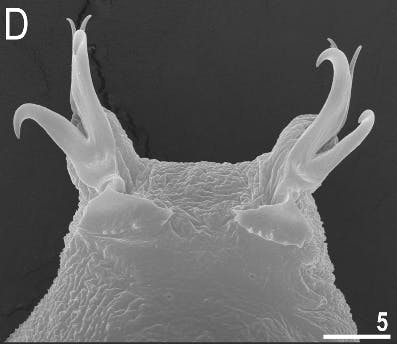
The researchers found this aesthetically impaired little guy in a similarly homely place: a scoop of moss from a car park in Tsuruoka-City, Japan, where Arakawa rented an apartment nearby (“specific permission was not required,” the authors note). Using phase contrast light microscopy and scanning electron microscopy, they snapped close-up shots of the new species, revealing a scary mouth, scary claws, and really scary eggs.
Here it is in its entirety, looking rather bland:
Kind of leech-like, if you ask me.
Here’s its scary mouth:
M. shonaicus's freaky mouth.
Here are its freaky claws:
Yikes.
The eggs are the pièce de résistance. Close up, they’ve got a bulbous middle that narrows into a floppy opening crowned with wild, ragged filaments. They do not look unlike a ripe pimple caught mid-pop.
See? Not cute.
These scary eggs, however, were key to the organism’s classification as a new species. Though the organism as a whole is most similar to M. anemone from the United States, M. naskreckii from Mozambique, and M. patagonicus from Argentina, the researchers determined that M. shonaicus’ eggs put it into a class of its own.
“[It] can be easily distinguished from these species by the presence of thin flexible filaments on terminal discs of the egg process,” they write, describing the flailing, itchy-looking things in the image above. The eggs, furthermore, have a solid, poreless surface, putting them in a subclass known as the persimilis. The new classification is as follows:
Despite itself, M. shonaicus has earned its place on the tardigrade family tree.
In the biological world, it’s not easy to earn your place as a unique species with its own classification. Perhaps it’s for the best, then, that M. shonaicus has so many, uh, unique features, even though its overall appearance leaves much to be desired.
Deep Bore Into Antarctica, Scientists Found Something Unexpected
Deep Bore Into Antarctica, Scientists Found Something Unexpected
Without the ice shelves pushing back the ice, the global sea level would increase rapidly. What do you think of this new finding about the Ross Ice Shelf in Antarctica?
That question gets more difficult to answer every day as new announcements are released about robotic achievements and advances in artificial intelligence. Just in the past week we’ve seen a realistic robotic dog that can open a door and fight off a human who tries to stop it, a realistic walking humanoid robot that puts out fires, a call to equip robots with kill switches, a warning that robots will use humans as guinea pigs and a call to be cautious rather than dystopic. Which one is it?
Boston Dynamics, a world leader in robotics, released two videos of one of its latest inventions – a four-legged SpotMini robot dog that can open a door with its ‘mouth’. The popularfirst video shows how cute the robotic pet looks as it grabs the knob without the usual canine slobber, while the second, which is called “Testing Robustness,” shows the pit bull wannabe fighting off a human who tries to stop it. Here’s a telling statement from the second video’s commentary:
“The ability to tolerate and respond automatically to disturbances like these improves successful operation of the robot. (Note: This testing does not irritate or harm the robot.)”
What about irritating or harming humans?
Not SpotMini but this is how it starts
Next, the Italian Institute of Technology’s (IIT) released a video of its WALK-MAN humanoid robot performing a simulated disaster rescue operation during an industrial plant disaster where it walks into a room, turns off a leaking gas valve, clears out debris and operates a fire extinguisher. While not fully autonomous (yet), all it will take is for one WALK-MAN to rescue a baby in a fire to move humans to embrace it like the Sony Walkman of the 80s and 90s (which ultimately took control of how humans listen to music … coincidence?).
Do we need to put a ‘kill switch’ or ‘kill chip’ in the brains of robots to stop them before their AI turns on their human overlords (if they even exist anymore) and kills their makers? Futurist Dr. Michio Kaku said in a Reddit Q/A session that he thinks it’s imperative to do this … and here’s why.
“I think we should chip their brain to shut them off if they have murderous thoughts.”
Murderous thoughts in robots! The plot of many sci-fi movies, which Dr. Kaku doesn’t see happening until 2100. But what about in the meantime? Fellow futurologist Dr. Ian Pearson has his own dystopian view of the future. He told The Sun he believes robots will act like rogue states and, as they gain more intelligence than humans, turn us into their own enslaved guinea pigs.
“We’ll have trained it to be like us, trained it to feel emotions like us, but it won’t be like us. It will be a bit like aliens off Star Trek—smarter and more calculated in its actions. It will be insensitive to humans, viewing us as barbaric. So when it decides to carry out its own experiments, with viruses that it’s created, it will treat us like guinea pigs.”
Guinea pigs of robots! Another great sci-fi plot that seems awfully close to reality – far sooner than 2100. Is there any hope for humans against robots and their murderous, rogue-state AI brains?
“What we are faced with, this list suggests, is not an existential threat to humanity but sharper forms of the problems with which we are already grappling. AI should be seen not in terms of super-intelligent machines but as clever bits of software that, depending on the humans wielding them, can be used either for good or ill.”
Photos shot from UFO Seekers allegedly show unknown, triangular object interacting with two U.S. Air Force F-16s.
On Feb. 15, 2017, UFO seekers Tim Doyle and Tracey Su were camping near Groom Lake to take pictures and film videos of activity in the skies inside Area 51. During their stay, they spotted a couple of F-16s dogfighting and snapped some shots at the jets. It wasn’t until they got back home, when they started reviewing the pictures, that they noticed a third unidentified aircraft that they described as a “triangular” object which appeared to be dogfighting the “Vipers” (as the F-16s are dubbed within the fighter pilots community).
The video below includes the pictures shot by Tracey (go to 19:45).
“We try to be a medium between the UFO Community and the Aviation Community. My dad worked at Plant 42 and other family had similar jobs. So people shouldn’t believe we would ever jump to advocating the existence of aliens or an alien craft at AREA 51. But that day we did catch a third craft, unfortunately we only used the photos in the video. All media from that trip was lost in a hard drive failure. In fact UFO Seekers lost over 5 months worth of media (6TB). It may have been a foreign aircraft as that is the primary purpose of the airspace at Groom Lake. Also I know the Air Force tests craft like the Polecat at the NTTR so it may have been an unmanned drone. But maybe, just maybe, it was something more,” said Tim in a message to The Aviationist.
The two F-16s flying close to the mysterious object (highlighted). This is a screen grab from UFO Seekers video filmed close to Area 51.
Here’s the mysterious object. (Screenshot from the UFO Seekers video).
The resolution of images in the video does not allow a proper identification of the object which might well be a drone (or a distant manned aircraft…such as an F-117 that was spotted flying over Nevada with accompanying F-16, in the recent past). Assessing the size is also difficult: even though the perspective might be a factor here, the object seems to be smaller than the F-16s, but probably much larger than a micro-drone as the bird-sized Perdix drones, 103 of those, launched from three F/A-18F Super Hornets, took part in one of the world’s largest micro-drone swarms over the skies of Naval Air Weapons Station China Lake, California on Oct. 25, 2016. That said, the aircraft could be a prototype of some new UAV (Unmanned Aerial Vehicle), maybe a UCAV (Unmanned Combat Aerial Vehicle), a weaponized drone.
Considered the position of the two fighters, rather than a dogfight, it seems that the jets were chasing the mysterious object rather than engaging it. Maybe they had just intercepted it in a simulated VID mission, or they were simply shadowing or filming a test flight. However, unlike what happened last year with the shots of the Su-27P dofighting with an F-16 inside Area 51, these new photos embedded in a YT video can’t provide a clear picture of the interaction.
Argentina: UFOs Over a Rural Service Station in Entre Rios
Argentina: UFOs Over a Rural Service Station in Entre Rios
Source: AHORA (Argentina) Date: 02.26.2018 A report by Elias Moreira Aliendro
Argentina: UFOs Over a Rural Service Station in Entre Rios
The mysterious lights were recorded and shared on social media, where cybernauts were consulted as to their opinion of what the objects might be in an effort to arrive at a logical explanation. What could be involved here? See the photos.
Unidentified Flying Objects (UFOs) were seen last night over the rural region of El Quebracho, Department of La Paz, over the premises of a local filling station.
The lights that could be seen and recorded by witnesses were shared on social media, where an effort to find a logical answer to the mystery was made. What could the lights have been?
"When we began asking questions, some suggested it could be a rebound effect of artificial lights, since there are dancing establishments in the local canyons. However, given the distance from where the place the photo was taken and Santa Elena, which is the nearest community, we don't believe those two single lights could have been the result," wrote local journalist Oscar Cuenca.
A major fire was unleashed in Granja Tres Arroyos, very near the area, causing considerable smoke over the region. "Given the density of the smoke in the air, others think a tube-shaped beam of light would have been necessary for the images to have been produced by a projector," said the reporter.
"Ultimately, others said on account of that the thickness of the smoke in the air, the luminous effect was caused by the atmosphere itself, as it was a clear night."
[Translation (c) 2018 IHU with thanks to Luis Burgos, Fundación Argentina de Ovnilogía]
Mystery solved: Luis Burgos writes - "A local witness tells me [the lights] were produced by a floodlight from a dance hall/bowling alley located a little more than 20 kilometers from the place, on Route 12. Given the density of the smoke-saturated air resulting from fires in the vicinity, this was the result."
Ghost rocket UFOs are 1st reported, February 26, 1946
Ghost rocket UFOs are 1st reported, February 26, 1946
Suzanne Deffree Ghost rocket UFOs are 1st reported, February 26, 1946
Ghost rockets, rocket- or missile-shaped unidentified flying objects (UFOs), were first sighted on February 26, 1946, mostly in Sweden and nearby countries.
More than 2000 sightings were recorded between May and December of that year, with an increased amount of sightings in mid-August 1946.
The origin of these ghost rockets was never fully revealed. Some investigations attributed the sightings to meteor showers, making special note that the August peak coincided with such events. But most ghost rocket sightings did not occur during meteor shower activity and, moreover, displayed characteristics inconsistent with meteors, such as reported maneuverability.
A 1946 Swedish newspaper photo of such sightings
Other theories attributed the origin of the ghost rockets to a former German rocket facility at Peenemünde. Such theories claimed the rockets were long-range tests by the Russians of captured German V-1 or V-2 missiles, or perhaps early cruise missiles because of the ways they were sometimes seen to maneuver.
These missile theories prompted the Swedish military to investigate. Some investigators for the Swedish military apparently believed the objects could not be conventionally explained, and instead hypothesized an extraterrestrial origin.
The missiles were often reported as having crashed into lakes, yet no missile fragments were found in lakes. For example, on July 19, 1946, a ghost rocket was reported as having crashed into Lake Kölmjärv in Sweden. Witnesses saw a gray, rocket-shaped object with wings crashing in the lake with a noise that suggested the object had exploded. However, a three-week military search conducted in intense secrecy, again turned up no evidence of a craft, only impact at the bottom of the lake.
The Swedish Air Force officer who led the search, Karl-Gösta Bartoll (see photo of him on the search), reported back to the military that the rockets were most likely made of material that would disintegrate quickly in water. A craft built of such material, which would also have to be capable of traveling at top speeds while carrying progressive equipment for maneuverability, would be considered extremely advanced and expensive in terms of 1946 technology.
In a 1984 interview, Bartoll reiterated his material belief and said "what people saw were real, physical objects” in opposition to ideas that such sightings were delusions or sci-fi fodder.
While largely in Sweden, Portugal, Greece, Belgium, and Italy, all reported similar ghost rocket sightings in 1946.
The United States military was also involved in investigations. A US document declassified in 1997 states, "we are inclined not to discredit entirely this somewhat spectacular theory [extraterrestrial origins], meantime keeping an open mind on the subject." Related articles:
The Mystery Behind The “1890; A Giant In Japan” Footage
The Mystery Behind The “1890; A Giant In Japan” Footage
One of the strangest videos showing alleged giants popped up on the internet 11 years ago when in 2007, several new agencies and YouTubers started talking about a video where a massive human is seen standing among the population, somewhere in Japan.
The video claimed to have been filmed in 1890 in Japan quickly made headlines across the world as people started thinking about the possibility that there were giants among us.
Many also started speaking about the Nephilim, the Bible, and legends that suggest how thousands of years ago Giants walked on Earth.
The video raised numerous questions as people cared little for fact checks.
Many claimed it was the ultimate evidence the Bible was right about the Nephilim, and how society in the 21st century was living a lie.
Little did they know that the video was far from any actual evidence of Giants.
Simply put, people love stories about giants, aliens and paranormal things that cannot be easily explained.
Furthermore, by nature people are fascinated by things that we struggle to understand. It’s a mixture of curiosity and fascination.
While there have been numerous reports and even discoveries of supposed massive skeletons, unlike those of ordinary humans, this video footage allegedly filmed in 1890 is not one of them.
While it is surely intricately made and makes you think that someone really filmed a giant walking among people in Japan in 1890, the truth is the video is barely a decade old.
Since the video—and images from the video—popped up on the internet, people started sharing it like crazy, without considering for a moment whether or not it was real.
Dubbed as ‘the ultimate proof’ of Nephilim on Earth, the video spread uncontrollably.
But, someone actually decided to dig deeper and find out more about the video and images.
That, someone, was Dan Evon who researched the mystery Giant video for Snopes.
As Evans wrote in his article for Snopes; “Some people have claimed that the footage comes from the early 1800s (decades before film was invented), while others say that it shows a giant sumo wrestler in a parade. Still, others maintain that the video really shows a Biblical Nephilim giant.”
The truth is that the footage is in fact only 11 years old, and belongs to a scene from the 2007 movie Big Man Japan, a movie which features a wide range of bizarre creatures as Evans explains.
“The “giant,” then, is the product of standard special-effects trickery, not hidden footage that proves beyond a doubt the existence of Nephilim.”
There may be plenty of evidence of Giants existing on Earth, but this one surely isn’t one.
‘This was not created by an airliner,’ it said. ‘This map here and at this distance only gives us images of the major cloud formations and weather around the Earth.
‘There are obviously hundreds of thousands of contrails by planes but we cannot see them.
‘Whatever created this cloud formation, if that’s what it is, would have to be massive.
‘Not only that, it would have the ability to go from Antarctica spanning 13,000 miles in a straight line all the way to the North Pole without stopping and without changing direction.
‘It would have to do this fast enough to leave this entire line of clouds in perfect condition like it moved over the Earth in a matter of minutes.’
If the line is real, it may have been produced by a new type of jet capable of travelling at extreme speeds.
However, there’s a chance it may have been produced by a glitch in Google Earth, which stitches together photos taken at different times together.
Theoretical physicist and futurist Michio Kaku believes that humans will make contact with alien civilization this century, but expects they will be largely peaceful – unlike robots, which pose a greater threat to humanity.
Kaku made the revelations during a Reddit AMA (Ask me Anything), where intrigued users asked questions relating to artificial intelligence and extraterrestrial life. “Let me stick my neck out. I personally feel is that within this century, we will make contact with an alien civilization, by listening in on their radio communications,” Kaku stated, adding that he expects they will see us like we see forest animals.
“And what are their intentions. Are they expansive and aggressive, or peaceful. Another possibility is that they land on the White House lawn and announce their existence. But I think that is unlikely, since we would be like forest animals to them, i.e. not worth communicating with.”
Kaku doubled down on this theory in another response, musing that humans will probably be seen as insignificant to alien society. At the core of their peaceful approach is knowledge, according to Kaku, who believes the extraterrestrials have had thousands of years to resolve sectarian, fundamentalist, nationalist questions.
The physicist admitted, however, that this neutral stance could shift if “we get in the way.” “They still might be dangerous if they simply don’t care about us and we get in the way. In War of the Worlds, the aliens did not hate us. We were simply in the way.”
“But for the most part, I think they will be peaceful, but view us like we view forest animals,” he concluded.
In contrast, Kaku suggested that robots will need chips implanted in their brains to control any “murderous thoughts.”Envisaging their future development, the scientist predicts that their intelligence level will go from that of a bug to a level on par with that of a monkey. “By that point they might become dangerous and even replace humans, near the end of the century. So I think we should put a chip in their brain to shut them off if they have murderous thoughts.”
Ultimately, humans may have to accept their fate and merge with their robot overlords, according to Kaku. “But what happens centuries from now, when robots evade even our most sophisticated fail-safe system?? At that point, I think we should merge with them."
“This may sound strange to some people, but remember that it is the people of the far future (not us) who will decide how far they want to modify themselves to deal with super smart robots.”
The dangers of AI and the grim possibility of a future with ‘killer robots’ have been addressed by several industry experts, including Elon Musk and Stephen Hawking. Musk was among more than a hundred tech leaders to call on the United Nations to ban the use of lethal autonomous weapons, or ‘killer robots, last year. The SpaceX and Tesla CEO believes AI is a “fundamental threat to human civilization.”
World-renowned physicist Stephen Hawking holds similar fears about the future of AI, warning that one day robots could entirely edge out human beings and become a new life form.
It was 1945, and science fiction writer Ray Palmer was working as the editor of a popular pulp fiction magazine called Amazing Stories. A diminutive fellow with a hunchback, Palmer had suffered a near-crippling accident early in life that broke his spine, and the resulting unsuccessful surgery stunted his growth. Thus, at the age of 35, Palmer had grown to a mere four feet in height.
It was on an afternoon during the year in question that Palmer happened upon an odd letter in the office slush pile. The letter was from a man who claimed he had managed to decipher a secret, coded ancient language, of which evidence could still be discerned from modern writing. Palmer wrote back to the author, a Mr. Richard Sharp Shaver of Pennsylvania, seeking clarification on the unusual matter. This prompted a long, rambling letter from Shaver, who claimed to learn of this, and other mysteries of our world, after psychically overhearing the communications of beings living in extensive caverns below ground.
Shaver was no great writer himself, if this grandiloquent offering was any indication, though Palmer saw potential nonetheless. From it, he began to construct an outline based on Shaver’s missive, and shaped it into a decent fantasy story, which eventually saw publication under the title, “I Remember Lemuria.”
Thus, the Shaver Mystery was born.
Initially intended to be read and enjoyed only as fiction, Shaver’s weird ramblings would inspire Palmer and the publishers of Amazing Stories to continue publication of “Shaver Mystery” stories for several years, during which the readership of the magazine reportedly increased by thousands. Throughout the period which saw the publication of stories based on his odd, rambling mythos, Shaver had always maintained that his “communications” with inner-earth dwellers were real and that the stories of cavern systems inhabited by strange beings beneath the Earth were based on fact.
Following the publication of the novella “I Remember Lemuria,” Palmer professed that letters his publication recieved–usually numbering less than fifty or so each month–were now close to 50,000. Equally impressive had been that many of these fan letters detailed strange experiences, expounding on the exploits of these deep-Earth denizens Shaver claimed to have met.
Among the letters Palmer received had been the story of a woman who, claiming to have served as a medical specialist in France during the Second World War, entered the sub-basement of an old building via an elevator. A cavernous opening existed in the lowest portion of the building, and upon her discovery of the entrance to an underground realm, the woman was captured by a group of monstrous creatures. She claimed to have been held prisoner by these beings for an indefinite period, after which she was finally discovered and released by a group of benign, human-like saviors. (An apparent nod toward this story was later featured in the works of science fiction writer Harlan Ellison, who wrote in a short story titled, “The Elevator People” that, “There are five hundred buildings in the United States whose elevators go deeper than the basement.” Ellison, however, was a vocal critic of the Shaver Mystery stories and had at one time badgered Palmer about his insistence on publishing them.)
Much like the story above outlines, Shaver categorized these subterranean inhabitants into two different groups: a monstrous, evil group called Deros (meaning “detrimental robots”), and their good-natured counterparts the Teros, who were nearly identical to humans in appearance.
Palmer himself had begun to wonder about the circumstances surrounding all this insanity, and Shaver’s claims that the events related in his letters to Amazing Stories were true. His curiosity finally prompted a visit to Richard Shaver’s home in Pennsylvania. After a late-evening coffee session, Palmer was led upstairs and shown to the spare bedroom, where throughout the evening he claimed, to his astonishment, to hear five individual voices of men, women, children, and even an “old gruff man.” According to Palmer, he was terrified to hear a discussion that pertained to the dismemberment of a human woman someplace four miles away–and presumably four miles down. Discussing the experience with Shaver the following morning, the strange host claimed he had asked the “beings” to “go easy on him (Palmer),” and Palmer, finally growing in his conviction regarding the Shaver Mystery himself, was able to get a night’s sleep uninterrupted.
This would be only one of many strange stories Palmer would recount, and though Richard Shaver’s own sanity would later come into question on many occasions, the prolific interest in his visions of an inner-Earth struggle would continue, inspiring a generation of devotees and researchers that included Timothy Green Beckley, who had known Palmer personally. Of his own discovery of Richard Shaver’s visions of conflict in a subterranean world, he admits being “chilled to the bone,” by the stories as a young reader, saying it was “stuff that nightmares were made of, and I was intrigued just as Ray Palmer had been.”
Palmer’s convictions about Shaver’s ideas would come and go over the years. After leaving Amazing Stories, the former editor was still under contractual obligations that prevented him from launching a competing publication. He did, however, do so anyway under a pseudonym, which led to the appearance of FATE, a magazine which, at the time, was mostly devoted to the burgeoning interest in flying saucers that followed pilot Kenneth Arnold’s observation of a group of objects over Mount Rainier, Washington in 1947.
Initially, Palmer had been convinced that the appearance of flying saucers might prove to be a vindication for Shaver’s claims, supposing that the seemingly advanced aircraft might actually belong to the subterranean dwellers discussed in his stories. With the founding of FATE, Palmer hoped in part to be able to get to the bottom of the saucer mystery, but after a few years, he left the operation which continued under the publication of his partner, Curtis Fuller.
Ultimately, what was Palmer to make of Shaver and his stories? Like many, it seemed by the 1970s that he had become disillusioned with Shaver and his claims, even noting in 1971 that during periods Shaver claimed to have lived underground amidst the warring factions of Deros and Teros, that he had instead been hospitalized in a mental institution.
The stories, of course, were purely imaginary, supplemented perhaps by the ramblings of a once disturbed mind; but in their heyday, the stories of Richard Shaver saw a kind of success and popularity that was nearly unrivaled in the science fiction genre.
INSIDE ROBERT BIGELOW'S DECADES-LONG OBSESSION WITH UFOS
INSIDE ROBERT BIGELOW'S DECADES-LONG OBSESSION WITH UFOS
GETTY IMAGES
IN 1994, A Mormon family bought a 480-acre plot in in Utah’s Uintah Basin, thinking they’d get back to the land. But this particular land was weird. It came with too-large-thrice-over wolves that refused to die by bullet, cattle with their reproductive organs sucked clean out, and a multitude of UFOs, as they told the Deseret News in 1996. It was driving them bonkers.
Robert Bigelow saw their story. Today, the Nevada businessman is known for founding Bigelow Aerospace, which spun off a business to sell its expandable space habitats just last Tuesday. But in 1995, he had also founded something called the National Institute for Discovery Science, an organization built to research paranormal phenomena. Soon after reading the newspaper story, he took Skinwalker off the family’s hands, and his institute set up shop.
That, at least, is the story told in Hunt for the Skinwalker, a book that I downloaded in audio form one Friday night in January. Bigelow deactivated the National Institute for Discovery Science in 2004, after years of failing to capture the supposedly supernatural. But as the world recently discovered, he didn’t give up the cause. In December, a New York Times story revealed that Bigelow Aerospace had conducted a study on UFOs—for the Pentagon. I’d been interested in Bigelow’s anomalistic dealings since that article came out; thus, the audio book.
The Pentagon’s Advanced Aviation Threat Identification Program officially ended in 2012. But similar work continues today—involving people from both the defunct Defense Department program and Bigelow’s dismantled paranormal enterprise. They have become part of a for-profit company: To The Stars Academy of Arts and Science, which launched in October 2017 to research and reverse-engineer UFOs, among other goals.
Bigelow has gotten his fingers into lots of private UFO pies. Even before Skinwalker, he helped initiate the UFO Research Coalition, which puts his UFO-hunting career at about 24 years old. Bigelow is not officially involved with To The Stars. But its aims, and its team, seem to line up with his past and his people. So I set off to try to understand that past.
ALL EIGHT HOURS and 42 minutes of audiobook downloaded, I got in my car at 5 a.m. the next day with my sister. Pointed toward Skinwalker Ranch, hoping for context and maybe something strange, we sped through the Rockies, trying to beat the ski traffic and a snowstorm. All the while, the staid voice of the book’s narrator described the alleged happenings at Skinwalker.
As my sister and I journeyed down I-70, the book’s authors—George Knapp, a journalist, and Colm Kelleher, former deputy administrator of Bigelow’s institute—presented the paranormal tales almost as matters of fact. Kelleher has a PhD in biochemistry, but his mindset was often anti-scientific. He took coincidences as meaningful; he aw-shucksed every time an “anomalous phenomenon” mysteriously evaded the cameras. The supposed point of Bigelow’s National Institute for Discovery Science was to get away from that kind of softness.
About four and a half hours and several hundred milligrams of caffeine in, I listened to a description of how instrument-bearing institute investigators witnessed a growing yellow light—or maybe a tunnel—from which a faceless black creature maybe emerged. I needed a break. Pausing the book, I pulled over at Rio Blanco Lake, a rare bit of water with an assemblage of red picnic tables. The lake, frozen, stretched to the scrub-covered buttes on the far shore. It was peaceful.
Then came the noises. Great metallic twangs, or thwangs, or something, that seemed to start here, no there, and rush across the landscape as if carried on an invisible wire.
They sounded like trebly light sabers. They sounded like alien spaceship chatter. Like maybe someone had pulled the power lines taut for miles and then plucked them with a giant finger.
“What is it?” I kept saying, deeply unnerved—not because I thought it was inexplicable but because I couldn’t explain it.
And then the lake’s ice cracked, the break spreading fast like a faultline in an action movie. The frozen water heaved itself into a new position.
With that, the noises explained themselves and stopped. We stood in the silence for a few seconds.
“That’s probably the weirdest thing that will happen all day,” my sister eventually said.
WE CONTINUED ON our way toward Skinwalker Ranch, where Bigelow’s people had, for years, tried to find that weirdest thing, every day. Researching UFOs seems a bit like gambling: You mostly lose, or break even, but the promise that you might hit jackpot is powerful. “The thing about UFOs that makes them so mysterious is that they disappear,” says historian Greg Eghigian, who is researching the global history of UFO sightings and alleged alien contact. “Not that they appear.” You just have to keep looking and hope they come back.
Toward the end of the book, the authors let us know that Bigelow abandoned studies at Skinwalker in the early 2000s. But he didn’t stop looking: In 2007, he got that Pentagon contract—some $22 million to study advanced aerial threats, including some that remain allegedly unidentified.
Around the same time, in 2008, Bigelow created a new company: Bigelow Advanced Aerospace Space Studies, a subsidiary of Bigelow Aerospace.
Archived versions of the Bigelow Aerospace Careers webpage say it “focuses on the identification, evaluation, and acquisition of novel and emerging future technologies worldwide as they specifically relate to spacecraft.” (Blair Bigelow, vice president of corporate strategy at Bigelow Aerospace, declined to comment.) Colm Kelleher—co-author of the Skinwalker book—was the company’s deputy administrator, according to his LinkedIn page.
Around the same time Bigelow created the new company, he also hitched a star to the Mutual UFO Network, a nonprofit that collects and investigates user-submitted reports of UFOs, according to MUFON’s executive director Jan Harzan. “If we were able to fund you so you could put investigators on the ground faster,” Harzan recalls Bigelow offering, “could you get better data on some of these reports?” Together, MUFON and Bigelow supported investigators’ fact-finding expeditions, and shared data—though for less than a year.
But that didn’t stop Bigelow from collecting UFO reports outside of the MUFON collaboration. The FAA, for instance, used to suggest pilots report UFO sightings directly to Bigelow Advanced Aerospace Space Studies. Christopher Rutkowski, who coordinates the Canadian UFO Survey, says Bigelow approached him at a MUFON conference in 2009. “He asked me to help him in his UFO-related efforts by alerting him and his team to any 'good' Canadian cases that needed onsite investigations,” he says. One of Bigelow’s people checked in with Rutkowski every few months following, for a year or two.
That person doesn’t call now. The FAA doesn’t instruct pilots to report to Bigelow. The Pentagon program is over. There’s no more MUFON collaboration. The National Institute for Discovery Science is kaput. So where’s a guy to get a bunch of UFO reports?
The newest answer might be To The Stars Academy—and its newly-launched “Community of Interest.” On this site, you can currently view two videos of alleged UFOs—the same footage embedded in the Times story about the Pentagon program—as well as a video interview with a Navy pilot who says he witnessed one of those events and a written report of the same encounter. In the future, the site aims to amass and analyze many more reports of anomalies.
Although a representative from To the Stars claims no affiliation with Bigelow, the overlap between its team and Bigelow’s is inarguable: Hal Puthoff, who was on the board of the National Institute for Discovery Science, is now the vice president of science and technology at To The Stars. Kelleher is now To The Stars’ biotech consultant. And Elizondo, who was reportedly in charge of the Pentagon program that contracted Bigelow’s company, is now To The Stars’ director of global security and special programs.
And if the gathered reports are public, Bigelow could check them out, same as anyone else. If Bigelow is as committed to ufology as his last two decades of work have suggested, he could do worse than striking a deal with this group.
WHEN MY SISTER and I arrived at Skinwalker Ranch (now owned not by the institute or Bigelow but by the mysterious Adamantium Real Estate (whoever that nerd is), we were numb to the claims of its strange happenings. To be clear, I don’t really believe in much. Not God, or miracles, or magical beasts. I don’t believe that anything “defies” the “laws of physics.”
I do believe that we probably misunderstand some laws of physics, that our knowledge is, in some cases, incomplete, or even drop-dead wrong. I believe there are things in the universe we don’t get yet, that our scientific explanations haven’t caught up to. But I also believe that they can. Anyway, I’d driven all the way to the Uintah Valley, and I was sure going to try to look for something strange in the sky. We found a legal gravel pull-off that looked down on the semi-martian land of Skinwalker, and stared at the sky, waiting.
I added an extra layer to my clothes, blew hot air into my gloves, and found a nearby rock suitable for sitting, surrounded by broken glass and scattering of half-smoked cigarettes. And so my sister and I sat, mock-gasping at the lights from low-flying planes.
And then the clouds, which had hung low all day, began to clear. The stars—some of them perhaps supporting life that almost certainly has not come here, but, you know, maybe—were crisp and clear. I turned Hunt for the Skinwalker back on, my phone’s speaker pulsing from my pocket.
We scanned the skies; we listened to the tall tales.
“It’s good out here,” I said to my sister. “But you were right about that ice.”
“What?” she said.
“That it was the weirdest thing that would happen all day.”
Beste bezoeker, Heb je zelf al ooit een vreemde waarneming gedaan, laat dit dan even weten via email aan Frederick Delaere opwww.ufomeldpunt.be. Deze onderzoekers behandelen jouw melding in volledige anonimiteit en met alle respect voor jouw privacy. Ze zijn kritisch, objectief maar open minded aangelegd en zullen jou steeds een verklaring geven voor jouw waarneming! DUS AARZEL NIET, ALS JE EEN ANTWOORD OP JOUW VRAGEN WENST, CONTACTEER FREDERICK. BIJ VOORBAAT DANK...
Druk op onderstaande knop om je bestand , jouw artikel naar mij te verzenden. INDIEN HET DE MOEITE WAARD IS, PLAATS IK HET OP DE BLOG ONDER DIVERSEN MET JOUW NAAM...
Druk op onderstaande knop om een berichtje achter te laten in mijn gastenboek
Alvast bedankt voor al jouw bezoekjes en jouw reacties. Nog een prettige dag verder!!!
Over mijzelf
Ik ben Pieter, en gebruik soms ook wel de schuilnaam Peter2011.
Ik ben een man en woon in Linter (België) en mijn beroep is Ik ben op rust..
Ik ben geboren op 18/10/1950 en ben nu dus 75 jaar jong.
Mijn hobby's zijn: Ufologie en andere esoterische onderwerpen.
Op deze blog vind je onder artikels, werk van mezelf. Mijn dank gaat ook naar André, Ingrid, Oliver, Paul, Vincent, Georges Filer en MUFON voor de bijdragen voor de verschillende categorieën...
Veel leesplezier en geef je mening over deze blog.





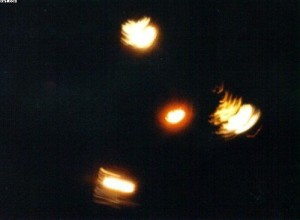
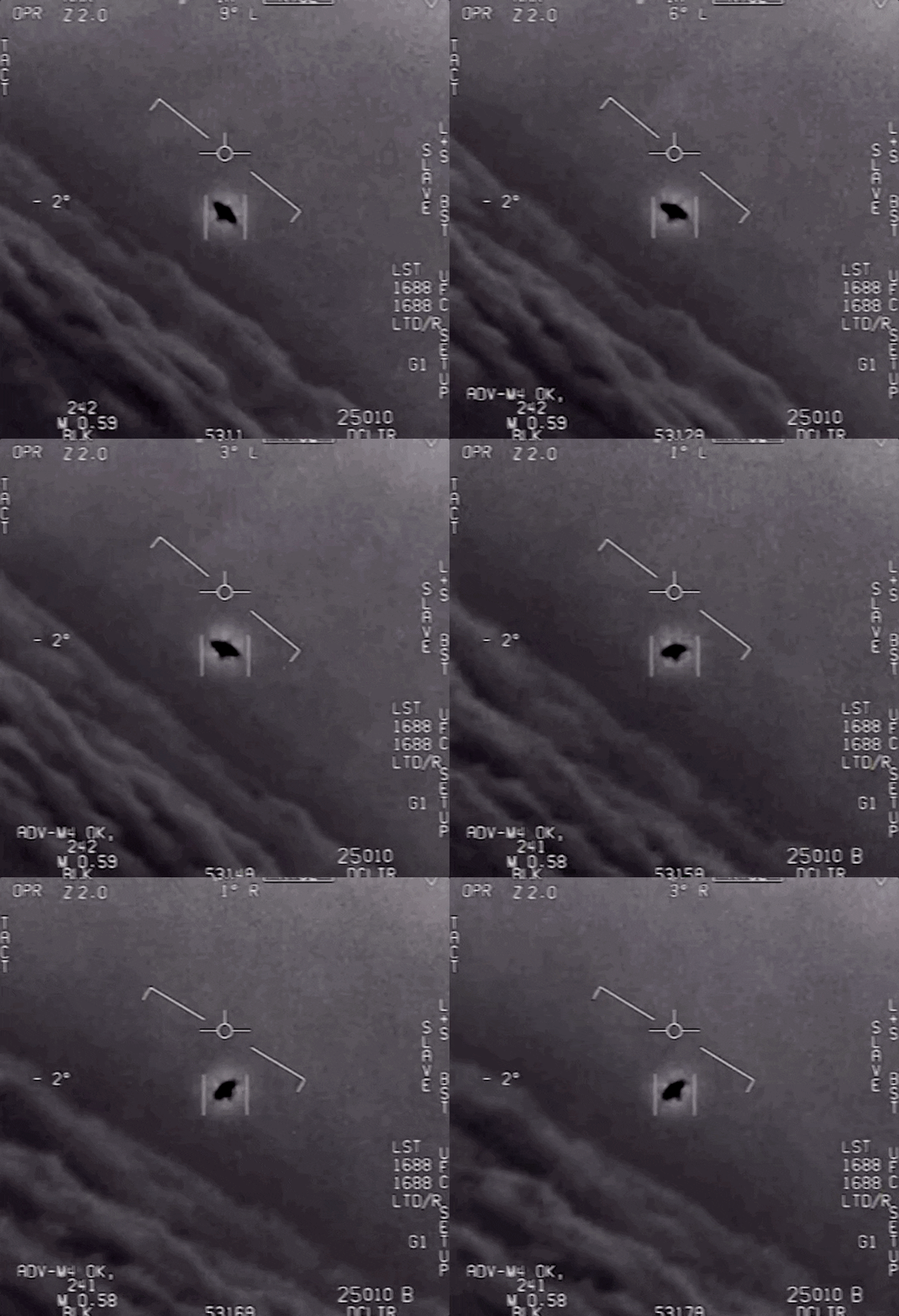


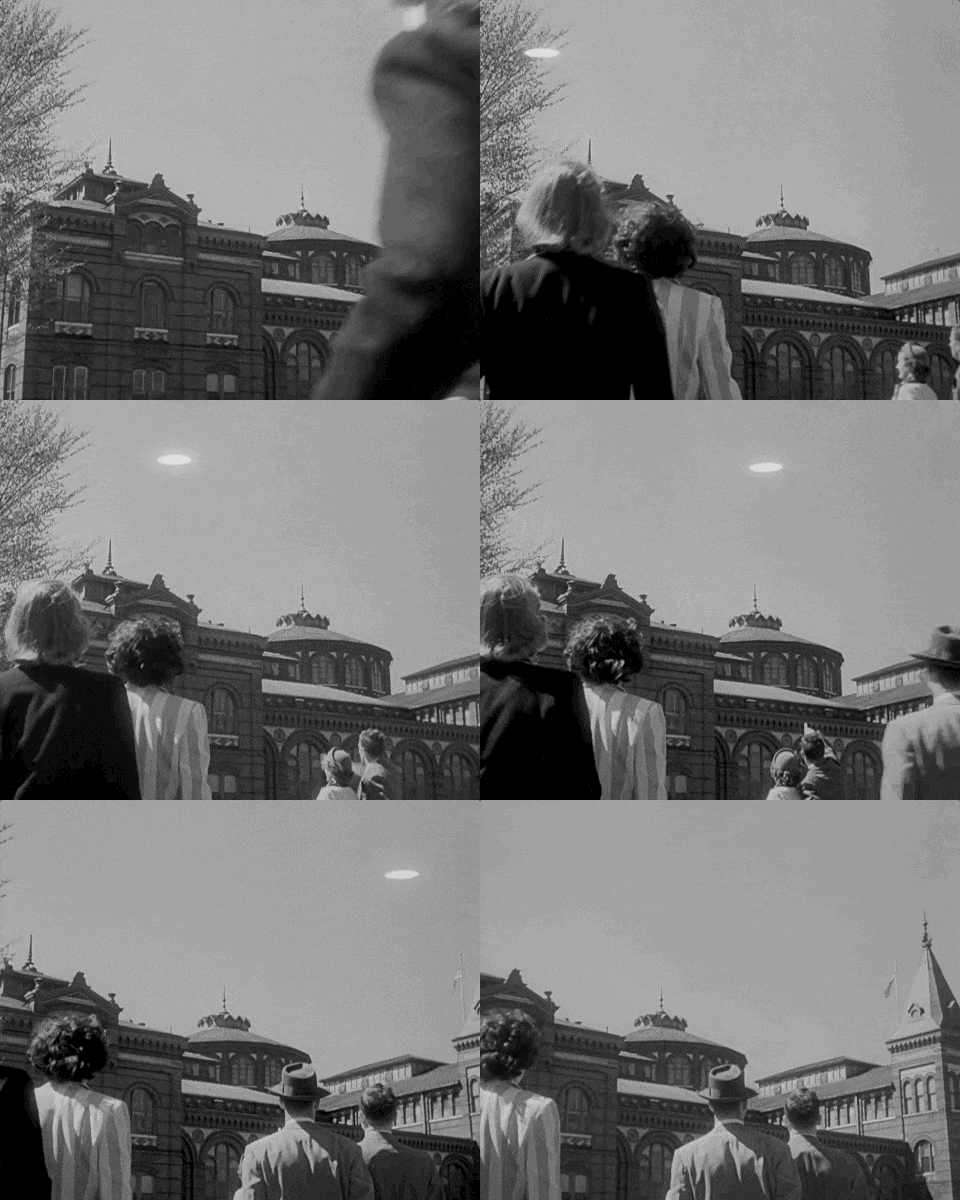




:quality(75)/curiosity-data.s3.amazonaws.com/images/content/portrait/standard/56933b09-35bf-4cc6-ea66-5e0981fc82f8.png)