The purpose of this blog is the creation of an open, international, independent and free forum, where every UFO-researcher can publish the results of his/her research. The languagues, used for this blog, are Dutch, English and French.You can find the articles of a collegue by selecting his category. Each author stays resposable for the continue of his articles. As blogmaster I have the right to refuse an addition or an article, when it attacks other collegues or UFO-groupes.
Druk op onderstaande knop om te reageren in mijn forum
Zoeken in blog
Deze blog is opgedragen aan mijn overleden echtgenote Lucienne.
In 2012 verloor ze haar moedige strijd tegen kanker!
In 2011 startte ik deze blog, omdat ik niet mocht stoppen met mijn UFO-onderzoek.
BEDANKT!!!
Een interessant adres?
UFO'S of UAP'S, ASTRONOMIE, RUIMTEVAART, ARCHEOLOGIE, OUDHEIDKUNDE, SF-SNUFJES EN ANDERE ESOTERISCHE WETENSCHAPPEN - DE ALLERLAATSTE NIEUWTJES
UFO's of UAP'S in België en de rest van de wereld Ontdek de Fascinerende Wereld van UFO's en UAP's: Jouw Bron voor Onthullende Informatie!
Ben jij ook gefascineerd door het onbekende? Wil je meer weten over UFO's en UAP's, niet alleen in België, maar over de hele wereld? Dan ben je op de juiste plek!
België: Het Kloppend Hart van UFO-onderzoek
In België is BUFON (Belgisch UFO-Netwerk) dé autoriteit op het gebied van UFO-onderzoek. Voor betrouwbare en objectieve informatie over deze intrigerende fenomenen, bezoek je zeker onze Facebook-pagina en deze blog. Maar dat is nog niet alles! Ontdek ook het Belgisch UFO-meldpunt en Caelestia, twee organisaties die diepgaand onderzoek verrichten, al zijn ze soms kritisch of sceptisch.
Nederland: Een Schat aan Informatie
Voor onze Nederlandse buren is er de schitterende website www.ufowijzer.nl, beheerd door Paul Harmans. Deze site biedt een schat aan informatie en artikelen die je niet wilt missen!
Internationaal: MUFON - De Wereldwijde Autoriteit
Neem ook een kijkje bij MUFON (Mutual UFO Network Inc.), een gerenommeerde Amerikaanse UFO-vereniging met afdelingen in de VS en wereldwijd. MUFON is toegewijd aan de wetenschappelijke en analytische studie van het UFO-fenomeen, en hun maandelijkse tijdschrift, The MUFON UFO-Journal, is een must-read voor elke UFO-enthousiasteling. Bezoek hun website op www.mufon.com voor meer informatie.
Samenwerking en Toekomstvisie
Sinds 1 februari 2020 is Pieter niet alleen ex-president van BUFON, maar ook de voormalige nationale directeur van MUFON in Vlaanderen en Nederland. Dit creëert een sterke samenwerking met de Franse MUFON Reseau MUFON/EUROP, wat ons in staat stelt om nog meer waardevolle inzichten te delen.
Let op: Nepprofielen en Nieuwe Groeperingen
Pas op voor een nieuwe groepering die zich ook BUFON noemt, maar geen enkele connectie heeft met onze gevestigde organisatie. Hoewel zij de naam geregistreerd hebben, kunnen ze het rijke verleden en de expertise van onze groep niet evenaren. We wensen hen veel succes, maar we blijven de autoriteit in UFO-onderzoek!
Blijf Op De Hoogte!
Wil jij de laatste nieuwtjes over UFO's, ruimtevaart, archeologie, en meer? Volg ons dan en duik samen met ons in de fascinerende wereld van het onbekende! Sluit je aan bij de gemeenschap van nieuwsgierige geesten die net als jij verlangen naar antwoorden en avonturen in de sterren!
Heb je vragen of wil je meer weten? Aarzel dan niet om contact met ons op te nemen! Samen ontrafelen we het mysterie van de lucht en daarbuiten.
31-03-2018
ANARCHY IN THE UFO! - PART II
ANARCHY IN THE UFO! - PART II
Change the Consciousness, and the Culture will follow.
Vallee saw in the UFO phenomenon a cultural thermostat occasionally nudging human affairs to a given, unforeseeable outcome. My rebellious nature prefers to regard it as a chaotic catalyst, ever turning human society up on its toes with its farcical displays of power. From an alchemical perspective, perhaps what this catalyst seems to be seeking is to propitiate an appropriate state of Nigredo [27], a necessary stage of general decomposition which must be followed through, if one is to reach the desired outcome of Albedo, in which the Great Work is complete and the final transmutation of crude matter into divine substance is finally achieved.
Observed in such a way, perhaps the confounding trickstery of these ‘Cosmic Jokers’ is meant to wake us out of our collective stagnation, and force us to see a way out of our ‘dark (k)night of the soul’ into a sunnier morrow.
…Maybe.
For even if there’s no humanly comprehensible solution to this mystery. It doesn’t mean one can’t utilize these ultimate symbols of anarchy –which even dare to defy the law of Gravity— for personal empowerment. I myself have successfully turned my long-life obsession in UFOs into my personal Alchemy, encouraging me to pursue questions I know fully well are devoid of easy answers, and grow both intellectually and spiritually for it. To assume one is certain of the phenomenon’s true origins and intentions at this stage is beyond arrogant –it is childishly naive. But if there’s one thing I’m certain about all of it, is this: If you let your curiosity guide you through uncharted territories seeking not fame, nor selfish gain or dulling self-reaffirmation; if you seek NOT to conform to other people’s facile theories and answers, then I guarantee you this passion will propel your life into a journey of childlike wonder for which there is no turning back.
That the journey is not without perils is a given, for no quest worth undertaking is devoid of them. John Keel used to warn parents not to let their children be interested in UFOs, since he saw in it a realm full of deceiving monsters threatening to drive even the most down-to-earth people insane.
But catalysts are, by definition, meant to boost what’s already in the solution. If LSD has the potential to give the world the gift of a Ram Dass or a Steve Jobs, it can also spawn a Charles Manson –Same substance, different outcomes.
Thus I say to you that, with any luck, not only may the UFO catalyst turn you utterly mad, but entirelybonkers. Yet as Alice told me a long time ago, the best people in this world are usually labelled as such, by those who haven’t the spine to imagine they can actually change it –It’s easy if you only try, I’m told…
Solve et Coagula, fellow anarchist. And FUCK ‘EM ALL!
“Are you ready? Are you ready to jump right off the edge of everything?” ― Grant Morrison, The Invisibles, Vol. 3: Entropy in the U.K.
REFERENCES
[1] Episode 3 – “Harmony of the Worlds.” Cosmos: A Personal Voyage Television Series, By Carl Sagan and Ann Druyan (1980)
[2] The Terence McKenna Wiki: Shamanic Approaches to the UFO. Angels, Aliens and Archetypes 1987 Conference, San Francisco, California (November 21, 1987) | terencemckenna.wikispaces.com/Shamanic+Approaches+to+the+UFO
Also see: https://youtu.be/22F6pZU_PC8
[3] From Operation Mindf**k to the White Room: The Strange Discordian Journey of the KLF, By J.M.R. Higgs. Darklore Vol. 7, Daily Grail Publishing (2012) | dailygrail.com/Guest-Articles/2013/5/The-Strange-Journey-the-KLF
[4] The Andreasson Affair, By Raymond Fowler. Prentice Hall, New York (1979)
[5] Grimerica Talks to Crop Circle Maker Matthew Williams (November 28, 2014). The Grimerica Podcast | www.grimerica.ca/williams
[6] Episode 12 – “Encyclopaedia Galactica.” Cosmos: A Personal Voyage Television Series, By Carl Sagan and Ann Druyan (1980)
Also see Contact, Directed By Robert Zemeckis, Starring Jodie Foster and Matthew McConaughey. Warner Brothers (1997)
[7] Hunt for the Skinwalker: Science Confronts the Unexplained at a Remote Ranch in Utah, By Colm A. Kelleher Ph.D and George Knapp. Paraview Pocket Books (2005)
[8] The Mothman Prophecies, By John A. Keel, Panther Books (1975)
[9] Red Dawn Again, By Loren Coleman (2012) | copycateffect.blogspot.com/2012/07/red-dawn-again
[10] Batman: The Dark Knight, Directed By Christopher Nolan, Starring Christian Bale and Heath Ledger. Warner Brothers, Legendary Entertainment (2008)
[11] Left at East Gate: A First-Hand Account of the Rendlesham Forest UFO Incident, Its Cover-Up and Investigation, By Larry Warren and Peter Robbins. Da Capo Press; 1st Edition (1997)
[12] Contactees: A History of Alien-Human Interaction, By Nick Redfern. New Page Books (2010)
[13] UFOs & the National Security State: The Cover-Up Exposed (1973-1991), By Richard M. Dolan, Keyhole Publishing Company (2009)
[14] Passport to Magonia: From Folklore to Flying Saucers, By Jacques Vallee. Re-Edition By Daily Grail Publishing (2014)
[15] Portents & Politics: UFO Apparitions Connected to Social Disturbances? By Red Pill Junkie (2011) | http://dailygrail.com/blogs/red-pill-junkie/2011/8/Portents-Politics-UFO-Apparitions-Connected-Social-Disturbances
[16] The Mammoth Encyclopedia of Extraterrestrial Encounters, Edited By Ronald D. Story. Robinson (2001)
[17] UFOs in Wartime: What They Didn’t Want You to Know, By Mack Maloney. Berkley; Original Edition (2011)
[18] Where Did the Road Go? Radio Show. Live on WVBR Every Saturday at 11 PM Eastern | wheredidtheroadgo.com
[19] Seriah Azkath – Broadcaster of the New Aeon (March 29, 2016). Radio Misterioso Podcast | radiomisterioso.com/2016/03/29/seriah-azkath-broadcaster-of-the-new-aeon/
[20] Hidden Experience, By Mike Clelland | hiddenexperience.blogspot.com
[21] That Time John Lennon Spotted a UFO in New York, By Dave Lifton (2015) | ultimateclassicrock.com/john-lennon-ufo/
[22] David Bowie, UFOs, Witchcraft, Cocaine and Paranoia, By Timothy Green Beckley (2010) | http://ufodigest.com/article/david-bowie-ufos-witchcraft-cocaine-and-paranoia
[23] Lam I Am, By Gary Johnson (2012). Aleister Crowley 2012 | https://ac2012.com/2012/10/20/lam-i-am/
[24] Yabba Dabble Doo: How Aleister Crowley Introduced the Iconic Gray Alien, By Richelle Hawks (2007) | http://www.ufodigest.com/news/1107/dabbledoo.html
[25] V for Vendetta, By Alan Moore and David Lloyd. DC Comics (1988)
[26] A.D., After Disclosure: When the Government Finally Reveals the Truth about Alien Contact, By Richard M. Dolan and Bryce Zabel. New Page Books; 1st Edition (2012)
Advanced (Possibly Extraterrestrial) German Technology From Before WW2
Advanced (Possibly Extraterrestrial) German Technology From Before WW2
(Arjun Walia)“A German newspaper recently published an interview with George Klein, famous German engineer and aircraft expert, describing the experimental construction of ‘flying saucers’ carried out by him from 1941 to 1945.”
Exotic technology has been around for a long time, and so have the agencies within the Department of Defense that use it. Just imagine what type of technology the NSA — an intelligence agency whose existence was denied until the mid-1960s — was using in the 1950s. Then there’s the National Reconnaissance Office, which was founded in 1960 but remained completely secret for 30 years. Secret technologies have been wrapped up in the Black Budget and Special Access Programs (SAPs) for years, and many of these SAPS remain unacknowledged by anybody within the government. They’re exempt from standard reporting requirements to Congress.
“It is ironic that the U.S. would begin a devastating war, allegedly in search of weapons of mass destruction, when the most worrisome developments in this field are occurring in your own backyard. It is ironic that the U.S. should be fighting monstrously expensive wars in Iraq and Afghanistan, allegedly to bring democracy to those countries, when it itself can no longer claim to be called a democracy, when trillions, and I mean thousands of billions of dollars have been spent on projects about which both the Congress and the Commander in Chief have been kept deliberately in the dark.”
When it comes to exotic aerial technology, there is no shortage of information. For examine, in the mid-1920s, Townsend Brown discovered that gravitational mass and electric charge are coupled. He found that when a capacitor is charged to a high voltage, it moves toward its positive pole. This became known as the “Biefeld-Brown” effect, which, like many new concepts today that challenge longheld belief systems (that then become scientific dogma), was opposed by conventional-minded physicists of his time.
As Theodore C. Loder, a Professor Emeritus of Earth Sciences at the University of New Hampshire, states:
The Pearl Harbor Demonstration. Around 1953, Brown conducted a demonstration for military top brass. He flew a pair of 3-foot diameter discs around a 50-foot course tethered to a central pole. Energized with 150,000 volts and emitting ions from their leading edge, they attained speeds of several hundred miles per hour. The subject was thereafter classified. Project Winterhaven. Brown submitted a proposal to the Pentagon for the development of a Mach 3 disc shaped electrogravitic fighter craft. Drawings of its basic design are shown in one of his patents. They are essentially large-scale versions of his tethered test discs.
German Flying Saucers
Here is an authentic image/story of a large UFO hovering over L.A., which was witnessed by 1 million people. Dubbed the “Battle of Los Angeles,” it was an event that showed us how the U.S. military was learning to lie about UFOs, five years prior to the Roswell Incident.
During World War Two, multiple strange sightings occurred, of disc-shaped objects travelling at incomprehensible speeds. When the Associated Press and New York Times covered the topic in 1945, they speculated the objects might be a new form of German weaponry.
There is no shortage of strange documents in the CIA’s Freedom of Information Act (FOIA) electronic reading room. Many reveal the agency’s efforts to keep tabs on the technological developments of other countries, especially during and after World War II.
One document brings up a famous German engineer named Georg Klein, who, as the document states, expressed that “though many people believe the ‘flying saucers’ to be a postwar development, they were actually in the planning stage in German aircraft factories as early as 1941.”
The document then goes on to mention an experiment described by Klein:
“The “flying saucer” reached an altitude of 12,400 meters within 3 minutes and a speed of 2,200 kilometers per hour. Klein emphasized that in accordance with German plans, the speed of these “saucers” would reach 4,000 kilometers per hour. One difficulty, according to Klein, was the problem of obtaining the materials to be used for the construction of the “saucers,” but even this had been solved by German engineers toward the end of 1945, and construction on the objects was scheduled to begin, Klein added.
Three Different Models
According to Klein, by 1944 the Germans had already built three saucers for testing. Were these the “foo” fighters all of these American pilots were reporting?
One type actually had the shape of a disc, with an interior cabin, and was built at the (unidentified) factories, which had also built the V2 rockets. This model was 42 meters in diameter. The other model had the shape of a ring, with raised sides and a spherically shaped pilot’s cabin placed on the outside, in the center of the ring . . . [and] both models had the ability to take off vertically and to land in an extremely restricted area, like helicopters.
The engineers were ordered to destroy these saucers, including all of the plans for them.
“The engineers at the Mite factories in Breslau, however, were not warned in sufficient time of the Soviet approach, and the Soviets, therefore, succeeded in seizing their material. Plans, as well as specialized personnel, were immediately sent directly to the Soviet Union under heavy guard.”
German Saucer Technology Has Been in the Lore for a Long Time
Aviation writer Nick Cook is one of many to have investigated this topic, and in 2002 he came to the conclusion that the Nazis had experimented “with a form of science the rest of the world had never remotely considered” and which continues to be suppressed today.
It makes you wonder what the United States received given that, through Operation Paperclip, a number of top German scientists were transported to the United States.
“[Italian researcher] Renato Vesco argued that Germans had developed antigravity. Disc-shaped and tubular craft were built and tested near the end of the Second World War, which, he argued, was the proper explanation of foo fighters. These concepts, he maintained, were developed by the Americans and Soviets and led directly to flying saucers.”
Another researcher Joseph P, Farrell, a professor of Economics in the Department of Economics at the University of California, Berkely, believes that some of the Nazi’s developments were
A means to tap into zero-point energy, or to phrase it differently, the energy of the physical medium of space-time itself
As a means to manipulate gravity itself, i.e. as an advanced prototypical field propulsion technology; and,
As a means to the ultimate, potentially planet-busting, weapons
Former head of the CIA Roscoe Hilenkoetter put it best in 1960 when he told the nation that “behind the scenes, high ranking air force officers are soberly concerned about UFOs. But through official secrecy and ridicule, many citizens are led to believe the unknown flying objects are nonsense.” (source)
“Oh yes we discuss it at every conference that we had with the military, and they never were able to make me a concrete report on it. . . . There’s always things like that going on, flying saucers and they’ve had other things, you know.”
I’ve been researching the UFO/extraterrestrial phenomenon for more than two decades now, and the more I do, the more I realize just how little I know, and how much information is out there that I have yet to examine. What I have learned, from documents like the one above, is that many of these crafts are most likely manmade, by our own agencies.
That being said, although UFOs are now officially verified, this wasn’t so just a few years ago. Just as there was evidence for the UFO phenomenon when it was ridiculed, so too does the extraterrestrial hypothesis have plenty of evidence to back it up, despite not being accepted by the mainstream yet.
I’ve covered why I believe so in many of my articles, most of which you can find in the exopolitics section of our website.
I’ll leave you with a couple of my favourite quotes.
“It is my thesis that flying saucers are real and that they are space ships from another solar system. I think that they possibly are manned by intelligent observers who are members of a race that may have been investigating our Earth for centuries.”
– Hermann Oberth , the founding father of rocketry and astronautics
There is abundant evidence that we are being contacted, that civilizations have been monitoring us for a very long time.”
– Dr. Brian O’Leary, former NASA Astronaut and Princeton Physics Professor (source)
About the Author
Extraterrestrial Technology and the World War Two Agenda. Picture Advanced tanks such as the Panther were deadly in battle
Arjun Walia: I joined the CE team in 2010 shortly after finishing university and have been grateful for the fact that I have been able to do this ever since There are many things happening on the planet that don’t resonate with me, and I wanted to do what I could to play a role in creating change. It’s been great making changes in my own life and creating awareness and I look forward to more projects that move beyond awareness and into action and implementation. So stay tuned arjun@collective-evolution.com
Here in the U.S., we can’t get our politicians to engage in civil debates about anything, let alone mythical monsters – unless they’re trying to get approval to make that monster THEIR state’s monster (see Washington state’s fight to make Bigfoot its official state monster – you can’t make this stuff up!). However, this is not the case in the British Parliament, where this week two members of the House of Commons discussed the existence of the Loch Ness monster and one revealed his own great-uncle was involved in an early sighting. Really!
The debate started when Scottish MP Drew Hendry was bragging about the growth of tourism in the towns under his jurisdiction, which includes Inverness, home of the Loch Ness monster.
“Why wouldn’t you, Mr. Speaker, want to come to Inverness, Nairn, Badenoch and Strathspey? To enjoy the snow sports in the Cairngorms, perhaps, or golfing in Nairn, or go on a cruise along Loch Ness with Jacobite cruises.”
The House of Commons — crowded but peaceful
Hendry was addressing MP Bob Stewart, who represents Beckenham in South-East London. Being a politician and not having access at the time to Twitter, Stewart responded to Hendry’s question face-to-face on the floor of Parliament with a revelation that both chided Hendry and shocked the rest of the members, the general public and Nessie believers worldwide.
“I want to help him by saying my uncle, who was at school on the edges of Loch Ness as a boy, saw the Loch Ness monster. In consequence, tourism expanded hugely. It was in all the Scottish newspapers. And only at his funeral did he allow it that he was a fake.”
If this had occurred in the U.S., all eyes would have turned to the nearest television to see what the cable news networks had to say. This being the U.K., Stewart was allowed to continue.
“For the sake of clarity, my uncle … was at prep school alongside Loch Ness in 1931 when he was late back to school and he and another boy claimed they were watching the Loch Ness monster. This grew big: Scotsman, lots of pictures and he was stuck with this. And it was only at my great uncle’s funeral that he allowed his son to declare that actually he hadn’t seen the Loch Ness Monster all those years ago as a boy.”
If this had occurred in the U.S., the tweets and retweets and memes would be flying. Instead, Hendry gave this stern yet polite response.
“[That is] a scurrilous attack on what is quite clearly one of my constituents.”
The first half of that statement is true, the second is also true assuming Nessie exists. The real question is, was Stewart telling the truth? He claims the sighting was reported in The Scotsman. The Official Loch Ness Monster Sightings Register – the go-to source for all things Nessie – lists one official sighting in 1931 by a J.J. Christie. However, the only record of that sighting it could find is an article in The Inverness, not The Scotsman, and it didn’t appear in the paper until 1948. That seems strange, considering the Official Loch Ness Monster Sightings Register is pretty thorough and Stewart said there were “lots of pictures.” Also, Stewart doesn’t give his great-uncle’s name.
MP Bob Stewart — would he lie about the Loch Ness monster?
Then there’s the alleged funeral confession by his great-uncle’s son that the alleged sighting of the alleged monster was all a real hoax. Really?
It was at this point that Stewart seems to be feeling a little guilty and says:
“But I want to say I believe there is a Loch Ness monster.”
Now there’s something that would NEVER happen on the floor of the U.S. Congress.
“There is no hell, there is the disappearance of sinful souls.”
Of all people, you would think that Pope Francis would know not to upset the status quo right before Easter. And yet, he allegedly declared hell does not exist … and it has become of public relations nightmare for the Vatican and an even worse nightmare for his followers as, just a few hours after this shocking declaration, pieces of St. Peter’s Basilica in Rome suddenly came crashing to the ground – narrowly missing worshipers and Michelangelo’s famous Pieta statue. Is this a coincidence or asign? Will churches be even MORE overflowing on Easter Sunday?
The problem started … as many religious problems do … with an atheist. Eugenio Scalfari — a 93-year-old Italian journalist, former member of the Italian parliament, co-founder of the newspaper La Repubblica and an avowed atheist – was interviewing Pope Francis for a piece that was scheduled to run on March 29th – Holy Thursday for Catholics. Why was Pope Francis being interviewed by an atheist? Because that’s the kind of open-to-all-ideas pope he is. And that’s probably what got him into the mess he’s in.
A loophole?
Scalfari, being an experienced journalist who’s done his share of big interviews, claims he never has and still does not take notes nor record his interviews with the pope, preferring to rely on his memory. Being 93, that may be why the Vatican’s PR team is blaming his memory for what it’s calling his “reconstruction” of what the pontiff actually said. The pope himself did not issue a retraction nor make any subsequent comments on the interview and the alleged quote.
Why? Perhaps he was a little worried. Just a few hours after the interview in La Repubblica was published, all hell (you knew it was coming) broke loose in St. Peter’s Basilica as pieces broke loose from the ceiling and crashed hundreds of feet to the floor. Officially known as the Papal Basilica of St. Peter in the Vatican, it’s considered to be the burial site of Saint Peter and the church where the pope conducts services on major Catholic occasions, including the upcoming Easter Sunday mass.
According to The Duran and other media outlets, a Vatican spokesperson said that no one was injured when plaster fell from the ceiling and broke into pieces on the marble floor near Michelangelo’s Pieta, one of the most famous statues in the world (photo here). The area was cordoned off until an inspection could be made. This is not what the Vatican wants to hear when thousands of people will be crammed into the basilica on Sunday.
Did Pope Francis really say that hell – the place where many believe the souls of the worst of the worst spend eternity in torture as punishment – doesn’t exist? Only he and Eugenio Scalfari know for sure. Is there a connection between the alleged quote and the ceiling pieces falling in St. Peter’s Basilica, the pope’s church, two days before Easter? Who knows? Stranger things have happened. Is the declaration that there is no hell a big enough scandal to warrant such a sign? That’s one for the theologians and religious historians.
The answer to all of these questions will be revealed if Pope Francis conducts Easter services in a pointy white hardhat.
Extreme temperatuurveranderingen kon prehistorische mensen niet klein krijgen
Extreme temperatuurveranderingen kon prehistorische mensen niet klein krijgen
Caroline Kraaijvanger
Ze hielden stand, zelfs toen de temperatuur in amper tien jaar tijd 3 graden Celsius daalde.
Dat blijkt uit opgravingen in Star Carr, een archeologische vindplaats uit de middensteentijd in Engeland. Op deze plaats zijn sporen van mensen gevonden die teruggaan tot zo’n 9000 voor Christus. Het betekent dat de mensen die hier woonden, met een behoorlijk instabiel klimaat te maken hadden (zie kader).
Na de ijstijd
Zo’n 11.500 jaar geleden kwam er een einde aan de IJstijd: de aarde begon op te warmen. Gletsjers trokken zich terug en ijskappen op het noordelijk halfrond verdwenen. Het zorgde ervoor dat er behoorlijk wat smeltwater in de oceanen liep en de interactie tussen die oceanen en het wegkwijnende ijs leidde tot extreme weersomstandigheden en een vrij instabiel klimaat.
Zo kregen de mensen in Engeland te maken met een zeer koude periode die zo’n honderd jaar aanhield. Maar dat deed ze weinig, zo onthullen de opgravingen. In aardlagen uit die periode zijn namelijk heel veel bewerkt hout, botten van dieren en gereedschappen aangetroffen dei stuk voor stuk getuigen van hun productiviteit en doorzettingsvermogen.
Geen onoverkomelijk probleem “Er is betoogd dat abrupte klimatologische gebeurtenissen een crash in Mesolithische populaties in het noorden van Groot-Brittannië veroorzaakten, maar onze studie onthult dat samenlevingen – in ieder geval die van de pionierende kolonisten in Star Carr – in staat was om om te gaan met extreme en aanhoudende klimatologische gebeurtenissen,” vertelt onderzoeker Simon Blockley. “Wij ontdekten dat mensen in feite veel sterker beïnvloed werden door kleine, lokale veranderingen in hun omgeving.” Blockley denkt dan bijvoorbeeld aan het verdwijnen van het meer dat ooit op de plek van Star Carr lag. Mensen woonden aan de rand ervan, maar zagen het meer op een gegeven moment geleidelijk aan verdwijnen. “Door de tijd heen werd het meer steeds ondieper en moerassiger, het begon in veenland te veranderen en dwong de kolonisten om het gebied te verlaten.”
De onderzoekers baseren hun conclusies niet alleen op archeologische vondsten. Ze bestudeerden ook pollen en sedimenten om meer te weten te komen over de klimaatveranderingen waarmee deze mensen te maken kregen. Zo ontdekten ze twee perioden van extreme afkoeling, waarbij de gemiddelde temperatuur in ongeveer tien jaar tijd met 3 graden Celsius afnam. De eerste keer dat dat gebeurde, hadden mensen dit gebied nog maar net betrokken. De afkoeling zorgde er in dat stadium waarschijnlijk voor dat de samenleving wat minder vooruitgang boekte en wat minder actief was. Maar toen er een tijd later weer sprake was van afkoeling, stond de samenleving al wat sterker in de schoenen en hadden de dalende temperaturen weinig effect. Het onderzoek onthult volgens onderzoeker Nicky Milner dat we niet te snel conclusies moeten trekken over de effecten die extreme temperatuurveranderingen op vroege mensenpopulaties heeft gehad.
Compleet nieuw 'orgaan' ontdekt in het menselijk lichaam
Compleet nieuw 'orgaan' ontdekt in het menselijk lichaam
Caroline Kraaijvanger
En het lijkt ook nog eens een heel belangrijke functie te hebben.
Het nieuwe ‘orgaan’ bevindt zich net onder het oppervlak van de huid, rond het spijsverteringskanaal, de longen, de urinewegen en omringende vaten, aderen en het bindweefsel tussen spieren. Lang werd gedacht dat het dichte, verbindende weefsels waren. Maar in werkelijkheid blijken het met vloeistof gevulde compartimenten te zijn die bovendien met elkaar in verbinding staan.
Functie De compartimenten hebben waarschijnlijk een zeer belangrijke functie, zo stellen onderzoekers in het blad Scientific Reports. Mogelijk doen ze dienst als schokdempers die voorkomen dat weefsels die veel samenknijpen, pulseren of pompen – denk aan organen, maar ook spieren en bloedvaten – scheuren.
Hier zie je het interstitium onder de huid.
Afbeelding: Jill Gregory / Mount Sinai Health System, CC-BY-ND.
Interstitium De ontdekking van dit nieuwe orgaan – dat de onderzoekers ‘interstitium’ hebben gedoopt – kan bovendien meer inzicht geven in verschillende ziekten. Zo kunnen de onderzoekers nu verklaren dat kankercellen die het weefsel rond onder meer het spijsverteringskanal, de longen en vaten binnendringen, hun weg weten te vinden naar de lymfeklieren. Je moet het interstitium als het ware zien als een verzameling snelwegen waar vloeistoffen gebruik van kunnen maken om zich door het lichaam te verplaatsen en dat wegennetwerk komt uit in de lymfeklieren.
Waarom nu pas? Het lijkt misschien vreemd dat onderzoekers anno 2018 nog nieuwe organen ontdekken in het menselijk lichaam. Hoe kon het interstitium zo lang onopgemerkt blijven? Dat is goed te verklaren. Onderzoekers bestuderen weefsels eigenlijk altijd onder de microscoop. Voor ze het onder de microscoop leggen, bewerken ze deze echter altijd enigszins om de cellen en andere structuren goed in beeld te krijgen. Het betekent onder meer dat alle vloeistof uit het weefsel wordt gehaald. Hierdoor stort het interstitium als een pannenkoek ineen, waardoor het opeens een heel dicht weefsel lijkt.
De onderzoekers kwamen het nieuwe ‘orgaan’ op het spoor dankzij een vrij nieuwe technologie die gebruikt kan worden om weefsels in beeld te brengen. De technologie werd gebruikt om te verwijderen weefsels in het lichaam van kankerpatiënten te bestuderen en liet de met vloeistoffen gevulde weefsels zien. Vervolgonderzoek wees uit dat die met vloeistof gevulde compartimenten overal waar in het lichaam weefsels bewogen of samengedrukt werden, te vinden waren.
Anil Seth, professor of Cognitive and Computational Neuroscience at the University of Sussex, explains the link between perception and reality. Seth believes reality as we know it comes from activity of our brain. Following is a transcript of the video.
Anil Seth: Is our reality just a hallucination that we all agree on?
WIRED Live
Anil Seth: How do we know that we experience the real world? In fact, we probably don't. Everything that we perceive, everything that we experience, is a result of the brain interpreting the sensory information that comes in in a particular way.
I'm Anil Seth. I'm a professor of neuroscience at the University of Sussex in the UK. Now you could say that all of our experiences are all hallucinated. It's just that whenever we agree about what's out there, that's what we call reality. Brain brings to bear its prior expectations about what's out there in order to interpret this massive, noisy, and ambiguous sensory information that it continually encounters.
Perception, instead of just being a reflection of what's actually there in the world, is always this active process of interpretation. It's easy to assume that we see with our eyes. In fact, we see with our brains. Our eyes are of course necessary, but what we actually end up perceiving is much more a product of how our brain interprets all this information from the eyes than the eyes being this window into an objective external reality. And when the balance is disturbed between how the brain interprets sensory information and what the sensory information actually is, well, that's when people start to see things that other people don't, and that's what we call hallucination.
When you look at a cloud, and sometimes you can see faces in clouds, now that's a kind of hallucination. Other people who will see things that really other people don't see, that's just a different balance that they have between how their prior expectations influence the sensory data that comes in. Another aspect of this is when you take things like psychedelic drugs. That also leads people to have unusual experiences, to see things that aren't there. Again, it doesn't mean that these things really exist. It just means that your brain is working in a different way so that its prior expectations come to dominate this sensory information.
We can see a number of things that happen in the brain on psychedelics. One of the things that happens is the brain generally becomes a bit more disorganized. Normally in the brain, different parts of the brain have activity that correlates. So we see all these networks in the brain with different areas active at the same time, and then they diminish their activity at the same time as well. How visual hallucinations in the psychedelic state might come about could be that in the psychedelic state, what you perceive is dependent more on the brain than the sensory data that's coming in through the eyes and the ears. And we have the opportunity now to try to characterize exactly how and why this happens.
But what we experience as being real is a construction of the brain. So when I experience a particular color, that doesn't mean that color exists out there in the universe, that a red mug is actually painted some color that exists independently of my mind and brain. No, red is something that my brain constructs in order to interpret visual information. This leads to the question, is anything real? Is anything really there?
(NEWSER) – A tiny skeleton long rumored to be some kind of alien-human hybrid is actually the body of a stillborn baby girl, researchers say—and the finding has caused outrage in Chile, where the body was dug up near an abandoned Catholic church in 2003. Chilean scientists say it appears that the body was illegally exhumed and smuggled out of the country, making the resulting research deeply unethical, the New York Times reports. The body of the girl, who suffered from severe genetic mutations and bone deformities, ended up in the private collection of Barcelona entrepreneur Ramon Navia-Osorio, who heads an organization for UFO research. Samples were provided to American researchers who reconstructed the genome of the girl, who'd been nicknamed Ata.
Chilean science groups have urged the Genome Research journal to send a message on ethics by retracting the Ata study on the grounds that it's based on the results of grave robbing. "Could you imagine the same study carried out using the corpse of someone's miscarried baby in Europe or America?" the Chilean Society of Biological Anthropology said in a statement. The American researchers are defending the study, saying it has countered claims the skeleton was that of an alien, though they agree the body should be treated with respect. "We now know that it's a child," Stanford University professor of microbiology and immunology Garry Nolan tells the San Jose Mercury News. "I think it should be returned to the country of origin and buried according to the customs of the local people."
For a seemingly simple fact, the number of organs in the human body is surprisingly controversial. Though the human body hasn’t changed much since modern humans emerged, our total number of organs — or what we call organs — has. A couple of years ago, the number was 78. At the end of 2016, doctors nudged the number up to 79. On Tuesday, scientists announced they’d found the 80th: a network of fluid-transporting vessels that span the entire body called the interstitium. But it has left some people familiar with human anatomy scratching their heads. The interstitium is nothing new.
In a paper published Tuesday in the journal Scientific Reports, doctors propose that the interstitium is the biggest organ in the human body by volume. It’s described as a fluid-filled space, supported by a lattice of collagen fibers, that runs throughout the human body, both within other organs and between them. They don’t call the interstitium an “organ” in the paper, but they’ve referred to it as an organ in interviews with the press, causing some confusion.
This figure from the study shows the interstitium, fluid filled spaces supported by collagen fiber bundles.
At first glance, it seems like they’re just talking about connective tissue, which has long been characterized as the broad class of tissues that support other tissues and organs (some specialized connective tissues are bones, blood, and fat).
What’s new in this study is that the authors are arguing that a specific type of connective tissue is connected within a greater network — the interstitium. This organ, the authors say, may form a protective layer around other organs. Which, admittedly, is huge, if true.
Here’s the summary they provide in their abstract: “In sum, we describe the anatomy and histology of a previously unrecognized, though widespread, macroscopic, fluid-filled space within and between tissues, a novel expansion and specification of the concept of the human interstitium.”
Collagen fibers support the fluid-filled channels that make up the interstitium.
The obvious question is why it took doctors so long to identify the interstitium in the way they just did, and the answer is simple: They just weren’t looking at it right. Previous researchers mischaracterized the connective tissue, the study’s authors say, because once it’s removed from the body for examination, all the fluid flows out, leaving something that looks merely like solid layers of membranes rather than the fluid-filled pockets and channels befitting an organ.
Though some doctors had recently noticed the reticular (that is, net-like) pattern of the interstitium, no one had successfully found a way to sample it. To get past this obstacle, the researchers devised a way to examine bile duct tissue samples obtained during surgeries without losing the structure of the fluid-filled channels. Removing the tissue, they rapidly froze it to retain the reticular structure of collagen fibers and fluid-filled chambers, which are described in the paper.
Their examination revealed that the tissues “are compressible and distensible and may thus serve as shock absorbers.” Furthermore, the channels connect to the lymphatic system, a central part of the human immune system, suggesting it could play a role in immune function. Since it’s a fluid-filled network, it may even function as a highway for cancer cells to travel through the body — a useful map for doctors wanting to understand how cancers metastasize and how to prevent it.
At the moment, though, the implications of this study are far from settled. The truth is that it will require a lot more research to understand what the role of the organ — if it is an organ at all — in the human body is. As The Daily Beastreported, the researchers had the paper rejected more than half a dozen times before Scientific Reports accepted it, so it’s clear that this discovery is a controversial one in the scientific community. That being said, the journal it found a home in is not a fringey rag. As with any medical discovery, time will tell us whether it actually is a discovery.
Abstract:Confocal laser endomicroscopy (pCLE) provides real-time histologic imaging of human tissues at a depth of 60–70 μm during endoscopy. pCLE of the extrahepatic bile duct after fluorescein injection demonstrated a reticular pattern within fluorescein-filled sinuses that had no known anatomical correlate. Freezing biopsy tissue before fixation preserved the anatomy of this structure, demonstrating that it is part of the submucosa and a previously unappreciated fluid-filled interstitial space, draining to lymph nodes and supported by a complex network of thick collagen bundles. These bundles are intermittently lined on one side by fibroblast-like cells that stain with endothelial markers and vimentin, although there is a highly unusual and extensive unlined interface between the matrix proteins of the bundles and the surrounding fluid. We observed similar structures in numerous tissues are subject to intermittent or rhythmic compression, including the submucosae of the entire gastrointestinal tract and urinary bladder, the dermis, the peri-bronchial and peri-arterial soft tissues, and fascia. These anatomic structures may be important in cancer metastasis, edema, fibrosis, and mechanical functioning of many or all tissues and organs. In sum, we describe the anatomy and histology of a previously unrecognized, though widespread, macroscopic, fluid-filled space within and between tissues, a novel expansion and specification of the concept of the human interstitium.
A B-21 Raider Combined Test Force patch has been put up for sale on Ebay. If the insignia is authentic it would be the first indication that such an outfit has been established to support the new stealth bomber's development. It would also be yet another indication that the stealth bomber's development is proceeding swiftly and it fits with recent comments made the of flight test operations at Edwards Air Force Base who noted that his staff "will be testing it here in the near future."
Its basic design consists of yellow ring with black borders and the phrases "B-21" and "Combined Test Force" around a central design. In the middle there is a cloaked figure, which appears to either be the Grim Reaper or another sort of wraith, with a star or "twinkle" in its eye, pointing what may be a skeletal finger that leads, through a trail of smoke, to a silhouette of the B-21.
EBAY/DEANNAANDGORDON
In the background is a globe motif oriented to primarily show the western hemisphere. In red at the top of the globe is the Latin word "praenuntius," which translates to either herald or harbinger, or signs of things to come. Near the bottom there is what may be a bird or dragon in black above the Roman numerals XVII, or 17.
Grim Reapers or similar spectral figures are not uncommon motifs in morale patches, especially those associated with secret programs, those dealing with low-observable designs, or both. "Wraith" is even an informal nickname for the RQ-170 Sentinel.
The star in the eye could be a callback of some sort to the B-2 Combined Test Force logo, which featured a similar heraldic item at the end of one of a pair of bird-of-prey-like talons. If it is indeed a black bird, that could also be related to the names and motifs applied to previous secret and stealth projects, as well.
MILITARYPATCHEANDPINS.COM/THELIVINGMOON.COM
Similar imagery has been used in secretive stealth programs in the past, as well as for the B-2's own CTF.
It's less clear what the Roman numerals "17" might represent. Some have already posited it could be a reference to the actual Combined Test Force squadron, which will be assigned to the 412th Test Wing at Edwards Air Force Base in the future – if it doesn't exist already in some form.
The Wing's 417th Flight Test Squadron shut down operations in 2012 with the cancellation of the YAL-1A airborne laser program and could be the unit in question, but there is no indication the Air Force has reactivated it since then. The Air Force did, without any other apparent notice, reactivate the 452nd Flight Test Squadron at Edwards Air Force Base in March 2017, which seems like a more plausible reference to "17."
It could also have some entirely different meaning altogether. There is an Italian superstition that the Roman numerals for 17 are unlucky since they can form an anagram that translates to "I lived," with the implication that one's life is over.
The patch also caught the eye of our friend David Cenciotti of Theaviaitonist.com, and he says the seller obtained the patch from personnel at Edwards AFB who were standing-up the B-21 test program. This vibes with what The War Zone has long reported—the South Base installation at Edwards AFB has been in transition for some time and that the B-21, and possibly other cutting-edge platforms and munitions that will work with it, will use the facility as a headquarters for development.
We also have to remember that Combined Test Forces work to bring all the elements of a program—including those of contractors and various military stakeholders—together to devise and execute test program that will usher the weapon system into an operational state and then sustain and upgrade it after that. This includes developing and evaluating the many different technologies that make up the aircraft as a whole.
USAF
B-21 Raider
With this in mind, a flying prototype isn't needed for test work to begin, far from it in fact, albeit proof of concept, technology demonstrators, and aircraft that the B-21 borrows tech direct from do likely exist in the classified realm. Still, there are plenty of components to put through their paces before they fly on a finalized design.
Systems integration is one of the biggest challenges during the genesis of any weapons platform, yet alone for one that is likely to end up being the most complex airplane the world has ever seen. We have even heard about some of the issues the bomber has already faced during development.
In other words, the B-21 test team should really exist by now as they have a lot of work to do in a fairly short period of time. The USAF wants the aircraft operationalby around 2025.
The patch has leaped up dramatically in price in recent hours, with a current bid of $103.50. Let us know what you think of its symbolism in the comments below.
Intermittent Fasting Is As Old As Mankind—And It’s The Key To Longevity
Intermittent Fasting Is As Old As Mankind—And It’s The Key To Longevity
Even before the appearance of great ancient civilizations, hunter-gatherers across the globe reaped the benefits of intermittent fasting.
But if we take a peek back in history, we will notice that ancient civilizations across the globe were much more advanced than we credit them for.
In many areas, ancient civilizations like the ancient Egyptians or the Ancient Greeks possessed knowledge that modern-day scholars struggle to understand.
Written sources exist which are evidence that humans have used ‘starvation’ in order to help their body recover and reap the health benefits it offered.
Regardless of territory or religion, different ancient civilizations used intermittent fasting and were fully aware of its effectiveness.
In ancient Indy, Greece, and Egypt, the ancients used intermittent ‘fasting’ to treat certain diseases, but also as prevention.
They used it to strengthen the body, as intermittent fasting kicks off a set of processes in the body, as the release of more Norepinephrine, an organic chemical in the catecholamine family that functions in the brain and body as a hormone and neurotransmitter, giving the person practicing the fast more energy, alertness, and focus.
Intermittent fasting remained popular thousands of years ago and spread across different parts of the planet. In the Middle Ages, intermittent fasting remained extremely popular as people continued reaping its benefits.
However, even before the ancient Egyptians, Greek and Hindu, due to food scarcity our ancestors, hunter-gatherers, practiced intermittent fasting. Before agriculture, people ate what they could hunt when they returned home empty-handed, and wild berries were nowhere to be found, periods of starvation took place, and this greatly strengthened hunter-gatherers.
This practice also played a key role in nearly all the world’s major religions since its associated with penitence and other forms of self-control.
Mahatma Gandhi undertook 17 fasts during the struggle for Indian independence.
If we take a look at the history of different religions and their connection with intermittent fasting, we find how Judaism has several annual fast days including Yom Kippur, the Day of Atonements; in Islam, Muslims fast during the holy month of Ramadan, while Roman Catholics and Eastern orthodoxy observe a 40 day fast during Lent, the period when Christ fasted 40 days in the desert.
In recent times, scientists have started investigating intermittent fasting evermore.
A recent study by Harvard scientists has shown how intermittent fasting is not only healthy, but it also can help you live longer.
Experts from Harvard have found that by manipulating mitochondrial networks inside cells — either by dietary restriction or by genetic manipulation that mimics it — a person could increase their lifespan and help promote health.
The study, published in the journal Cell Metabolism details advances made in the research of mitochondrial connections and explains how intermittent fasting is crucial to increase lifespan. According to the researchers, dietary restriction and intermittent fasting have shown in the past to be able to help health during the years of old age, so understanding why this phenomenon occurs is a crucial step towards the therapeutic use of its benefits.
“Our work shows how crucial is the plasticity of the mitochondria for the benefits of fasting,” they explained but emphasized that it is necessary to investigate more deeply this complex biological process to reach definitive conclusions.
Reports: People are seeing something odd in the sky in Phoenix and in Yuma
Reports: People are seeing something odd in the sky in Phoenix and in Yuma
We have been getting reports in our newsroom of something odd in the sky, as they look west. People are seeing it in Phoenix and in Yuma. We are working to get more information.
Meanwhile, if you have photos of what's going on, we'd love to see them
#BREAKING: We have been getting reports in our newsroom of something odd in the sky to the west. People are seeing it in Phoenix and in Yuma. We are working to get more information. Meanwhile, if you have photos of what's going on, we'd love to see them.
Thanks to New Criterion's Andrew Stuttaford, now we know what devout UFO-logists were up to on the latest anniversary of the appearance of a well-identified flying object that turned up one sweltering day in the high desert.
"After losing my way last summer in a tiny town best known as the deathplace of Billy the Kid," Mr. Stuttaford writes in the March issue, "I eventually located the right desert highway. Outperforming the alleged aliens who, 70 years before, had allegedly crashed their alleged spacecraft nearby, I swept past a welcome sign decorated with--in honor of a cowtown's real and imagined pasts--cattle and a flying saucer, and reached Roswell, N.M., in one piece."
"The city of Roswell," announced the Welcome sign, "invites UFO enthusiasts and skeptics alike to join in the celebration of one of the most debated incidents in history."
Clearly history ain't what she used to be if the existence or non-existence of a pile of scraps turned out to be one of its most debated topics. Lincoln-Douglas this debate never was. Instead it proved a mix of circus sideshow and local chamber-of-commerce promotion. What a strange interlude between Twilight Zone episodes and what might be called the country's first outburst of post-nuclear phobias.
A photo by Mr. Stuttaford shows alien kitsch at his hotel's front desk, and notes that there is "an alien face on the elevator floor and each elevator button too." Enough should have been more than enough, but it seems Americans still haven't learned where to stop when it comes to wretched excess: "Applebee's held itself aloof, but Arby's was ready to 'welcome' unsuspecting aliens. A little green matador graced the walls of a Mexican restaurant, and the striking architecture of one local McDonald's paid tribute to a saucer that never was. Downtown, an immense metallic construction with a pointed rocket nose turned out to be an old grain silo, a disappointment dispelled by a $2 'black light spacewalk' in a nearby souvenir store, the not-exactly-NASA Roswell Space Center."
How in the world, or rather in the space-time continuum, did this fad ever get started, and how will it end, if ever? Your guess is as good as mine, Gentle Reader of Arkansas' Newspaper full of news, opinion and zany doings from all over.
But this much I can be sure of by personal experience as a public information officer in Uncle Sam's army, where an order is still an order: On July 8, 1947, when the commander of the base told his PIO to put out a press release on the much disputed matter, that's just what Lieutenant Walter Haut did. "The many rumors regarding the flying disc," it proclaimed, "became a reality yesterday when the intelligence office of the 509th Bomb Group . . . was fortunate enough to gain possession of a disc."
What a typically modern transmogrification and inflation of what was an illegitimate news story in the first place: "RAAF [Roswell Army Air Field] Captures Flying Saucer on Ranch in Roswell Region," read the headlines on the Roswell Daily Record's front page, and if you're so moved you can buy a reproduction of it in forms ranging from T-shirts to refrigerator magnets. Anything for a buck. For there's still one born every minute in this land of the free and all too gullible.
In his press release, Lieutenant Haut said the aforementioned disc had been duly inspected, "then loaned by Major Marcel to higher headquarters." But it was higher headquarters that let this scrawny cat out of its torn bag by telling the press that this celebrated hunk of junk was only a balloon, or rather the remains of a weather balloon plus the radar reflectors attached to it.
You could almost sense the air of disappointment when the Roswell Daily Record had to announce that "General Ramey Empties Roswell Saucer." Mac Brazel, the innocent local who discovered the mysterious fragments, said he was sorry he'd ever spread the story in the first place. But he felt obliged to add in his own defense that "he had previously found two weather observation balloons on the ranch, but . . . what he found this time did not in any way resemble either of these . . ."
But hope, or rather self-delusion, springs eternal among the UFO-logists, and so they go on peering expectantly at the night sky waiting for the next big story--or at least the next big rumor--to break. And when or if it does, then this story, myth or just rumor will surely spring into its eternal life once again.
------------v------------
Paul Greenberg is the Pulitzer Prize-winning editorial writer and columnist for the Arkansas Democrat-Gazette.
Looking up at the clouds, imagining shapes of fantastic creatures and scenes has been a pastime of humans since time immemorial. Now a video showing a cloud shaped in a perfect square, which is arguably the most boring shape of all, has been making the rounds on social media, leading some to link the bizarre weather phenomenon to supposed government attempts at geoengineering and weather control through the use of HAARP (High-frequency Active Auroral Research Program), the often paranoia-inducing radio installation in Alaska.
The video, claimed to be filmed in Tuscon, Arizona and posted March 23, 2018, shows a large, thick cloud covering the sky on an otherwise clear day. As the camera moves to show more of the cloud it reveals perfect 90 degree angles and well defined edges against the backdrop of blue sky. It’s a noteworthy cloud, and it’s understandable that it would spark curiosity.
Of course, this square cloud video could be a hoax. That’s a reality in the age of easily accessible video effects tools and platforms to disseminate videos. This isn’t the first time square-shaped and other strange clouds have been seen, however, and it never fails to excite curiosity and speculation. After all, clouds aren’t known for their conformity to rigid geometry, and well defined angles and squares are rarely seen in nature.
See? Not a square in sight.
Why, though, are people jumping to the immediate conclusion that this strange weather phenomenon is due to HAARP and not something else? Is it merely because of HAARP’s notoriety and the fact that its name sounds like a comic book super-weapon, or are there specifics of the HAARP research program that would account for these mysterious clouds?
The video in question is on YouTube. Warning: spooky music.
Mysterious 'Square' Cloud Spotted in the Sky
Artist’s rendition of normal clouds.
HAARP is a research facility consisting of an array of high frequency transmitters in Gakona, Alaska. The facility was built in 1993 with the express purpose (as the HAARP FAQ explains) of artificially inducing rare weather phenomena, to better study otherwise obscure and unpredictable atmospheric events.
HAARP uses high-frequency radio transmissions to heat targeted areas of the ionosphere to artificially replicate disturbances that are found in nature. HAARP’s website lists a select few of the phenomena that can be replicated:
With a facility like HAARP, it is possible to perform an experiment at will to create plasma structures and irregularities, use the ionosphere like an antenna to excite low frequency waves, create weak luminous aurora-like glows and a variety of other experiments.
OK, so it’s definitely a weird facility. It’s too bad the “variety of other experiments” are not elaborated on, though it probably wouldn’t reveal much. HAARP denies that they’re hiding a weather control machine up in the frozen north, and they deny that the installation could be at all used to control the weather:
Radio waves in the frequency ranges that HAARP transmits are not absorbed in either the troposphere or the stratosphere—the two levels of the atmosphere that produce Earth’s weather. Since there is no interaction, there is no way to control the weather.
The HAARP system is basically a large radio transmitter. Radio waves interact with electrical charges and currents, and do not significantly interact with the troposphere.
HAARP antenna array. You can see where the public relations problems might come from.
That doesn’t stop the speculation though. Government research into weather manipulation is a real thing, according to the CIA, and if HAARP had nothing to do with these strange clouds then they’re probably kicking themselves for putting this in their FAQ:
It’s not surprising that a new study linking extreme winter weather in the U.S. East with a warmer Arctic has drawn fire from global warming skeptics. Should you believe the study or the skeptics?
A new study – published March 13, 2018, in the peer-reviewed journal Nature Communications – again links warming Arctic temperatures to colder weather. Although this correlation is far-from-settled science, these particular researchers did find that severe winter weather in the eastern U.S. is two to four times more likely when the Arctic is abnormally warm than when the Arctic is abnormally cold. Likewise, according to this study, northern latitudes of Europe and Asia may have colder winters when the Arctic is warm. This research has drawn fire from global warming deniers and prompted contrarian viewpoints in some publications. How can we know who or what to believe?
Here’s what we can know, with some confidence. Measurements show that the Arctic has been abnormally warm, and sea ice in the Arctic has been low. Measurements have their uncertainties also, but many measurements – for example, sea ice measurements from the National Snow and Ice Data Center in Boulder, Colorado – show these trends in the Arctic. It appears that the Arctic is not only warming, but warming at a rate two to three times faster than the observed rate of warming for the rest of the globe. This phenomenon is known among climate scientists as Arctic amplification.
So … what’s happening here? It seems counterintuitive that a warmer Arctic would cause colder winters.
Should we believe this new study?
View larger. | Geographic locations of cities analyzed in the new study. The authors said: “We chose a geographically diverse set of 12 cities to analyze Arctic variability and severe winter weather, though we chose more cities in the northeastern and mid-western U.S. where severe winter weather is more common than in other regions of the U.S.”
In deciding whether you believe it, it’s important to realize that measurements are in a different category in science from analysis. The March 13 study – authored by Judah Cohen of MIT, Karl Pfeiffer of Atmospheric & Environmental Research, Inc. and Jennifer Francis of Rutgers – used the tools of science to analyze existing data. These authors described their study as an:
… extensive, quantitative analysis of the link between Arctic variability and severe winter weather across the mid-latitudes. In this study we find a robust relationship between Arctic temperatures and severe winter weather in the United States. When the Arctic is warm, both cold temperatures and heavy snowfall are more frequent compared to when the Arctic is cold.
Jennifer Francis commented in a statement from Rutgers on March 13:
Basically, this confirms the story I’ve been telling for a couple of years now. Warm temperatures in the Arctic cause the jet stream to take these wild swings, and when it swings farther south, that causes cold air to reach farther south.
These researchers found that when Arctic warming occurred near Earth’s surface, the correlation with severe winter weather was weak. But when the warming over the Arctic extended high into the atmosphere, into the stratosphere, disruptions of the stratospheric polar vortex were likely.
View larger. | These authors assert in their study that: “As the Arctic warms, the continents become colder.”
Global warming skeptics pounced on this study. For example, Steven Milloy – who is, among other things, the publisher of the website JunkScience.com, a former columnist for Fox News and a co-creator and manager of the Free Enterprise Action Fund – posted the following tweet, which lifts language directly from Cohen et al.’s Nature paper:
He’s pointing to the part of Cohen, Pfeiffer and Francis’ own study where they themselves point out some of this study’s unknowns and challenges, and, by extension, some of the unknowns and challenges inherent in modern climate science. Do these acknowledged unknowns and challenges undercut this study – or almost all climate studies – as Milloy suggests?
Let’s look at the answer in a wider context. Does asking scientific questions in any field suggest that area of science is not worth pursuing?
Of course not.
If it did, science as a whole would have come to a dead standstill long ago, and our lives would be far less easy and comfortable than they are today. Think of electricity. Do you suppose Thomas Edison had questions, as he figured it out? Do you think he might have had challenges?
The fact is, scientists are supposed to question themselves and each other. They’re supposed to work through challenges. It’s what they’re trained to do. It’s how science gets done. It might be helpful here to mention that all science is a process, as all scientists and many non-scientists know. Scientists question, and try to answer their own questions or learn how other scientists have answered them, and this constant questioning-and-answering pushes their investigations of nature forward … or, I should say, our investigations of nature, since science is a cultural activity, paid for in large part by our tax dollars.
Do global warming skeptics like Steven Milloy understand that questioning is part of the process of science? I have no idea. It’s possible he doesn’t; he’s trained as a lawyer, not a scientist.
Should we believe that Arctic warming is correlated with colder winters as this study suggests? Belief or disbelief doesn’t enter into it, for scientists, and it shouldn’t for you either. The results are just out there, for you and me to read about, be informed about and think about, and for future scientific studies to either confirm or refute.
This study is one small clue in the investigation of climate change, which has already been going on for decades. Will this one little clue be swept away by better ones? Maybe. Time will tell.
Until then, claims that the study has been undercut because scientists are questioning themselves and each other … well, those claims just show some writers’ ignorance of – unawareness of, unconsciousness of, unfamiliarity with, inexperience with, lack of information about – the way science works.
It may be willful ignorance, or not.
See how Step #5 (Make a Conclusion) has an arrow leading back to Step #1 (Ask a Question)? Scientists are continually questioning because science isn’t a body of facts; it’s a way of investigating nature.
By the way, someone is bound to ask in the comments who supported the study by Cohen, Pfeiffer and Francis. That is a valid and excellent question. For virtually any published science study, you can find a section at the very bottom called Acknowledgements. These authors’ acknowledgements are as follows:
We are grateful to Barbara Mayes-Boustead and Steve Hallberg for generously sharing with us the AWSSI [Accumulated Winter Season Severity Index] data. J.C. is supported by the National Science Foundation grants AGS-1303647 and PLR-1504361. J.F. is supported by NASA grant NNX14AH896 and NSF/ARCSS grant 1304097.
In his criticism of the study, Steven Milloy didn’t have as established a mechanism for mentioning who currently funds him, but he’s well-known for having been a paid advocate for Philip Morris, ExxonMobil and other corporations. Read more about who funds Steven Milloy.
Wondering who funds EarthSky? Our small organization receives revenues from three sources: ads on this website, donations and sales in our store.
Bottom line: A warm Arctic means colder, snowier winters in the northeastern U.S., according to a new study. You don’t have to believe it; just think about it.
Snow with an orange-tint has been seen in countries around the globe including Russia, Ukraine and Romania.
The rare occurrence, which only happens once every 5 years, is due to snow and rain mixing with dust that has accumulated in the air from Sahara Desert storms, the BBC reports.
“Looking at satellite imagery from NASA, it shows a lot of sand and dust in the atmosphere drifting across the Mediterranean,” Steven Keates, a weather forecaster at the UK’s Met Office, told The Independent. “When it rains or snows, it drags down whatever is up there, if there is sand in the atmosphere.”
What turned snow orange in Sochi, Russia? Believe it or not, according to the Athens Observatory, winds transported sand and dust from the Sahara some 1500 miles (2400 km) from north Africa to southern Russia. More could be on the way Monday.
Although it’s happened before, there’s more sand now, which has caused people to complain of sand getting in their mouths. In Greece, the desert dust has blanketed the entire country. Greece has the highest concentration of dust in more than a decade, according to The Athens Observatory meteorological service, CNN reports.
In February 2007, orange snow which was apparently oily and smelled, was reported in various regions across Siberia.
Although some suggested the snow was discolored due to dust picked up from a desert storm, environmental groups believed otherwise, considering high levels of iron, acids and nitrates were in the snow, according to The Guardian. An exact cause for the mysterious event was never determined.
Snow is white. Any other color is not right. Grey means cars have been through it. Yellow means dogs have been through it. Black means you slipped, fell and are lying face down in it. What does orange snow mean? That’s the question being asked across Eastern Europe as Russia, Bulgaria, Romania and Ukraine are digging out from under a blanket of bright orange snow that stretches to the Black Sea. This has ski resort owners seeing red because skiers don’t want to spend their green stuff to slalom on orange stuff that reminds some of the landscape of the Red Planet. Is this a sign of the O-pocalypse? (More pictures here and here.)
The “nothing to worry about” crowd (i.e. the government and weather reporters) are telling people wondering if this orange snow is safe to touch, shovel, lick, make into an orange snowman or treat like ordinary white stuff that the color comes from the sands of the Sahara Desert – specifically, a Saharan sandstorm kicked up by a recent cyclone in northern Africa. For backup, they used NASA satellite images showing sand in the upper levels of the atmosphere. And it’s true … this is a condition that has happened before under similar circumstances. For example, orange snow blanketed Saratov in far western Russian in 2015 and was also blamed on Saharan sand.
Normal snowman
But never in Romania. Why is this orange snow falling in eastern Europe? Is some world power testing a new form of weather control weapon? That’s not as far-fetched as it sounds. Doctors in Romania are warning residents — particularly the elderly or those with respiratory conditions, asthma or allergies — to stay indoors for a few days until the snow melts. The danger doesn’t end there as the melted snow fills bodies of water used for drinking or food. While the first suspect might be Russia, one of the heaviest concentrations or the orange snow fell in Sochi, the beautiful Russian city which hosted the 2014 Winter Olympics. Was this an experiment gone wrong? Or is some other country to blame?
The mysterious Siberian orange snow of 2007 was also blamed on sand – this time from Kazakhstan — even though many residents and government inspectors admitted it smelled bad, felt oily and had a high lead content – not exactly sno-cone worthy. While industrial pollution was suspected, residents were told that it would be “difficult” to identify the guilty party. Again, that orange snow was deemed “safe” but farmers were still advised not to let their animals walk in it or drink it.
Orange snow from a carton is OK
Pictures from various resorts show people skiing in the orange snow. Have we really become so conditioned to accept unusual weather that we no longer care to wait for answers? Will resort owners start advertising odd-colored snow as a new feature?
When it comes to the chance of getting a straight answer from the powers that be about this mysterious snow, is orange the new bleak?
Not so mysterious, the snow was orange colored by and from the sands of the Sahara. This was carried away by the wind and in the air layers and came with the snow down. We have already experienced more frequently in Belgium that everything outside with a layer of and from the Sahara in mind was ...
A communications scholar offers an argument that science isn’t broken or in crisis and that it’s media’s job to educate people about how science works.
What’s the media’s role in helping to fix a perception that science is broken, if such a perception exists?
Have you heard people say that NASA lies, or that scientists are just chasing grants, or even that science itself is brokenor in crisis? We at EarthSky often hear these comments, and, while they don’t surprise us anymore, we do ponder the general public’s perception of science, especially given the public debate in the U.S. over climate change and other science-related issues, and especially in a media climate that allows fake news. This month (March 12, 2018), in the peer-reviewedProceedings of the National Academy of Sciences (PNAS), communications scholar Kathleen Hall Jamieson documented three alternative news narratives about science and its challenges in media today.
She argued that science isn’t broken or in crisis. And she said it’s the job of the media to educate people about how science works.
First, what is the public’s perception of science? Has that perception deteriorated? This short article at the Pew Research Center – from April, 2017 – suggests it hasn’t and that, in fact:
… public confidence in science has remained stable for decades.
However, Pew said, a segment of the U.S. population (6 percent) has “hardly any confidence” in the scientific community. Pew is basing its conclusion on data collected by NORC, an independent research organization at the University of Chicago, whose General Social Survey (GSS) has been running each year since 1972. Pew said GSS results released a year ago – on March 29, 2017 – show:
… that 40 percent of Americans have a great deal of confidence in the scientific community, while half (50 percent) have only some confidence and 6 percent have hardly any confidence.
Despite these survey results, Kathleen Hall Jamieson and others worry about a public perception of science as broken. Jamieson is a communications professor and director of the Annenberg Public Policy Center at the University of Pennsylvania. This academic center runs FactCheck.org, which examines the factual accuracy of U.S. political campaign advertisements. She and Joe Hilgard of Illinois State University contributed a chapter to The Oxford Handbook of the Science of Science Communication, published in 2017. Their chapter was titled Science as “Broken” Versus Science as “Self-Correcting.”
In her March 12 essay, Jamieson outlined three narratives used by the media in science stories. She included the quest discovery narrative, the counterfeit discovery narrative and the systemic problem narrative (the overall idea that science is broken).
In typical quest discovery stories about science, you’ll find words like advance, path-breaking, breakthrough, or discovery.
Jamieson pointed out that this narrative is employed particularly when presenting science that’s useful to humankind. And many science stories do lean that way. Of the 60 studies that received the most media coverage from May 2016 to April 2017, she wrote, nearly half were related to human health and well-being, according to the tracking firm Altmetric.
On the other hand, Jamieson said, the media also frequently employs a counterfeit discovery narrative. We’ve all read this story. It’s the tale of a deceptive scientist and a dishonorable quest, the story of someone who has “gulled custodians of knowledge” such as science journal editors and peer reviewers. Jamieson provided an interesting sequence of headlines related to Haruko Obokata, who reported having developed a method of developing pluripotent stem cells. The sequence started with:
Indictments of null hypothesis testing and P values [both commonly used in psychology] were rationalized away as well. Such inaction warranted “broken, uncorrecting” and perhaps even “crisis” characterizations, and the inference that such terms were more realistic than histrionic.
In other words, some sciences – such as psychology – may have their own unique and troublesome issues.
The psychology example feeds into Jamieson’s argument that the third narrative – science is broken – is an overgeneralization. Yet, in media today, many stories do suggest science as a whole (or in some large part) is broken. You can find stories like that here and here and here and here. Jamieson also pointed to some science writers today, who tend to concentrate on what she calls a problem-focused news narrative in science, with headlines and storylines to match. She said:
In such accounts, scientists are portrayed as publicizing problems, not proffering solutions.
Jamieson doesn’t think science is broken. She stated in her essay:
… generalizations about a crisis in science aren’t justified by the available evidence.
But she thinks the issue is important, because news media portrayals of science affect how we all think about it. That’s why she concluded that:
… those who communicate science, including journalists, scholars, and scientists themselves, should more accurately convey its investigatory nature, the self-correction process, and corrective measures without legitimizing a faulty narrative.
By the way, Jamieson identified ways that science narratives can be improved in the media. Among her suggestions:Science journalism is many things. Is part of its job to educate people about science? Artist’s illustration via Nature.
Include information that reflects the practices and protections of science, such as the trial-and-error process, and the ways that science detects and protects itself from deception;
Reserve “dire characterizations of the state of science” for cases in which “integrity-threatening problems are being ignored”;
Treat self-correction as a central part of the scientific process, not an afterthought – before regarding a rise in retractions as a “crisis in science,” consider the argument that they are a “signal that science is working”;
Focus on problems without shortchanging solutions: “To perform their accountability function well, reporters should not only alert the public to problems in consequential science but also scrutinize how and how well they are being addressed.”
Her essay concluded:
By responsibly publicizing both breaches of integrity and attempts to forestall them, news can perform its accountability function without undermining public trust in the most reliable form of knowledge generation humans have devised.
Bottom line: Kathleen Jamieson analyzed narratives used in media to portray science. She argued that science isn’t broken or in crisis and that it’s the job of the media to educate people about how science works.
Unknown satellites in the solar system. Are they extraterrestrial? Videos.
Unknown satellites in the solar system. Are they extraterrestrial? Videos.
In our solar system there are many objects such as asteroids, comets or planets that astronomers have documented and described in detail. Of course, there are also satellites and satellites made by humans or larger space debris, such as burned rocket launchers.
In space, however, there are objects that astronomers can not identify, and some even consider them non-Earth satellites. What are they actually?
1. We do not know the celestial body Astronomers in space are constantly searching for unknown asteroids that could also endanger our planet Earth. That is why, in 1999, in the American state of New Mexico, the Linear Satellite project was created, where scientists searched by means of an automatic telescope to search for unknown or unidentified asteroids.
Over the course of this project, they discovered an unknown body with a diameter of 30 to 50 meters, which runs around the Sun on a nearly circular path with a circulation period of 1.09 years. This object, which was named 1999 CG9, is about 158 million kilometers from the Sun, about 9 million kilometers away from our planet Earth. The greatest mystery for astronomers is its atypical orbit, which is almost circular. All other celestial bodies move along the elliptical path.
Brain Marsden of the Harward Smithsonian Center is convinced that due to the size of the object, it can not be the burning degree of a carrier rocket. Therefore, he believes that this object could come from a moon that has a small gravitational force when it was thrown into space in the event of a larger meteorite.
However, a detailed analysis of the composition of the 1999 CG9 satellite would be required to confirm this assumption. Some scientists, however, are skeptical about this, because it would be a really good piece of the Moon that was thrown into the universe, and its circular path, which scientists have not explained yet.
2. Unknown Celestial Body
Even in November 1991, however, astronomers from the Kitt Peak Observatory in the US discovered a body that behaved similarly to the 1999 CG9 object. The Sky & Telescope magazine, which has been named the 1991 VG even referred to as a “true UFO,” because its orbit almost exactly copies the orbit of our blue planet, and it also features light effects.
The biggest mystery for astronomers is the fact that the 1991 VG does not reflect the radar waves at all, which is quite a matter of fact for other cosmic bodies. Therefore, the overwhelming majority of scientists consider the possibility that the natural body would behave as absolutely excluded.
Some scientists think it could be the remains of an earlier probe or rocket, but later it was found that such a orbit does not correspond to the calculated orbit of missiles and satellites so far. At the beginning of December 1991, this body traveled only 450,000 kilometers from the Earth
There is the possibility that this mysterious object is in fact some non-Earth probe or satellite, as was said by Australian astronomer Duncan Steel of the University of Adelaide. Later, however, he took his words back and said he was not convinced that this body was of extraterrestrial origin.
In the summer of 2017, the 1991 VG spacecraft can be seen from the southern hemisphere, and astronomers believe they can identify the satellite that is copying the Earth’s orbit. It will be just one of the burnt levels of the carrier rocket than most scientists think, or it may be a non-Earth probe, which does not exclude British astronomer Duncan Forgan. Let’s surprise you.
NOSTRADAMUS IS QUOTED AS SAYING MANKIND WOULD DISCOVER A MACHINE IN SPACE THAT WAS SENT TO US BY THE WATCHERS! IN 2018-2019!
Beste bezoeker, Heb je zelf al ooit een vreemde waarneming gedaan, laat dit dan even weten via email aan Frederick Delaere opwww.ufomeldpunt.be. Deze onderzoekers behandelen jouw melding in volledige anonimiteit en met alle respect voor jouw privacy. Ze zijn kritisch, objectief maar open minded aangelegd en zullen jou steeds een verklaring geven voor jouw waarneming! DUS AARZEL NIET, ALS JE EEN ANTWOORD OP JOUW VRAGEN WENST, CONTACTEER FREDERICK. BIJ VOORBAAT DANK...
Druk op onderstaande knop om je bestand , jouw artikel naar mij te verzenden. INDIEN HET DE MOEITE WAARD IS, PLAATS IK HET OP DE BLOG ONDER DIVERSEN MET JOUW NAAM...
Druk op onderstaande knop om een berichtje achter te laten in mijn gastenboek
Alvast bedankt voor al jouw bezoekjes en jouw reacties. Nog een prettige dag verder!!!
Over mijzelf
Ik ben Pieter, en gebruik soms ook wel de schuilnaam Peter2011.
Ik ben een man en woon in Linter (België) en mijn beroep is Ik ben op rust..
Ik ben geboren op 18/10/1950 en ben nu dus 75 jaar jong.
Mijn hobby's zijn: Ufologie en andere esoterische onderwerpen.
Op deze blog vind je onder artikels, werk van mezelf. Mijn dank gaat ook naar André, Ingrid, Oliver, Paul, Vincent, Georges Filer en MUFON voor de bijdragen voor de verschillende categorieën...
Veel leesplezier en geef je mening over deze blog.





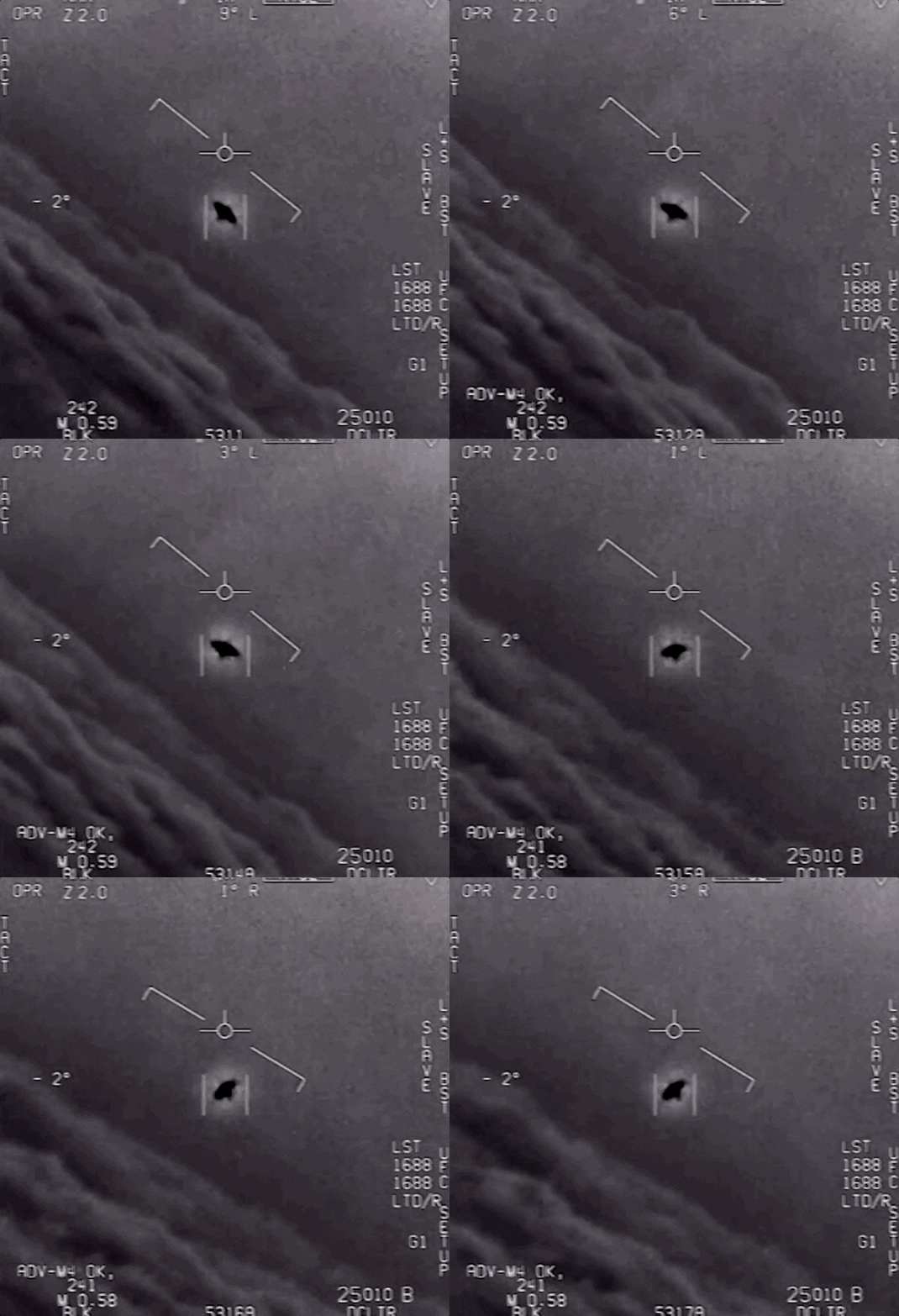




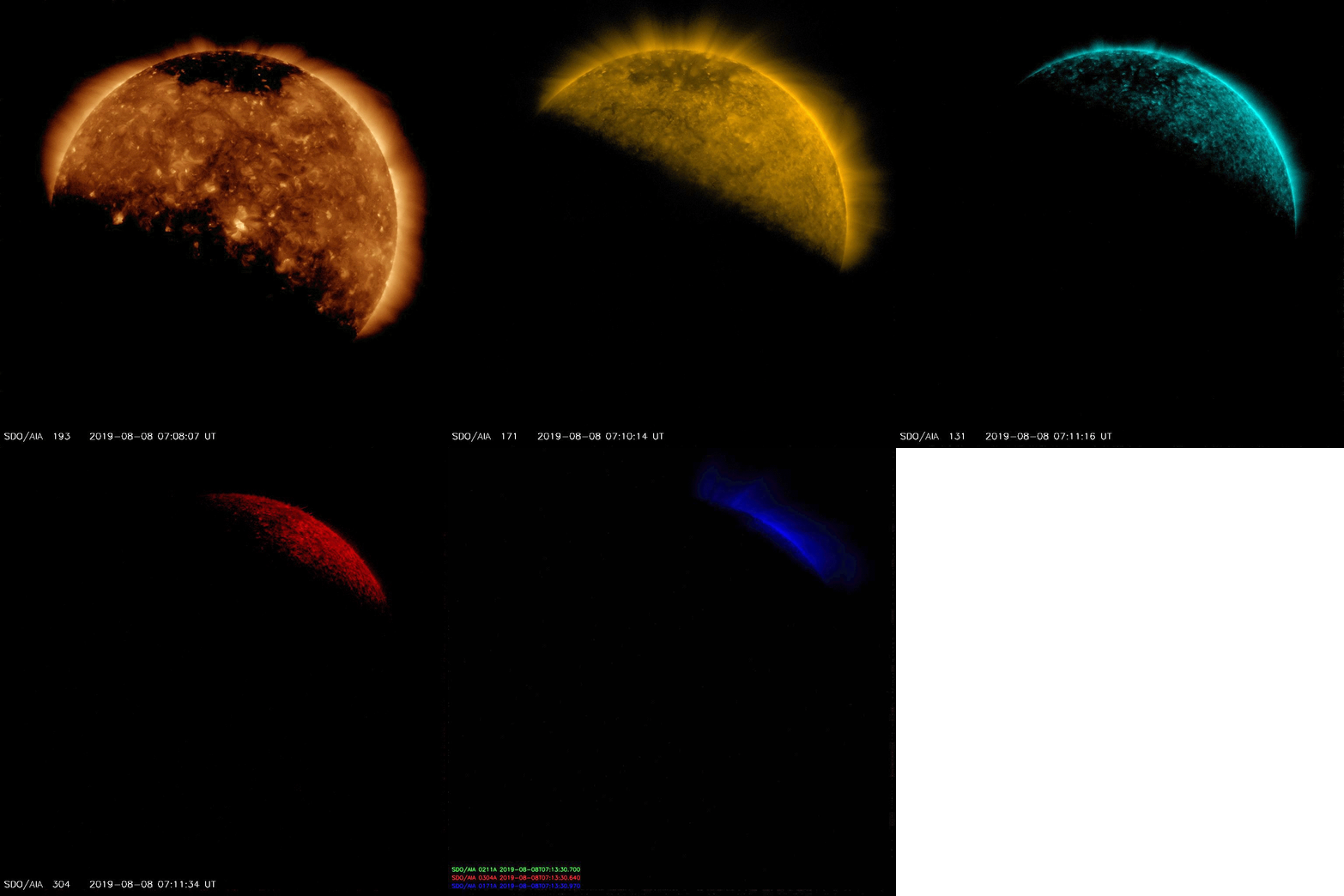


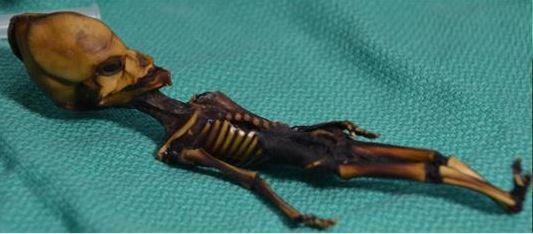








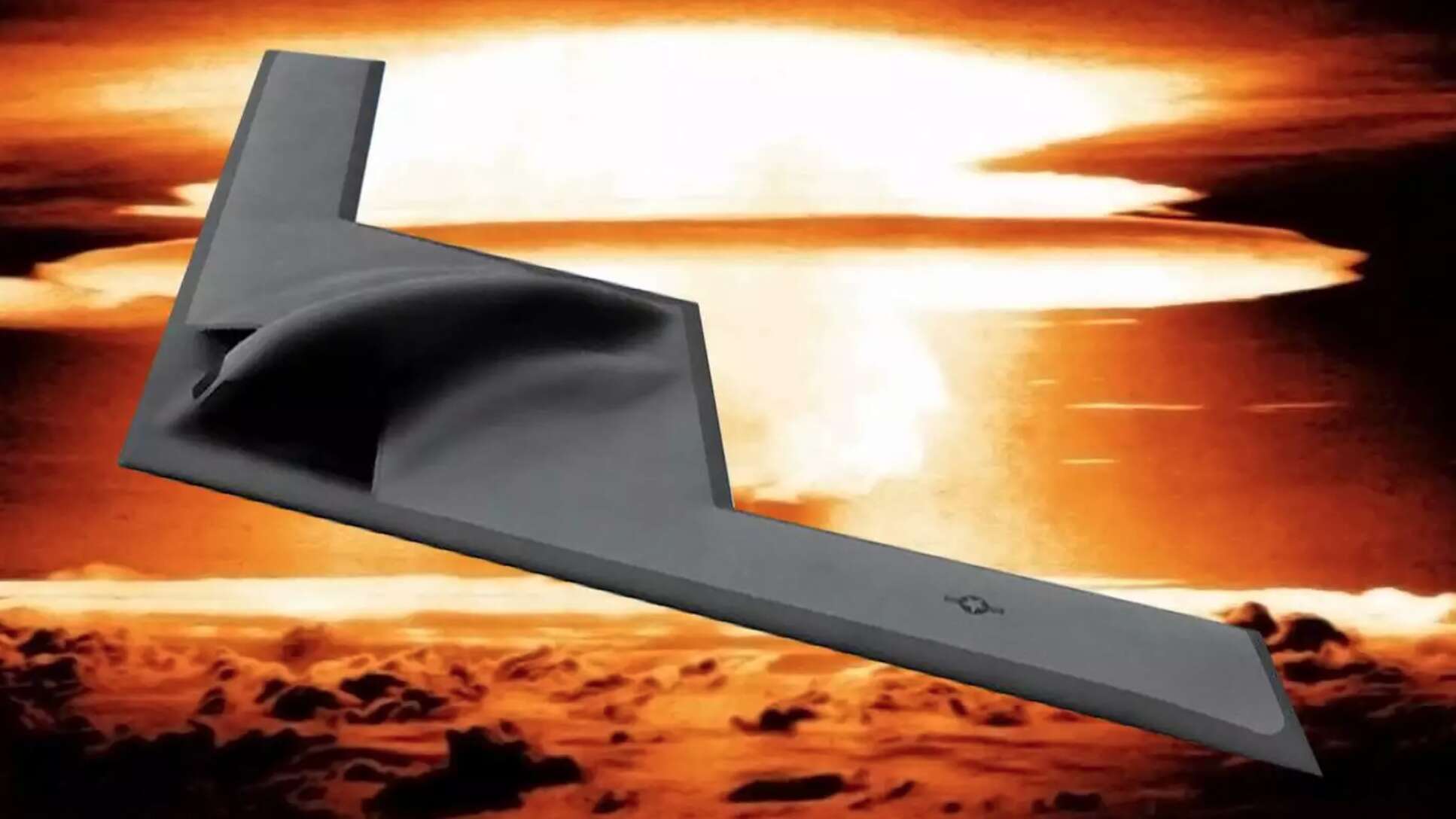




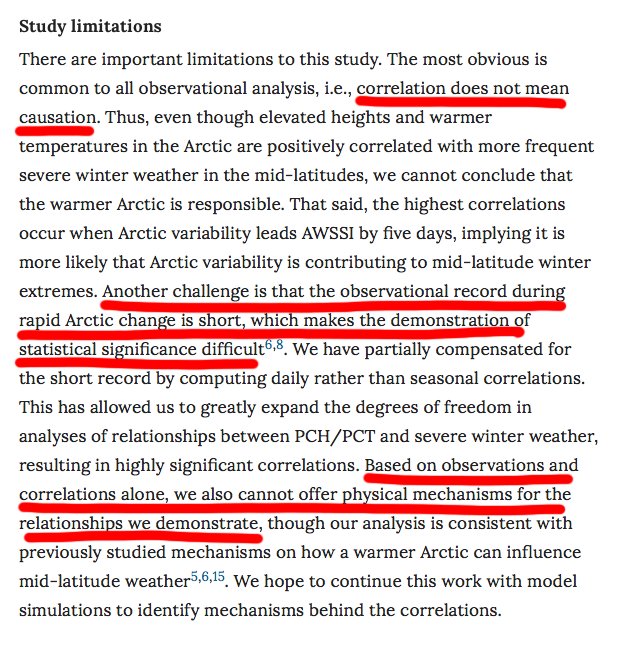




 carmenavramjournalist