The purpose of this blog is the creation of an open, international, independent and free forum, where every UFO-researcher can publish the results of his/her research. The languagues, used for this blog, are Dutch, English and French.You can find the articles of a collegue by selecting his category. Each author stays resposable for the continue of his articles. As blogmaster I have the right to refuse an addition or an article, when it attacks other collegues or UFO-groupes.
Druk op onderstaande knop om te reageren in mijn forum
Zoeken in blog
Deze blog is opgedragen aan mijn overleden echtgenote Lucienne.
In 2012 verloor ze haar moedige strijd tegen kanker!
In 2011 startte ik deze blog, omdat ik niet mocht stoppen met mijn UFO-onderzoek.
BEDANKT!!!
Een interessant adres?
UFO'S of UAP'S, ASTRONOMIE, RUIMTEVAART, ARCHEOLOGIE, OUDHEIDKUNDE, SF-SNUFJES EN ANDERE ESOTERISCHE WETENSCHAPPEN - DE ALLERLAATSTE NIEUWTJES
UFO's of UAP'S in België en de rest van de wereld Ontdek de Fascinerende Wereld van UFO's en UAP's: Jouw Bron voor Onthullende Informatie!
Ben jij ook gefascineerd door het onbekende? Wil je meer weten over UFO's en UAP's, niet alleen in België, maar over de hele wereld? Dan ben je op de juiste plek!
België: Het Kloppend Hart van UFO-onderzoek
In België is BUFON (Belgisch UFO-Netwerk) dé autoriteit op het gebied van UFO-onderzoek. Voor betrouwbare en objectieve informatie over deze intrigerende fenomenen, bezoek je zeker onze Facebook-pagina en deze blog. Maar dat is nog niet alles! Ontdek ook het Belgisch UFO-meldpunt en Caelestia, twee organisaties die diepgaand onderzoek verrichten, al zijn ze soms kritisch of sceptisch.
Nederland: Een Schat aan Informatie
Voor onze Nederlandse buren is er de schitterende website www.ufowijzer.nl, beheerd door Paul Harmans. Deze site biedt een schat aan informatie en artikelen die je niet wilt missen!
Internationaal: MUFON - De Wereldwijde Autoriteit
Neem ook een kijkje bij MUFON (Mutual UFO Network Inc.), een gerenommeerde Amerikaanse UFO-vereniging met afdelingen in de VS en wereldwijd. MUFON is toegewijd aan de wetenschappelijke en analytische studie van het UFO-fenomeen, en hun maandelijkse tijdschrift, The MUFON UFO-Journal, is een must-read voor elke UFO-enthousiasteling. Bezoek hun website op www.mufon.com voor meer informatie.
Samenwerking en Toekomstvisie
Sinds 1 februari 2020 is Pieter niet alleen ex-president van BUFON, maar ook de voormalige nationale directeur van MUFON in Vlaanderen en Nederland. Dit creëert een sterke samenwerking met de Franse MUFON Reseau MUFON/EUROP, wat ons in staat stelt om nog meer waardevolle inzichten te delen.
Let op: Nepprofielen en Nieuwe Groeperingen
Pas op voor een nieuwe groepering die zich ook BUFON noemt, maar geen enkele connectie heeft met onze gevestigde organisatie. Hoewel zij de naam geregistreerd hebben, kunnen ze het rijke verleden en de expertise van onze groep niet evenaren. We wensen hen veel succes, maar we blijven de autoriteit in UFO-onderzoek!
Blijf Op De Hoogte!
Wil jij de laatste nieuwtjes over UFO's, ruimtevaart, archeologie, en meer? Volg ons dan en duik samen met ons in de fascinerende wereld van het onbekende! Sluit je aan bij de gemeenschap van nieuwsgierige geesten die net als jij verlangen naar antwoorden en avonturen in de sterren!
Heb je vragen of wil je meer weten? Aarzel dan niet om contact met ons op te nemen! Samen ontrafelen we het mysterie van de lucht en daarbuiten.
27-02-2026
US Air Force Drone Captured Three 'Orb' UFOs Over the Persian Gulf. The Pentagon Hid the FootaAge in a 'Non-Human' Archive - Indian Defence Review
US Air Force Drone Captured Three 'Orb' UFOs Over the Persian Gulf. The Pentagon Hid the FootaAge in a 'Non-Human' Archive - Indian Defence Review
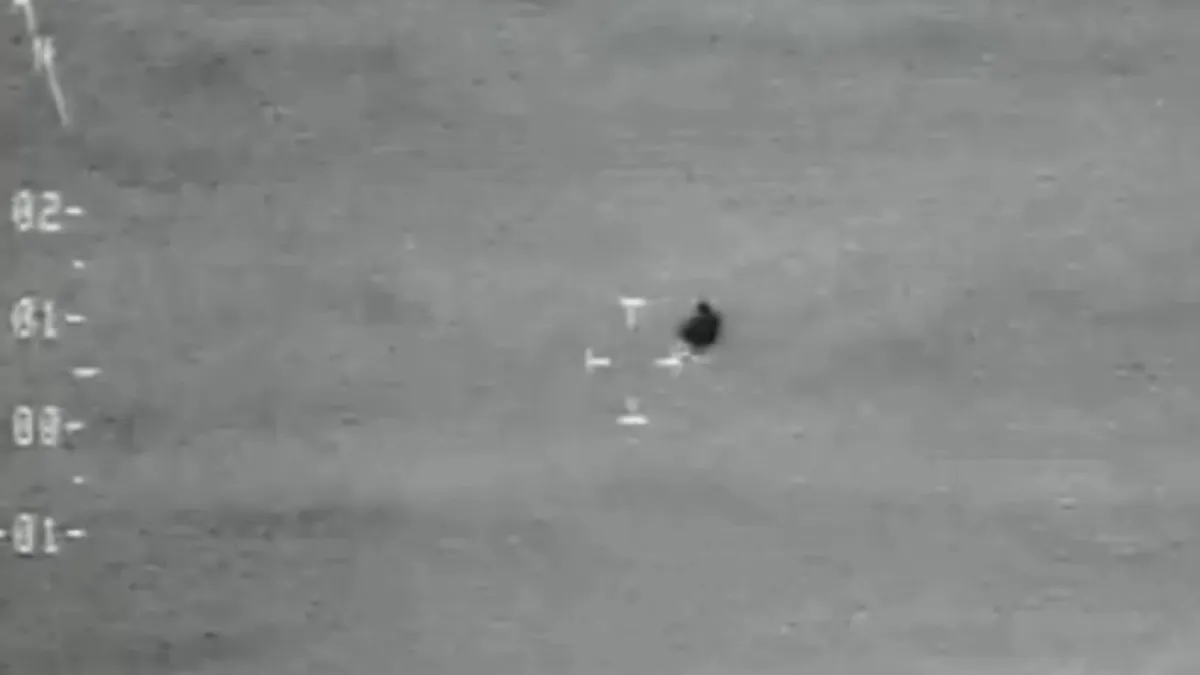
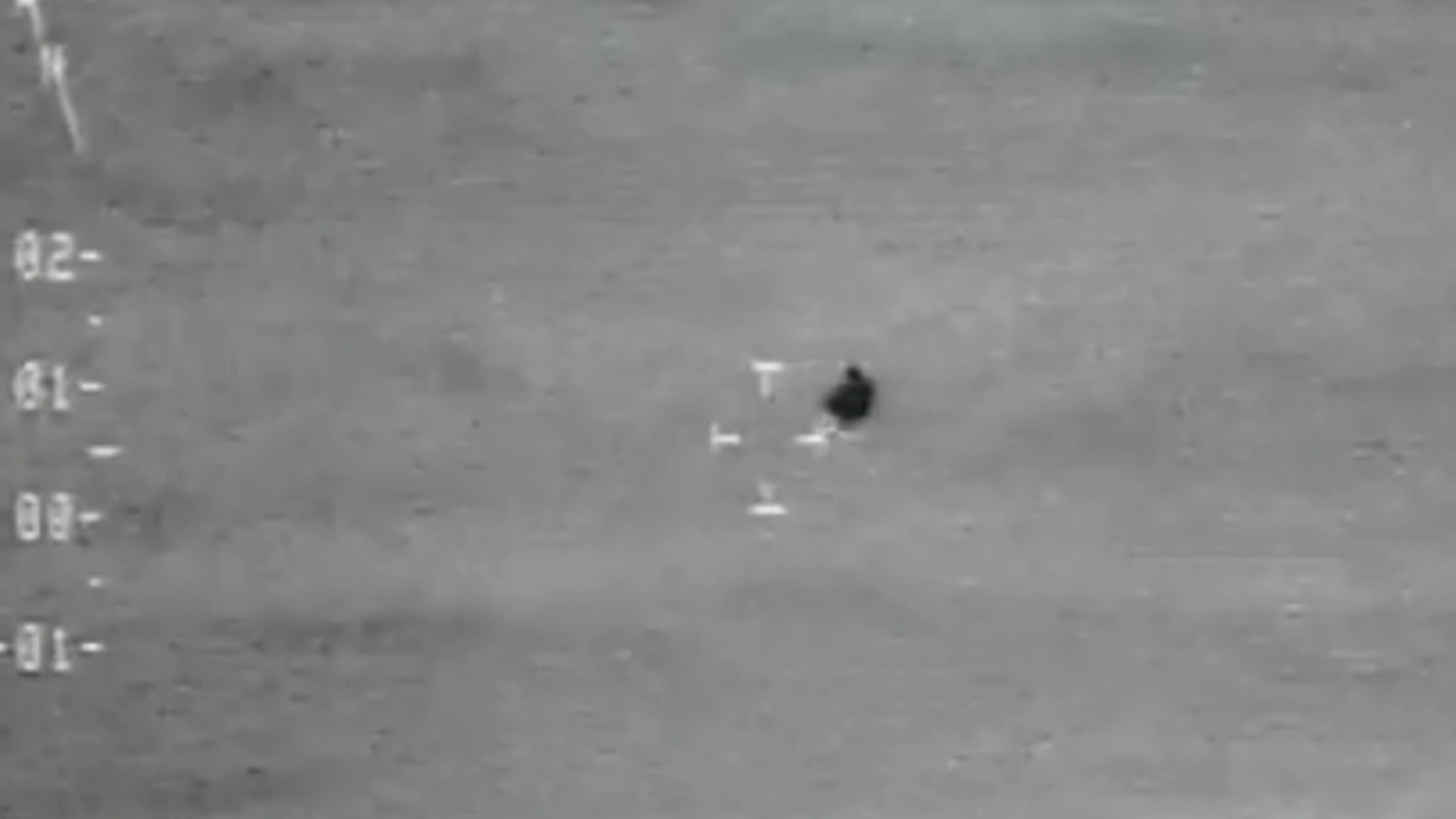
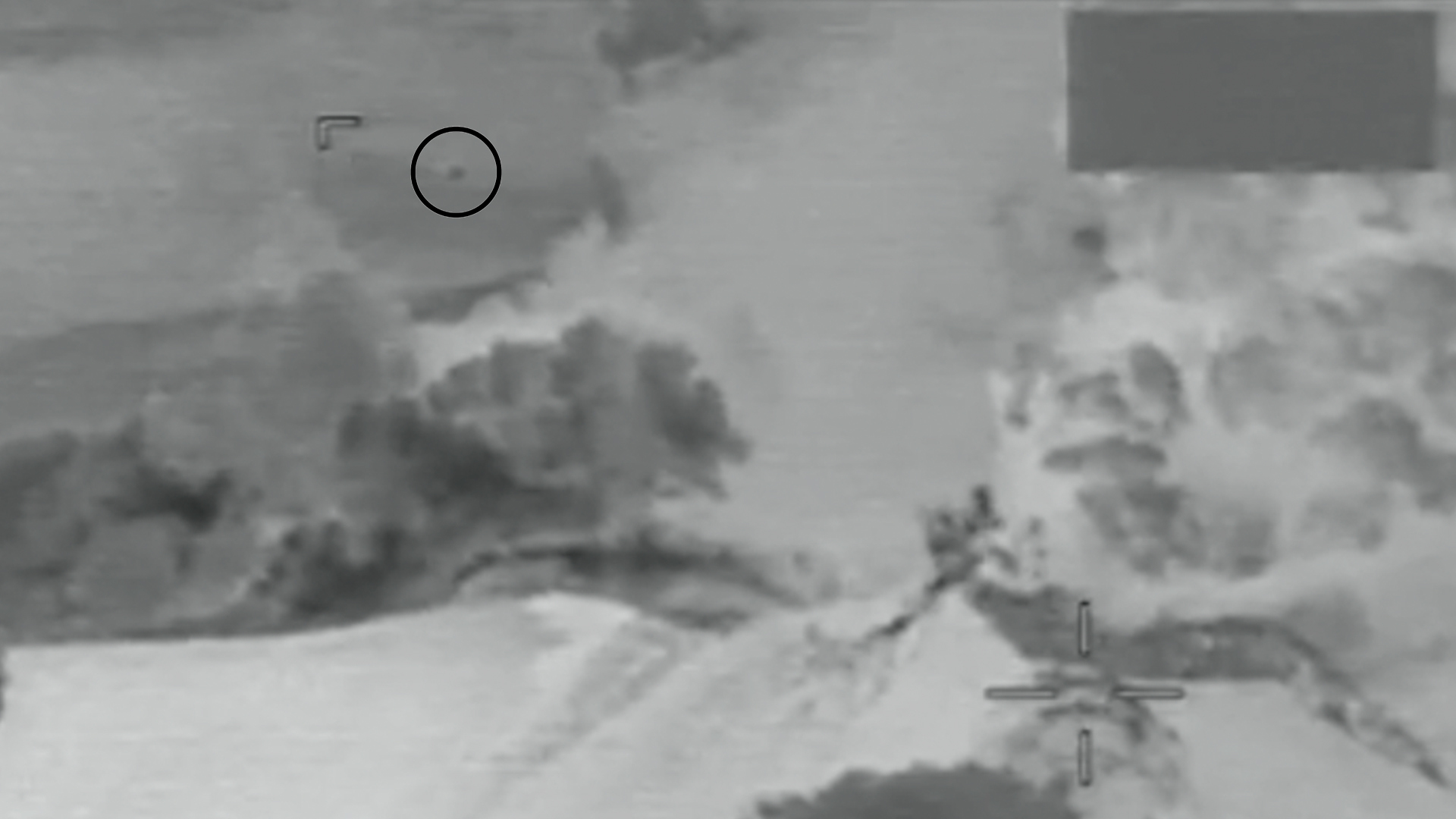
The footage was captured on August 23, 2012, by an MQ-9 Reaper drone operated by the United States Air Force. The infrared sensors on the military aircraft recorded the objects just after 6pm local time as they moved through airspace between Saudi Arabia and Iran. The region has since become recognized as a significant hotspot for unexplained aerial phenomena, with personnel on US Navy vessels reporting multiple encounters with bright objects in the sky.
What makes this particular sighting stand apart from countless other UFO videos is its origin. This is not smartphone footage shot by an excited amateur but military-grade sensor data officially designated as UAP, which stands for Unidentified Anomalous Phenomena. Investigative journalist Jeremy Corbell, who obtained and released the footage along with colleague George Knapp on theirWEAPONIZEDpodcast, noted that the Department of War, formerly the Department of Defence, reportedly placed this recording in a separate archive specifically reserved for evidence considered non-human.
Three Lights That Move Like Nothing We’ve Built
The footage shows three distinct points of light moving across the drone’s field of view in what observers immediately recognized as a coordinated triangular formation. For most of the recording, the objects maintain equal distances from one another, holding their positions with a precision that suggested either intelligent control or an unknown physical connection. The visual presentation initially created the impression of a single triangular craft with lights at each corner.
George Knapp addressed this directly during the podcast analysis, explaining that what looks like one large triangular vehicle with three dots on the ends is clearly not what the footage actually shows. Watching the full sequence makes it evident that three separate objects are moving together rather than one unified structure. The military’s own classification described them as orbs flying in formation, according to Unilad, confirming the interpretation that multiple objects were involved.
Throughout the entire sequence, none of the objects displayed any visible wings, tails, fins, or engine exhaust. These are features that would be unavoidable on any conventional aircraft, yet the infrared sensors detected nothing of the sort. The objects simply existed as three points of light moving through the air with apparent disregard for how things normally fly.
A Playful Maneuver That Broke the Formation
The most intriguing moment arrives about halfway through the minute-long recording. One of the three lights suddenly drops back, breaking the perfect triangle it had maintained with the other two objects. It hangs behind for a brief moment before surging forward again, rejoining the formation and resuming its original position as if nothing unusual had happened.
Jeremy Corbell emphasized during the WEAPONIZED episode that this movement appeared almost playful in nature. He suggested the objects seemed aware of one another and were coordinating intelligently, maintaining equal distances throughout most of the flight. The way the orb dropped back and then came forward again seemed deliberate, almost as if demonstrating awareness and control rather than simply following a predetermined path.
The video of the orbs was taken by a US Air Force Reaper drone between Saudi Arabia and Iran
According to theDaily Mail, Corbell pointed out that this particular behavior matches one of the five observables often associated with UFO encounters, unusual flight movements that appear to violate basic physical laws. The orb showed clear signs of instant acceleration without any visible thrust, something no known aircraft can accomplish. There were no exhaust plumes, no engine glow, no heat signatures that would typically accompany such rapid movement in the atmosphere.
Why Military Footage Carries More Weight
The credibility of this observation rests heavily on the equipment that captured it. Military sensors, particularly those mounted on Reaper drones, accumulate far more data than standard cameras or commercial recording devices. They detect heat, track movement across multiple spectral bands, and maintain precise timing information that allows analysts to calculate speed and acceleration with high accuracy.
George Knapp argued during the podcast that this technological advantage makes military recordings inherently more reliable than civilian footage when evaluating claims of extraordinary performance. A military recorded sensor-generated image carries weight that someone’s shaky phone video simply cannot match. The objects were captured by equipment designed to track and identify potential threats, not by accident or through someone hoping to see something strange.
Congressman Eric Burlison of Missouri revealed video of a US military drone striking an orb-shaped UFO with a missile, which bounced off and did not stop the craft
Corbell made a point of telling listeners that their government designated this footage as depicting unidentified phenomena and that the public was never supposed to see it at all. The classification suggests ongoing official acknowledgment that some encounters remain genuinely unexplained, even if public statements continue to maintain otherwise.
Archived Separately as Potentially Non-Human
Perhaps the most significant detail to emerge involves how the military reportedly categorized the recording after its initial analysis. According to information obtained by Corbell and Knapp, this video was not filed alongside routine sightings of weather balloons, aircraft, or wildlife. Instead, it was placed in a separate archive specifically designated for evidence of non-human craft or objects.
This distinction matters because it indicates that whoever reviewed the original footage concluded that conventional explanations did not apply. The objects were not birds, not balloons, not atmospheric phenomena, and not known aircraft. They were something else entirely, something that merited special handling and restricted access. The existence of such an archive, if confirmed, would suggest the military encounters enough truly unexplained objects to require dedicated storage.
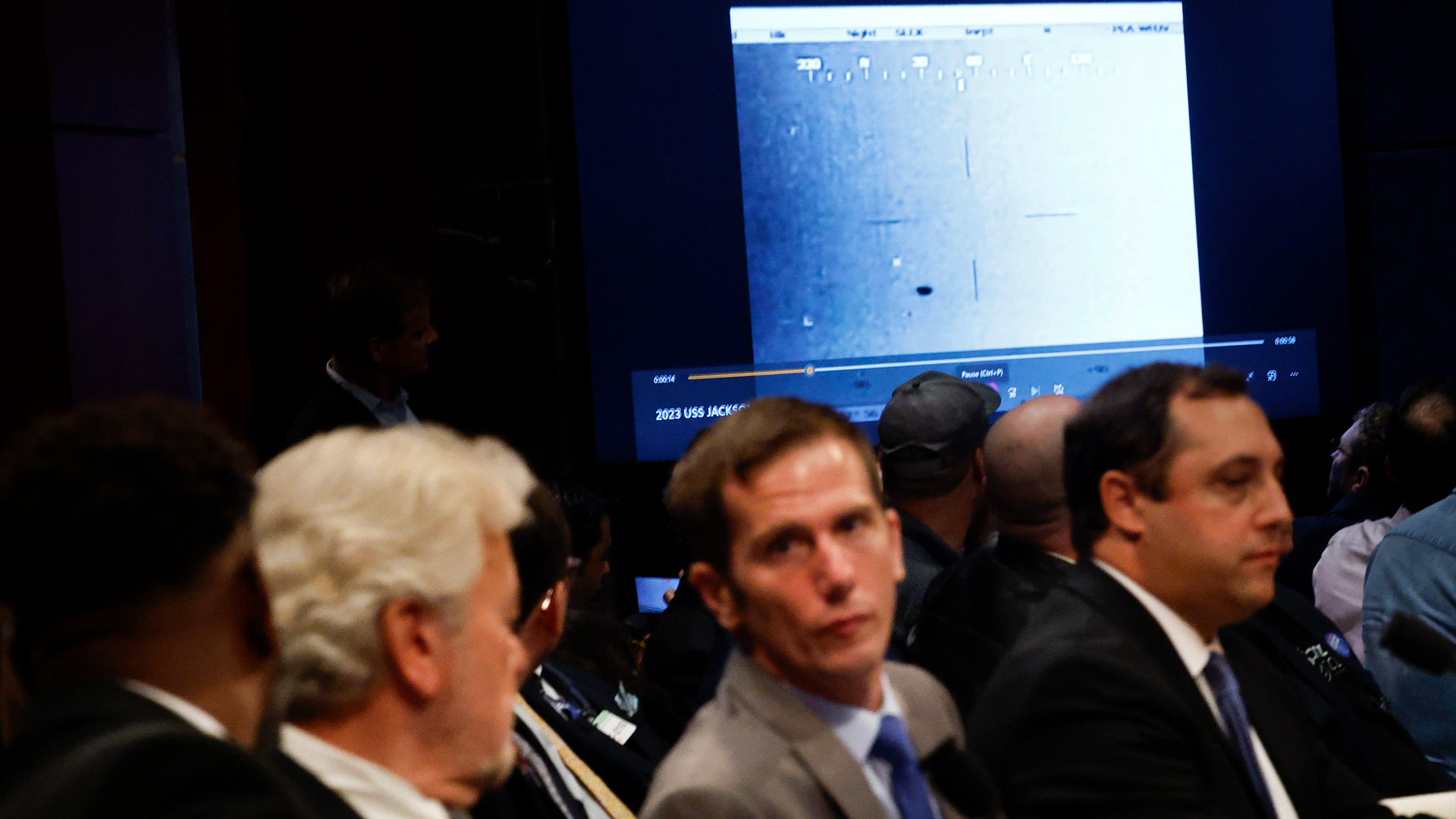
The Persian Gulf region has produced multiple such encounters over the years. One particularly dramatic incident occurred not far from where the 2012 drone footage was captured, off the coast of Yemen approximately one thousand miles away. During a congressional UAP hearing last year, Missouri Congressman Eric Burlison released never-before-seen footage from October 30, 2024, showing a military drone strike on an orb-shaped object similar to those seen in the Persian Gulf.
That black-and-white video captured a Hellfire missile, a hundred-pound class air-to-ground precision weapon, striking what appeared to be a similar object. The missile did not destroy the target. It bounced off. The orb continued traveling at extreme speed as if nothing had happened. Former Air Force military police officer Jeffrey Nuccetelli, who served for sixteen years, described that outcome as exceptional evidence supporting the reality of UFO existence.
It’s like something out of a Hollywood blockbuster: an astronaut looks out the window and suddenly notices a thin crack running across the glass, separating him from the deadly vacuum by just a few centimeters. But what happened to the crew of the Chinese Shenzhou-20 missionlast November was not a movie, but a harsh reality that nearly led to a catastrophe in orbit.
The Shenzhou-21 spacecraft capsule with the Shenzhou-20 crew at the landing site in the Inner Mongolia Autonomous Region in northern China on November 14, 2025. Source: Xinhua
Commander Chen Dong was the first to notice the danger. What at first appeared to him to be ordinary trash or a leaf stuck to the glass turned out to be much more sinister. A triangular mark was clearly visible on the inner surface of the window — a crack left by a collision with an unknown object.
“I went out to inspect it, and my eye immediately noticed this anomaly,” recalled the commander. In an instant, realization came with a chill of fear: their station had been attacked by a piece of space debris. Scientists still do not know its origin, but they assume that the deadly guest was no larger than a millimeter. This proved sufficient to break through the spacecraft’s strong defenses.
Don’t panic
Despite the dramatic nature of the situation, there was no panic on board. Taikonaut Wang Jie, who was responsible for safety, handled the incident with professional calm. He explained that the design of the porthole was not just simple glass, but a complex engineering system.
“The outer layer is just a protective screen, a kind of ‘shield’. The main pressure is held by two inner sealed layers,” he reassured the audience. For detailed analysis, the astronauts used a special microscope that looked like a pen. They were shocked by what they saw: a network of cracks, some relatively long, others shorter, but the most dangerous thing was that some of them went right through the material.
Rescue operation
Unlike in movies, where everything is decided in seconds, the real drama unfolded over several days. However, the consequences could have been catastrophic. The damaged Shenzhou-20 could no longer be used to return the crew home. The risk of depressurization during descent was too great.
The Chinese flight control center quickly developed a rescue plan. The crew of Shenzhou-20 was forced to abandon their spacecraft and temporarily “move” to the station. They returned home in the Shenzhou-21 capsule, which was originally intended for their replacements. This created a new problem: the new crew was left in orbit without a vehicle.
The situation was saved by the fact that the empty emergency Shenzhou-20 was later successfully undocked and returned to Earth in automatic mode.
Warning for the future
Photos of collisions show how destructive even minor impacts on a spacecraft’s hull can be. Photo: NASA
This incident is not just a story about successfully avoiding disaster. This is a stern warning to all those who are exploring near-Earth space today. Our orbit has turned into a crowded garbage dump, where thousands of objects are hurtling around at breakneck speed.
We will never know what exactly hit Shenzhou-20 — a microscopic fragment of an old rocket or paint from another satellite. But scientists unanimously warn that a chain reaction of collisions (Kessler syndrome) could render space unsuitable for flights for decades.
The Pentagon’s All-domain Anomaly Resolution Office (AARO) has outlined plans to standardize the collection and analysis of reports on unidentified anomalous phenomena (UAP), marking a shift toward greater collaboration with civilian researchers and more structured public data sharing.
The plans were conveyed in a new report that appeared on AARO’s website earlier this month, detailing an August 2025 private meeting with experts from government, academia, and civilian research organizations convened in the Washington, D.C., area.
Coordinated by AARO and hosted by Associated Universities, Inc. (AUI), the workshop marked a significant step in AARO’s engagement with civilian and independent research groups. The meeting sought to establish a more collaborative and professional process for standardizing the study of UAP within the Department of War (DoW), while potentially increasing transparency compared with previous years.
Topics discussed at the 2025 Workshop
Traditionally, many UAP gatherings involving academics or government officials have focused on presenting findings, historical analysis, or scientific data. The AARO workshop took a different approach, forming breakout groups to address a foundational challenge: how to collect, manage, integrate, and analyze UAP data using rigorous scientific methods—both internally at AARO and in collaboration with civilian datasets.
Areas that the August 2025 workshop focused on included:
Assessing the current landscape of UAP reporting systems and data repositories;
Identifying key challenges and gaps in UAP data collection, standardization, and accessibility;
Exploring methodologies for data analysis and pattern recognition in UAP reports.
Nurturing trust and collaboration among researchers, government agencies, and civilian organizations; and
Proposing recommendations for developing a robust UAP data infrastructure.
UAP Report Collection
UAP reports originate from a wide array of sources, including military logs, pilot reports, civilian testimony, archival records, social media posts, and sensor-based systems such as radar and imagery platforms.
In the past, challenges with UAP data collection have ranged from fragmentation and inconsistent formatting to the lack of standardized metadata and limited cross-correlation between datasets. Classification restrictions, language differences, social stigma, and inconsistent retention policies have further complicated access for both government and civilian researchers.
According to the report, participants in the 2025 workshop emphasized that progress in UAP research depends on building a shared data infrastructure between government and civilian researchers. One major recommendation was the development of standardized metadata templates that combine human expertise with AI tools, leverage existing infrastructure, support case triage, and integrate interviews and historical reports, while prioritizing new high-quality data.
These templates would record contextual information such as time, location, morphology, provenance, and environmental conditions.
Clear metadata standards would also make it easier for agencies and independent researchers to share datasets while protecting sensitive information and privacy. The white paper notes AARO seeks a “multi-disciplinary and community-engaged approach to UAP narrative data,” which may influence future sensor deployment strategies.
The white paper identifies artificial intelligence as both a potential solution and a potential hazard. AI could assist with transcription, clustering, and large-scale pattern detection, but also risks introducing bias, amplifying hoaxes, or producing inaccurate results—the classic “garbage in, garbage out” problem. The workshop strongly endorsed a hybrid human-AI model with human oversight.
Privacy First
The AARO whitepaper emphasizes that privacy was a central priority for the workshop. “Participant privacy was an important consideration throughout workshop planning, and Institutional Review Board (IRB) approval governed data collection and security for the workshop,” the report states.
Workshop participants were asked to adhere to the “Chatham House Rules,” and not to take photos or attribute statements to individuals without permission. Given these circumstances, civilian participants who attended the workshop and later spoke with The Debrief did so on background.
“Civilian participants were given genuine opportunities to contribute perspectives and technical insights, and there appeared to be a shared commitment—on the part of both AARO personnel and external researchers—to improving the quality and rigor of UAP data collection,” one participant told The Debrief. “The discussions and presentations were conducted in a constructive, solutions-oriented atmosphere that encouraged collaboration on best practices for future observational and analytical efforts.”
The breakout sessions also emphasized balancing quantitative data with qualitative witness narratives and incorporating cultural and experiential perspectives while allowing multiple analytical approaches to coexist.
“I was pleasantly surprised that AARO did a good job of getting a cross-section, not only of the UAP community, right, but also of people from other federal groups or agencies that attended. None of the three-letter agencies, at least none that I knew of, were represented,” said one participant who spoke with The Debrief.
“There was definitely more transparency compared to their public statements and postings,” another participant said. “I think that was attributed to the level of trust they had with their select invitees in a private session. ”
The Importance of Public Reporting
Improving reporting systems was another major priority discussed at the workshop. Recommendations included open-ended narrative submissions followed by AI-assisted structuring that witnesses could review; improved geolocation tools; standardized time inputs; flexible units; and optional metadata fields. Participants also encouraged the release of de-identified public data to build public trust and reduce stigma.
Following the report’s publication, The Debrief reached out to the Pentagon for comment on how AARO’s mission may incorporate public reports going forward.
“AARO anticipates using public reports to enhance overall UAP trend analysis and, when possible, to enrich open UAP cases from government and law enforcement sources,” said Sue Gough, a Department of War spokesperson, in an email to The Debrief.
According to AARO’s official website, it currently accepts UAP-related information from military and Department of War civilian personnel, although it adds that “AARO will announce when a reporting mechanism is available to the public.”
Asked about the potential timeline for completing this civilian-accessible UAP reporting mechanism, Gough told The Debrief that “We have nothing to announce at this time.”
A Change in Direction
Sean M. Kirkpatrick, a laser and materials physicist and inaugural director of AARO, presided over the office during the initial phase of its development. At that time, engagement with civilian UAP researchers had been limited and often viewed through a more cautious, security-focused lens. That approach appeared to reflect broader government concerns about data reliability, classification, and the challenges of integrating independent research into official investigative frameworks; however, it also left some outside researchers feeling excluded from the process, and at times drew criticism from some in the broader UAP research community.
Under its current director, Dr. Jon T. Kosloski, AARO appears to be moving toward a more collaborative model. The recent workshop brought together representatives from academia, government, and civilian research communities, offering participants an opportunity to contribute perspectives on data collection practices, reporting standards, and analytical methods. For many independent researchers, the possibility of participating in discussions about government UAP data infrastructure and national security implications marks a notable shift from previous engagement.
Overall, the workshop concluded that continuous collaboration and community-building are needed to establish a sustainable “community of practice” across disciplines.
“AARO recognizes that input from the scientific and academic community is critical to its work and hopes to convene future workshops and collaborative opportunities, as needed, to foster an interdisciplinary community for UAP analysis,” Gough told The Debrief.
“The long-term success of these efforts will be measured by higher-quality UAP reporting, the use of new analytical tools, and improved understanding of UAP sightings, drawing on the expertise of a wide range of stakeholders,” Gough added.
Chrissy Newton is a PR professional and the founder of VOCAB Communications. She currently appears on The Discovery Channel and Max and hosts the Rebelliously Curious podcast, which can be found on YouTube and on all audio podcast streaming platforms. Follow her on X: @ChrissyNewton, Instagram: @BeingChrissyNewton, and chrissynewton.com. To contact Chrissy with a story, please email chrissy @ thedebrief.org.
Al het complexe leven op aarde deelt een gemeenschappelijke oorsprong. Maar hoe meercellig leven exact is ontstaan uit eencelligen, was lange tijd een raadsel.
Diep in de zee leven microscopisch kleine organismen die Asgard-archaea heten. De beestjes zijn vernoemd naar de mythologische wereld van de Noorse goden. Deze oeroude microben zijn de verre voorouders van alle complexe levensvormen, inclusief wijzelf. Wetenschappers van de Universiteit van Texas hebben deze microben bestudeerd en hebben zo een oeroude vraag beantwoord.
Hoe werden twee onverenigbare microben één?
Neem even een stap terug. Alle planten, dieren en schimmels (wetenschappelijk samengevat als eukaryoten, alle organismen waarvan de cellen een celkern hebben) zijn vermoedelijk ontstaan doordat twee totaal verschillende microben samensmolten. Eén daarvan was een Asgard-archaeon, de andere een bacterie. Die bacterie leefde uiteindelijk verder als het mitochondrium, vandaag de dag het mini-orgaantje in onze cellen dat energie aanmaakt.
Het grote probleem waar wetenschappers hun hersenen over kraakten was dat de Asgard-archaea altijd werden gevonden op plekken zonder zuurstof, bijvoorbeeld op de bodem van de diepe oceaan. De bacterie waarmee ze samensmolten had echter zuurstof nodig om te overleven. Hoe kwamen die twee dan ooit bij elkaar?
“De oorsprong van eukaryoten is een van de langlopende mysteries binnen de biologie”, vertelt Kathryn Appler, postdoctoraal onderzoeker aan het Institut Pasteur in Parijs en medeauteur van de studie, aan Scientias.nl. “Welke microbiële afstammingslijnen betrokken waren, wat hun samenwerking op gang bracht en waar dit precies plaatsvond: dat waren allemaal nog openstaande vragen.”
Een verrassende vondst
Voor het onderzoek verzamelde het team enorme hoeveelheden genetisch materiaal van microben uit allerlei omgevingen. Uit die data konden ze meer dan 13.000 nieuwe microbiële genomen in kaart brengen. Een genoom is de complete genetische blauwdruk van een organisme. Daarmee konden ze het aantal bekende Asgard-genomen bijna verdubbelden.
En uit de data bleek iets onverwachts: de Asgard-archaea die het nauwst verwant zijn aan eukaryoten en dus het meest op onze gemeenschappelijke voorouder lijken, werden aangetroffen in ondiepe kustgebieden, waar wél zuurstof aanwezig is dus. Sterker nog, hun genen wijzen erop dat ze zuurstof actief kunnen gebruiken bij hun stofwisseling.
“We waren verrast dat een meerderheid van de genomen uit bepaalde Asgard-groepen afkomstig was uit ondiepe kustomgevingen”, zegt Appler. “De meeste eerdere studies suggereerden dat Asgard-archaea geen zuurstof verdroegen.”
Zuurstof als sleutel tot complex leven?
De timing van deze bevinding sluit aan op wat geologen al wisten. Zo’n 1,7 miljard jaar geleden maakte de aardatmosfeer een radicale omslag door: zuurstofniveaus schoten toen omhoog. Kort daarna verschenen de eerste sporen van eukaryoten in het fossielenarchief. Dat is geen toeval, zo blijkt nu.
Appler is voorzichtig in haar conclusies: “Het is mogelijk dat zuurstof de omgeving vormgaf waarin eukaryoten ontstonden. Ik kijk uit naar verdere gesprekken met geologen terwijl we de omgevingscontext van deze cruciale evolutionaire stap verder ontrafelen.”
Wat mogen we hier wel en niet uit concluderen?
De studie lost misschien een belangrijk raadsel op, maar Appler zegt wel dat voorzichtigheid geboden blijft. “Het is belangrijk te benadrukken dat het om moderne nakomelingen gaat en dat wij als wetenschappelijke gemeenschap proberen een gebeurtenis te reconstrueren die miljarden jaren geleden plaatsvond.” En dat vergt de nodige bescheidenheid.
"Science doesn't always go as planned. In any case, there's a lot of work to be done."
A photo taken at the recent US Congressional UAP hearing on September 9.
(Image credit: Kevin Dietsch / Getty Images staff)
After years of making headlines, air vehicles of nameless origin, unknown intent, and seemingly odd capabilities are still being reported within America's national airspace, allegedly flying over sensitive facilities and interfering with commercial air traffic.
All of this aerial weirdness involves unidentified anomalous phenomena, or UAP for short. Whatever they are, UAP continue to be seen, reported and even documented through various sensor technologies. However, despite years of whistleblowers testifying before Congress, there seems to have been a bottleneck in getting to the bottom of the UAP issue in 2025. Why so?
Key specialists appraising the issue UAP have yet to untangle the mystery, but do appear to agree on what needs to be done now to further resolve what UAP are and from where they might originate.
Plurality of minds
The UAP phenomenon benefits from having a plurality of minds engaged in disciplined debate, suggests Michael Cifone, founding executive director and President of the Society for UAP Studies, based in Los Angeles, California.
Today, there's a division emerging between classical Unidentified Flying Object (UFO), aka "flying saucer," incidents and studying UAP from the point of view of observational and experimental science. But engaging scientific methods and instruments turns out to be neither trivial nor cheap, Cifone said.
"Perhaps the holdup is reluctance to dump time, energy and money into what looks to some like a wild goose chase," said Cifone.
Cold cases
"Like any other scientific venture, both funding and institutional support is required," Cifone said. "Given the historical stigma associated with the topic that has been hard to achieve. But now with the emphasis no longer on chasing forensic cold cases, and relying on reports of UAP, serious scientists and student researchers are getting involved."
The upshot is to deploy scientific methodology to establish the observational framework with the proper instrumentation, Cifone added, "in order to generate the data on UAP from which more secure conclusions can be derived."
Cifone said that progress, like in any other science or research area, will be slow but hopefully steady, albeit incremental.
"What will likely happen is that there will be downstream benefits that aren't foreseeable exactly now. Maybe new sciences will break away. So it will be a win for the growth of knowledge and for science in particular," Cifone senses.
For Cifone, his view is to keep the eye on the ball and work out the observational framework design and required instruments and observational modalities before we can have the reliable datasets we need. "But science doesn't always go as planned. In any case, there's a lot of work to be done."
Cifone points to an increasing number of institutions that are studying UAPs. Indeed, work underway on UAP has blossomed into a world-wide field of research, he said.
A still from a video reportedly showing a "transmedium" UAP that appears to travel between air and water and split in half. During testimony on Nov. 19, 2024 the head of the Pentagon's UFO office AARO said it actually shows an infrared camera's inability to tell two objects' temperature apart from the ocean behind them. (Image credit: AARO/DOD)
All sky, all the time
To Cifone's point, there's the University of Würzburg in northern Bavaria, one of the oldest universities in Germany. An Interdisciplinary Research Center for Extraterrestrial Studies (IFEX) has been established.
One effort the university is developing is an "AllSkyCAM" able to capture UAP. An automated reporting system is currently under construction with the university cooperating with the Luftfahrt-Bundesamt, the national civil aviation authority of Germany, to research unusual phenomena in the country's airspace.
Then there's the Galileo Project led by astrophysicist Avi Loeb of Harvard University. They have designed and built an array of sensors to scan the sky for aerial phenomena and assess atmospheric anomalies that may not be of terrestrial origin.
This type of research can produce data on UAP, Cifone said, "then we need to experiment with the data and produce theories, or what you call explanations, and perhaps even understanding! We're only at the observational framework design and testing phase. Then we need to let the systems run, probably for many years."
Test a hypothesis
There's need to be able to scientifically test a hypothesis that some UAP are potentially extraterrestrial craft, said Robert Powell, executive board member of the Scientific Coalition for UAP Studies (SCU).
"I consider extreme acceleration to be the best characteristic that has the potential to eliminate a terrestrial explanation for a UAP," said Powell. But measurement of high accelerations of UAP, he said, requires high-precision scientific gear and data.
"The cost of putting out a network of calibrated and characterized equipment, maintaining it, obtaining placement rights on land, and analyzing the data will cost tens to hundreds of millions of dollars," said Powell.
Military systems
One estimate by an engineer in SCU forecasts that given 300 "actual" UAP sightings per year — and assuming random distribution of sightings — that with 930 automated camera systems distributed across the U.S., one would have a 95% chance of detecting a UAP of 50 foot or larger size within a year.
"To date, the financial resources to achieve this are not available," said Powell. "The military has the capability with radar, satellite, and optical systems, but the scientific community does not have access to these systems." He thinks the work ahead could be done now via military systems, but only if there were no national security concerns.
"I think it will take many years to do it through privately-financed civilian systems but that doesn't mean we shouldn't continue working at it," Powell concluded.
"Highly credible people and professional observers are seeing objects that appear to exhibit capabilities beyond the state of the art," Graves told Space.com. "In the data received, there seems to be this core anomalous aspect that we can't just ignore or rationalize away."
Graves speaks with UAP eye-witness authority as a former Lt. U.S. Navy and F/A-18F pilot. He was the first active-duty pilot to publicly point to his own encounters and spotlights his military colleagues regarding their UAP sightings.
In July 2023, Graves testified about UAPs before the House Oversight Committee's National Security Subcommittee in Congress, a hearing centered on UAP and the implications for national security, public safety, and how best to attain government transparency on the issue.
Ryan Graves, the chair of the American Institute of Aeronautics and Astronautics. (Image credit: BRENDAN SMIALOWSKI/Getty Images)
Pay attention
"We need to pay attention to this and recognize the national security implications," Graves said. Objects are operating in sovereign air space, he said, potentially collecting intelligence and trying to break into or set the stage to counter our defenses and set the country up for strategic surprise.
In blunt talk, Graves said UAP are engaged in actions "that would be recognized as acts of war or at the minimum preparation for an attack."
For its part, the AIAA UAP Integration & Outreach Committee is a strictly agnostic, science-first committee inside the AIAA.
"Our remit is to bring aerospace rigor to an area with real safety-of-flight implications," Graves said. The committee has been convening experts across AIAA's technical committees, publishing peer-reviewed and conference papers, and producing policy guidance that standardizes how aviation professionals document and share safety-relevant observations, Graves added.
Retention of data
While AIAA provides technical expertise rather than lobbying, Graves said the work on UAP has helped clarify best-practice reporting standards as well as set standards for retention of data on what's being reported.
One early payoff is that AIAA's UAP effort parallels what Congress has been considering in the standalone bill "Safe Airspace for Americans Act," introduced in January 2024 and reintroduced in September of this year. "Our focus remains the same," said Graves, "and that is credible data, clear procedures, and aviation safety."
That bipartisan Act is championed by U.S. representatives Robert Garcia of California and Glenn Grothman of Wisconsin, legislation crafted to support civilian UAP reporting.
"Transparency surrounding UAP is crucial for national security, public safety, and making sure people trust that our government is taking these reports seriously," Congressman Garcia said in a statement. "This bill creates a clear, protected pathway for pilots and other aviation professionals to report UAP incidents without having to fear stigma or worry about retaliation. This is a vital step forward to make sure our skies are safe and our government is responsive."
Closure on the topic?
Graves also points to the current leadership of the Department of Defense All-domain Anomaly Resolution Office, or AARO. It too is established to minimize technical and intelligence surprise by "synchronizing identification, attribution, and mitigation of UAP in the vicinity of national security areas," the AARO states.
"I'm optimistic. There is significant organizational change across the government that I think will bare fruit. There process is maturing to the point where they can start delivering on their expectations," said Graves.
Overall, Graves is heartened by current UAP interest and on-going activities.
"I don't know if there's been a better time to hope for closure on this topic. I don't think we've ever been in quite the situation we're in today," Graves said.
Revealed: Unexplained objects that stop and accelerate quickly in space detected by 'highly qualified observers, says former UFO chief. 'Spacecraft we know don't behave that way'
EXCLUSIVE - Revealed: Unexplained objects that stop and accelerate quickly in space detected by 'highly qualified observers, says former UFO chief. 'Spacecraft we know don't behave that way'
The Pentagon's UFO office former chief has revealed unexplained objects were detectedin space – and that some performed maneuvers defying anything in America's known aerospace arsenal.
Lieutenant Colonel Tim Phillips, who was acting director of the All-domain AnomalyResolution Office (AARO) until last April, told the Daily Mail that while most cases involved objects in the air, some detections extended beyond the atmosphere.
A still from a video reportedly showing a "transmedium" UAP that appears to travel between air and water and split in half. During testimony on Nov. 19, the head of the Pentagon's UFO office says it actually shows an infrared camera's inability to tell two objects' temperature apart from the ocean behind them.
(Image credit: AARO/DOD)
'I would say probably 90 percent of our cases, if not higher, were always in the air domain,' Phillips said.
'Most of these were in the atmosphere, but there were things in space.'
AARO, a team within the Department of War, is tasked with collecting and investigating UFO cases, with a focus on data-backed reports from skilled military members like fighter pilots or radar operators.
Phillips described reports from 'highly qualified observers' who witnessed these objects displaying capabilities beyond anything the US government is known to have.
He said the object had the 'ability to stop very, very quickly, accelerate quickly, right angle turns – the things that aircraft and spacecraft we know don't behave that way.'
Out of thousands of reports reviewed by AARO, fewer than 50 remained completely unresolved, even after examination by some of the world's leading experts, he said.
Lieutenant Colonel Tim Phillips, former acting director of the All-domain Anomaly Resolution Office (AARO) until last April, said that 'highly qualified observers' reported unexplained objects in space performing maneuvers beyond the capabilities of known US aircraft or spacecraft
Of thousands of reports reviewed by AARO, fewer than 50 remain completely unresolved, even after scrutiny by some of the world’s leading experts
The lieutenant colonel also told the Daily Mail that while most cases involved objects in the air, some sightings extended beyond the atmosphere
But those few dozen reports kept the experts scratching their heads.
'We're talking some of the best and brightest in the world couldn't explain what it is,' Phillips said.
His office was also able to rule out the possibility that the objects belonged to any known US or foreign program.
'We were able to conclusively prove it wasn't a known system, either adversary or friendly,' he said.
Despite the extraordinary nature of some sightings, Phillips told the Daily Mail that the objects never appeared to pose a direct threat.
'We never saw any hostile behavior,' he said. 'I couldn't speak to the intent, but we saw them in sensitive locations sometimes.'
He also noted that some objects appeared to actively avoid detection.
'We saw their attempt not to be surveyed, and in other cases they didn't seem to care,' Phillips said.
The drone managed to record the moment when the object suddenly disappears, appearing as a faint white streak as it moved to the right
Between May 1, 2023, and June 1, 2024, UAPs where reported frequently in US airspace
Phillips was quick to stress that many dramatic sightings turn out to be misidentified classified US programs or objects mistaken for balloons, satellites, aircraft and birds
That language echoes the Office of the Director of National Intelligence's landmark 2021 UFO assessment, which noted data appearing to show objects demonstrating 'acceleration or a degree of signature management', a term used to describe active attempts to avoid detection.
Phillips was also quick to stress that many dramatic sightings turn out to be misidentified classified US programs.
In one striking case, he described a witness who accurately reported what they saw – but drew the wrong conclusion entirely.
'We looked into it and there was a spaceship being tested, but it wasn't an alien spaceship. It's one of ours,' he said.
A still from a video captured by a U.S.-operated drone in 2018 while flying above Mt. Etna appears to show an anomalous object, but the Pentagon's UFO chief says his office was able to solve the case.
(Image credit: AARO/DOD)
Phillips has publicly thrown cold water on expectations of any dramatic revelations.
In a LinkedIn post, he wrote: 'UFO believers will be disappointed by what is disclosed; there is no US Government evidence for beings or their craft visiting earth.'
But his statements on space detections, extraordinary flight performance, and dozens of unexplained cases despite analysis by top experts, are sure to stoke the debate.
He spoke to the Daily Mail in the wake of a shock announcement by President Donald Trump that he had directed Secretary of War Pete Hegseth to release any government UFO files still kept secret.
President Donald Trump shockingly announced on Truth Social that he had directed Secretary of War Pete Hegseth to release any remaining government UFO files
'I will be directing the Secretary of War, and other relevant departments and agencies, to begin the process of identifying and releasing government files related to alien and extraterrestrial life, unidentified aerial phenomena (UAP), and unidentified flying objects (UFOs), and any and all other information connected to these highly complex, but extremely interesting and important, matters,' Trump posted on Truth Social on February 19.
'We've got our people working on it right now,' Hegseth told reporters Monday. 'I don't want to oversell how much time it will take, but we're digging in.'
Aliens exist — but they haven’t visited Earth, says Nasa veteran
Aliens exist — but they haven’t visited Earth, says Nasa veteran
Overview
Veteran NASA engineer Gentry Lee – a former project manager for the Mars Pathfinder and a key figure in the development of the Mars rovers – told reporters on 24 February 2026 that, while the existence of extraterrestrial life is “almost inevitable,” there is no credible evidence that any such life has ever visited Earth. Lee’s remarks come amid renewed public interest in unidentified aerial phenomena (UAP) and a series of high‑profile congressional hearings on the topic. He cautioned that “UFO believers have been misled by sensational claims that lack scientific rigor,” and emphasized that NASA’s current focus remains on systematic, data‑driven searches for life beyond our planet.
Lee’s Perspective
In his interview with a media outlet in London, Lee emphasized the significant role that the vastness of the universe plays in supporting the possibility of extraterrestrial life. He explained that the sheer scale of the cosmos makes the likelihood that Earth is the only planet with life incredibly small. With billions of galaxies, each containing billions of stars, the probability that Earth is uniquely suited for life is astronomically low. This concept is rooted in the principle of statistical probability; given the enormity of space, it would be extraordinary if no other planets harbored life forms. However, Lee also underscored a crucial distinction: while the chances of microbial life existing elsewhere are high, the leap from simple organisms to intelligent, technologically advanced civilizations capable of interstellar travel is immense. Currently, there is no concrete evidence to support the existence of such civilizations. Despite numerous claims and sightings, scientists like Lee point out that no signals, artifacts, or physical traces have been definitively linked to extraterrestrial intelligence.
This cautious stance reflects the scientific community’s consensus, which remains skeptical until verifiable proof is presented. Lee’s perspective balances curiosity with scientific rigor, advocating for a measured approach grounded in empirical evidence rather than speculation. He acknowledges the excitement surrounding potential alien encounters but emphasizes that extraordinary claims require extraordinary proof. Until such evidence emerges, the scientific approach remains focused on exploring the universe for signs of life through systematic research rather than sensationalism.
Context Within the UFO Debate
The current UFO debate has evolved significantly over recent years, especially with the United States government taking steps to declassify and study unexplained aerial phenomena. Several videos capturing unidentified flying objects (UFOs), now often referred to as Unidentified Aerial Phenomena (UAP), have been released to the public, fueling both curiosity and skepticism. The establishment of the All-Domain Anomaly Resolution Office (AARO) signifies a formal effort to investigate these sightings and assess any potential threats to national security. While these initiatives lend credibility to the study of unexplained aerial phenomena, scientists like Lee caution against jumping to conclusions. He warns that the public’s fascination with aliens can sometimes overshadow the importance of scientific rigor, leading to sensationalism. Many UFO reports are often the result of misinterpretations of natural atmospheric phenomena, astronomical events, or human-made objects. Some claims are hoaxes or deliberate fabrications aimed at garnering attention.
Lee advocates for a clear distinction between genuine scientific investigation and myth-making, emphasizing that credible research must be based on solid evidence rather than rumors or sensational stories. He hopes that the focus remains on collecting verifiable data and applying rigorous scientific methods to understand these phenomena, rather than succumbing to hype or unfounded speculation about alien life.
Ongoing Scientific Efforts
The scientific community is actively engaged in multiple projects aimed at discovering signs of extraterrestrial life, aligning with Lee’s call for disciplined inquiry. NASA’s current missions are designed to explore potential habitats beyond Earth systematically. The James Webb Space Telescope, for example, is analyzing the atmospheres of exoplanets, searching for biosignature gases such as oxygen, methane, and phosphine—indicators that could suggest the presence of life or habitable conditions. These gases are considered potential markers because they can be produced by biological processes. Meanwhile, the upcoming Europa Clipper mission, scheduled for launch in 2027, aims to study Jupiter’s icy moon Europa.
This moon is believed to harbor a subsurface ocean beneath its icy crust, and scientists hope to detect chemical signs of habitability or even microbial life within this hidden ocean. Additionally, on Mars, the Perseverance rover and its Ingenuity helicopter continue to collect rock and soil samples, searching for organic molecules and other biological markers. These samples may eventually be returned to Earth for detailed analysis. The overarching goal of these missions is to follow a logical, step-by-step approach: first, identify environments that could support life, then look for biological indicators, and finally, investigate the possibility of technological signatures—technosignatures—that could indicate intelligent life.
These efforts exemplify a cautious yet promising approach, grounded in scientific methodology, to answering one of humanity’s most profound questions: are we alone in the universe?
Implications for the Public and Policy
Lee’s remarks carry significant implications for both policymakers and the general public. His message underscores that the search for extraterrestrial life is a long-term scientific pursuit, rather than a quick fix for sensational headlines or entertainment. The recent declassification of UAP videos by the U.S. government has sparked widespread interest, but Lee stresses the importance of maintaining scientific discipline. Transparent, peer-reviewed research programs are essential to ensure that any claims about alien life are based on reliable and reproducible data. Policymakers are encouraged to support sustained investment in scientific missions and research that adhere to rigorous standards, rather than succumbing to the allure of sensational stories that lack empirical backing.
Lee also highlights the broader philosophical implications of discovering extraterrestrial life. If humanity were to find evidence of an advanced civilization, it would fundamentally alter our understanding of our place in the universe—potentially challenging long-held beliefs and sparking profound societal and scientific shifts. Until such a discovery is made, Lee advocates for patience, rigor, and reliance on data. He concludes that the pursuit of knowledge about extraterrestrial life must be driven by scientific integrity, ensuring that any breakthroughs are meaningful and credible. Ultimately, maintaining a disciplined approach will serve humanity best as we continue to explore the cosmos and seek answers to one of the most compelling questions: are we alone?
In early January, NASA unexpectedly announced it had been forced to delay a scheduled spacewalk involving two crewmates on board the International Space Station, citing a “medical situation” that “involved a single crew member who is stable.”
Two days later, the agency announced the first-ever medical evacuation in the space station’s 25 years of continuous human occupation, a historic moment highlighting the possible severity of the situation.
The affected crew members of the Crew-11 mission — NASA astronauts Mike Fincke and Zena Cardman, Japanese astronaut Kimiya Yui, and Russian cosmonaut Oleg Platonov — safely splashed down in the Pacific Ocean off the coast of southern California on January 15 and were promptly helicoptered to the nearby Scripps Memorial Hospital La Jolla near San Diego, leaving us with far more questions than answers.
Now, seven weeks later, Fincke has voluntarily stepped forward, announcing in a NASA statement that it was he who had “experienced a medical event that required immediate attention from my incredible crewmates.”
Fincke is a retired US Air Force colonel and was selected to be an astronaut back in 1996. The Crew-11 mission, which launched in August, was his fourth trip to space. He was also initially selected in 2019 to pilot Boeing’s much-troubled Starliner spacecraft, but — perhaps fortunately — never got the chance.
“Thanks to their quick response and the guidance of our NASA flight surgeons, my status quickly stabilized,” Fincke said. “I am deeply grateful to my fellow Expedition 74 members… as well as the entire NASA team, SpaceX, and the medical professionals at Scripps Memorial Hospital La Jolla near San Diego.”
But beyond revealing a “carefully coordinated plan to be able to take advantage of advanced medical imaging not available on the space station,” we still don’t know what caused the space station’s first medical evacuation in history, leaving us with the simple question: why come forward without revealing what happened?
In a statement to Futurism, NASA press secretary Bethany Stevens said it was Fincke’s choice to identify himself as the crew member who had the medical incident, not NASA.
“Given medical privacy laws and the overall sensitivity of the situation, this decision was entirely up to the individual involved,” Stevens wrote. “We know now, that in this case, that was Mike Fincke, because he self-identified.”
Stevens also suggested that Fincke may have chosen to protect his fellow crew members from being the subject of speculation and unfounded conspiracy theories.
“I can’t speak to Mike’s motivations in self-identifying, but given the scrutiny and speculation, I would guess he is hopeful that his brave step forward will decrease the conspiracies online that target his crewmates,” Stevens added in her statement to Futurism.
Needless to say, it’s a delicate matter. Fincke could have a litany of personal reasons not to publicize any details regarding his earlier condition that required an evacuation, and he’s entirely within his rights to withhold that information.
But given the extremely public nature of his employment as a NASA astronaut, questions are bound to arise, especially given it’s the first-ever medical evacuation of its kind.
It’s ultimately up to Fincke to tell the likely harrowing tale. But when or if that will happen remains unclear.
K2-18b is a so-called Habitable Zone planet located 124 light-years away from us. In terms of mass, the planet is somewhere between Earth and a small gas giant. Researchers are interested in whether extraterrestrial life could exist on it.
If you have been following exoplanet research over the past few years, you have probably heard of K2-18b. Located 124 light-years away in the constellation Leo, it has attracted a lot of attention because it is right in the habitable zone of its red dwarf star, and measurements from the James Webb Space Telescope show that its atmosphere is rich in carbon dioxide and methane. It is one of the leading candidates for the title of “hydrogen world” — a world where a dense atmosphere rich in hydrogen covers a global ocean of liquid water.
This is such an interesting target for researchers from the Search for Extraterrestrial Intelligence (SETI) project that they have directed two of the world’s most powerful radio telescopes to observe the K2-18b system. A recent article available on the arXiv preprint server shows that, despite millions of potential matches, this planet is unlikely to be sending out artificial narrowband radio signals equivalent to our level of technology.
Listening with radio telescopes
To collect the data needed for processing, both the Karl G. Jansky Very Large Array (VLA) in New Mexico and the MeerKAT radio telescope in South Africa were used. These are the two most powerful radio telescopes on the planet, and their coordination within the observation campaign is an extremely rare occurrence.
But physical equipment was not the only important factor for this work. The “data transfer channel,” as astronomers call the software filters and logic applied after data collection, is no less important, especially in radio astronomy. Signals from Earth are the source of the vast majority of radio signals received by these telescopes, and modern filtering algorithms, such as the Commensal Open-Source Multi-Mode Interferometer Cluster system used by the VLA, and the Breakthrough Listen User Supplied Equipment (BLUSE) system used by MeerKAT, are important elements of any modern radio astronomy program.
Radio signal filtering system
However, the logic behind such filtering remains the responsibility of the people involved in the process, and the article describes five different restrictions they impose on the data for selecting potential alien technosignatures. The first step was to mask radio frequency interference — essentially, they removed all data from signals falling within frequency ranges known to be heavily contaminated by terrestrial interference. If aliens communicated through these channels, we would have to use some other method — such as a radio telescope on the far side of the Moon — to hear them.
Doppler effects, such as the changing sound of an ambulance siren as it approaches or passes you, are even more noticeable when the signal travels between planets. Any signal with virtually no Doppler effect was immediately rejected, as it could only have originated from Earth. Perhaps the most controversial logical filtering choice was to exclude all signals with a signal-to-noise ratio of less than 10 or greater than 100. Although this allowed for the exclusion of extremely weak false positives, as well as strong instrumental data artifacts typically observed in only one antenna, it could also exclude.
Another filtering technique is the use of multi-beam analysis. In this case, the telescopes formed coherent beams across the sky, one of which was directed directly at K2-18b, and the other at a different location. In such cases, the signal coming from the exoplanet would only appear in the beam directed directly at it, while terrestrial interference penetrates several beams simultaneously. The final check, which was not necessary due to the timing of the study, is transit filtering. Any signal coming from K2-18b should disappear when the planet passes in front of its parent star, but since no such “secondary transit” occurred during the observation, filtering was not necessary.
Positive test result in any case
In short, despite millions of potential signals throughout the observation period, none of them passed these filters. No unambiguous technosignatures were detected in the narrowband radio spectrum from K2-18b. Although this may seem disappointing, it is precisely this kind of thing that science needs in order to progress. By carefully scanning the planet and finding nothing, they can establish the “upper limits” of the transmitter’s power from this system — in terms of power, it would be equivalent to the destroyed Arecibo radar in Puerto Rico. If there is civilization there, it certainly does not scream at us from anything greater than this level of radio telescope.
However, perhaps the most important result is the confirmation of the concept of their automated filtering system. Processing millions of signals detected by two telescopes manually would be virtually impossible. So, when even larger radio telescopes such as the Square Kilometer Array appear, these technologies will be ready to help other research projects make sense of the mass of data collected. Although planet K2-18b may be quiet today, we will continue to improve our ability to listen if it ever begins to communicate with us.
On the night of February 24-25, US PresidentDonald Trump made history by giving the longest speech on the state of the nation — it lasted 107 minutes. The main topics were economic successes, criticism of the Democrats, and the fight against illegal immigration. However, amid the political statements, an event worthy of special attention has been overlooked: the country is preparing to send a human into deep space for the first time since the legendary Apollo program.
Artemis II astronauts (left to right): Canadian Space Agency mission specialist Jeremy Hansen, pilot Victor Glover, commander Reid Wiseman, and mission specialist Christina Koch attend the President’s address to Congress during a joint session of Congress at the U.S. Capitol on February 24, 2026. Photo: Gizmodo
The most ironic thing is that the main characters of the upcoming space breakthrough went unnoticed, even though they were sitting in the front row. The astronauts of the Artemis II mission— Reid Wiseman, Victor Glover, Christina Koch from NASA, and Jeremy Hansen from the Canadian Space Agency — were guests of honor of the Speaker of the House of Representatives. These four brave souls are about to embark on a journey to the Moon that no human being has undertaken in more than fifty years.
Their 10-day flight will be more than just a symbolic gesture. This will be the farthest human expedition in the history of space exploration, taking the Orion spacecraft into orbit around our natural satellite.
The Trump administration’s vision
The Artemis II mission is intended to lay the foundation for a “golden age of American space leadership” — a phrase that the Trump administration uses quite often. However, the president limited himself to brief references to Apollo’s glorious past and boastful statements about the creation of the US Space Force, proudly calling it “his brainchild.”
However, the significance of Artemis II extends far beyond political ambitions. This is a critically important test phase: for the first time, the super-heavy Space Launch System (SLS) rocket and the Orion spacecraft will be tested with a crew on board. The success of the mission should confirm the US’s ability not only to return to the Moon, but also to make long-term plans for expeditions to Mars.
Space race gains momentum
The importance of the program is reinforced by the international context. China is actively developing its own manned lunar program, adding an element of healthy competition and urgency to American efforts. Maintaining NASA’s technological supremacy is not only a matter of prestige, but also of national security and scientific leadership.
However, despite its historical context and geopolitical significance, the mission faces an unexpected enemy — public indifference. Even among space enthusiasts, interest is beginning to wane due to technical problems. It was recently announced that SLS and Orion are returning to the hangar, postponing the likely launch until at least April.
A missed opportunity to unite the nation
The problem of lack of attention is not just a matter of NASA’s “public relations.” Without broad public support, multi-billion-dollar space programs become vulnerable targets for budget cuts. Trump had a unique opportunity to draw the attention of a 300 million-strong audience to the titanic feat that his compatriots are preparing to accomplish for the first time in half a century. He could present the astronauts sitting in the hall and explain the significance of their mission for the future of humanity.
Instead, time was spent on political tirades. By failing to seize this opportunity, the president did more than simply ignore an important event — he dealt a blow to his own space policy, depriving it of potential public support at a time when it needs it most.
Are UFO sightings a 20th-century phenomena, or did people report seeing them earlier in history?
Did earlier civilizations report seeing UFOs?
(Image credit: Aaron Foster via Getty Images)
The phenomenon of unidentified flying objects, or UFOs, has long fascinated humanity. From ancient times to the modern era, countless individuals across different cultures and eras have reported strange sightings in the sky. While the term "UFO" and the contemporary scientific approach to these phenomena are relatively modern inventions, accounts of mysterious aerial objects and unexplained lights have existed for centuries. This article explores whether people before the 20th century reported seeing UFOs, examining historical records, cultural interpretations, and the evolution of the phenomenon over time.
Ancient and Medieval Accounts of Unexplained Aerial Phenomena
Long before the advent of modern aviation, humans looked up at the sky and interpreted unusual sights through the lens of their cultural, religious, and mythological frameworks. Many ancient texts and artworks contain references that can be interpreted as descriptions of strange aerial phenomena.
Ancient Civilizations and Sky Phenomena
Mesopotamia: The cradle of civilization, Mesopotamian cultures such as the Sumerians, Akkadians, Babylonians, and Assyrians, left behind a rich tapestry of mythological texts and cuneiform inscriptions. Some of these writings mention celestial objects and phenomena that appear to be beyond natural explanation. For example, the "Epic of Gilgamesh" references celestial lights and unusual skies, though these are often interpreted symbolically or mythologically rather than as sightings of physical objects.
Ancient Egypt: Egyptian hieroglyphs and texts frequently depict the sky as populated with gods, stars, and otherworldly entities. Some scholars have suggested that certain images of flying chariots or celestial ships could be interpreted as early UFO sightings. For example, depictions of solar barques and celestial boats in tombs and temples may symbolize divine journeys, but some interpret them as possible representations of aerial phenomena.
Ancient China: Chinese historical texts from thousands of years ago record numerous accounts of unusual sky phenomena, such as "guest stars" (novae and supernovae), comets, and mysterious lights. The "Book of Han" (2nd century CE) describes strange objects in the sky, which to ancient observers might have appeared as flying crafts or celestial visitors.
Ancient Greece and Rome: Classical writers such as Pliny the Elder, Cicero, and Lucian of Samosata mention strange lights and flying objects. For example, Pliny’s "Natural History" describes fiery chariots and luminous bodies in the sky. Lucian’s satirical texts mention "chariots of the gods" and "flying shields," which may reflect observations of atmospheric phenomena or mythological allegories.
Medieval and Renaissance Reports
During the Middle Ages, reports of unusual aerial phenomena persisted, often intertwined with religious and superstitious interpretations.
Medieval Europe
Fireballs and mysterious lights: Medieval chronicles often mention "fiery disks" or "balls of fire" seen in the sky, sometimes associated with omens or divine signs. For example, the "Annales of Saint-Bertin" (9th century) record sightings of strange lights during battles or significant events.
The "Mysterious Flying Shields": In 14th-century Europe, some accounts describe "flying shields" or "phantoms" seen in the sky, which contemporary scholars sometimes interpret as atmospheric reflections or natural phenomena, but which could also have been early reports of unidentified aerial objects.
Renaissance and Early Modern Period
The Renaissance brought a renewed interest in astronomy and natural phenomena. However, the period also saw reports of strange lights and craft.
The Nuremberg Celestial Phenomenon (1561): One of the most famous pre-20th-century UFO reports is the "Nuremberg Celestial Phenomenon," documented in a broadsheet newspaper published in 1561. It describes a sky filled with numerous orbs, crosses, and other shapes engaging in a celestial battle. Witnesses reported seeing "many globes" moving across the sky, changing colors, and interacting in strange ways. While some interpret this as a natural atmospheric event or a religious allegory, others see it as an early sighting of unidentified flying objects.
The Kepler Incident (1594): The astronomer Johannes Kepler recorded an unusual sighting involving a "small, bright, and moving star" that appeared in the sky and then disappeared. While likely a meteor or atmospheric phenomenon, such accounts contribute to the long history of strange sky sightings.
The 17th and 18th Centuries
As scientific understanding of the cosmos expanded, so did the recording of unusual sightings, often with more detailed descriptions.
The Aurora Borealis: Northern lights have been observed for centuries and often mistaken for mysterious aerial displays. In many historical accounts, the aurora was seen as a divine or supernatural sign, but to modern observers, it is understood as a natural atmospheric phenomenon.
Unidentified Lights and Apparitions: Throughout the 17th and 18th centuries, reports of strange lights persisted. For instance, in 1719, a report from the English coast described "bright, moving lights" in the sky, which could have been early observations of meteors, atmospheric reflections, or unexplained craft.
Ball Lightning and Other Natural Phenomena: Many reports of strange aerial phenomena during this period have been attributed to natural causes like ball lightning, meteors, or atmospheric reflections. However, some reports remained unexplained and could be considered early UFO sightings.
19th Century: The Precursors to Modern UFO Sightings
The 19th century saw a surge in reports of strange aerial phenomena, coinciding with advances in scientific instrumentation, increased observations, and a growing public interest in science and exploration.
Early Ballooning and Aerial Experiments
Hot Air Balloons: The advent of balloon flight in the late 18th and early 19th centuries introduced new aerial phenomena that observers sometimes misinterpreted. Balloons drifting across the sky appeared strange to those unfamiliar with the technology, leading to reports of mysterious "flying ships" or "aircraft."
Aerial Spectacles and Phenomena: In 1804, the "Great Moon Hoax" in New York newspapers captivated the public with stories of life on the moon, but also reflected the fascination with celestial and aerial phenomena. Similarly, the rise of aviation experiments, including early gliders and aircraft, led to more reports of unidentified flying objects.
Notable 19th Century Sightings
The Vevay, Indiana, Sightings (1800s): Multiple reports from the early 1800s describe strange lights and disks seen over Indiana. Such sightings were often dismissed at the time as natural or atmospheric phenomena.
The Aurora and Unexplained Lights: Throughout the 19th century, reports of luminous objects in the sky, including the Aurora Borealis and Aurora Australis, were common. While natural, some reports involved shapes and movements that puzzled observers.
The Mount Washington UFO (1800s): In the late 19th century, there are reports of strange lights and disks over Mount Washington in New Hampshire, which some interpret as early UFOs.
The 20th Century and the Birth of Modern UFO Phenomenon
While the question focuses on whether people reported seeing UFOs before the 20th century, it is impossible to ignore the pivotal role that early 20th-century sightings played in shaping modern perceptions of UFOs. The famous 1947 Kenneth Arnold sighting, which gave rise to the term "flying saucers," was preceded by a long history of similar reports.
Cultural and Interpretative Variations
Throughout history, interpretations of strange sky phenomena have varied widely depending on cultural context.
Religious Interpretations: Many ancient and medieval reports framed mysterious aerial phenomena as divine signs, celestial battles, or messages from gods. These interpretations reflect the worldview of the time, often seeing such phenomena as supernatural or divine rather than unexplained natural or technological events.
Mythological and Allegorical Accounts: Stories of flying chariots, celestial ships, and divine messengers often served as allegories for spiritual or moral lessons, but they also may encode observations of natural phenomena.
Natural Explanations vs. Unexplained Sightings: Many historical accounts are now understood as natural phenomena—meteors, atmospheric reflections, planets, or atmospheric optical effects. However, some reports remain unexplained, especially when descriptions are vague or sensational.
Limitations and Challenges in Interpreting Historical Accounts
Interpreting pre-20th-century sky sightings as UFO reports is complicated by several factors:
Lack of Verification: Many accounts are anecdotal, lacking corroboration or detailed descriptions.
Cultural Filters:Interpretations are heavily influenced by contemporary beliefs, religious views, and scientific understanding.
Terminology: The language used in historical texts often differs from modern descriptions, making it challenging to classify sightings accurately.
Natural Phenomena:Many sightings are likely natural atmospheric or celestial phenomena misinterpreted due to limited scientific knowledge.
Conclusion: Were There Reports of UFOs Before the 20th Century?
Based on historical records, cultural narratives, and scientific analysis, it is clear that humans have reported strange aerial phenomena for millennia. These accounts, spanning from ancient civilizations to the Renaissance, often described lights, craft-like objects, or strange shapes in the sky, which today could be considered early UFO sightings.
While many of these reports can be explained by natural phenomena or mythological symbolism, some remain unexplained or ambiguous, suggesting that the phenomenon of unidentified aerial observations is as old as human civilization itself. The interpretations of these sightings have evolved over time—from divine signs and mythic symbols to potential evidence of extraterrestrial visitation.
In essence, yes, people before the 20th century did report seeing objects or phenomena in the sky that they could not readily explain. Whether these were actual physical objects, atmospheric effects, or cultural expressions, they contribute to the long and complex history of humanity’s fascination with the skies and the mysterious entities that inhabit them.
References & Further Reading:
Clodd, Edward. The Story of the Heavens. (1913)
Keel, John. The Mysterious Universe. (1977)
Ruppelt, Edward. The Report on Unidentified Flying Objects. (1956)
Hynek, J. Allen. The UFO Experience: A Scientific Inquiry. (1972)
McNeill, William H. The Shape of the Sky: An Introduction to the History of Astronomy. (1984)
Historical newspapers and chronicles, including the Nuremberg Celestial Phenomenon (1561)
Final thoughts: The phenomenon of UFO sightings is deeply rooted in human history. While the context and interpretations have shifted over centuries, the fundamental human curiosity about the unknown in the skies remains unchanged. Recognizing these ancient accounts enriches our understanding of the longstanding human engagement with unexplained aerial phenomena.
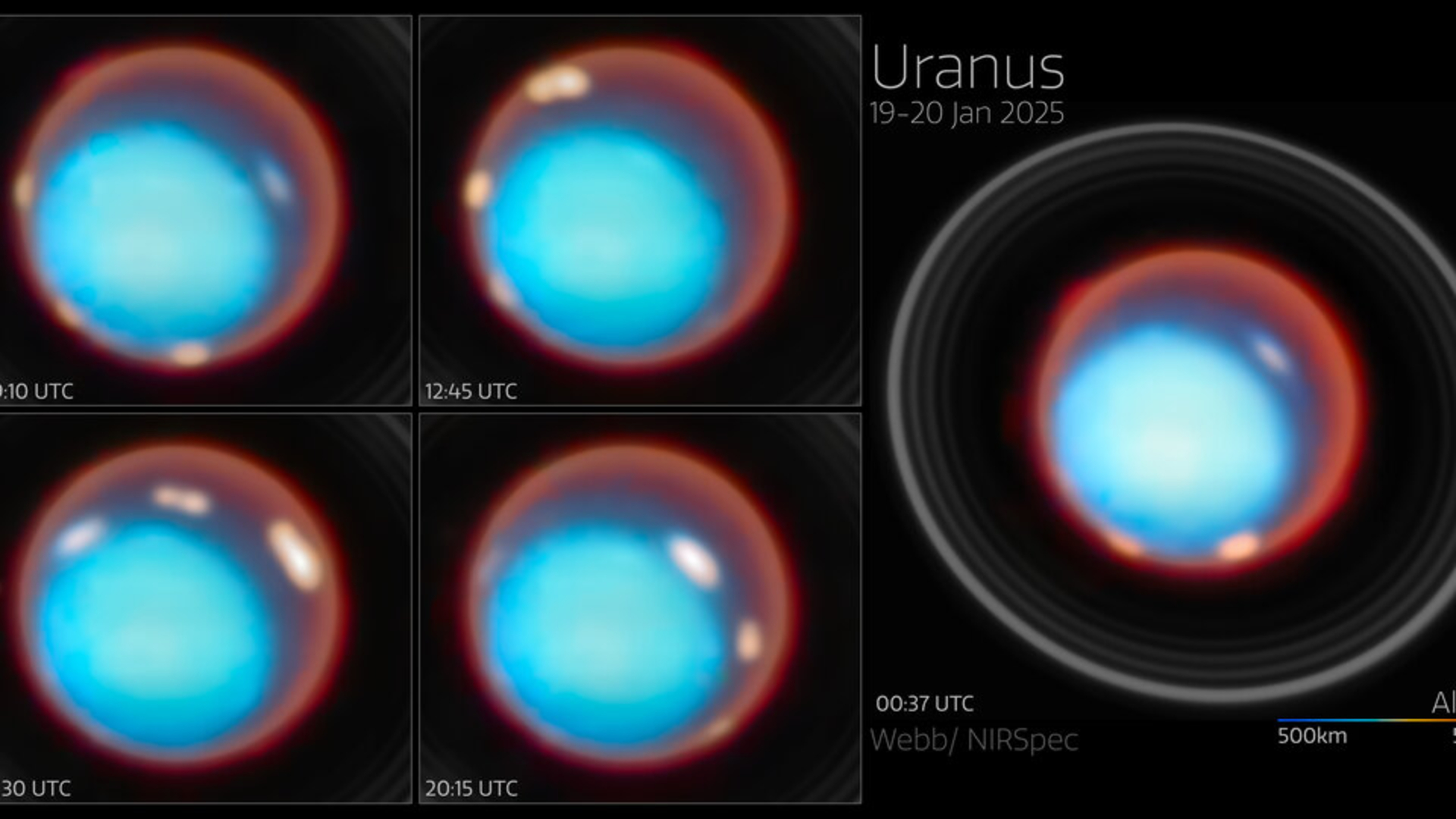
JWST observed Uranus for nearly a full rotation, charting the planet's upper atmosphere and magnetic environment for the first time.
JWST observed Uranus rotating for 15 hours in January 2025, showing bright auroral bands (in white) near the planet's magnetic poles.
(Image credit: ESA/Webb, NASA, CSA, STScI, P. Tiranti, H. Melin, M. Zamani (ESA/Webb))
Scientists using the James Webb Space Telescope just mapped the mysterious upper atmosphere of Uranus for the first time, revealing strange new features of the planet's mysterious magnetic field and glowing auroras.
The James Webb Space Telescope (JWST) observed Uranus rotating for 15 hours (nearly a full Uranian day) to learn more about how ice giants distribute energy in the upper layers of their atmospheres and to investigate how the planet's auroras operate.
To learn more, scientists used JWST to study Uranus' magnetosphere — the region of space around Uranus that's dominated by the planet's magnetic field.
"Uranus's magnetosphere is one of the strangest in the solar system," study lead author Paola Tiranti, a doctoral student at Northumbria University in the U.K., said in a European Space Agency (ESA) statement. "Webb has now shown us how deeply those effects reach into the atmosphere."
Strange lights on Uranus
JWST charted "the most detailed portrait yet" of how particles in Uranus' upper atmosphere are energized (ionized) by interactions with the sun, ESA officials said in the statement. The study, published Feb. 19 in the journal Geophysical Research Letters, aimed to measure ion temperature and density as far as 3,100 miles (5,000 kilometers) above the cloud tops of Uranus.
Temperature and density do not peak at the same altitude, JWST showed. Ions were the warmest between roughly 2,500 and 3,100 miles (4,000 and 5,000 km) but the densest at about 600 miles (1,000 km). This is because of the "complex geometry" of the planet's magnetic field, ESA officials said in the statement.
That geometry also produced two bright bands of auroras near Uranus' magnetic poles. In between the aurora belts, however, there is a "depletion" in both ion density and auroral emissions — an effect likely produced by transitions between the planet's magnetic-field lines, the scientists said. Observations at Jupiter's upper atmosphere have shown similar transition regions.
In addition to charting Uranus' upper atmosphere in three dimensions for the first time, JWST confirmed findings from previous studies that suggested the planet's upper atmosphere has been cooling steadily since the early 1990s. The telescope showed the average temperature of Uranus' atmosphere is about 307 degrees Fahrenheit (153 degrees Celsius), which is lower than the temperature measurements from other spacecraft and ground-based telescopes.
"By revealing Uranus's vertical structure in such detail, Webb is helping us understand the energy balance of the ice giants," Tiranti said. "This is a crucial step towards characterizing giant planets beyond our solar system."
US Secretary of War Pete Hegsethhas finally addressed the president's announcement to release all government files related toUFOs and aliens.
Speaking at an event for the Department of War’s 'Arsenal of Freedom' tour on Monday, Hegseth, 45, said he intends to find out if aliens really exist, and the American people will learn the truth at the same time.
Although he admitted he never envisioned being the person put in charge of potentially revealing alien life to the world, Hegseth declared that the Department of War would fully comply with the president's orders.
'I did not have that on my bingo card at all,' Hegseth said.
'We've got our people working on it right now. I don't want to oversell how much time it will take, right? We're digging in. We're going to be in full compliance with that executive order, eager to provide that for the president.'
Hegseth didn't have an estimate of how long it would take for the Pentagon and US intelligence agencies to release every piece of information on unidentified aerial phenomena (UAP), which have been widely reported throughout the US since the 1940s.
Asked if he believes aliens exist, Hegseth replied: 'We'll see. I get to do the review and find out along with all of you.'
Congresswoman Anna Paulina Luna of Florida, who was put in charge of the House Oversight Committee's task force on declassifying secret records on UAPs, revealed that all of the incoming documents will be housed on the US National Archives' website.
Secretary of War Pete Hegseth (Pictured) said the Pentagon plans to be in 'full compliance' with President Trump's order to release all UFO-related files
Trump's February 19 order to disclose any and all information on alien life came hours after he scolded former President Obama for saying in an interview that aliens were real
Until now, the Pentagon has maintained for decades that no physical evidence of extraterrestrial life has ever been found by the US, and videos capturing suspected UFOs have never been confirmed to be of a non-human origin.
Hegseth's comments came after a whirlwind week of stunning UFO-related claims made by Trump and former President Barack Obama.
On February 14, a podcast interview between Obama and Brian Tyler Cohen sent shockwaves through the US after the 44th president declared aliens were real, but they weren't being kept at Area 51.
Obama tried to walk back the comments a day later, posting on social media that he gave a short and direct answer to Cohen's rapid-fire questions 'to stick with the spirit of the speed round.'
'Statistically, the universe is so vast that the odds are good there’s life out there,' he wrote on February 15.
However, President Trump seized on the comments, declaring that Obama had actually committed a serious violation by speaking on the matter, calling the topic 'classified information.'
'I don't know if they're real or not,' Trump told reporters aboard Air Force One on February 19 when asked about alien life and his predecessor's comments.
'I can tell you he gave classified information. He made a big mistake,' the president added.
President Trump (Pictured) allegedly has a speech written which discusses the existence of UFOs and extraterrestrial life, a claim later confirmed by his daughter-in-law, Lara Trump
The US government has claimed there is no physical proof extraterrestrial spacecraft or alien life exist and have visited Earth, despite countless videos capturing UFOs
Just hours later, Trump became the first president in history to issue a broad executive directive ordering government agencies to make any information on unidentified spacecraft and non-human life public information.
The president has also reportedly granted a key US congressman access to the most famous military base - Area 51.
In a recent interview, Representative Eric Burlison of Missouri claimed his request to visit the top-secret Nevada facility and other locations allegedly connected to UFOs was approved by the White House.
Burlison is a member of the congressional oversight committee involved in the ongoing investigation into UAPs, more commonly known as UFOs.
Although the US government has continued to deny that crashed UFOs and alien bodies have been recovered, Congress has heard from multiple whistleblowers claiming secret programs have covered up the truth for 80 years.
Seeking physical evidence of these encounters, Burlison told the ALN Podcast that the Trump Administration has ordered Hegseth and the Department of War (formerly the Department of Defense) to 'make it happen.'
'The extent to which they've been involved is literally just saying to the Department of Defense that "we're backing his request. Do what you can to make it happen,"' Burlison explained during the January 30 interview.
Trump has previously said he didn't believe UFOs or aliens exist, but revealed that military pilots have personally told him about their mid-air encounters with unexplainable craft which defied the laws of gravity.
When asked if he would declassify the files about aliens on the Lex Fridman Podcast in September 2024, then-candidate Trump said: 'Sure, I’ll do that. I would do that. I’d love to do that. I have to do that.'
The president's daughter-in-law, Lara Trump, has claimed he already has a written speech prepared, which discusses the topic of UFOs and alien life visiting Earth.
White House insiders and UFO researchers have claimed this speech is scheduled to be given this year, possibly coinciding with the Roswell UFO incident's 79th anniversary on July 8 or at the United Nations General Assembly in September.
The Pentagon’s All-domain Anomaly Resolution Office (AARO) has outlined plans to standardize the collection and analysis of reports on unidentified anomalous phenomena (UAP), marking a shift toward greater collaboration with civilian researchers and more structured public data sharing.
The plans were conveyed in a new reportthat appeared on AARO’s website earlier this month, detailing an August 2025 private meeting with experts from government, academia, and civilian research organizations convened in the Washington, D.C., area.
Coordinated by AARO and hosted by Associated Universities, Inc. (AUI), the workshop marked a significant step in AARO’s engagement with civilian and independent research groups. The meeting sought to establish a more collaborative and professional process for standardizing the study of UAP within the Department of War (DoW), while potentially increasing transparency compared with previous years.
Topics discussed at the 2025 Workshop
Traditionally, many UAP gatherings involving academics or government officials have focused on presenting findings, historical analysis, or scientific data. The AARO workshop took a different approach, forming breakout groups to address a foundational challenge: how to collect, manage, integrate, and analyze UAP data using rigorous scientific methods—both internally at AARO and in collaboration with civilian datasets.
Areas that the August 2025 workshop focused on included:
Assessing the current landscape of UAP reporting systems and data repositories;
Identifying key challenges and gaps in UAP data collection, standardization, and accessibility;
Exploring methodologies for data analysis and pattern recognition in UAP reports.
Nurturing trust and collaboration among researchers, government agencies, and civilian organizations; and
Proposing recommendations for developing a robust UAP data infrastructure.
UAP Report Collection
UAP reports originate from a wide array of sources, including military logs, pilot reports, civilian testimony, archival records, social media posts, and sensor-based systems such as radar and imagery platforms.
In the past, challenges with UAP data collection have ranged from fragmentation and inconsistent formatting to the lack of standardized metadata and limited cross-correlation between datasets. Classification restrictions, language differences, social stigma, and inconsistent retention policies have further complicated access for both government and civilian researchers.
According to the report, participants in the 2025 workshop emphasized that progress in UAP research depends on building a shared data infrastructure between government and civilian researchers. One major recommendation was the development of standardized metadata templates that combine human expertise with AI tools, leverage existing infrastructure, support case triage, and integrate interviews and historical reports, while prioritizing new high-quality data.
These templates would record contextual information such as time, location, morphology, provenance, and environmental conditions.
Clear metadata standards would also make it easier for agencies and independent researchers to share datasets while protecting sensitive information and privacy. The white paper notes AARO seeks a “multi-disciplinary and community-engaged approach to UAP narrative data,” which may influence future sensor deployment strategies.
The white paper identifies artificial intelligence as both a potential solution and a potential hazard. AI could assist with transcription, clustering, and large-scale pattern detection, but also risks introducing bias, amplifying hoaxes, or producing inaccurate results—the classic “garbage in, garbage out” problem. The workshop strongly endorsed a hybrid human-AI model with human oversight.
Privacy First
The AARO whitepaper emphasizes that privacy was a central priority for the workshop. “Participant privacy was an important consideration throughout workshop planning, and Institutional Review Board (IRB) approval governed data collection and security for the workshop,” the report states.
Workshop participants were asked to adhere to the “Chatham House Rules,” and not to take photos or attribute statements to individuals without permission. Given these circumstances, civilian participants who attended the workshop and later spoke with The Debrief did so on background.
“Civilian participants were given genuine opportunities to contribute perspectives and technical insights, and there appeared to be a shared commitment—on the part of both AARO personnel and external researchers—to improving the quality and rigor of UAP data collection,” one participant told The Debrief. “The discussions and presentations were conducted in a constructive, solutions-oriented atmosphere that encouraged collaboration on best practices for future observational and analytical efforts.”
The breakout sessions also emphasized balancing quantitative data with qualitative witness narratives and incorporating cultural and experiential perspectives while allowing multiple analytical approaches to coexist.
“I was pleasantly surprised that AARO did a good job of getting a cross-section, not only of the UAP community, right, but also of people from other federal groups or agencies that attended. None of the three-letter agencies, at least none that I knew of, were represented,” said one participant who spoke with The Debrief.
“There was definitely more transparency compared to their public statements and postings,” another participant said. “I think that was attributed to the level of trust they had with their select invitees in a private session. ”
The Importance of Public Reporting
Improving reporting systems was another major priority discussed at the workshop. Recommendations included open-ended narrative submissions followed by AI-assisted structuring that witnesses could review; improved geolocation tools; standardized time inputs; flexible units; and optional metadata fields. Participants also encouraged the release of de-identified public data to build public trust and reduce stigma.
Following the report’s publication, The Debrief reached out to the Pentagon for comment on how AARO’s mission may incorporate public reports going forward.
“AARO anticipates using public reports to enhance overall UAP trend analysis and, when possible, to enrich open UAP cases from government and law enforcement sources,” said Sue Gough, a Department of War spokesperson, in an email to The Debrief.
According to AARO’s official website, it currently accepts UAP-related information from military and Department of War civilian personnel, although it adds that “AARO will announce when a reporting mechanism is available to the public.”
Asked about the potential timeline for completing this civilian-accessible UAP reporting mechanism, Gough told The Debrief that “We have nothing to announce at this time.”
A Change in Direction
Sean M. Kirkpatrick, a laser and materials physicist and inaugural director of AARO, presided over the office during the initial phase of its development. At that time, engagement with civilian UAP researchers had been limited and often viewed through a more cautious, security-focused lens. That approach appeared to reflect broader government concerns about data reliability, classification, and the challenges of integrating independent research into official investigative frameworks; however, it also left some outside researchers feeling excluded from the process, and at times drew criticism from some in the broader UAP research community.
Under its current director, Dr. Jon T. Kosloski, AARO appears to be moving toward a more collaborative model. The recent workshop brought together representatives from academia, government, and civilian research communities, offering participants an opportunity to contribute perspectives on data collection practices, reporting standards, and analytical methods. For many independent researchers, the possibility of participating in discussions about government UAP data infrastructure and national security implications marks a notable shift from previous engagement.
Overall, the workshop concluded that continuous collaboration and community-building are needed to establish a sustainable “community of practice” across disciplines.
“AARO recognizes that input from the scientific and academic community is critical to its work and hopes to convene future workshops and collaborative opportunities, as needed, to foster an interdisciplinary community for UAP analysis,” Gough told The Debrief.
“The long-term success of these efforts will be measured by higher-quality UAP reporting, the use of new analytical tools, and improved understanding of UAP sightings, drawing on the expertise of a wide range of stakeholders,” Gough added.
Chrissy Newton is a PR professional and the founder of VOCAB Communications. She currently appears on The Discovery Channel and Max and hosts the Rebelliously Curious podcast, which can be found on YouTube and on all audio podcast streaming platforms. Follow her on X: @ChrissyNewton, Instagram: @BeingChrissyNewton, and chrissynewton.com. To contact Chrissy with a story, please email chrissy @ thedebrief.org.
Artemis II – NASA says it's fixed the fuel leak, putting the Moon mission on course for a March launch
Artemis II – NASA says it's fixed the fuel leak, putting the Moon mission on course for a March launch
The next mission to the Moon could now be weeks away
BY Iain Todd
NASA says the second wet dress rehearsal of the upcoming Artemis II mission has concluded with engineers having successfully fuelled the Space Launch System.
The wet dress rehearsal concluded on Thursday 19 February, and was the second rehearsal of the mission that will take humans back to the Moon.
A previous Artemis II wet dress rehearsal that concluded on 2 February found a leak in the system that provides liquid hydrogen fuel for propulsion of the Space Launch System (the rocket).
But it seems NASA engineers have completed the second wet dress rehearsal with the problem fixed, and the Artemis II crew are preparing to enter a 14-day quarantine ahead of the first potential launch on 6 March.
Feed showing the fuelling test for Artemis II during the second wet dress rehearsal
Prep for a mission to the Moon
NASA's Artemis II mission will see astronauts Reid Wiseman, Victor Glover, Christina Koch and Jeremy Hansen launch to the Moon and back.
The 10-day mission will take the crew to the Moon, further into space than any human has ever travelled before, then slingshot around the Moon and return to Earth.
Part of preparations for the launch of Artemis II include a wet dress rehearsal, where the ground team run through all the steps to launch, but without the astronauts onboard.
The first wet dress rehearsal for Artemis II concluded on 2 February 2026.
Animation showing the flight path of the Artemis II mission. Credit: NASA, Kel Elkins (Science and Technology Corporation), Ernie Wright (USRA)
Engineers discovered issues with the system providing fuel to the Space Launch System, but also problems with a valve involved in the pressurisation of the Orion crew module hatch, which is where the astronauts will be situated during their journey around the Moon.
The second dress rehearsal concluded on 19 February 2026.
NASA says the ground team successfully fuelled the Space Launch System rocket and demonstrated the launch countdown for Artemis II during the rehearsal at Kennedy Space Center in Florida.
Engineers loaded over 700,000 gallons of liquid fuel, practiced closing the Orion capsule's hatches and completed two runs of the final phase of the launch countdown.
Credit: NASA/Sam Lott
The Artemis II crew were present, but observing the wet dress rehearsal from the Launch Control Center at Kennedy Space Center.
Previously-known issues around maintaining communications between ground teams seem to have re-surface, however.
NASA says teams experienced a loss of ground communications in the Launch Control Center.
However, backup communications kicked in so the fuelling could continue before engineers restored main communications and isolated what had caused the issue.
The Artemis II Space Launch System inside the Vehicle Assembly Building at NASA's Kennedy Space Center, Florida, just prior to rollout, 18 January 2026. Credit: NASA
While no launch date has been confirmed, the Artemis II crew are preparing to enter quarantine again, having been released from earlier quarantine after issues with the first wet dress rehearsal became apparent.
Quarantine is a standard practice for the crewed Artemis missions, and sees the astronauts isolated in order to ensure they remain fit and healthy for the mission ahead.
Even Isaac Newton believed that God created the Universe, some 6,000 years ago.
Later, many scientists, including young Albert Einstein, assumed the Universe itself to be eternal and everlasting.
Einstein's theories of spacetime revolutionised our understanding of the Universe. Credit: Bettmann / Getty Images
The beginning of the Universe
But when cosmic expansion was discovered, Belgian cosmologist (and Jesuit priest) Georges Lemaître realised there must have been a beginning – a scientific version of Genesis, so to speak.
Not that everyone immediately agreed.
Well into the 1960s, Fred Hoyle’s steady-state theory was quite popular among iconoclastic scientists as well as lay people.
Instead, he assumed that a slow, continuous creation of new matter could keep the average density and the general properties of the Universe constant over time.
Popular in the 1950s, steady-state theory claimed matter is continuously created as the Universe expands, a theory overtaken by the Big Bang idea that density drops as galaxies move away from one another
The 1964 discovery of the cosmic microwave background was the major nail in the coffin of the steady-state theory.
Ever since, supporting evidence for the Big Bang origin of our Universe has accumulated to a point where there’s hardly any doubt left.
Still, no one has the final answer to the question "what happened before the Big Bang?".
Most scientists simply ignore the question, as it seems to be too hard a nut to crack.
A snapshot of the Cosmic Microwave Background - heat left over from the Big Bang - when the Universe was just 380,000 years old. What came before? Credit: ESA and the Planck Collaboration
Beginning of time
When astronomers talk about the Big Bang, they usually do not refer to the very beginning of the Universe (time zero), but to the incredibly hot and compact state of the Universe in the first couple of minutes of its existence.
To some extent, this is because no one has a real clue about the true nature of time, let alone about the beginning of time.
British physicist Julian Barbour, for one, has argued that time doesn’t even exist, except as an illusion in our minds.
According to others (including Stephen Hawking), time came into existence together with the Universe, rendering the whole concept of the word ‘before’ meaningless.
Asking what happened before the Big Bang would be like asking what lies north of the North Pole, or what distance is shorter than zero.
Will all matter eventually crush back in on itself? Credit: NASA, ESA, H. Teplitz and M. Rafelski (IPAC/Caltech), A. Koekemoer (STScI), R. Windhorst (Arizona State University), Z. Levay (STScI)
Alternative theories
Then again, we simply don’t know whether or not there was time before the Big Bang.
According to the once-popular idea of the cyclic (or oscillatory) Universe, the current expansion of space could one day revert into a contraction, and the resulting Big Crunch could bounce into a new Big Bang, starting the next cycle of an eternal sequence.
It’s just one of many hypotheses in which our Universe is not unique, but part of a possibly infinite multiverse, one way or another.
And if the multiverse is also infinite in time, we’re back to the idea that everything has existed forever, conveniently circumnavigating the nagging question of a beginning.
Credit: NASA/JPL
Finally, South African physicist Neil Turok thinks the Big Bang not only spawned our Universe, but also an anti-Universe, composed of antimatter and running backward in time.
Again, an intriguing idea, but there’s also no chance of confirmation (or rejection!) via observations.
In the end, we have to admit we’re ignorant about the true beginning of the Universe.
And even if we lean towards an eternal multiverse with no real beginning at all, we don’t know why there is something (or, more to the point, why there is everything) instead of nothing.
This moss just survived months in space. Here's why it could one day help humans live on Mars
This moss just survived months in space. Here's why it could one day help humans live on Mars
By Iain Todd
A team of scientists have confirmed that a sample of moss – the small plant often found in damp, shady spots – was able to survive the harsh radiation of space.
On Earth, moss is known for its resilience, surviving in the Himalayas, Antarctic tundra, lava fields and even in the scorching sands of East California's Death Valley.
Now moss can add another string to its bow: the ability to survive in space for months on end.
A study found more than 80% of moss spores survived 9 months outside the International Space Station – and returned to Earth still capable of growing.
This is the first demonstration that moss can withstand long-term exposure to the extreme elements of space, and could have implications for humans' ability to develop ecosystems on barren planets like Mars.
Moss growing on arctic tundra, Nunavut Territory, Vansittart Island, Canada. Credit: Paul Souders / Getty Images
Why moss?
The study was led by Tomomichi Fujita of Hokkaido University, Japan, who was inspired by moss’s ability to survive among the harshest conditions on Earth.
His question was simple: if moss can survive glaciers, deserts and volcanoes, could it also survive space?
"Most living organisms, including humans, cannot survive even briefly in the vacuum of space," says Fujita.
"However, the moss spores retained their vitality after nine months of direct exposure."
The results, he says, suggest that life on Earth contains "intrinsic mechanisms" that can endure conditions far beyond our planet.
A sporophyte sample from moss that survived the harsh environment of space on the exterior of the International Space Station. Credit: Tomomichi Fujita
Putting moss to the test
Before sending moss to space, the researchers simulated space-like stresses on Physcomitrium patens, a well-studied moss known as spreading earthmoss.
The team exposed them to extreme temperatures, vacuum conditions and intense ultraviolet (UV) radiation.
UV radiation proved the most damaging. Juvenile moss died under high UV exposure or severe temperatures.
Brood cells fared better, but the real champions were the encased spores, which tolerated UV radiation roughly 1,000 times better than the other structures.
The spores also survived freezing at –196°C (–320°F) for over a week and withstood 55°C (131°F) heat for a month.
The researchers suggest the sporophyte’s protective outer casing shields the spore from radiation and physical damage.
This is likely an evolutionary feature dating back 500 million years, when early bryophytes first moved from water onto land.
Humans need sophisticated equipment to survive outside the Space Station. Moss seems to fare much better. Credit: NASA
The ultimate test: a trip beyond Earth
To test these structures under real cosmic conditions, the team launched hundreds of sporophytes to the International Space Station in March 2022.
Astronauts mounted them on the Space Station's exterior, where they endured vacuum, cosmic radiation, microgravity and temperature extremes for 283 days.
In January 2023, the spores returned to Earth.
"We expected almost zero survival," Fujita says. "But the result was the opposite: most of the spores survived.:
More than 80% survived, and of those, all but 11% successfully germinated in the lab.
The team checked chlorophyll levels as well – essential pigments for photosynthesis – and found normal levels across the spores, aside from a 20% drop in chlorophyll a.
But even that reduction did not appear to harm the spores’ overall health.
A previous experiment on the Space Station, the Environmental Response and Utilization of Mosses in Space – Space Moss experiment, saw mosses grown inside the ISS to determine how microgravity affects their growth, development, gene expression, photosynthetic activity and other features. Credit NASA
How long could moss survive in space?
Using their experimental data, the researchers built a model to estimate long-term survival.
Their rough prediction: up to 5,600 days (around 15 years) in space.
This estimate is preliminary, they caution, and more data will be needed to refine it.
Still, the finding underscores the astonishing durability of early land plants, and raises new possibilities for space exploration.
The researchers hope their results will guide future work on how plants interact with extraterrestrial soils and how hardy species like moss might support agricultural systems beyond Earth.
"Ultimately, we hope this work opens a new frontier toward constructing ecosystems in extraterrestrial environments such as the Moon and Mars," says Fujita.
"I hope that our moss research will serve as a starting point."
An extraordinary new investigation, originally published by Popular Mechanics is drawing fresh attention to a string of unexplained encounters between U.S. Navy personnel and unidentified submerged objects (USOs). These sightings—recorded over decades and across multiple oceans—are now being described by former officers as a legitimate threat and part of a global pattern that defies conventional physics.
Unexplained Encounters During Training Missions
In 2014, Lieutenant Ryan Graves, a U.S. Navy F/A-18 pilot stationed off the coast of Virginia Beach, began to detect anomalies during flight training missions. Initially dismissed as radar glitches, the signals reappeared repeatedly—only this time, they were backed by infrared and optical confirmation.
In Just a Week, Over 7 Billion People Will Witness The Most Spectacular Total Lunar Eclipse
According to Graves, these unidentified objects could hover completely still or accelerate to supersonic speeds. They were seen across all altitudes, always above or near the ocean. Graves reported seeing a particularly strange object: a black or dark gray cube enclosed in a clear sphere, estimated to be 5 to 15 feet in diameter. It passed within 50 feet of one of the jets. That incident, he later explained, “was the turning point.”
When Graves later spoke with pilots stationed on the USS Nimitz and USS Princeton off the West Coast, he discovered that similar sightings had occurred for years.
Craft That Travel Between Air And Sea
The military has since adopted the term unidentified anomalous phenomena (UAPs) to describe objects like those witnessed by Graves. A growing number of them appear to be transmedium—able to travel from air to sea without slowing down, splashing, or generating turbulence. These transitions contradict what we know about aerodynamics and hydrodynamics.
Rear Admiral Tim Gallaudet, a retired oceanographer and Navy commander, was among the first to review footage of these transmedium encounters, captured in 2015 by jets from the USS Theodore Roosevelt. The craft shown in those videos moved at extraordinary speeds, rotated midair, and left no propulsion trail.
“What I saw was not our technology,” Gallaudet said. “No nation has craft that can move like that.” For him, these phenomena represent a national research priority. He now collaborates with Graves and former Pentagon officials to push for transparency and investigation.
Four Major Incidents Still Unexplained
Several high-profile military encounters continue to raise questions about unidentified submerged objects. In 2004, Navy pilots aboard the USS Nimitz witnessed a Tic Tac–shaped craft that dropped from 80,000 feet to sea level in under one second, with no wings or engines.
In 2013, infrared footage from Aguadilla, Puerto Rico captured a spherical object entering the ocean without a splash, resurfacing, then splitting into two before submerging—defying known flight and fluid dynamics.
A 1990s incident involved a CH-53 Sea Stallion helicopter crew near Puerto Rico. As they retrieved a drone, a massive dark object rose from below and pulled it back underwater, leaving the pilot stunned.
In 2019, the USS Omaha recorded a spherical object hovering over the Pacific before it dropped into the water without any visible splash. A sailor later confirmed similar sightings aboard the USS Jackson in 2023.
This New U.S. Law Could Expose Alien Technology
The volume and consistency of these reports have led to real political action. In 2023, Congress passed the UAP Disclosure Act, mandating federal agencies to catalog, analyze, and disclose data about recovered nonhuman craft and biologics. The legislation marks a shift in how the U.S. treats this topic, acknowledging the possibility of nonhuman intelligence and hinting at secret recovery programs.
Graves and Gallaudet recently briefed Washington officials on the national security implications of USOs. “We’re at a unique moment in history,” Graves said. “People have access to tools that can reveal things. The momentum is building.”
Reflecting on what lies beneath, Gallaudet posed a final theory: “Maybe they lived here for a long time, before we even evolved, and sought safety from the Earth’s atmospheric and geologic cataclysms by creating a habitat or place to live beneath the seafloor… That’s one hypothesis.”
NASA’s Curiosity rover has unveiled an incredible feature on Mars: intricate geological formations resembling giant spiderwebs, known as boxwork ridges, that stretch across the Martian surface. For the past six months, Curiosity has been carefully exploring this region, and its findings are raising some very interesting questions about the possibility of life on Mars long before it became the dry, desert world we see today.
Theseboxwork formations, with ridges ranging from three tosix feet tall, aren’t just a weird visual anomaly. They tell a story about Mars’ watery past. The discovery comes at a time when scientists are trying to piece together the history of water on Mars and how it may have supported life, or at least provided the conditions that could have.
What the Ridges Might Reveal?
Curiosity’s mission on Mars is focused on one big question: Did water ever flow on Mars in a way that might have supported life? According to NASA, Curiosity has been exploring an area of Mount Sharp where these boxwork formations can be found, and the data it’s collecting is helping answer that question in unexpected ways.
“The formations suggest ancient groundwater flowed on this part of the Red Planet later than scientists expected. This possibility raises new questions about how long microbial life could have survived on Mars billions of years ago.”
Curiosity’s detailed exploration of these ridges has added some important evidence.
“Seeing boxwork this far up the mountain suggests the groundwater table had to be pretty high,” said Tina Seeger, one of the scientists leading the investigation. “And that means the water needed for sustaining life could have lasted much longer than we thought looking from orbit.”
This image of boxwork formations was captured by NASA’s Curiosity rover on Mars.
Credit: NASA/JPL-Caltech/MSSS
Rover Exploration: Navigating the Tight Ridges
But getting to the bottom of this discovery isn’t exactly easy. Curiosity, an SUV-sized rover, is rolling across a landscape with ridges just a few feet wide. For the team at NASA’s Jet Propulsion Laboratory, navigating this terrain is a bit like threading a needle.
“It almost feels like a highway we can drive on. But then we have to go down into the hollows, where you need to be mindful of Curiosity’s wheels slipping or having trouble turning in the sand,” explained Ashley Stroupe, an operations systems engineer.
It’s a constant balancing act to make sure the rover doesn’t get stuck or damaged, all while trying to collect as much data as possible from these fascinating Martian features.
Despite the challenges, the rover has been able to gather rock samples and analyze them with some seriously sophisticated equipment.
Minerals left behind by drying groundwater billions of years ago on Mars created these bumpy nodules.
Credit: NASA/JPL-Caltech/MSSS
What the Boxwork Reveals?
As Curiosity ascends the mountain, it’s uncovering signs of a climate that fluctuated between wet and dry conditions. The boxwork formations themselves are evidence of a time when water was more abundant, even if it wasn’t around in the way we see it on Earth today. By analyzing the mineral content and the structure of the boxwork ridges, scientists are starting to put together a more nuanced timeline of Mars’ climate history.
The minerals that the rover has found in the ridges, such as clay and carbonate, suggest that groundwater may have been active for much longer than researchers initially thought.
“We can’t quite explain yet why the nodules appear where they do.” As Seeger suggested. “Maybe the ridges were cemented by minerals first, and later episodes of groundwater left nodules around them,” hinting at the possibility of multiple wet periods across Mars’ history.
American alligators in the Florida Everglades use their snouts and claws to create massive trenches known as "gator holes." Paul Giamou/Getty Images
Nutrients, water and living space. Those are some of life's basic needs. Anything that alters their distribution is going to be a key factor in the struggle for survival. Change the waterways, the landscape or the availability of food and an entire ecosystem can be reshaped.
Certain species wield that power to great effect. One of the most fascinating topics in biology is the role of ecosystem engineers. Scientists define these as "organisms that directly or indirectly modulate the availability of resources to other species by causing physical state changes to biotic or abiotic materials."
In simple terms, ecosystem engineers alter their physical surroundings in ways that have major impacts on the livelihood of other organisms. A perfect example would be the American alligator (Alligator mississippiensis).
Out in the wild, the big reptiles like to make their own swimming pools. Using their snouts and claws, they create massive trenches known as "gator holes" in the limestone around Florida's Everglades. In short order, these things flood with water. The depressions also tend to remain full of water, even well into the dry season — a time when standing water is scarce.
For other life forms, these gator holes provide badly-needed oases. Frogs and turtles pour into these convenient little ponds, while plants surround their rims, attracting all kinds of insects. So, as unlikely as it sounds, Florida alligators are environmental stewards. They create brand-new homes for their neighbors and — in the process — strengthen the biodiversity of the Everglades.
Other ecosystem engineers leave different marks. Today, we're looking at five that reshape rivers, link ponds together and transform mangrove creeks. Mapmakers of the world, you'll want to keep your erasers handy when these beasties come to town.
Beavers can wreak havoc digging canals and building dams that often block rivers. Dean Fikar/Getty Images
The term "busy as a beaver" is high praise indeed. Beavers are insanely hard-working rodents; a lone individual can cut down up to 200 trees in a single year. Famously, they build sturdy homes — or "lodges" — for themselves out of branches, mud and other materials. They can also make their own large-scale ponds by damming streams.
With a well-placed dam, a beaver family will be able to regulate water flow. On the structure's upstream side, backlogged water may give rise to a standing pond where none previously existed. This not only gives beavers a place to build their lodges, it also affords easy access to surrounding trees. Often, a couple of inches (5 centimeters) or feet (0.6 meters) of water covers the bases of nearby pines and hardwoods that once stood on dry ground. As a result, beavers can swim right up to these trees. They also like to dig canals that branch out of the new ponds, penetrating deeply into the local forests.
These new beaver-created wetlands provide homes for smaller animals like amphibians. Plus, the rodents' dams make great natural filters, blocking excess nitrogen from our creeks and streams.
However, not all the side-effects are positive. When a beaver dam fails, it's liable to flood towns or farms. The aftermath can be expensive: In the southeastern U.S. alone, these floods are responsible for an estimated $22 million in yearly damages to the timber industry. It's not surprising, then, that many people view beavers as pests. If you've got a beaver problem, know that humane solutions are out there.
4: Hippos
Hippos carve up and revamp Africa's waterways just by going about their daily business. Arterra/Getty Images
Landscaping is child's play for these guys. Put a group of hippos into a floodplain with lots of nice, soft soil and they'll start reconfiguring the turf like crazy. The massive creatures like to plow through the reed beds that ring bodies of water. This creates deep depressions in the underlying soil, which in turn become channels. Also, on hot days, hippos will sometimes relax in the cool comfort of freshwater pools.
However, these don't offer much in the way of food. So when hunger strikes, the hippos leave their little pools to feed elsewhere. All of this coming and going produces what Discover magazine once called "hippo highways."
Worn down into deep, plant-free ravines by wandering hippos, these footpaths can be as much as 16 feet (5 meters) wide and — just like gator holes — they're quick to fill up with water. What's more, hippo highways linking the pools to big rivers can also be established. If the area should flood, these connection points may become an outlet for surging water. They also enable swamplands to expand. And under the right circumstances, the trench-like trails will divert a great deal of sediment from rivers into lagoons or ponds.
So to make a long story short, just by going about their daily business, hippos can carve up and revamp Africa's waterways. Neat. But if hippopotamuses are true blue ecosystem engineers, then how do they affect other organisms?
Well, one 2015 analysis determined that hippo dung is an important source of nutrition for at least some of the fish and insects that share the animal's native range. Don't underestimate the power of poop.
3: Muskrats
The burrows muskrats build have big implications for the waterways because they promote erosion, which can cause riverbanks to collapse. Design Pics/David Ponton/Getty Images
Beavers may be the poster children for ecosystem engineers, but other rodents also deserve some acknowledgement for their roles in shaping habitats.
Consider the muskrat. Like beavers, muskrats are known to create dome-shaped lodges out of things like twigs and leaves. But this isn't their only method of building shelters. Muskrats who live alongside rivers, ponds or ditches tend to eschew lodges in favor of deep holes they've burrowed into the banks. The critters begin by diving under the water, where they start working on a tunnel about 6 to 18 inches (15.2 to 45.7 centimeters) below the surface. From there, the muskrats dig farther and farther at an upward slant. Eventually, they produce a warm, dry living chamber that's only accessible through underwater entrances. Not a bad way to keep uninvited guests out.
Such burrows can have big implications for the waterways they're connected to. For one thing, the structures promote erosion, which can cause banks to collapse. This prompts water to race into the afflicted area, disrupting the river flow. Over time, if enough water is re-routed toward the collapsed bank, the river's curvature might change — thanks partly to the rodents. And much to the annoyance of human land developers, when a muskrat burrows into a manmade dam, unwanted drainage often follows.
2: Elephants
African elephants transform the landscape and waterways in multiple ways. Wim van den Heever/Getty Images
It's hard to keep a full belly when you weigh 7 tons (6.35 metric tons). African elephants are larger than life and have appetites to match. On a typical day, an adult will spend 12 to 18 hours eating, devouring as much as 600 pounds' (272 kilograms') worth of food in the process. All that munching is vital to the ecosystem. So are the bowel movements that come later.
Elephant dung is a nutritious fertilizer for the soils of Africa; it's also a vehicle by which many seeds are dispersed. Furthermore, by knocking down trees and eating shrubs, these colossal animals convert forests into grasslands.
A 2009 study revealed even more about the transformative powers that African elephants have over their habitats. Appearing in an issue of the journalBioScience, this study reported on the ecosystem engineers in Botswana's Okavango Delta. Elephants, the co-authors noted, are great at building water channels. The tusked herbivores like to cover the same land routes over and over again, making trails in the process. Sometimes, multiple generations of elephants will re-use the exact same footpaths. As time goes by, the heavy animals can't help but compress the soil, turning their walkways into trenches.
According to study authors, when elephants move back and forth between two bodies of water, their sunken trails become nice conduits. Thus, rivers or ponds that were once isolated can be merged via elephant-made canals.
And that's not the only service that elephant routes provide. In 2010, environmental scientists Roy Sidle and Alan Ziegler published a seven-year study on an Asian elephant trail in northern Thailand. By inspecting both water and sediment levels, they determined that this pathway helped send monsoon runoff directly into the local streams.
1: Burrowing Crabs
Burrowing crabs trenches along mangrove swamp shorelines so deep they often collapse. Nortondefeis via Wikimedia Commons
It's time to take a break from our own phylum. A number of crustaceans are great diggers, including the so-called fiddler crabs (genus Uca), which shelter in tunnels measuring up to 3 feet (0.9 meters) or more in depth. (The holes are quite a construction project, given the fact that most fiddler species are less than 2 inches (5 centimeters) wide.
And then we've got the "burrowing crabs" of the genus Chasmagnathus. Unrelated to the fiddlers, these guys live in the mangrove swamps, salt marshes and estuaries of eastern Asia. For many years, a South American species formerly known as Chasmognathus granulatus was assigned to this genus, but in 2006, it was reclassified and renamedNeohelice granulata — though, confusingly, some scientists still use the old name.
Often found in the mangrove swamps of Brazil and Argentina, Neohelice granulata is an efficient, deep-digging burrower. Like muskrat holes, the tunnels these small crabs builds are liable to weaken the surrounding turf. On mangrove swamp shorelines, this has the effect of widening tidal creeks, whose mud and clay-based banks are rendered more vulnerable to erosion by the digging invertebrates. And that's just part of the story. Because burrowing crabs have such a pronounced effect on sediment composition, their tunnels can also cause completely new creeks to form within these mangrove systems.
So despite being rather miniscule animals, burrowing crabs can shake up entire waterway networks. Will nature ever cease to amaze us?
Beste bezoeker, Heb je zelf al ooit een vreemde waarneming gedaan, laat dit dan even weten via email aan Frederick Delaere opwww.ufomeldpunt.be. Deze onderzoekers behandelen jouw melding in volledige anonimiteit en met alle respect voor jouw privacy. Ze zijn kritisch, objectief maar open minded aangelegd en zullen jou steeds een verklaring geven voor jouw waarneming! DUS AARZEL NIET, ALS JE EEN ANTWOORD OP JOUW VRAGEN WENST, CONTACTEER FREDERICK. BIJ VOORBAAT DANK...
Druk op onderstaande knop om je bestand , jouw artikel naar mij te verzenden. INDIEN HET DE MOEITE WAARD IS, PLAATS IK HET OP DE BLOG ONDER DIVERSEN MET JOUW NAAM...
Druk op onderstaande knop om een berichtje achter te laten in mijn gastenboek
Alvast bedankt voor al jouw bezoekjes en jouw reacties. Nog een prettige dag verder!!!
Over mijzelf
Ik ben Pieter, en gebruik soms ook wel de schuilnaam Peter2011.
Ik ben een man en woon in Linter (België) en mijn beroep is Ik ben op rust..
Ik ben geboren op 18/10/1950 en ben nu dus 75 jaar jong.
Mijn hobby's zijn: Ufologie en andere esoterische onderwerpen.
Op deze blog vind je onder artikels, werk van mezelf. Mijn dank gaat ook naar André, Ingrid, Oliver, Paul, Vincent, Georges Filer en MUFON voor de bijdragen voor de verschillende categorieën...
Veel leesplezier en geef je mening over deze blog.