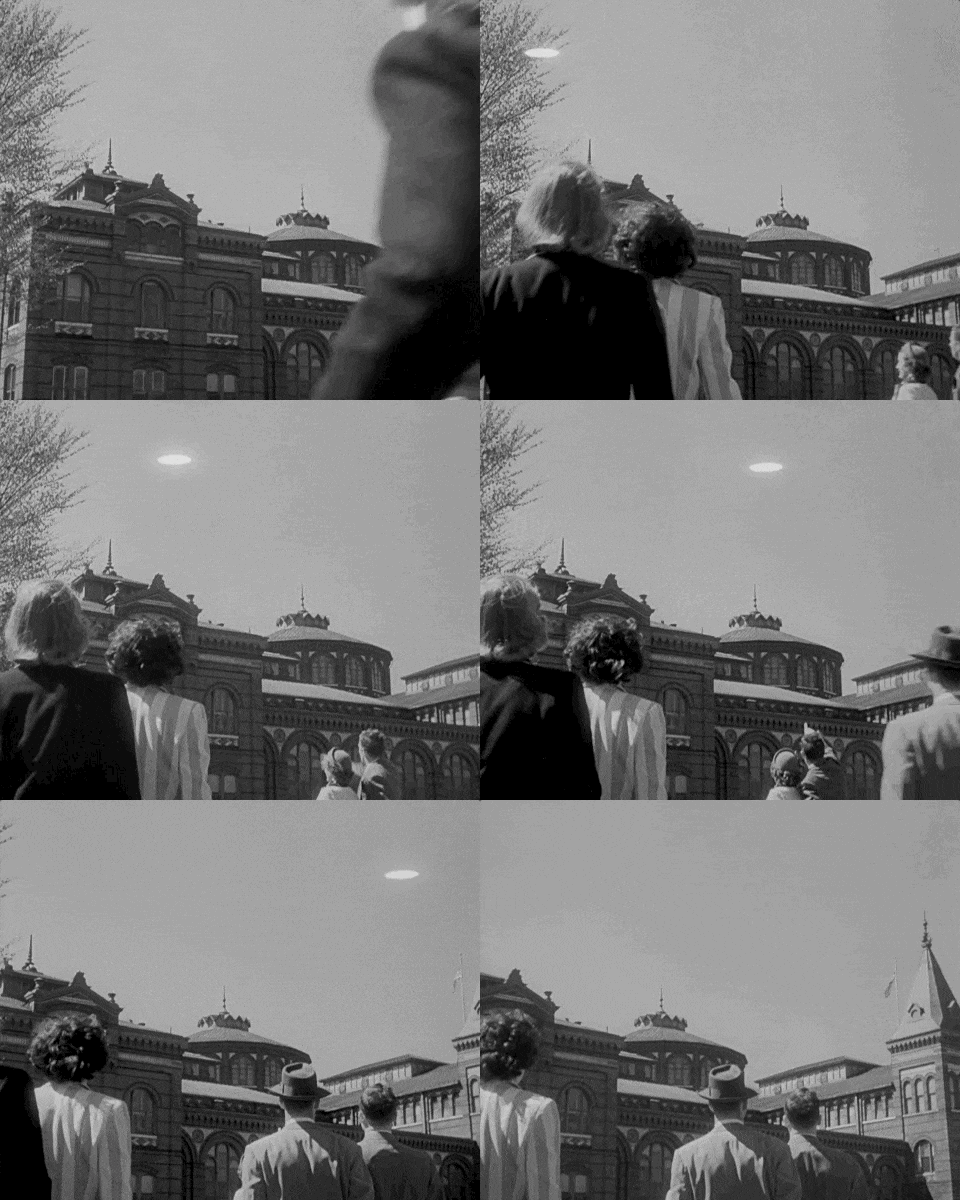
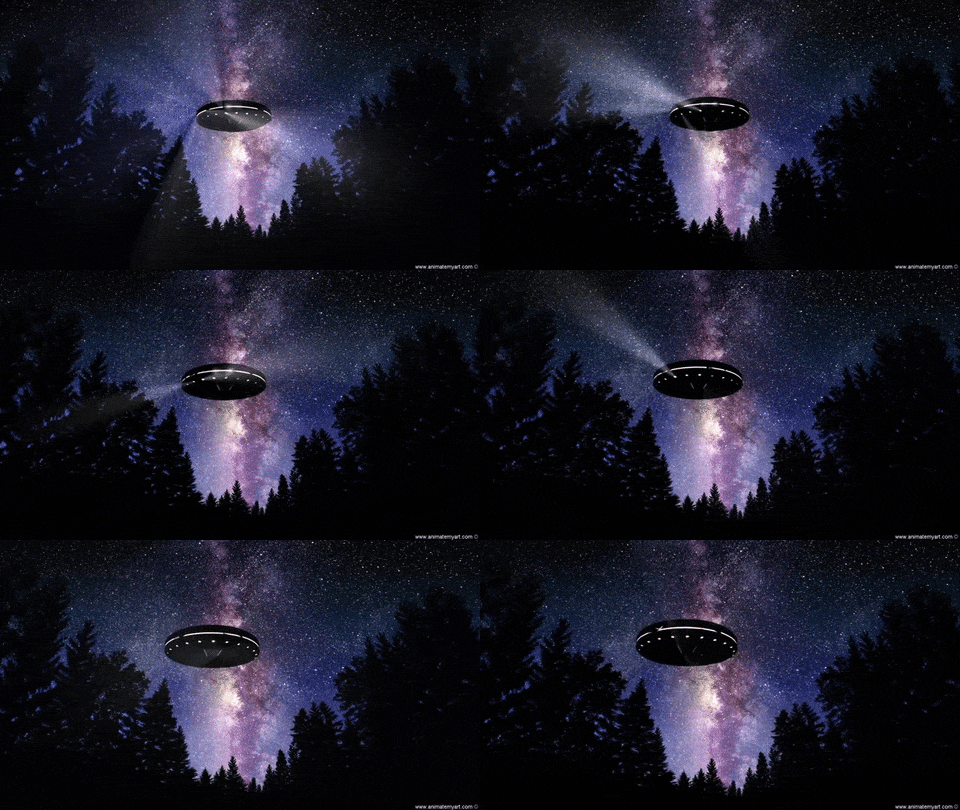
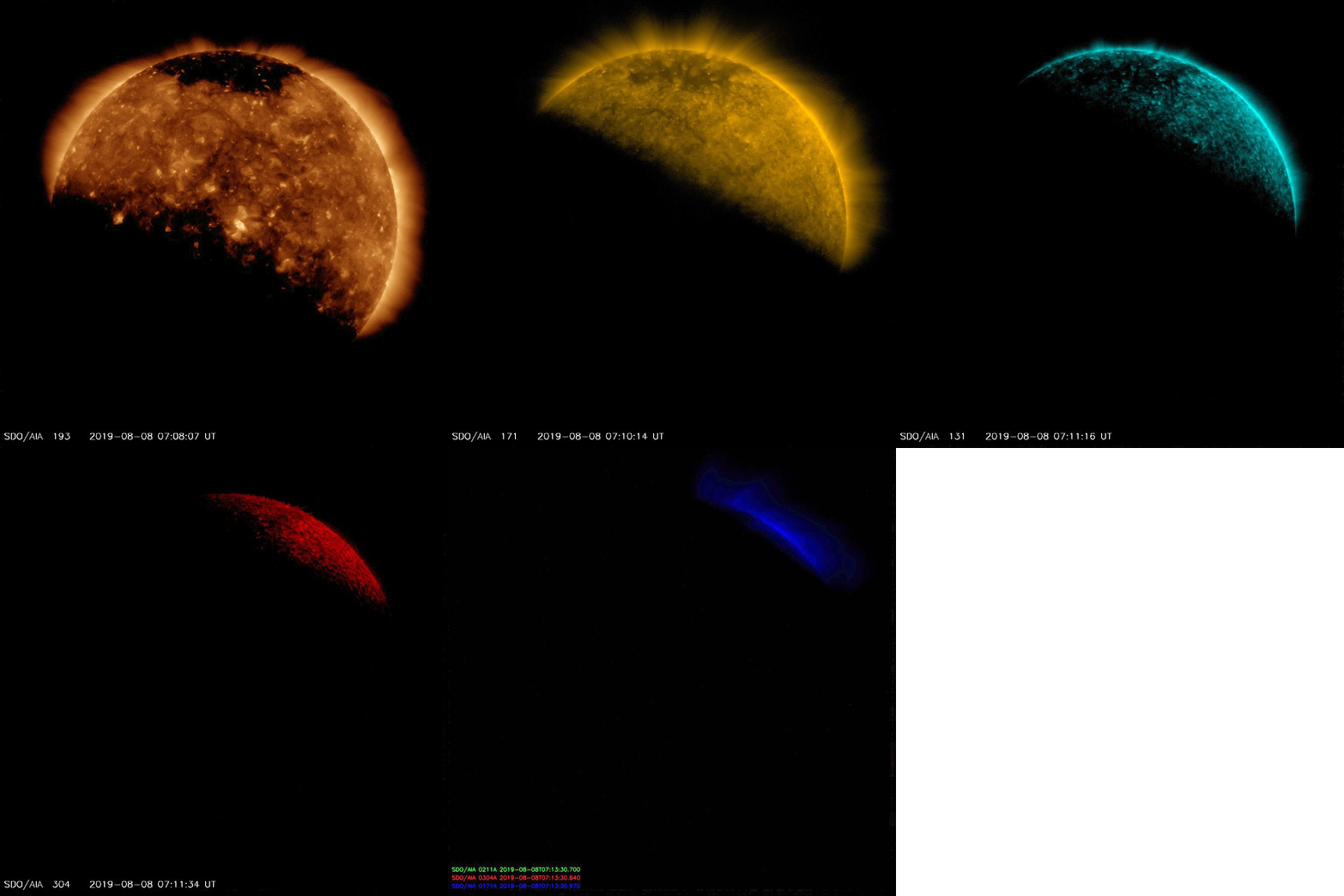
The purpose of this blog is the creation of an open, international, independent and free forum, where every UFO-researcher can publish the results of his/her research. The languagues, used for this blog, are Dutch, English and French.You can find the articles of a collegue by selecting his category. Each author stays resposable for the continue of his articles. As blogmaster I have the right to refuse an addition or an article, when it attacks other collegues or UFO-groupes.
Druk op onderstaande knop om te reageren in mijn forum
Zoeken in blog
Deze blog is opgedragen aan mijn overleden echtgenote Lucienne.
In 2012 verloor ze haar moedige strijd tegen kanker!
In 2011 startte ik deze blog, omdat ik niet mocht stoppen met mijn UFO-onderzoek.
BEDANKT!!!
Een interessant adres?
UFO'S of UAP'S, ASTRONOMIE, RUIMTEVAART, ARCHEOLOGIE, OUDHEIDKUNDE, SF-SNUFJES EN ANDERE ESOTERISCHE WETENSCHAPPEN - DE ALLERLAATSTE NIEUWTJES
UFO's of UAP'S in België en de rest van de wereld Ontdek de Fascinerende Wereld van UFO's en UAP's: Jouw Bron voor Onthullende Informatie!
Ben jij ook gefascineerd door het onbekende? Wil je meer weten over UFO's en UAP's, niet alleen in België, maar over de hele wereld? Dan ben je op de juiste plek!
België: Het Kloppend Hart van UFO-onderzoek
In België is BUFON (Belgisch UFO-Netwerk) dé autoriteit op het gebied van UFO-onderzoek. Voor betrouwbare en objectieve informatie over deze intrigerende fenomenen, bezoek je zeker onze Facebook-pagina en deze blog. Maar dat is nog niet alles! Ontdek ook het Belgisch UFO-meldpunt en Caelestia, twee organisaties die diepgaand onderzoek verrichten, al zijn ze soms kritisch of sceptisch.
Nederland: Een Schat aan Informatie
Voor onze Nederlandse buren is er de schitterende website www.ufowijzer.nl, beheerd door Paul Harmans. Deze site biedt een schat aan informatie en artikelen die je niet wilt missen!
Internationaal: MUFON - De Wereldwijde Autoriteit
Neem ook een kijkje bij MUFON (Mutual UFO Network Inc.), een gerenommeerde Amerikaanse UFO-vereniging met afdelingen in de VS en wereldwijd. MUFON is toegewijd aan de wetenschappelijke en analytische studie van het UFO-fenomeen, en hun maandelijkse tijdschrift, The MUFON UFO-Journal, is een must-read voor elke UFO-enthousiasteling. Bezoek hun website op www.mufon.com voor meer informatie.
Samenwerking en Toekomstvisie
Sinds 1 februari 2020 is Pieter niet alleen ex-president van BUFON, maar ook de voormalige nationale directeur van MUFON in Vlaanderen en Nederland. Dit creëert een sterke samenwerking met de Franse MUFON Reseau MUFON/EUROP, wat ons in staat stelt om nog meer waardevolle inzichten te delen.
Let op: Nepprofielen en Nieuwe Groeperingen
Pas op voor een nieuwe groepering die zich ook BUFON noemt, maar geen enkele connectie heeft met onze gevestigde organisatie. Hoewel zij de naam geregistreerd hebben, kunnen ze het rijke verleden en de expertise van onze groep niet evenaren. We wensen hen veel succes, maar we blijven de autoriteit in UFO-onderzoek!
Blijf Op De Hoogte!
Wil jij de laatste nieuwtjes over UFO's, ruimtevaart, archeologie, en meer? Volg ons dan en duik samen met ons in de fascinerende wereld van het onbekende! Sluit je aan bij de gemeenschap van nieuwsgierige geesten die net als jij verlangen naar antwoorden en avonturen in de sterren!
Heb je vragen of wil je meer weten? Aarzel dan niet om contact met ons op te nemen! Samen ontrafelen we het mysterie van de lucht en daarbuiten.
31-12-2025
Alien 'Hoaxes' That Went Viral From Roswell's Flying Saucers to Mexican & Australian X-Files
Alien 'Hoaxes' That Went Viral From Roswell's Flying Saucers to Mexican & Australian X-Files
By SPYSCAPE
When it comes to aliens, the truth is out there... just not necessarily on YouTube, TikTok or Facebook.
Both the CIA and the Pentagon have released information on ‘unidentified’ flying objects, however, so The X-Files enthusiasts can be forgiven for acting a bit smug these days. We examine 10 of the world’s top alien ‘hoaxes’, searching for signs of intelligence.
1. Dead alien found after UFO sighting in Russia
Two Russian men were out for a walk in 2011 when they came across what appeared to be a frozen corpse in the snowy countryside near Irkutsk, in eastern Siberia. But this wasn’t just any old corpse – it was an alien, or was it? Only a month earlier, villagers swore they’d seen bright orange lights in the sky. Could the two incidents be related? Perhaps there had been an extraterrestrial crash? Nyet. More than 12m people viewed the YouTube video and police investigated. It was at this point the men sheepishly confessed: they’d actually made the ‘alien’ out of breadcrumbs and stuffed it into chicken skin as a practical joke.
2. New Jersey spacecraft stops traffic
A large, threatening spacecraft crept slowly across New Jersey’s sky in 2020 and it wasn’t long before the Twitter and TikTok videos went viral. The extraterrestrial ship with blue flashing lights slowed traffic on the turnpike – some people even got out of their cars to take a better look. Turns out, a Goodyear blimp was passing over New Jersey at the time, getting an aerial television shot of an NFL game at the MetLife Stadium, just west of New York City. And yes, the blimp came in peace.
3. UFO visits India
A ‘spaceship’ hovering precariously close to buildings in Uttar Pradesh, in northern India, created panic in 2016, with photos of the large object spreading feverishly. The UFO photographer quickly disappeared (beamed up?) and the cell phone number couldn’t ever be traced. Despite the mystery, experts decided the UFO was probably created by an app, noting it bore a striking resemblance to a UFO in the movie Independence Day.
4. UFOs terrify Haiti
An eerie, realistic home video captured 'UFOs' soaring over Haiti in2007. A woman can be heard gasping. A dog barks. Surely the video must be real? A second video from the Dominican Republic seemed to provide independent corroboration. The Los Angeles Times decided to track down the videographer and others who immediately re-posted the ‘evidence’ and got a swift response from barzolff814 – aka Heather, a 17-year-old Irish girl who’d racked up 2.2m YouTube hits (now 20m!): “Umm yeah. Whatever. You people are stupid. Find something better to do with your time. And get a life.” The Times finally found the source, a professional animator who’d spent 17 hours creating the UFO videos on his MacBook and didn’t want to reveal his name. It seems the animator was just testing his work, thinking he might get a few likes...
5. Six ‘spaceships’ land in England
Wiltshire in southwest England has always been a draw for the alien conspiracists – it is, after all, the home of the legendary Stonehenge, multiple crop circles and a UFO hotspot since the 17th century. But even the locals were astounded when six UFOs landed in Wiltshire, London and four other locations across England in 1967, bleeping, hissing and triggering a major police and military response. The hoax was conjured up by the engineer apprentices at the Royal Aircraft Establishment (later part of the Ministry of Defense) who scattered them overnight. The pranksters wanted to know if the government had a plan if aliens invaded. The Army responded by blowing up one saucer, dropping another and brushing themselves off when one imploded. Police decided not to take action against the apprentices, with one officer saying authorities were “taking it like gentlemen”.
6. Australia’s X-Files
Melbourne’s Kelly and Andrew Cahill said they were driving in August 1993 when they spotted a weird object in the sky with circular orange lights, but that isn’t the shocking part of the story. The couple said they were abducted by tall, skinny aliens with red eyes who burned a triangle into the skin around Kelly’s navel.
The couple ‘awoke’ in their car having lost an hour’s time. “I felt this blow to my stomach and went flying in the air and I heard my husband say ‘Let go of me’, and this male voice that said, 'I mean you no harm'," she told journalists. The Cahills’ story was such a sensation it was mentioned by agent Fox Mulder (David Duchovny) on The X-Files. Ms Cahill published a bestselling book, did the rounds of the talk shows, then went quiet. The UFO experts at Phenomena Research Australia (PRA) investigated the claims and compiled a 300-page report. In 2020, 27 years after the ‘abduction’, PRA said they were considering releasing their findings - just not any time soon.
7. Canada’s closest encounter
Canada has big skies and plenty of land so it should be fertile ground for an alien landing. In May, 1967, amateur geologist Stefan Michalak was prospecting in Manitoba when he spotted two glowing objects. One of the silver crafts landed and Michalak said he had a look inside at the blinking lights.
The craft took off quickly, knocking him on his back, and an opening appeared in the upper portion of the 35-foot disc that hissed and smelled of sulfur. (Luckily, the craft hovered long enough for Michalak to sketch the spaceship above). The UFO spotter became ill afterwards, displaying signs of a radiation burn. Years later, a twisted piece of metal was recovered from the site, which was radioactive. Was it a hoax, military test or an alien landing? Neither Canadian nor the US military have been able to explain the event. Tour guides swear it was a UFO sighting, however, and include it on their trips. The Royal Canadian Mint has even issued a commemorative silver coin that retails for $129.95. The one-ounce coin comes with a black light that can be shone on the currency to reveal a yellowish blast resembling the one that (supposedly) burned Michalak.
8.South Korea is a UFO magnet
For a small country, South Korea has a lot of extraterrestrial activity. There have been sightings of ‘Tic Tac’ UFOs (bullet-shaped spacecraft with no wings) and videos showing discs with domed tops hovering over cities and mountain ranges. South Korea’s military took UFO reports rather more seriously in 2019, however, when radar detected ‘traces of flight by an unidentified object’ heading across the frontier from North Korea. Jet fighters were scrambled. Helicopters buzzed over the demilitarized zone separating north and south. Former US president Donald Trump was in the region to meet North Korean leader Kim Jong Un, so the world’s media covered the updates in real time. The frenzy ended minutes later with an announcement from the US Joint Chiefs of Staff: the UFO was a flock of about 20 birds.
9. Mexico’s Mulder
There have been so many UFO sightings at Volcán Popocatépetl, Mexico's largest volcano, it has a UFO-spotting camera trained on it 24-7. 'Spaceships' have been seen floating behind it, hovering above, flirting with the flames and even flying directly into its mouth. So it should come as no surprise that UFO-mad Mexico also has its own celebrity UFO-ologist, Jaime Maussan. Maussan visited Peru in 2017, hoping to analyze mummies discovered near the UNESCO World Heritage Nazca Lines (there’s speculation aliens created the lines too).
At least one of Peru’s mummified bodies apparently had an elongated skull and hands with only three fingers, so Maussan teamed up with a TV crew to gather evidence of alien life. Unfortunately, the alien theory was debunked. Snopes, the fact-checking website, pointed out that the website that streamed Maussan’s documentary charges just under $100 a year for videos about alien abductions, crop circles and contact with angels.
10. Roswell, New Mexico’s flying saucer
The Roswell Daily Record newspaper headline was clear: ‘RAAF Captures Flying Saucer On Ranch in Roswell Region’. It was July 8, 1947, and the Roswell UFO was the best evidence so far that aliens existed. At first, the Roswell Army Air Field announced that a flying disk had landed on a ranch in a thunderstorm but then changed the story, calling it a ‘weather balloon’. In fact, a rancher may have gathered debris related to a classified US military project to detect atomic bomb tests in the Soviet Union, but that information wasn’t immediately released. UFO believers suspected a cover-up. More than 40 years after the crash, an ex-mortician named Glenn Dennis remained adamant that a Roswell Army nurse had walked in on doctors who were bent over three creatures with small frames and huge, bald heads. (Dennis ran Roswell’s International UFO Museum at the time.) Roswell now hosts a UFO festival and science fiction ‘Galacticon’ celebration each July, inviting visitors from around the world to decide for themselves.
Alien Encounters: Five Shocking UFO Space Secrets & Cover-up Claims
Alien Encounters: Five Shocking UFO Space Secrets & Cover-up Claims
By SPYSCAPE
When former US Air Force intelligence officer David Grusch testified about mysterious alien landings and a covert 'multi-decade' UFO program in July 2023, he sparked a heated debate - is the US really hiding intel on aliens and spacecraft?
We’re "not bringing little green men or flying saucers into the hearing,” Republican Tim Burchett said. “We're just going to get to the facts.”
The congressional committee heard from three witnesses in all: Grusch, former US Navy commanding officer David Fravor, and former Navy pilot Ryan Graves. Buckle up for a cosmic shockwave as we delve into the five most memorable moments from the head-spinning hearing.
1. ‘Non-human’ bodies were recovered from a UFO crash site
Whistleblower David Charles Grusch testified under oath at a national security subcommittee hearing that 'non-human biologics’ were found at an alleged UFO crash site. In a remarkable exchange, South Carolina Republican Nancy Mace asked Grusch to elaborate on his knowledge of ‘non-terrestrial bodies’ and ‘biologics’ to which Grusch responded: "Biologics came with some of these recoveries." Were they human or non-human? "Non-human, and that was the assessment of people with direct knowledge on the program I talked to," Grusch said.
Separately, he confirmed he had not personally seen alien bodies or aircraft but based his testimony on compelling evidence in the form of photography, official documentation, and classified testimony. Grusch said he interviewed 40 witnesses over four years.
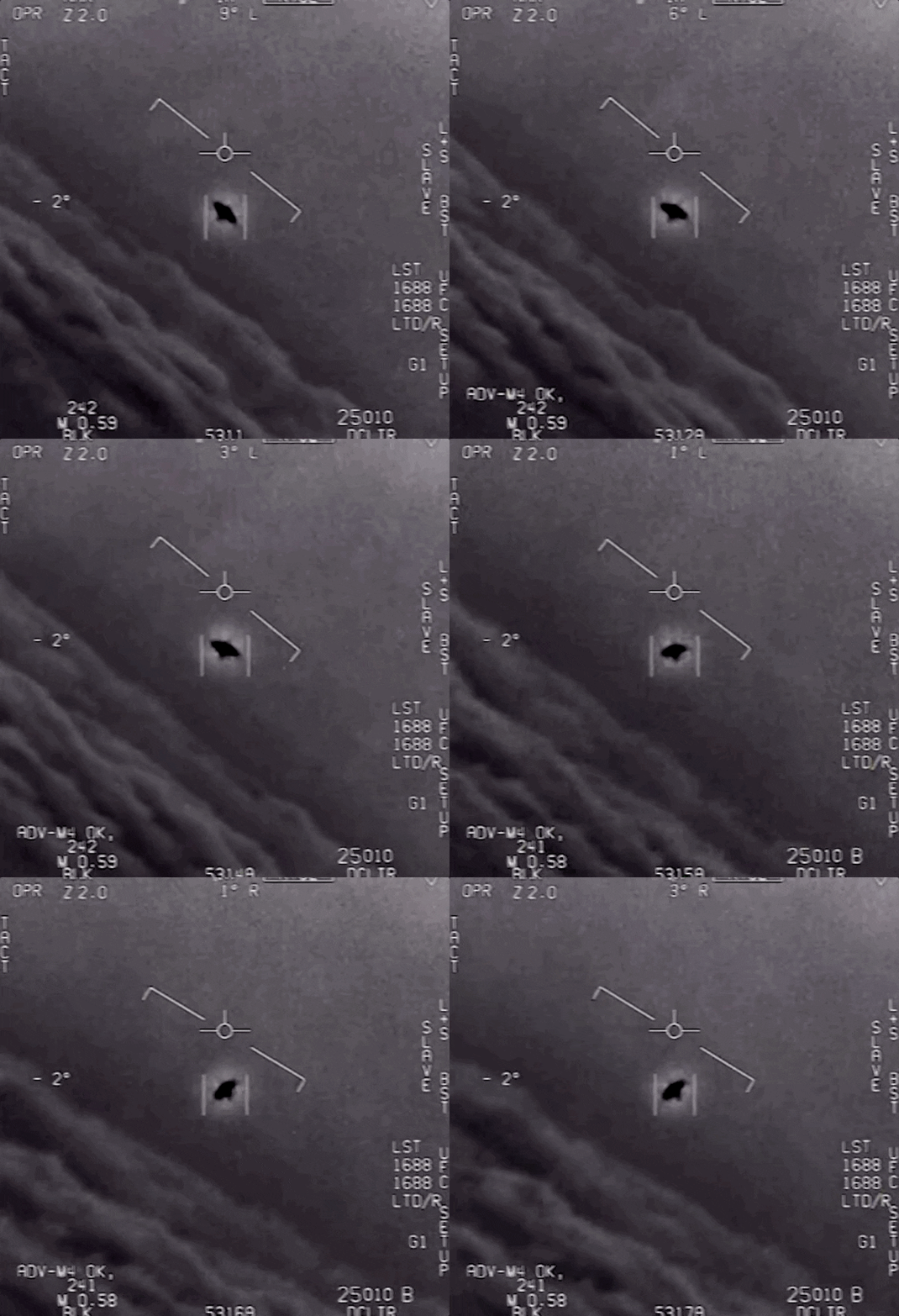
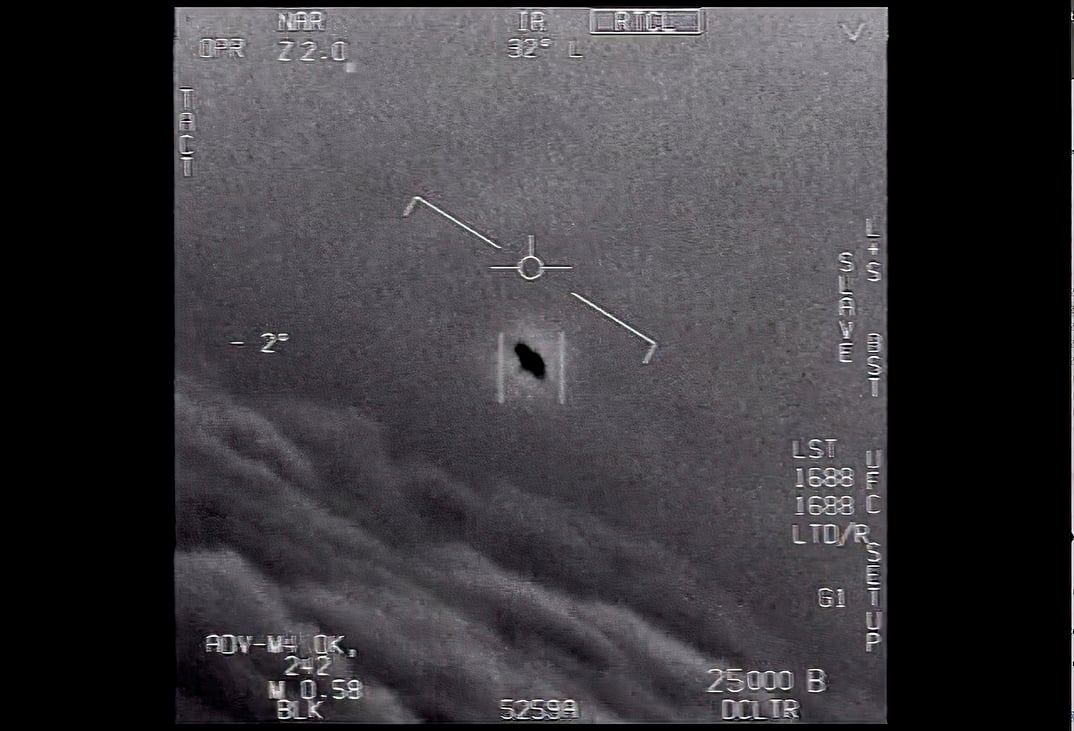
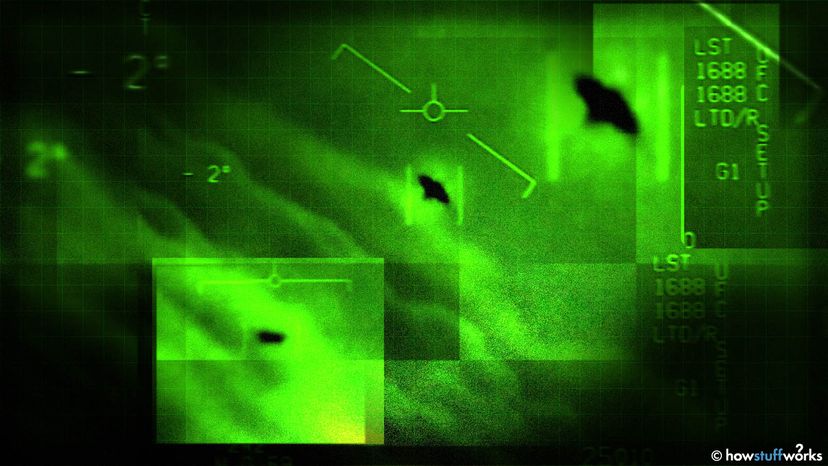
In this image from video provided by the Department of Defense labeled Gimbal, from 2015, an unexplained object is seen at center as it is tracked as it soars high along the clouds, traveling against the wind. “There's a whole fleet of them,” one naval aviator tells another, though only one indistinct object is shown. “It's rotating." (Department of Defense via AP)
Grusch: US aware of non-human intel in the ‘30s
Who is David Grusch?For 14 years, Grusch was an intelligence officer in the US Air Force at the rank of Major and, from 2021-2023, a civilian at the National-Geospatial Intelligence Agency with the military equivalent rank of a full-bird Colonel. He was previously the Agency’s co-lead in UAP - Unidentified Anomalous Phenomena - as well as reporting to UAP Task Force and All-Domain Anomaly Resolution Office.
2.The Pentagon is hiding evidence of alien spacecraft from Congress
The US government is accused of conducting a ‘multi-decade’ program that collected and attempted to reverse-engineer crashed UFOs. Grusch also claimed the Pentagon is hiding evidence of alien spacecraft from Congress which he described as “non-human origin technical vehicles”.
Furthermore, Grusch said that while he was on the intelligence community’s task force, he became aware of secret US government programs in charge of unsanctioned technological research related to UFOs.
He explained that much of the information is classified and responded several times: “I can’t discuss that in an open session.”
The Pentagon’s view: In a statement, the Pentagon said it hasn’t discovered “any verifiable information to substantiate claims that any programs regarding the possession or reverse-engineering of extraterrestrial materials have existed in the past or exist currently”.
3. US employees who come forward about UFOs and government practices are punished
Grusch, who filed a whistleblowing claim two months before the heading, said he had support from colleagues but was also subjected to reprisal: "I do have knowledge of active, planned, reprisal activity against myself and other colleagues."
Grusch said the blowback is coming from 'certain senior leadership at previous agencies I was associated with.' He described some of the behavior as ‘administrative terrorism’ including threats to his colleagues’ career paths. He offered to provide further details in a ‘closed environment’ such as a SCIF - a secure, sound-proofed room where officials with security clearances can examine sensitive intel.
Burchett asked if Grushch had personal knowledge of people who have been harmed or injured in efforts to cover up or conceal extraterrestrial technology. “Yes,” Grusch replied.
“Anyone been murdered that you would - that you know of or have heard of?” Burchett added.
“I have to be careful asking that question,” Grusch responded. “I directed people with that knowledge to the appropriate authorities.”
Asked at one point where the committee could find corroborating information about possible cover-ups, Grusch said he could not answer but encouraged the committee to thoroughly investigate: “As I stand here under oath now, I am speaking to the facts as I have been told
4.UFOs pose a national security threat
Representative Glenn Grothman asked if the witnesses believed UAPs - Unidentified Anomalous Phenomena - posed a threat to US national security.
On Aug. 4, 2020, the U.S. Department of Defense approved the establishment of an Unidentified Aerial Phenomenon Task Force (UAPTF). "The mission of the task force is to detect, analyze and catalog UAPs that could potentially pose a threat to U.S. national security," according to the DoD website.
HowStuffWorks
“Yes," former US Navy Commander David Fravor responded. "The technology that we faced was far superior than anything that we had. If you had one, you captured one, you reverse engineered it, you got it to work.”
Representative Robert Garcia told the bipartisan committee that more reports should be encouraged: "UAPs, whatever they be, may pose a serious threat to our military and our civilian aircraft, and that must be understood.
5. US Navy pilots David Fravor and Ryan Graves say they've personally seen UFOs
David Fravor, a former commanding officer in the US Navy, and former Navy pilot Ryan Graves have previously gone public with allegations about UFOs but it was breathtaking to hear their first-hand accounts at the House Oversight Committee hearing.
Regarding a 2004 incident, Fravor (pictured right) described a UFO caught on camera that resembled a Tic Tac breath mint: “As all four looked down we saw a small white Tic Tac-shaped object with the longitudinal axis pointing N/S and moving very abruptly over the white water. There were no rotors, No rotor wash, or any visible flight control surfaces like wings,” he testified. “This Tic Tac object… was far superior in performance to my brand new F/A-18F and did not operate with any of the known aerodynamic principles that we expect.”
Graves (pictured left), a former F-18 pilot, said that in 2014 - after the radar system was upgraded - he saw a craft without exhaust plumes or a visible engine ‘almost daily’ flying over the East Coast.
He added that at one point two jets were forced to make evasive maneuvers to avoid a ‘dark gray cube inside of a clear sphere’ that stood motionless against the wind.
Graves' squadron submitted a safety report, but there was no official acknowledgment of the incident.
“Over time, UAP sightings became an open secret among our aircrew,” Graves testified. “They were a common occurrence, seen by most of my colleagues on radar and occasionally up close. The sightings were so frequent that they became part of daily briefs.”
The Amazon rainforest is shifting into a 'hypertropical state' that has not been seen for tens of millions of years, scientists have warned.
This new, hotter climate could be commonplace by 2100, and will see the rainforest experience more frequent and intense droughts.
Worryingly, experts from the University of California, Berkeley, say this could lead to widespread tree die–off.
In turn, this will impair Earth's ability to remove carbon dioxide in the atmosphere, since tropical rainforests absorb more carbon emissions than any other biome.
The only way to prevent the hypertropical state from occurring is to curb greenhouse gas emissions, according to Jeff Chambers, lead author of the study.
'It all depends on what we do,' he said.
'It's up to us to what extent we're actually going to create this hypertropical climate.
'If we're just going to emit greenhouse gasses as much as we want, without any control, then we're going to create this hypertropical climate sooner.'
The Amazon rainforest is shifting into a 'hypertropical state' that has not been seen for tens of millions of years, scientists have warned. This new, hotter climate could be commonplace by 2100, and will see the rainforest experience more frequent and intense droughts
Usually, the dry season in the Amazon lasts from July to September and brings hotter–than–normal conditions.
However, in hypertropical conditions, the dry season is extended – putting more stress on trees.
'When these hot droughts occur, that's the climate that we associate with a hypertropical forest, because it's beyond the boundary of what we consider to be tropical forest now,' explained Professor Chambers.
Worryingly, the study found that by 2100, hot drought conditions could occur as many as 150 days each year.
In turn, this could increase tree mortality by 0.55 per cent.
'We showed that the fast–growing, low wood–density trees were more vulnerable, dying in greater numbers than high wood–density trees,' Professor Chambers said.
'That implies that secondary forests might be more vulnerable to drought–induced mortality, because secondary forests have a larger fraction of these types of trees.'
Since the annual tree mortality is slightly more than one per cent, an extra 0.55 per cent may not seem like much.
Usually, the dry season in the Amazon lasts from July to September and brings hotter–than–normal conditions. However, in hypertropical conditions, the dry season is extended – putting more stress on trees
However, Professor Chambers explained that it has a cumulative impact on the forest – meaning over time, it could be catastrophic.
What's more, the researchers say that hypertropical conditions are also likely to appear outside the Amazon in rainforests in western Africa and across Southeast Asia.
As global temperatures continue to rise, extreme droughts will increasingly occur throughout the entire year, the researchers added.
'Present–day hot droughts are harbingers of this emerging climate, providing windows of opportunity to better understand tropical forest responses to increasingly extreme future conditions,' the authors wrote.
The Paris Agreement, which was first signed in 2015, is an international agreement to control and limit climate change.
It hopes to hold the increase in the global average temperature to below 2°C (3.6ºF) 'and to pursue efforts to limit the temperature increase to 1.5°C (2.7°F)'.
It seems the more ambitious goal of restricting global warming to 1.5°C (2.7°F) may be more important than ever, according to previous research which claims 25 per cent of the world could see a significant increase in drier conditions.
The Paris Agreement on Climate Change has four main goals with regards to reducing emissions:
1) A long-term goal of keeping the increase in global average temperature to well below 2°C above pre-industrial levels
2) To aim to limit the increase to 1.5°C, since this would significantly reduce risks and the impacts of climate change
3) Governments agreed on the need for global emissions to peak as soon as possible, recognising that this will take longer for developing countries
4) To undertake rapid reductions thereafter in accordance with the best available science
A blind psychic who allegedly foretold 9/11 and the Covid pandemic gave an exact date the world would end before her death nearly 30 years ago.
Baba Vanga, known as the 'Nostradamus of the Balkans,' predicted humanity's ultimate demise in the year 5079, when a cosmic event of 'unimaginable' proportions would bring about the complete destruction of the universe.
Her vision follows a detailed timeline depicting humanity's evolution, technological advancements, conflicts and eventual extinction.
According to multiple reports, her prophecy showed humans expanding across the solar system, achieving immortality and even interacting with extraterrestrial civilizations before facing a final, catastrophic event.
Key milestones in the centuries leading up to 5079 include a war on Mars in 3005, a Moon-collision in 3010 and the extinction of life on Earth in 3797, by which point humans have already colonized a new planet.
By the 4300s, humanity is advancing technologically and morally, curing all diseases and even increasing brain capacity to eliminate concepts like evil and hatred.
Civilization reaches its peak in 4674, with a population of 340 billion across planets and early integration with alien species.
In the final years, humans discover the boundary of the known universe and debate whether to venture beyond it. By 5079, this decision, or some associated catastrophe, triggers 'absolute doomsday,' ending human civilization and the universe.
Baba Vanga, known as the 'Nostradamus of the Balkans,' predicted humanity's ultimate demise in the year 5079, when a cosmic event of 'unimaginable' proportions would bring about the complete destruction of the universe
Baba Vanga left no written records of her predictions. Most of the accounts come from her niece, Krasimira Stoyanova, or other followers who documented her alleged visions after her death, and who have been accused of misinterpreting what she said.
Born in 1911 as Vangeliya Pandeva Dimitrova, she was a famous blind Bulgarian mystic, clairvoyant and herbalist.
She lost her sight at age 12 after being caught in a tornado, an event that coincided with the emergence of her purported psychic abilities.
After turning 30, her powers of foresight, healing, and fortune-telling became prominent, attracting believers who sought her guidance.
She made numerous prophecies, often vague, about natural disasters, political shifts and future technologies, some of which supporters claim foretold events like the Kursk submarine disaster, Brexit and the rise of ISIS.
One of her most famous predictions was the attack on New York City's Twin Towers on September 11, 2001.
'Two metal birds will crash into our American brothers, wolves will howl from the bushes and the blood of the innocent will flow in the rivers,' she predicted.
While she has legions of followers, experts warn her prophecies are speculative and not grounded in fact.
Key milestones in the centuries leading up to 5079 include a war on Mars in 3005, a Moon-collision in 3010 and the extinction of life on Earth in 3797, by which point humans have already colonized a new planet
According to Baba Vanga's alleged prophecies, humanity's path toward its ultimate end begins far beyond Earth.
By the year 3005, humans are said to have expanded into space to such an extent that war erupts on Mars, a conflict so severe it alters planetary trajectories.
Just five years later, in 3010, a comet or asteroid is believed to collide with the moon, sending debris into orbit and forming a visible ring around Earth, dramatically changing the planet's night sky.
By 3797, all life on Earth is said to be extinguished, forcing humanity to survive by establishing colonies on a new planet elsewhere in the cosmos.
That survival, however, comes at a high cost. Between 3803 and 3805, scarce resources spark devastating wars among the remaining population, wiping out more than half of humanity and pushing civilization toward collapse, according to Baba Vanga's predictions.
In the aftermath, progress grinds to a halt. From roughly 3815 through 3878, humanity regresses into tribal societies, living
in scattered groups until the emergence of a new prophet who restores moral order. This figure is said to have founded a powerful church that not only spreads religious teachings but also revives forgotten scientific knowledge, laying the groundwork for a slow recovery.
By the early 4300s, civilization enters a renewed golden age.
New cities rise, scientific breakthroughs accelerate, and humanity succeeds in curing all known diseases.
Advances in genetics and neuroscience allow humans to dramatically expand their brain capacity, eliminating concepts such as hatred and evil altogether.
By 4509, humanity reaches what the prophecy describes as an unprecedented moral state, enabling direct communication with God.
The timeline grows even more extraordinary by the late 45th century.
In 4599, humans are said to achieve immortality, fundamentally reshaping society.
Civilization reaches its absolute peak in 4674, with an estimated population of 340 billion spread across multiple planets, and early stages of assimilation with extraterrestrial beings already underway.
In the final years before the end, humans make a discovery that ultimately seals their fate.
Between 5076 and 5078, explorers locate the boundary of the known universe, a mysterious edge whose true nature remains unknown.
The revelation divides humanity, with a significant portion opposing attempts to move beyond it.
A blind psychic who allegedly foretold 9/11 and the Covid pandemic gave an exact date the world would end before her death nearly 30 years ago.
Baba Vanga, known as the 'Nostradamus of the Balkans,' predicted humanity's ultimate demise in the year 5079, when a cosmic event of 'unimaginable' proportions would bring about the complete destruction of the universe.
Her vision follows a detailed timeline depicting humanity's evolution, technological advancements, conflicts and eventual extinction.
According to multiple reports, her prophecy showed humans expanding across the solar system, achieving immortality and even interacting with extraterrestrial civilizations before facing a final, catastrophic event.
Key milestones in the centuries leading up to 5079 include a war on Mars in 3005, a Moon-collision in 3010 and the extinction of life on Earth in 3797, by which point humans have already colonized a new planet.
By the 4300s, humanity is advancing technologically and morally, curing all diseases and even increasing brain capacity to eliminate concepts like evil and hatred.
Civilization reaches its peak in 4674, with a population of 340 billion across planets and early integration with alien species.
In the final years, humans discover the boundary of the known universe and debate whether to venture beyond it. By 5079, this decision, or some associated catastrophe, triggers 'absolute doomsday,' ending human civilization and the universe.
Baba Vanga, known as the 'Nostradamus of the Balkans,' predicted humanity's ultimate demise in the year 5079, when a cosmic event of 'unimaginable' proportions would bring about the complete destruction of the universe
Baba Vanga left no written records of her predictions. Most of the accounts come from her niece, Krasimira Stoyanova, or other followers who documented her alleged visions after her death, and who have been accused of misinterpreting what she said.
Born in 1911 as Vangeliya Pandeva Dimitrova, she was a famous blind Bulgarian mystic, clairvoyant and herbalist.
She lost her sight at age 12 after being caught in a tornado, an event that coincided with the emergence of her purported psychic abilities.
After turning 30, her powers of foresight, healing, and fortune-telling became prominent, attracting believers who sought her guidance.
She made numerous prophecies, often vague, about natural disasters, political shifts and future technologies, some of which supporters claim foretold events like the Kursk submarine disaster, Brexit and the rise of ISIS.
One of her most famous predictions was the attack on New York City's Twin Towers on September 11, 2001.
'Two metal birds will crash into our American brothers, wolves will howl from the bushes and the blood of the innocent will flow in the rivers,' she predicted.
While she has legions of followers, experts warn her prophecies are speculative and not grounded in fact.
Key milestones in the centuries leading up to 5079 include a war on Mars in 3005, a Moon-collision in 3010 and the extinction of life on Earth in 3797, by which point humans have already colonized a new planet
According to Baba Vanga's alleged prophecies, humanity's path toward its ultimate end begins far beyond Earth.
By the year 3005, humans are said to have expanded into space to such an extent that war erupts on Mars, a conflict so severe it alters planetary trajectories.
Just five years later, in 3010, a comet or asteroid is believed to collide with the moon, sending debris into orbit and forming a visible ring around Earth, dramatically changing the planet's night sky.
By 3797, all life on Earth is said to be extinguished, forcing humanity to survive by establishing colonies on a new planet elsewhere in the cosmos.
That survival, however, comes at a high cost. Between 3803 and 3805, scarce resources spark devastating wars among the remaining population, wiping out more than half of humanity and pushing civilization toward collapse, according to Baba Vanga's predictions.
In the aftermath, progress grinds to a halt. From roughly 3815 through 3878, humanity regresses into tribal societies, living
in scattered groups until the emergence of a new prophet who restores moral order. This figure is said to have founded a powerful church that not only spreads religious teachings but also revives forgotten scientific knowledge, laying the groundwork for a slow recovery.
By the early 4300s, civilization enters a renewed golden age.
New cities rise, scientific breakthroughs accelerate, and humanity succeeds in curing all known diseases.
Advances in genetics and neuroscience allow humans to dramatically expand their brain capacity, eliminating concepts such as hatred and evil altogether.
By 4509, humanity reaches what the prophecy describes as an unprecedented moral state, enabling direct communication with God.
The timeline grows even more extraordinary by the late 45th century.
In 4599, humans are said to achieve immortality, fundamentally reshaping society.
Civilization reaches its absolute peak in 4674, with an estimated population of 340 billion spread across multiple planets, and early stages of assimilation with extraterrestrial beings already underway.
In the final years before the end, humans make a discovery that ultimately seals their fate.
Between 5076 and 5078, explorers locate the boundary of the known universe, a mysterious edge whose true nature remains unknown.
The revelation divides humanity, with a significant portion opposing attempts to move beyond it.
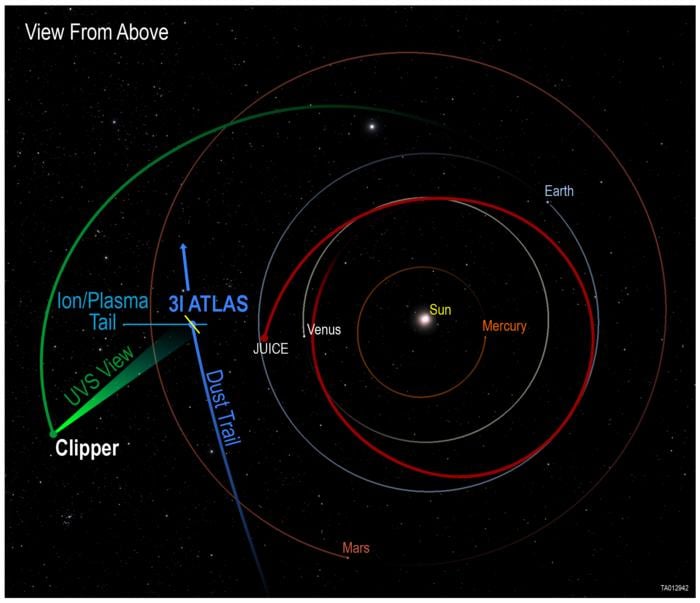
Map of how 3I/ATLAS is traveling through out solar system, compared to the inner planets, JUICe, and Europa Clipper. Credit - NASA/JPL-Caltech/APL/SwRI
Researchers have been trying to look at interstellar object 3I/ATLAS from every conceivable angle. That includes very unconventional ones. Recently, while 3I/ATLAS passed out of view of the Earth, it moved into a great vantage point for one of our interplanetary probes. Europa Clipper, whose main mission is to explore Jupiter’s active moon, turned its gaze during its six year journey back towards the center of the solar system and observed 3I/ATLAS as it was reaching its perihelion, and out of sight from the Earth.
Realizing that it could do so did not take long. Only a week after first finding this interstellar visitor, rocket scientists at NASA’s Jet Propulsion Laboratory had mapped its entirely trajectory through the solar system. Armed with that information, Europa Clipper’s operational team realized the craft would have a unique vantage point during the later part of this year.
As it makes its way to Jupiter, it is currently curving slightly outside the orbit of Mars. 3I/ATLAS is making its way past the Red Planet, passing slightly inside its orbit, and has already garnered plenty of attention from instruments based there. But, Europa Clipper has some instruments that are uniquely well suited to studying the intricacies of the comet, and it just so happened to be able to observe it after it had moved out of sight from Mars, but before it was again visible from Earth.
The Ultraviolet Spectrograph (UVS) was originally designed to analyze the composition of Europa’s atmosphere and surface. But for the purposes of comet observation, it can detect transitions from atoms and molecules, such as when water breaks into hydrogen and oxygen.
Fraser discusses the actual science behind 3I/ATLAS
Insights like those are particularly critical, as from its vantage point, Europa Clipper was able to see the comet’s two “tails”. One, which follows behind the comet’s path, is made up primarily of dust parts that have fallen off the comet itself. The other, which extends from the comet directly away from the Sun, is made up of particles that have been directly plasmatized by the Sun’s rays.
Both of these tails are of interest to scientists, as they offer some of the best clues both to what 3I/ATLAS is made of, but also the chemical processes that are happening on the comet as it passes close to a star for the first time in potentially billions of years. Tracking how closely those processes conform to expectations of how they work in our own solar system is one of the critical insights that 3I/ATLAS can give us about the makeup of the galaxy outside our own neighborhood.
Europa Clipper also won’t be the only craft observing our visitor during that critical gap in observations from Earth and Mars-based platform. The Jupiter Icy Moon Explorer (JUICE), operator by ESA, also happened to be in position to observe 3I/ATLAS at the same time, but from a more typical view looking away from the Sun, as it passes back through Earth’s orbit on its way out to Jupiter. JUICE has its own version of the UVS instrument, and the additional data from a different angle will inherently complement that taken by Europa Clipper.
Fraser discusses 3I/ATLAS's perihelion, around the time of the Europa Clipper observations.
This extra observational time from these two space probes is honestly just lucky - if they happened to be further on in their journey, they wouldn’t have such a front-row seat to this once in a life-time flyby. While the results and analysis from this event haven’t yet been published, it likely will be in the next few months. Granted, they probably won’t stop sensationalists from continuing to claim that 3I/ATLAS is some sort of alien space craft, but as we continue to gather more evidence that it’s not, both Europa Clipper and JUICE will play a critical role in proving that something unforeseen didn’t happen when the object was blocked from out sight from other vantage points. And before long, Europa Clipper itself will pass through the comet's dust tail - who knows what additional observations it will be able to make from that unique vantage point.
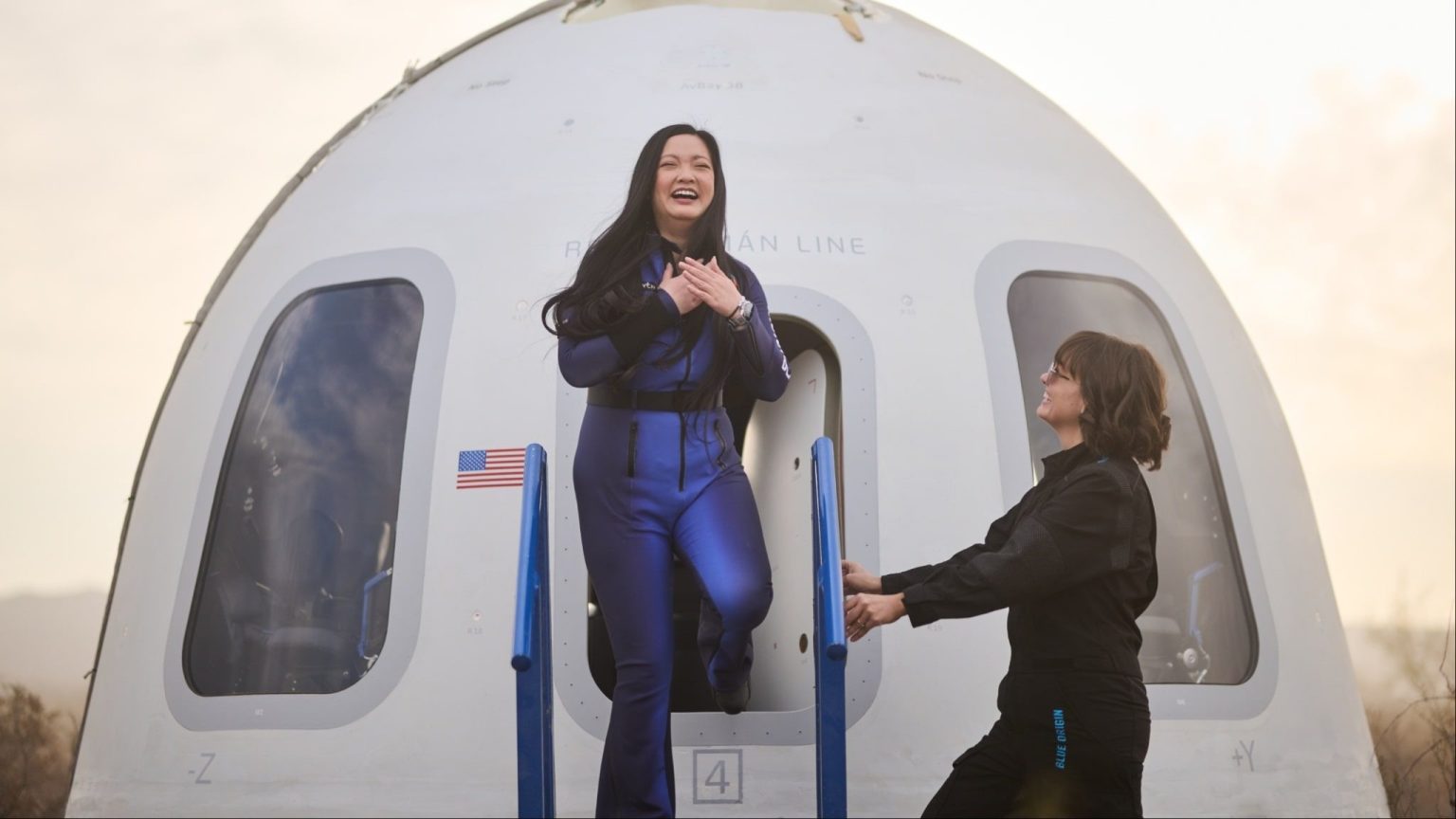
Activist and researcher Amanda Nguyen, who flew on Blue Origin’s all-femalespaceflight in April 2025, has admitted to suffering from severe psychological distress after the mission. After months of battling depression, she has reported feeling better and shared her experience of overcoming severe trauma.
Activist and researcher Amanda Nguyen emotionally exits the New Shepard capsule immediately after landing. Photo: Blue Origin
Dream that turned into a challenge
In her Instagram post, Amanda revealed the deep depression that overwhelmed her after returning to Earth.
“Another dream turned into a nightmare,” she wrote. Nguyen described feeling that all her achievements – her scientific work, her historic status as the first Vietnamese woman in space – were “buried under an avalanche of misogyny” and hostile comments in the media.
A 34-year-old woman, the child of refugees who fled Vietnam by boat, felt like a “collateral victim.” She couldn’t get out of bed for weeks, and a month after the flight, she couldn’t speak through her tears during a call from a Blue Origin employee.
The star-studded crew of the Blue Origin NS-31 space tourism mission. Photo: Blue Origin
Despite her experiences, Amanda emphasized the positive outcomes of the mission. The flight drew attention to her breast cancer research and helped achieve the goal of using science as a tool for diplomacy. She recalled the symbolism: when Neil Armstrong was on the moon, bombs were falling on Vietnam, and now her family had seen a Vietnamese woman in space.
“We arrived in boats, and now we are in spaceships,” she wrote.
The road to recovery
Eight months later, Nguyen felt that “the fog of grief had begun to lift.” In her diary, she wrote, “I am happy to report that my depression is gone.” She concluded that the past never completely leaves us, but she is proud that she kept her promise to fight for her dreams and focus on kindness.
“The best gift this season is that I feel the fog lifting. I can say that it won’t take years,” Amanda Nguyen summed up.
Image generated by the editorial team using DALL·E for illustrative purposes.
Many researchers have spent decades attempting to decode biblical descriptions and link them to verifiable historical events. One such description is that of the Star of Bethlehem—a bright astronomical body that was said to lead the Magi to Jesus shortly after his birth.
Although many attempts have been made to link the Star of Bethlehem to astronomical bodies, the unique motion of the "star" did not quite fit any known object. However, a new research study, published in Journal of the British Astronomical Association, describes a likely candidate for the bright object seen above Bethlehem over 2000 years ago—a comet described in an ancient Chinese text.
Nonsensical motion
The biblical text in question occurs in the book of Matthew and describes a "star," which the authors of the study suggest may be any celestial object. The text says that the star "went before them, till it came and stood over where the young child was." The star is described as being in the eastern sky. The study authors meticulously analyzed the context and potential meaning of the story.
They write, "The passage indicates that after the Star appeared to precede the Magi on their short journey to Bethlehem, it reached a position over the town, perhaps overhead near the zenith, where its motion came to a noticeable stop for a period coincident with their arrival."
This is a simplified diagram of a hypothetical interplanetary object ("C") traveling near Earth. The subscripts refer to its position at time steps t1 to t7. For a fixed position ("P") on the rotating Earth, the object would appear to remain stationary directly overhead as a "temporary geosynchronous object" for several hours (t3 to t5). Credit: Journal of the British Astronomical Association (2025). DOI: 10.64150/193njt
Of course, this motion is not typical of most astronomical objects, like stars and planets. Instead, most astronomical objects simply appear to rise in the east and set in the west, due to the rotation of Earth. This led to three interpretations: the story is simply a myth used to make a point and no such object existed, it was an actual miracle or there is a natural (although, rare) astronomical event that explains the motion.
Some researchers held onto the idea that there is a physical explanation. After all, there are some situations where an object might appear to stop temporarily in the sky. In particular, an object that is in geosynchronous motion with Earth will appear to be motionless in the sky. This can theoretically occur with a comet if it is in the right place and moving at the right velocity.
A few different comets have been suggested, such as Halley's Comet, but these did not fit the timing or placement needed for the Star of Bethlehem. And so, the authors of the new study conducted a search of many historical documents to find mention of any other observed astronomical events during the time period.
A potential match
A passage in a Chinese document known as the Han Shu (History of the Former Han Dynasty), caught the attention of the study authors with the mention of a "broom star"—known to be a term for a comet—in the "second month" of the "second year."
"The 'second month' of the 'second year' corresponds to the Chinese lunar month spanning 5 BCE [from] March 9 to April 6, which falls neatly within the estimated window for Jesus's birth. Being visible 'for over 70 days' suggests that the object was likely bright," the study authors explain.
The researchers also say that period fits with the life of King Herod, who ordered a massacre of male children under two years old in an attempt to kill Jesus. Herod ruled Judea as a Roman client king from 37 BCE to 4 BCE.
Simulations were conducted to generate possible comet orbits fitting the observations. The numerical modeling showed that this comet could have passed close enough to Earth in June of 5 BCE, to exhibit the "temporary geosynchronous" motion needed to make it appear to pause overhead for several hours. The best-fit orbit showed the comet would have appeared nearly stationary over Bethlehem for about two hours.
Positive omens and Magi motivations
The team also asked the question: "How could a comet appearing in Capricornus in March/April of 5 BCE have convinced the Magi that a king had been born in Judea, prompting them to undertake a long journey?"
To attempt to better understand their motivations, the researchers examined ancient astrological and cultural beliefs that the Magi may have been exposed to in order to explain why they would interpret the comet as a sign indicating the birth of Jesus. They found mentions of comets signifying both good and bad omens in both Greco-Roman and Mesopotamian texts.
"A major criticism of the comet hypothesis is that ancient astrologers interpreted the omens associated with their appearance as harbingers of evil, rather than as signs of good tidings such as a new king. However, closer examination of comet omens will show that interpretations of comet appearances were not always negative," the study authors explain.
They found that some omens in Mesopotamian texts could even have been interpreted to link a comet's appearance with events in the royal families of client kingdoms and that it is possible that this influenced the Magi's belief that the birth of a new Judean king had occurred.
Whether or not the comet mentioned in the Han Shu was the same celestial body witnessed over Bethlehem, the study authors say that this study has proven that such an object could exist that would explain the event.
They conclude by saying, "This study shows that it is no longer justifiable to claim that 'no astronomical event' could possibly have behaved in the manner described by Matthew."
The star described in the Gospels, which heralded the appearance of Jesus Christ in Bethlehem, behaves extremely strangely for a celestial body. However, scientists have calculated that under certain conditions, a comet could exhibit similar behavior. They even found a possible candidate.
The Star of Bethlehem. Source: phys.org
The Star of Bethlehem
Recently, the Journal of the British Astronomical Association published an article in which scientists attempted to explain the nature of the star that, according to the Bible, heralded the birth of Jesus Christ in Bethlehem and guided the three wise men from the East to him. Surprisingly, they found a completely rational explanation for it.
This is not the first time scientists have tried to understand whether there is any real astronomical event behind the Gospel myth. And it is clear that the word “star” can actually mean any celestial body. However, in the Gospel of Matthias, where it is described in the most detail, its behavior seems too strange.
Based on the text, the star of Bethlehem was initially somewhere in the east, then, overtaking the Magi, it flew west and hovered somewhere at the zenith above the city where Jesus was born. And it is precisely its stopping in one place that seems most strange. Whether it is a planet, a comet, or something else in space, its rotation should be affected by the rotation of our planet; that is, one way or another, it should rise and set during the day.
But in reality, there is one object that truly seems to hover above one place – a satellite in geostationary orbit. Of course, it actually moves, but its linear velocity is such that its angular velocity coincides with the Earth’s rotation.
Comet from Chinese sources
And now scientists have calculated that the same suspension effect could have occurred when a comet flew close to Earth. Of course, it did not enter geosynchronous orbit. But it moved much faster than a satellite in geostationary orbit. This means that at some point, it could have actually hovered over Bethlehem for a couple of hours.
And the most interesting thing is that the authors have already found a good candidate for the role of the Star of Bethlehem – a comet mentioned in the Chinese chronicle “Han Shu,” also known as the History of the Former Han Dynasty. According to this document, the comet appeared in the second month of the second year and was visible for 70 days. This means that it was indeed very bright.
The specified time period is March-April 5 BC. And this coincides perfectly with assumptions about the true date of Jesus’ birth. After all, King Herod, the same one who is credited with the mass murder of infants, ruled Judea from 37 to 4 BC. So, from this point of view, everything is indeed reliable.
However, opponents of the “comet” theory have another argument. In the tradition of Eastern mystics, which theoretically included the three wise kings, the comet was associated with something bad. However, researchers have recently discovered that this is not entirely true, as its appearance could also be linked to events in the royal family. So it could indeed have been perceived as a sign of the birth of a new king.
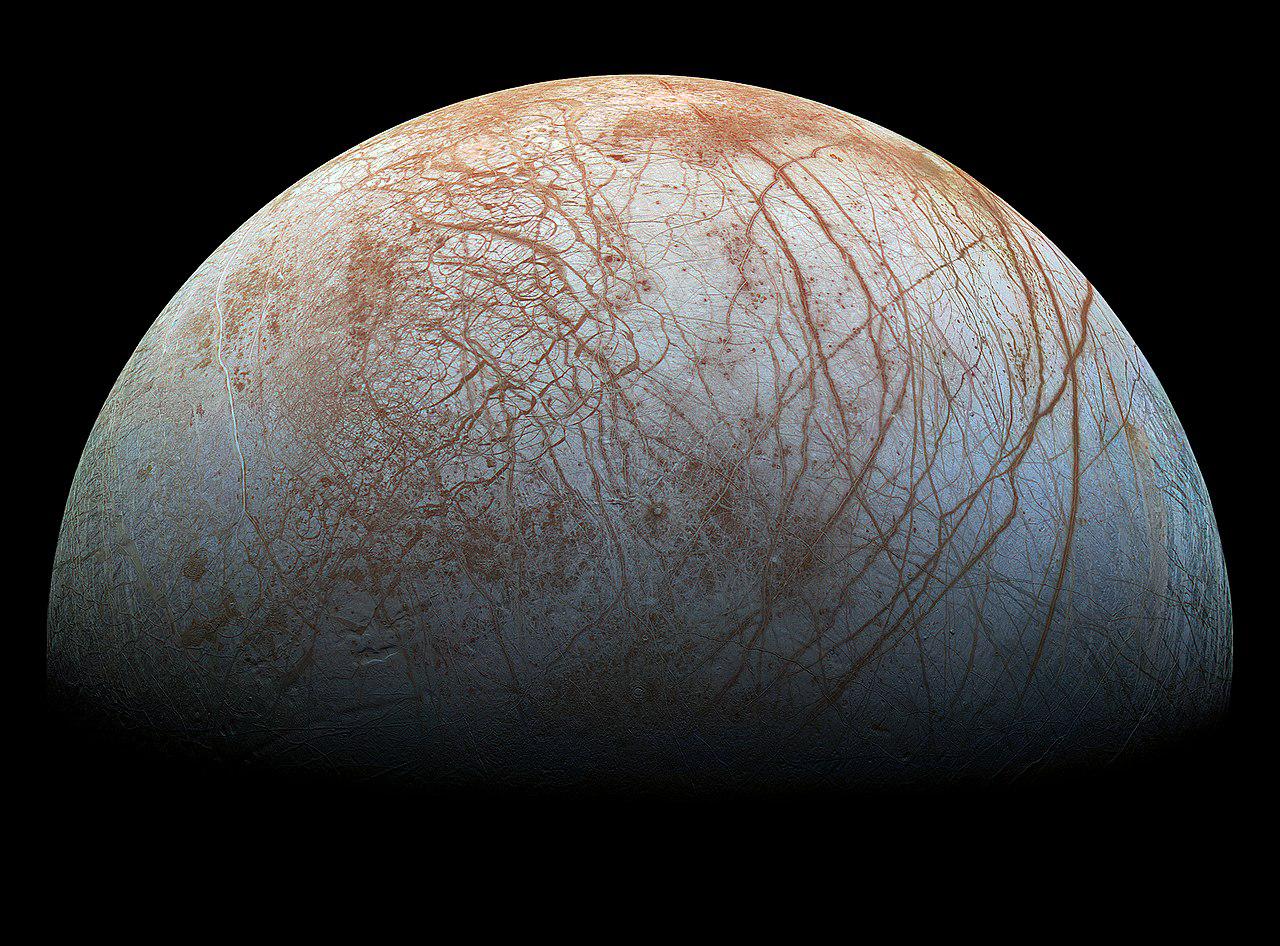
NASA scientists have proposed a new, unexpected source of energy that could sustain life in the deep ocean of Jupiter’s moon Europa. It may not be deep heat, but radioactive elements seeping from the ocean floor.
Jupiter rising over Europa. Illustration: Space Engine
A revolutionary model was presented at the annual conference of the American Geophysical Union. It suggests that the key to life may lie not in the moon’s interior, but in the rocks at the bottom of its ocean. Radioactive decay of uranium and potassium in these rocks could provide the energy necessary for biology.
The scale of the possible biosphere
Europa (moon). Source: NASA/JPL-Caltech/SETI Institute
Researchers were inspired by terrestrial ecosystems in deep-sea hydrothermal vents, where microorganisms exist thanks to chemosynthesis – the process of obtaining energy from chemical reactions. A similar process may occur on Europa. Radioactive decay splits water molecules into hydrogen and oxygen ions, which can become “fuel” for microbes.
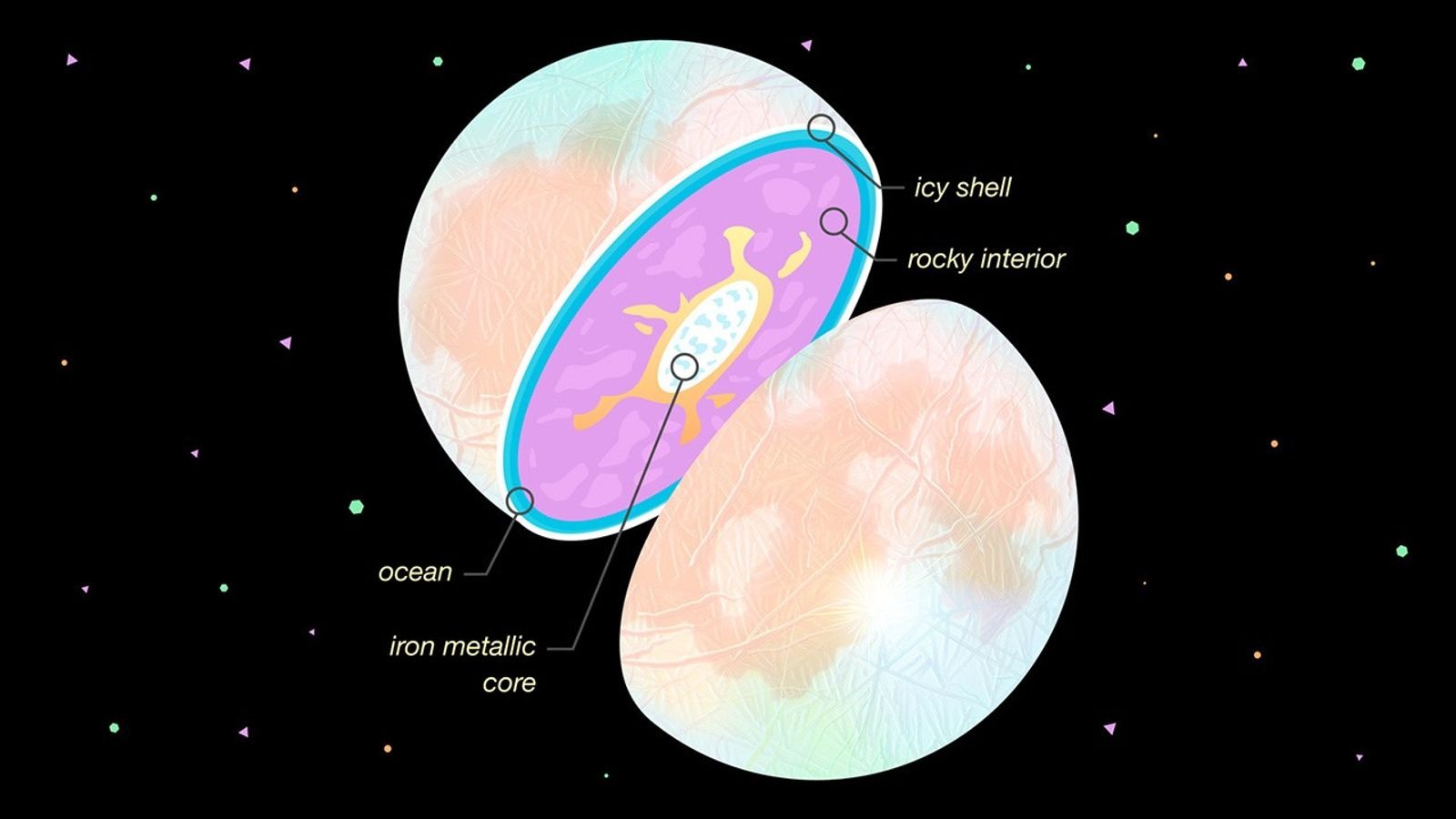
The depth of the ocean on Europa can reach 100 km. Illustration: NASA
Internal structure of Jupiter’s moon Europa. Illustration: NASA
A team led by planetary scientist Ngoc Tuan Truong has modeled the concentration of radioactive isotopes in Europa’s ocean. Calculations showed that the energy released is sufficient to sustain biomass equivalent to a thousand blue whales. This discovery is particularly important in light of new data on Europa’s thick ice crust, which may insulate the ocean from the heat of the core.
Checking the theory
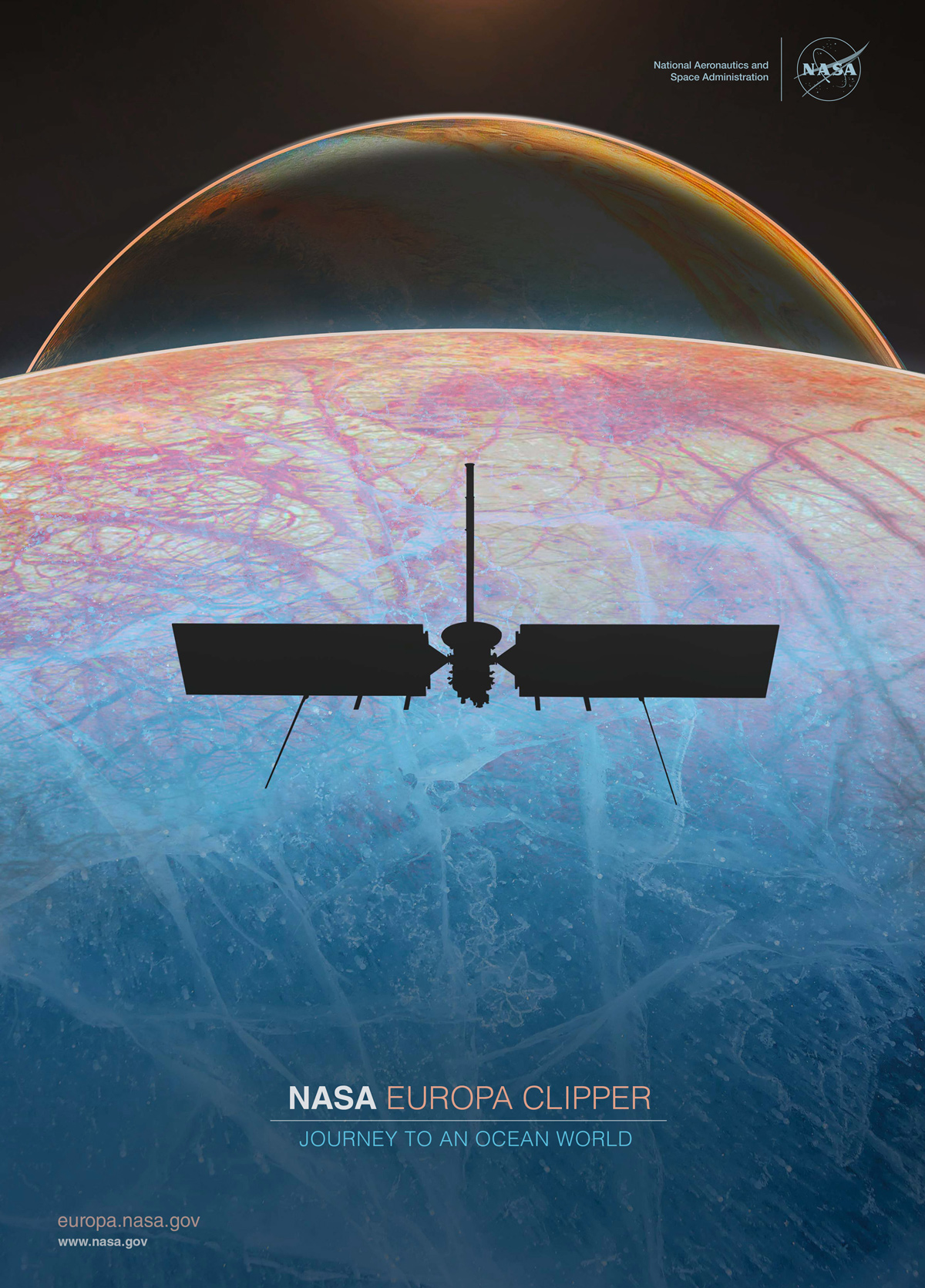
Evidence for this theory may be found by NASA’s Europa Clipper mission, which will reach Jupiter’s system in 2030. The spacecraft will study the composition of the ice and the deep processes of the moon. If the hypothesis is confirmed, Europa will be revealed as a world where life can feed on the energy of radioactive decay – a rather original scenario for the search for extraterrestrial intelligence.
Poster Europa Clipper: Journey to an Ocean World. Source: NASA/ Jet Propulsion Laboratory-Caltech
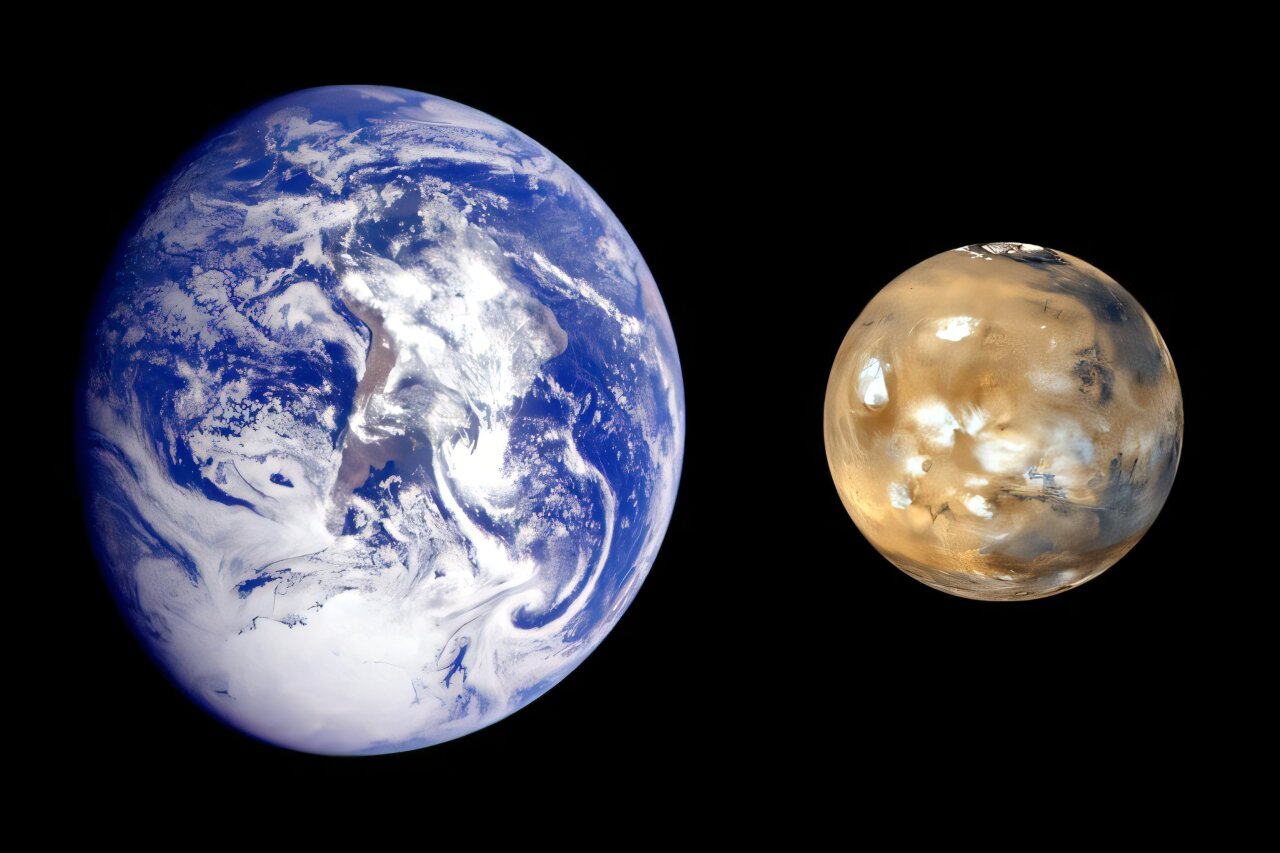
It is quite possible that Mars was the first planet in the solar system where life originated. And only later did microorganisms from Mars reach Earth. So, from a certain point of view, we may be all Martians.
Earth and Mars. Source: phys.org
A bold hypothesis
How did life begin on Earth? While scientists have theories, they don’t yet fully understand the precise chemical steps that led to biology, or when the first primitive life forms appeared.
But what if Earth’s life did not originate here, instead arriving on meteorites from Mars? It’s not the most favored theory for life’s origins, but it remains an intriguing hypothesis. Here, we’ll examine the evidence for and against.
Timing is a key factor. Mars formed around 4.6 billion years ago, while Earth is slightly younger at 4.54 billion years old. The surfaces of both planets were initially molten, before gradually cooling and hardening.
Life could, in theory, have arisen independently on both Earth and Mars shortly after formation. While the surface of Mars today is probably uninhabitable for life as we know it, early Mars probably had similar conditions to early Earth.
The possibility of life forming on Mars
Early Mars seems to have had a protective atmosphere and liquid water in the form of oceans, rivers, and lakes. It may also have been geothermally active, with plenty of hydrothermal vents and hot springs to provide the necessary conditions for the emergence of life.
However, about 4.51 billion years ago, a Mars-sized, rocky planet called Theia crashed into proto-Earth. This impact caused both bodies to melt together and then separate into Earth and its moon. If life had begun before this event, it certainly would not have survived it.
Mars, on the other hand, probably didn’t experience a global remelting event. The red planet had its fair share of impacts in the violent early solar system, but evidence suggests that none of these would have been large enough to destroy the planet, and some areas could have remained relatively stable.
So if life arose on Mars shortly after the formation of the planet 4.6 billion years ago, it could have continued evolving without major interruptions for at least half a billion years. After this time, Mars’ magnetic field collapsed, marking the beginning of the end for Martian habitability. The protective atmosphere disappeared, leaving the planet’s surface exposed to freezing temperatures and ionizing radiation from space.
The time required for life to emerge
But what of Earth: how soon did life appear after the impact that formed the moon? Tracing the tree of life back to its root leads to a microorganism called Luca – the last universal common ancestor. This is the microbial species from which all life today is descended. A recent study reconstructed Luca’s characteristics using genetics and the fossil record of early life on Earth. It is inferred that Luca lived 4.2 billion years ago – earlier than some previous estimates.
Luca was not the earliest organism on Earth, but one of multiple species of microbe existing in tandem on our planet at this time. They were competing, cooperating, and surviving the elements, as well as fending off attacks from viruses.
If small but fairly complex ecosystems were present on Earth around 4.2 billion years ago, life must have originated earlier. But how much earlier? The new estimate for the age of Luca is 360 million years after the formation of Earth and 290 million years after the moon-forming impact. All we know is that in these 290 million years, chemistry somehow became biology. Was this enough time for life to originate on Earth and then diversify into the ecosystems present when Luca was alive?
A Martian origin for terrestrial life circumvents this question. According to the hypothesis, species of Martian microorganism could have traveled to Earth on meteorites just in time to take advantage of the clement conditions following the moon’s formation.
The timing may be convenient for this idea. However, as someone who works in the field, my hunch would be that 290 million years is plenty of time for chemical reactions to produce the first living organisms on Earth, and for biology to subsequently diversify and become more complex.
Surviving the journey
Luca’s reconstructed genome suggests that it could live off molecular hydrogen or simple organic molecules as food sources. Along with other evidence, this suggests that Luca’s habitat was either a shallow marine hydrothermal vent system or a geothermal hot spring. Current thought in the origin of life field is that these kinds of environments on early Earth had the necessary conditions for life to emerge from non-living chemistry.
Luca also contained biochemical machinery that could protect it from high temperatures and UV radiation – real dangers in these early Earth environments. However, it’s far from certain that early life forms could have survived the journey from Mars to Earth. And there’s nothing in Luca’s genome to suggest that it was particularly well adapted to space flight.
To have made it to Earth, microorganisms would need to have survived the initial impact on Mars’ surface, a high-speed ejection from the Martian atmosphere, and travel through the vacuum of space while being bombarded by cosmic rays for at least the best part of a year.
They would then have needed to survive the high-temperature entry through Earth’s atmosphere and another impact onto the surface. This last event may or may not have deposited it in an environment to which it was even remotely adapted.
The chances of all of this seem pretty slim to me. However difficult the transition from chemistry to biology may appear, it seems far easier to me than the idea that this transition would occur on Mars, with life forms surviving the journey to Earth, and then adapting to a completely new planet.
The resilience of microorganisms in space
It’s useful to look at studies of whether microorganisms could survive the journey between planets. So far, it looks like only the hardiest microorganisms could survive the journey between Mars and Earth. These are species adapted to preventing damage from radiation and capable of surviving desiccation through the formation of spores.
But maybe, just maybe, if a population of microorganisms were trapped in the interior of a sufficiently large meteorite, they could be protected from most of the harsh conditions of space. Some computer simulations even support this idea. Further simulations and laboratory experiments to test this are ongoing.
This raises another question – if life made it from Mars to Earth within the first 500 million years of our solar system’s existence, why hasn’t it spread from Earth to the rest of the solar system in the following four billion years? Maybe we’re not the Martians after all.
An eerie sound has haunted Cincinnati for weeks and no one can explain it
An eerie sound has haunted Cincinnati for weeks and no one can explain it
For several weeks, residents across multiple Cincinnati neighborhoods have reported a persistent and unusual eerie sound that appears to have no clear point of origin.
This is not the first time people have reported hearing strange sounds. Over the years, unexplained noises have been documented around the world, from mysterious sky booms and trumpet-like blasts to The Hum, a persistent low-frequency tone heard by only a small percentage of the population.
Such phenomena are often tentatively linked to geological activity, industrial operations, or unusual atmospheric conditions. Some have even suggested a connection to unidentified aerial phenomena (UAP/UFO) in our skies. Despite decades of reports, these sounds continue to baffle both scientists and residents alike, and to this day, no definitive explanation for their sources exists.
The noise Cincinnati is described as an oscillating, siren-like tone rising and falling in pitch, sometimes lasting for extended periods, sometimes stopping abruptly. Those who hear it say it is impossible to locate, yet difficult to ignore.
While unexplained sounds are not uncommon in dense urban environments, what has drawn attention in this case is the lack of a confirmed explanation despite weeks of reports.
One potential explanation involves aging locomotive equipment operating at a nearby rail yard. Certain engines are known to produce low-frequency acoustic effects that can travel considerable distances under specific atmospheric conditions.
However, a spokesperson for the rail company has stated that they are unable to confirm the rail yard as the source of the sound.
As of now, no person, agency or company has publicly identified the origin of the mysterious noise.
Meta AI Can Now Read Your Mind: A Deep Dive into Brain-to-Text Technology
Meta AI Can Now Read Your Mind: A Deep Dive into Brain-to-Text Technology
Meta's AI can now decode brain activity into text with 80% accuracy, bringing us closer to mind-powered communication. Dive into the future of brain-computer interfaces—read the full story now!
Imagine a world where your thoughts can be transcribed into text without lifting a finger. Meta is turning this futuristic vision into reality. In collaboration with the Basque Center on Cognition, Brain, and Language, Meta's AI research team has developed a groundbreaking system capable of decoding brain activity into text with remarkable accuracy.
The Science Behind the Magic
This innovative approach utilises non-invasive techniques, specifically magnetoencephalography (MEG) and electroencephalography (EEG), to measure the brain's magnetic and electrical activity. In a study involving 35 participants, researchers recorded brain signals as individuals typed sentences. These recordings trained an AI model to predict text based solely on brain activity. The results were astounding: the system achieved up to 80% accuracy in decoding characters from MEG data, significantly outperforming previous EEG-based methods.
A Leap Forward in Non-Invasive Brain-Computer Interfaces
Traditional brain-computer interfaces often require surgical implants, posing risks and limiting accessibility. Meta's approach, however, is entirely non-invasive. By employing MEG and EEG, the system captures brain activity without the need for implants, making the technology safer and more accessible. This advancement holds promise for individuals with speech impairments or paralysis, offering a potential pathway to regain communication abilities.
Challenges on the Horizon
While the progress is impressive, several hurdles remain:
Equipment Limitations: MEG technology requires large, expensive machinery—approximately $2 million per device—and necessitates a magnetically shielded room. This setup is currently impractical for everyday use.
Sensitivity to Movement: Participants must remain still during MEG recordings, as even slight movements can disrupt signal accuracy. This constraint poses challenges for real-world applications.
Individual Variability: The AI model requires personalised training, as brain activity patterns differ among individuals. Developing a universal model applicable to everyone remains a complex task.
The Road Ahead: From Lab to Life
Transitioning this technology from the laboratory to everyday life involves addressing these challenges. Researchers are exploring ways to miniaturise MEG equipment and enhance its portability. Advancements in AI could lead to models that generalise across users, reducing the need for individualised training. Moreover, ethical considerations, particularly concerning mental privacy and data security, must be prioritised as the technology progresses.
A Glimpse into the Future
Meta's brain-to-text system represents a significant stride in human-computer interaction. Envision a future where composing messages or controlling devices is as effortless as thinking. While practical implementation may still be years away, the foundation laid by this research brings us closer to a world where our minds can seamlessly interface with technology.
In the words of Meta's AI research team, "Our efforts are not towards products but towards understanding the computational principles that allow the brain to acquire language."
As we continue to unravel the mysteries of the mind, the possibilities for innovation are boundless.
Introduction: Pre-Crime and Mind Reading Technology
References 2002 movie "Minority Report" (2054 setting) - pre-crime police units arresting future criminals
Breakthrough: AI translating brain scans into text at tissue level
May 2023: University of Texas Austin creates "semantic decoder" converting brain activity to text
Meta develops similar technology plus real-time visual brain wave analysis
Potential applications: helping speech-impaired individuals vs privacy concerns
UT Austin Semantic Decoder Research
Lead researchers: Jerry Tang (doctoral student computer science), Alexander Huth (assistant professor neuroscience/computer science)
Publication: Journal of Nature Neuroscience
Device name: Non-invasive language decoder
Capabilities: Reconstruct continuous language from perceived speech, imagined speech, silent videos
Advantage over invasive methods: Lower risk than Neuralink-type implants but less clear data
Technical Implementation
Method: Functional magnetic resonance imaging (fMRI) - non-invasive brain recordings
Spatial specificity: Excellent - pinpoints neuroactivity with great accuracy
0
1
2
3
4
5
- Gemiddelde waardering: 0/5 - (0 Stemmen) Categorie:SF-snufjes }, Robotics and A.I. Artificiel Intelligence ( E, F en NL )
Things You Only Notice In The Fifth Element The Second Time Around
Things You Only Notice In The Fifth Element The Second Time Around
Uncover hidden details, clever Easter eggs, and subtle references in The Fifth Element that even die-hard fans might have missed. Dive deeper into this sci-fi classic with fresh insights and fun facts.
Though it bombed at the box office back in 1997, "The Fifth Element" has become the ultimate sci-fi cult classic. There's a story behind that transformation, but it really comes down to the incredible amount of work that dozens of people put into making the movie a reality. Director Luc Besson set out to create one of the most imaginative and funny sci-fi films to date, and without a doubt, he succeeded.
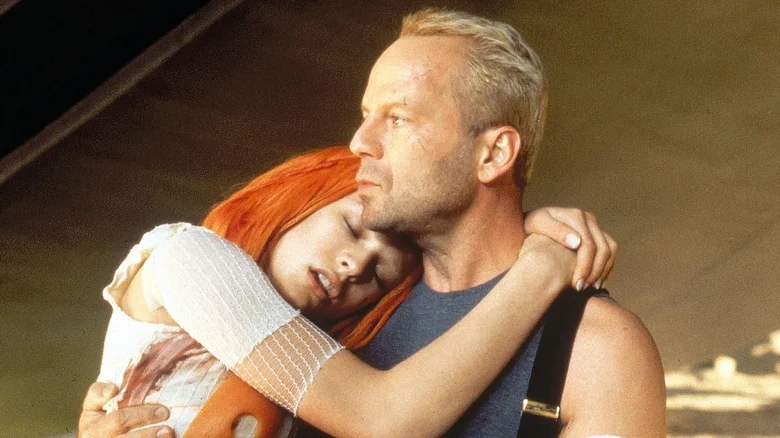
"The Fifth Element" centers on taxi driver Korben Dallas (Bruce Willis) and resurrected perfect being Leeloo (Milla Jovovich). The unlikely couple have a chance meeting that leads them out into deep space and on a quest to save the world from a galactic-scale evil threat. In the background of their grand adventure is a deeply intriguing world filled with alien opera singers, incompetent government officials, and capitalist villains willing to sacrifice Earth for power.
Besson's film is the kind of movie that warrants multiple viewings. Plenty of its fans were kids in 1997 and are just now realizing how many details in "The Fifth Element" were just for adults. It's not all raunchy humor and political satire, though. If you haven't seen "The Fifth Element" in a while, there's plenty of good and bad to be discovered on a second viewing.
Was that Luke Perry?
Gaumont Buena Vista International
"The Fifth Element" has a truly star-studded cast. It's not every day you see people like Bruce Willis, Milla Jovovich, Ian Holm, and Gary Oldman all sharing the screen. Even the movie's smaller characters are played by excellent actors like Brion James and Tom Lister Jr. — and then of course there's Chris Tucker's character, Ruby Rhod.
The first time you watch the movie, it's easy to be so starstruck that you actually miss one or two big stars who get featured in the movie. On a second pass, though, you'll notice that even extremely minor characters are played by recognizable actors.
There's a reason, for instance, why Billy looks so familiar in the beginning of the movie. Billy is a research assistant who witnesses aliens landing on Earth in 1914. He's got a very small part to play in the movie, which is a little strange considering he's played by Luke Perry. By 1997 Perry was an established star, with seven years of "Beverly Hills 90210" and plenty of other roles under his belt. Perry is the kind of actor who regularly showed up in unexpected places, but even when he doesn't have that much to do in a movie, he brings a certain level of charm to a character.
The score is even better than you remember
Gaumont Buena Vista International
People pay plenty of attention to the visual effects in "The Fifth Element," and they should: Everything from model work to murals to prosthetics got used to make the sci-fi world of Luc Besson's imagination come to life. The visual style of "The Fifth Element" sticks with you long after you watch the film, and revisiting it down the road, you'll realize that the movie looks just as good today as it did in 1997. The visuals are so good, in fact, that they just might distract you from how incredible the movie's score really is.
The first time, it's easy to lose track of the music and get lost in the action, but watching the movie a second time makes the score really stand out. At every step of the way the music supports what's happening on screen, but there are some moments that are even more striking than the visual effects. The passage playing during Leeloo's initial escape into Korben's taxi is a particular highlight.
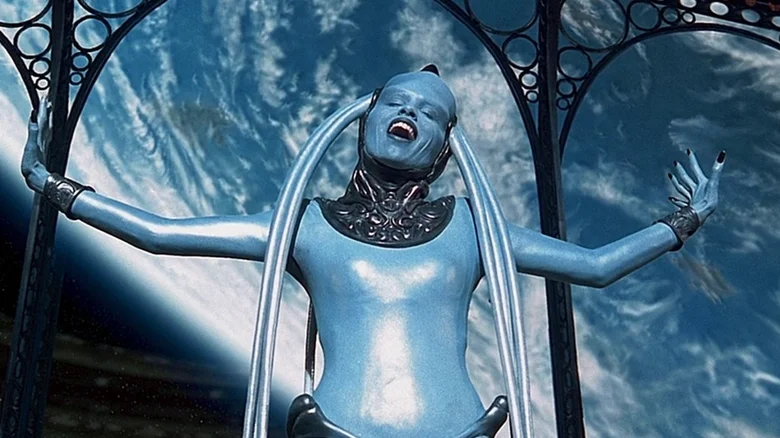
Of course, the biggest musical moment comes during Diva Plavalaguna's performance. Composer Eric Serra knew that creating an alien opera was a tall order, and he wrote the piece to purposely include notes beyond the reach of the human voice. Opera singer Inva Mula recorded the vocal performance, and she was actually able to sing a majority of what Serra had written. Some careful digital editing took care of the rest and perfected Plavalaguna's otherworldly song.
2263 desperately needs police reform
Gaumont Buena Vista International
At its heart, "The Fifth Element" is an adventure story. Korben's chance encounter with Leeloo sends his life spiraling in a new direction, and the two of them end up racing across deep space to save the universe from evil. The movie introduces some dazzling locations and sci-fi concepts, but it doesn't spend nearly as much time developing them as it does rushing through the plot. That's why every time you rewatch the movie, you'll notice new small details about the world — and sometimes they're a little concerning.
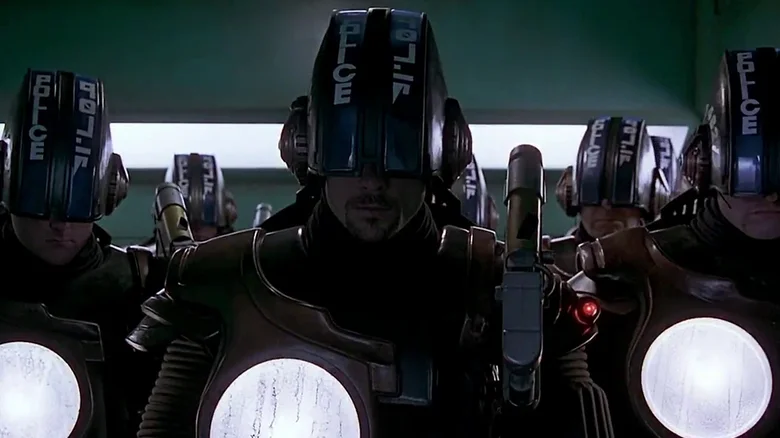
By the end of the movie, we don't know all that much about New York City circa 2263, but we've gotten enough details to learn that the city is a borderline dystopia. Korben's life as a taxi driver gives us a glimpse into the capitalist nightmare that seems to have taken over this version of the future, and his chase with the police lets us know that New York really needs to consider some drastic reform measures.
As Korben's taxi races past a police hover car early in the movie, we see that the NYPD of 2263 wears full metal body armor at all times, even if they're at a fast food drive-thru. When the police start to pursue Korben, it quickly becomes clear that collateral damage isn't a concern for them. They all but tear apart the city trying to get Korben, and they don't even succeed. Life as a pedestrian in this future NYC has to be a bit scary.
Leeloo speaks a real language
Gaumont Buena Vista International
When Leeloo lands in the back of Korben's taxi, she doesn't know where she is, and she definitely doesn't know how to speak English. Considering that she's just been essentially resurrected and brought into the future from thousands of years in the past, she learns how to communicate remarkably quickly. Though she picks up more and more English as the movie progresses, most of the time Leeloo speaks a language beyond anyone's comprehension.
At least, most of the people in the movie have a hard time understanding her. In reality, the language that Leeloo speaks is entirely real, and it was created by director Luc Besson just for this movie. Besson spent 15 years developing the world of "The Fifth Element," and in all that time he also spent some effort creating a dictionary for the Divine Language. Besson invented around 400 words so that Leeloo could, in theory, say everything she needs to say through the entire movie in a real language. Besson and Milla Jovovich both became so fluent in the Divine Language that they even used it to communicate with each other while filming.
Did Korben work for Zorg?
Gaumont Buena Vista International
"The Fifth Element" gets more mileage than most movies out of playing with tropes and character archetypes. The story has a traditional big evil and a chosen one destined to defeat it. Leeloo and Korben both get to play out different takes on the hero archetype, while Zorg (Gary Oldman) stands in for the movie's real villain. The movie sets up a story that's initially familiar, but it subverts the usual formula whenever it can.
One of the oddest parts about "The Fifth Element" is that the heroes and the villains never actually see each other face to face. Obviously the big space evil is a kind of amorphous entity that would probably have trouble standing on the surface of Earth, but Leeloo and Korben never even meet Zorg, the evil's human representative. They save the day without ever properly squaring off against Zorg, but that doesn't mean they have no connection to Zorg whatsoever.
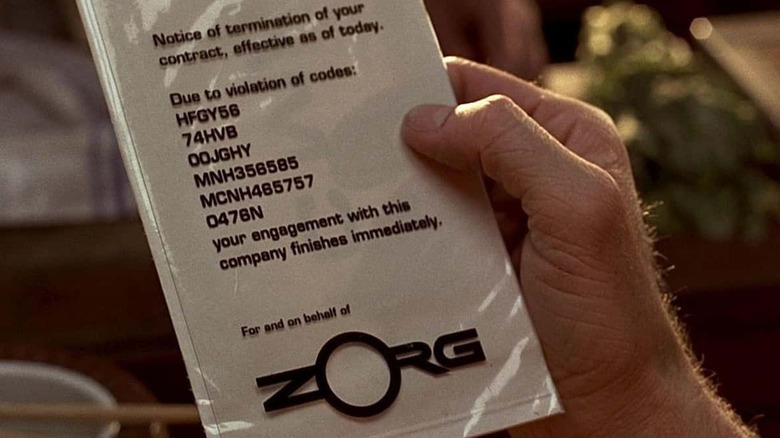
After using his taxi to escape from the police, Korben loses his job, and that's actually Zorg's first strike against our heroes. The first time they watch the movie, most people probably miss a small detail on Korben's termination notice. Zorg owns the company that fires Korben, so even though the two never directly meet, their conflict is still personal.
The future's military needs better leadership
Gaumont Buena Vista International
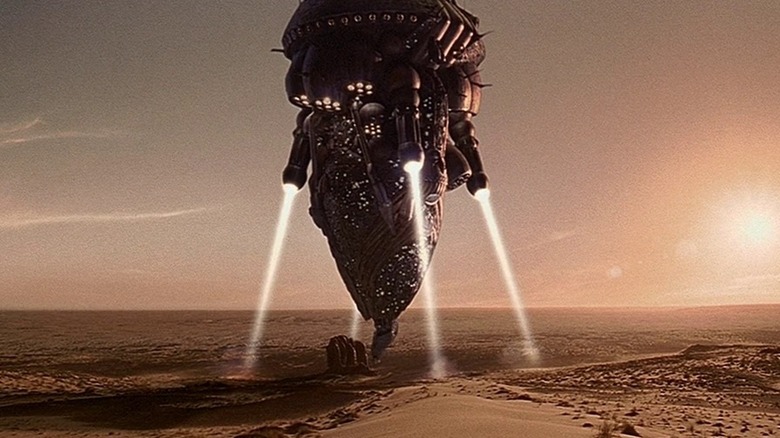
According to "The Fifth Element," by 2263 humanity will have spread out to the stars and made contact with alien civilizations. Earth will be filled with sprawling cities, hover cars, and the kind of technology that lets you regrow life from tissue samples. The future sounds amazing, but when you really think about the people who are in charge of the planet, you might have second thoughts about that.
Earth's military has a big role to play in "The Fifth Element." They're the ones who make first contact with the great evil that employs Zorg, and they eventually help send Korben and Leeloo on their journey to save the world. It might be fair to say all's well that ends well, but the movie shows us over and over again how incompetent the future leadership of Earth really is.
The President, played by Tom "Tiny" Lister Jr., never seems to have any idea what's really going on. He's willing to take advice from Ian Holm's Cornelius, despite having very little evidence that the priest knows what he's talking about when it comes to epic space evils. The military, on the other hand, is represented by Brion James's character General Munro. You'd want a general to have a sound tactical mind, but Korben manages to outsmart Munro, leaving him trapped in a freezer in his apartment while he escapes with Leeloo. The movie is definitely saying something about people in power, but it's also depicting a future we'd all be better off avoiding.
Even the characters are surprised by Chris Tucker
Gaumont Buena Vista International
"The Fifth Element" is filled with great performances, but Chris Tucker's appearance as Ruby Rhod is one of the most memorable parts of the entire movie. From clothing to hair, Ruby's sense of style is something that you won't forget after seeing it. Tucker brings a tremendous amount of energy to the role, transforming Ruby into an unbelievably entertaining powerhouse entertainer. Ruby immediately steals the scene, and even the characters in the movie seem to be a bit stunned by Tucker's performance.
It turns out that everyone on set probably was just as surprised by Tucker as anyone who's ever watched "The Fifth Element." Tucker told EW that when he took the part, hardly anyone knew what the role was supposed to be. "They were really protective of the script," he recalled. "They didn't let anyone know what the part was." Even Tucker himself was kept mostly in the dark. All he knew was that Prince was supposed to play the role, but he passed it up because the costumes were too outlandish. Tucker didn't know what to think, until he saw the costume for himself.
"I was kind of like 'Whoof, this is a deep, deep character,'" Tucker said, adding, "But all that stuff really helped me get into character." Get into character Tucker did, and the movie's other actors couldn't help but let their genuine reactions to Tucker's performance bleed into their own work.
Zorg might be Gary Oldman's scariest villain
Gaumont Buena Vista International
Gary Oldman is one of the greatest character actors of his generation. He's played some heroic characters, like Detective Jim Gordon in the "Dark Knight" trilogy and Sirius Black in the "Harry Potter" films, but Oldman really shines as a villain. Whether he's playing a shapeshifting vampire in "Bram Stoker's Dracula" or the crazed mayor of a post-apocalyptic town in "The Book of Eli," Oldman brings a chilling energy to all his baddies.
Amidst all the aliens and shiny scenery, it can be easy to lose track of Oldman's character Zorg in "The Fifth Element," but the second time through you'll realize how terrifying he really is. What makes Zorg so scary isn't that he's working for a terrible evil, but that communicating with his evil boss seems to shake Zorg to his very core. On the phone with the evil entity, Zorg's head spontaneously starts bleeding, and his own terror is very apparent. Despite his fear, he keeps trying to help the evil grow in power.
Oldman's performance in the movie is even more impressive if you know the context surrounding it. In an interview with Role Recall, Oldman admitted that he only took the role as a favor to Luc Besson. He didn't even read the script before agreeing to be in the movie, and it doesn't sound like he's a huge fan of the finished product. When told that "The Fifth Element" has become a cult classic, Oldman just laughed and said, "That's the wacky world we live in."
Leeloo may have inspired another sci-fi hero
Gaumont Buena Vista International
As a character, Leeloo is obviously based on "chosen one" tropes that are as old as time itself. The movie repeatedly says that she's supposed to be a perfect being. It's not just that Leeloo is destined to save the world, but also that she has some borderline magical abilities. She's an incredibly fast learner, and all but a champion fighter with little to no training whatsoever. Korben plays a central role in the story, but it's really Leeloo who's the hero of "The Fifth Element."
As much as she's based on mythological heroes from stories that came before her, Leeloo has also gone on to inspire other sci-fi heroes. Her influence can easily be seen in characters like River from "Firefly" and "Serenity," but she has a very particular similarity with another major '90s sci-fi "chosen one." In the movie Leeloo learns how to fight — and a majority of human history — by watching video feeds on a small screen. She basically downloads the knowledge into her head. Two years after the debut of "The Fifth Element," Neo learns his own fighting techniques using a very similar method in "The Matrix."
There's no replacement for practical effects
Gaumont Buena Vista International
There are plenty of '90s sci-fi movies that don't hold up visually today. CGI has come a long way in the past three decades, and movies that went all in on the technology back then are really starting to show their age. "The Fifth Element" has no shortage of special effects, but the movie still looks fantastic today because so much of what happens on screen was created practically.
Luc Besson knew that his movie was going to demand an excessive amount of visual effects. It took more than 160 people to create the 220 visual effects shots that made it into the movie, and the team filmed plenty more that didn't survive the editing room. Besson employed model makers and artists to make his world as realistic as possible. The spaceships shown in the movie are real models. So is Korben's taxi, and even some of the New York City streets that he flies it down. A second viewing gives one plenty of time to really appreciate the level of effort that went into making "The Fifth Element" as visually engaging as it is.
The movie is plagued by stereotypes
Gaumont Buena Vista International
Unfortunately, not everything that you notice about "The Fifth Element" when watching it again is good. There are plenty of things to praise about the movie, from the performances to the music to the visual effects, but decades later it also stands out for being filled to the brim with misogynist stereotypes.
There's no way around it: "The Fifth Element" does a terrible job depicting women. Leeloo is basically the only human woman on screen the entire movie, and even though she's a hardcore action hero, she still ends up falling into the damsel in distress role more than once. As badass as Leeloo may be on her own, the movie doesn't let her be a hero without the help of Korben. She's also wearing little more than some strategically placed bandages for the first third of the film.
It's the other women in the movie that get a really problematic portrayal. Korben's mother and ex-wife — heard only as voices talking to Korben over the phone — are depicted as greedy nags who won't let Korben live his life in peace. They call Korben to ask him for money or berate him for supposedly going on vacation, and the movie plays these moments for laughs as Korben rolls his eyes and desperately tries to avoid interacting with them as much as possible. Those cringe-worthy moments don't ruin the film by any means, but they may tarnish your memories of it on that second viewing.
The Loch Ness Monster was 'spotted' five times in 2025, official records have revealed.
The mythical creature has been a staple feature of Scottish folklore for centuries, but gained worldwide attention in 1933, when the first photo was snapped.
The five sightings of the creature, nicknamed Nessie, took place across just an eight-month period.
The first was on 22 March, when a couple visiting from London spotted a mysterious 'hump' in the water.
Two months later, in May, a visitor reported a 'long and thin' creature in a boat's wake.
In August, a 'long time local' reported a sighting, before two visitors claimed to spot Nessie within weeks of each other in October.
Here's a closer look at the five sightings, and exactly what was seen.
In May, a visitor viewing the loch from a high vantage point at around 15:40 spotted a small motor boat entering the bay
22 March
At around 7pm on 22 March, a couple visiting from London heard a 'quiet splash' at Fort Augustus.
'We were right at the point where the River Taff connects to Loch Ness, on the north bank,' one of them said.
'At first I noticed a very quiet splash sound as if something was cutting stealthily into the water and this drew my attention to the south side of the water.
'There I saw something moving through the water, between 130 and 160 feet away from us.
'It was paler than the jet-black water around it, but in the gloom it was impossible to determine a hue.'
The couple described the sighting as a 'hump', adding that it was 'large and alive'.
'Kind of like if a large seal or walrus was swimming in the water but for some reason it's head was hidden, like just it's back was exposed,' they explained.
The mythical creature has been a staple feature of Scottish folklore for centuries, but gained worldwide attention in 1933, when the first photo was snapped
In late August, a long time local resident shot a two-minute video of something under the water near Lochend
While it was too dark to pick up on details like texture, the couple soon realised that there was a second mass in its wake.
'It was roughly the same size and shape as the leading mass but perhaps lower in the water,' they added.
'There was maybe 1.5 to 2 meters gap between the humps from my line of sight. I think until I saw the second hump I was thinking it was a seal that was behaving strangely.'
The creature soon left the area, moving towards the deeper part of the loch, before disappearing.
'Later when we talked about it, my partner told me that from her vantage point it was clear that the two humps were on one creature, that it was one long creature,' the viewer added.
23 May
In May, a visitor viewing the loch from a high vantage point at around 15:40 spotted a small motor boat entering the bay.
Using binoculars, he peered at the boat's wake, and spotted something 'long and thin' pop up.
On 15 October, Peter Hoyle was visiting the Loch from Moray, when he spotted a dark shape sticking out of the water
While the object vanished a few times, he managed to catch it on film, with the entire sighting lasting just five minutes.
29 August
In late August, a long time local resident shot a two-minute video of something under the water near Lochend.
Filmed at 09:15 during 'calm clear conditions', the footage shows an unusual disturbance pattern on the surface of the water.
Despite living in the area for 30 years, the resident said they had 'never seen anything like this before.'
15 October
On 15 October, Peter Hoyle was visiting the Loch from Moray, when he spotted a dark shape sticking out of the water.
The shape was moving from the right side of the loch to the left, travelling 'fairly quickly, but not boat speed'.
Finally, Mishawn Mielke, a tourist from Texas, was visiting Urquhart Castle when she reported seeing a black head in the water at 14.45
Within 30 seconds, the shape had disappeared into the depths of the water - although Mr Hoyle did manage to capture footage of the short sighting.
28 October 2025
Finally, Mishawn Mielke, a tourist from Texas, was visiting Urquhart Castle when she reported seeing a black head in the water at 14.45.
'I first saw it and was like wow, that looks just like images I saw from the sightings website,' she said.
'It didn't look like a wave, it actually looked like the head of something popping up. it made a distinct pattern in the water I couldn't see anywhere else, kind of like its own wake. And than it was gone.
'From that distance I'd say the water pattern was at least 3m long.'
Webcam images
Four sightings were also reported via webcam images in 2025, although these are listed separately.
'Over the past few years, and especially during the Covid crisis, many images that we receive come from the Loch Ness Webcam,' The Official Loch Ness Monster Sightings Register explains on its website.
'For reasons outwith the control of the camera operators, the resolution of some of the images from the camera has at times been less than ideal.
'As such, it has been more difficult to identify what some images submitted.
'Given they are still "unexplained" though, we decided that from 2021 onwards, such images would be listed separately from those that are reported by people who saw something while physically at the loch.'
Rumours of a strange creature living in the waters of Loch Ness have abounded over the decades, yet scant evidence has been found to back up these claims.
One of the first sightings, believed to have fuelled modern Nessie fever, came in May 2, 1933.
On this date the Inverness Courier carried a story about a local couple who claim to have seen 'an enormous animal rolling and plunging on the surface'.
Another famous claimed sighting is a photograph taken in 1934 by Colonel Robert Kenneth Wilson.
It was later exposed as a hoax by one of the participants, Chris Spurling, who, on his deathbed, revealed that the pictures were staged.
Other sightings James Gray's picture from 2001 when he and friend Peter Levings were out fishing on the Loch, while namesake Hugh Gray's blurred photo of what appears to be a large sea creature was published in the Daily Express in 1933.
Robert Kenneth Wilson, a London physician, captured arguably the most famous image of the Loch Ness Monster. The surgeon’s photograph was published in the Daily Mail on April 21, 1934 - however it was later proven to be a fake
The first reported sighting of the monster is said to have been made in AD565 by the Irish missionary St Columba when he came across a giant beast in the River Ness.
But no one has ever come up with a satisfactory explanation for the sightings - although in 2019, 'Nessie expert' Steve Feltham, who has spent 24 years watching the Loch, said he thought it was actually a giant Wels Catfish, native to waters near the Baltic and Caspian seas in Europe.
An online register lists more than 1,000 total Nessie sightings, created by Mr Campbell, the man behind the Official Loch Ness Monster Fan Club and is available at www.lochnesssightings.com.
So what could explain these mysterious sightings?
Many Nessie witnesses have mentioned large, crocodile-like scutes sitting atop the spine of the creature, leading some to believe an escaped amphibian may be to blame.
Native fish sturgeons can also weigh several hundred pounds and have ridged backs, which make them look almost reptilian.
Some believe Nessie is a long-necked plesiosaur - like an elasmosaur - that survived somehow when all the other dinosaurs were wiped out.
Others say the sightings are down to Scottish pines dying and flopping into the loch, before quickly becoming water-logged and sinking.
While submerged, botanical chemicals start trapping tiny bubbles of air.
Eventually, enough of these are gathered to propel the log upward as deep pressures begin altering its shape, giving the appearance of an animal coming up for air.
That means it takes light 160,000 years to travel the distance to this 'star factor', so this is actually what it looked like 160,000 years ago.
Here on Earth, Neanderthals were extinct only 40,000 years ago, so would still be roaming our planet for another 120,000 years after this light was emitted from the factory.
This is an unfathomably gigantic scale the telescope has revealed, with the full width of this factory being 150 light years across too.
Thick clouds of cold hydrogen - star fuel - twist over the giant area, glowing deep red where baby stars are forming, burning.
Some erratic stars have blasted their surroundings with powerful stellar winds which carve out giant bubbles in the gas.
It is visible in the southern hemisphere of Earth in the constellations of Dorado and Mensa, showing as a large misty cloud, easily seen by the naked eye in dark skies.
The Hubble Space Telescope has been in a low Earth orbit for the past three decades and has been revealing far away pieces of space for all that time. It is a joint project between NASA and the European Space Agency (ESA).
This new picture from the Hubble Space Telescope shows a 'star factory' at work in the Large Magellanic Cloud
They’re some of the most sterile places on Earth – but scientists have discovered dozens of new bacterial species inside NASA’s cleanrooms.
These facilities are ultra-sanitised, highly controlled spaces where spacecraft and sensitive instruments are built and tested.
They are designed to prevent any form of contamination and to stop unwanted microbes from hitching a ride to other planets.
So experts were left stunned after finding 26 tiny living organisms – all previously unknown bacterial species – in the Kennedy Space Center cleanrooms in Florida.
Despite stringent measures including filtering air, the strict regulation of temperature and humidity and the use of harsh chemical detergents, these microbes have somehow managed to survive.
‘It was a genuine “stop and re-check everything” moment,’ Alexandre Rosado, a professor of Bioscience at King Abdullah University of Science and Technology (KAUST) in Saudi Arabia, told Live Science.
Recent analysis of these microbes has shed light on how they can live – and even thrive – in one of the harshest man-made environments on Earth.
And it turns out they have genes that help them resist the effects of radiation and even repair their own DNA.
A selection of the 26 new bacterial species discovered in the cleanroom, despite the facility being ultra-sanitised and highly controlled
The Phoenix Mars Lander in the cleanroom at the Kennedy Space Center. This photograph was taken in 2007, when bacterial samples were collected from the floor
The main goal of cleanrooms is to stop Earth’s organisms contaminating other planets that could potentially contain life.
They also play a crucial role in protecting Earth from potential alien hitchhikers in returned samples.
However, ‘cleanrooms don’t contain “no” life’, Professor Rosado said. ‘Our results show these new species are usually rare but can be found.’
The new species were identified lurking in cleanrooms where NASA assembled its Phoenix Mars Lander in 2007.
They were collected and preserved at the time, and recent advances in DNA technology has allowed scientists to properly analyse them.
The findings, published in the journal Microbiome, read: ‘Maintaining the biological cleanliness of NASA’s mission-associated cleanrooms, where spacecraft are assembled and tested, is critical for planetary protection.
‘Even with stringent controls such as regulated airflow, temperature management and rigorous cleaning, resilient microorganisms can persist in these environments, posing potential risks for space missions.’
The next step, experts said, is to figure out whether any of these tiny organisms could have potentially tolerated conditions during a journey to Mars’ northern polar cap, where Phoenix landed in 2008.
This image shows Phoenix hanging from its parachute as it descended to the Martian surface in 2008
Experts said the next step is to work out whether any of these microorganisms could have survived the trip to the Red Planet. Pictured: The Phoenix Lander on Mars
Professor Rosado said several species do carry genes that may help them adapt to the stresses of spaceflight.
But their survival would depend on how they handle the harsh conditions of the journey and on the Red Planet itself, including exposure to vacuum, deep cold and high levels of UV.
To explore this further, the team plan to test the microbes inside a ‘planetary simulation chamber’ that could reveal whether they could survive a trip through space.
One is currently being built at JAUST, with its first experiments expected to commence in early 2026.
The team said that beyond space exploration, these microbes hold ‘immense promise’ for biotechnology as their resistance to radiation and chemical stressors could drive innovations in medicine, pharmaceuticals and the food industry.
Het Laatste Decennium: 10 jaar Onverklaarde UFO-gevallen uit Project Blue Book
Het Laatste Decennium: 10 jaar Onverklaarde UFO-gevallen uit Project Blue Book
De jaren 60 waren een stuk rustiger voor Project Blue Book
Inleiding
Tegenwoordig is de interesse in UFO’s (Unidentified Flying Objects) en de mogelijkheid van buitenaardse aanwezigheid opnieuw toegenomen. Hoewel deze onderwerpen vaak worden afgedaan als complottheorieën of pseudowetenschap, is de geschiedenis van UFO-onderzoeken rijk aan mysterieuze incidenten die nog altijd vragen oproepen. Een van de meest bekende nationale onderzoeken naar UFO’s uit de Verenigde Staten is Project Blue Book (1952-1969). Dit overheidsinitiatief probeerde de vele rapportages over vreemde objecten in de lucht te onderzoeken en te classificeren. Maar ondanks de uitgebreide documentatie en officiële rapporten blijven veel gevallen onverklaard.
In dit artikel onderzoeken we de onverklaarde gevallen uit het laatste decennium van Project Blue Book, met focus op voorbeelden uit de jaren zestig, en we plaatsen deze in een bredere historische en contextuele kader. Daarbij belichten we ook de zienswijzen, de methodologie van het onderzoek en de mogelijke patronen die uit deze gevallen kunnen worden afgeleid. We bouwen verder op de basis van de originele rapporten, brengen voorbeelden met details, en analyseren de betekenis van deze incidenten binnen het grotere UFO-onderzoek.
Het doel is om niet alleen de feiten te presenteren, maar ook een gestructureerde en uitvoerige analyse te bieden die de lezer een helder inzicht geeft in de complexiteit en de raadsels die de menselijke lucht boven ons blijven bedekken.
Veel UFO-waarnemingen bereikten Project Blue Book niet
Hoofdstuk 1: Het Achtergrondverhaal van Project Blue Book
1.1 Het ontstaan en de doelstellingen van Blue Book
Project Blue Book werd in 1952 gestart onder leiding van het Amerikaanse ministerie van defensie. Het hoofddoel was het onderzoeken van UFO-meldingen die werden gedaan door militaire personeel, piloten, burgerwachten en gewone burgers. Men wilde bepalen of deze verschijnselen een bedreiging vormden voor de nationale veiligheid en of ze technisch verklaarbaar waren.
De onderzoekers probeerden een systematisch aanpak te hanteren: ze verbruikten getuigenverslagen, deden radarbezoeken, en vergeleken waarnemingen. Aanvankelijk was het een serieuze poging om bewijs voor buitenaardse technologie te vinden. Echter, vanaf het begin was er ook sprake van politieke en propagandistische belangen. Men wilde de publieke angst beperken, en rapportages werden soms onderdrukt of aangepast.
1.2 De leiding en de controverse
De eerste leiding van het project was onder leiding van Captain Edward Ruppelt, die bekendstaat als een objectieve en kritische informant over het werk van Blue Book. Ruppelt probeerde de geloofwaardigheid van het onderzoek te behouden en was ervan overtuigd dat er daadwerkelijk onverklaarbare incidenten waren. Nadat Ruppelt in 1953 vertrok, verslechterde de situatie: rapporten werden veel makkelijker afgewezen, en er ontstond een sfeer van onderdrukking en desinformatie.
Bepaalde rapporten werden verwijderd, gecensureerd of neergezet als natuurlijke fenomenen zoals weerballonnen, sterren, sterrenbeelden, of menselijke fouten. Openbare verklaringen werden minder serieus toen duidelijk werd dat het project vooral bedoeld was om de publieke angst te temperen, in plaats van wetenschappelijk onbevooroordeeld te worden.
Toont deze foto een echte UFO?
1.3 De invloed van politieke en militaire belangen
De jaren zestig markeerden een periode van toenemende militaire spanning, met de Koude Oorlog en de Space Race. In die context waren sommige UFO-incidenten mogelijk militaire geheimen of gevechtsvliegdekschepen. De vraag bleef of er soortgelijke verschijnselen technisch verklaarbare oorzaken hadden, of dat ze echt iets bovennatuurlijks of buitenaards waren.
Er was ook sprake van een soort ‘disinfo’ strategie, waarbij men gegevens technische en mysterieus hield om te voorkomen dat vijanden of oppositie zich een beeld konden vormen van nieuwe technologieën of bedreigingen. Veel incidenten konden niet worden verklaard, zelfs niet door geavanceerde radar en sensorische apparatuur.
Kortom, ze sluimerden onder de oppervlakte, en de officiële documenten tonen dat veel rapportages verduisterd of afgewezen werden zonder adequate verklaring.
Hoofdstuk 2: De jaren zestig – Een Bloei van Onverklaarbare Incidenten
2.1 De algemene kenmerken van de waarnemingen
De jaren zestig blijken een bijzonder rijke periode te zijn in termen van UFO-waarnemingen. Uit de rapporten blijkt dat veel waarnemingen zich herhaalden: opvallende lichten, ongewone vormen, grote objecten die stilhielden of plotseling snelheden bereikten die klassieke technologie niet kon halen.
De getuigen variëren van militairen en piloten tot gewone burgers, zoals boeren, studenten, en politieagenten. Betrouwbare getuigen zoals piloten en ervaren militairen meldden incidenten die met radar en visuele waarnemingen werden ondersteund. Dat maakt deze gevallen extra interessant, omdat zij de mogelijkheid bieden om waarnemingen vanuit verschillende bronnen te vergelijken.
Veel UFO-waarnemingen hadden meerdere getuigen
2.2 Voorbeelden van opmerkelijke incidenten uit de jaren zestig
Laten we enkele incidenten in detail bekijken.
a) Het geval van de grote driehoek in Kansas (1961)
In de nacht van 3 januari 1961 meldde een politieagent in Kansas een indrukwekkende driehoekvormige ufo die stil zweefde boven de snelweg. De ufo was ongeveer 200 voet breed, draaide langzaam en leek geen geluid te maken. Toen de agent naderbij kwam, sloeg het object plotseling snel weg en verdween. Het had een glanzend oppervlak en leek uit meerdere lagen te bestaan.
Wat dit incident uniek maakt, is dat het niet alleen visueel werd waargenomen, maar ook radarbevestiging kreeg. Verschillende radarvelden registreerden de bewegingen van het object, wat de onbevooroordeelde wetenschappelijke waarde verhoogt. Het werd ook bevestigd door meerdere getuigen in de omgeving. Dit soort gevallen, waarbij radar- en visuele gegevens overeenkomen, wordt beschouwd als zeer moeilijk te verklaren.
b) Het waarnemingsincident van Michigan (1966)
In Michigan werden meerdere mensen tegelijkertijd getuige van een groot, ringvormig object dat traag door de lucht bewoog. Het object had een halo effect en leek een blauwachtige gloed uit te stralen. Sommige getuigen rapporteerden dat het object zich splitste in kleinere delen en verdween achter de bomen of zich snel vervolmaakte naar een punt.
Het interessante was dat dit fenomeen meerdere keren werd gemeld door olika mensen in korte tijd, en dat enkele waarnemingen werden ondersteund door radardata van nabijgelegen luchthavens. Het verband tussen visuele waarnemingen en radarvermeldingen suggereert dat er werkelijk een fysiek object aanwezig was dat op de een of andere manier niet bekend was.
2.3 Sporen en fysieke effecten
Veel onverklaarde waarnemingen gaan gepaard met fysieke effecten, zoals intense hitte, elektromagnetische verstoringen, en zelfs schade aan apparatuur. Bijvoorbeeld, in een incident in Oklahoma (1962) werd een klein vliegtuig achtervolgd door een rood-oranje vuurbol die zich snel door de lucht bewoog. De piloot meldde dat zijn navigatiesysteem stoorde en dat er een warmtegevoel op de huid was. Sommige onderzoekers vermoeden dat dergelijke fenomenen antimagnetische of energiewaardevolle eigenschappen bezitten.
Wat hebben de twee getuigen die avond precies gezien?
2.4 Voorbeelden van andere opvallende gevallen
De ‘lighthouse’ in New York (1962): meerdere getuigen meldden een grote, heldere lichtbron die boven de skyline hing. De lichtsterkte deed denken aan een kustlamp, maar bevond zich op een plaats waar geen natuurlijke lichtbronnen bekend waren.
De landingspoging van een klein object in Oklahoma (1962): getuigen zagen dat een klein, dik object leek te landen en dat er uit het object een man uit een voertuig stapte die zich vreemd gedroeg. Dit soort ‘bijzondere’ waarnemingen roept vragen op over buitenaardse en menselijke factoren.
Hoofdstuk 3: Analyse van de patronen en kenmerken
3.1 De herhaling van kenmerken en patronen
Een belangrijke bevinding uit de verzamelde rapporten is de consistentie: vele waarnemingen delen kenmerken zoals:
Lichtfenomenen die in verschillende vormen verschijnen: cirkels, driehoeken, cilinders, en kubussen.
Snelle bewegingen en plotselinge snelheden die de technologische mogelijkheden van de jaren zestig overtreffen.
Stilstaande of langzaam bewegende objecten, vaak met het vermogen om van vorm te veranderen.
Felle lichten die van kleur variëren, vooral rood, geel, blauw en groen.
Geluiden die vaak ontbreken of erg zacht zijn, hoewel sommige getuigen zingen dat ze harde kreunen of sissende geluiden hoorden.
3.2 Radar- en sensorwaarnemingen
De combinatie van visuele waarneming met radarbevestiging is een belangrijke indicator voor de objectiviteit van sommige incidenten. Vooral in militaire en luchthavendossiers blijkt wel dat bepaalde objecten niet alleen visueel, maar ook via radar werden gevolgd en dat ze zich niet konden aanpassen aan bestaande technologie of natuurlijke verschijnselen.
Meldingen van UFO-waarnemingen bleven afnemen voor Blue Book naarmate de jaren '60 vorderden
3.3 fysieke en elektromagnetische effecten
Veel incidenten tonen dat objecten elektromagnetische verstoringen kunnen veroorzaken. Dit viel op in gevallen waar vliegtuigen en communicatieapparatuur uitvallen bij de waarneming van de UFO. Daarnaast worden lichaamseffecten gerapporteerd, zoals warmte, tintelingen en waterige ogen. Sommige onderzoekers vermoeden dat deze verschijnselen te maken hebben met energiegolven die door de objecten worden uitgezonden.
3.4 De rol van de publieke en militaire perceptie
In de jaren zestig was de publieke belangstelling voor UFO’s groot, vooral met de opkomst van de televisiekunst en de nieuwe media. Overheidsrapporten proberen vaak de incidenten te ‘verdammen’ door ze te labelen als natuurlijke fenomenen, menselijke fouten, of ballon- en weerballonnen. Maar de herhaalde onverklaarbare incidenten wijzen op een complex samenspel van natuurlijke en technologische factoren die nog niet volledig zijn begrepen.
Hoofdstuk 4: Conclusies en Reflecties
4.1 De blijvende onverklaarbaarheid
Ondanks de inspanningen van Project Blue Book en de technologische vooruitgang, blijven veel incidenten onverklaard. Vaak wordt er gesuggereerd dat bepaalde fenomenen een bewijs vormen voor buitenaardse intelligentie, terwijl andere mogelijk natuurlijke of menselijke oorzaken hebben.
Ondanks dat er een UFO-golf was, kwamen er in 1964 weinig meldingen bij Blue Book binnen
4.2 Het belang van herziening en onderzoek
Veel gevallen uit de jaren zestig worden nog steeds bestudeerd door UFO-onderzoekers en historische wetenschappers. Het herzien van oude dossiers kan patronen blootleggen die voorheen niet zichtbaar waren, en kan zelfs nieuwe technologieën behulpzaam maken bij de analyse van historische waarnemingen.
In 1966 nam het aantal Blue Book-onderzoeken toe
4.3 De vraag of we echt alleen zijn
De confrontatie met onverklaarbare incidenten benadrukt dat de lucht en de ruimte boven ons vol raadsels blijven. Of deze verschijnselen nu buitenaards, natuurlijke, of door menselijke technologieën veroorzaakt zijn, ze blijven mysterieus en relevant voor de menselijke nieuwsgierigheid en wetenschap.
4.4 Toekomstperspectief
Met de huidige toename aan technologie en sensoren, en de hernieuwde belangstelling van overheden zoals de Amerikaanse Pentagon en NASA, wordt aangenomen dat er meer data en inzichten zullen komen. Openbare transparantie en wetenschappelijk onderzoek kunnen uiteindelijk bepalen of we ooit het antwoord vinden op de vraag: Zijn we echt alleen in de kosmos?
Het verhelderende auto-incident is een van de meest intrigerende die ooit is vastgelegd
Slotwoord
De afgelopen tien jaar laten zien dat de onverklaarde UFO-gevallen niet enkel een fascinerende verzameling raadsels vormen, maar ook een venster bieden op de limieten van onze kennis. Door de historische incidenten te bestuderen en patronen te zoeken, kunnen we misschien op termijn meer begrip krijgen van deze mysteries die ons al decennia lang uitdagen. Het blijft een boeiende uitdaging voor wetenschappers, overheden en nieuwsgierigen om verder te kijken dan de horizon en de waarheid boven tafel te krijgen.
De korte video hieronder onderzoekt de mogelijkheid van UFO's en buitenaards leven.
By Bob Spearing - MUFON Director of International Development
Anyone who knows anyone aware of anything happening on UFO Street right now knows that Steven Spielberg is re-entering the UFO movie field after several decades, following his monumental successes with ET and Close Encounters of the Third Kind. But why now?
Personally, I think Close Encounters is a monumental Hollywood success and sucked me into this community based on my own personal experiences that Spielberg seemed to understand. But why now?! Indeed! I certainly don't want to give Spielberg free press here because I don't know his motives apart from the fact that he needs to make money for the studio.
It will undoubtedly be a mega-blockbuster.
It will also skew public opinion in a certain direction. Be careful of the magician showing youhis left hand while his right hand receives you. Is Spielberg part of the cabal? Real or not?
Also, it’s just good ole' product placement, to be honest. Know your audience. Hollywood thrives on this! UAP is the hottest topic in the universe right now because the public is craving answers, and there seems to be a slow rollout by the government and its various mouthpieces that disclosure may be near. OR NOT. Think of how worldwide audiences are being seduced by the 3i/ATLAS affair based on virtually nothing.
You've got the all everywhere at all times, Lue Elizondo, and a supporting cast of George Knapp, David Grusch, Cris Mellon, Hal Putoff, Eric Davis, Jeremy Corbell, Robert Bigelow, and the folks at Skinwalker, and as if late, a scientist or two at Lockheed, claiming to have reverse-engineered weird stuff, possibly from the future. That stuff is similar to what mysteriously disappeared from a USPS box intended for MUFON, which all adds to the mystery and intrigue. Just stay in the loop! They rob us from time to time! Isn’t that to be expected, though?
On the governmental side, we have advocates for disclosure like Representatives Anna Luna, Tim Burchett, Andre Carson, and Senators Kirsten Gillibrand and the late Harry Reid, who got the whole gig going by funding AATIP, which has morphed into the mess that is the less-than-useless All Doman Resolution Office (AARO.) Let's not leave out those photo pixelating folks at NASA also.
We have endless Congressional Hearings, with the latest being held by Representative Nancy Mace. If you go back to the glory days of Ufology, NICAP was reaching out to our Congressional members as far back as the late 50s. Yet we reinvent the wheel every 5 years or so. With no results. EVER. Or at least, if you are privileged enough to get the skinny in a Congressional briefing behind closed doors in the "SCIF. You are golden! Why nothing for us, the public?" LOL! What a fix!
So, what gives? Is Spielberg a truly independent filmmaker, or is his new movie, rumored to be entitled "Disclosure"; a life-like interpretation of an alien contact, or is it like propaganda to keep the UFO Community begging for more per governmental requirements?
Interestingly, when Spielberg was in consultations with J Allen Hynek and Jacque Vallee, on Close Encounters, Vallee (brilliantly portrayed by the late Francois Truffet in the movie), Vallee suggested at the time that maybe it wasn't aliens but something far different. And perhaps even more exotic and anomalous. I remember that. Do you? Exactly!
At the time, Spielberg’s response, to paraphrase, was that people wanted aliens.
I think on this point, 40 years later, Vallee will be on the winning side of this argument. It’s far more weird than we ever considered, and is Spielberg finally catching up, or is he being directed?
Spielberg is intimating perhaps it's not aliens at all but humans from 500,000 years in the future!
Why that number? Why not 100 years from now or 1,000? What a grand departure from 40-plus years ago in his thinking. But is it his thinking or putting out the party line? Things have changed since the 80s. Where did he come up with the 500,000-year number? Out of whole cloth? Or is he privy to something we do not know about or never will because we are not part of the enlightened elite like him?
The initial ad for Spielberg’s new movie is very cryptic, the first ad showing what appears to be a bird’s head with a human eye. That, at least, is my interpretation. It’s cryptic indeed. Maybe it's?the dinosaurs coming back? I hope that's not the Jurassic plot. I really hope not!
Even still, that would suggest a nod towards human evolution and a complete erasure of his Close Encounters of the 1980s concerning aliens.
It also, in a way, leads to a theory of time travel. Are aliens US from a far, far future?
Is the government’s hand being forced now by human tools in the form of whistleblowers, preparing us for some revelation? Interrupting or even destroying their disclosure plans. Is it a giantclusterf…! If so, who is in charge? Governments or whistleblowers throwing everything on its head!? I guess that whistleblowers will be the first to lose!
What happens next?
There is a certain angst in the reluctance to fulfill disclosure. WHY? In some circles, including?intimations from prominent UFO spokespersons, that the reality of who is operating these.UFO/UAP are of such dire reality that the public cannot absorb it all at once. If this is true, we?certainly face a dark and dystopian reality that could destroy civilization when disclosure actually occurs! Then again, is it all a psyop?
In the final analysis, considering longstanding free and open grassroots organizations like MUFON and NUFORC are under attack like never before, with the sudden appearance of the Department of War entities like AARO, other governmental entities under serious suspicion, and factual disregard like NASA, and the sudden appearance of mysterious private corporations like Enigma Labs, funded by billionaire Peter Thiel, with multi-billion dollar contracts held with the
Department of War via his Palantir company, YOU, the public, YOU, the UFO Street, should be very, very, very concerned that what is going down might be the largest “Psyop” in human. history. A perfect storm of cooperation between government, military, media, the entertainment establishment, and industry ever conceived to hide the truth from us all.
Be very careful when you submit your UFO report. Do you want it to go into useless black holeslike AARO, NASA, Enigma, or even worse, tiny little startups that come and go like the? International UFO Bureau, or do you want an established organization like MUFON with over 700 certified field investigators from numerous forensic backgrounds reaching out to you in real time getting the job done? Real investigations that the government has zero access to?
We have been doing the Air Force’s job since 1969! No one owns us! NO-ONE!
The biggest unanswered questions in the Bible The Bible remains the best-selling book of all time, but to this day scholars and theologists debate on a number of inconsistencies. Indeed, many parts of the Bible have been confirmed to be true by science. As for others, well, not quite. In fact, some parts of the Bible remain a complete mystery.
Curious to learn what the biggest unanswered questions in the Bible are? Then read through!
The location of the Garden of Eden The original home of Adam and Eve, from where they were cast out by God, remains one of the mysterious locations in the Bible.
The location of the Garden of Eden It is true that the whole story can be interpreted as a metaphor, but what if one interprets it literally? Where would the Garden of Eden be located, after all? We can find some hints in Genesis 2.
The location of the Garden of Eden Genesis 2:10 says that, “A river flowed out of Eden to water the garden, and there it divided and became four rivers” (the specific wording depends on the Bible translation). And then it mentions their names: Pishon, Gihon, Hiddekel (the Tigris), and Phirat (the Euphrates).
The location of the Garden of Eden This hint has led to speculations that the Garden of Eden was located either in Mesopotamia (present-day Iraq and Kuwait), or modern-day Turkey or Armenia. Though the specific location has, thus far, not been located.
There are two creation stories In Genesis 1, God creates male and female at the same time. But then, in the very next chapter, Genesis 2, God created a woman from a man’s rib.
There are two creation stories Not only that, but even God himself is described as having two different names: Elohim in the first account, and YHWH in the second.
Metaphorical interpretation aside, there are indeed two different versions of the creation story. Sure, these may have been an editorial mistake when putting the Bible together, but still, which story should we trust and why?
Who were the "sons of God?" Genesis 6:2 says that, “The sons of God saw that the daughters of humans were beautiful, and they married any of them they chose.” So who were these “sons of God,” after all?
Who were the "sons of God?" There are various interpretations of who the "sons of God" were. Some theories point to fallen angels, while others say they might be the descendants of Seth (one of Adam and Eve's children). The Bible, however, doesn’t really tell us who they were for sure.
What really happened to the Ark of the Covenant? The Ark of the Covenant, which is mentioned in both the Old and New Testaments, contains the Ten Commandments tablets. But whatever happened to such an important piece of Biblical history?
What really happened to the Ark of the Covenant? There is a theory that the Ark ended up in Ethiopia and it’s in Aksum today, where it’s guarded by a monk. Other theories point to the Ark being hidden somewhere beneath Jerusalem. To this day, no one has found it.
Who is Lucifer? He’s Satan, right? Well, there’s more to it, actually. Isaiah 14:12-17 mentions the story of Lucifer, however, you won’t find any connection to Satan or the Devil. Just that he’s a fallen angel who was cast down to earth by God for wanting to be above him.
Who is Lucifer? But then Luke 10:18-20 mentions Satan falling "like lightning from heaven." So, yes, it seems like Lucifer and Satan fell down from heaven, but are they the same? It is possible that the connection between the two was made after the Bible was written.
Who is Lucifer? So, who is Lucifer, after all? Some theories point to the hypothesis that Lucifer was a reference to a Babylonian ruler. Another theory says that Lucifer was simply the Latin word for “morning star,” but the truth is that no one knows for sure.
What happened during the "lost years" of Jesus? Not much is documented in the Bible about Jesus’ so-called "lost years." So what was Jesus up to between the ages of 12 and 30, after all?
What happened during the "lost years" of Jesus? Some theories say Jesus stayed in Nazareth, while others say he went to study elsewhere. Locations range from Alexandria, in Egypt, to India.
What happened during the "lost years" of Jesus? It is possible that Jesus studied with the Jewish mystic group the Essenes, or that he traveled as far as Britain with his uncle Joseph of Arimathea, who was a tin trader. The truth is that there is no solid evidence of any of these hypotheses.
How did humanity multiply? Okay, so Adam and Eve were cast out of the Garden of Eden and went on to have babies. But then for humans to multiply they had to intermarry, right? After all, there were no other humans around.
How did humanity multiply? Not only does it sound wrong, but scientifically speaking this wouldn’t have worked out. We need genetic diversity to thrive as healthy humans. So what gives?
How did humanity multiply? Well, one theory says that God either prevented genetic disorders that would likely happen from incestuous relationships, or that, indeed, he created more than two humans.
What happened to the lost tribes of Israel? Both the Kingdom of Israel and the Kingdom of Judah were formed by 12 tribes of Hebrew people. While there is historical evidence of the tribes of Judah and Benjamin (which formed the Kingdom of Judah and are considered the ancestors of modern Jews), the remaining 10 tribes are not well documented.
What happened to the lost tribes of Israel? The tribes were reportedly overtaken by Assyria and exiled from the Kingdom of Israel. But where did they go? Some theories say they traveled to Persia, the Arabian Peninsula, Ethiopia, and even as far as Asia and North America.
What happened to the lost tribes of Israel? It is also possible that they merged with other non-Hebraic cultures and their traditions faded away over the years. Despite all the theories, no one knows for sure what happened to the lost tribes of Israel.
Where is Noah’s Ark? It is true that the Great Flood might have happened (though not on a global scale as the Bible mentions). But if Noah’s Ark did, too, what happened to it?
Where is Noah’s Ark? Over the years, numerous theories have emerged, and 'evidence' has been found, though none was robust enough or indeed conclusive.
Where is Noah’s Ark? One example includes wooden fragments discovered on Turkey's Mount Ararat. Being made of wood, it’s very possible that if the Ark ever existed, it rotted and disappeared over the years.
What happened to Enoch and Elijah? The Bible says that Enoch (the father of the 969-year-old Methuselah), one of the 'two witnesses,' "walked faithfully with God; then he was no more, because God took him away." But what does that mean? Did he die? Did he join God in heaven?
What happened to Enoch and Elijah? According to Kings 2 2:1, Elijah, the other witness, who was a prophet, “Went up by a whirlwind into heaven” in a chariot of fire. If indeed this was a description of his death, why did he ascend to heaven? He was a man, after all.
Beste bezoeker, Heb je zelf al ooit een vreemde waarneming gedaan, laat dit dan even weten via email aan Frederick Delaere opwww.ufomeldpunt.be. Deze onderzoekers behandelen jouw melding in volledige anonimiteit en met alle respect voor jouw privacy. Ze zijn kritisch, objectief maar open minded aangelegd en zullen jou steeds een verklaring geven voor jouw waarneming! DUS AARZEL NIET, ALS JE EEN ANTWOORD OP JOUW VRAGEN WENST, CONTACTEER FREDERICK. BIJ VOORBAAT DANK...
Druk op onderstaande knop om je bestand , jouw artikel naar mij te verzenden. INDIEN HET DE MOEITE WAARD IS, PLAATS IK HET OP DE BLOG ONDER DIVERSEN MET JOUW NAAM...
Druk op onderstaande knop om een berichtje achter te laten in mijn gastenboek
Alvast bedankt voor al jouw bezoekjes en jouw reacties. Nog een prettige dag verder!!!
Over mijzelf
Ik ben Pieter, en gebruik soms ook wel de schuilnaam Peter2011.
Ik ben een man en woon in Linter (België) en mijn beroep is Ik ben op rust..
Ik ben geboren op 18/10/1950 en ben nu dus 75 jaar jong.
Mijn hobby's zijn: Ufologie en andere esoterische onderwerpen.
Op deze blog vind je onder artikels, werk van mezelf. Mijn dank gaat ook naar André, Ingrid, Oliver, Paul, Vincent, Georges Filer en MUFON voor de bijdragen voor de verschillende categorieën...
Veel leesplezier en geef je mening over deze blog.