The purpose of this blog is the creation of an open, international, independent and free forum, where every UFO-researcher can publish the results of his/her research. The languagues, used for this blog, are Dutch, English and French.You can find the articles of a collegue by selecting his category. Each author stays resposable for the continue of his articles. As blogmaster I have the right to refuse an addition or an article, when it attacks other collegues or UFO-groupes.
Druk op onderstaande knop om te reageren in mijn forum
Zoeken in blog
Deze blog is opgedragen aan mijn overleden echtgenote Lucienne.
In 2012 verloor ze haar moedige strijd tegen kanker!
In 2011 startte ik deze blog, omdat ik niet mocht stoppen met mijn UFO-onderzoek.
BEDANKT!!!
Een interessant adres?
UFO'S of UAP'S, ASTRONOMIE, RUIMTEVAART, ARCHEOLOGIE, OUDHEIDKUNDE, SF-SNUFJES EN ANDERE ESOTERISCHE WETENSCHAPPEN - DE ALLERLAATSTE NIEUWTJES
UFO's of UAP'S in België en de rest van de wereld Ontdek de Fascinerende Wereld van UFO's en UAP's: Jouw Bron voor Onthullende Informatie!
Ben jij ook gefascineerd door het onbekende? Wil je meer weten over UFO's en UAP's, niet alleen in België, maar over de hele wereld? Dan ben je op de juiste plek!
België: Het Kloppend Hart van UFO-onderzoek
In België is BUFON (Belgisch UFO-Netwerk) dé autoriteit op het gebied van UFO-onderzoek. Voor betrouwbare en objectieve informatie over deze intrigerende fenomenen, bezoek je zeker onze Facebook-pagina en deze blog. Maar dat is nog niet alles! Ontdek ook het Belgisch UFO-meldpunt en Caelestia, twee organisaties die diepgaand onderzoek verrichten, al zijn ze soms kritisch of sceptisch.
Nederland: Een Schat aan Informatie
Voor onze Nederlandse buren is er de schitterende website www.ufowijzer.nl, beheerd door Paul Harmans. Deze site biedt een schat aan informatie en artikelen die je niet wilt missen!
Internationaal: MUFON - De Wereldwijde Autoriteit
Neem ook een kijkje bij MUFON (Mutual UFO Network Inc.), een gerenommeerde Amerikaanse UFO-vereniging met afdelingen in de VS en wereldwijd. MUFON is toegewijd aan de wetenschappelijke en analytische studie van het UFO-fenomeen, en hun maandelijkse tijdschrift, The MUFON UFO-Journal, is een must-read voor elke UFO-enthousiasteling. Bezoek hun website op www.mufon.com voor meer informatie.
Samenwerking en Toekomstvisie
Sinds 1 februari 2020 is Pieter niet alleen ex-president van BUFON, maar ook de voormalige nationale directeur van MUFON in Vlaanderen en Nederland. Dit creëert een sterke samenwerking met de Franse MUFON Reseau MUFON/EUROP, wat ons in staat stelt om nog meer waardevolle inzichten te delen.
Let op: Nepprofielen en Nieuwe Groeperingen
Pas op voor een nieuwe groepering die zich ook BUFON noemt, maar geen enkele connectie heeft met onze gevestigde organisatie. Hoewel zij de naam geregistreerd hebben, kunnen ze het rijke verleden en de expertise van onze groep niet evenaren. We wensen hen veel succes, maar we blijven de autoriteit in UFO-onderzoek!
Blijf Op De Hoogte!
Wil jij de laatste nieuwtjes over UFO's, ruimtevaart, archeologie, en meer? Volg ons dan en duik samen met ons in de fascinerende wereld van het onbekende! Sluit je aan bij de gemeenschap van nieuwsgierige geesten die net als jij verlangen naar antwoorden en avonturen in de sterren!
Heb je vragen of wil je meer weten? Aarzel dan niet om contact met ons op te nemen! Samen ontrafelen we het mysterie van de lucht en daarbuiten.
02-05-2018
Salty, subglacial lakes in Canada could be key for studying aliens
Salty, subglacial lakes in Canada could be key for studying aliens
A sealed lake is an ideal place to look for clues about extraterrestrial life — and researchers have just identified a few more.
Small valley glacier exiting the Devon Island Ice Cap in Canada. The Devon Ice Cap appears to be the only holder of salty subglacial lakes (as far as we know).
Image credits: NASA Goddard Space Flight Center.
Life on other planets might not be located the most obvious of places. While researchers used to think that Earth-like planets such as Mars or Venus were capable of holding life, modern research has shown that places like Europa or Enceladus are much more likely to be hospitable (Europa and Enceladus are two frozen moons of Jupiter and Saturn respectively). However, astronomers have evidence that beneath the frozen surface lies a vast ocean of liquid where life may very well thrive. Researchers want to explore this avenue before actually landing a shuttle on the surface of these moons (which may take a very long time) and the best way to do that is by studying subglacial lakes.
Subglacial lakes are bodies of water perfectly sealed under a glacier — typically an ice cap or ice sheet. There are 400 known subglacial lakes in the world, most of which can be found in Antarctica, with Lake Vostok being probably the most well known. Since they’re sealed off from the rest of the world, life can develop and adapt independently — this essentially means that subglacial lakes are potentially unique microbial habitats which can provide information about how life might have developed on places like Europa. Now, lead author Anja Rutishauser, a Ph.D. student at the University of Alberta, has found the first subglacial lakes in the Canadian High Arctic.
“If there is microbial life in these lakes, it has likely been under the ice for at least 120,000 years, so it likely evolved in isolation,” Rutishauser said. “If we can collect a sample of the water, we may determine whether microbial life exists, how it evolved, and how it continues to live in this cold environment with no connection to the atmosphere.”
An artist’s cross-section of Lake Vostok, the largest known subglacial lake in Antarctica. Importantly, the lake is sealed by kilometers of ice.
Image credits: Nicolle Rager-Fuller / NSF.
What makes these newly discovered lakes extra special is that they seem to contain very salty water — all other subglacial lakes we know of are thought to contain freshwater, or only mildly saline water. All subglacial lakes are good analogs for life beyond Earth, but the hypersaline nature of these newly discovered lakes makes them particularly tantalizing analogs for ice-covered moons in our solar system, according to the researchers. There is strong evidence that Jupiter’s icy moon Europa contains hypersaline water.
The lake was discovered using remote sensing, which is promising, especially considering that NASA’s Europa Clipper mission, which is set to launch sometime in the 2020s and take samples from Europa, will use similar remote sensing techniques. An analysis of the radar data shows that the lakes are located 550 to 750 meters beneath the Devon Ice Cap, one of the largest ice caps in the Canadian Arctic. They’ve not had contact with the outside world for tens of thousands of years.
“If there is microbial life in these lakes, it has likely been under the ice for at least 120,000 years, so it likely evolved in isolation,” Rutishauser said. “If we can collect a sample of the water, we may determine whether microbial life exists, how it evolved, and how it continues to live in this cold environment with no connection to the atmosphere.”
Now, researchers would like to sample this environment, which is probably more complicated than you’d expect. It’s not just drilling through hundreds of meters (or perhaps even kilometers) of ice that’s problematic: there’s also the matter of contamination — if a unique microbial environment does exist, the last thing you’d want to do is contaminate it.
Journal Reference: Anja Rutishause et al. Discovery of a hypersaline subglacial lake complex beneath Devon Ice Cap, Canadian Arctic. DOI: 10.1126/sciadv.aar4353
Underwater robots have recently made a discomforting discovery: the Gulf of Oman harbors a “dead zone” nearly the size of Florida.
Dead zones are often caused by the decay of algae during algal blooms, like this one off the coast of La Jolla, San Diego, California.
Image and caption credits: Alejandro Díaz / Wikimedia.
Remote-controlled submarines — sent forth by researchers from the University of East Anglia — have identified the world’s largest dead zone. This mass of water, spanning a chilling 63,700-square-mile (roughly 165.000 km²) area in the Gulf of Oman, is nearly devoid of oxygen. That’s an area comparable to the surface of Florida (170,305 km²), and over two times larger than Scotland (80,077 km²).
Although the technical term for such a place is an “oxygen minimum area”, their colloquial name of “dead zones” is quite apt. Marine flora and fauna are completely dependent on oxygen dissolved in the water for their survival. The absence of this element also alters the local nitrogen cycle, causing nitrous oxide emissions — which is a greenhouse gas 300 times more powerful than carbon dioxide.
Dead zones are generally the product of climate change-induced ecological shifts and/or chemical run-off from land — for example, from sewage or chemical fertilizers. One particularly worrying prospect is that as climate change makes ocean water warmer, it will be less able to hold oxygen — meaning more frequent and more intense dead zones.
“Our research shows that the situation is actually worse than feared – and that the area of dead zone is vast and growing,” said Dr Bastien Queste, who led the research. “The ocean is suffocating.”
Dead zones are “a disaster waiting to happen,” he adds.
The Gulf of Oman.
Image via Google Earth.
The Gulf of Oman dead zone sits between a depth of 200 and 800 meters. The team report that it is made up of entirely anoxic or suboxic conditions — meaning there’s no oxygen or very low oxygen present, respectively.
Computer simulations, based on data the team recovered on site, revealed that the dead zone has increased both in size and severity since the 1990s and is still growing, the team reports. Unless addressed it could have drastic consequences for life both in and out of the sea.
“Another interesting question is now that the Gulf of Oman is clearly consuming oxygen faster than it is replenished, how much of that is exported to the Arabian Sea and making the wider Arabian Sea OMZ extend and grow even more?” Queste asks.
The next step for the team is to figure out whether this is due to the overall supply of oxygen decreasing, or an increased consumption of oxygen in the region.
The “Seaglider” robots that made the discovery possible are roughly the size of a person, but can spend several months at depths of 1,000 meters. In an article recently published in Geophysical Research Letters, the researchers note that access to these waters had previously been limited by “piracy and geopolitical tensions.”
The paper “Physical controls on oxygen distribution and denitrification potential in the north west Arabian Sea” has been published in the journal Geophysical Review Letters.
AN EXPANDING CLOUD OF ATOMS COULD OFFER INSIGHT INTO UNANSWERED COSMOLOGICAL QUESTIONS.
An expanding, ring-shaped cloud of atoms shares several striking features with the early universe.
(Credit: E. Edwards/JQI)
Researchers playing with a cloud of ultracold atoms uncovered behavior that bears a striking resemblance to the universe in microcosm. Their work, which forges new connections between atomic physics and the sudden expansion of the early universe, was published April 19 in Physical Review X(link is external)and featured in Physics(link is external).
"From the atomic physics perspective, the experiment is beautifully described by existing theory," says Stephen Eckel, an atomic physicist at the National Institute of Standards and Technology (NIST) and the lead author of the new paper. "But even more striking is how that theory connects with cosmology."
In several sets of experiments, Eckel and his colleagues rapidly expanded the size of a doughnut-shaped cloud of atoms, taking snapshots during the process. The growth happens so fast that the cloud is left humming, and a related hum may have appeared on cosmic scales during the rapid expansion of the early universe—an epoch that cosmologists refer to as the period of inflation.
The work brought together experts in atomic physics and gravity, and the authors say it is a testament to the versatility of the Bose-Einstein condensate (BEC)—an ultracold cloud of atoms that can be described as a single quantum object—as a platform for testing ideas from other areas of physics.
"Maybe this will one day inform future models of cosmology," Eckel says. "Or vice versa. Maybe there will be a model of cosmology that’s difficult to solve but that you could simulate using a cold atomic gas."
It’s not the first time that researchers have connected BECs and cosmology. Prior studies mimicked black holes and searched for analogs of the radiation predicted to pour forth from their shadowy boundaries. The new experiments focus instead on the BEC’s response to a rapid expansion, a process that suggests several analogies to what may have happened during the period of inflation.
The first and most direct analogy involves the way that waves travel through an expanding medium. Such a situation doesn’t arise often in physics, but it happened during inflation on a grand scale. During that expansion, space itself stretched any waves to much larger sizes and stole energy from them through a process known as Hubble friction.
In one set of experiments, researchers spotted analogous features in their cloud of atoms. They imprinted a sound wave onto their cloud—alternating regions of more atoms and fewer atoms around the ring, like a wave in the early universe—and watched it disperse during expansion. Unsurprisingly, the sound wave stretched out, but its amplitude also decreased. The math revealed that this damping looked just like Hubble friction, and the behavior was captured well by calculations and numerical simulations.
"It's like we're hitting the BEC with a hammer," says Gretchen Campbell, the NIST co-director of the Joint Quantum Institute (JQI) and a coauthor of the paper, "and it’s sort of shocking to me that these simulations so nicely replicate what's going on."
In a second set of experiments, the team uncovered another, more speculative analogy. For these tests they left the BEC free of any sound waves but provoked the same expansion, watching the BEC slosh back and forth until it relaxed.
In a way, that relaxation also resembled inflation. Some of the energy that drove the expansion of the universe ultimately ended up creating all of the matter and light around us. And although there are many theories for how this happened, cosmologists aren’t exactly sure how that leftover energy got converted into all the stuff we see today.
In the BEC, the energy of the expansion was quickly transferred to things like sound waves traveling around the ring. Some early guesses for why this was happening looked promising, but they fell short of predicting the energy transfer accurately. So the team turned to numerical simulations that could capture a more complete picture of the physics.
What emerged was a complicated account of the energy conversion: After the expansion stopped, atoms at the outer edge of the ring hit their new, expanded boundary and got reflected back toward the center of the cloud. There, they interfered with atoms still traveling outward, creating a zone in the middle where almost no atoms could live. Atoms on either side of this inhospitable area had mismatched quantum properties, like two neighboring clocks that are out of sync.
The situation was highly unstable and eventually collapsed, leading to the creation of vortices throughout the cloud. These vortices, or little quantum whirlpools, would break apart and generate sound waves that ran around the ring, like the particles and radiation left over after inflation. Some vortices even escaped from the edge of the BEC, creating an imbalance that left the cloud rotating.
Unlike the analogy to Hubble friction, the complicated story of how sloshing atoms can create dozens of quantum whirlpools may bear no resemblance to what goes on during and after inflation. But Ted Jacobson, a coauthor of the new paper and a physics professor at the University of Maryland specializing in black holes, says that his interaction with atomic physicists yielded benefits outside these technical results.
"What I learned from them, and from thinking so much about an experiment like that, are new ways to think about the cosmology problem," Jacobson says. "And they learned to think about aspects of the BEC that they would never have thought about before. Whether those are useful or important remains to be seen, but it was certainly stimulating."
Eckel echoes the same thought. "Ted got me to think about the processes in BECs differently," he says, "and any time you approach a problem and you can see it from a different perspective, it gives you a better chance of actually solving that problem."
Future experiments may study the complicated transfer of energy during expansion more closely, or even search for further cosmological analogies. "The nice thing is that from these results, we now know how to design experiments in the future to target the different effects that we hope to see," Campbell says. "And as theorists come up with models, it does give us a testbed where we could actually study those models and see what happens."
The new paper included contributions from two coauthors not mentioned in the text: Avinash Kumar, a graduate student at JQI; and Ian Spielman, a JQI Fellow and NIST physicist.
Did another advanced species exist on Earth before humans?
Did another advanced species exist on Earth before humans?
New paper explains how we might go about looking for evidence of earlier civilizations.
by Corey S. Powell
Monolith on Lifeless Planetbestdesigns / Getty Images/iStockphoto
Our Milky Way galaxy contains tens of billions of potentially habitable planets, but we have no idea whether we’re alone. For now Earth is the only world known to harbor life, and among all the living things on our planet we assume Homo sapiens is the only species ever to have developed advanced technology.
But maybe that’s assuming too much.
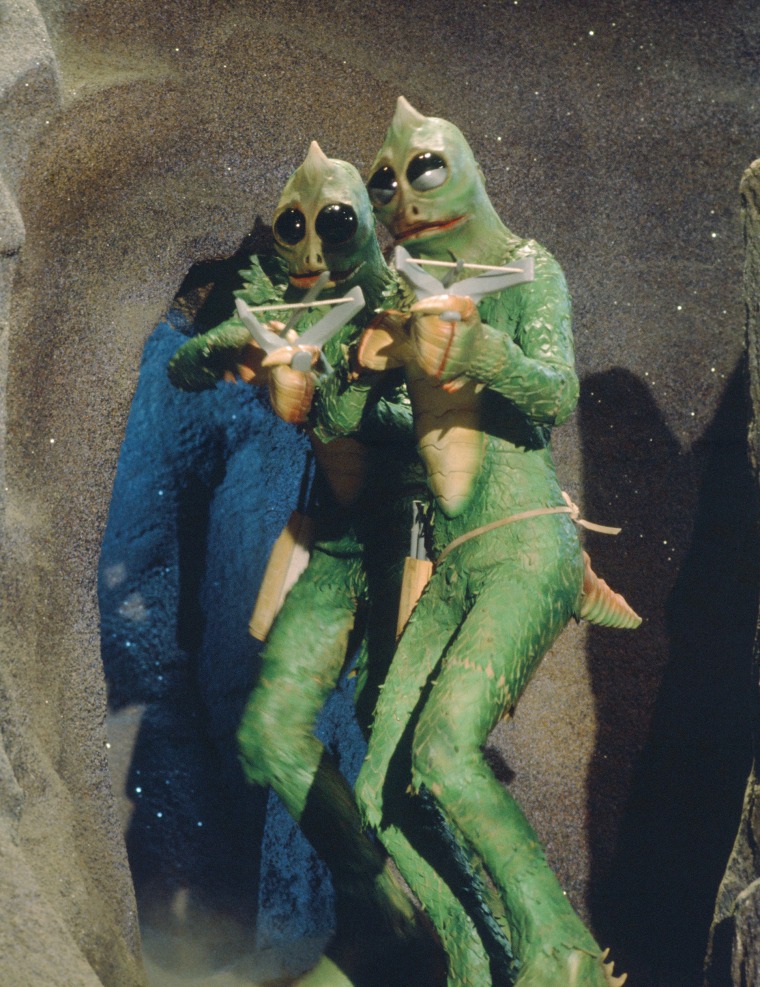
In a mind-bending new paper entitled “The Silurian Hypothesis” — a reference to an ancient race of brainy reptiles featured in the British science fiction show "Doctor Who" — scientists at NASA’s Goddard Institute for Space Studies and the University of Rochester take a critical look at the scientific evidence that ours is the only advanced civilization ever to have existed on our planet.
“Do we really know we were the first technological species on Earth?” asks Adam Frank, a professor of physics and astronomy at Rochester and a co-author of the paper. “We’ve had an industrial society for only about 300 years, but there’s been complex life on land for nearly 400 million years.”
If humans went extinct today, Frank says, any future civilization that might arise on Earth millions of years hence might find it hard to recognize traces of human civilization. By the same token, if some earlier civilization existed on Earth millions of years ago, we might have trouble finding evidence of it.
IN SEARCH OF LIZARD PEOPLE
The discovery of physical artifacts would certainly be the most dramatic evidence of a Silurian-style civilization on Earth, but Frank doubts we’ll ever find anything of the sort.
“Our cities cover less than one percent of the surface,” he says. Any comparable cities from an earlier civilization would be easy for modern-day paleontologists to miss. And no one should count on finding a Jurassic iPhone; it wouldn't last millions of years, Gorilla Glass or no.
SleestaksNBC / NBC via Getty Images
Finding fossilized bones is a slightly better bet, but if another advanced species walked the Earth millions of years ago — if they walked — it would be easy to overlook their fossilized skeletons — if they had skeletons. Modern humans have been around for just 100,000 years, a thin sliver of time within the vast and spotty fossil record.
For these reasons, Frank and Gavin Schmidt, a climatologist at Goddard and the paper's co-author, focus on the possibility of finding chemical relics of an ancient terrestrial civilization.
Using human technology as their guide, Schmidt and Frank suggest zeroing in on plastics and other long-lived synthetic molecules as well as radioactive fallout (in case factions of ancient lizard people waged atomic warfare). In our case, technological development has been accompanied by widespread extinctions and rapid environmental changes, so those are red flags as well.
After reviewing several suspiciously abrupt geologic events of the past 380 million years, the researchers conclude that none of them clearly fit a technological profile. Frank calls for more research, such as studying how modern industrial chemicals persist in ocean sediments and then seeing if we can find traces of similar chemicals in the geologic record.
He argues that a deeper understanding of the human environmental footprint will also have practical consequences, helping us recognize better ways to achieve a long-term balance with the planet so we don't end up as tomorrow's forgotten species.
Then again, he’s also a curious guy who's interested in exploring more far-out ideas for finding Silurian-style signatures: “You could try looking on the moon,” he says.
LUNAR ARCHAEOLOGY
The moon is a favored target of Penn State University astronomer Jason Wright, one of a handful of other researchers now applying serious scientific thinking to the possibility of pre-human technological civilizations.
“Habitable planets like Earth are pretty good at destroying unmaintained things on their surfaces,” Wright says. So he’s been looking at the exotic possibility that such a civilization might have been a spacefaring one. If so, artifacts of their technology, or technosignatures, might be found elsewhere in the solar system.
Wright suggests looking for such artifacts not just on the lunar surface, but also on asteroids or buried on Mars — places where such objects could theoretically survive for hundreds of millions or even billions of years.
SpaceX’s recent launch of a Tesla Roadster into space offers an insight into how such a search might go. Several astronomers pointed their telescopes at the car and showed that, even if you had no idea what you were looking at, you’d still quickly pick it out as one weird-looking asteroid.
Finding technosignatures in space is an extreme long shot, but Wright argues that the effort is worthwhile. “There are lots of other reasons to find peculiar structures on Mars and the moon, and to look for weird asteroids,” he says. Such studies might reveal new details about the history and evolution of the solar system, for instance, or about resources that might be useful to future spacefarers.
If the efforts turn up a big black obelisk somewhere, so much the better.
Russian Mars probe 'Phobos 2' sent back images of a 20-mile-long cylindrical shaped object, before losing signal
Russian Mars probe 'Phobos 2' sent back images of a 20-mile-long cylindrical shaped object, before losing signal
Phobos used to be one of two moons that surround Mars, and it has been thought of as being something of a mysterious object. It was once said that Phobos must be hollow and this led to the question of whether it was a huge space station that had been hollowed out.
Russia launched two satellite probes that were unmanned in July 1988. These were Phobos 1 and 2 and headed in the direction of Mars. Their chief intention was to investigate the mysterious moon of the planet but was said to be lost while making their way there just two months later. It was said that Phobos 1 was lost due to an error with radio command. The reason for the loss of Phobos 2 has been intriguing, but it did manage to beam some information and images from Mars.
Things were going well with Phobos 2 until it came to align with Phobos. On March 28, the mission control center said they suddenly encountered communication issues with Phobos 2. It was said that Phobos 2 had not communicated with Earth as it had been scheduled to do so after it completed an operation going around Phobos, the Martian moon. So what was behind the loss of Phobos 2? Was it a malfunction as suggested?
Spindle Shaped Mysterious Object Picked Up In Photos
Boris Bolitsky, Moscow science correspondent, said that shortly before the loss of radio contact with Phobos 2 many images that were unusual had been sent back to Earth and were said to have shown features that were remarkable. A report said that the features were either on the surface of Mars or in the lower atmosphere. They were 20 to 25 kilometers in width and did not look like any geological formation that was known. They were said to be of a spindle type shape and were puzzling.
The surface of Mars had a dark and clearly defined shape on it that looked like a thin ellipse. This was different from the Phobos shadow that had been recorded some 18 years previously by Mariner 9. The ellipse seen in the photos showed an ellipse that had rounded points, with fuzzy edges that stood out against the surface. It was described as being something between Mars and the spacecraft as the surface could be seen below. Also stressed was the fact that the object could be seen by the infrared and optical camera. This is one of the reasons why it has not been said that the shape could have been the shadow of the moonlet. It was said that the photograph had been taken when the spacecraft was aligning with Phobos.
This brings about the question of just what collided with Phobos 2. Was it possible that the space probe might have been shot from space as it captured too much information? Another question is what the last frame captured show?
The chairperson of the equivalent of NASA in Russia said that an image seems to show an object that is an odd shape between Mars and the spacecraft. The photograph was shown to Colonel Dr. Marina Popovich, an astronaut and pilot from Russia with an interest in UFOs. Popovich gave information that is interesting at a UFO conference in 1991. Part of the information was said to be “the first ever leaked accounts of an alien mothership in the solar system”.
The last photograph that came from Phobos 2 showed a huge cylindrical spaceship around 20km in length and 1.5km in width hanging around close to the Martian moon. When the last frame was transmitted back to Earth the probe disappeared mysteriously, and the Russians said it had been destroyed.
The cigar-shaped spacecraft is said to be the penultimate frame that was taken by Phobos 2, and it is the object that cast the oblong shadow onto the surface of Mars in a photograph taken earlier.
Brian Crowley, the science writer from Australia, said that the convex cat’s eyeshadow, which due to the overhead solar inclination stopped a shadow being cast by the surface features of Mars and implies a shadow, was on the surface from something that was orbiting beyond Phobos 2. The spindle-shaped object is not consistent with a shadow that would be cast by the moon Phobos, as it is an irregular potato shape.
Another photo that was sent back by Phobos 2 was an infrared scan of the surface of Mars showing rectangular regions that were clearly defined. They seemed to be latticework of straight channels that resembled a city block. It was said that it might have been underground caverns too geometrically regular to be natural. The Russians have been pressed to release data that is more definitive, and they have released a television transmission that Phobos 2 sent during the last moments. However, they had not released the last frames, which were taken shortly before the spacecraft lost contact.
The final photograph that Phobos 2 took before it was said to have been shot out of orbit was tracked down.
This photograph was said to have been shown during a closed meeting between British and US officials.
We can only assume that it is not just NASA that suppresses photographs along with knowledge about planets; it seems that the Russian space program does too.
Phobos Chain Craters
An article was published in Astronomy magazine with the title Chain of Craters of Phobos. The author of the article talked about the many strange craters and grooves of Phobos. It was said that Viking had found a mystery in one of the most unexpected places, on one of two small Martian moons.
The mapping of Phobos by Mariner 9 revealed many craters and many investigators said that they were just rock chunks with scars of meteorite impacts. A few analysts noticed a puzzling feature, but as they did not have better data, there was little that could be said about it. A few crater pits looked as though they aligned in one or two chains. This was something unusual because crater chains on the moon were usually explained as being volcanic pits. They were said to be small eruption sites strung along fracture lines. However, Phobos was too small to be able to generate the heat along with the conventional volcanic activity.
Scientists are at a loss to be able to explain them. One of the last attempts to photograph Mars along with the Moons was by the Mars Observer of NASA, which was launched from Cape Canaveral Air Force. However, NASA also lost contact with the spacecraft.
Could it be that someone or something does not want people capturing footage of whatever is on Mars or its Moons?
Mysterious light captured in China is not extraterrestrial spaceship
Mysterious light captured in China is not extraterrestrial spaceship
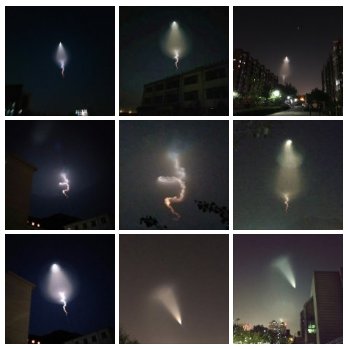
The mysterious light was spotted over several cities in China, cities, including Beijing, Taiyuan, Zhengzhou, and Qingdao. Baffled residents believed that the light could be UFO or extraterrestrial spaceship, but Chinese Academy of Science clarified saying it's neither of them.
A beam of mysterious light spotted over several parts in China baffled residents with some claiming that it could be a UFO or extraterrestrial spaceship. However, Chinese Academy of Science has clarified dismissed the claim that it is a UFO and said it is noctilucent contrail caused by an aircraft.
The mysterious light spotted Friday, April 27, created a buzz on Chinese social media platforms. Photos and videos of the light over Beijing went viral. Residents were confused and some even joked that it could be a massive torch.
"Bizarre scene appeared in the sky over Beijing. Have you seen it?," a post on Chinese social media Weibo read. The post, which was shared by the user the Beijing things Beijing people don't know, also had several photos of the mysterious light.
Another user, hang kong wu yu, took to Weibo to say that the light was observed in several cities, including Beijing, Taiyuan, Zhengzhou, and Qingdao.
Beijing Evening News had initially reported that the light could have been caused by the launch of a Beidou satellite. The launch happened Friday in Taiyuan city. And now People's Daily China has clarified that the UFO seen over the night sky in Beijing was nothing but a noctilucent contrail.
"The alleged "#UFO" seen in the sky above northern China on Friday evening was a noctilucent contrail, possibly caused by aircraft engine exhaust or air pressure changes, says the Chinese Academy of Science, warning the clouds as a sign of #globalwarming," the tweet reads.
Last December, a similar incident was recorded on camera in the US when SpaceX rocket was launched. Residents of Southern California and Arizona were baffled by the mysterious light over the sky. It was later revealed that the light was caused because of the launch of SpaceX rocket.
People's Daily,China✔@PDChina
ET, is that you? A #mysterious light was seen Friday night by many residents in different northern Chinese cities, leading some to speculate about a possible extraterrestrial spaceship sighting, although the cause is still being investigated pic.twitter.com/FTPEEdn7hx
People's Daily,China✔@PDChina
The alleged "#UFO" seen in the sky above northern China on Friday evening was a noctilucent contrail, possibly caused by aircraft engine exhaust or air pressure changes, says the Chinese Academy of Science, warning the clouds as a sign of #globalwarmingpic.twitter.com/QJrgnuJRdO
I found an alien city (non reflective black material) inside a what looks like a crater, but is actually alien made to hide it. At the center of the city is a glowing orb. The city is made of massive black tunnels the move in every direction but they very in size from 2km wide to a few hundred meters wide. Below this mass of black structures is more of the city, which is sealed underground. Ever hear the story of Atlantis and how at the center of the city was a great diamond which was the power source for the entire culture? Perhaps Atlantis never sank, but instead flew to another planet, where we see it now. Scott C. Waring
Friday night on "Ancient Aliens," Podesta very seriously reflected on the Clinton campaign’s pro-alien declassification platform.(Andrew Harrer/Via Bloomberg)
Hillay Clinton’s campaign chairman was on cable television Friday night peddling conspiracy theories about extraterrestrial life forms, and nobody seems to have noticed.
In fairness, I didn’t really believe it until I saw it either. But there he was, John Podesta, speaking gravely over a foreboding soundtrack, lending his very earnest insights to “Ancient Aliens” on The History Channel. (Don’t tell Sen. Chuck Grassley, R-Iowa).
Podesta has long been in avid pursuitof the truth about UFOs, memorably reassuringthe public during Clinton’s 2016 campaign he’d “convinced her that we need an effort to kind of go look at that and declassify as much as we can, so that people have their legitimate questions answered.”
John Podesta✔@johnpodesta
Tune in to The History Channel tonight at 9pm ET for the season premiere of Ancient Aliens #TheTruthIsOutThere
And so it came to be, this former White House chief of staff and counselor to the president sat before “Ancient Aliens” cameras and unloaded enigmatic observations like, “The government seems to be completely unaccountable to the American public,” and “I've had a number of members of Congress, members of the U.S. Senate say to me, ‘Keep going at this. I'm really interested in it, but I can't say anything about it.’"
Behold this surreal exchange, wherein Podesta very seriously reflects on the Clinton campaign’s pro-alien declassification platform.
NARRATOR: Clinton's campaign chairman, John Podesta, is well-known for his interest in UFO and extraterrestrial encounters, and according to him, so is she.
PODESTA: Secretary Clinton, likewise, was also kind of interested in the topic, and during the course of the campaign said that, if elected, she would have ordered a more thorough declassification review …
NARRATOR: Many believe that had Clinton won, there would have been a seismic shift from the government's long-held policy of secrecy concerning UFO investigations to a new policy of full disclosure.
PODESTA: The system of regulation that creates our secrecy system — what's top secret, what's confidential, these lower levels of classification — that's regulated and has been since the Truman administration by executive order of the president. The president sets forward the general rules of classification, and some presidents have been more forthcoming, wanted less secrecy, some have tightened the reins and wanted more secrecy. It makes a difference.
That provided an opening for another of the episode’s commentators to claim, “The CIA and the Pentagon, they were worried about Hillary Clinton, Secretary Clinton, all the statements she was making, winning the presidency, and going to the Pentagon and basically saying, ‘You are going to give me the information I need to disclose the extraterrestrial presence or I’m gonna fire every single one of you.’”
Which, in turn, set up another expert nicely to insist with dramatic flair: “John Podesta was trying to get ready to open up that we're not alone in the universe. All of that crashed when a different person became president of the United States.”
“November 8, 2016: Donald Trump was elected as America's next president,” the History Channel’s narrator intones. “There would be no disclosure of the secret UFO files.”
So, was Trump’s election really secured by scheming puppetmasters in Russia? Or were those strings perhaps pulled from a little further out of this world by aliens hoping to shield their species from exposure to our planet at this strange moment in time?
BIZARRE SCIENCE FUTURISTIC PIG BRAINS CAN BE KEPT ALIVE OUTSIDE THE BODY. HUMAN BRAINS MIGHT BE NEXT.
PIG BRAINS CAN BE KEPT ALIVE OUTSIDE THE BODY. HUMAN BRAINS MIGHT BE NEXT.
In a step that could change the definition of death, researchers have restored circulation to the brains of decapitated pigs and kept the reanimated organs alive for as long as 36 hours.
The feat offers scientists a new way to study intact brains in the lab in stunning detail. But it also inaugurates a bizarre new possibility in life extension, should human brains ever be kept on life support outside the body.
The work was described on March 28 at a meeting held at the National Institutes of Health to investigate ethical issues arising as US neuroscience centers explore the limits of brain science.
During the event, Yale University neuroscientist Nenad Sestan disclosed that a team he leads had experimented on between 100 and 200 pig brains obtained from a slaughterhouse, restoring their circulation using a system of pumps, heaters, and bags of artificial blood warmed to body temperature.
There was no evidence that the disembodied pig brains regained consciousness. However, in what Sestan termed a “mind-boggling” and “unexpected” result, billions of individual cells in the brains were found to be healthy and capable of normal activity.
Reached by telephone yesterday, Sestan declined to elaborate, saying he had submitted the results for publication in a scholarly journal and had not intended for his remarks to become public.
Since last spring, however, a widening circle of scientists and bioethicists have been buzzing about the Yale research, which involves a breakthrough in restoring micro-circulation—the flow of oxygen to small blood vessels, including those deep in the brain.
“These brains may be damaged, but if the cells are alive, it’s a living organ,” says Steve Hyman, director of psychiatric research at the Broad Institute in Cambridge, Massachusetts, who was among those briefed on the work. “It’s at the extreme of technical know-how, but not that different from preserving a kidney.”
Hyman says the similarity to techniques for preserving organs like hearts or lungs for transplant could cause some to mistakenly view the technology as a way to avoid death. “It may come to the point that instead of people saying ‘Freeze my brain,’ they say ‘Hook me up and find me a body,’” says Hyman.
Such hopes are misplaced, at least for now. Transplanting a brain into a new body “is not remotely possible,” according to Hyman.
Brain in a bucket
The Yale system, called BrainEx, involves connecting a brain to a closed loop of tubes and reservoirs that circulate a red perfusion fluid, which is able to carry oxygen to the brain stem, the cerebellar artery, and areas deep in the center of the brain.
In his presentation to the NIH officials and ethics experts, Sestan said the technique was likely to work in any species, including primates. “This is probably not unique to pigs,” he said.
The Yale researchers, who began work on the technique about four years ago and are seeking NIH funding for it, acted out of a desire to construct a comprehensive atlas of connections between human brain cells.
Some of these connections probably span large regions of the brain and would thus be traced more easily in a complete, intact organ.
Sestan acknowledged that surgeons at Yale had already asked him if the brain-preserving technology could have medical uses. Disembodied human brains, he said, could become guinea pigs for testing exotic cancer cures and speculative Alzheimer’s treatments too dangerous to try on the living.
The setup, jokingly dubbed the “brain in a bucket,” would quickly raise serious ethical and legal questions if it were tried on a human.
For instance, if a person’s brain were reanimated outside the body, would that person awake in what would amount to the ultimate sensory deprivation chamber, without ears, eyes, or a way to communicate? Would someone retain memories, an identity, or legal rights? Could researchers ethically dissect or dispose of such a brain?
The “brain in a jar” scene from the 1983 comedy The Man with Two Brains. Though fodder for jokes, as brain-preservation technology advances medical ethicists are taking it seriously. STREAMLINE | “THE MAN WITH TWO BRAINS” (1983)
Also, because federal safety regulations apply to people, not “dead” tissues, it is uncertain whether the US Food and Drug Administration would have any say over whether scientists could attempt such a reanimation procedure.
“There are going to be a lot of weird questions even if it isn’t a brain in a box,” said an advisor to the NIH who didn’t wish to speak on the record. “I think a lot of people are going to start going to slaughterhouses to get heads and figure it out.”
Sestan said he was concerned about how the technology would be received by the public and by his peers. “People are fascinated. We have to be careful how fascinated,” he said.
Comatose state
It’s well known that a comatose brain can be kept alive for at least decades. That is the case with brain-dead people whose families elect to keep them attached to ventilating machines.
Less well explored are artificial means of maintaining a brain wholly separated from its body. There have been previous attempts, including a 1993 report involving rodents, but Sestan’s team is the first to achieve it with a large mammal, without using cold temperatures, and with such promising results.
At first, the Yale group was uncertain if an “ex vivo” brain to which circulation was restored would regain consciousness. To answer that question, the scientists checked for signs of complex activity in the pig brains using a version of EEG, or electrodes placed on the brain’s surface. These can pick up electrical waves reflecting broad brain activity indicating thoughts and sensations.
Initially, Sestan said, they believed they had found such signals, generating both alarm and excitement in the lab, but they later determined that those signals were artifacts created by nearby equipment.
Sestan now says the organs produce a flat brain wave equivalent to a comatose state, although the tissue itself “looks surprisingly great” and, once it’s dissected, the cells produce normal-seeming patterns.
The lack of wider electrical activity could be irreversible if it is due to damage and cell death. The pigs’ brains were attached to the BrainEx device roughly four hours after the animals were decapitated.
However, it could also be due to chemicals the Yale team added to the blood replacement to prevent swelling, which also severely dampen the activity of neurons. “You have to understand that we have so many channel blockers in our solution,” Sestan told the NIH. “This is probably the explanation why we don’t get [any] signal.”
Sestan told the NIH it is conceivable that the brains could be kept alive indefinitely and that steps could be attempted to restore awareness. He said his team had elected not to attempt either because “this is uncharted territory.”
“That animal brain is not aware of anything, I am very confident of that,” Sestan said, although he expressed concern over how the technique might be used by others in the future. “Hypothetically, somebody takes this technology, makes it better, and restores someone’s [brain] activity. That is restoring a human being. If that person has memory, I would be freaking out completely.”
Brain experiments
Consciousness isn’t necessary for the type of experiments on brain connections that scientists hope to carry out on living ex vivo brains. “The EEG brain activity is a flat line, but a lot of other things keep on ticking,” says Anna Devor, a neuroscientist at the University of California, San Diego, who is familiar with the Yale project.
Devor thinks the ability to work on intact, living brains would be “very nice” for scientists working to build a brain atlas. “The whole question of death is a gray zone,” she says. “But we need to remember the isolated brain is not the same as other organs, and we need to treat it with the same level of respect that we give to an animal.”
Today in the journal Nature, 17 neuroscientists and bioethicists, including Sestan, published an editorial arguing that experiments on human brain tissue may require special protections and rules.
They identified three categories of “brain surrogates” that provoke new concerns. These include brain organoids (blobs of nerve tissue the size of a rice grain), human-animal chimeras (mice with human brain tissue added), and ex vivo human brain tissue (such as chunks of brain removed during surgery).
They went on to suggest a variety of ethical safety measures, such as drugging animals that possess human brain cells so they stay in a “comatose-like brain state.”
Hyman, who also signed the letter, says he did so reluctantly, because he thinks most of the scenarios are exaggerated or unlikely. It’s hardly possible a tiny brain organoid will feel or think anything, he says.
The one type of research he thinks may call for quick action to set up rules of the road is Sestan’s unpublished brain preservation technique (which the Nature editorial did not discuss). “If people want to keep human brains alive post mortem, that is a more pressing and realistic problem,” says Hyman. “Given that it is possible with a pig brain, there should be guidelines for human tissue.”
A MASSIVE HEAT SOURCE WAS JUST DISCOVERED UNDER ANTARCTICA, DRIVING ICE MELT AND VOLCANISM
A MASSIVE HEAT SOURCE WAS JUST DISCOVERED UNDER ANTARCTICA, DRIVING ICE MELT AND VOLCANISM
Recent discoveries have revealed just how volcanic Antarctica really is, despite being hidden underneath massive ice sheets. However, up until now, there remained significant debate as to what is causing the unusual amount of volcanic activity under an area covered in ice.
Recent research found the source of magma that is fueling the volcanoes underneath Antarctica. The source, a massive upwelling of mantle magma, also known as a hotspot. This is a similar mechanism that produced the Hawaiian Islands and fuels volcanic and geothermal activity in Yellowstone.
There were two key reasons this discovery was difficult to come by, despite significant research.
The first is the difficulty of measuring anything underneath kilometers of ice. Typically geoscientists gain a better understanding of the Earth’s inner workings by sending sound waves into the ground and measuring the time and angle at which they return to the surface. Using complex mathematical algorithms, geophysicists are able to reconstruct a three-dimensional picture of the subsurface. However, this was difficult to do when any acoustic signal has to travel through kilometers of chaotic ice, causing significant noise in the subsurface “picture” beneath Antarctica.
The second is the counterintuitive nature of having a massive heat source underneath an area that is covered with kilometers of ice. With an average ice sheet thickness of 2.16 km and a maximum thickness of around 4.7 km, it’s hard to believe there is a massive heat source similar to the one in Yellowstone sitting beneath the ice. How has the heat source not prevented ice build up?
To tackle these questions the research team used a numerical model to help constrain the heat required to produce the melting we currently measure in Antarctica. While direct measurements underneath Antarctica are difficult and few, there are numerous measurements of meltwater outflow. This allowed the research team to constrain their model.
Depiction of the water pathways under the Antarctic ice sheet. Blue dots are lakes, whereas lines show rivers. Marie Byrd Land, the source of the mantle plume, is located near the Antarctic Peninsula.
It is well known that there are rivers and lakes beneath Antarctica that drain meltwater to the ocean. Some lakes are as large as Lake Erie and can rapidly drain into the ocean, causing a sudden sinking of the overlying ice.
The numerical model, using constrained melt rates, were able to predict heat sources underneath Antarctica. The team found that the heat coming from beneath Antarctica is constrained to 150 milliwatts per square meter, with a higher heat rate causing too much melting as compared to what is measured. To compare that with other areas, the average heat flux from the Earth is 40-60 milliwatts per square meter and it reaches an average of 200 milliwatts beneath Yellowstone National Park.
Interestingly, the team found one location where the heat flow required jumped to 150-180 milliwatts underneath Antarctica. This area is the presumed source of the massive mantle upwelling and heat source. The Marie Byrd Land mantle plume appears to be the primary driver of volcanic activity in Antarctica. Geologists believe the mantle plume formed 50 to 110 million years ago when Antarctica was not covered in ice. Since then, the mantle plume has continually worked to heat up Antarctica, continually working to melt the overlying ice.
Vergroot kunstmatige intelligentie de kans op een kernoorlog?
Vergroot kunstmatige intelligentie de kans op een kernoorlog?
Caroline Kraaijvanger
Sommige deskundigen vrezen van wel.
Dat blijkt uit een nieuw rapport van het RAND Center for Global Risk and Security. Het rapport is gebaseerd op een serie workshops waarbij wetenschappers, beleidsmakers en andere deskundigen zich bogen over de vraag: ‘Hoe kan kunstmatige intelligentie tegen 2040 van invloed zijn op de kans op een kernoorlog?’.
Misschien denk je in eerste instantie dat kernwapens en KI weinig met elkaar te maken hebben. Maar dat is niet zo. “De connectie tussen kernoorlog en kunstmatige intelligentie is niet nieuw, sterker nog: de histories van de twee zijn met elkaar verweven,” vertelt onderzoeker Edward Geist. Hij vertelt dat KI in een pril stadium ontwikkeld werd omwille van militaire doeleinden. Een mooi voorbeeld daarvan is een experiment uit de jaren tachtig, waarbij KI werd ingezet om op basis van data die tijdens verkennende missies waren verzameld verschillende plaatsen aan te wijzen die tijdens een eventuele kernoorlog konden worden aangevallen.
Mutual Assured Destruction Uit de workshops blijkt dat het eigenlijk twee kanten op gaan. Sommige onderzoekers denken bijvoorbeeld dat kunstmatige intelligentie een bedreiging vormt voor de nucleaire stabiliteit. Die stabiliteit is op dit moment gebaseerd op de militaire strategie MAD (Mutual Assured Destruction, oftewel gegarandeerde wederzijdse vernietiging). Deze strategie stelt dat landen met kernwapens deze niet tegen elkaar zullen inzetten, omdat het niet alleen resulteert in de vernietiging van het aangevallen land, maar ook in de vernietiging van de aanvaller (aangezien het aangevallen land ongetwijfeld met kernwapens terugslaat). Volgens sommige onderzoekers zou kunstmatige intelligentie deze militaire strategie de komende decennia kunnen ondermijnen. En wel doordat kunstmatige intelligentie in staat is om de wapensystemen van de tegenstander nauwkeuriger dan ooit te lokaliseren en aan te vallen. In zo’n scenario kan de aanvaller die wapensystemen uitschakelen, waarna het aangevallen land niet meer terug kan slaan, MAD dus geen rol meer speelt en het gemakkelijker wordt om naar de kernwapens te grijpen.
Wapenwedloop En zelfs als landen niet de intentie hebben om de kernwapensystemen van andere landen uit te schakelen, kan de gedachte dat zij daar dankzij KI wel toe in staat zijn, al voldoende zijn om tot een kernoorlog of in ieder geval een wapenwedloop te leiden. Stel je voor dat land A laat doorschemeren dat het precies weet waar de kernwapens van land B liggen. Dan zal land B zich kwetsbaar voelen; in zekere zin zijn haar kernwapens – die toch vooral moeten afschrikken – nutteloos geworden, omdat land A ze elk moment weg kan nemen. Land B zal dan ook op zoek gaan naar nieuwe manieren om zich tegen land A te beschermen en die Mutual Assured Destruction-strategie in ere te herstellen.
Stabiliserende werking Andere onderzoekers stellen dat KI de wereld echter ook veiliger kan maken. Bijvoorbeeld doordat de systemen beter in staat zijn om tegenstanders te monitoren en hun verrichtingen te interpreteren. Dat zou de kans op onterechte escalatie verkleinen. Ook is het mogelijk dat toekomstige kunstmatige intelligente systemen minder foutgevoelig zijn dan wij mensen, met onze eigen belangen en emoties. In die zin zouden de systemen op lange termijn dus ook stabiliserend kunnen werken.
Of dat in 2040 echter al gaat gebeuren? Daar zijn de meeste deskundigen niet van overtuigd. Zij stellen dat de technologie tegen die tijd waarschijnlijk nog niet is uitgekristalliseerd. Zo kan deze pas in combinatie met kernwapens worden ingezet als deze onmogelijk te hacken is. En zover zijn we nog niet. Het is dan ook te hopen dat kernwapenlanden – in een poging anderen te slim af te zijn en als eersten de vruchten van KI te plukken – niet vroegtijding naar de kunstmatig intelligente systemen grijpen, aldus de deskundigen.
WATER MIGHT BE THE WEIRDEST LIQUID IN THE UNIVERSE, AND NOW WE KNOW WHY
WATER MIGHT BE THE WEIRDEST LIQUID IN THE UNIVERSE, AND NOW WE KNOW WHY
Water might seem ubiquitous and ordinary; it covers 71 percent of the Earth’s surface, not to mention being the primary fluid in most living organisms. But when you step back and look at water from the point of view of physics and chemistry, it’s truly an oddball molecule.
For one, water has a highly unusual density. Most liquids become more dense as they cool down, but after water cools past 39.2 degrees Fahrenheit, it defies this general rule and instead becomes less dense. By the time it freezes solid, the resultant ice actually floats on liquid water. Again, because water is so ubiquitous, you might not find this property weird, but solids are generally supposed to be denser than their liquid forms. Not so with water.
That’s not all. Water also has an unusually high boiling point, and an absurdly high surface tension to boot. Oh, and there’s also the property that makes water such a valuable substance for life: so many chemical substances dissolve in it that it’s often referred to as a “universal solvent.”
You’d think that with water’s importance, we’d have figured out why its properties are so uncanny. But the properties of water have actually remained largely unexplained. That is, until now.
Researchers from the University of Bristol and the University of Tokyo recently used a supercomputer to model the structure of how water molecules arrange themselves, and what they found might finally solve the mystery of this magical substance, according to a recent press release.
It turns out that at room temperature and as ice, water has a tetrahedral arrangement of molecules, which is essentially a pyramid shape, and it’s this shape that apparently gives water such amazing abilities. To test this, researchers were able to run computer models that arranged water molecules in other shapes besides the pyramid. What they found was that as soon as the tetrahedral arrangement was broken down, water began behaving more like a normal liquid.
“With this procedure, we have found that what makes water behave anomalously is the presence of a particular arrangement of the water’s molecules, such as the tetrahedral arrangement,” explained lead author John Russo.
He added: “We think this work provides a simple explanation of the anomalies and highlights the exceptional nature of water, which makes it so special compared with any other substance.”
Doomsday AI Could Star Nuclear War By 2040 That Could Wipe Out Humanity Say Experts
Doomsday AI Could Star Nuclear War By 2040 That Could Wipe Out Humanity Say Experts
Artificial intelligence has the potential to upend the foundations of nuclear peace by the year 2040, a leading think tank has warned. 'Doomsday AI' machines could encourage humans to take potentially apocalyptic risks that could lead to a nuclear war and humanity's destruction
Eerie warnings from AI experts suggest that Artificial Intelligence could kick-start a nuclear war by 2040 that could destroy our civilization, and there may be nothing we can do about it.
A recent study by leading security experts believes how advanced in the field of Artificial Intelligence could lead to the creation of Doomsday Machines that could cause nations around the globe to take apocalyptic risks with their nuclear arsenals.
To understand what experts are talking about, let’s take a trip back to the Cold War.
Back then, a condition referred to as the mutually assured destruction (Mad)— a doctrine of military strategy and national security policy in which a full-scale use of nuclear weapons by two or more opposing sides would cause the complete annihilation of both the attacker and the defender kept an uneasy peace between the superpowers.
During the Cold War, the doctrine of mutually assured destruction (Mad) maintained an uneasy peace between the superpowers by ensuring that any attack would be met by a devastating retaliation
Both sides possessing weapons of mass destruction had very little initiative to launch such a devastating attack as it would have been responded by an equally devastating retaliation.
However, the cold war is long gone, and we’ve entered a modern militaristic era where advances in the field of Artificial Intelligence no longer guarantees this.
Experts from the Rand Corporation—a nonprofit based organization with headquarters in Santa Monica, California—say that this scenario opens up a number of problems including the possibility of taking out an enemy’s ability to launch a counter-offensive, and there may be very little we can do about it.
The Rand Corporation offers research and analysis to the United States armed forces on global policy issues.
They say that given the numerous advances in the field of artificial intelligence, in the coming decades AI could practically cancel out Mad’s ability to keep nuclear tensions at ease.
The new study explains how futuristic AI agents, together with sensor and open source data could convince countries that their nuclear capabilities are at risk.
The report argues that this may cause countries to take more drastic measures to keep up with leading military countries such as the United States.
Speaking about this issue, Andrew Lohn, a co-author on the paper and associate engineer at Rand said: “Some experts fear that an increased reliance on artificial intelligence can lead to new types of catastrophic mistakes.”
“There may be pressure to use AI before it is technologically mature, or it may be susceptible to adversarial subversion. Therefore, maintaining strategic stability in coming decades may prove extremely difficult, and all nuclear powers must participate in the cultivation of institutions to help limit nuclear risk.”
But there could be an even greater threat lurking in the shadows say experts from the Rand Corporation: Military Commanders could make the wrong decision to launch an attack based on advice from Artificial Intelligence that has been fed erroneous information.
But in addition to the danger of being fed with corrupted information, AI is also at risk from hacking, which in turn opens the possibility that malicious third parties could trigger—just as those villains in Hollywood movies—a global conflict.
Doctors think they’re so smart. Sure, they might be able to save our lives and everything, but the history of medicine shows us that what is cutting-edge thinking today will someday (maybe soon) be looked down upon as foolish gobbledygook. I mean, we used to give children morphine to calm them down, people used to rub mercury on themselves for all sorts of conditions, and lobotomies were considered a legitimate form of medicine through the mid-20th century. That’s no reason not to go to the doctor or get vaccinated in the meantime, though. It merely shows that medical science, like all sciences, are constantly reinventing themselves in light of new discoveries and likely always will. It’s just the nature of scientific knowledge.
Case in point: scientists have just discovered an entirely new, unknown form of DNA hiding right inside human cells. While most human DNA assumes the double helix corkscrew form, scientists have speculated for years that there might be another form hidden within the human genome: a four-stranded ‘knot’ known as i-motif. A new study in Nature Chemistry claims to have finally found evidence that i-motif DNA exists in the human genome, and that it might play an unknown-but-highly-important regulatory role in human genetics.
These i-motif forms are thought to fold and unfold in and out of existence during transcription, the process through which DNA sequences are ‘copied’ into RNA and subsequently expressed as various biological functions. Marcel Dinger, head of the Kinghorn Centre for Clinical Genomics at the Garvan Institute of Medical Research in Sydney, says the discovery is “pretty spectacular” and only further highlights the fact that the human genome is still pretty much a mystery to science:
There’s so much of the genome that we don’t understand, probably like 99 percent of it. Seeing DNA folded like this in living cells makes it possible to decode those parts of the genome and understand what they do.
DNA was formally discovered less than a hundred years ago, and the disciplines of genetics and genomics are still in their infancy, relatively speaking. Who knows what groundbreaking genetics discoveries are just around the corner now that the human body has become the plaything of so-called biohackerslooking to augment their own genomes in the privacy of their own basements?
Yoink.
With every genetics discovery comes the possibility that Homo sapiens might soon grab the reins of our own genetic destiny and forge a new evolutionary path of our own choosing – or more likely, some type of hybrid biological/technological one. It’s gonna be a weird future.
Extraterrestrials Genetically Engineered Homo sapiens 780,000-years-ago
Extraterrestrials Genetically Engineered Homo sapiens 780,000-years-ago
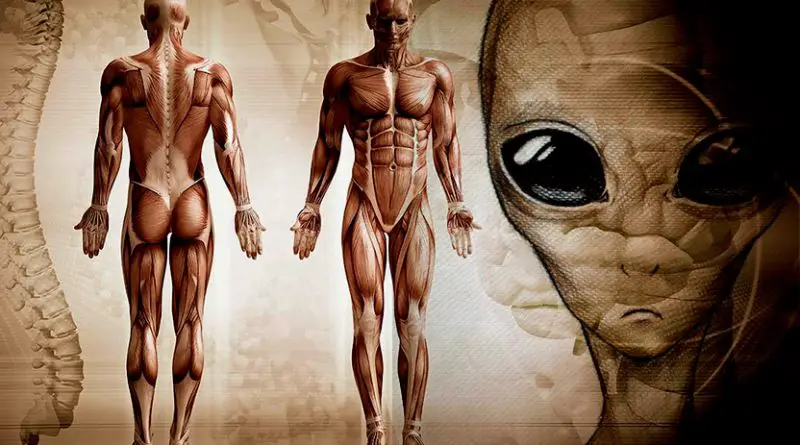
Early humans emerged on Earth around 4 million years ago, but new evidence arising from the study of human evolution has revealed compelling evidence that a small group of these hominins was genetically modified by ancient alien visitors to create the first Homo sapiens.
Researcher and author, Daniella Fenton, has been taking an in-depth look at the earliest origins of humanity and its sudden acceleration in brain development close to 800,000 years ago, this investigation has led to a massive revelation.
Homo sapiens are the creation of ancient astronauts that arrived through a wormhole from the Pleiades star cluster 780,000 years ago.
The Australian researcher, an expert in equine bloodlines and genetic expression, uncovered numerous genetic changes which mark humans as anomalous when contrasted with modern primate species, some are so extreme that they are best explained by advanced genetic engineering.
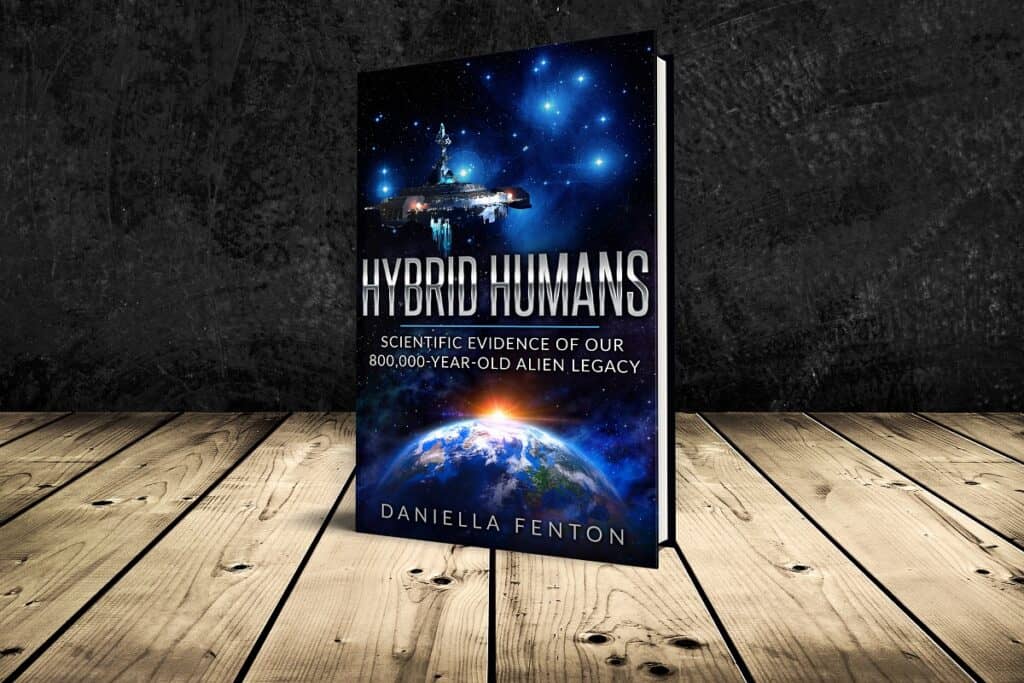
In her book, titled ‘Hybrid Humans: Scientific Evidence of Our 800,000-Year Old Alien Legacy’, Daniella Fenton highlights a series of profound changes in the genes associated with brain size, neural structures, and information processing. These changes include genes that appear suddenly fully formed out of so-called ‘junk DNA’ and fragments of genes that have been snipped out, copied and re-inserted.
Fenton points the mysterious fusion of Chromosome-2 at the same time as these other changes, around 780,000 years ago, as further evidence of extraterrestrial experimentation. This fusion is found in all large-brained human types, including Neanderthals and Denisovans, but not in any other primate species.
She explains that the fusion of chromosome-2 should have been a one-off error that disappeared in the subsequent generation or perhaps led to a small population of people with 46 chromosomes among a more substantial number of those carrying 48. Instead, all humans after 780,000 years ago exhibited the ‘mutation’. This strongly infers that there was an enormous benefit associated with the fusion and that it appeared suddenly in a considerable number of individuals, allowing chromosome-2 to become a permanent and dominant trait. This does not fit with known natural mutations in the human genome.
Fenton explains, “Somebody created an entire generation of breeding pairs that carried the fusion of chromosome-2. The chromosome modification is such that it would have impacts on the brain development, the immune system and reproductive processes.”
Humans also carry unique changes in the gene FOXP2 that changed synaptic connectivity and enhanced our ability to transform new experiences into routine procedures, this had enormous influence on our ability to produce meaningful speech. Fenton points out that this change is not observed in other primates and it appears our creators wanted us to be able to quickly form new habitual behaviors particularity language use.
Fenton said: “It is not just the genetic changes 780,000 years ago which inform us Homo sapiens is a species created by alien beings, we have also identified physical material left behind by these star people, materials dated to that same specific point in time.”
Should Mankind Be Worried? Here Are 5 Alarming Prophecies Written By Nostradamus
Should Mankind Be Worried? Here Are 5 Alarming Prophecies Written By Nostradamus
Michel de Notre Dame, historically known as Nostradamus is without a doubt one of the greatest prophets to ever exist. The French apothecary is believed to have foreseen countless historical evens long before they occurred. According to reports, Nostradamus is said to have predicted the US Moon Landing, Adolf Hitler’s rise to power, he is believed to have accurately predicted the Death of Henry II, and the JFK & RFK Assassinations among many other historical events.
2018, is of particular interest for those who analyze and study his work. The years has been extremely interesting both scientifically and historically, and despite the fact that many people believe not much will change in comparison to previous years, there are those–specifically those following Nostradamus’ work–believe great changes are upon us.
The French apothecary and seer is believed to have started having visions of the future at a relatively early age.
If we take a look at his greatest work written down in his book ‘The Prophecies’, Nostradamus composed over a thousand four-line poetic verses called “quatrains.” It is precisely in these quatrains where his secrets lay embedded.
Despite the fact that many academic scholars argue that the associations made between historic events and Nostradamus’s quatrains are mostly the product mistranslations, there are millions of people around the world, including news portals around the world that credit him with predicting countless major historic events.
Some of his most famous predictions are listed here below.
The Death of Henry II
“The young lion will overcome the older one, On the field of combat in a single battle; He will pierce his eyes through a golden cage, two wounds made one, then he dies a cruel death.”
In the summer of 1559, King Henry II of France referred to as the older one lined up to joust the Comte de Montgomery, the young lion, six years his junior, on the fields of France or combat. In the final pass, Montgomery’s lance burst through the king’s visor splintering to pieces. Both of them did have lions on their shields. Two shards injured him, one pierced his eye and lodged in the Kings head. Henry II suffered for 10 days before dying in his bed.
The US Moon Landing
He will come to travel to the corner of Luna, where he will be captured and put in a strange land, The unripe fruits to be subject of great scandal, great blame, to one, great praise.
He referred to the Astronauts traveling to the moon, Luna. He, the astronaut was captured on film. Nostradamus used the phrase “the Eagle” as an allusion to the U.S.A. Is it a coincidence that the American lunar landing craft happened to be named “the Eagle”?
Oh, did I say he predicted Donald Trump as becoming President of the United States?
But, what does Nostradamus have for 2018?
1. The Largest Recorded Earthquake
So far, 2018 and even a part of 2017 was marked by catastrophic earthquakes around the globe. However, it is said that Nostradamus foresaw the largest earthquake in the history of the United States, especially affecting the western area of the United States. However, despite predicting the earthquake in the US, it is believed that the power of the earthquake will be felt in other countries around the world. Let’s hope he was wrong.
2. People will live more than 200 years
It is believed that the great French seer predicted great advances in medicine, which will extend the average lifespan of human to about 200 years. It is said that Nostradamus wrote how an 80-year-old will look like a 50, year old according. Numerous advancements in medicine have been made and Nostradamus’ predictions may soon become a reality.
3. Radiation will burn the planet
“Kings steal forests, the sky will open; the fields will be burned by heat,” Nostradamus wrote. This is believed to be a warning that the destruction of Earth’s rainforests will lead to a dangerous hole in the ozone layer and how Earth could be exposed to harmful ultraviolet radiation. Maybe it’s time to pay attention.
4. Language differences will disappear
“After the invention of a new engine, the world will be like in the days before Babel.” According to some interpretations of Nostradamus’ work, this new ‘engine; could be used like modern-day computers.
5. The collapse of the global economy
“The rich will die many times,” the French prophet wrote in his quatrains. Curiously, many other ‘Prophets’ like Baba Vanga, Edgar Cayce predicted the same.
Seriously: what’s going on with all of the unexplained explosions and booms being heard throughout the United States? Over the last year, loud mystery booms have been consistently rattling homes and people from coast to coast with little explanation. All sorts of possible causes have been thrown out – underground frostquakes, natural gas emissions, atmospheric disturbances – but so far no single, official explanation has been offered.
This week, the booms continued in America’s northeast, being heard in rural Pennsylvania and New Hampshire. In Richland Township, Pennsylvania, residents in several towns were left confused after loud booms were reported multiple nights around 2:00 a.m., waking up residents and leaving a mystery in their wake. “It is quite loud,” says Donna Weaver of Quakertown, “It went boom, boom, that’s what it sounds like to me and that sounds like an explosion.” You’re absolutely right, Donna. Explosions do go ‘boom boom.’
Weaver told local news WFMZ that without an official explanation, residents are left to guess wildly as to what the source of the booms might be:
Nobody can figure out what it is. Some people were saying maybe they think it’s kids throwing M-80’s or cherry bombs, others are saying aliens.
Others always say aliens. A little farther north, residents of Plaistow, New Hampshire were awakened early in the morning hours of Monday, April 23 when a “mysterious loud noise” woke them up. Plaistow resident Joseph Pageau says he heard a sound “louder than fireworks” and feared the worst, but upon heading in the direction of the sound found nothing:
I was awake in bed and heard the explosion. I got up and looked out the window expecting to see a fire or something. I got in my truck and took a ride over expecting to see a house explosion. But there was nothing.
Police responded to several concerned calls about the sound, but discovered nothing. Fire crews were called when a small brush fire was found in the vicinity of many of the mystery boom reports, but it’s unclear if the fire and the noise were related.
A similar incident occurred today in Bellingham, Washington, where a large boom was heard throughout several surrounding cities. Like in the New Hampshire incident, smoke from a small fire was seen afterwards, although a local fire department spokesperson said this was likely from a nearby permitted brush burn. The Whatcom County Fire Marshal is still investigating the cause of the unexplained boom.
Me, I can’t help coming back to the theory that these noises could be the result of test flights of hypersonic unmanned aerial vehicles. Russia, China, and the U.S. have all been rumored to be testing faster-than-sound suborbital spacecraftcapable of delivering airstrikes to anywhere in the world in minutes. Are these mystery explosions actually the sonic booms caused by secret aircraft or weapons tests, spread out throughout the country to avoid detection? It’s certainly within the realm of the possible.
Scientists Find New ‘Hidden’ Structure Inside Human DNA
Scientists Find New ‘Hidden’ Structure Inside Human DNA
“This new research reminds us that totally different DNA structures exist – and could well be important for our cells.”
Ladies and Gents, forget what you thought you knew about DNA. Scientists have just discovered a new, ‘hidden’ structure inside Human DNA.
An illustration of an i-motif embedded in a strand of DNA.
(Mahdi Zeraati.)
The modern biological era began when Rosalind Franklin, James Watson, and Francis Crick discovered the twisted structure of DNA in 1953. Understanding that structure is what has allowed scientists to unravel the mysteries of the genetic code, but there was one part that was missing.
It turns out that the human DNA had a long-held secret: the popular double helix with which we interpret the DNA structure is not the only way it adopts.
In fact, and for the first time ever, a team of scientists has identified a new structure that resembles a twisted knot of four ropes.
The new structure has just been described in the journal Nature Chemistry, and it seems to play a crucial role in the way DNA is expressed.
Despite the fact that experts have long thought this structure (called i–motif) may exist, never before had it been detected inside living human cells. The “i” stands for “intercalation,” which is a chemistry term for a layered structure.
The structure consists of four strands of DNA paired in a peculiar way.
Discovering the i-motif inside living cells indicates that it most likely plays a significant role in cell biology.
In the double helix, the nitrogenous bases of adenine (A) form pairs with thiamin (T), while the cytosine (C) does the same with guanine (G).
These bases are structured one on top of the other twisting in two rows of glucose and phosphate that form an elegant staircase in the form of a double helix.
This structure plays a determining role in the synthesis of proteins, note experts.
Discovering the hidden structure
“Our imaging suggests that this is a normal thing that happens,” said Marcel Dinger, a molecular biologist at the Garvan Institute for Medical Research in Sydney, Australia, who oversaw the research. “It is very likely that genomes in all the cells of our bodies are forming i-motifs at some point in time.”
In order to detect the i-motif, scientists used a fragment of an antibody capable of recognizing and adhering specifically to the i-motif forms.
We still know little about its function or importance, but it seems clear that, while the double helix is the predominant structure, the most common way that DNA has to store its information, there are other patterns whose role could be determinant for the control of the gene expression and, therefore, control diseases related to it, such as certain cancers.
“What excited us most is that we could see the green spots – the i-motifs – appearing and disappearing over time, so we know that they are forming, dissolving and forming again,” said Dr Mahdi Zeraati, a member of the team.
“We think the coming and going of the i-motifs is a clue to what they do. It seems likely that they are there to help switch genes on or off, and to affect whether a gene is actively read or not.”
The discovery was published in the scientific journalNature Chemistry.
Scientific evidence of a transcendent truth: beings from another world created life on earth
Findings in fields as diverse as genetics, biology, biochemistry or astrophysics point to a destabilizing evidence: that a nonhuman intelligence - perhaps an alien civilization, as acclaimed scientists claim - artificially manufactured terrestrial DNA, assembling certain elements by means of genetic engineering and coding in it the information necessary for the emergence of life on our planet. This thesis has been and is defended by top-level researchers, such as the discoverer of the DNA structure and Nobel Prize in Medicine for this finding. In 1953, Harold Urey and Stanley Miller, two scientists from the University of Chicago (USA), conducted an experiment, described by the press of the moment as "the most surprising of all the trials." Both researchers had created a mixture formed by simple molecules of methane, ammonia, hydrogen and water vapor, which they introduced into a vessel with water. His intention was to reproduce the "primordial soup," in which they presumed life had been born on Earth for the first time billions of years ago.
In short, "the most surprising essay in history", which we all studied at school as proof that life arose accidentally and spontaneously, only managed to form inert compounds, which did not clarify about the birth of the first cells alive: the basic units of every being, capable of absorbing nutrients - nutrients - and reproducing in new cells. The same year that Urey and Miller made their famous essay in 1953, biologists James D. Watson and Francis Crick made one of the great discoveries of humanity: they discovered the structure of DNA in the form of a double helix, which complicated plus the explanation that life was born on Earth casually. For their achievement, Watson and Crick received the Nobel Prize in Medicine in 1962, becoming in their own right two of the most influential scientists of the twentieth century. Francis Crick was always known for making his opinions known in a clear and resounding manner, without half measures or ambiguities. Therefore, few were surprised when in 1973 he published an article with the chemist Leslie Orgel in the magazine Icarus (vol 19). In this work he defended a theory that many of his fellow scientists already knew: that life on our planet had been inseminated "by the deliberate activity of an extraterrestrial civilization." Francis Crick was aware - like many other geneticists - that the DNA structure in the form of a double helix seemed to have come from nothing, because no intermediate steps had been found prior to its formation. Therefore, he deduced that the only possibility is that he had reached our planet already conformed. The probability that extraterrestrial living organisms "landed" on our planet on board a meteorite or by spores pushed into our world because of the pressure exerted by the radiation of a star -as defends the hypothesis of panspermia-, is practically null according to Crick, because no living organism would resist the rigors of such space travel.
About 15,000 years ago, changes in ocean circulation caused the North Pacific Ocean to discharge copious amounts of CO2 into the atmosphere, thereby warming the planet and sealing the end of the last Ice Age. The findings could prove highly important for managing and mitigating current climate change trends.
Credit: University of St Andrews.
Researchers studied the chemical composition of the fossilized shells of a type of plankton called foraminifera — some of the most abundant shelled organisms in many marine environments. This allowed British scientists at the University of St Andrews to reconstruct the exchange of CO2 between the North Pacific Ocean and the atmosphere. The analysis showed that around the end of the last Ice Age, the North Pacific released large amounts of CO2 during a time when the Atlantic ocean’s currents were rapidly changing.
The shift in ocean circulation not only explains the considerable release of CO2 by the North Pacific, which eventually helped end the Ice Age by warming the entire planet, but also the drop in oxygen levels in the Pacific Ocean seen at the time and first observed nearly two decades ago.
The findings have huge implications for climate research today. Just last week, scientists at the University College London reported that the Atlantic’s circulation is at its weakest point in 1,600 years, a trend that could disrupt weather patterns all the way from the United States to the African Sahel. The 15% slowdown, compared to peak circulation, is equivalent to three million cubic meters of water per second — water movement that is connected to fish stocks, industry and weather systems.
The link between ocean currents and very rapid changes in the climate, identified by the new study, gives us an example of just how intricately connected different parts of the climate system can be. In other words, “changes in circulation in one region can drive changes in CO2 and oxygen all the way over on the other side of the planet,” said Dr. Will Gray, lead author of the new study and a researcher at the School of Earth and Environmental Sciences, University of St Andrews.
“The North Pacific Ocean is very big and just below the surface the waters are brimming with CO2; because of this, we really need to understand how this region can change in the future, and looking into the past is a good way to do that,” Gray added.
Co-author Dr. James Rae, also from the University of St Andrews, added: “Although the CO2 rise caused by this process was dramatic in geological terms, it happened very slowly compared to modern man-made CO2 rise. Humans have driven CO2 rise in the atmosphere as large as the CO2 rise that helped end the last Ice Age, but the man-made CO2 rise has happened 100 times faster. This will have a huge effect on the climate system, and one that we are only just beginning to see.”
Scientific reference: William R. Gray et al. Deglacial upwelling, productivity and CO2 outgassing in the North Pacific Ocean, Nature Geoscience (2018). DOI: 10.1038/s41561-018-0108-6.
Beste bezoeker, Heb je zelf al ooit een vreemde waarneming gedaan, laat dit dan even weten via email aan Frederick Delaere opwww.ufomeldpunt.be. Deze onderzoekers behandelen jouw melding in volledige anonimiteit en met alle respect voor jouw privacy. Ze zijn kritisch, objectief maar open minded aangelegd en zullen jou steeds een verklaring geven voor jouw waarneming! DUS AARZEL NIET, ALS JE EEN ANTWOORD OP JOUW VRAGEN WENST, CONTACTEER FREDERICK. BIJ VOORBAAT DANK...
Druk op onderstaande knop om je bestand , jouw artikel naar mij te verzenden. INDIEN HET DE MOEITE WAARD IS, PLAATS IK HET OP DE BLOG ONDER DIVERSEN MET JOUW NAAM...
Druk op onderstaande knop om een berichtje achter te laten in mijn gastenboek
Alvast bedankt voor al jouw bezoekjes en jouw reacties. Nog een prettige dag verder!!!
Over mijzelf
Ik ben Pieter, en gebruik soms ook wel de schuilnaam Peter2011.
Ik ben een man en woon in Linter (België) en mijn beroep is Ik ben op rust..
Ik ben geboren op 18/10/1950 en ben nu dus 75 jaar jong.
Mijn hobby's zijn: Ufologie en andere esoterische onderwerpen.
Op deze blog vind je onder artikels, werk van mezelf. Mijn dank gaat ook naar André, Ingrid, Oliver, Paul, Vincent, Georges Filer en MUFON voor de bijdragen voor de verschillende categorieën...
Veel leesplezier en geef je mening over deze blog.




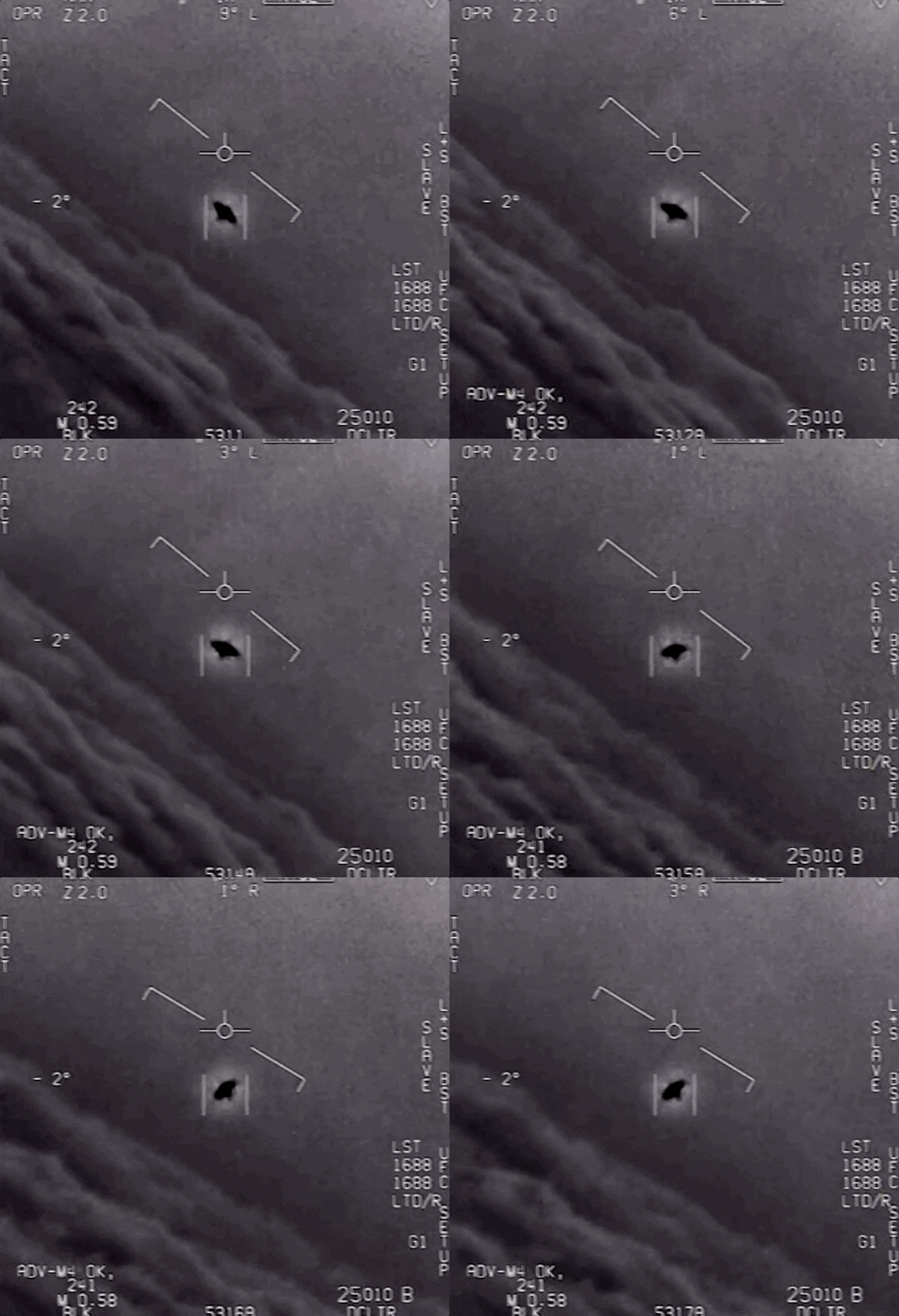




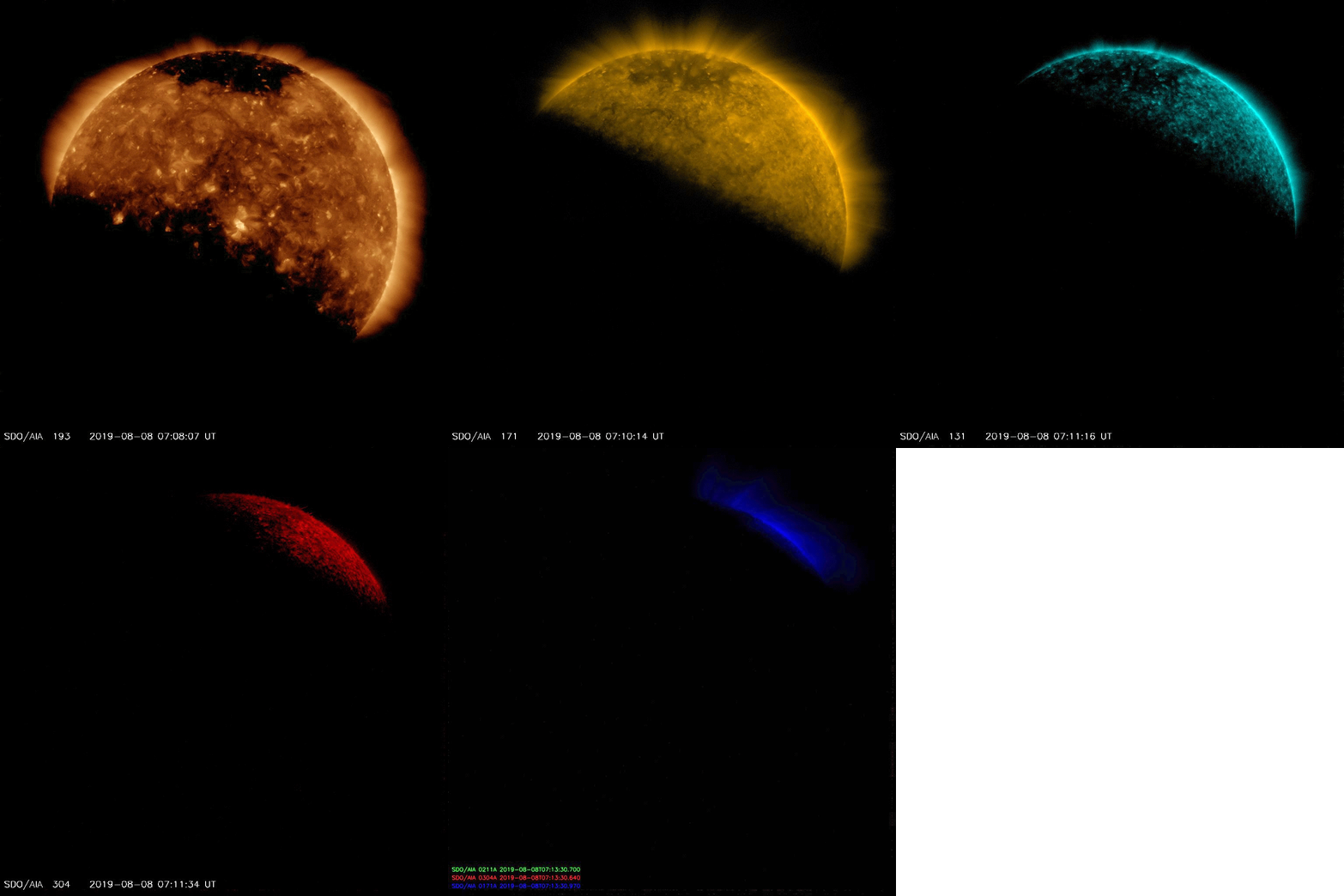



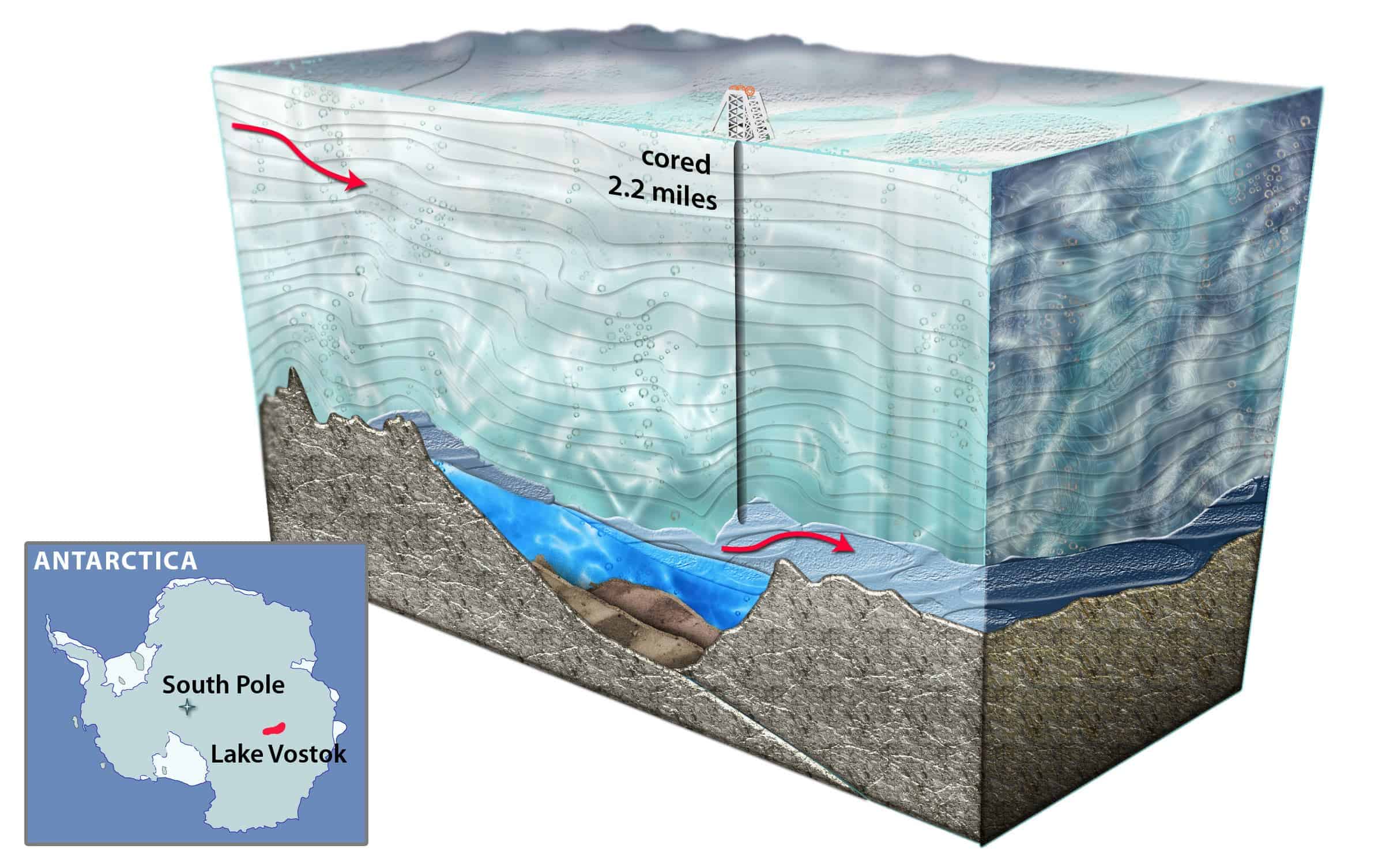




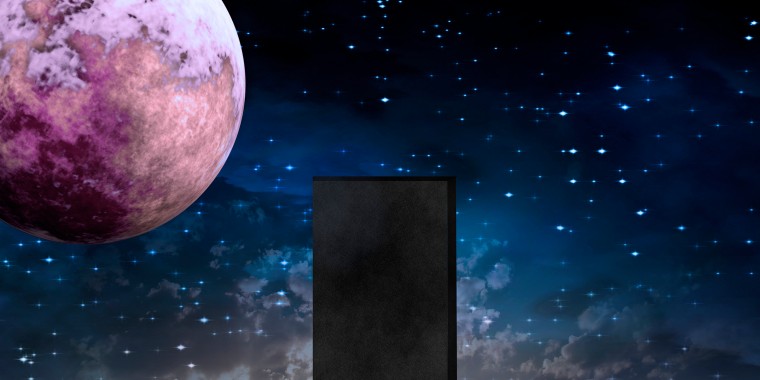


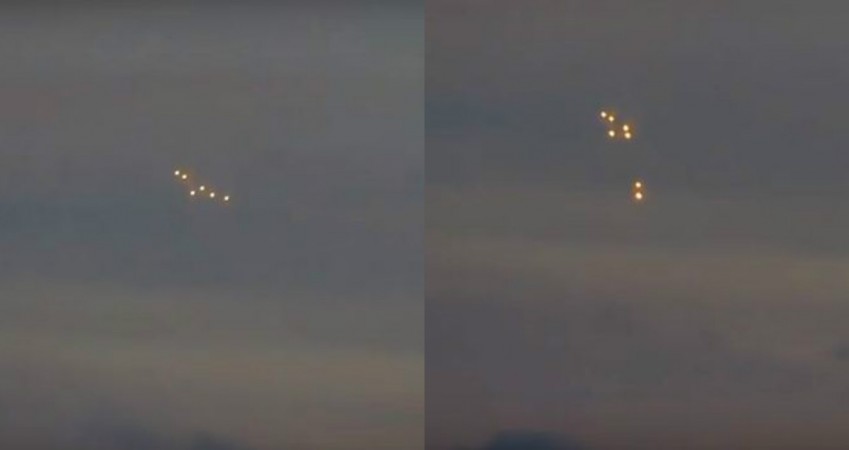

 , is that you? A #mysterious light was seen Friday night by many residents in different northern Chinese cities, leading some to speculate about a possible extraterrestrial spaceship sighting, although the cause is still being investigated pic.twitter.com/FTPEEdn7hx