The purpose of this blog is the creation of an open, international, independent and free forum, where every UFO-researcher can publish the results of his/her research. The languagues, used for this blog, are Dutch, English and French.You can find the articles of a collegue by selecting his category. Each author stays resposable for the continue of his articles. As blogmaster I have the right to refuse an addition or an article, when it attacks other collegues or UFO-groupes.
Druk op onderstaande knop om te reageren in mijn forum
Zoeken in blog
Deze blog is opgedragen aan mijn overleden echtgenote Lucienne.
In 2012 verloor ze haar moedige strijd tegen kanker!
In 2011 startte ik deze blog, omdat ik niet mocht stoppen met mijn UFO-onderzoek.
BEDANKT!!!
Een interessant adres?
UFO'S of UAP'S, ASTRONOMIE, RUIMTEVAART, ARCHEOLOGIE, OUDHEIDKUNDE, SF-SNUFJES EN ANDERE ESOTERISCHE WETENSCHAPPEN - DE ALLERLAATSTE NIEUWTJES
UFO's of UAP'S in België en de rest van de wereld Ontdek de Fascinerende Wereld van UFO's en UAP's: Jouw Bron voor Onthullende Informatie!
Ben jij ook gefascineerd door het onbekende? Wil je meer weten over UFO's en UAP's, niet alleen in België, maar over de hele wereld? Dan ben je op de juiste plek!
België: Het Kloppend Hart van UFO-onderzoek
In België is BUFON (Belgisch UFO-Netwerk) dé autoriteit op het gebied van UFO-onderzoek. Voor betrouwbare en objectieve informatie over deze intrigerende fenomenen, bezoek je zeker onze Facebook-pagina en deze blog. Maar dat is nog niet alles! Ontdek ook het Belgisch UFO-meldpunt en Caelestia, twee organisaties die diepgaand onderzoek verrichten, al zijn ze soms kritisch of sceptisch.
Nederland: Een Schat aan Informatie
Voor onze Nederlandse buren is er de schitterende website www.ufowijzer.nl, beheerd door Paul Harmans. Deze site biedt een schat aan informatie en artikelen die je niet wilt missen!
Internationaal: MUFON - De Wereldwijde Autoriteit
Neem ook een kijkje bij MUFON (Mutual UFO Network Inc.), een gerenommeerde Amerikaanse UFO-vereniging met afdelingen in de VS en wereldwijd. MUFON is toegewijd aan de wetenschappelijke en analytische studie van het UFO-fenomeen, en hun maandelijkse tijdschrift, The MUFON UFO-Journal, is een must-read voor elke UFO-enthousiasteling. Bezoek hun website op www.mufon.com voor meer informatie.
Samenwerking en Toekomstvisie
Sinds 1 februari 2020 is Pieter niet alleen ex-president van BUFON, maar ook de voormalige nationale directeur van MUFON in Vlaanderen en Nederland. Dit creëert een sterke samenwerking met de Franse MUFON Reseau MUFON/EUROP, wat ons in staat stelt om nog meer waardevolle inzichten te delen.
Let op: Nepprofielen en Nieuwe Groeperingen
Pas op voor een nieuwe groepering die zich ook BUFON noemt, maar geen enkele connectie heeft met onze gevestigde organisatie. Hoewel zij de naam geregistreerd hebben, kunnen ze het rijke verleden en de expertise van onze groep niet evenaren. We wensen hen veel succes, maar we blijven de autoriteit in UFO-onderzoek!
Blijf Op De Hoogte!
Wil jij de laatste nieuwtjes over UFO's, ruimtevaart, archeologie, en meer? Volg ons dan en duik samen met ons in de fascinerende wereld van het onbekende! Sluit je aan bij de gemeenschap van nieuwsgierige geesten die net als jij verlangen naar antwoorden en avonturen in de sterren!
Heb je vragen of wil je meer weten? Aarzel dan niet om contact met ons op te nemen! Samen ontrafelen we het mysterie van de lucht en daarbuiten.
18-07-2018
The Hunt for Earth’s Deep Hidden Oceans
The Hunt for Earth’s Deep Hidden Oceans
Water-bearing minerals reveal that Earth’s mantle could hold more water than all its oceans. Researchers now ask: Where did it all come from?
A couple hundred pebble-size diamonds, plucked from Brazilian mud, sit inside a safe at Northwestern University. To some, they might be worthless. “They’re battered,” said Steve Jacobsen, a mineralogist at Northwestern. “They look like they’ve been through a washing machine.” Many are dark or yellow, far from the pristine gems of jewelers’ dreams.
Yet, for researchers like Jacobsen, these fragments of crystalline carbon are every bit as precious — not for the diamond itself, but for what is locked inside: specks of minerals forged hundreds of kilometers underground, deep in Earth’s mantle.
These mineral flecks — some too small to see even under a microscope — offer a peek into Earth’s otherwise unreachable interior. In 2014, researchers glimpsed something embedded in these minerals that, if not for its deep origins, would’ve been unremarkable: water.
Not actual drops of water, or even molecules of H20, but its ingredients, atoms of hydrogen and oxygen embedded in the crystal structure of the mineral itself. This hydrous mineral isn’t wet. But when it melts, out spills water. The discovery was the first direct proof that water-rich minerals exist this deep, between 410 and 660 kilometers down, in a region called the transition zone, sandwiched between the upper and lower mantles.
This diamond from Juína, Brazil, originally formed deep inside Earth. It contains an inclusion of ringwoodite, a water-bearing mineral.
University of Alberta
Since then, scientists have found more tantalizing evidence of water. In March, a team announced that they had discovered diamonds from Earth’s mantle that have actual water encased inside. Seismic data has also mapped water-friendly minerals across a large portion of Earth’s interior. Some scientists now argue that a huge reservoir of water could be lurking far beneath our feet. If we consider all of the planet’s surface water as one ocean, and there turn out to be even a few oceans underground, it would change how scientists think of Earth’s interior. But it also raises another question: Where could it have all come from?
Water World
Without water, life as we know it would not exist. Neither would the living, dynamic planet we’re familiar with today. Water plays an integral role in plate tectonics, triggering volcanoes and helping parts of the upper mantle flow more freely. Still, most of the mantle is relatively dry. The upper mantle, for instance, is primarily made of a mineral called olivine, which can’t store much water.
But below 410 kilometers, in the transition zone, high temperatures and pressures squeeze the olivine into a new crystal configuration called wadsleyite. In 1987, Joe Smyth, a mineralogist at the University of Colorado, realized that wadsleyite’s crystal structure would be afflicted with gaps. These gaps turn out to be perfect fits for hydrogen atoms, which could snuggle into these defects and bond with the adjacent oxygen atoms already in the mineral. Wadsleyite, Smyth found, can potentially grab onto lots of hydrogen, turning it into a hydrous mineral that produces water when it melts. For scientists like Smyth, hydrogen means water.
Deeper in the transition zone, wadsleyite becomes ringwoodite. And in the lab, Jacobsen (who was Smyth’s graduate student in the 1990s) would squeeze and heat bits of ringwoodite to mimic the extreme conditions of the transition zone. Researchers doing similar experiments with both wadsleyite and ringwoodite found that in the transition zone, these minerals could hold 1 to 3 percent of their weight in water. Considering that the transition zone is a roughly 250-kilometer-thick shell that accounts for about 7 percent of Earth’s mass (by comparison, the crust is only 1 percent), it could contain several times the water of Earth’s oceans.
Lucy Reading-Ikkanda/Quanta Magazine
These experiments, however, only gauge water capacity. “It’s not a measurement of how wet the sponge is, it’s a measurement of how much the sponge can hold,” said Wendy Panero, a geophysicist at Ohio State University.
Neither were the experiments necessarily realistic, since researchers could only test lab-grown ringwoodite. Apart from a few meteorites, no one had ever seen ringwoodite in nature. That is, until 2014.
Tantalizing Clues
While soccer fans converged on Brazil for the 2014 World Cup, a small group of geologists headed to the farmlands around Juína, a city almost 2,000 kilometers west of Brasilia. They were on the hunt for diamonds that had been panned from local rivers.
As diamonds form in the heat and high pressure of the mantle, they can trap bits of minerals. Because diamonds are so tough and rigid, they preserve these mantle minerals as they’re blasted to the surface via volcanic eruptions.
The researchers bought more than a thousand of the most speckled, mineral-filled crystals. One of the scientists, Graham Pearson, took several hundred back to his lab at the University of Alberta, where, inside one particular diamond, he and his colleagues discoveredringwoodite from the transition zone. Not only that, but it was hydrous ringwoodite, which meant it contained water — about 1 percent by weight.
“It’s an important discovery in terms of plausibility,” said Brandon Schmandt, a seismologist at the University of New Mexico. For the first time, scientists had a sample of the transition zone — and it was hydrated. “It’s definitely not crazy, then, to think other parts of the transition zone are also hydrated.”
But, he added, “it would also be a little crazy to think that one crystal represents the average of the entire transition zone.” Diamonds, after all, form only in certain conditions, and this sample might come from a uniquely watery place.
To see how widespread hydrous ringwoodite could be, Schmandt teamed with Jacobsen and others to map it using seismic waves. Due to convection, hydrous ringwoodite can sink, and as it drops below the transition zone, the rising pressure wrings water out, causing the mineral to melt. Just beneath the transition zone where mantle material is descending, these pools of molten minerals can abruptly slow seismic waves. By measuring seismic speeds under North America, the researchers found that, indeed, such pools appear common below the transition zone. Another studymeasuring the seismic waves under the European Alps found a similar pattern.
Abundant mantle water got yet another boost in March when a team led by Oliver Tschauner, a mineralogist at the University of Nevada, Las Vegas, discovered diamonds that contain actual pieces of water ice — the first observation of freely existing H2O from the mantle. The samples might say more about the wet conditions that formed the diamond than the existence of any ubiquitous reservoir. But because this water — a high-pressure form called ice-VII — was found in a variety of locations across southern Africa and China, it could turn out to be relatively widespread.
“A couple years from now, we’ll find ice-VII is much more common,” said Steve Shirey, a geologist at the Carnegie Institution for Science. “It’s telling us we have the same story that hydrous ringwoodite is telling us.”
But if the story is that the mantle is brimming with water, the cliffhanger leaves us wondering how it all got there.
Watery Origins
According to the standard tale, Earth’s water was imported. The region around the sun where the planet formed was too hot for volatile compounds like water to condense. So the nascent Earth started out dry, getting wet only after water-rich bodies from the distant solar system crashed into the planet, delivering water to the surface. Most of these were likely not comets but rather asteroids called carbonaceous chondrites, which can be up to 20 percent water by weight, storing it in a form of hydrogen like ringwoodite.
But if there’s a huge stockpile of water in the transition zone, this story of water’s origin would have to change. If the transition zone could store 1 percent of its weight in water — a moderate estimate, Jacobsen said — it would contain twice the world’s oceans. The lower mantle is much drier but also voluminous. It could amount to all the world’s oceans (again). There’s water in the crust, too. For subduction to incorporate that much water from the surface at the current rate, it would take much longer than the age of the planet, Jacobsen said.
If that’s the case, at least some of Earth’s interior water must have always been here. Despite the heat in the early solar system, water molecules could have stuck to the dust particles that coalesced to form Earth, according to some theories.
Yet the total amount of water in the mantle is a highly uncertain figure. At the low end, the mantle might hold only half as much water as in the world’s oceans, according to Schmandt and others.
On the high end, the mantle could hold two or three times the amount of water in the oceans. If there were much more than that, the additional heat of the younger Earth would have made the mantle too watery and runny to fracture the continental plates, and today’s plate tectonics may never have gotten started. “If you have a bunch of water in the surface, it’s great,” said Jun Korenaga, a geophysicist at Yale University. “If you have a bunch of water in the mantle, it’s not great.”
But many uncertainties remain. One big question mark is the lower mantle, where extreme pressures turn ringwoodite into bridgmanite, which can’t hold much water at all. Recent studies, however, suggest the presence of new water-bearing minerals dubbed phase D and phase H. Exactly what these minerals are like and how much water they might store remains an open question, Panero said. “Because it is a wide-open question, I think that the water content in the mantle remains open for debate — wide open.”
Measuring Earth’s interior water storage isn’t easy. One promising way is to measure the electrical conductivity of the mantle, Korenaga said. But those techniques aren’t yet as advanced as, say, using seismic waves. And while seismic waves offer a global view of Earth’s interior, the picture isn’t always clear. The signals are subtle, and researchers need more precise data and a better understanding of the properties of more realistic mantle material, instead of just ringwoodite and wadsleyite. Those two minerals constitute about 60 percent of the transition zone, the rest being a complex mix of other minerals and compounds.
Finding more diamonds with hydrous minerals would help, too. In Jacobsen’s lab, that job falls to graduate student Michelle Wenz. For each diamond, she uses powerful X-rays at Argonne National Laboratory to map the location of every mineral speck, of which there may be half a dozen. Then, to identify the minerals, she blasts X-rays onto each bit and measures how the rays scatter off its crystal structure. Of the hundreds of diamonds in the lab, all from Brazil, she’s gone through about 60. No water yet.
Water or not, she said, these capsules from the deep are still amazing. “Each one is so unique,” she said. “They’re a lot like snowflakes.”
Correction:This article was revised on July 11, 2018, to correct a typographical error; it is the mantle, not the ocean, that could hold two or three times the amount of water in the oceans.
A giant black sarcophagus the likes of which have never been seen before has been found deep within the ground in Egypt, and a whole lot of scientists want to open it – despite having neither one earthly nor one unearthly idea what might lie waiting possibly maliciously inside. Say it with me now: “What! Could! Go! Wrong?” [cue applause and intro music]
Today’s episode of What The Hell Are They Thinking? comes to you straight from the ancient city of Alexandria in Egypt, one of the cradles of Western civilization as we know it. Earlier this month, construction crews there unearthed a true archaeological mystery the likes of which can only be found in Egypt. A massive alabaster head was found in the ground, the identity of which still remains a mystery. Even stranger (and scarier), a massive black sarcophagus was discovered nearby, measuring two meters by three meters, weighing over 30 metric tons, and carved entirely from black marble. Sounds like the perfect way to entomb an immortal evil wizard if you ask me.
How would you feel if some science nerds a few thousand years from now cracked open your coffin to look at your embarrassingly shriveled remains? How are they supposed to know you’re a grower and not a shower?
But they didn’t ask me. Instead, a team of archaeologists and scientists from Egypt’s money hungry Ministry of Antiquities will crack the menacing-looking thing open despite the entirety of the internet knowing that it’s a terrible idea. “We are hoping this tomb may belong to one of the high dignitaries of the period,” Ayman Ashmawy, the head of Egypt’s Ministry of Antiquities said in a statement, his pupils turning into dollar signs as he eyes the sarcophagus and licks his lips. “The alabaster head is likely that of a nobleman in Alexandria. When we open the sarcophagus, we hope to find objects inside that are intact, which will help us to identify this person and their position.”
Let’s take a step back for a second, though: why would you take the time and resources to bury something underneath a 15-ton slab of black marble unless you really, really want it to stay there? But no, fetch the crowbars and let’s get crackin’ boys! There’s museums to stock and tours to plan!
“Why did you release me!? I wasn’t finished with my cleanse yet!”
While in all likelihood the tomb contains nothing more than the stinking remains of some poor inbred aristocrat and all of his junk, there does in fact seem to be a precedent for a real-life pharaoh’s curse – although it seems the “curse” is more like a lifetime of disappointment and waning fame living in the shadow of your greatest discovery than a persistent haunting from a vengeful ancient ghost. But who knows? Maybe vengeful ancient ghosts work in mysterious ways. Maybe evil wizards don’t like being buried for 2,000 years in a musty black marble box. Maybe some things are better left in the ground where one of the most advanced civilizations in human history clearly wanted it to stay.
I’ll be in the bunker tonight, honey; no dinner for me. I’ve got talismans to enchant and salt circles to pour.
Diamonds are not rare at all on Earth- Representational imagePixabay
Diamonds are famously known to be both rare and "forever". Both of those supposedly well-known facts are, as it turns out, not true at all.
New research by a team from MIT, Harvard, and Berkeley has found that there is a lot more diamond in the planet than once believed. A quadrillion tonnes, or about a 1,000 trillion tonnes of diamond is buried below the Earth, but it is out of reach to humans. At about 120 to 150 km below the surface, it is out of reach of even the best drills available right now.
That means there are more diamonds than gold on the planet. According to a BBC report, there is only 2.5 million tonnes of the shiny metal in the world.
"This shows that diamond is not perhaps this exotic mineral, but on the [geological] scale of things, it's relatively common," said Ulrich Faul, of MIT's Department of Earth, Atmospheric, and Planetary Sciences.
"We can't get at them, but still, there is much more diamond there than we have ever thought before."
Astronomers Spot ‘Celestial Diamond Ring’ Nebula - Diamonds are surprisingly common in outer space
European Southern Observatory
This massive stash of diamonds are stored in rock formations called cratons. Cratons form as a result of tectonic plate movement. Similar to the way mountains happen as a result of tectonic movement and are pushed up, cratons are pushed down. They can be likened to inverted mountains and can go as deep as 200 miles, says MIT. At the very bottom of these cratons lie the diamond "roots". The study found that diamonds likely make up about 1 to 2 percent of croton roots.
As to how this find was made, the tech is similar to what is used to detect and measure seismic activity, or earthquakes. Seismic data can also be used to effectively see inside Earth, similar to an ultrasound scan.
Sound travels faster in more dense material than light materials, so its speeds vary according to the composition, temperature, and density of rocks below the surface. By comparing the way sound travels and bounces back, scientists can accurately find what rock lies beneath the surface and at what depth they lie.
The study was published by the American Geophysical Union.
How an alien seaweed invasion spawned an Antarctic mystery
Southern bull kelp can drift huge distances before washing ashore.
Ceridwen Fraser, Author provided
How an alien seaweed invasion spawned an Antarctic mystery
Two small pieces of seaweed found by a Chilean scientist on an Antarctic beach set in train research that may transform our understanding of ocean drift and reveal what the future holds for Antarctic ecosystems affected by climate change.
It all started in January 2017, when sharp-eyed marine biologist Erasmo Macaya spotted two clumps of southern bull kelp washed up on the tide line of an Antarctic beach.
Most of us would have walked right on by, but it stopped Macaya in his tracks. To him it was as if an alien had just landed – and in many ways that was exactly what had happened.
The kelp that washed up on Antarctica’s Prince George Island.Erasmo Macaya, Author provided
Every piece of science he knew said that this species of kelp should never have ended up in Antarctica. Its home was the regions around New Zealand, Chile and the sub-Antarctic islands. Indeed, a genetic test later confirmed that the pieces he found had travelled tens of thousands of kilometres from the Kerguelen and South Georgia islands.
So how did the kelp get to Antarctica?
The ocean barrier
Many scientists considered such a journey impossible, because of the fierce barrier of winds and currents that encircle Antarctica. These winds – known to sailors as the Roaring Forties – combine with the world’s strongest ocean current, the Antarctic Circumpolar Current, and the Coriolis force generated by Earth’s rotation.
Together, these forces push floating objects east and north, away from Antarctica. Before Macaya’s discovery, this barrier was thought to be impenetrable to floating debris.
Ocean currents in the Southern Ocean push floating objects east and north away from Antarctica.Author provided
But if kelp and other organisms could make it to Antarctica, this would have profound consequences for Antarctic ecosystems. So was there a way for the kelp to drift through that barrier?
We took up the challenge, using our ocean models. The mystery deepened when our first modelling attempts suggested that the Southern Ocean was indeed uncrossable by floating kelp. Even ocean eddies – the “weather” of the ocean – were not able to push floating objects southward away from the main ocean currents.
Yet the kelp had undeniably made the crossing. This led us to think about other influences on ocean drift that could play a role. We decided to add a very small effect known as Stokes drift to our models.
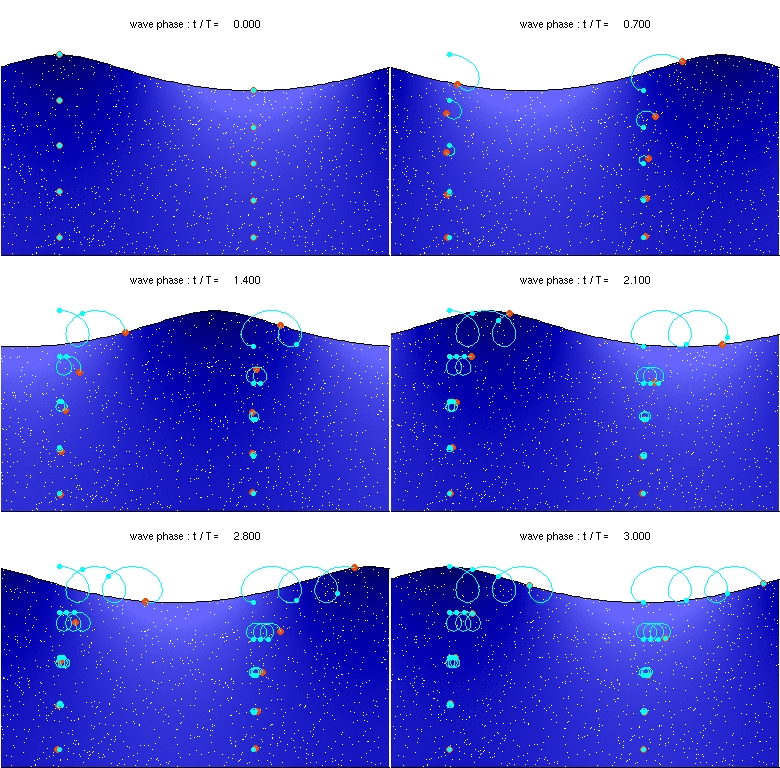
You can think of Stokes drift as deep ocean surfing. Waves can push floating objects in unusual directions. In the kelp’s case, each time a wave passes, the kelp will move a short distance with the wave. This drift is slow when waves are small, but in regions with large waves (such as the Southern Ocean) it can be much faster.
During storms around Antarctica, waves are typically 10-15m high. The largest wave ever recorded in the Southern Hemisphere, more than 23m, was in the Southern Ocean off New Zealand. Stokes drift must be large here.
When we added this factor to our ocean models, the change was instant. The massive waves generated by Antarctic storms pushed a small proportion of floating objects southwards. As we report in Nature Climate Change today, this conceivably explains the kelp’s voyage to Antarctica.
Modelling virtual kelp pathways with surface ocean currents and wave motion.
We calculated that the kelp specimens must have drifted at least 20,000km to reach Antarctica – the longest biological rafting events ever recorded.
Our results will also change the way that drift pathways for floating objects – such as plastics, aeroplane crash debris, pumice from volcanoes, driftwood, seaweeds, and messages in bottles – will be calculated, particularly in stormy oceans.
What this means for Antarctica
The implications don’t stop there. Until now, Antarctica was thought to be an isolated ecosystem, largely insulated from environmental change. This is not in fact true.
Southern bull kelp can carry many other species of plants and animals when it detaches and floats out to sea. The discovery that this kelp can raft to Antarctica means we could see major ecological changes in Antarctic marine ecosystems as the climate warms.
So far there is almost no evidence of natural colonisations of Antarctica from northern regions in the past few tens of thousands of years. Many Antarctic plants and animals are distinct from those found on other continents and sub-Antarctic islands.
In fact, the kelp strands Macaya found are the first recorded foreign organisms to have drifted across the Southern Ocean. But our models suggest these are unlikely to be the only ones to have made the trip.
This means that Antarctica’s ecological differences are not really due to physical isolation. It is more likely that the harsh Antarctic climate prevents new plants and animals from establishing themselves.
But Antarctica is changing. Parts of the frozen continent are among the fastest-warming regions on Earth. As Antarctica and the ocean around it warms, the kelp rafts – and other floating organisms, including invertebrates hanging onto the kelp, seeds, driftwood that could harbour insects, and larvae – may one day be able to colonise.
By the end of this century, when parts of Antarctica are expected to be similar to current sub-Antarctic environments, we might see many new species colonising Antarctica, bringing dramatic ecosystem change.
Other human-caused influences may also be felt. If kelp can break through the barrier, then floating plastic debris from the large garbage patches in the South Atlantic and South Pacific, just north of the Southern Ocean, could conceivably make a similar journey.
Plastic litter is still very rare in the waters around Antarctica. But with ever-growing amounts of plastic entering our oceans and the new drift pathways we have discovered, more plastic will likely find its way south to pollute one of our last near-pristine environments.
And all of this has been revealed through the discovery of two small pieces of kelp on a distant beach, and the application of a relatively insignificant piece of ocean physics. From these small beginnings we now know that one of the world’s last great wildernesses might not escape our influence.
Checkout This Dynamic New Crop Circle That Was Just Reported in the UK
Checkout This Dynamic New Crop Circle That Was Just Reported in the UK
This impressive crop circle was just discovered in the UK on July 14th. The details in this one are pretty remarkable. To us it looks like 24 star systems circling the core of the galaxy!
One of the most controversial of all of Bob Lazar’s claims (made after he allegedly briefly worked, in late 1988, at a portion of Area 51 called S-4) is that he read a series of highly-classified documents on various aspects of the UFO phenomenon. One of those documents, Lazar maintained, told a strange and sinister story of a violent confrontation between security personnel at Area 51 and a group of aliens that were in residence and working at S-4, alongside a scientific team. It was a confrontation that reportedly resulted in more than a few deaths. Far more than a few.
Lazar has admitted that he cannot say for sure that the briefing papers he read were the real thing. He has acknowledged that they may have been nothing but disinformation, designed to swamp him with both real and bogus material. Why might the project leaders at Area 51 do such a thing? Simple: if there were concerns that Lazar might blow the whistle on what he knew (which, as history has shown, he did, in 1989), mixing up the truth with a more than liberal amount of lies might have an adverse effect on his credibility. It should be noted that’s exactly what happened. That said, and although he cannot say for sure that the documentation was the real deal, he does recall the contents of the material, in relation to this fire-fight situation.
According to Lazar, the deadly confrontation occurred at some point in 1979, in the S-4 facility. Lazar said: “I believe the altercation came about in 1979, or sometime like that. And I don’t remember exactly how it was started, but it had something to do with the security personnel. The aliens were in a separate room. I think it had something to do with the bullets [the security guards] were carrying, and somehow they were trying to be told that they couldn’t enter the area with the bullets, possibly because it was hazardous – the bullets could explode, through some field or whatever.”
Lazar continued that despite the warning, one of the security guards did indeed enter the room with the bullets – something which resulted in a violent and lethal response from the aliens. Lazar recalled that the papers he read described how the security personnel were all quickly killed by “head wounds.” The same fate befell a group of scientists on the program, too. Timothy Good, who interviewed Lazar at the height of the controversy surrounding his claims, said: “The incident is said to have led to the termination of an alien liaison at the Nevada Test Site.”
It’s important to note that there is a variation on this story. Not from Lazar, who stuck to the story which he read out at S-4. But, from a man named Paul Bennewitz, who in the late 1970s began digging into claims that an alien base existed below the New Mexico town of Dulce. From intelligence personnel at Kirtland Air Force Base, Albuquerque, Bennewitz learned of a story of a fatal encounter between hostile aliens and a security team in the lower levels of the Dulce Base. The different location given to Bennewitz is just about the only difference between what Lazar was told and what Bennewitz was told.
Clearly, both scenarios cannot be true, something which means we must give deep consideration to the possibility that the papers Lazar read were not the real deal. They may well have been disinformation. So might have been the data provided to Paul Bennewitz. In other words, there is a strong likelihood that both tales were fabricated and fed to Lazar and Bennewitz as a means to confuse the truth surrounding what is really going on at Area 51 – and which may actually have nothing to do with real aliens, hostile or not.
Last week, paranormal researcher and inventor of The Wishing Machine Joshua P. Warren made international headlines with his announcement that he had discovered a “time warp”outside of Las Vegas, Nevada. Warren says he detected a spot in the desert in which time itself was observed to slow down by 20 milliseconds. Warren reports the discovery was made using a device called a DT-Meter, or differential time meter, claimed by its inventor to be able to “detect and measure the effects of technology that is able to bend space-time.” According to inventor Ron Heath’s website, “examples of this technology would be a UFO that bends space-time, or uses gravity as part of it’s propulsion system.”
Joshua P. Warren
Naturally, I was skeptical about this discovery. A single anomalous measurement is hardly conclusive proof of anything, particularly one using an unknown device which appears to have been made in some dude’s basement and sold on eBay. However, as someone who writes about the paranormal and unexplained, I am open to all possibilities – given sufficient evidence.
To that end, I recently spoke with Joshua P. Warren about his discovery and the device he used. To start, I asked Warren if he has been able to reproduce the same result at the same site:
This result is truly an anomaly. I have tested the same site three times, but this only happened for a moment on one occasion. However, I have used the DT-Meter all over the desert, between Vegas and Area 51, and it has always been easily, and reliably, calibrated and operated just as intended. In fact, the inventor of the device, Silicon Valley engineer Ronald Heath, has had two of them running on property in California for months, logging results 24/7, and he has never seen one anomaly. When he saw my reading he said ‘WOW! Incredible!!!’
Warren says he is the first individual to one one of these devices after they only became available in the last month. One thing I immediately wondered about the device after reading this story is if it was calibrated against a control, to which Warren replied that while he did not perform such a control calibration himself, he’s sure the DT-Meter’s inventor calibrated it and that he followed the onboard calibration instructions with each use. Thus, while Warren admits that a malfunction is indeed a possibility, he considers it to be the least likely of all of the possible explanations for the time anomaly he detected given the impeccable performance of the device in every other test:
Since humans are imperfect, no scientific results can be truly conclusive. But there is no direct evidence that the meter performed any differently that day, at that spot, than it has on any other occasion. Given all the variables, since the DT-Meter has worked reliably in every other case, and we know from mainstream science that spacetime anomalies exist, I think this reading is most likely an accurate recording of one such anomaly, and the first of many we will discover, on a civilian level, in the coming years.
In another post on one of his sites, Warren cites that this anomaly could be due to a black hole approaching Earth, or perhaps some type of gravity or spacetime-bending technology nearby. Warren pointed out that there are several well-known areas nearby where exotic or extraterrestrial technologies are rumored to be tested or de-engineered by the likes of Robert Bigelow and others – not to mention the infamous Area 51. I asked Warren if he suspects the nearby installations at Groom Lake/Area 51 might have something to do with the time anomaly. While Warren says he is open to the possibility, he says the readings he took at locations much closer to the facility came back normal:
The Groom Lake facility is so huge that one can conceivably tie any weird phenomenon in Nevada to conspiracies regarding their work. However, I cannot say that this particular result was directly related to Groom Lake. I traveled hundreds of miles testing spots in the desert, about every 20-30 miles, between Las Vegas and past Rachel, Nevada (near Area 51). Surprisingly, the land around Groom Lake/Area 51 tested as completely normal. It was only this one site, about 20 miles north of Vegas, in the desert, where I got the anomalous reading.
What might be the cause of this anomalous reading Warren took with the DT-Meter? Ultimately, it’s difficult to say given just one reading. However, within the field of physics there is some precedent for such anomalies. For one, there’s the the phenomenon of time dilation as proven by the famous Hafele-Keating experiment and other studies, in which working clocks have been found to report different times after being travelling at different velocities. Clocks on the International Space Station, for example, run .014 seconds slower per year than clocks on Earth. However, since Warren discovered the time anomaly while stationary on the surface of Earth, these types of effects normally shouldn’t apply.
The gravitational effects of blackholes can actually distort spacetime.
Of course, as Warren notes, there are other documented cases of physical anomalies here on Earth, such as inconsistencies in the Earth’s gravitational field detected by space agencies. Given that gravitational effects can also lead to time dilation, could the site of this Las Vegas time warp be home to some type of unknown gravitational anomaly? Much more data from a variety of sources would need to be collected to even begin approaching such a conclusion.
For now, Warren says his plans for the DT-Meter and the time warp going forward are to collect more data and look for any other locations which display similar time distortions in order to determine if there might be a correlation or pattern among other sites.
Like many of us, I hope to someday discover or be shown be conclusive proof of higher mysteries, extraterrestrial intelligence, or the paranormal. As most of us seekers who grew up on The X-Files, I truly want to believe. However, I also feel that unsubstantiated claims or premature conclusions can sometimes do harm to the paranormal research community and reinforce common stigmas levied at the study of anomalous phenomena. Where does this discovery stand? We’ve got a well-known paranormal researcher and inventor reporting a single anomalous reading taken with a homemade device. Is this conclusive proof of a time warp?
Beginning with the 1895 publication of the H. G. Wells novella The Time Machine, popular culture has been fascinated with the idea of inventing machines capable of sending humans through time. Despite our best efforts and a whole lot of dubious claims, though, true time travel seems as if it will remain the stuff of science fiction.
Who knows, though? Science and technology occasionally undergo paradigm shifts which make the impossible a reality, after all. The concept of devices which enable people to instantaneously see and hear other people on the opposite side of the world would have seemed like outlandish fantasy just a century ago, yet here you are watching live footage of cave rescues in Thailand while on the toilet and sending pictures of your naughty bits to that Czech girl you met on the train while backpacking through eastern Europe, all with a machine that fits in your pocket.
Will advances in technology someday allow us to travel back in time and make sure that mustard gas finishes off Hitler during World War I this time or, more importantly, fix all those embarrassing faux pas we made in middle school? One University of Connecticut physicist might thinks he may be able to some day make that all possible. Professor Ron Mallett recently met with interviewers the BBC’s Horizon science series to discuss a time machine design he believes might soon make time travel a reality.
I think of myself as being an ordinary person with a passion, and my passion is the possibility of time travel. If I could build a time machine, then I could go back into the past and see my father again and maybe save his life and change everything.
That’s how Mallett describes his quest to someday achieve time travel and save his father from an untimely death at age 33. Mallett has spent his life dreaming of saving his father ever since reading The Time Machine when he was just eleven years old. After researching the concept of time travel for decades, Mallett now believes he has a design that could theoretically work – with one hitch: the device would need an unbelievable, as yet impossible amount of energy to power. And a working shrink ray. But a man can dream, can’t he?
Mallett’s design centers around a vortex of incredibly intense lasers which generate a rapidly swirling beam of light. If that light could be spun fast enough, Mallett believes spacetime itself could become twisted “like stirring a cup of coffee:”
If space is being twisted strongly enough, this linear timeline is going to be twisted into a loop. If time all of a sudden is twisted into a loop that allows us the possibility of travelling into the past.
Several recent discoveries in quantum physics have suggested that affecting matter in the present can affect matter in the past, but quantum entanglement is one thing, and travelling back in time to attend Stephen Hawking’s funeral is quite another. Will a physics professor’s dream of swirling lasers one day enable use to right the wrongs of the past, or is this merely a case of one man’s obsession to bring his father back to life?
Planet Sized Circular Object Detected by STEREO Satellites
Planet Sized Circular Object Detected by STEREO Satellites
Given the knowledge of where the STEREO crafts were at the time, it should be able to triangulate the size, orbit, and relative position at the time of this video. Very cool video.
The STEREO project (Solar TErrestrial RElations Observatory) of the US space agency NASA consists of two almost identical space probes, which for the first time observe the sun and the interaction of its particle eruptions and fields with the Earth's magnetosphere in three dimensions (stereo effect) and also monitor its remote side.
People in cities around the world—from Taos, New Mexico, to Windsor, Ontario, to Blackburn, England, to Auckland, New Zealand—have reported hearing strange humming noises that have no obvious source. The hums are often compared to the sound of idling trucks, and for the people who can hear them, they can be maddening, causing nausea and insomnia.
City officials and scientists have investigated various potential causes of the hums, including industrial plants, electricity pylons, mating fish, and even mass hysteria. In the first episode of our new series “Sound Mysteries,” we look into the case of the mysterious hums that have vexed people across the globe.
Fascinating Discovery: "Ghost Particle" Heralds A New Era In Astronomy
From the depths of space, billions of particles patter to the earth every second. Now researchers have identified a source of high-energy neutrinos for the first time - and solved a puzzle of the century.
Researchers find the extragalactic source of ghost particles
"We still do not know where they come from," says Elisa Resconi from the Technical University of Munich. It is five years since researchers used a large detector at the South Pole to detect high-energy neutrinos from deep space. Now for the first time, they have also found a source of ghost particles. It's in a distant galaxy.
Neutrinos hardly interact with their environment and possess almost no mass. They travel billions of light years through the universe and penetrate galaxies, stars, and planets almost without a trace. The physicists around Resconi have now taken advantage of this special feature.
▶ Particles with enormous energy
"Our goal is actually to learn more about the origin of cosmic radiation," explains Marek Kowalski, head of neutrino astronomy at the German Electron Synchrotron (Desy) in Hamburg. Some particles of cosmic radiation carry enormous energy and scientists have been puzzling for over a hundred years where in space they have their origin.
The problem: Cosmic radiation - mainly protons - is charged and is therefore strongly deflected on its way to Earth. "You can't understand where it came from," says Kowalski.
The situation is different with neutrinos: they travel to Earth together with cosmic radiation, but do not change direction. If you know its origin, you also know a source of cosmic radiation.
Image copyrightBBC / THOMAS SCHEIDLImage captionRon Mallett built a device that illustrates principles he believes could be used to build a time machine
Travelling in time might sound like a flight of fancy, but some physicists think it might really be possible. BBC Horizon looked at some of the most promising ideas for turning this staple of science fiction into reality.
Ron Mallett has a dream: He wants to travel in time.
This isn't mere fantasy - Mallett is a respected professor of physics.
"I think of myself as being an ordinary person with a passion, and my passion is the possibility of time travel," he says.
Prof Mallett has wanted to build a time machine for most of his life. His passion, he explains, can be traced to a tragic event early in his life.
Ron's father, a heavy smoker, died of a heart attack at the age of 33 - when Prof Mallett was just 10 years of age. Ron was devastated and withdrew into his books.
Image captionRod Taylor starred in the 1960s adaptation of HG Wells' classic novel, The Time Machine
"The cover caught my attention, but it was when I read the inside, and it said: 'Scientific people know very well that time is just a kind of space and that we can move forward and backwards in time, just as we can… in space'.
"When I read that I said: 'This is wonderful!'."
Prof Mallett explains: "If I could build a time machine, then I could go back into the past and see my father again and maybe save his life and change everything.
Image captionProf Mallett's father Boyd inspired his love of science and reading
Time travel may sound far-fetched, but scientists are already exploring several mysteries of nature that could one day see Ron's dream fulfilled.
Albert Einstein thought the three dimensions of space were linked to time - which serves as a fourth dimension. He called this system space-time, and it's the model of the Universe that we use today.
But Einstein also thought it was possible to fold space-time, creating a shortcut between two distant locations. This phenomenon is called a wormhole, and it can be visualised as a tunnel with two openings, each emerging at different points in space-time.
Wormholes might exist naturally in the cosmos; indeed, scientists in Russia are trying to use radio telescopes to detect them. But using wormholes for time travel won't be straightforward.
Image copyrightALAMYImage captionArtwork: A wormhole can be thought of as a kind of tunnel creating a shortcut between separate points in space-time
The nearest ones could be many light-years away. And even if you could get to them and then survive the journey through them, there's no guarantee where you'd end up.
But some physicists have speculated that we might be able to conjure up bespoke wormholes at some point in the future - though we currently have no idea how.
Physics also predicts that wormholes would have a habit of collapsing, crushing whatever's inside them. If a time machine is ever to exploit them, we'd have to find a way to stop this inconvenient feature.
The mysterious phenomenon of dark energy might provide a solution. In the 1990s, astronomers found that the expansion of the Universe was speeding up, rather than slowing down as might have been expected.
"Something out there is having an 'anti-gravity' effect - it's pushing rather than pulling. We don't know what that is, but it makes up most of the Universe. We call it dark energy," says Prof Tamara Davis, a cosmologist at the University of Queensland in Australia.
Image captionProf Tamara Davis says wormholes might offer a way of travelling in time
A wormhole will only work for time travel if its "mouth" can be held open for long enough that it allows something to travel through it. That requires something called negative energy, which doesn't really exist in the everyday world.
But the dark energy that permeates the cosmos fits the bill - if we can figure out what it is, we might be able to prop open a wormhole long enough to go in one end and out the other.
"We don't know whether we are able to make a wormhole, whether that's technically within our capabilities… But who knows what a future human civilization is going to be able to do," says Prof Davis.
"Technology has advanced so rapidly that maybe space and time themselves are something that can come under our control."
Wormholes exist at the more speculative end of physics, offering one approach to travelling in time. But Ron Mallett has another.
He has drawn up plans for an actual time machine, and his concept was inspired by a book he read at age 12 about Albert Einstein's equations.
Prof Mallett has built a table-top device that illustrates principles he thinks could be used to build a real, working time machine. First, lasers are used to generate a circulating beam of light. The space inside this "ring laser" should become twisted, "like stirring a cup of coffee", the University of Connecticut professor explains.
Image captionProf Mallett's theoretical work suggests our normally linear timeline could be twisted into a loop
Because space and time are intimately connected, warping space should also warp time. Prof Mallett's theoretical work has shown that, given enough laser intensity in a small enough space, it should be possible to alter the normally linear timeline we all inhabit.
"If space is being twisted strongly enough, this linear timeline is going to be twisted into a loop. If time all of a sudden is twisted into a loop that allows us the possibility of travelling into the past," says Ron Mallett.
However, in order to make it work, the concept would require vast amounts of power and a way of shrinking everything to a microscopic scale.
But once we have a time machine, using it successfully will require a detailed understanding of time itself.
The generally accepted view is that the Universe is an unchanging "block" of space-time; this idea arises directly from Einstein's equations.
"What's important about the model is the idea that the past, present and future are all equally real. So you can think of everything that ever did exist, does exist or will exist as all somehow being out there in space-time," says Dr Kristie Miller, director of the Centre for Time at the University of Sydney, Australia.
"The dinosaurs are all out there somewhere in the past doing dinosaur stuff, we're all here now and all of the future is out there somewhere in space-time too."
Image copyrightSPLImage captionThe "block" theory of space-time arises directly from Albert Einstein's equations
One way to visualise the block model is to think of other places in time as being like other places in space: "We are here in Sydney, but there are other people located in Singapore and London. Those places are perfectly real, it's just that we aren't at them," says Dr Miller.
This is good news for the budding time traveller, because it suggests there is nothing to stop us from swapping where we are now for some other place and time.
But, importantly, it also implies that the past, present and the future are already written, so that if we were to travel back in time, we wouldn't be able to alter it. To take an oft-quoted example, we shouldn't be able to kill someone's grandparent so that their descendant will cease to exist in the future.
The block model treats our everyday concept of time as an illusion, a way that humans rationalise reality. But Prof Lee Smolin, from the Perimeter Institute in Waterloo, Canada, disagrees. He believes that the passage of time is a real and fundamental phenomenon.
Image copyrightBBC / EUAN SMIT
Image captionProf Lee Smolin believes the concept of time passing may be a real one, rather than an illusion created by humans
"Time travel is probably impossible," he says. "If what's real is the present moment and the past is only real in the sense that there are memories and records of it in the present, and the future is still to exist… there's nowhere to go."
His colleague Prof Neil Turok, director of the Perimeter Institute, thinks the weird world of quantum physics could be crucial to answering this question.
This area of physics emerges at very small scales, where the rules of classical physics we learnt about in our school textbooks break down. For example, in the quantum world, it might be possible for a particle to be in many places at once.
"I think it's clear to me that there is some probability of us going backwards in time," he says. "In quantum physics, nothing is impossible - particles travel through walls!"
Prof Turok explains that time travel remains a distant hope because "no one really has any plausible idea of how to go backwards in time right now". But he adds: "One should never say never, because some clever person will come along and tell you how to break the rule."
I added color to make it easier to see, because psychology says black and white photos often confuse the mind on first glance. I found this in the Mars Global Surveyor MOC images. This particular image seems to depict many trees on the Mars surface. These trees are similar to what you see when using Google Earth and looking over a forest, but this is Mars and it should be impossible, but here it is, right in front of us and with the link to the official NASA site as proof that it exists. Obviously there are large bushy trees on Mars. There is no geological formation that could explain these features. These are living, growing organisms on the surface of Mars. Now why would NASA want to hide trees? Because its a form of life and where there are trees, there are animals and insects. Thus, NASA finds this information to be athreat to national security, because other countries would race to get to Mars if they knew it was more habitable than once thought. NASA does not want competition to get to other plants. Did you hear NASA criticising Elon Musks SpaceX Falcon Heavy Rocket last week? They did saying it was just too small to be useful, but it didn't seem to discourage Elon Musk at all. Scott C. Waring
NOTE PETER2011:
I have decided to publish this article on my blog. I don't know if it's true or fake news, but as a forum ii try to give the most complete information as possoble. Judge yourself
Claudio Kopper didn’t think there was anything to see in that part of the sky, but he was wrong. What he and other scientists around the world soon observed on Earth and in space marked the beginning of a new age of astrophysics — one in which a long-elusive “ghost particle,” or high-energy neutrino, can finally be traced back to its mysterious origins.
Optical detectors at the IceCube Neutrino Observatory in Antarctica picked up evidence of a high-energy neutrino in September 2017, prompting the project’s computers to begin calculating where in the universe the particle may have come from. Neutrinos are tiny subatomic particles with so little mass that they barely interact with anything in space, making it incredibly difficult for physicists like the University of Alberta’s Kopper, an assistant professor of physics, and his hundreds of collaborators to study them and trace their origins.
With the new data, which are described Thursday in a groundbreaking pair of Science papers, IceCube collaborators alerted other laboratories around the world to gaze at that part of the sky and figure out what emitted the neutrino.
Against all odds, they succeeded.
The team had sent out these alerts before, and Kopper didn’t think this one would be special. “How wrong I was,” Kopper tells Inverse.
Estimates showed that the neutrino was flung toward Earth off the shoulder of the constellation Orion, and when Kopper returned to work the next morning, he saw that astronomers at the Fermi Large Area Telescope had indeed identified a source of gamma radiation in that part of the sky. Soon after, astronomers at the Major Atmospheric Gamma Imaging Cherenkov (MAGIC) Telescope confirmed a bright emission of light in that part of space at the time in question. And so, the hunt for the neutrino’s source began.
In the new papers, the scientists announced their findings: The neutrino most likely came from a flaring blazar, an astronomical object considered to be one of the most energetic bodies in the universe. A blazar is a supermassive black hole situated at the center of a galaxy, whose powerful jet blasts light and radiation toward Earth from across all that space.
The blazar in question, TXS 0506+056, is about 4 billion light-years away from Earth, and in the pair of Science papers, over 100 scientists present evidence that this coincidence — the neutrino detection and the blazar flare — are most likely connected. In one paper, an international team shows that there’s a very low probability that the coincidence of the neutrino detected on Earth and the blazar flare observed in outer space did not occur by random chance.
In the other paper, scientists from the IceCube Collaboration confirm that high-energy neutrons came from the direction of blazar TXS 0506+056 between September 2014 and March 2015.Together, these papers support the idea that blazars are a source of the cosmic rays that create the evasive ghost particles. Neutrinos are produced when the high-energy protons and atomic nuclei in cosmic rays smash together, so where there are neutrinos, there are cosmic rays.
Prior to this discovery, scientists knew that cosmic rays came from our sun and from supernovae, but now they know the most energetic ones originate in blazars.
While the discovery of the neutrino’s source is an astounding find, what’s even more important is the near-unprecedented method used to discover it, which will usher in a new age of physics. For only the second time in history, the scientists used both light and radiation to understand an astronomical phenomenon. The only other time “multimessenger observation” had ever been used was when scientists used light and gravitational waves to detect a neutron star collision.
To detect all those signals, scientists need seriously heavy-duty equipment. “It can be hard to even imagine how big the detector is,” says Kopper. The IceCube Observatory detector, situated at the Amundsen-Scott South Pole Station in Antarctica, lies entirely below the surface of the ice. It includes 86 vertical strings that reach over 8,000 feet below the surface of the Antarctic ice, spread out over a cubic kilometer of ice. Each string has 60 optical detectors on it, so as a neutrino passes undisturbed through the ice and the Earth, the observatory’s array can detect which direction the particle is moving. But even with this massive sensor array, the observatory can only detect about 10 astrophysical neutrinos each year.
“Painting a picture of the entire sky at a pace of ten dots per year is hard, so we rely on the multimessenger technique, using other telescopes to see what else is going on in the sky at the position where a neutrino is detected,” Marcos Santander, an assistant professor of physics and astronomy at the Universty of Alabama and one of the collaborators on the discovery, tells Inverse. This use of multimessenger observation is the bigger, perhaps more important context of the blazar discovery.
“It was not only IceCube but so many more people across so many other experiments and observatories that needed to come together to make this happen,” says Kopper of the collaboration that allowed scientists to make this discovery.
The IceCube Neutrino Observatory is almost entirely under the Antarctic ice, consisting of over 5,000 detectors that lie between 1.5 and 2.5 kilometers below the surface.
As astrophysicists begin to use all the available signals sent our way by astronomical phenomena, they’ll be able to piece together mysteries about the universe that had puzzled their predecessors for decades. For instance, even though scientists have known about cosmic rays for a century, multimessenger observation helped them identify a likely source for the most energetic ones. But this is much more of a starting point than a final result.
“Now that we have the first source candidate we need to know what makes it special and how the acceleration actually happens,” says Santander.
“We want to also be able to do neutrino astronomy, finding many sources that we can study and comparing their emission to what we see in electromagnetic waves. This is really just the beginning.”
AMERICAN MADE Human-modified stones excavated in central Texas date to more than 16,000 years ago. Finds include a spearpoint (far right) unlike any others previously unearthed at ancient American sites.
People inhabited what’s now central Texas several thousand years before hunters from North America’s ancient Clovis culture showed up, researchers say.
Excavations at the Gault site, about 64 kilometers north of Austin, produced a range of stone artifacts that date to between around 16,700 and 21,700 years ago, reports a team led by archaeologist Thomas Williams of Texas State University in San Marcos. An analysis of 184 of those finds identified 11 spearpoints unlike any others that have been found at ancient American sites, the scientists conclude July 11 in Science Advances.
Researchers have long argued about whether people reached North America before the rise of Clovis culture 13,000 years ago. Evidence from the Gault site joins other recent reports of humans venturing deep into North America far earlier (SN: 6/11/16, p. 8), which would take Clovis people out of the running for the title of first New World settlers.
Williams’ group estimated the age of the Gault pre-Clovis discoveries with a method that calculates the time since artifact-containing sediment has been exposed to sunlight.
Previous work at the Gault site uncovered Clovis spearpoints and other implements from roughly 13,000 years ago, as well as tools and other artifacts made by groups dating to as recently as a few thousand years ago. Some of the newly described stone tools at Gault, such as small, rectangular cutting implements, display similarities to Clovis tools, the investigators say. Overall, though, the earlier artifacts belong to a toolmaking tradition separate from Clovis, the team asserts.
Does ‘Quantum Theory’ prove consciousness moves to another universe after death?
Does ‘Quantum Theory’ prove consciousness moves to another universe after death?
As controversial as it may sound to many, there are several theories that indicate that man’s consciousness moves to another place after death. According to scientists, the structure of the universe we live in, its laws and forces and constants are in fact fine-tune for life. This implies the existence of intelligence prior to matter.
Quantum Theory Proves That Consciousness Moves To Another Universe After Death
The book Biocentrism: How Life and Consciousness are the Keys to Understanding the True Nature of the Universe written by Dr. Robert Lanza –who was voted the 3rd most important scientist alive by the NY Times— expands the theory like never before, stirring along the way the internet up by proposing that life as we know it does not die with the body, and can be considered as forever lasting. Robert Lanza is one of the most respected scientists in the world—a USNews & WorldReport cover story called him a “genius” and a “renegade thinker,” even likening him to Einstein.
Dr. Lanza is the man to go to when it comes to regenerative medicine and works as the director of Advanced Cell Technology Company. Prior to this, Dr. Lanza was known for his extensive studies in the field of stem cells and is known for perfuming successful experiments in cloning endangered animal species.
However, as all scientists are curious by nature, Dr. Lanza became interested and involved with physics, quantum mechanics, and astrophysics. This erratic mixture gave rise to a new theory of biocentrism.
According to Biocentrism, life and consciousness are fundamental parts of the universe. Consciousness is responsible for creating the material universe and not the other way around.
Dr. Lanza indicates that the structure of the universe we live in, its laws and forces and constants are in fact fine-tune for life. This implies the existence of intelligence prior to matter.
Furthermore, Dr. Lnaza suggests that space and time are not like objects or things, but are tools that are utilized by our ‘animal understanding’.
Lanza indicates that mankind carries space and time “like turtles with shells.” When the shell comes off –space and time— we do not cease to exist.
In other words, this theory suggests that death of consciousness simply does not exist. In fact, it only exists in such a way because people are identified with their body, and since they believe that this body will ‘perish’ one day, their consciousness may disappear too.
This would mean that if our body crates consciousness, then consciousness will disappear together with the body.
However, if our body is receiving consciousness like a satellite received obtains its signals, then ‘consciousness’ does not cease to exist on death.
This suggests that Consciousness exists outside of the constraints of time and space and is able to travel anywhere, within the human body and outside of it: it is not something that is localized, just as quantum objects are not.
Furthermore, Dr. Lanza believes that multiverse can exist simultaneously: In one universe the body can die while in another it continues to exist, absorbing consciousness which migrated into this universe. In other words, this would mean that someone who died ends up in a similar world where that person once inhabited, and so on infinitely. Think of it like a Russian doll ‘afterlife effect’.
Meteor Suddenly Changing Direction Filmed Over Rio Grande do Norte, Brazil
Meteor Suddenly Changing Direction Filmed Over Rio Grande do Norte, Brazil
EXPLAINED?
As a group of people where enjoying some evening celebration an huge fireball made an appearance. This event took place on July the 7th 2018 around 10:35pm but what is strange is the fireball suddenly change direction before hitting the ocean
Fiery Object Filmed Moments Before Exploding Over An Californian Suburb. July 9, 2018
Scientists To Attempt To Make Matter Out Of Pure Light
Scientists have found out how to turn pure light into matter for the very first time – after 80 years of trying.
The idea was first dreamt up in 1934 by two physicists, but they never expected anybody to be able to physically demonstrate their prediction.
But researchers at Imperial College London say they have found a way to convert light into matter by using new equipment in the form of an extremely powerful high-intensity laser, capable of speeding up electrons to just below the speed of light.
Researchers say they have found a way to convert light into matter by using new equipment in the form of an extremely powerful laser capable of speeding up electrons to just below the speed of light
The 80-year-old theory involved smashing together two particles of light, or photons, to create an electron and a positron - subatomic particles found in all materials.
Although scientists at the university believe they can create matter, at this stage the end result would not be visible to the naked eye.
Professor Steve Rose, from imperial College, said: 'What was so surprising to us was the discovery of how we can create matter directly from light using the technology that we have today in the UK.
‘As we are theorists we are now talking to others who can use our ideas to undertake this landmark experiment.'
The experiment would involve blasting electrons, sped up by lasers to just below the speed of light, into a slab of gold to create a beam of photons a billion times more energetic than visible light.
The next stage would need a tiny gold can called a hohlraum, German for 'empty room'.
Scientists would fire a high-energy laser at the inner surface of this to create a thermal radiation field, generating light similar to that emitted by stars.
Although scientists at Imperial College London, pictured, believe they can create matter, it would only be in the form of tiny subatomic particles, not visible to the naked eye
They would then direct the photon beam from the first stage of the experiment through the centre of the can, causing the photons from the two sources to collide and form electrons and positrons.
It would then be possible to detect the formation of the electrons and positrons when they exited the can – in their microscopic state.
Oliver Pike, who is currently completing his PhD in plasma physics at Imperial College London, said: 'Although the theory is conceptually simple, it has been very difficult to verify experimentally. The experimental design we propose can be carried out with relative ease and with existing technology.
'Within a few hours of looking for applications of hohlraums outside their traditional role in fusion energy research, we were astonished to find they provided the perfect conditions for creating a photon collider.
'The race to carry out and complete the experiment is on.'
The research published in Nature Photonics shows how the original theory, put forward by US physicists, Gregory Breit and John Wheeler in the 1930s, could be proven in practice.
This 'photon-photon collider', which would convert light directly into matter using technology that is already available, would be a new type of high-energy physics experiment.
The experiment would recreate a process that was important in the first 100 seconds of the universe and that is also seen in gamma ray bursts, which are the biggest explosions in the universe and one of physics' greatest unsolved mysteries.
Scientists Discover a Way to Turn Light Into Matter
The science of superstition – and why people believe in the unbelievable
The science of superstition – and why people believe in the unbelievable
Credit: Pixabay.
The number 13, black cats, breaking mirrors, or walking under ladders, may all be things you actively avoid – if you’re anything like the 25% of people in the US who consider themselves superstitious.
Even if you don’t consider yourself a particularly superstitious person, you probably say “bless you” when someone sneezes, just in case the devil should decide to steal their soul – as our ancestors thought possible during a sneeze.
The science of superstition and why people believe in the unbelievable - fox news
Superstition also explains why many buildings do not have a 13th floor – preferring to label it 14, 14A 12B or M (the 13th letter of the alphabet) on elevator button panels because of concerns about superstitious tenants. Indeed, 13% of people in one survey indicated that staying on the 13th floor of a hotel would bother them – and 9% said they would ask for a different room.
On top of this, some airlines such as Air France and Lufthansa, do not have a 13th row. Lufthansa also has no 17th row – because in some countries – such as Italy and Brazil – the typical unlucky number is 17 and not 13.
Although there is no single definition of superstition, it generally means a belief in supernatural forces – such as fate – the desire to influence unpredictable factors and a need to resolve uncertainty. In this way then, individual beliefs and experiences drive superstitions, which explains why they are generally irrational and often defy current scientific wisdom.
Psychologists who have investigated what role superstitions play, have found that they derive from the assumption that a connection exists between co-occurring, non-related events. For instance, the notion that charms promote good luck, or protect you from bad luck.
For many people, engaging with superstitious behaviours provides a sense of control and reduces anxiety – which is why levels of superstition increase at times of stress and angst. This is particularly the case during times of economic crisis and social uncertainty – notably wars and conflicts. Indeed, Researchers have observed how in Germany between 1918 and 1940 measures of economic threat correlated directly with measures of superstition.
2. Touch wood
Superstitious beliefs have been shown to help promote a positive mental attitude. Although they can lead to irrational decisions, such as trusting in the merits of good luck and destiny rather than sound decision making.
Carrying charms, wearing certain clothes, visiting places associated with good fortune, preferring specific colours and using particular numbers are all elements of superstition. And although these behaviours and actions can appear trivial, for some people, they can often affect choices made in the real world.
Superstitions can also give rise to the notion that objects and places are cursed. Such as the Annabelle the Doll – who featured in The Conjuring and two other movies – and is said to be inhabited by the spirit of a dead girl. A more traditional illustration is the Curse of the Pharaohs, which is said to be cast upon any person who disturbs the mummy of an Ancient Egyptian person – especially a pharaoh.
Numbers themselves can also often be associated with curses. For example, the figure 666 in a licence plate is often featured in stories of misfortune. The most famous case was the numberplate “ARK 666Y”, which is believed to have caused mysterious vehicle fires and “bad vibes” for passengers.
3. Sporting superstitions
Superstition is also highly prevalent within sport – especially in highly competitive situations. Four out of five professional athletes report engaging with at least one superstitious behaviour prior to performance. Within sport, superstitions have been shown to reduce tension and provide a sense of control over unpredictable, chance factors.
Superstitions practices tend to vary across sports, but there are similarities. Within football, gymnastics and athletics, for example, competitors reported praying for success, checking appearance in mirror and dressing well to feel better prepared. Players and athletes also engage with personalised actions and behaviours – such as wearing lucky clothes, kit and charms.
Famous sportspeople often display superstitious behaviours. Notably, basketball legend Michael Jordan concealed his lucky North Carolina shorts under his Chicago Bulls team kit. Similarly, the tennis legend Björn Bork, reportedly wore the same brand of shirt when preparing for Wimbledon.
Rafael Nadal has an array of rituals that he performs each time he plays. These include the manner in which he places his water bottles and taking freezing cold showers. Nadal believes these rituals help him to find focus, flow and perform well.
4. Walking under ladders
What all this shows is that superstitions can provide reassurance and can help to reduce anxiety in some people. But while this may well be true, research has shown that actions associated with superstitions can also become self-reinforcing – in that the behaviour develops into a habit and failure to perform the ritual can actually result in anxiety.
This is even though the actual outcome of an event or situation is still dependent on known factors – rather than unknown supernatural forces. A notion consistent with the often quoted maxim, “the harder you work (practice) the luckier you get”.
So the next time you break a mirror, see a black cat or encounter the number 13 – don’t worry too much about “bad luck”, as it’s most likely just a trick of the mind.
The Angry Red Planet (10/10) Movie CLIP - Parting Martian Warning (1959) HD
For decades, Hollywood filmmakers have been romantically drawn to the mysteries of Mars, compelled to explore the majestic sweep of its rust-hued surface and to unearth its ancient subterranean secrets. Hollywood’s love for Mars, though, is unrequited. Indeed, it seems that the potential inhabitants of the planet (be they microbes or, as has been suggested by remote viewers, technologically advanced underground base-dwelling humanoids) are aggressively anti-Hollywood and have actively been working their malicious mojo against Tinseltown’s Mars movies.
Okay, you’re probably thinking now about Matt Damon… yes, his 2015 collaboration with Ridley Scott, The Martian, was a hit, critically and commercially. Or perhaps you’re thinking of Jake Gyllenhaal, who co-starred in the 2017 sci-fi thriller Life, which used the Red Planet as a narrative springboard to moderate financial success. But these are anomalies. Historically, Hollywood’s Mars movies have bombed at the box-office.
During the Cold War, the only Mars movie that could claim any measure of success was War of the Worlds (1953). Other productions of the era fell afoul of the curse. Movies such as Rocketship XM (1950), Flight to Mars (1951), Red Planet Mars(1952), Invaders from Mars (1953),The Angry Red Planet (1959) and The Day Mars Invaded Earth (1963) received, at best, mixed reviews from critics and generated little or no profit. But the Mars movie-bomb conveyor belt was only just slipping into gear. Here’s a quick chronological glance at some of Hollywood’s most memorably disastrous visits to our planetary neighbor:
Robinson Crusoe on Mars (1964):
Despite its silly title, this movie is a surprisingly sober and dramatically engaging affair. It was also billed as being “scientifically accurate” based on technical advice that the production received from NASA (though actually it’s about as scientifically accurate as the Transformers franchise). There were high hopes for the movie, and a sequel—Robinson Crusoe in the Invisible Galaxy—was planned but quickly scrapped after the first movie took a nose dive at the box-office.
Santa Claus Conquers the Martians (1964):
The title says it all. It is currently ranked number 90 in the IMDB’s bottom 100 movies of all time.
Mars Attacks! (1996):
Inspired by the cult trading card series of the same name, Tim Burton’s manic B-movie parody—described by the director as “kind of a Mad magazine version of Independence Day”—had a production budget of $80 million, on top of which Warner Bros. forked out $220 million on marketing. The movie grossed just over 100 million worldwide and introduced Burton to the notion of box-office failure (something he has rarely experienced since).
My Favorite Martian (1999):
a big screen version of the popular 1960s sitcom of the same name in which a Martian crash-lands on Earth and disguises himself in human form. This Disney flick grossed just $37 million against a budget of $65 million and was slammed by critics. It has a great opening scene though (see video below).
Mission to Mars (2000):
When the first manned mission to Mars meets with disaster in the year 2020, the ensuing rescue mission learns that humans are descended from an ancient and long-since-departed race of Martians. Disney (again) and director Brian De Palma had high hopes for this $100 million epic, but the best it could do at the worldwide box-office was to recoup its productions costs plus a paltry $11 million.
Red Planet (2000):
Released in the same year as Mission to Mars, Warner Bros.’ bid to lift the Martian Curse fared no better than Disney’s. The story follows a team of astronauts who travel to Mars in search of solutions to Earth’s environmental degradation and eventually come up against some nasty Martian insect thingies. Other stuff happens too, but none of it good. It cost $80 million to produce and grossed just $33 million worldwide, making it one of the world’s biggest ever box-office bombs.
Ghosts of Mars (2001):
In which human colonists on the Red Planet become possessed by angry Martian spectres. Another big rusty nail in the coffin of John Carpenter’s career, the movie had a $28 million budget and grossed just $14 million worldwide. Scathing critics’ reviews didn’t help.
Mars Needs Moms (2011):
undeterred by the back-to-back failures of My Favorite Martian (1999) and Mission to Mars(2000), Disney chose to return to the Red Planet with this family-friendly offering about emotionally stunted Martians who abduct Earth moms in order to extract their maternal instincts for the benefit of their own babies. The moms’ natural know-how is then uploaded into thousands of automated robots which are tasked with nurturing the Martian young. It’s as weird as it sounds, but actually not half bad—the visuals, at least, are jaw-dropping. Disney poured a staggering $175 million into the movie, of which it lost $136 million (ouch!). It is one of the biggest box-office bomb of all time.
John Carter (2012):
A lavish, big-screen adaptation of Edgar Rice Burroughs’ Barsoom series of science fiction adventure novels. John Carter chronicles the exploits of the eponymous hero, a 19th Century American Civil War veteran who, upon being mysteriously transported to Mars, discovers it to be a thriving and diverse world populated by 9 ft tall, green, four-armed warriors called Tharks, as well as more human-looking red Martians. Disney (yet again) invested almost $300 million in the movie, placing great faith in its director Andrew Stanton (Finding Nemo, Wall-E), as well as its much-loved source material, and hopes were high for a franchise. Not to be. It tanked hard, failing even to recoup its production budget.
Last Days on Mars (2013):
On the first human mission to Mars, a crew member discovers fossil evidence of bacterial life. When contact is lost with him, the rest of the crew investigates and learns that there is still life on the planet. The movie was savaged by the critics and went on to become one of the biggest flops in cinematic history. Budget: $10,600,000. Worldwide Box Office: $261,364 (yes, you read that correctly).
The Space Between Us (2017):
Starring Gary Oldman, Asa Butterfield and Carla Gugino, the movie follows the first human born on Mars as he travels to Earth for the first time, experiencing the wonders of the planet through fresh eyes. Yet another bomb, it failed to recoup even half of its $30 million production budget.
Considering the high failure rate of Hollywood’s Mars missions, it’s a wonder that filmmakers continue to gamble on the Red Planet at all, and yet, they do. According to The Hollywood Reporter, John Krasinski (A Quiet Place) is set to produce Life on Mars. The project will adapt a short story by Cecil Castellucci titled We Have Always Lived on Mars that centers on a woman who is among a handful of descendants of a Martian colony long-abandoned by Earth following a cataclysm. The woman one day finds she can breathe the air on Mars, upending her world and that of her fellow colonists.
Will John Krasinski succeed in lifting the Martian Curse, or, like so many other filmmakers before him, will he end up biting red dust? Watch this space… (pun intended).
Beste bezoeker, Heb je zelf al ooit een vreemde waarneming gedaan, laat dit dan even weten via email aan Frederick Delaere opwww.ufomeldpunt.be. Deze onderzoekers behandelen jouw melding in volledige anonimiteit en met alle respect voor jouw privacy. Ze zijn kritisch, objectief maar open minded aangelegd en zullen jou steeds een verklaring geven voor jouw waarneming! DUS AARZEL NIET, ALS JE EEN ANTWOORD OP JOUW VRAGEN WENST, CONTACTEER FREDERICK. BIJ VOORBAAT DANK...
Druk op onderstaande knop om je bestand , jouw artikel naar mij te verzenden. INDIEN HET DE MOEITE WAARD IS, PLAATS IK HET OP DE BLOG ONDER DIVERSEN MET JOUW NAAM...
Druk op onderstaande knop om een berichtje achter te laten in mijn gastenboek
Alvast bedankt voor al jouw bezoekjes en jouw reacties. Nog een prettige dag verder!!!
Over mijzelf
Ik ben Pieter, en gebruik soms ook wel de schuilnaam Peter2011.
Ik ben een man en woon in Linter (België) en mijn beroep is Ik ben op rust..
Ik ben geboren op 18/10/1950 en ben nu dus 75 jaar jong.
Mijn hobby's zijn: Ufologie en andere esoterische onderwerpen.
Op deze blog vind je onder artikels, werk van mezelf. Mijn dank gaat ook naar André, Ingrid, Oliver, Paul, Vincent, Georges Filer en MUFON voor de bijdragen voor de verschillende categorieën...
Veel leesplezier en geef je mening over deze blog.




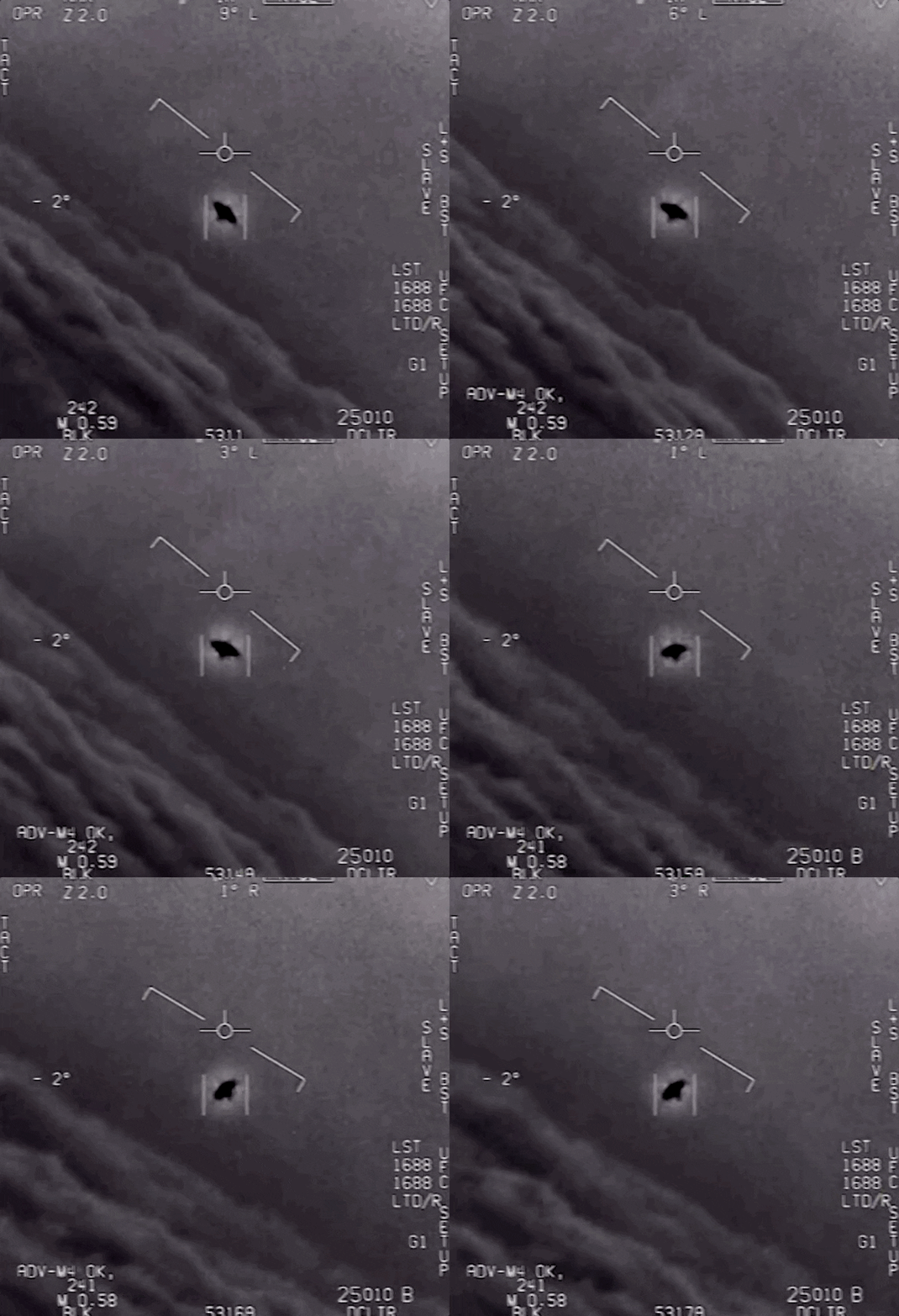




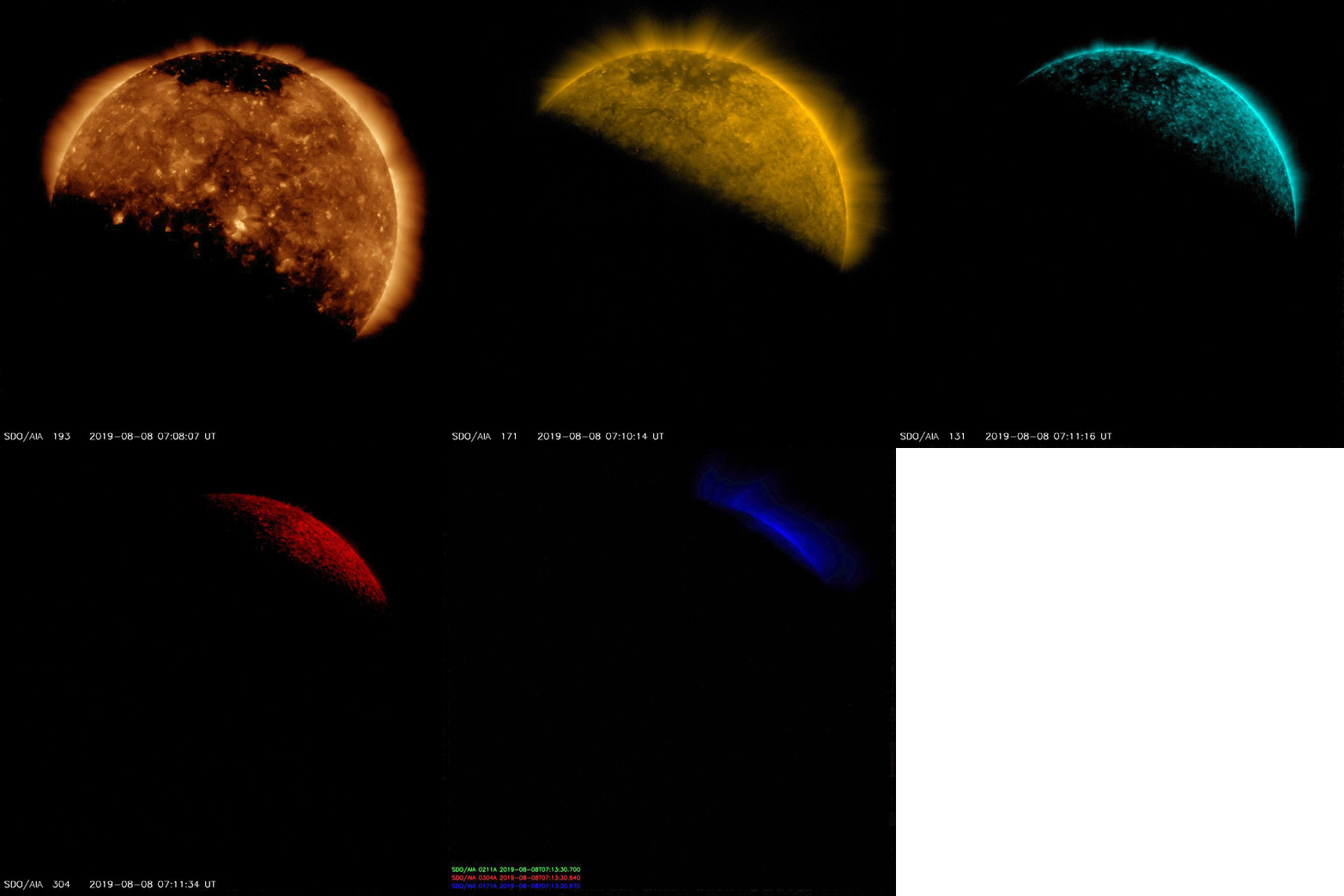






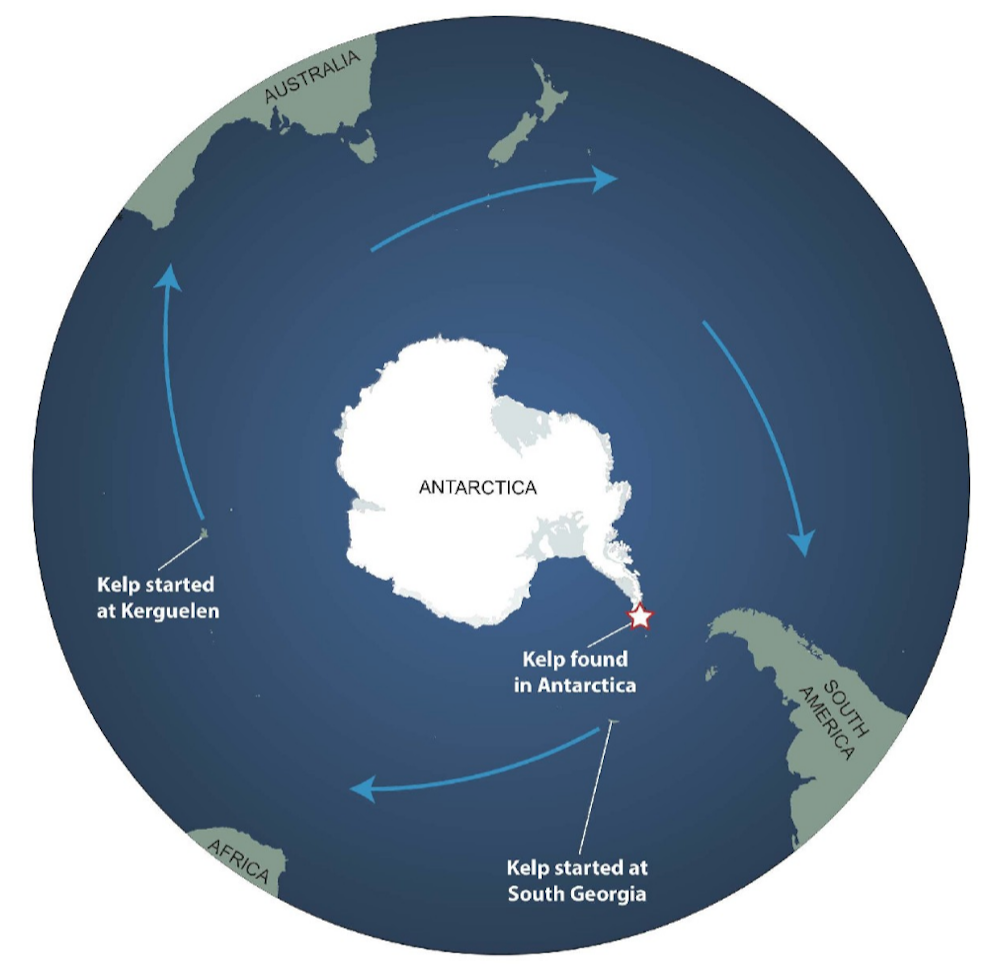


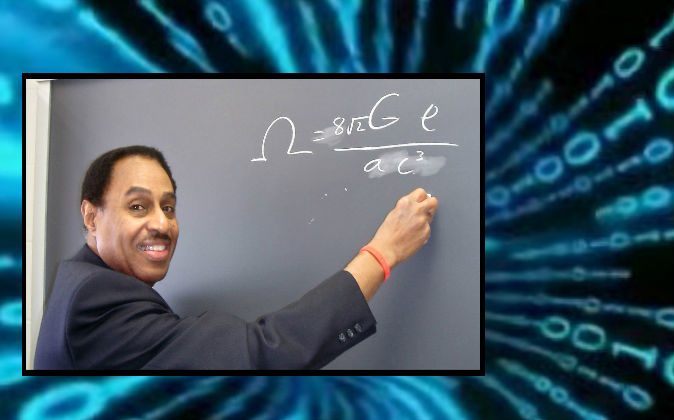


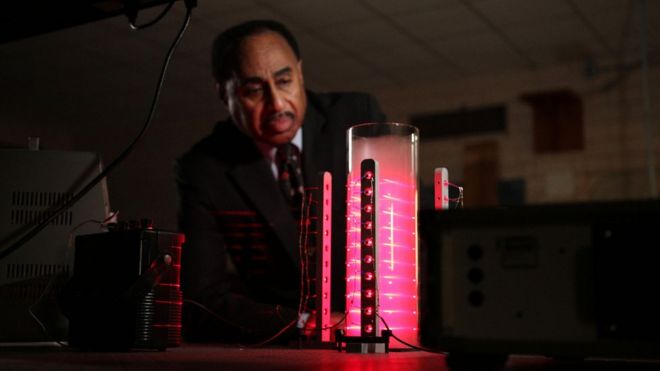
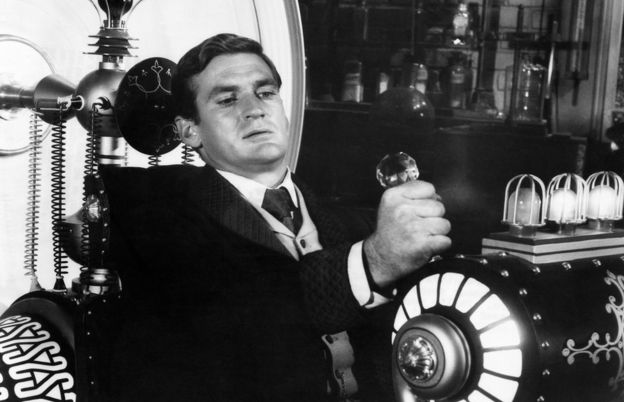

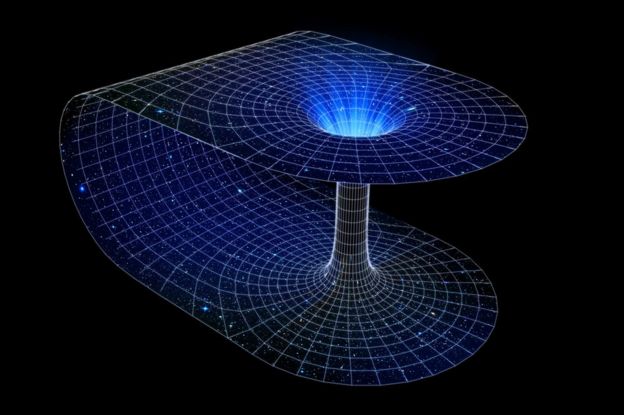
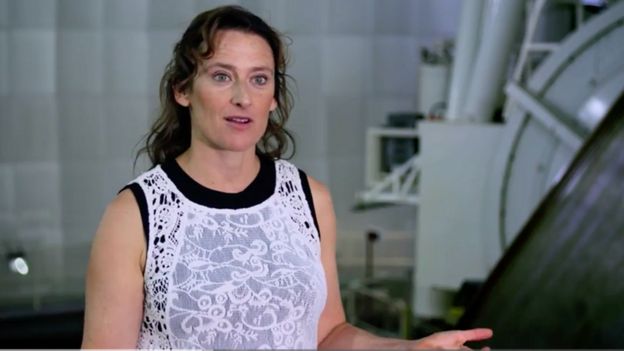
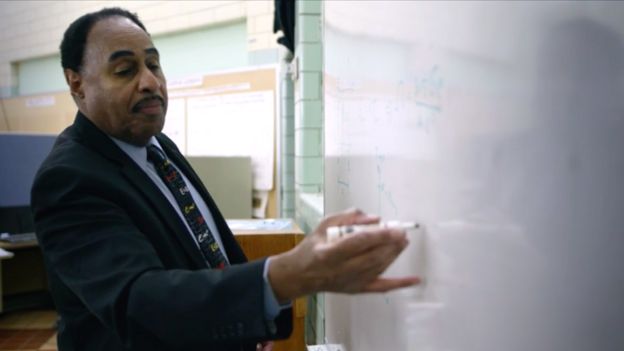

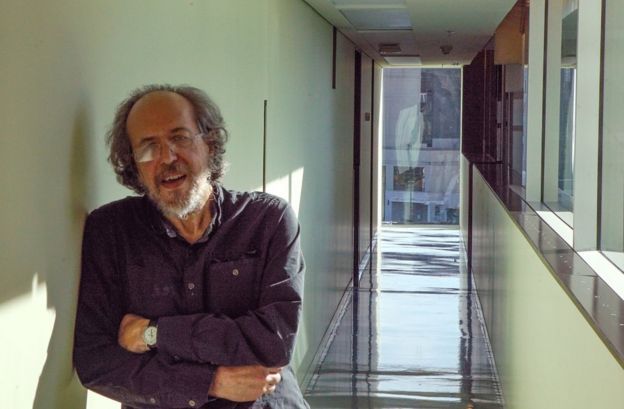


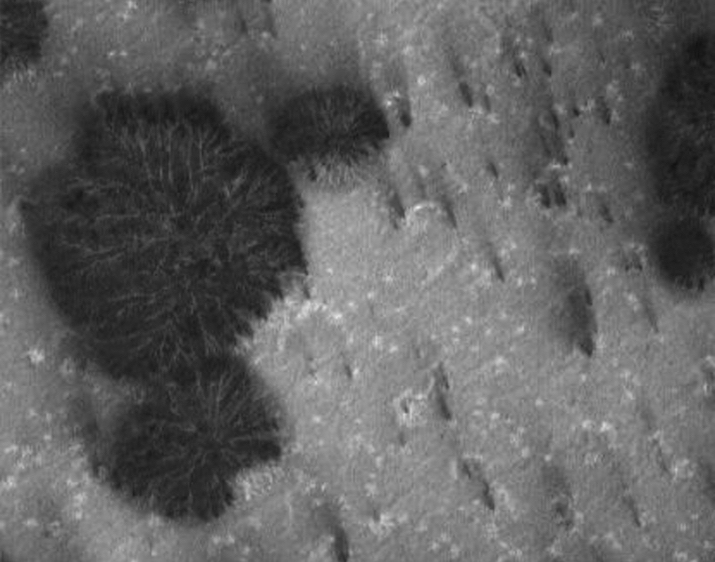

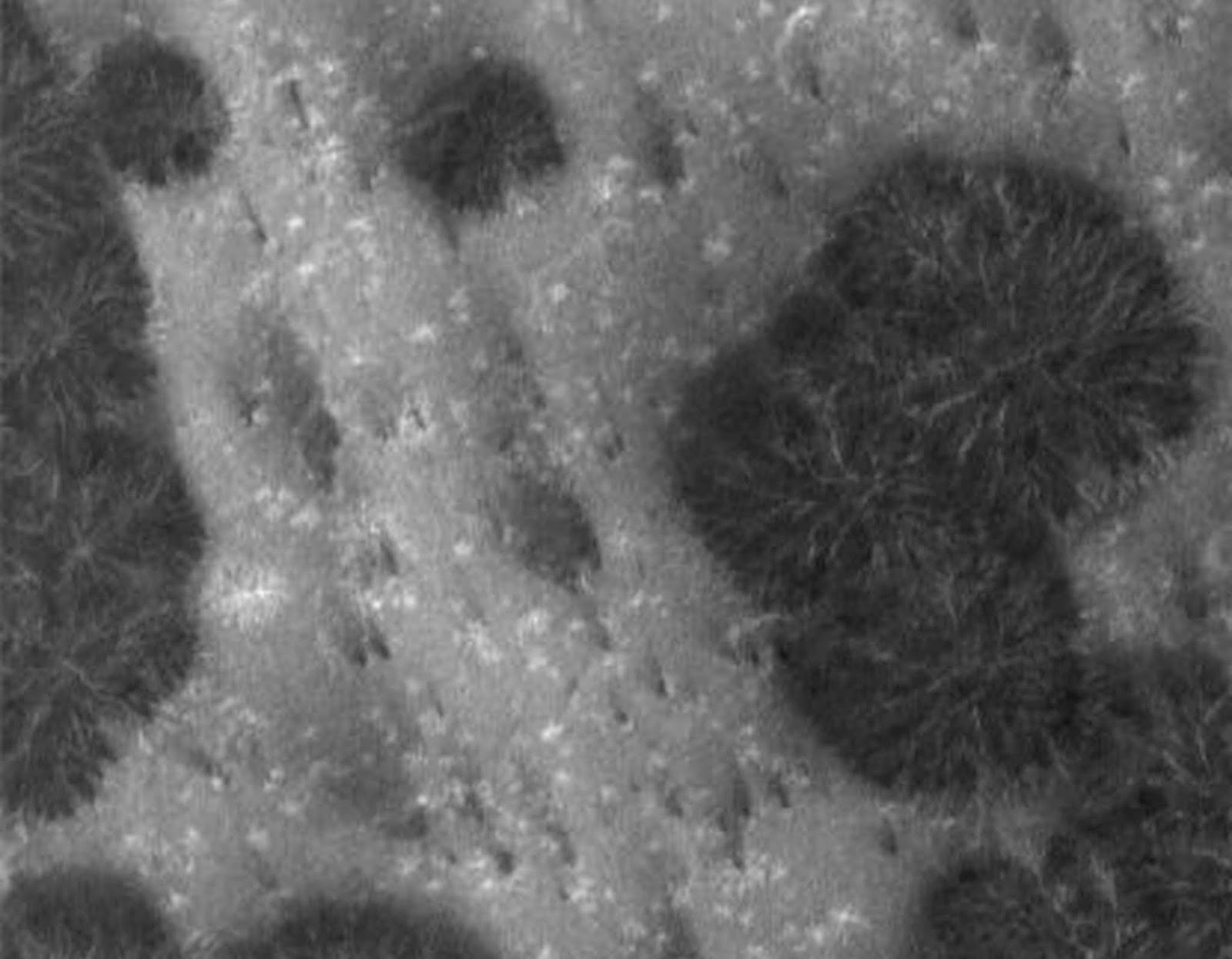
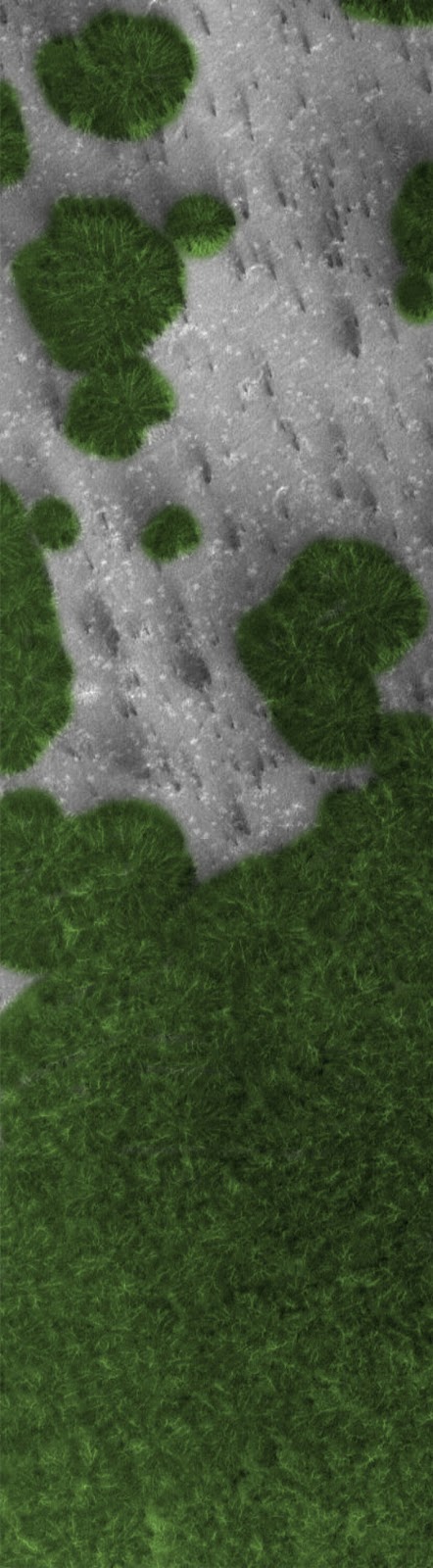
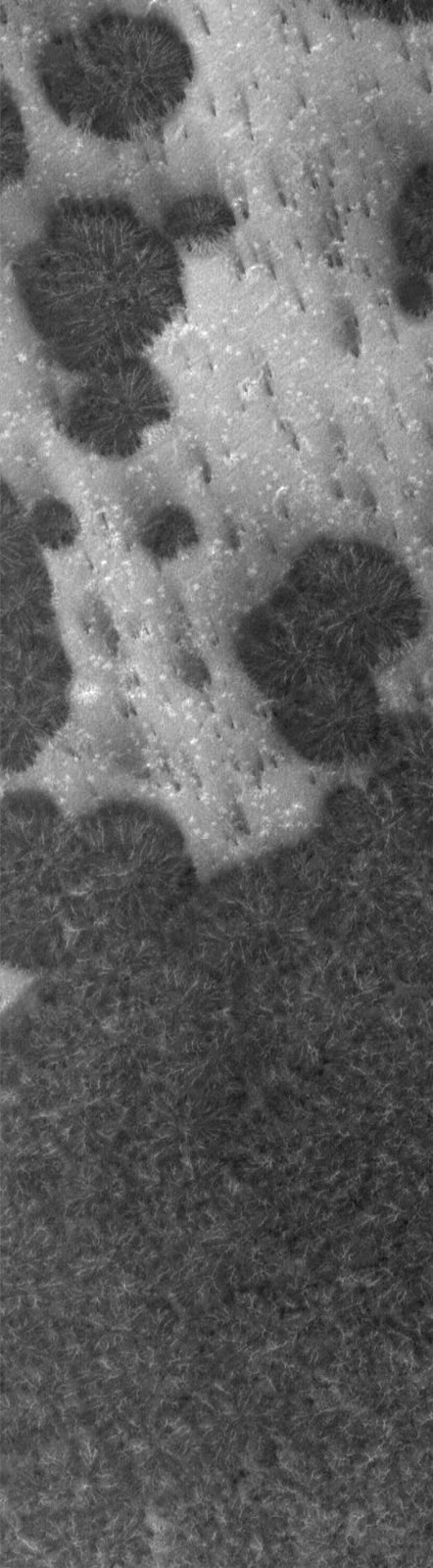

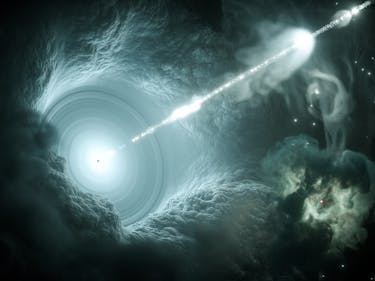





 Super motorways to have charging stations for electric cars...
 All over-40s should take cholesterol-busting statins, says...