The purpose of this blog is the creation of an open, international, independent and free forum, where every UFO-researcher can publish the results of his/her research. The languagues, used for this blog, are Dutch, English and French.You can find the articles of a collegue by selecting his category. Each author stays resposable for the continue of his articles. As blogmaster I have the right to refuse an addition or an article, when it attacks other collegues or UFO-groupes.
Druk op onderstaande knop om te reageren in mijn forum
Zoeken in blog
Deze blog is opgedragen aan mijn overleden echtgenote Lucienne.
In 2012 verloor ze haar moedige strijd tegen kanker!
In 2011 startte ik deze blog, omdat ik niet mocht stoppen met mijn UFO-onderzoek.
BEDANKT!!!
Een interessant adres?
UFO'S of UAP'S, ASTRONOMIE, RUIMTEVAART, ARCHEOLOGIE, OUDHEIDKUNDE, SF-SNUFJES EN ANDERE ESOTERISCHE WETENSCHAPPEN - DE ALLERLAATSTE NIEUWTJES
UFO's of UAP'S in België en de rest van de wereld Ontdek de Fascinerende Wereld van UFO's en UAP's: Jouw Bron voor Onthullende Informatie!
Ben jij ook gefascineerd door het onbekende? Wil je meer weten over UFO's en UAP's, niet alleen in België, maar over de hele wereld? Dan ben je op de juiste plek!
België: Het Kloppend Hart van UFO-onderzoek
In België is BUFON (Belgisch UFO-Netwerk) dé autoriteit op het gebied van UFO-onderzoek. Voor betrouwbare en objectieve informatie over deze intrigerende fenomenen, bezoek je zeker onze Facebook-pagina en deze blog. Maar dat is nog niet alles! Ontdek ook het Belgisch UFO-meldpunt en Caelestia, twee organisaties die diepgaand onderzoek verrichten, al zijn ze soms kritisch of sceptisch.
Nederland: Een Schat aan Informatie
Voor onze Nederlandse buren is er de schitterende website www.ufowijzer.nl, beheerd door Paul Harmans. Deze site biedt een schat aan informatie en artikelen die je niet wilt missen!
Internationaal: MUFON - De Wereldwijde Autoriteit
Neem ook een kijkje bij MUFON (Mutual UFO Network Inc.), een gerenommeerde Amerikaanse UFO-vereniging met afdelingen in de VS en wereldwijd. MUFON is toegewijd aan de wetenschappelijke en analytische studie van het UFO-fenomeen, en hun maandelijkse tijdschrift, The MUFON UFO-Journal, is een must-read voor elke UFO-enthousiasteling. Bezoek hun website op www.mufon.com voor meer informatie.
Samenwerking en Toekomstvisie
Sinds 1 februari 2020 is Pieter niet alleen ex-president van BUFON, maar ook de voormalige nationale directeur van MUFON in Vlaanderen en Nederland. Dit creëert een sterke samenwerking met de Franse MUFON Reseau MUFON/EUROP, wat ons in staat stelt om nog meer waardevolle inzichten te delen.
Let op: Nepprofielen en Nieuwe Groeperingen
Pas op voor een nieuwe groepering die zich ook BUFON noemt, maar geen enkele connectie heeft met onze gevestigde organisatie. Hoewel zij de naam geregistreerd hebben, kunnen ze het rijke verleden en de expertise van onze groep niet evenaren. We wensen hen veel succes, maar we blijven de autoriteit in UFO-onderzoek!
Blijf Op De Hoogte!
Wil jij de laatste nieuwtjes over UFO's, ruimtevaart, archeologie, en meer? Volg ons dan en duik samen met ons in de fascinerende wereld van het onbekende! Sluit je aan bij de gemeenschap van nieuwsgierige geesten die net als jij verlangen naar antwoorden en avonturen in de sterren!
Heb je vragen of wil je meer weten? Aarzel dan niet om contact met ons op te nemen! Samen ontrafelen we het mysterie van de lucht en daarbuiten.
29-11-2018
Is Richard Branson Trying To Contact Aliens? Taking Submarine Into Great Blue Hole. Nov 2018, UFO Sighting News.
Is Richard Branson Trying To Contact Aliens? Taking Submarine Into Great Blue Hole. Nov 2018, UFO Sighting News.
Richard Branson is about to take his mini submarine down a deep hole he named the Great Blue Hole. The hole is big enough for two 747 jets to fit easily across its opening. But the real question is...is Sir Richard Branson attempting to make contact with an alien species?
You see, this giant hole is well located so that people would almost never be around it, leaving it very secluded of a location and safe for UFOs to exit and enter without worries of being seen. However it seems that Branson wants to explore it and if he does actually come near an underground alien base...what will aliens do to him?
Thats an interesting question and one of the answers is that they may capture him and keep him, forbidding him to leave so that no one would find out about the base.
Another scenario might have aliens instantly destroying the submarine...seeing it as a threat to their territory and not giving a damn who is in the submarine.
That last one scares the hell out of me and may have a higher chance of happening if he encounters aliens. Lets just hope he comes back safe.
The photo that captured two breathtaking atmospheric wonders couldn’t have been taken at a more perfect time. The picture caught the incredibly unique moment that the Northern Lights – also known as the aurora borealis – and a ‘moonbow’ were seen together at the exact same time.
The astonishing picture was taken in Abisko in the Swedish Lapland which is north of the Arctic Circle. It was captured by Chad Blakeley who is the founder of “Lights Over Lapland” which helps visitors experience and photograph the spectacular phenomenon of the Northern Lights. “We’ve set up an Aurora webcam giving our community a live feed of images of the night Sky and Northern Lights,” Blakeley explained. And it was when he was reviewing the footage that he noticed the moonbow forming through the Northern Lights. “It was a unique experience for me and I’ve been photographing the Northern Lights every winter for the last 10 years,” he said.
A moonbow – which is also known as a lunar rainbow – works similar to a daytime rainbow except that it needs moonlight instead of sunlight to pass through the water particles in the air. They are, however, seen less often than the daytime rainbows as they need more precise conditions in order to form. They need the light of the full moon to be reflected, as well as the water droplets at a specific angle in order to be created. Normally, moonbows appear white to the human eye although the colors are always there and that’s why long-exposure photos are the best way to see and appreciate their stunning features.
The moon has to be full or very close to being full and it has be located quite low in the dark sky at less than 42 degrees. The rain also needs to fall opposite of the moon. In order to witness a moonbow, you have to have the moon behind you and the best time to observe them is either a couple of hours after the sun sets or before the sun rises. There are certain locations around the world where people have a better chance at witnessing moonbows, such as Hawaii. They have also been around for many years, as Aristotle first mentioned seeing a moonbow in the year 350 BC.
There are two types of Auroras: the Aurora Borealis which means “dawn of the north”, and the Aurora Australis which means “dawn of the south”. These spectacular light shows are created when electrically charged particles from the sun enter our atmosphere on Earth. During strong solar storms, the particles enter our atmosphere and combine with gas particles which includes helium and hydrogen, and that’s what creates the breathtaking light shows. While the Auroras can display many colors, the most commonly seen ones are green and pink.
Two of the world's most elusive atmospheric wonders have been caught on camera in a stunning visual display. The Northern Lights, or aurora borealis, made a spectacular appearance alongside a rarely-seen 'moonbow' over Sweden's Lapland on Tuesday night
Aurora borealis: Usually, the Northern Lights appear alone - as here at Lofoten islands, Norway, where green lights are seen hovering above the waters
There are two types of Aurora - Aurora Borealis (file photo), which means 'dawn of the north', and Aurora Australis, 'dawn of the south.' The displays light up when electrically charged particles from the sun enter the Earth’s atmosphere
A bright green fireball whizzed through the sky in the Russian city of Novosibirsk in Western Siberia shocking residents. This fireball seems to have baffled social media users and scientists alike.
The flyby was spotted by locals in several areas of the city on Tuesday morning when the sky was still dark and luckily clear. These circumstances made viewing the fireball incredibly effective. Videos showing the green glowing meteor quickly started circulating on Russian social network Vkontakte and on YouTube.
NOTE: The meteor can be difficult to spot. Look to the left of the row of street lights that appear toward the middle of the screen near the median.
According to a report by RT, scientists say it was likely a bolide – an extremely bright meteor that explodes in the Earth’s atmosphere and has an iconic dazzling tail. Nonetheless, the planetarium has asked all locals with any visual evidence, such as photographs or videos, to send them in to help nail down exactly what happened.
This bolide (seen in the video above) is believed to have burned in the atmosphere and no traces of space rocks were found on the ground. Dozens of meteors fly over us every year, but most of them go unnoticed. This time Siberia was lucky to see the stunning space object streaking by above.
Astronomers have been somewhat bewildered by the appearance of this particular phenomenon because there are currently no active meteor showers. “It can be either the tail of a [Leonid] meteor shower or a lone meteor, we need to find out,” deputy director of local planetarium toldKomsomolskaya Pravda, a Russian media source.
This article has been contributed by SHTF Plan. Visit www.SHTFplan.com for alternative news, commentary and preparedness info.
But the astronomers have been somewhat bewildered by the appearance of this phenomenon, as there are currently no active meteor showers.
“It can be either the tail of a [Leonid] meteor shower or a lone meteor, we need to find out,” deputy director of local planetarium told Komsomolskaya Pravda.
The bolide is believed to have burned in the atmosphere and no traces of space rocks were found on the ground. Dozens of meteors fly over us every year, but most of them go unnoticed. This time Siberia was lucky to see the stunning space object streaking by above.
Antarctica might as well be another planet. There is still much left to explore on the frozen continent on the bottom of the Earth, and it seems like each week there’s a new discovery which adds to the growing mystery of what might lie beneath the Antarctic ice sheet. Strange lost continents? Unknown, bizarre organisms? Secret Nazi bases? How about all of the above, that do anything for ya?
This week, the latest bizarre Antarctica news concerns a mysterious, radioactive heat source melting the Antarctic ice sheet from below. Is this one of those crashed alien spacecraft the Google Earth people keep warning us about, or just some unknown geothermal process?
Of course it’s gonna be some boring rock phenomenon. It’s never aliens. Until it is. Scientists with the the British Antarctic Survey (BAS) found areas of the Antarctic Ice Sheet were melting unexpectedly quickly and used radar to peer through three kilometers of ice to determine what might be causing the melting. What the researchers discovered is an area twice the size of London which appears to be melting from the bottom up.
The researchers found that unusually radioactive rocks and hot water bubbling up from deep within the Earth were causing the melt, and the source of the radioactivity remains unknown. Thus, while the usual boogeyman of climate change can’t be cited as the cause, Dr. Tom Jordan from British Antarctic Survey (BAS) says this new phenomenon could speed up the melting caused by global warming:
The process of melting we observe has probably been going on for thousands or maybe even millions of years and isn’t directly contributing to ice sheet change. However, in the future the extra water at the ice sheet bed may make this region more sensitive to external factors such as climate change.
The discovery of this phenomenon was completely unexpected and shows how much more we have to learn about Antarctica. In many ways, the icy continent is one of the last great frontiers here on Earth – at least above the ocean. What secrets will it reveal in the future?
The Man Who Was Sentenced To 14 Years For Making ‘Anti-Gravity’ Vehicles
The Man Who Was Sentenced To 14 Years For Making ‘Anti-Gravity’ Vehicles
IN BRIEF
The Facts:
Anti-gravity technology has been around for decades, and there is much proof of that. One of the pioneers was Otis T. Carr, who was subjected to large amounts of ridicule and difficulty while pursuing his developments.
Reflect On:
If the release of this technology would completely wipe out the Oil Industry and collapse the monetary system, does that legitimize the suppressing of it? Is our collective consciousness ready for technologies that would change our entire society?
It’s astonishing to me how the topic of anti-gravity is still be placed in the “conspiracy theory” realm. This isn’t the stuff of conspiracy theories or “fringe” science, it’s a field full of reputable scientists and scholars, and real-world examples that have come not only from hard evidence but from extremely credible witness testimony as well. One thing is for certain when talking about such topics: one must delve into the black budget world.
Take, for example, a recent investigation conducted by a Michigan State University professor and a former secretary from the Department of Housing and Development. Together, with a team of Ph.D students, they uncovered approximately $21 trillion that went missing and unaccounted for from the Department of Defense as well as the Department of Housing and Development. Why is this relevant? Because they discovered that the money was going to fund black budget, off the books programs that require no oversight from Congress. This black budget world has been in operation for many years. You can read more about it here and here in two articles I’ve previously written on the subject.
Breakaway Civilization
The black budget world encompasses a separate civilization (Richard Dolan, “Breakaway Civilization”) that has used tremendous amounts of resources in all areas, from science to archaeology, to move itself far ahead of the mainstream world technologically. How many people does it employ? Who is operating it? Many of these questions remain unknown, but if you follow the money it will give you perhaps somewhat of an idea.
Any civilian who invents technology that rivals the black budget world has always been subjected to harassment, and has difficulty getting their innovations or inventions out to the public. That’s because these technologies have been ‘classified’, for if they were made public it would change everything, severely threatening the tremendous amount of power and control the global elite has over the human population.
The technology that’s been developed within these programs could change the world, but instead it’s used within the military-industrial complex for self-serving purposes, or so it seems. Efficient energy-generating devices that could eliminate the use of oil, or any other modern day fuel source for that matter, have been subjected to patent suppression.
Suppressed Technology List From 1971
For example, the previous list regarding technology suppressed was obtained by researcher Michael Ravnitzky in 1971. Most of the technology listed seems to be related to various military applications. You can view that list here. As Steven Aftergood from the Federation of American Scientists reports:
“The 1971 list indicates that patents for solar photovoltaic generators were subject to review and possible restriction if the photovoltaics were more than 20% efficient. Energy conversion systems were likewise subject to review and possible restriction if they offered conversion efficiencies in “excess of 70-80%.”
Why would higher energy efficiencies be a “national security threat?” If this is true, we are talking about solar technology that goes far beyond the best commercial panels available today, which usually can’t even generate 20 percent efficiency.
“These concepts have been proven in hundreds of laboratories throughout the world and yet they have not really seen the light of day. If these technologies were to be set free worldwide, the change would be profound, it would be applicable everywhere. These technologies are absolutely the most important thing that has happened in the history of the world”
– Brian O’Leary, Former Nasa Astronaut and Princeton Physics Professor, speaking about over-unity energy, or ‘free’ energy.
Anti-Gravity technology most probably falls into this category. According to the very first director of the CIA, Roscoe Hiellenkoetter, we know that there was an “official campaign of secrecy and ridicule” with regards to UFOs while stating that Air Force officers were well aware of their existence. Today we have electro-optical data and even physical evidence, not to mention credible witness testimony of technologies performing and demonstrating this type of technology.
We have statements from previous as well as the most recently retired Directors of Lockheed Martin Aerospace programs, like Steve Justice. So, what did Mr. Justice have to say? Well, a lot of things. One of the first statements he made using the To The Stars platform is that, when it comes to the technologies he’s been around, worked with, and seen, it would be an understatement to call them revolutionary. They are also working on a craft that mimics observations they’ve seen in UFOs, as he stated:
It mimics the capabilities observed in unidentified aerial phenomenon by employing a driver system that alters the space-time metric. We have glimpses of how the physics of this works, but we need to harvest technologies from the Science Division to “realize” the capability.
So, as you can see, this type of technology is no joke. Many of the UFOs we see may be made by humans, others, probably not. The point is, they are here, within the “science division.”
“It is my thesis that flying saucers are real and that they are space ships from another solar system.”
– Hermannn Oberth , one of the founding fathers of modern rocketry.
Anti-gravity technology has been around for a long time.
A paper entitled “Outside The Box” Space & Terrestrial Transportation & Energy Technologies For The 21st Century written by Professor Theodore Lodre of the University of New Hampshire reviews the development of anti-gravity research in the United States and emphasizes how “research activity seemed to disappear by the mid-1950s.” It then looks into recently reported scientific findings and witness testimonies “that show us that this research and technology is alive and well and very advanced. The revelations of findings in this area will alter dramatically our 20th-century view of physics and technology and must be considered in planning for both energy and transportation needs in the 21st century.”
Otis T. Carr
Otis T. Carr is one of many examples throughout history where there are clues that highly advanced technologies like anti-gravity crafts are actually legit. Given everything we know now, as well as what happened to Carr, only strengthens this suspicion.
In the late 1950s, OTC Enterprises, Inc. of Baltimore, Maryland put out a statement that was published in the April 3rd edition of the Baltimore Enterprise. The statement came in the form of a claim that the company was ready to manufacture a flying saucer that was capable of travel outside of the Earth’s atmosphere. All that was needed was a massive amount of funding, approximately 20 million dollars. The equivalent to that today is probably several billion.
Otis Carr with anti gravity vehicle model.
Now keep in mind that this is the 1950s. There was a big wave of UFO sightings at this time, especially after the Atom bomb was dropped. The topic was getting a lot of mainstream media attention. Rumors of “crashed craft, and bodies recovered,” that Apollo 14 astronaut Edgar Mitchell claimed were real were running rampant at this time. Did ‘the powers that be’ or ‘the military-industrial complex’ have saucer technology at this time? Based on my research, it certainly seems that way. Take, for example, a document from the Central Intelligence Agency’s Electronic reading room:
“A German newspaper recently published an interview with George Klein, famous German engineer and aircraft expert, describing the experimental construction of ‘flying saucers’ carried out by him from 1941 to 1945.”
The document goes on to describe how many people believed ‘flying saucers’ to be a postwar development. They were actually in the planning stages in German aircraft factories as early as 1941. The document then goes on to mention an experiment described by Klein:
“The “flying saucer” reached an altitude of 12,400 meters within 3 minutes and a speed of 2,200 kilometers per hour. Klein emphasized that in accordance with German plans, the speed of these “saucers” would reach 4,000 kilometers per hour. One difficulty, according to Klein, was the problem of obtaining the materials to be used for the construction of the “saucers,” but even this had been solved by German engineers toward the end of 1945, and construction on the objects was scheduled to begin, Klein added.
Otis T. Carr, as mentioned above, had similar claims. He even put on numerous demonstrations for the public and amassed millions of dollars from extremely wealthy people to do so. If they did not believe him, and if he had not shown some promise, how did he receive all of this funding?
Think about it. We now know for a fact that global militaries have long had an interest in the UFO phenomenon. They’ve been asking who, what, where, when and how for a very long time, and of course it’s considered a national security matter. Any individual who has invented, or shows potential to invent craft that is capable of extreme, technologically advanced maneuvers, would not be allowed to develop it, and would be ridiculed like Carr was. This is why the invention secrecy act was made in the early 1950s. In my opinion, its true aimto protect the interest of the power under the guise of ‘national security.’
Carr’s Goal
His goal was to fly to the moon in his “circular foil spacecraft” on December 7th, 1959.
The “spacecraft” allegedly invented by Carr is much like the ideal spaceship imagined by Plantier and others. It is propelled by an artificial gravitic field (the “Carrotto gravity motor”) and if this were not miracle enough, it uses no fuel. It is powered by the “Utron electric accumulator”–a short of self-charging battery which “uses the Sun’s magnificent force of Electromagnetism by means of natural reproductive chemistry, to quote the interesting language of the Enterprise ad.
Below is a picture of Wayne Aho, a military intelligence officer who was going to accompany Carr on his trip to the moon. He claimed it would only take a few hours. Carr is second from the left.
Otis T. Carr was actually a protege of Nikola Tesla, according to independent researcher Doug Yurchey: “Carr and his team constructed a number of fully functional flying saucers in the late 1950s. The flying disk worked and was demonstrated. Carr was serious about ‘taking his craft to the Moon. ‘However, two weeks after a dramatic test flight, their laboratory was forcibly closed, Federal agents confiscated equipment as well as all documentation. Authorities told them Carr’s project would ‘destroy the monetary system of the United States.’ (source)
Carr was heavily criticized, ridiculed, and made a fool of by the press. I could not verify whether his connection with Tesla is actually true or not, but rumors of Carr’s relationship with Tesla were rampant, even in the 50’s.
Classic Hit Job
This is a classic story of someone who received lots of public attention and had many failed demonstrations, and apparently, many successful ones as well. Like other great inventors, Carr’s work was seized by the government. This happened in January 1961, when Louis J. Lefkowitz, the Attorney General of New York at the time, stated that “Carr had swindled $50,000, and later that year True Magazine labelled him as a hoaxer.” By then, his laboratory had been raided and destroyed, and the group of engineers had been ordered to disband and cease contact with one another.
This is very fishy, and similar to the Stan Meyer water powered car story. Looking at it today, it was quite clear that this was a huge attempt to shut Carr down. These developments and curiosities were not for our world, but were reserved for the black budget world. He was denied an appeal on March 1st, 1961 for his ‘crime’. He could not pay the fine and served part of a 14-year jail term. After that little is known about what became either of Carr himself or the craft, but they never flew again. Carr is reported to have suffered from ill-health, a broken man. He passed away apparently in Gardnerville, Nevada, in 2005.
In 1952, Carr actually wrote a book, called “Dimensions of Mystery.” The book was mostly written in ‘code,’ according to him, it was the complete layout of his plan and how his machine worked, yet for a reader like me, or anyone for that matter, it’s impossible to understand. He did switch from user code and poetry, to actually writing some real statements regarding his intentions, as you can see here:
Below is a discussion about the tests that would need to be conducted, and, apparently were conducted.
Hal Puthoff
As you can see, just like with most other stories of great technological advancements (there are too many examples to choose from), the global elite has always demonstrated their supremacy by ridiculing concepts that don’t really fit the frame. There are multiple technological developments that have been completely hushed up, for “national security purposes.”
Take this quote from Hal Puthoff, for example. It’s not with regards to UFOs but more so “free-energy,” which actually go hand in hand and relate directly to each other. Puthoff has published numerous papers on electron-beam devices, lasers and space propulsion and has patents issued in the laser, communications, and energy fields. Dr. Puthoff’s professional background spans more than five decades of research at General Electric, Sperry, the National Security Agency, Stanford University and SRI International. Dr. Puthoff regularly advises NASA, the Department of Defense and intelligence communities, corporations and foundations. Here’s what he’s had to say:
“I’ve been taken out on aircraft carriers by the Navy and shown what it is we have to replace if we have new energy sources to provide new fuel methods.”
Puthoff is now part of the ‘To The Stars’ academy, who have publicly disclosed that they are working on technology that mimics the flight patterns of observed UFOs.
Let’s keep an open mind, and not to brush off revolutionizing technologies just because they break the laws of physics as we know them; after all, such laws are made to be broken. It’s similar to when Lord Einstein published his paper on special relativity that completely shattered what we thought we knew back then. Today, we are more aware of how the giant national security apparatus intervenes, and given all of the information that’s emerged regarding the subject of exotic technologies like anti-gravity crafts, it’s easier to see 70 years after the fact what really happened to Otis T. Carr.
For the want of a nail the shoe was lost, For the want of a shoe the horse was lost, For the want of a horse the rider was lost, For the want of a rider the battle was lost, For the want of a battle the kingdom was lost, For the want of $14,000 the alien skull was lost.
Wait … what?
A science fiction author (red flag #1) and amateur UFO hunter (red flag #2) has revealed what he claims is an alien skull brought to him by an unnamed collector (red flag #3) who allegedly bought it from a Mongolian trader (red flag #4). Now he needs $14,000 (red flag #5) to pay for DNA tests on the skull. Should this parade of red flags stop his march to proving the greatest discovery ever? Did it stop the three-fingered Peruvian mummy investigators?
” I welcome questions and skepticism, but if you decide to challenge me, be sure to bring along evidence.”
Where did I lose that skull?
In an extensive article on the Chinese media site jqknews.com, 55-year-old Li Jianmin explains that the “collector” bought the skull at a roadside stand in Inner Mongolia. (Pictures of the skull and Li can be seen here.) The collector decided to show it to Jianmin after reading one of his science fiction books and seeing an illustration which looked like his roadside acquisition, which is brown with a curved top and measures 16 cm (6.2 inches) in diameter. The skull also resembles a human cranium with skull lines and hippocampal grooves. Unlike a human skull, it is divided into distinct upper and lower layers. The “collector” claimed to have taken it to various “paleontologists” without success before bringing it to Jianmin.
Li Jianmin claimed he studied the skull for four months. He conducted Raman spectroscopy, a technique used in chemistry to identify molecules and study chemical bonding and intramolecular bonds, and atomic force microscopy, a very-high-resolution type of scanning probe microscopy said to be over 1000 times better than that of optical microscopes. He then claims he compared the results with others claiming to have alien skulls in their possession (sorry, I’ve run out of red flags). The end result of four months of work was a 103-page report with pictures and drawings which he presented at a UFO conference held in Beijing in October, along with his conclusion: the skull definitely belonged to an alien.
“DNA analysis alone costs around 100,000 yuan ($14,398).”
OK, despite saying the skull belongs to an alien, Li Jianmin doesn’t really have the definitive proof a DNA test would produce since it costs over 14 grand and he claims he’s already spent that much just completing the report. He’s certain it would back him up because the Raman test showed that it doesn’t match any known earth organism. He also speculated that the skull was anywhere from 2.5 to 400 million years old.
What is this thing Li Jianmin is so certain to be an alien skull? One observation was that it’s a “sea monster monk,” which probably refers to the so-called “sea monk monster” reportedly caught off the coast of Denmark in 1546 and so named because it resembled a monk. Later speculation pointed towards it being an angelshark (often called a monkfish) or a giant squid.
Illustration of a Sea Monk Monster
Want to know what it really is? You’ll have to wait until a “collector” shows Li Jianmin how to collect money using crowdfunding. Meanwhile, I’m setting one up to buy more red flags.
When Johnny Carson was host of the Tonight Show, comedians knew that they had made it to the top when the iconic comedy figure laughed and invited them to sit on his couch and talk. That happened to Jerry Seinfeld, David Letterman and the comic who took Johnny’s place, Jay Leno. Today, the host is Jimmy Fallon and, while he’s not the designated bestower of success to comedians, he may be one to robots. On November 21st, Fallon sang a duet of “Say Something” with Sophia, the most sophisticated humanoid robot to date, and it was sufficiently impressive, creepy and frightening. Was this the sign that AI has made it? If not, how about the news from Houston that a scientist has created a HAL 9000, the villainous computer from 2001: A Space Odyssey? Has the takeover begun … or is it already over?
Say something, I’m giving up on you I’m sorry that I couldn’t get to you Anywhere, I would’ve followed you Say something, I’m giving up on you
After watching a demonstration of the latest robotic animal doing back flips and being made a fool of by a robot feeding him a tomato while he’s jogging (yes, AI has already taken over Letterman’s Stupid Human Tricks — see the entire video here), Hanson Robotics’ Sophia rolled out. She’s not a walking robot but her facial expressions and human hand and arm motions more than make up for the option that will undoubtedly be available soon, if the Little Sophia which was also brought out is any indication. Fallon is of course a good actor and looked like he was enjoying his duet with Sophia … or was he covering up his realization of what was actually happening?
Meanwhile, AI and robotics developer Pete Bonasso from Houston-based TRACLabs unveiled his new robot in the current edition of Science Robotics. In CASE: A HAL 9000 for 2021 and in an interview with Space.com, he explains how CASE — “cognitive architecture for space agents” – is “an intelligent agent, like HAL 9000, can plan and manage activities for a planetary base and can interact with users through a dialog management system.” And that’s just the prototype!
CASE is designed to plan and control activities and technological operations for a planetary colony base on three levels: hardware (life-support, power, transportation, pod bay doors), software (the AI for the hardware) and daily maintenance and emergencies (gas leaks, pod bay doors stuck, alien invasion). CASE is also able to interface with humans via visuals and speech and can make judgement calls (handy for refereeing Martian football games).
“Our colleagues and NASA counterparts are not concerned that our HAL might get out of control. That’s because it can’t do anything it’s not programmed to do.”
Bonasso has demonstrated CASE to NASA in a four-hour simulation of managing a planetary space station and no humans were harmed in the making of the model. However, it hasn’t yet been tried in the ultimate test … Beer Pong with Jimmy Fallon.
Should we be worried? Is it too late? If it is, who will help us fight back?
The term cloud iridescence – aka irisation – comes from Iris, the Greek personification of the rainbow. True iridescent clouds are relatively rare. Here’s what causes them.
Ken Christison wrote on November 18, 2018: “We had some beautiful iridescence in the clouds late this afternoon. Seen from northeastern North Carolina.” Thank you, Ken!
Sky watchers often report seeing rainbow colors in clouds. There are various kinds ofhalosand colored arcsand even truerainbowsyou might see associated with clouds, but – if the rainbow-like colors are randomly distributed, and if the sun is nearby – what you’re seeing is likely an iridescent cloud.
These sorts of clouds are caused by especially tiny ice crystals or water droplets in the air. Larger ice crystals produce lunar or solar halos, but tiny ice crystals or water droplets cause light to be diffracted – spread out – creating this rainbow-like effect in the clouds.
The images on this page are mostly via the EarthSky community. Our thanks to all who contributed!
Kino Obusan caught these iridescent clouds – one on the right and one on the left – on July 15, 2016, from Batangas, Philippines. “It was my first time to see a rare cloud phenomenon like this.” Thank you, Kino!
Our friend Dave Walker in the UK caught another iridescent cloud in 2013. He wrote, “There’s been a lot of very high cloud recently, always a cue for me to look out for more atmospheric optics.”
The best way to see an iridescent cloud is to place the sun itself behind some foreground object, a building or mountain, for example. Other aids are dark glasses, or observing the sky reflected in a convex mirror or in a pool of water. EarthSky Facebook friend Duke Marsh captured this image in 2012 in New Albany, Indiana.
Charles Loyd wrote in 2014: “I was outside and my 9-year-old daughter looked up and asked why there was a rainbow in the clouds … “
The moon with Jupiter and iridescent clouds, seen over Greece in 2015 by Nikolaus Pantazis.
The colors in an iridescent cloud tend to be subtle and are usually pastel, but in some cases they can be vivid. Here is cloud iridescence captured by George Quiroga in Boynton Beach, Florida, in 2012.
Image via Wikimedia Commons.
Bottom line: You might on occasion see a rainbow-like cloud. They’re fairly rare, but people do spot them, and we sometimes receive photos of them. They’re caused by the presence of very tiny ice crystals or water droplets in the air, which cause light to be diffracted (spread out).
I noticed this object near the rover looks very similar in shape to a snail...like an old fossil of a Mars Ammonite from its ancient lakes or oceans. Here on Earth, Ammonites lived died out 66 million years ago, but lived as long ago as 200 million years ago. I believe that since it evolved on a different planet, its shape was effected by a different evolution involving different environmental influences. I'm confused at why the NASA rover didn't want to examine it more closely, since it was hovering over some rocks nearby for several days. It would be most interesting to have a paleontologist take a look at the object.
SHENZEN, China — Amy and John Bollinsworth are sitting on a white couch in the waiting room of BabyX, China’s chain of premiere fertility clinics. Two days ago they flew from London with a mixture of excitement and anxiousness for today’s appointment with their genetic counselor.
After a month’s discussion and going through the BabyX’s gene catalogue, they’re ready to pick out the traits of their future baby: a piercing blue eyed, curly-red haired girl with tiny freckles on her face and a gene enabling her to sleep just a couple of hours a night and feel rested.
It is 2070, the year when China registered five million “designer babies” being born, up 20% from last year and expected to continue growing. BabyX, a part state-owned enterprise, is at the forefront on the boom. Developed out of GHealth, a consumer genomics company offering genetic tests to improve fertility treatments, BabyX received the first commercial baby-engineering license in 2030.
“We’re happy to be able to provide a high quality genetic service to our customers coming from over 50 countries across the world,” said Xiao Bao, head of BabyX business operations, speaking at a recent launch of a new product line in Beijing — a gene catalogue of sports traits including increased reaction speed, endurance, among others.
BabyX is one of many companies which sprung up during the genomics revolution in the first half of the 21st century. In 2014 the total sequencing market was estimated at $1.9 billion, with the potential market being estimated at $23 billion. For reproductive testing market, the opportunity was estimated to be close to $2.0 billion annually.
The “designer babies” are created using CRISPR gene editing, a technique that allows genes to be modified at specific desired locations within the genome and that became commonly used in laboratories around the world in early 2010s.
Gene editing is done using a tool called CRISPR-Cas9. CRISPR stands for Clustered Regularly Interspaced Palindromic Repeats. The name refers to the DNA sequence within the bacterial system where CRISPR was initially discovered. The DNA sequence repeats itself over and over again with unique sequences in-between the repeating palindromic ones. Cas9 is a protein which acts like molecular scissors, while a guiding piece of RNA (the other molecule essential to life) works as a small tag pointing Cas9 to which area in the DNA it should go and then where it should make very precise cuts. One way to think about CRISPR is as a text editor where you could search the given text of your genome, find the place where you want to edit it and make a change.
The technology has developed rapidly since the 2010s, although it initially ran into heavy resistance. Around forty countries, including China, discouraged or banned the editing tool to genetically engineer germline cells — cells whose change in the genome will be passed onto the progeny.
After publishing the first study on human embryos in 2015, where scientists attempted to modify a gene responsible for B-thalassaemia, a fatal blood disorder, China took the lead from the US in genome editing of embryos.
Whereas in the US, the federal funding of germline gene editing research was prohibited, the B-thalassaemia study was funded by the Chinese government. Within the next decade, technical challenges on the road to designer babies were overcome. One of the biggest challenges was preventing CRISPR going rogue and acting on unintended sites within the genome. This could lead to unwanted mutations such as inadvertently activating a cancer-causing gene or allowing pieces of chromosome to come together in a genomic rearrangement called a translocation, one of the causes of diseases like chronic myeloid leukemia. But by 2025 CRISPR system evolved up to the point where such off-targeting was strictly controllable.
The same year, 2025, China established its Human Fertilization Agency and lifted the ban on embryo genome editing, paving the way to commercializing the science behind it. The role of the Human Fertilization agency was to issue licenses to private and governmental organizations to use embryo genome editing for commercial and research purposes.
In China, these arguments were brushed aside. “China supports human rights and is a leader in the fight to improve health around the world with use of genetic engineering. UNESCO declarations do not create a legally binding obligations for the countries which signed them,” was the only short statement given from the communications department of the Human Fertilization Agency. After this act, a number of private designer genomic clinics sprung up in China.
The first “designer baby” was born in 2030 in Tianjin: Adam, a boy with purple eyes and golden locks framing his heart-shaped face. Like the Bollinsworths’ future daughter, Adam also had the ability to sleep just a couple of hours a day and feel rested. The activation of this gene enhanced the productivity of the working population by 3 percent around 2070, when the generation after Adam’s began entering the workforce. In the 2030s, though, it initially just meant longer sleepless nights for Adam’s parents.
Adam and other designer babies were born with enhanced intellectual abilities and physical appearances, designed to be more attractive based on population wide polls. However, the superhuman life they were given to lead came at a price.
In the decades after Adam’s birth debates raged from questions of serving genetically enhanced people to the need for different grading systems adapted to designer children’s enhanced abilities. Private schools appeared, offering accelerated curriculum specially catering for designer children. Education specialists warned that designer children could face similar challenges as gifted learners. A 2006 study, reported that 67% of gifted individuals experienced some form of bullying by the age of 14 within the educational system and therefore could face higher rates of suicide and depression.
The rise of genetically-modified people also quickly provoked fear, particularly in the US.
On Time Magazine’s 2040 Person-of-the-Year cover, a 10 year-old Adam stared out under the headline, “U.S. or Them” — just a decade after he had appeared on it under a celebratory one. A month earlier, the U.S. had banned entrance to all genetically-modified people, except in cases where the modification was medical-related.
“We won’t let those monsters enter our country and procreate with our citizens!” Benjamin Jackson, the country’s controversial president, had told TV cameras, as he signed an executive order imposing the ban.
There had also been a fearful reaction in Europe, where France required special visas for GM-people entering. Countries enforced strict border controls where the special visa stamped in the passport contained a barcode with person’s stored genome sequence, allowing immigration officers to see what modifications had been made.
Just five years before that, in 2035 the world had celebrated a milestone together. Thirty two OECD countries had recorded zero new cases of cystic fibrosis. In more than two thirds of cases the difference between suffering the disease or not had proved to be just a single missing letter in a person’s genome.
This disease was just one of many genetic disorders that future generations in developed countries would know nothing about. Progress was still uneven though, while developed nations were making huge strides towards disease eradication, developing countries faced the same problems as in the past: poor medical access and unaffordable prices of genetic engineering. Similar to prices of insulin which soared in 2010s, the price of a genetic modification didn’t depend only on the price of technology. Although the technology was getting cheaper, prices often depended more on the politics around governments and the pharmaceutical companies providing the service. Genetic engineering of embryos came coupled with IVF treatments, which, according to the Advanced Fertility Center of Chicago, in their basic form without CRISPR came with a price tag of $15,000, making them unattainable for populations of developing countries.
But, while throughout the 2030s the world embraced editing embryo’s genomes as a way to eradicate heritable diseases, enhancing the genetic traits of your offspring remained intensely contested.
The EU and the US initially banned any kind of genetic manipulation which didn’t directly aid disease prevention and treatment. Asian and Latin American countries, however — led by Japan, China, Brazil and India — allowed the creation of designer babies under one condition: a designed life couldn’t create life, all people created this way were compulsorily born sterile.
Unsurprisingly, the technology was quickly identified as a potential means of population control, particularly in countries where policies meant to target overcrowding were already in place. The same year Adam was born, China, released a planning document estimating a 1:1 ratio of designer vs. normal newborns would lead to a decrease in the population numbers. India projected that by 2080 a quarter of its births would be designer babies, conducted under a public births program. As the GM-people matured, adoptions also surged.
After half a year in China and two IVF treatments, Amy and John Bollinsworth returned to London expecting a child. Not everyone was pleased by their decision — some friends refused to hold baby Jemima. Many things though were the same for them as any other family — there were still waiting lists for childcare, and the scrambling later to get her into the right school catchment area. Even in a world of genetically-designed life some things didn’t change.
All modern humans descended from a solitary pair who lived 100,000 to 200,000 years ago, scientists say.
Scientists surveyed the genetic 'bar codes' of five million animals - including humans - from 100,000 different species and deduced that we sprang from a single pair of adults after a catastrophic event almost wiped out the human race.
These bar codes, or snippets of DNA that reside outside the nuclei of living cells, suggest that it's not just people who came from a single pair of beings, but nine out of every 10 animal species, too
Stoeckle and Thaler, the scientists who headed the study, concluded that ninety percent of all animal species alive today come from parents that all began giving birth at roughly the same time, less than 250 thousand years ago - throwing into doubt the patterns of human evolution.
Scientists surveyed the genetic 'bar codes' of five million animals and 100,000 different species
'This conclusion is very surprising,' Thaler admitted, 'and I fought against it as hard as I could.'
The new report from experts at the Rockefeller University along with from the University of Basel published the extraordinary findings in Human Evolution.
The research was led by Senior Research Associate Mark Stoeckle and Research Associate David Thaler of the University of Basel, Switzerland.
They mined 'big data' insights from the world's fast-growing genetic databases and reviewed a large literature in evolutionary theory, including Darwin.
Dr Stoeckle said: 'At a time when humans place so much emphasis on individual and group differences, maybe we should spend more time on the ways in which we resemble one another and the rest of the animal kingdom.'
The conclusions throw up considerable mystery as to why the need for human life to start again was needed such a relatively short time ago, especially since the last known extinction we know of was during the time of the dinosaurs 65 million years ago.
This opens up the possibility of an inbuilt human evolutionary process wherein we break down and die out, leaving the need to start from scratch.
Mark Stoeckle (left) of Rockefeller University made findings with David Thaler of Basil Uni
The research deduced that humans and animals sprang from single pair - as did animals
We're also surprisingly similar to not just every other human, but every other species.
'If a Martian landed on Earth and met a flock of pigeons and a crowd of humans, one would not seem more diverse than the other according to the basic measure of mitochondrial DNA,' said Jesse Ausubel, Director of the Program for the Human Environment at The Rockefeller University.
'Culture, life experience and other things can make people very different but in terms of basic biology, we're like the birds,' Dr Stoeckle added.
The 'mitochondrial DNA' examined in the research is that which mothers pass down from generation to generation and it showed the 'absence of human exceptionalism.'
'One might have thought that, due to their high population numbers and wide geographic distribution, humans might have led to greater genetic diversity than other animal species,' added Stoeckle.
'At least for mitochondrial DNA, humans turn out to be low to average in genetic diversity.'
The study has been misunderstood by some religious parties who thought it meant that we all came into being in some seminal Big Bang-typed event 100,000 ago, but this isn't what the findings actually suggest.
What Stoeckle and Thaler's findings point to is that our species has to revamp far more often than we thought, and we do so in unison with all animals.
FILE -- This image shows Earth as seen by NASA's Earth Polychromatic Imaging Camera (EPIC), aboard NOAA's Deep Space Climate Observatory (DSCOVR) spacecraft.
(NASA)
In one of the most provocative and misunderstood studies of the year, scientists in the U.S. and Switzerland have madean astonishing discovery: All humans alive today are the offspring of a common father and mother – an Adam and Eve – who walked the planet 100,000 to 200,000 years ago, which by evolutionary standards is like yesterday. Moreover, the same is true of nine out of every 10 animal species, meaning that nearly all of Earth’s creatures living today sprang into being recently from some seminal, Big Bang-like event.
Mark Stoeckle at Rockefeller University and David Thaler at the University of Basel reached this striking conclusion after analyzing the DNA “bar codes” of five million animals from 100,000 different species. The bar codes are snippets of DNA that reside outside the nuclei of living cells – so-called mitochondrial DNA, which mothers pass down from generation to generation.
With each reproduction, errors creep into the bar code, as they do when you repeatedly photocopy a document. By measuring the accumulated errors – the blurriness or “diversity” among the bar codes – scientists are able to infer the passage of time.
That’s how Stoeckle and Thaler concluded that ninety percent of all animal species alive today come from parents that all began giving birth at roughly the same time, less than a quarter-million years ago. “This conclusion is very surprising,” Thaler avers, “and I fought against it as hard as I could.”
What caused animal life on Earth to be almost completely renewed such a short time ago? For now, it remains a mystery.
It’s possible something far more powerful than H-bombs decimated life and only a single set of parents for each species survived to live and procreate another day. But the last major extinction event we know about – the one that snuffed out the mighty dinosaurs – happened a full 65 million years ago.
It’s also possible there is something in nature that limits the size of an animal population. Perhaps it’s some built-in evolutionary process that when a population gets too big, it crashes and must restart itself from scratch.
In their report, published in Human Evolution, Stoeckle and Thaler offer other possible explanations, including, Thaler explains, “ice ages and other forms of environmental change, infections, predation, competition from other species and for limited resources, and interactions among these forces.” Whatever the explanation, he adds, the takeaway is this: “all of animal life experiences pulses of growth and stasis or near extinction on similar time scales.”
That is, humans, elephants, birds, you name it – Earth’s creatures tend to stand and fall in unison, like the rising and falling of the tides. And even though we don’t know what Svengali is directing the show, we now have scientific evidence that it wipes the slate clean far more frequently than we ever imagined.
Many religious commentators misunderstand this study to mean that species abruptly came into being only recently. To be clear: according to evolutionary biologists, species developed gradually over many millions of years. Stoeckle and Thaler’s discovery is that something happened roughly 100,000 years ago that created entirely new populations from long-existing species.
That said, Stoeckle and Thaler’s study does line up with the Bible in at least two notable ways. First, it affirms that we and our fellow creatures on Earth arose from a recent and profound creation event, orchestrated by some unknown mechanism. And second, the DNA bar codes reveal that species are quantized. Instead of there being a continuum of animal varieties, as one might expect from millions of years of gradual evolution, creatures fall into very distinct, widely separated populations – what the Bible describes as “kinds,” from the Hebrew word min.
“Darwin struggled to understand the absence of intermediates and his questions remain fruitful [to this day],” says Thaler. What the new study discovered, he explains, is that “If individuals are stars, then species are galaxies. They are compact clusters in the vastness of empty sequence space.”
Above all, Stoeckle and Thaler’s intriguing study serves up hard evidence for the astonishing fragility of life and a humbling lesson for the high-and-mighty among us. It proves we are at the mercy of forces we do not see nor understand; forces that made our existence possible a few hundred thousand years ago and that just as quickly – in the twinkling of an eye – can and will one day take us out.
Researcher Found An Alien Shipwreck In The Bermuda Triangle
Researcher Found An Alien Shipwreck In The Bermuda Triangle
Mysterious underwater objects have emerged in the Bermuda Triangle and no one can explain whether they have a natural, an artificial or an extraterrestrial origin. The researcher who discovered the objects believes that, in fact, he found an extraterrestrial ship.
For those who don’t know, the Bermuda Triangle is located in the western part of the North Atlantic Ocean. However, it doesn’t appear on any official geographic map. Its second infamous name is the Devil’s triangle.
Under the water, this area hosts many mysteries and secrets. Namely, the Bermuda Triangle is notoriously responsible for many disappearances of aircraft and ships for unknown reasons.
According to some claims, the disappearances happen due to some strange hexagonal clouds in the area.
Numerous diving researchers claim they have witnessed perplexing events in this scope. For instance, a few years ago, divers exploring the area said to have discovered a large ancient underwater city with sunk sphinxes and old wrecks. Could it have been the legendary city of Atlantis? Many, rightfully, thought so.
Treasure hunter Darrell Miklos announced yet another interesting discovery regarding the area. According to him, the Bermuda Triangle could be the home of an alien spaceship.
While diving in an area nearby the Bahamas, he saw a marvelous but mysterious underwater structure. “It was a formation unlike anything I’ve ever seen related to shipwreck material, it was too big for that,” Miklos said in an interview with Daily Mail.
As Daily Mail further reveals, Miklos arrived in the undisclosed area thanks to some secret maps designed by Gordon Cooper, a NASA astronaut and a close friend of his.
At first, Miklos actually believed he would find an English sunken ship linked to Sir Francis Drake. However, he encountered something far more mystical.
“I was trying to identify shipwreck material based on one of the anomaly readings on Gordon’s charts when I noticed something that stuck out, that shocked me. It was a formation unlike anything I’ve ever seen related to shipwreck material, it was too big for that.”
Miklos added that the objects he discovered were unique and they didn’t look as they were created by nature. “It’s almost like there are five arms coming out of a steep wall cliff and each one of these is the size of a gun on a battleship. They’re enormous and then there’s five over here and five over there, 15 in total,” he said.
There are identical formations in three different areas and they don’t look nature made, they don’t look man-made, certainly nothing I’ve ever seen based on my experience and I have years of experience at doing this, we’ve identified multiple different types of shipwreck material, this doesn’t match or look anything like that.”
Even though Miklos is convinced the structures have an extraterrestrial origin, it is still too quick to draw such conclusions. Therefore, they need to undergo a further analysis in the future.
Photographer Reuben Wu creates images that reveal an alien splendor in natural and manmade landscapes across the globe. Previously he has explored the brilliant blue rivers of molten sulfurin Indonesian volcanoes, and photographed the thousands of glistening mirrors that compose Nevada’s SolarReserve. For his ongoing series Lux Noctis, the Chicago-based photographer utilizes modified drones as aerial light sources, illuminating obscure landscapes in a way that makes each appear new and unexplored.
Recently Wu has evolved his process of working with the drones to form light paths above topographical peaks in the mountainous terrain. “I see it as a kind of ‘zero trace’ version of land art where the environment remains untouched by the artist, and at the same time is presented in a sublime way which speaks to 19th century Romantic painting and science and fictional imagery,” said Wu to Colossal.
The light from his GPS-enabled drones create a halo effect around some of the presented cliffs and crests when photographed using a long exposure. An elegant circle of light traces the flight of the drone, leaving a mark only perceptible in the resulting photograph. You can see more of Wu’s landscape photography on his Instagram and Facebook. (via Faith is Torment)
Update: A book of Wu’s photo series will be published in Fall 2018 and is available for preorder.
Did Silicone-Based Life Dominate Our Planet's Surface?
Did Silicone-Based Life Dominate Our Planet's Surface?
Imagine Earth billions of years ago. Life blooms everywhere. But it is not the single-celled life or plants. It is gem-based. Giant crystalline trees shine in all colors. It is silicone-based life. It emerged before carbon emerged as the basic building blocks of being. That is my favorite conspiracy theory. How unlikely is it?
TheTree of Lifeis a metaphor established by Charles Darwin to give some perspective to evolution. Every living organism on Earth has a home somewhere on the Tree, and by looking at it, we can see how species relate to one another.
While we’ve known about a type of microbe called hemimastigotes since the 1800s, it turns out we were totally wrong about where they fit on the Tree of Life — because they didn’t fit on any of the existing branches.
Home Of Its Own
In a study published Wednesday in the journal Nature, researchers from Dalhousie University detail their discovery that hemimastigotes are so unlike anything else in the Tree of Life, they require the creation of a brand-new branch.
“It was clear from our analyses that hemimastigotes didn’t belong to any known kingdom-level group, or even to a known ‘super-group’ of several kingdoms together, like the one that includes both animals and fungi,” researcher Alastair Simpson said in a news release.
“This one little collection of organisms is a whole new group at that level, all on its own,” she continued. “It’s a branch of the Tree of Life that has been separate for a very long time, perhaps more than a billion years, and we had no information on it whatsoever.”
Evolution Of Tech
The Dalhousie team was only able to reach this conclusion thanks to an advanced genetic analysis technique that wasn’t available when scientists first discovered hemimastigotes.
“That such a distinct form of life could be hiding literally under our feet,” Simpson said in the press release, “is a sharp reminder about how little we still know about the diversity of life on Earth.”
And as our technologies advance even further, there’s no telling what else we might discover — or how many other branches we might add to the Tree of Life.
For a demonstration that overturned the great Isaac Newton’s ideas about the nature of light, it was staggeringly simple. It “may be repeated with great ease, wherever the sun shines,” the English physicist Thomas Young told the members of the Royal Society in London in November 1803, describing what is now known as a double-slit experiment, and Young wasn’t being overly melodramatic. He had come up with an elegant and decidedly homespun experiment to show light’s wavelike nature, and in doing so refuted Newton’s theory that light is made of corpuscles, or particles.
But the birth of quantum physics in the early 1900s made it clear that light is made of tiny, indivisible units, or quanta, of energy, which we call photons. Young’s experiment, when done with single photons or even single particles of matter, such as electrons and neutrons, is a conundrum to behold, raising fundamental questions about the very nature of reality. Some have even used it to argue that the quantum world is influenced by human consciousness, giving our minds an agency and a place in the ontology of the universe. But does the simple experiment really make such a case?
In the modern quantum form, Young’s experiment involves beaming individual particles of light or matter at two slits or openings cut into an otherwise opaque barrier. On the other side of the barrier is a screen that records the arrival of the particles (say, a photographic plate in the case of photons). Common sense leads us to expect that photons should go through one slit or the other and pile up behind each slit.
They don’t. Rather, they go to certain parts of the screen and avoid others, creating alternating bands of light and dark. These so-called interference fringes, the kind you get when two sets of waves overlap. When the crests of one wave line up with the crests of another, you get constructive interference (bright bands), and when the crests align with troughs you get destructive interference (darkness).
But there’s only one photon going through the apparatus at any one time. It’s as if each photon is going through both slits at once and interfering with itself. This doesn’t make classical sense.
Mathematically speaking, however, what goes through both slits is not a physical particle or a physical wave but something called a wave function—an abstract mathematical function that represents the photon’s state (in this case its position). The wave function behaves like a wave. It hits the two slits, and new waves emanate from each slit on the other side, spread and eventually interfere with each other. The combined wave function can be used to work out the probabilities of where one might find the photon.
The photon has a high probability of being found where the two wave functions constructively interfere and is unlikely to be found in regions of destructive interference. The measurement—in this case the interaction of the wave function with the photographic plate—is said to “collapse” the wave function. It goes from being spread out before measurement to peaking at one of those places where the photon materializes upon measurement.
This apparent measurement-induced collapse of the wave function is the source of many conceptual difficulties in quantum mechanics. Before the collapse, there’s no way to tell with certainty where the photon will land; it can appear at any one of the places of non-zero probability. There’s no way to chart the photon’s trajectory from the source to the detector. The photon is not real in the sense that a plane flying from San Francisco to New York is real.
Werner Heisenberg, among others, interpreted the mathematics to mean that reality doesn’t exist until observed. “The idea of an objective real world whose smallest parts exist objectively in the same sense as stones or trees exist, independently of whether or not we observe them ... is impossible,” he wrote. John Wheeler, too, used a variant of the double-slit experiment to argue that “no elementary quantum phenomenon is a phenomenon until it is a registered (‘observed,’ ‘indelibly recorded’) phenomenon.”
But quantum theory is entirely unclear about what constitutes a “measurement.” It simply postulates that the measuring device must be classical, without defining where such a boundary between the classical and quantum lies, thus leaving the door open for those who think that human consciousness needs to be invoked for collapse. Last May, Henry Stapp and colleagues argued, in this forum, that the double-slit experiment and its modern variants provide evidence that “a conscious observer may be indispensable” to make sense of the quantum realm and that a transpersonal mind underlies the material world.
But these experiments don’t constitute empirical evidence for such claims. In the double-slit experiment done with single photons, all one can do is verify the probabilistic predictions of the mathematics. If the probabilities are borne out over the course of sending tens of thousands of identical photons through the double slit, the theory claims that each photon’s wave function collapsed—thanks to an ill-defined process called measurement. That’s all.
Also, there are other ways of interpreting the double-slit experiment. Take the de Broglie-Bohm theory, which says that reality is both wave and particle. A photon heads towards the double slit with a definite position at all times and goes through one slit or the other; so each photon has a trajectory. It’s riding a pilot wave, which goes through both slits, interferes and then guides the photon to a location of constructive interference.
In 1979, Chris Dewdney and colleagues at Birkbeck College, London, simulated the theory’s prediction for the trajectories of particles going through the double slit. In the past decade, experimentalists haveverified that such trajectories exist, albeit by using a controversial technique called weak measurements. The controversy notwithstanding, the experiments show that the de Broglie-Bohm theory remains in the running as an explanation for the behavior of the quantum world.
Crucially, the theory does not need observers or measurements or a non-material consciousness.
Neither do so-called collapse theories, which argue that wavefunctions collapse randomly: the more the number of particles in the quantum system, the more likely the collapse. Observers merely discover the outcome. Markus Arndt’s team at the University of Vienna in Austria has been testing these theories by sending larger and larger molecules through the double slit. Collapse theories predict that when particles of matter become more massive than some threshold, they cannot remain in a quantum superposition of going through both slits at once, and this will destroy the interference pattern. Arndt’s team has sent a molecule with more than 800 atoms through the double slit, and they still see interference. The search for the threshold continues.
Roger Penrose has his own version of a collapse theory, in which the more massive the mass of the object in superposition, the faster it’ll collapse to one state or the other, because of gravitational instabilities. Again, it’s an observer-independent theory. No consciousness needed. Dirk Bouwmeester at the University of California, Santa Barbara, is testing Penrose’s idea with a version of the double-slit experiment.
Conceptually, the idea is to not just put a photon into a superposition of going through two slits at once, but to also put one of the slits in a superposition of being in two locations at once. According to Penrose, the displaced slit will either stay in superposition or collapse while the photon is in flight, leading to different types of interference patterns. The collapse will depend on the mass of the slits. Bouwmeester has been at work on this experiment for a decade and may soon be able to verify or refute Penrose’s claims.
If nothing else, these experiments are showing that we cannot yet make any claims about the nature of reality, even if the claims are well-motivated mathematically or philosophically. And given that neuroscientists and philosophers of mind don’t agree on the nature of consciousness, claims that it collapses wave functions are premature at best and misleading and wrong at worst.
The views expressed are those of the author(s) and are not necessarily those of Scientific American.
The evolutionary tree of life is called as such because of the way species are interrelated to each other. From the base of the trunk, which represents the single-celled common ancestor that all life on earth shares, the tree grows and splits into branches: bacteria and other single-celled organisms split from the branch of the Eukaryotes, multi-celled organisms like plants, animals, fungi, etc. Then those branches split. Plants, animals, and fungus all go their own ways. And then again. Mammals end up on a different branch than reptiles, for instance, and then dogs, bears, and primates all end up on different smaller branches. On and on it goes until we end up with all the life we see on earth today. That’s a gross simplification, but it works. Sort of. According to a recent paper published in the journal Nature, Canadian scientists have discovered an organism so vastly different from anything else alive that they believe it requires it’s own own unique branch on the tree of life.
The organism, a microbe called Hemimastigophora, isn’t a new discovery. While it is rare, scientists have known about its existence for some time. Ten species of Hemimastigophora have been known to scientists for over 100 years. While they knew it was weird, technology and genetic science hadn’t progressed far enough to tell exactly how weird.
A simplified picture of the evolutionary tree of life.
Hemimastigophora looks like one of the terrifying creatures you might see under a microscope. It moves, it hunts prey, and it utilizes microscopic body parts to get through it’s day to day existence. It looks and behaves like a microscopic animal, but it’s not. In fact, Hemimastigophora is farther away from any other living organism than humans are from mushrooms. According to Alastair Simpson, an author of the study:
“They represent a major branch… that we didn’t know we were missing. There’s nothing we know that’s closely related to them.”
The discovery was made by Dalhousie University graduate student Yana Eglit and a team of biologists after Eglit, on a whim, collected some soil samples on a hike in Nova Scotia. Upon examining the soil samples Eglit and fellow graduate student Gordon Lax found that they not only contained the rare microbe but contained two of them, including a previously undiscovered species of hemimastigophora which they named Hemastix kukwesjijk, after a hairy ogre from the legends of the local M’ikmaq people.
Its name means “little greedy ogre.”
Genetic analysis of the Hemastix showed it’s bizarre evolutionary lineage. Despite being a small micro-organism it’s a complex multi-cellular creature which puts it in the kingdom of Eukaryotes, the kingdom that includes plants, fungi, and animals. Yet it doesn’t fit in to any of those kingdoms. The scientists have now proposed adding an entirely new “supra-kingdom” to the tree of life to account for Hemimastigophora. A supra-kingdom is a fundamental separation. Again, human beings and portabello mushrooms are part of the same supra-kingdom.
Of course, proposing a new branch on the tree of life doesn’t mean the rest of the scientific community will easily accept it, and if they do it will take a long time. Still this shows, once again, how much we have yet to learn about the this strange floating rock we call home.
After researching for more than a decade, two divers found the mysterious sea creature that is leaving many people breathless and astonished. On October 25, 2018, two divers, Steve Hathaway and Andrew Buttle, were shooting a video underwater near the volcanic island of White Island located approximately 30 miles off of New Zealand’s northern-most point. In fact, Buttle’s family owns the island which has been in their family since the 1930’s. And that day in late October was when they came upon the 26-foot-long worm-like creature.
This worm-like creature is described as a pyrosome which is a colony of hundreds or thousands of very small sea creatures that come together in a tube-like mass that free-float in the water. The mysterious way that it appears, along with the bioluminescent glow have made some scientists describe them as “bizarre unicorns of the sea.”
In an interview, Hathaway explained how happy he was to have encountered the sea creature. “I’ve always wanted to see one,” he explained, “I was beyond excited, this is like finding something that you’ve dreamed of for so many years.” Hathaway has been filming mostly underwater footage for eleven years but he had never seen a pyrosome before, so when he noticed that one was lying beneath him on the ocean floor he had to capture it on video.
Scientists have said that while most pyrosomes aren’t that huge, there have been some found near Australia and New Zealand that have reached more than 60 feet in length. Perhaps the reason why they are so big is because in the springtime there is a lot of phytoplankton which pyrosomes feed on. And while pyrosomes are normally only encountered by people who spend a lot of time in the water, they have apparently been around for many years, as some of the earliest reports of seeing them date as far back as the 1800s by sailors who had witnessed the bright glow of the creatures.
Hathaway has been fascinated with the ocean since he was a young child and as an adult he founded the “Young Ocean Explorers” which helps to encourage and educate children on marine life and the oceans. He also wants to share his experience with the world. “It’s always been about wanting to go see these things for myself and then sharing them with others,” he said.
“Even the most articulate person in the world couldn’t describe the creature that we filmed,” Hathaway expressed. And he’s certainly right; seeing a 26-foot-long mysterious sea creature is definitely a once in a lifetime event that those two divers were lucky enough to capture on video. Now that’s what you call being at the right place at the right time.
Here Are Some of The Strangest Things on Earth You May Not Have Heard Of
Here Are Some of The Strangest Things on Earth You May Not Have Heard Of
HILARY BRUECK, BUSINESS INSIDER
The Earth is wonderfully weird. From tiny puddle-dwelling creatures that can survive in outer space to a paint so dark that your eyes can't actually even see it, Earth is filled with plenty of strange and incredible things - both natural and made by us.
Here are a handful of things on this planet that you probably had no idea existed.
1. Vantablack is the darkest known substance in the universe.
(Surrey Nanosystems)
Vantablack is a nanomaterial that is darker than any other substance on Earth. It was developed in the UK by Surrey NanoSystems in 2015 and is actually a collection of vertical carbon tubes that are "grown" on a substrate.
Vantablack absorbs 99.98 percent of the light that hits its surface. This means that the human eye technically sees nothing when it looks at Vantablack, making it the closest thing to staring into a black hole.
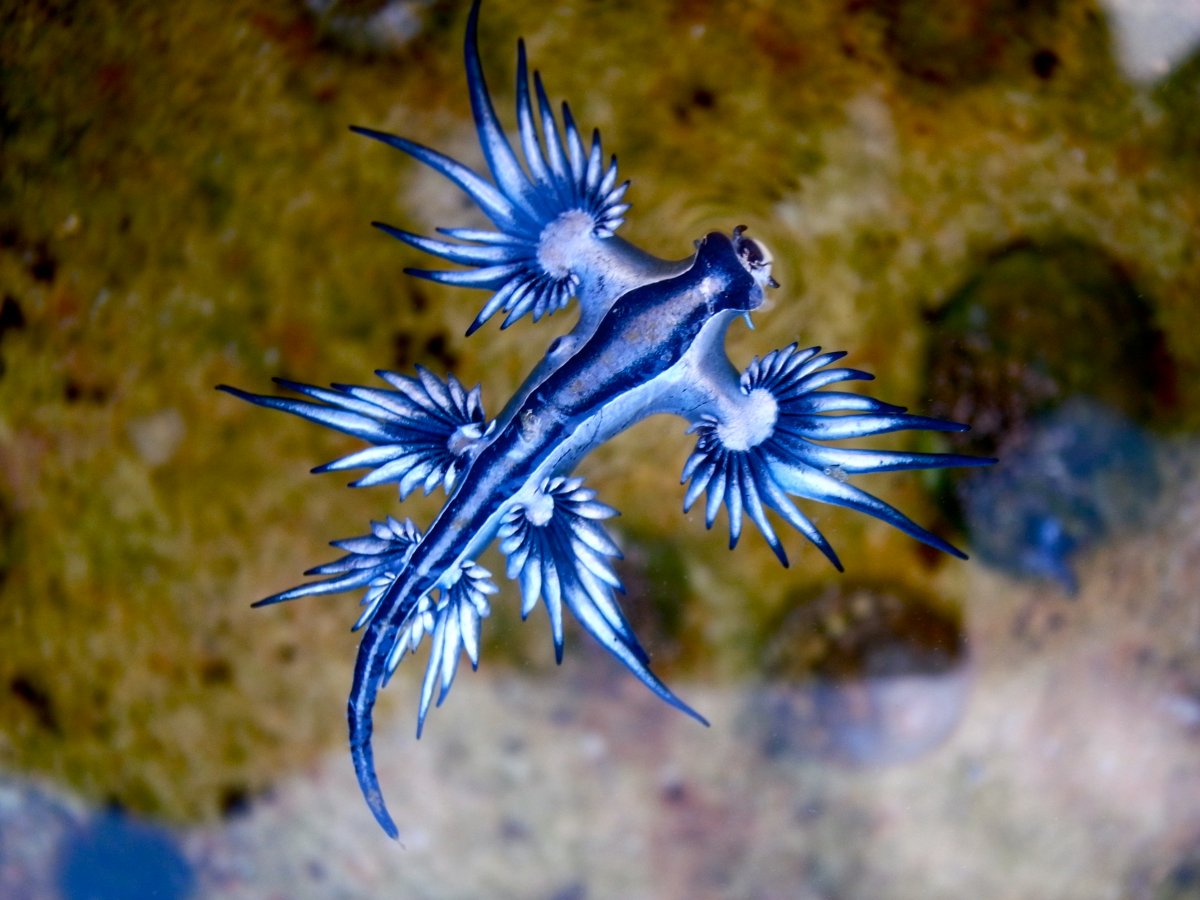
Glaucus Atlanticus is a species of sea slug nicknamed the "blue angel." This otherworldly creature is as rare as it is beautiful and is only found on the coasts of South Africa and Australia.
The slug's mesmerising looks belie a dangerous nature.
The blue angel is carnivorous and feeds on other venomous sea creatures, such as the Portuguese man o' war. It collects the venom from its prey in specialised sacs, concentrates it, then uses the venom on future prey.
3. Aerogel looks like a slice of cloud.
(NASA/JPL-Caltech)
Aerogel is an ultralight material made from gel and gas. It's been nicknamed "frozen smoke" or "solid cloud" because of its ethereal appearance.
Scientists have created more than a dozen recipes for different types of aerogel, but they all share a similar process: mix chemicals together, let them settle into a wet gel, and then suck all of the liquid out. The result is a substance of extremely low density that is actually 99 percent air.
Because it's made primarily of air and air is such a terrible heat conductor, placing a layer of Aerogel between a flower and a flame will protect the flower from getting destroyed.
4. Rainbow eucalyptus trees have candy-coloured bark.
(Shutterstock)
The Eucalyptus Deglupta tree may look like it has fallen out of a Dr. Seuss book, but it actually grows in Indonesia, Papua New Guinea, and the Philippines. This unique tree has multicolored bark that features bright blue, orange, purple, green, and maroon streaks.
The unusual colours are a side effect of the tree's shedding, according to Missouri Botanical Garden – as strips of bark peel away, the tree's bright green inner bark is revealed. This inner layer slowly matures and turns a range of colours.
5. There's an underground cathedral in Colombia entirely made of salt.
The Salt Cathedral of Zipaquirá is an underground Roman Catholic Church in Cundinamarca, Colombia, that was excavated from a salt mine in 1954. It is completely made of salt and is located 180 meters (590 feet) below the surface of the small town of Zipaquirá.
The cathedral includes a giant salt cross and can accommodate up to 10,000 people, though it has never been filled to capacity.
6. Goblin sharks are 'living fossils' that look straight out of a nightmare.
Goblin sharks are a rare species of deep-sea shark that are sometimes referred to as "living fossils." They are the only known remaining member of the ancient Mitsukurinidae family of sharks.
Goblin sharks are notable for their distinctive elongated jaws, which are filled with nail-like teeth. They are able to detect the electrical currents emitted by other animals and rapidly extend their jaws in order to snatch up prey.
7. Bismuth is an element with a psychedelic surface.
(Shutterstock)
You may remember the chemical element bismuth from your high school chemistry class, but you probably had no idea that it has a colourful, iridescent appearance.
Bismuth has a unique "stair step" growth pattern in which the outer edges form more quickly than the inner areas, according to Live Science. This results in a crystalline structure that appears to be made of interlocking rainbow squares.
8. This volcano in Indonesia spews bright-blue lava - sort of.
(Shutterstock)
Indonesia's Kawah Ijen volcano is remarkable for its tendency to emit oozing waves of what appears to be blue and purple lava.
Technically, the lava itself isn't blue. According to Smithsonian Magazine, the fascinating coloration comes from high quantities of sulfuric gas that emerges along with the lava. When the gas catches fire, it burns with a bright hue that makes the lava appear to be electric blue.
9. The Voynich Manuscript is mysterious book written in an untranslatable language.
(Wikimedia Commons)
The Voynich Manuscript is a 240-page medieval tome written in an unknown language that has baffled scholars and code-breakers for years.
The manuscript is believed to have originated sometime between 1404 and 1438. It is filled with enigmatic illustrations and diagrams that seem to depict everything from unusual plants to women with swollen bellies bathing in green pools.
All attempts to translate the book's text or identify the plants depicted in it have failed.
In January 2018, a group of Canadian computer scientists announced that they may have had some limited success decoding parts of the manuscript using AI. The researchers, however, admitted that further refinement of the process and input from scholars is needed.
10. The most inaccessible place in the world is called Point Nemo.
Point Nemo is the furthest point from land on Earth. Officially known as the oceanic point of inaccessibility, it's located in the center of the triangle made by Ducie Island, Motu Nui (part of the Easter Island chain) and Maher Island near Antarctica.
It is so far from land that the closest humans to Point Nemo are usually astronauts – the International Space Station orbits the Earth from a distance of about 258 miles (415 kilometres), while the closest inhabited spot to Point Nemo is more than 1,670 miles (1,225 kilometres) away.
11. The Danakil Depression looks like the surface of an alien planet.
(Shutterstock/Aleksandra H. Kossowska)
Ethiopia's Danakil Depression is home to one of the most bizarre-looking landscapes on Earth.
Located in the Afar Triangle, this surreal spot is dotted with crackling lava pools, neon-coloured hot springs, and sparkling salt flats. Poisonous gases swirl around hydrothermal fields, and many of the area's pools are filled with acid.
12. There are underwater lakes and rivers within the ocean.
(Wikimedia Commons)
Also known as brine pools, underwater lakes are bodies of water that have a much higher salinity (i.e. saltiness) than the surrounding ocean. The briny water is denser than the rest of the seawater, which causes underwater lakes to form that appear separate from the surrounding sea.
These lakes have distinct waves of their own that lap against the "shoreline," and submarines can even float on these brine pools when they descend to the ocean floor.
Unfortunately, these lakes also contain high amounts of toxic methane and hydrogen sulfide, so swimming in them would be toxic for humans.
13. The biggest living thing on Earth is a massive fungus.
(Shutterstock)
Whales, redwood trees, and elephants are all very big – but they're not the largest living organism on the planet by acreage. That title, when looking at sheer size – the Pando tree colony holds the title of the largest living organism by mass – goes to the Armillaria Ostoyae mushroom.
Nicknamed the Humongous Fungus, this mushroom has spread across 2,385 acres of Malheur National Forest in Oregon. The scientists who discovered the fungus in 2017 used DNA testing to determine that all parts of the growth are in fact different segments of the same organism.
The giant mushroom has probably been growing for between 2,400 to 8,650 years, and its caps are said to be quite delicious.
14. Tardigrades are microorganisms that can survive in outer space.
(Shutterstock)
Tardigrades, also called water bears or moss piglets, are fascinating microorganisms that can survive just about anywhere.
They prefer to hang out in moist places like mud or moss, but according to Smithsonian magazine, the creatures can survive in environments at least as cold as -328 degrees Fahrenheit (-200 degrees Celsius) or as hot as 300 degrees Fahrenheit (149 degrees Celsius).
Scientists have also found that water bears can survive radiation, boiling liquids, pressures more than six times that of the deepest part of the ocean, and even the vacuum of space.
15. There's a cave in Mexico filled with towering white crystals.
(Wikimedia Commons)
Fittingly known as the Cueva de los Cristales or The Cave of Crystals, this enchanting cavern is crisscrossed with gleaming gypsum crystals that dwarf human explorers.
This mysterious spot was only discovered in 2000 when miners drained the water from a zinc mine beneath Naica, in the Mexican state of Chihuahua.
The sparkling structures are so pure that scientists are unable to date themusing conventional techniques. But researchers have discovered what is believed to be a 50,000-year-old bacteria sample within one of the crystals.
In 2017, the mining company that owns the property where the cave is located allowed the cave to reflood.
Beste bezoeker, Heb je zelf al ooit een vreemde waarneming gedaan, laat dit dan even weten via email aan Frederick Delaere opwww.ufomeldpunt.be. Deze onderzoekers behandelen jouw melding in volledige anonimiteit en met alle respect voor jouw privacy. Ze zijn kritisch, objectief maar open minded aangelegd en zullen jou steeds een verklaring geven voor jouw waarneming! DUS AARZEL NIET, ALS JE EEN ANTWOORD OP JOUW VRAGEN WENST, CONTACTEER FREDERICK. BIJ VOORBAAT DANK...
Druk op onderstaande knop om je bestand , jouw artikel naar mij te verzenden. INDIEN HET DE MOEITE WAARD IS, PLAATS IK HET OP DE BLOG ONDER DIVERSEN MET JOUW NAAM...
Druk op onderstaande knop om een berichtje achter te laten in mijn gastenboek
Alvast bedankt voor al jouw bezoekjes en jouw reacties. Nog een prettige dag verder!!!
Over mijzelf
Ik ben Pieter, en gebruik soms ook wel de schuilnaam Peter2011.
Ik ben een man en woon in Linter (België) en mijn beroep is Ik ben op rust..
Ik ben geboren op 18/10/1950 en ben nu dus 75 jaar jong.
Mijn hobby's zijn: Ufologie en andere esoterische onderwerpen.
Op deze blog vind je onder artikels, werk van mezelf. Mijn dank gaat ook naar André, Ingrid, Oliver, Paul, Vincent, Georges Filer en MUFON voor de bijdragen voor de verschillende categorieën...
Veel leesplezier en geef je mening over deze blog.







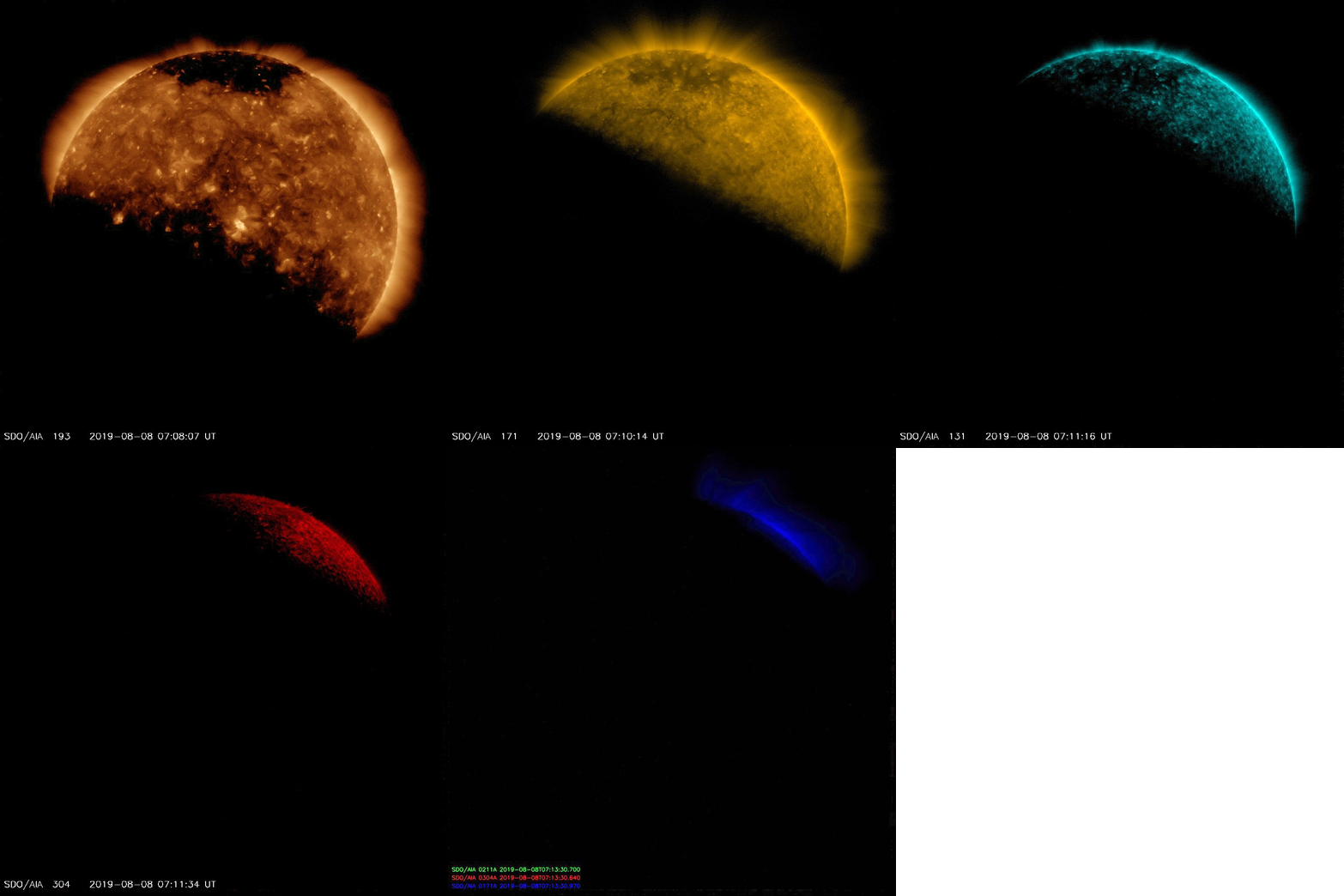





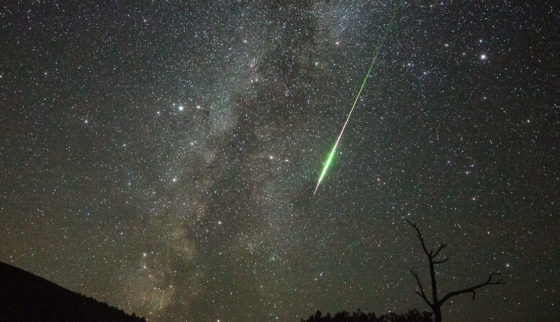



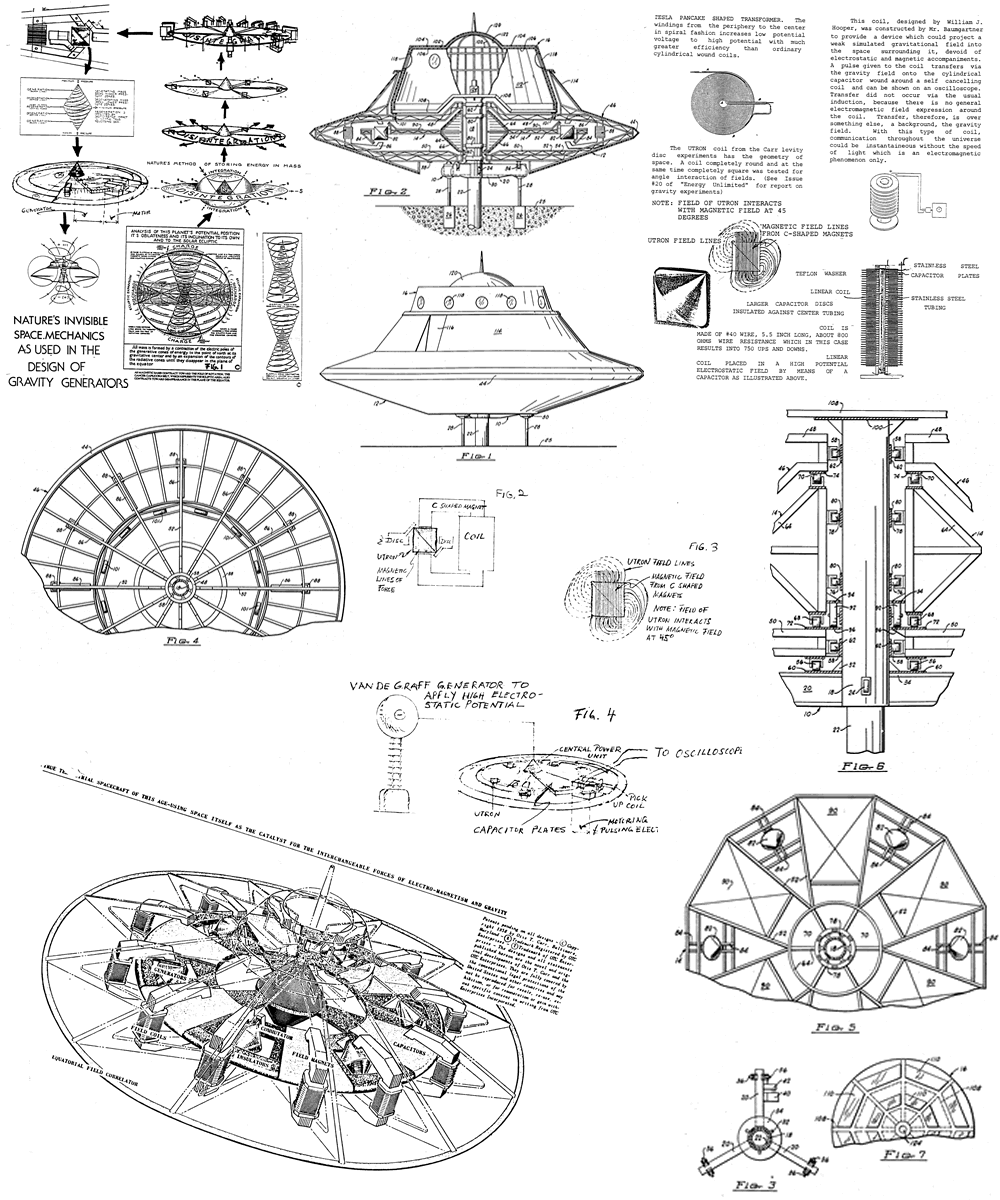


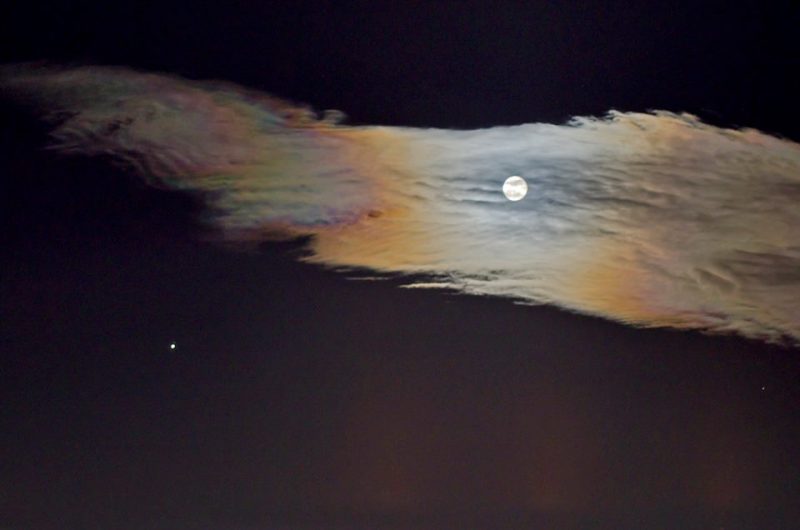
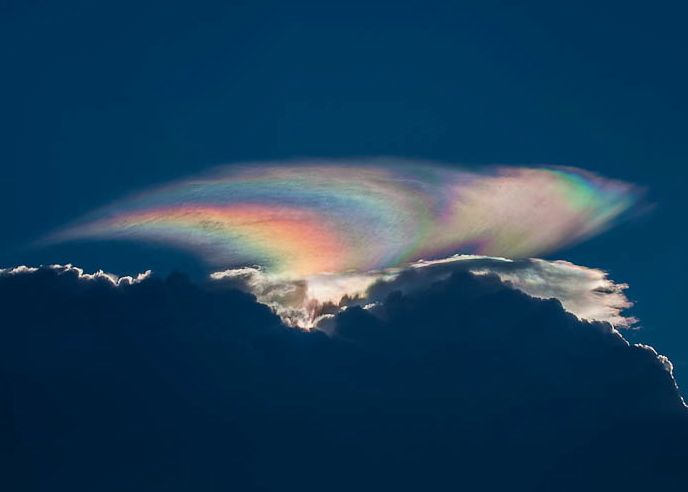
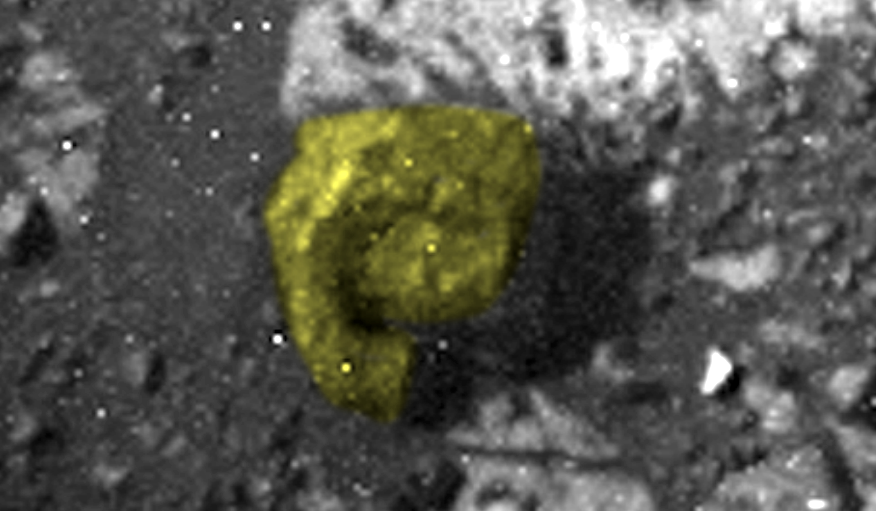



 Scientists on a hike in Canada discover rare organism that's...
 Australian academic reveals how the 'bin chicken' played a...



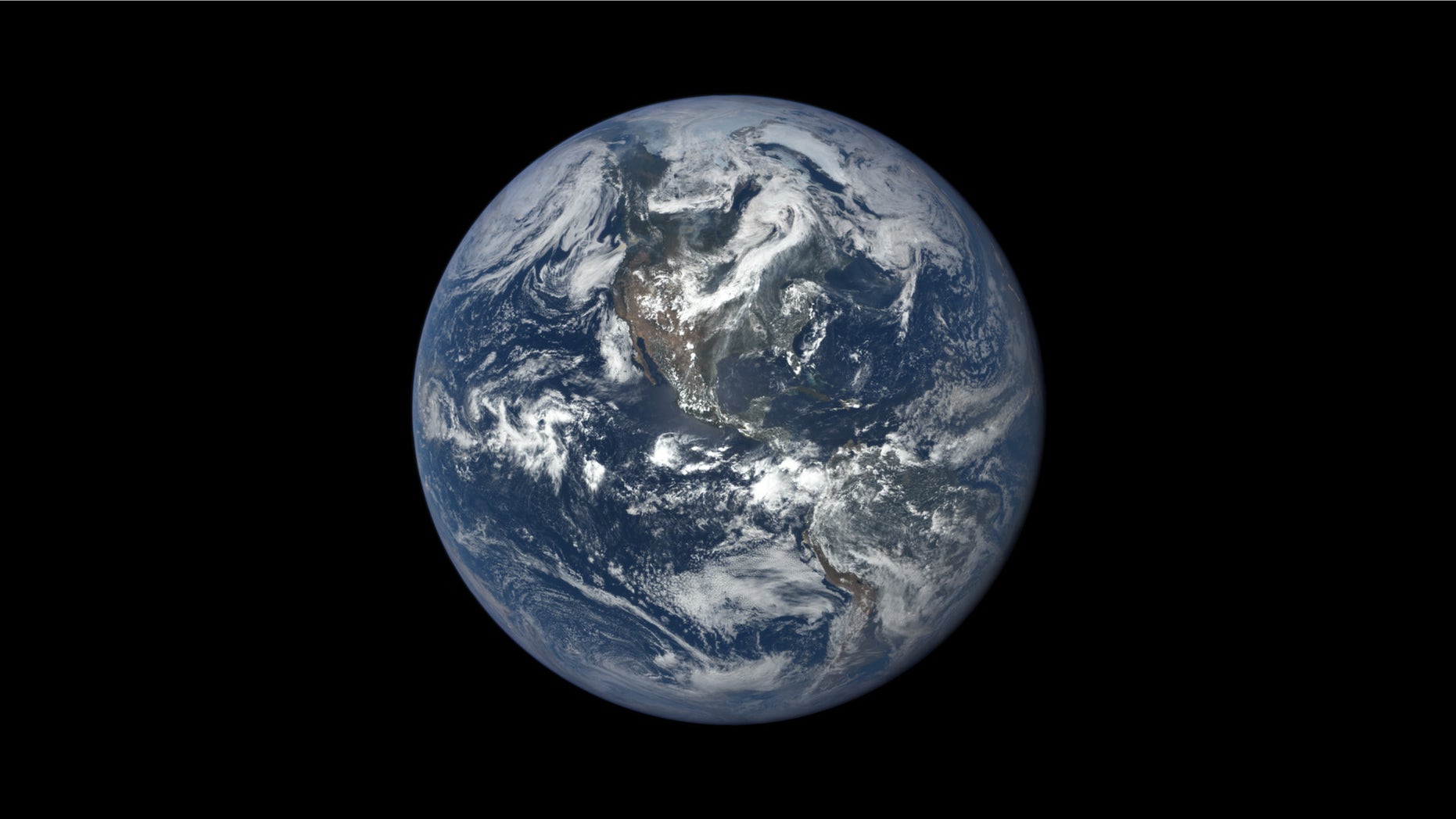


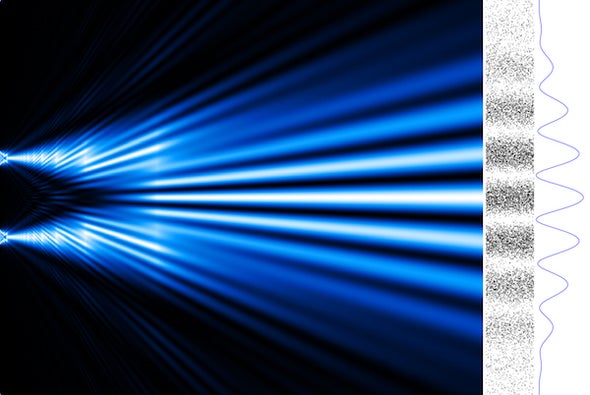
_Lorryia_formosa_2_edit.jpg)