The purpose of this blog is the creation of an open, international, independent and free forum, where every UFO-researcher can publish the results of his/her research. The languagues, used for this blog, are Dutch, English and French.You can find the articles of a collegue by selecting his category. Each author stays resposable for the continue of his articles. As blogmaster I have the right to refuse an addition or an article, when it attacks other collegues or UFO-groupes.
Druk op onderstaande knop om te reageren in mijn forum
Zoeken in blog
Deze blog is opgedragen aan mijn overleden echtgenote Lucienne.
In 2012 verloor ze haar moedige strijd tegen kanker!
In 2011 startte ik deze blog, omdat ik niet mocht stoppen met mijn UFO-onderzoek.
BEDANKT!!!
Een interessant adres?
UFO'S of UAP'S, ASTRONOMIE, RUIMTEVAART, ARCHEOLOGIE, OUDHEIDKUNDE, SF-SNUFJES EN ANDERE ESOTERISCHE WETENSCHAPPEN - DE ALLERLAATSTE NIEUWTJES
UFO's of UAP'S in België en de rest van de wereld Ontdek de Fascinerende Wereld van UFO's en UAP's: Jouw Bron voor Onthullende Informatie!
Ben jij ook gefascineerd door het onbekende? Wil je meer weten over UFO's en UAP's, niet alleen in België, maar over de hele wereld? Dan ben je op de juiste plek!
België: Het Kloppend Hart van UFO-onderzoek
In België is BUFON (Belgisch UFO-Netwerk) dé autoriteit op het gebied van UFO-onderzoek. Voor betrouwbare en objectieve informatie over deze intrigerende fenomenen, bezoek je zeker onze Facebook-pagina en deze blog. Maar dat is nog niet alles! Ontdek ook het Belgisch UFO-meldpunt en Caelestia, twee organisaties die diepgaand onderzoek verrichten, al zijn ze soms kritisch of sceptisch.
Nederland: Een Schat aan Informatie
Voor onze Nederlandse buren is er de schitterende website www.ufowijzer.nl, beheerd door Paul Harmans. Deze site biedt een schat aan informatie en artikelen die je niet wilt missen!
Internationaal: MUFON - De Wereldwijde Autoriteit
Neem ook een kijkje bij MUFON (Mutual UFO Network Inc.), een gerenommeerde Amerikaanse UFO-vereniging met afdelingen in de VS en wereldwijd. MUFON is toegewijd aan de wetenschappelijke en analytische studie van het UFO-fenomeen, en hun maandelijkse tijdschrift, The MUFON UFO-Journal, is een must-read voor elke UFO-enthousiasteling. Bezoek hun website op www.mufon.com voor meer informatie.
Samenwerking en Toekomstvisie
Sinds 1 februari 2020 is Pieter niet alleen ex-president van BUFON, maar ook de voormalige nationale directeur van MUFON in Vlaanderen en Nederland. Dit creëert een sterke samenwerking met de Franse MUFON Reseau MUFON/EUROP, wat ons in staat stelt om nog meer waardevolle inzichten te delen.
Let op: Nepprofielen en Nieuwe Groeperingen
Pas op voor een nieuwe groepering die zich ook BUFON noemt, maar geen enkele connectie heeft met onze gevestigde organisatie. Hoewel zij de naam geregistreerd hebben, kunnen ze het rijke verleden en de expertise van onze groep niet evenaren. We wensen hen veel succes, maar we blijven de autoriteit in UFO-onderzoek!
Blijf Op De Hoogte!
Wil jij de laatste nieuwtjes over UFO's, ruimtevaart, archeologie, en meer? Volg ons dan en duik samen met ons in de fascinerende wereld van het onbekende! Sluit je aan bij de gemeenschap van nieuwsgierige geesten die net als jij verlangen naar antwoorden en avonturen in de sterren!
Heb je vragen of wil je meer weten? Aarzel dan niet om contact met ons op te nemen! Samen ontrafelen we het mysterie van de lucht en daarbuiten.
28-03-2018
Four times people cried ‘aliens’ — and four times they were wrong
Four times people cried ‘aliens’ — and four times they were wrong
The results, which have been making headlines, are a reminder that the truth may well be out there — but it isn’t aliens. A series of discoveries this past year make it clear that, sadly, it never is.
SAD BUT TRUE
Scientists have struggled to explain why this mummy, known as Ata, is the size of a fetus and yet has bones as developed as those of a six- to eight-year-old child, Science reported in 2013. The new analysis of Ata’s DNA, published last week in the journal Genome Research, reports mutations in seven genes key for human growth.
These mutations could explain why Ata’s bones developed so quickly, Gary Nolan, an immunologist at Stanford University and co-author of the study, told National Geographic. He suspects that the story is much sadder and more human than an extraterrestrial visitation: someone gave birth to a stillborn fetus several decades ago and buried her in the desert. “The alien hype was silly pseudoscience promoted for media attention,” paleoanthropologist and anatomist William Jungers told National Geographic. “This paper puts that nonsense and poor little Ata to bed.”
A BIZARRE DEEP SPACE SIGNAL
In the summer of 2017, astronomers at the Arecibo Observatory picked up a strange radio signal that seemed to be coming from a small red dwarf star called Ross 128. But the source of the signal was a mystery: a solar flare on Ross 128 might have produced it, but the frequency of the radio waves didn’t quite fit that theory. Could it have been a deep space call for ET? No such luck. The astronomers discovered a week later that the signal originated much closer to home — most likely from satellites in high geostationary orbit in the same part of the sky as Ross 128.
The Arecibo Observatory. Photo: H. Schweiker / WIYN and NOAO / AURA / NSF
JUST DUST
The wild flickerings of star KIC 8462852, also known as Tabby’s star, suggest that something occasionally passes in front of it and blocks out as much as 20 percent of its light. The flickerings have no clear pattern, and whatever is blocking the star’s light probably isn’t a celestial body like a planet. Some have suggested alien megastructures or some sort of extraterrestrial solar panel might be passing in front of the star instead.
But in January 2018, a team of astronomers reported that something much more ordinary is probably to blame for the star’s unusual behavior: a bunch of dust could be surrounding the star and filtering its light. “Weird stars that have dust coming from somewhere isn’t as much of a headline grabber,” Jason Wright, an astronomer at Penn State University and one of the study’s authors, told The Verge’s Loren Grush at the time. But there’s still some mystery left: we don’t know where exactly the dust is coming from.
An artist’s rendering of KIC 8462852, also known as Tabby’s star. Image: NASA / JPL-Caltech / R. Hurt (IPAC)
THE GREAT PYRAMID’S GIANT VOID
In November 2017, scientists reported the discovery of a vast empty cavity inside the Great Pyramid at Giza. Using a kind of souped-up X-ray, an international team of researchers tracked subatomic particles called muons that plummet to Earth at nearly the speed of light. Since muons can pass through the air more easily than they can travel through dense stone, the researchers were able to discover previously unknown cracks and cavities — like the 100-foot-long cavern they called the “Big Void.”
The researchers still don’t know the precise shape of the cavity or why it’s there, but study co-author Mehdi Tayoubi said in a press briefing that they suspect that this cavity was built on purpose (by humans). Because, friends: it’s never aliens.
Is there anyone else out there? It's a question plenty of people have asked, but no one has been able to answer—yet. But scientists think that may change, and sooner rather than later.
One of those scientists is Jill Tarter of the SETI Institute research center in California. Tarter has spent her career working on the search for extraterrestrial intelligence, and during a speech she presented in Florida last week, she hinted at a timeline for the next big discovery.
"I think that in this century we are going to be finding life beyond Earth," Tarter said during the talk, according to Florida Today. "We’re really working on an ancient human question. And that’s very, very rewarding. We might, within the 21st century, have the answer to whether there is life beyond Earth. And we’ve been asking that question for a very, very long time."
Tarter was speaking at a conference about cross-cultural management, and she wanted to give the attendees a greater context for solving the big problems that face us. She suggested that searching for alien life could be a sort of practice project—one that is less divisive but requires the same big-picture thinking as challenges like food shortages and climate change.
"[The search for extraterrestrial intelligence] as an endeavor may, in fact, need to be multi-, multi-generational before we figure out the right thing to look for," she told Newsweek. "This cosmic perspective is really something that we all need to adopt."
For Tarter, the 2100 date reflects a prediction made in a 2004 scientific paper that science of this century would be dominated by biology, just as the one prior was dominated by physics. "I think we see that already playing out in spades," she said—and she says taking that beyond Earth itself is only natural.
An artist's portrayal of the Kepler Space Telescope, a major development in the hunt for extraterrestrial life, spotting exoplanets.
NASA/JPL
But there's a big if: Tarter says the biggest challenge is securing the funding needed to see a field through multiple scientific generations. That's been particularly hard for scientists looking for technological signals, rather than focusing on simpler, single-celled life. She thinks success will also depend on adopting new technologies that could revolutionize how scientists search, like using neural networks to process data in new ways.
"Instead of us telling the computers what artifacts and signal types to look for, the machines will be smart enough and fast enough to tell us what's in the data that isn't noise," Tarter said. "It's a big ocean and we're just sticking our toe into it, but it's clearly the way to go."
Earlier this month, Voxfeatured a video essay on its website examining “Why we imagine aliens the way we do.” Vox tells us:
“We often imagine extraterrestrials to look a certain way because we’ve encountered them in books, films, or TV shows, which means that when we’re thinking about aliens, we’re usually thinking about the product of someone else’s imagination.”
Vox is suggesting that we conceptualize aliens as we do almost entirely because of science fiction, in the form of books, movies, TV shows, etc. As I’ve shown in my own work, it’s not quite as simple as that. Vox’s video essay is interesting, but what it neglects to consider is the tremendous influence of the UFO subculture—a subculture sprung from what would appear to be an ontologically real phenomenon.
It is a common misconception that Hollywood pulls its alien imaginings out of thin air; in reality, the movie industry has been drawing creative inspiration from UFOlogy—from real-world reports of otherworldly encounters—for decades. Unidentified Flying Objects are “real,” which is to say they exist independently of cinema, and of pop-culture more broadly. UFOs have been investigated by governments around the world for almost seven decades. What the phenomenon represents is open for debate, but the point is that, even in a world without movies, people would continue to report UFOs. People were reporting UFOs comfortably before Hollywood got in on the act.
Indeed, the first reports of flying saucers in the modern UFO era pre-date Hollywood’s first feature film about UFOs by three years. It was in 1947 that pilot Kenneth Arnold’s famous sighting gave rise to the “flying saucer” term, but it wasn’t until 1950 that Hollywood produced The Flying Saucer, a cheap attempt to cash-in on the UFO hysteria then sweeping America—a hysteria incited not by cinema, but by numerous reports nationwide of disc-shaped objects intruding upon America’s airspace.
Ever since 1950, the movie industry has been grabbing hold of UFOlogical concepts and popularizing them through the science-fiction genre: “Men in Black,” “Close Encounters of the Third Kind,” “The Fourth Kind,” “Area 51.” Hollywood didn’t create these terms, they were all part of the common language of UFOlogy decades before Hollywood lifted them. The same is true of the now-iconic image of the “Gray” alien—a form that has its roots in pre-existing UFO literature and which has since has found its way into some of the most popular science-fiction movies and TV shows of all time.
The eponymous alien from the 2011 movie, ‘Paul,’ which drew heavily from UFO literature and debate.
A recurrent image in the Vox video is that of the Gray alien, but Vox makes no allusions to its UFOlogical origins; the implication is that Hollywood dreamed it up. In fact, descriptions of what we now call Grays were surfacing in real-world abduction accounts reported to Budd Hopkins and other researchers in the 1970s, and alleged abductee Travis Waltonhad described such entities as early as 1975. It wasn’t until two years later, in 1977, that Hollywood produced its first fully crystalized cinematic image of the Grays in Spielberg’s proudly UFOlogical Close Encounters of the Third Kind. The Grays in the movie were based directly on first-hand testimonies gathered by Spielberg’s production designer, Joe Alves.
I interviewed Alves in 2014. He told me: “I talked to a lot of legitimate people… who described to me very simplistic creatures with large eyes and small mouths, no nose.” Based on what he heard during his research for Close Encounters, Alves began conceptualizing the alien beings. “The descriptions I heard were of these big-eyed things with small mouths and no nose, long fingers, that kind of thing.”
Close Encounters was tremendously successful, but it wasn’t until the late-1980s that the big black eyes of the Gray began to penetrate the popular consciousness. Key to this was Whitley Strieber’s 1987 nonfiction Communion, based on his own claimed experiences with alien beings. Communion was adapted for Hollywood in 1989; its poster featured a full-face image of a Gray, staring hypnotically into the eyes of millions of creeped-out cinemagoers worldwide. Then followed Intruders(1992), a miniseries based directly on real-world descriptions of Grays as documented in abduction literature. More Grays would then appear in The X-Files (1993-), Babylon 5 (1994-1998), Dark Skies (1996-1997), and others. By the late-1990s, the image of the Gray had supplanted almost all other pre-existing cultural imaginings of what an alien might look like.
In Hollywood’s UFO movies, broadly speaking, art imitates life. If the opposite were true, then following the release of James Cameron’s Avatar, the highest grossing film of all time, we might reasonably have expected thousands of people to have begun reporting ten-foot-tall blue aliens. This did not happen; just as Hollywood’s forceful projection of the “little green men” meme has failed to result in mass sightings of little green men (although reports of such entities do lightly pepper the UFO literature).
When it comes to UFOs and aliens, Hollywood produces depictions, albeit not entirely faithful ones, of what people actually report. This is not to say that what’s reported is necessarily true or accurate, but merely that Hollywood sees dramatic potential in these reports. The resulting cinematic imagery then plants itself into our pop-cultural landscape, influencing our perceptions and expectations of alien life and contact.
So, we should keep in mind that a significant factor in why we imagine aliens as we do is that people across the decades claim to have encountered them in real life; these individuals have then reported their alien encounters to interested parties, and the details of these cases have been gradually appropriated by Hollywood for entertainment purposes, devaluing the original reports while transforming fact-based ufological detail into sci-fi iconography. So, while it’s certainly fair to say that Hollywood is the force primarily responsible for shaping popular expectations of alien life and visitation, let us not forget the immense debt Hollywood owes to UFOlogy.
27-03-2018 om 21:02
geschreven door peter
0
1
2
3
4
5
- Gemiddelde waardering: 0/5 - (0 Stemmen) Categorie:ALIEN LIFE, UFO- CRASHES, ABDUCTIONS, MEN IN BLACK, ed ( FR. , NL; E )
26-03-2018
DNA Tests Reveal Surprising Details About Tiny ‘Atacama Alien’
DNA Tests Reveal Surprising Details About Tiny ‘Atacama Alien’
The most comprehensive study to date performed on the so-called Atacama Alien has revealed, according to the first study, that 8 percent of the DNA was unmatched to human DNA. The second set of DNA tests matched 98 percent of the DNA.
Remeber the alien-like creature discovered in the Atacama desert of chile a while ago? Well, new DNA results have revealed a number of peculiar characteristics about the mysterious creature.
A complete genomic study of a skeleton discovered more than a decade ago in the Atacama desert (Chile), and ‘falsely’ taken as an alien, has revealed unpublished bone molecular rarities.
The findings of researchers at the Stanford University School of Medicine eliminate any remaining dilemmas on the planetary origin of the specimen, assuring that it is human, and not an alien. The analysis also answers questions about the mysterious skeletal remains that have long been a genetic enigma.
Now, after five years of genomic analysis, Garry Nolan, professor of Microbiology and Immunology at Stanford, and Atul Butte, director of the Institute of Computational Health Sciences at the University of California-San Francisco, in the United States, have identified the mutations responsible for the anomalous sample.
The researchers found mutations in not one, but several genes known to control bone development. In addition, some of these molecular oddities have never been described before.
The mysterious-looking skeleton, nicknamed Ata, was discovered more than a decade ago in an abandoned town in the Atacama desert in Chile.
After changing owners and finally finding a permanent home in Spain, the mummified specimen began to attract public attention.
Just six inches tall (about 15 centimeters), about the length of a dollar bill, with an elongated, angular skull and sunken, tilted eye sockets, the possibility of Ata coming from another world began to circulate on the Internet as people started speaking about aliens with extremely tiny bodies.
“I had heard about this specimen through a friend of mine, and I managed to get an image of it,” says Nolan. You can not look at this specimen and not think it’s interesting; It is quite dramatic. Then I said to my friend: “Look, whatever it is, if it has DNA, I can do the analysis.”
With the help of Ralph Lachman, a professor of Radiology at Stanford and an expert in a type of pediatric bone disease, Nolan made things clear.
His analysis pointed to a decisive conclusion: this was the skeleton of a human woman, probably a fetus, who had suffered serious genetic mutations.
In addition, Nolan saw that Ata, although most likely a fetus, had the bone composition of a 6-year-old girl, an indication that she had a rare bone aging disorder.
To understand the genetic basis of Ata, Nolan turned to Butte for help with genomic evaluation.
He accepted the challenge and performed such a thorough evaluation that he almost reached the level of patient care.
Butte noted that some people might wonder about the point of these in-depth analyzes.
“We thought it would be an interesting exercise to apply the tools we have today to really see what we could find,” he says. The phenotype, the symptoms and the size of this girl were extremely unusual, and the analysis of this kind of truly disconcerting and ancient samples better teaches us how to analyze the DNA of children nowadays under current conditions.“
To understand the genetic factors involved, Butte and Nolan extracted a small sample of DNA from Ata’s ribs and sequenced the entire genome.
The skeleton is approximately 40 years old, so its DNA is modern and relatively intact. In addition, the data collected from the complete genome sequencing showed that Ata’s molecular composition was aligned with that of a human genome.
Human but…
Nolan detected that 8 percent of the DNA was unmatched by human DNA, but that was due to a degraded sample, not to extraterrestrial biology. Later, a more sophisticated analysis could match up to 98 percent of the DNA.
The genomic results confirmed Ata’s Chilean lineage and presented a series of mutations in seven genes that, separately or in combinations, contribute to various bone deformities, facial malformations or skeletal dysplasia, more commonly known as dwarfism.
Some of these mutations, although found in genes that are known to cause disease, have never before been associated with bone growth or developmental disorders.
“Knowing these new mutational variants could be useful,” says Nolan, “because they add to the reservoir of known mutations that must be sought in humans with this type of bone or physical disorders.”
It’s the strangest human mummy you’ll likely ever see, and it’s not an alien.
The alien-like mummified specimen from Atacama region of Chile.
Credits: Bhattacharya et al. 2018.
In 2003, researchers found an incredibly bizarre mummy in Chile. Measuring a mere 6 inches, with an extremely elongated skull and several extreme abnormalities, it only remotely looked human. The questions came in fast, and they poured in: what is? Is it human — and if it is human, why does it look so strange? The specimen was auctioned off to a Spanish businessman which delayed proper studies but now, results from the first comprehensive analysis are finally in.
“This was an unusual specimen with some fairly extraordinary claims put forward. It would be an example of how to use modern science to answer the question what is it?” says senior author Garry Nolan from Stanford University.
Not an alien
Thankfully, Ata, as the skeleton was named (short for Atacama), contains some high-quality DNA which researchers were able to sequence. They compared Ata’s DNA with human and non-human primate reference genomes, including chimpanzee and rhesus macaque. To the chagrin of UFO hunters, researchers learned that Ata is very much human and even more — she has Chilean ancestry.
DNA results will certainly disappoint UFO conspiracists, but Ata is very much human — although she’s incredibly small and suffers from several malformations.
Image credits: Garry Nolan.
Although researchers believed Ata was a few years old, Nolan now believes she was either stillborn or only lived for a few days. It’s unclear exactly when Ata lived, though the skeleton seems to be at least several decades old — probably some 40 years.
Next, researchers moved on to look for more clues regarding Ata’s extremely short stature and unusual features, which aside from the obvious skull malformation, include an abnormal rib count and premature bone age. They found multiple mutations in genes associated with diseases such as dwarfism, scoliosis, and musculoskeletal abnormalities. Surprisingly, all these malformations can be explained with a relatively short list of gene mutations in genes associated with bone development, Nolan says.
However, Ata is more than just an interesting specimen. Since she had the grave misfortune of suffering such severe abnormalities, she can teach us quite a bit about how the gene mutations can affect the human body.
“This is a great example of how studying ancient samples can teach us how to analyze modern day medical samples” says co-author Atul Butte, from the UCSF.
Aside from her skeletal malformations, Ata also probably suffered from something called congenital diaphragmatic hernia — a fairly common, but also life-threatening condition where a baby’s diaphragm doesn’t form correctly. Nolan told The Guardian:
“She was so badly malformed as to be unable to feed. In her condition, she would have ended up in the neonatal ICU, but given where the specimen was found, such things were simply not available,” he said.
“While this started as a story about aliens, and went international, it’s really a story of a human tragedy. A woman had a malformed baby, it was preserved in a manner and then ‘hocked’ or sold as a strange artefact. It turns out to be human, with a fascinating genetic story from which we might learn something important to help others. May she rest in peace.”
Journal Reference: Bhattacharya S, Li J, Sockell A, Kan M, Bava F, Chen, S, Ávila-Arcos M, Ji X, Smith E, Asadi N, Lachman R, Lam H, Bustamante C, Butte A, Nolan G. 2018. Whole genome sequencing of Atacama skeleton shows novel mutations linked with dysplasia. Genome Research doi: 10.1101/gr.223693.117.
Edit:In its original form, this article had an error regarding Ata’s age.
0
1
2
3
4
5
- Gemiddelde waardering: 0/5 - (0 Stemmen) Categorie:ALIEN LIFE, UFO- CRASHES, ABDUCTIONS, MEN IN BLACK, ed ( FR. , NL; E )
21-03-2018
Leaked WikiLeaks Cable Confirms Alien Life On Other Planets
Leaked WikiLeaks Cable Confirms Alien Life On Other Planets
A cable released by Wikileaks seems to have confirmed what millions of people around the globe believe for decades: we are not the only “intelligent” lifeforms in the universe.
WikiLeaks is an international non-profit media organization, which publishes anonymous reports and leaked documents with sensitive content of public interest on its website, preserving the anonymity of its sources.
The site was launched in December 2006, although its activity began in July 2007-2008.
Since then its database has grown steadily to accumulate 1.2 million documents.
Its creator is Julian Assange and is managed by The Sunshine Press.
The website itself is a treasure-trove of ‘secret’ or better said sensitive information, and unsurprisingly, among the 1.2 million leaked documents posted on Wikileaks, we find a couple for them that directly speak about extraterrestrial life.
A document titled: “MAYOR MEETS AMBASSADOR, CONFIRMS EXTRATERRESTRIAL LIFE” seems to confirm what many of us have known for decades, there is life on other planets in the universe.
The leaked document was posted in January of 2010 and was originally classified as ‘Confidential’ according to Wikileaks.
The document reads:
REASON: 1.4 (b), (d)
(C) Summary: In a platitude-ridden meeting, Dushanbe Mayor Mahmadsaid Ubaidulloev said upcoming elections would be free and fair, that contributions to the Roghun Dam were voluntary, and that the losses suffered by the United States in Afghanistan were felt by Tajiks as their own. Ubaidulloev asked for help in getting Tajik students admitted to Harvard University but effectively declined to help find a new location for an American Corner in Dushanbe. He asserted the existence of life on other planets, caveating this by noting that we should focus on solving our problems on Earth. End Summary.
AFGHANISTAN
(SBU) On January 13 Ambassador called on Dushanbe Mayor and Chairman of the upper house of Parliament Mahmadsaid Ubaidulloev at his parliamentary office. The Mayor began the meeting with a lengthy discourse on Afghanistan, thanking the United States for its contributions and sacrifices there, and saying that U.S. activities there were very important “as we enter the third millennium and the 21st century.” Ubaidulloev thought the main task there was to build a sense of national identity among ethnically disparate groups, and said the United States was an example for this. He noted that “war is very dangerous”, and said, “we know there is life on other planets, but we must make peace here first.”
0
1
2
3
4
5
- Gemiddelde waardering: 0/5 - (0 Stemmen) Categorie:ALIEN LIFE, UFO- CRASHES, ABDUCTIONS, MEN IN BLACK, ed ( FR. , NL; E )
Area 51 may hold answers about aliens
She also said she would look into sending a tast force Area 51 (pictured)
Area 51 may hold answers about aliens
There has been much speculation surrounding the 1947 crash of a flying object near Roswell, N.M.
WRITTEN BY JENNIFER WAGNER
Are there aliens? And if so, why don't we know about them?
No one knows the true answer to these questions, but many speculate the answers might have something to do with Area 51.
Area 51 is a highly known and widely debated Air Force Base located in Nevada, about 80 miles outside of Las Vegas. Its official purpose is to test military aircraft technology; however, it is rumored to contain the remains of alien spacecrafts that have crashed as well as communication with extraterrestrials, according to Time. This is due to all of the supposed UFO sightings surrounding the area. The government claims that the information from the base is classified for national security purposes, which only helps confirm in the minds of many that their suspicions are correct.
But how did all of these ideas start?
While there have been many possible UFO sightings, the most compelling and widely talked about is the Roswell incident of 1947. Sometime in early July of that year, an unknown object crashed in a ranch outside of Roswell, N.M., according to the Huffington Post. The owner of the ranch, W.W. Brazel, collected some of the debris, took it to the local sheriff, George Wilcox, who eventually notified the FBI.
From there, Maj. Jesse Marcel, an intelligence officer for one of the local Air Force bases, was brought to inspect the crash site. On July 8, the Roswell Daily Record printed an article stating that the Roswell Army Air Field had captured a flying saucer. The next day, a second article was run stating that a mistake was made and the crash material was from a weather balloon, according to the Huffington Post.
Since 1947, there have been many investigations and reports published by both the military and civilians to find out what really happened in Roswell. After the initial article was published, both Marcel and Brazel rescinded their claims that the crash site contained a flying saucer and possible alien bodies, but in recent years they have both again claimed that they believed that these original statements were true.
As strange as this all may sound, there is also another conspiracy theory that suggests Area 51 is being used to study time travel and teleportation technology, although this theory is not nearly as popular as the theory on extraterrestrial communication and cover-ups.
These theories, to me, may hold some water due to the uncertainty revolving around the existence of extraterrestrials, although I am not entirely convinced. However, we will never really know the answer to these questions, so unfortunately what Area 51 contains and what really happened in the Roswell incident will probably remain a mystery.
Harvard astrochemist Karin Öberg told Aleteia, "Wouldn’t it be really cool to talk to another species that had a relationship with God ... ?”
Karin Öberg hopes there is intelligent life on other planets.
That’s not only because her job as an astronomer is to look for solar systems that could be home to life. It’s also because of her Catholic faith. “I would hope yes,” Öberg said in a recent interview with Aleteia. “It would be so exciting to meet rational animals that are not humans and the same holds for non-rational life also. Again, we don’t know but I wouldn’t be doing what I do for a living if I didn’t think they existed.”
Öberg is an astrochemist at Harvard University whose research focuses on protoplanetary disks around other stars and how their chemical composition makes the planets that form out of them hospitable to life. Öberg spoke with Aleteia after a lecture on the science and theology of other worlds on March 5 at Brown University, hosted by the Thomistic Institute.
Just what are the chances that there is another earth out there with rational animals like us? Öberg won’t say how probable it is because probability involves a scientific calculation that can’t yet be made. But her gut instinct says yes. Her hope is driven by both professional as well as spiritual considerations.
“Wouldn’t it be really cool to talk to another species that had a relationship with God but must look different because it’s not influenced by our story?” Öberg told Aleteia. “I realize we’re very limited in what we can do but getting a second data point I think would be helpful.”
As a scientist, Öberg may not be ready to talk about the probability that there is intelligent life, but she can talk about whether there are planets that would be conducive to it. Here there is more data. Planets around other stars, technically known as exoplanets, were hypothesized in 1584 by the Italian monk and philosopher Giordano Bruno, but the first one was not discovered until 1995. Since then, the existence of thousands has been verified. In 2016 alone, scientists found 1,284 new exoplanets.
At least three big criteria must be met in order for an exoplanet to be hospitable to life, according to Öberg. First it must be small and rocky, like earth. Second, it must be the right distance from the star it is orbiting. Being too close or too far would make the planet correspondingly too hot or too cold. Finally, because it is a good solvent for the necessary organic chemicals, water is essential for life.
Based on those criteria, is it certainly possible there are life-friendly worlds out there. Out of 4,034 total exoplanets, as of last summer, 50 were earth-like and in the “habitable zone” of their stars, according to the New Scientist. As for water, while it is unique, it is “one of the most common things in space,” according to Öberg.
And that’s about as far as science goes, leaving so far unanswered the big question about other intelligent life. “We do not yet know whether any of these extraterrestrial planets are inhabited or not, even by the simplest life-forms. Are we inhabiting a universe teaming with life, that seems to have the transition from non-living to living matter built into its laws? Or are we a lonely ark, traveling through space and time carrying all living things with us?” Öberg asked in her lecture.
The question is intriguing from both a scientific and a theological perspective.
In terms of theology, Öberg, who is a convert to Catholicism, said Christianity already has a belief in other intelligent life. “We already know extraterrestrials. They’re called angels,” Öberg said. But angels are intellectual beings, not rational animals. Angels are not in need of salvation, whereas we human beings as rational animals are, Öberg noted. (She didn’t mention the issue of fallen angels, but St. Thomas Aquinas taught that demons aren’t saved because their free choices once made, unlike ours, are permanent. Thus, they persist in their rejection of God.)
That leads to a big theological question: “If there are rational aliens out there, how are they saved? Are they saved?” Öberg asked.
For Christians, salvation comes through the Incarnation of the Second Person of the Trinity. “It seems clear from reading the New Testament that this was a one-time event for all,” Öberg said. Likewise, Aquinas arguedthat it was fitting for the Word to take on human nature alone. But the reasons for this—the dignity of having a rational nature and needing salvation—in theory would apply to other rational beings, Öberg noted. (But Öberg remains skeptical that there would be another incarnation.)
Although she is hoping there are rational animals, Öberg says she would be happy with the discovery of far humbler life-forms elsewhere in the universe. “I would be excited by the tiniest bacteria,” Öberg told Aleteia. “I don’t need much more than that.”
Either way, future discoveries are bound to reveal more about the kind of universe in which we live, and indirectly, further reveal its Creator.
In the good old days, the arrival of UFOs on the front page of America’s paper of record might have seemed like a loose-thread tear right through the fabric of reality — the closest that secular, space-race America could have gotten to a Second Coming. Two decades ago, or three, or six, we would’ve also felt we knew the script in advance, thanks to the endless variations pop culture had played for us already: civilizational conflicts to mirror the real-world ones Americans had been imagining in terror since the beginning of the Cold War.
But when, in December, the New York Timespublished an undisputed account of what might once have sounded like crackpot conspiracy theory — that the Pentagon had spent five years investigating“unexplained aerial phenomena” — the response among the paper’s mostly liberal readers, exhausted and beaten down by “recent events,” was markedly different from the one in those movies. The news that aliens might actually be visiting us, regularly and recently, didn’t provoke terror about a coming space-opera conflict but something much more like the Evangelical dream of the Rapture the same liberals might have mocked as kooky right-wing escapism in the George W. Bush years. “The truth is out there,” former senator Harry Reid tweeted, with a link to the story. Thank God, came the response through the Twitter vent. “Could extraterrestrials help us save the Earth?” went one typical reaction.
Suddenly, aliens were an escapist fantasy — but also more credible (legitimized by the government!) than mere fantasy. That Pentagon report, which featured two gripping videos of aerial encounters, was just one beat in a recent search-for-extraterrestrial-intelligence (or SETI) drumroll: In October, an object passed through our solar system that looked an awful lot like a spaceship; astronomers spent much of 2016 arguing over whether the weird pulses of light coming from a distant star were actually evidence of an “alien megastructure.” An army of Silicon Valley billionaires are racing to make first contact, and our new superpowered telescopes are discovering more conceivably habitable planets every year.
Then, in March, a third video emerged, featuring a Navy encounter off the East Coast in 2015, with the group that released it hinting at an additional trove. “Why doesn’t the Pentagon care?” wondered a Washington Postop-ed — surely the first time the newspaper of Katharine Graham was raising a stink about aliens. The next week, President Trump seemed to announce he was creating an entirely new branch of the military: “We’ll call it the Space Force.” You could be forgiven for thinking you’d woken up in a science-fiction novel. At the very least, it is starting to seem non-crazy to believe. A recent study shows half the world already does.
Searching the Universe for Extraterrestrial Life: A Timeline
Alien dreams have always been powered by the desire for human importance in a vast, forgetful cosmos: We want to be seen so we know we exist. What’s unusual about the alien fantasy is that, unlike religion, nationalism, or conspiracy theory, it doesn’t place humans at the center of a grand story. In fact, it displaces them: Humans become, briefly, major players in a drama of almost inconceivable scale, the lasting lesson of which is, unfortunately: We’re total nobodies. That’s the lesson, at least, of a visit from aliens, who got here long before we were able to get there, wherever there is; if humans are the ones making first contact, we’re the advanced ones and the aliens are probably more like productive pond scum, which may be one reason we fantasize about those kinds of encounters a lot less than visits to Earth. Of course, when the aliens are the explorers, we’re the pond scum.
But a lot of people in the modern world will take that bargain, which should probably not surprise us given how dizzying, secular, and, um, alienating that world objectively is. Most conspiracy theory is fueled by a desire to see the universe as ultimately intelligible — the bargain being that things can make sense, but only if you believe in pervasive totalitarian malice. Alien conspiracy theory keeps the malice (cover-ups at Roswell, the Men in Black). But rather than benzo comforts like order and intelligibility, it offers the psychedelic drama of total unintelligibility — awe, wonder, a knee-wobblingly deep, mystical experience of existential ignorance.
Floating Down (1990), by David Huggins, who makes oil paintings about his encounters with aliens. As featured in Love & Saucers, a 2017 documentary about the artist. Photo: David Huggins
Every extraterrestrial era has its own fantasy of consequentiality. Crop circles began as a phenomenon of the English countryside, then spread to the far corners of the onetime British Empire (Australia, Canada) after World War II, when the U.K. was falling unmistakably back in the ranks of nations and when its provincial subjects would have felt some understandable desire to demonstrate that, somehow, their lives really mattered. American encounters were invariably rural as well — typically farmers and ranchers, mostly in the country’s interior and the deserts and mountains of the West, in decades the country as a whole spent rapidly urbanizing and then industrializing its farmland so systematically it looked like Monsanto was trying to exterminate the American farmer along with the cotton bollworm.
These incidents, which never occurred in cities, where other witnesses could have verified them, were often reported as horror stories even as they may have expressed secret desires. But the pop culture of the same era introduced another mode: the suburban encounter, often still private and personal but more ooey-gooey New Age than abductions and anal probes. The two major authors were Steven Spielberg, who gave us broken-family theology in Close Encounters of the Third Kind and E.T., and Carl Sagan, who gave us Cosmos and Contact, which, when it was turned into a movie, featured an eerie seascape that was basically a secular heaven, maintained by offscreen aliens explicitly playing the role of gods. Stephen Hawking, who died in March, was also a godfather of a sort, not just a physicist but a sage and guru for a generation of squishy-lefty seekers curious about life beyond Earth; among his last acts was partnering with Yuri Milner, a Russian billionaire building a giant SETI laboratory at UC Berkeley. Americans used to regard the space race with not just national but something like collectivist pride — all those government engineers from the new middle class. Suddenly, it’s the rich kids with the cool toys and the keys to the rocket ship.
Which does mark a change. Beyond the mysticism, American stories of alien encounters have been (often anxious) meditations on the status of American power — meditations informed, surely, by both the memory of European settlers, for whom “first contact” was a story of triumphant genocide, and sympathy for those they trampled. Given the option, America will always prefer to play the cowboy, and through the post–Cold War 1990s, the dominant alien-encounter template was still the swaggering military strut of Independence Day. (The closest thing we got to a counterpoint was the cover-up paranoia of The X-Files, which just expressed a darker faith in the same American power.) By the time we got an alien epic for the War on Terror era, even Spielberg staged it as a story about armed conflict: The War of the Worlds. Of course, in that story, the winner was always going to be the humans — that is, the Americans. And then came the financial crisis, the recession, and Trump, and the new hope that E.T. may take pity on us.
Elsewhere in the world, where things are looking up, relatively speaking, you might expect a different perspective on aliens — and indeed, as The Atlantic’s Ross Andersen documented last fall, the Chinese have recently opened the world’s largest radar facility to listen for signs of aliens, wherever they are out there. But even our future Chinese overlords, projecting power for the first time into the ever-receding reaches of the universe, are a bit nervous about aliens; as Andersen points out, their popular science fiction bears the evidence. And why wouldn’t they be? They have their own memory of colonial contact — the Opium Wars, the end of that empire — to reckon with. And, besides, the unknown is just scary. Things have to get pretty bleak before you take a chance on the arrival of a total blank slate, just for the sake of change. —David Wallace-Wells
1. The Government Literally Just Admitted It’s Taking UFOs Seriously
And, according to researchers, it’s only pretended to end the program.
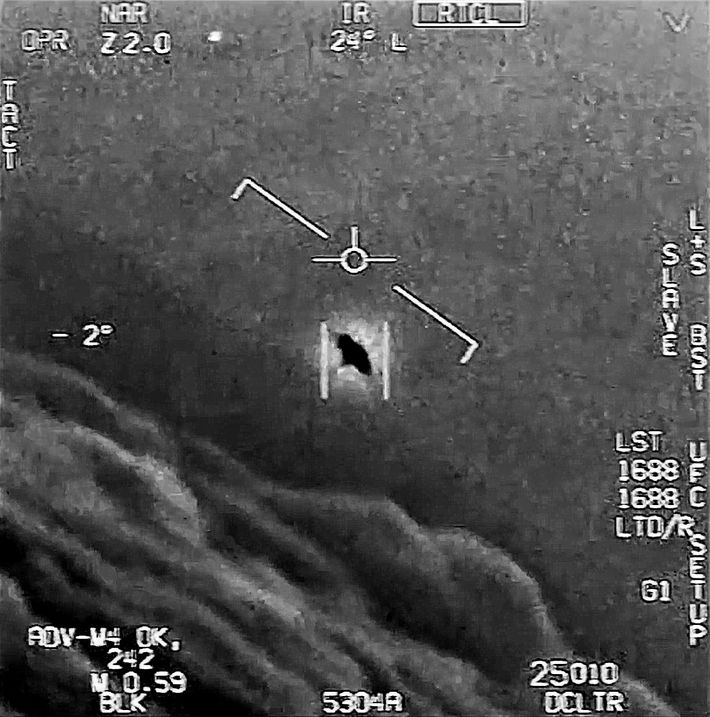
A 2004 encounter near San Diego between two Navy F/A-18F fighter jets and an “unknown object.”
In 1952, a CIA group called the Psychological Strategy Board concluded that, when it came to UFOs, the American public was dangerously gullible and prone to “hysterical mass behavior.” The group recommended “debunking” campaigns to tamper the public’s interest in unexplained phenomena. But the government seems to have been interested, too: In December, the Pentagon confirmed the existence of the Advanced Aerospace Threat Identification Program. Created in 2007 by senators Ted Stevens (who reported being chased by a mysterious object), Daniel Inouye, and then–Majority Leader Harry Reid, and funded with $22 million of “black money” from the Department of Defense’s budget, the program investigated and evaluated reports of UFO sightings, many of which came from American service members.
So much of what the program uncovered remains classified, but what little we know is tantalizing. Based on data it collected, the program identified five observations that showed mysterious objects displaying some level of “advanced physics,” also known as “stuff humans can’t do yet”: The objects would accelerate with g-forces too strong for the human body to withstand, or reach hypersonic speed with no heat trail or sonic boom, or they seemed to resist the effects of Earth’s gravity without any aerodynamic structures to provide thrust or lift. “No one has been able to figure out what these are,” said Luis Elizondo, who ran the program until last October, in a recent interview.
Elizondo has also talked about “metamaterials” that may have been recovered from unidentified aerial phenomena and stored in buildings owned by a private aerospace contractor in Las Vegas; they apparently have material compositions that aren’t found naturally on Earth and would be exceptionally expensive to replicate. According to a 2009 Pentagon briefing summarized in the New York Times, “the United States was incapable of defending itself against some of the technologies discovered.” This was a briefing by people trying to get more funding — but still.
Some of the accounts Elizondo and his team analyzed supposedly occurred near nuclear facilities like power plants or battleships. In November 2004, the USS Princeton, a Navy cruiser escorting the aircraft carrier USS Nimitz off the coast of San Diego, ordered two fighter jets to investigate mysterious aircraft the Navy had been tracking for weeks (meaning this was not just a trick of the eye or a momentary failure of perspective, the two things most often blamed for unexplained aerial phenomena). When the jets arrived at the location, one of the pilots, Commander David Fravor, saw a disturbance just below the ocean’s surface causing the water to roil around it. Then, suddenly, he saw a white, 40-foot Tic Tac–shaped craft moving like a Ping-Pong ball above the water. The vehicle began mirroring his plane’s movements, but when Fravor dove directly at the object, the Tic Tac zipped away.
The Pentagon has said funding for the program ran out in 2012 and wasn’t renewed. But Elizondo has claimed the project was alive and well when he resigned in October. —James D. Walsh
2. Harry Reid Says We’re Not Taking Them Seriously Enough
The former Senate majority leader is definitely a truther.
Eric Benson: I’m curious about just where your interest in this subject comes from.
Harry Reid: Bob Bigelow [the founder of Bigelow Aerospace and Budget Suites]. He’s a central figure in all this. When he was a young man, he heard a story from his grandparents about driving down from Mt. Charleston, near Las Vegas, where they saw a so-called flying saucer, for lack of a better description. Bob became a very wealthy man. He would pay for these conferences about UFOs, and he would bring in scientists, academics, and a few nutcases.
There were people trying to figure out what all this aerial phenomena was. Bob started sending me tons of stuff. Mainly what interested me is that so many people had seen these strange things in the air.
EB: So tell me how this program got started.
HR: I was in Washington in the Senate, and Bob called me and said, “I got the strangest letter here. Could I have a courier bring it to you?” I said sure. He didn’t want to send it to me over the lines, for obvious reasons.
The letter said, “I am a senior, longtime member of this security agency, and I have an interest in what you’ve been working on. I also want to go to your ranch in Utah.”
Bigelow had bought a great big ranch. All this crazy stuff goes on up there — you know, things in the air. Indians used to talk about it, part of their folklore.
So I called Bigelow back and said, “Hey, I’ll meet with the guy.” The program grew out of that, to study aerial phenomena.
We decided it would be [funded by] black money. I wanted to get something done. I didn’t want a debate where no one knew what the hell they were talking about on the Senate floor.
EB: I saw that you tweeted, “We don’t know the answers, but we have plenty of evidence to support asking the questions.” To you, what’s the most compelling evidence to support asking the questions?
HR: Read the reports. We have hundreds of — Eric, two, three weeks ago, maybe a month now, up in Montana, they had another strange deal at a missile base up there. It goes on all the time.
EB: Do you know things about this program that you can’t discuss publicly?
HR: Yeah.
3. Scientists Are Suddenly Much More Bullish About the Possibility of Life Out There
The universe is really big, people.
Just 20 years ago, we had not discovered a single planet outside our solar system. Now we know of more than 3,000 of them, and we know nearly every star in the night sky has at least one planet in its orbit. “Even people who are not terribly interested in science know that we’ve found that planets are as common as fire hydrants — they’re everywhere,” says Seth Shostak, the senior astronomer at the SETI Institute. “One in five or one in six might be a planet similar to the Earth.”
That doesn’t mean we’ll ever find an exact replica of Earth, but maybe we don’t have to. Our study of other planets and moons in the solar system shows us many worlds possess the ingredients necessary for life — an atmosphere, organic compounds, liquid water, and other necessities. (The moons orbiting Jupiter and Saturn, for example, feature whole subsurface oceans.)
And even though these places are extremely harsh environments, that doesn’t mean as much as we might once have thought it did; recent discoveries on Earth itself demonstrate that life is much tougher than we thought. We’ve found organisms in blisteringly hot geysers in Yellowstone National Park, in the darkest crevices under the most ungodly pressures in the deep ocean, in dry hellscapes like the Atacama Desert in Chile (an analogue for Mars). These “extremophiles” don’t need a warm and fuzzy paradise to call home — in fact, they have already evolved to live in environments as harsh as those on other planets. Some, like tardigrades, can even survive the bleak vacuum of space itself. If there’s life in most of those places, “it’s going to be pond scum,” says Shostak. “But it’s alien pond scum. It shows that biology is all over.”
And where there’s biology, there may well be intelligence, and our increasing understanding of evolution also tells us life can evolve faster than we ever anticipated. Millions of years is a long time for us, but it’s the blink of an eye on the cosmic scale. Blink too fast, and you’ll miss that pond scum turning into an intelligent civilization sending out messages every which way, looking for friends.
And we’re now at the point where we could one day find those messages and send a reply. New technology gives us a better chance to actually make contact with extraterrestrials. Our radio telescopes can scan more of the night sky for an intelligent message than ever before. Our optical telescopes and observatories can peer farther into space and look for new planets, moons, and perhaps even signs of something altogether artificial (see “Tabby’s Star”). Our ability to parse volumes of data in mere seconds means we could conceivably survey much of the galaxy in just a few decades. That’s why, in the past few years, Shostak has continually bet a cup of coffee with everyone he knows that humans will find aliens by around 2029. “We’d have to be dead above the neck if we weren’t interested in this,” says Penelope Boston, the director of the NASA Astrobiology Institute. —Neel Patel
4. They’re Especially Bullish About These Planets
Adventures in the “Goldilocks zone.”
Scientists now think every one in five or six planets might be habitable, based on two general criteria: They’re rocky, and they reside in a region of the star’s orbit called the “Goldilocks zone,” where it’s not too cold and not too hot, but just right to allow for liquid water to form on the surface. And where there’s water, there can be life. Extraterrestrial researchers and enthusiasts are most excited about these seven:
Proxima B:The closest exoplanet ever discovered is also a potentially habitable world in its own right, if the intense stellar winds don’t make it barren. It’s not totally inconceivable we might be able to actually send a probe and study it directly this century — even travel to it ourselves one day.
TRAPPIST-1 System:The red dwarf at the center of this possesses a whopping seven planets in its orbit — three of which reside in the Goldilocks zone, but all of which seem to possess some degree of potential habitability — and they’re so close to one another that life on one planet could quickly spread to another.
LHS 1140b: This wouldn’t be a planet we could colonize. It’s almost seven times the mass of the Earth and 40 percent larger, making it a “super-Earth.” But its mass means that it would retain a thicker atmosphere capable of keeping it warmer and more comfortable for life than most other places.
Ross 128 b: One of the best chances we have so far at finding life on another planet. It orbits an inactive red-dwarf star, meaning it’s likely not being bludgeoned by solar radiation. And we’ve detected strange signals emanating from the nearby host star — signals that perhaps have intelligent origins?
Mars:Mars has water, as we’ve known since 2015. Although the planet looks like a barren wasteland these days, there’s little reason to write off any chance we might find aliens residing in some cavern or crevice.
The Ocean Worlds (Europa, Enceladus, Titan):Many of Jupiter’s and Saturn’s moons show signs of possessing a liquid ocean underneath the surface.
GJ 1214b: Nicknamed “waterworld” by scientists; signs of potential clouds give us some hope the planet has an atmosphere.
—N.P.
5. And There Is “Documentation”
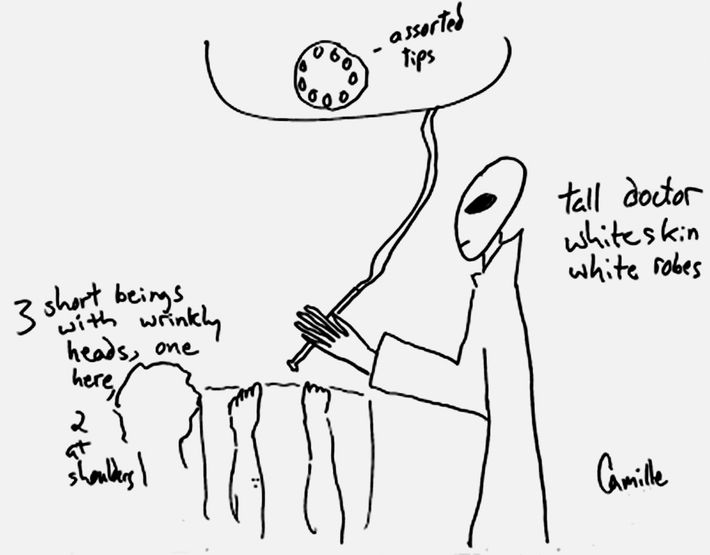
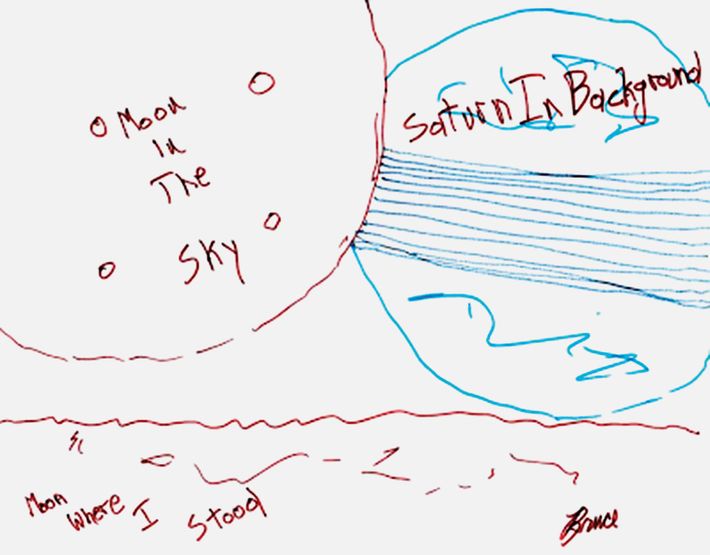
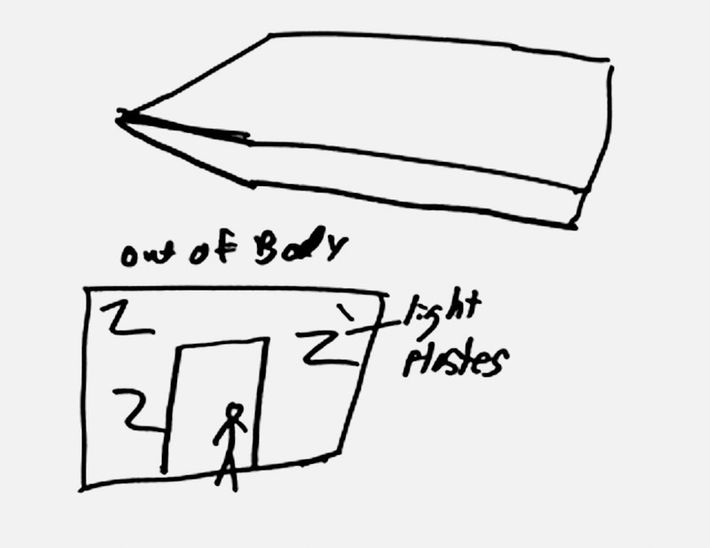
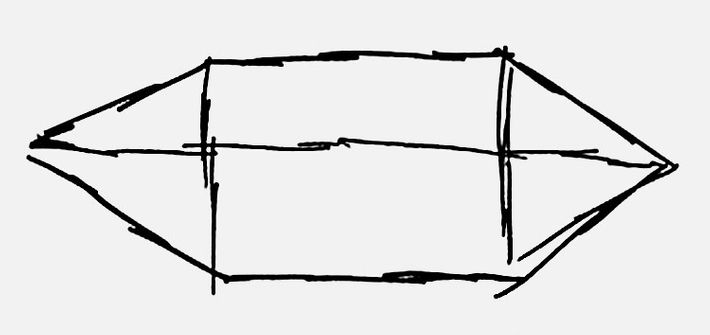
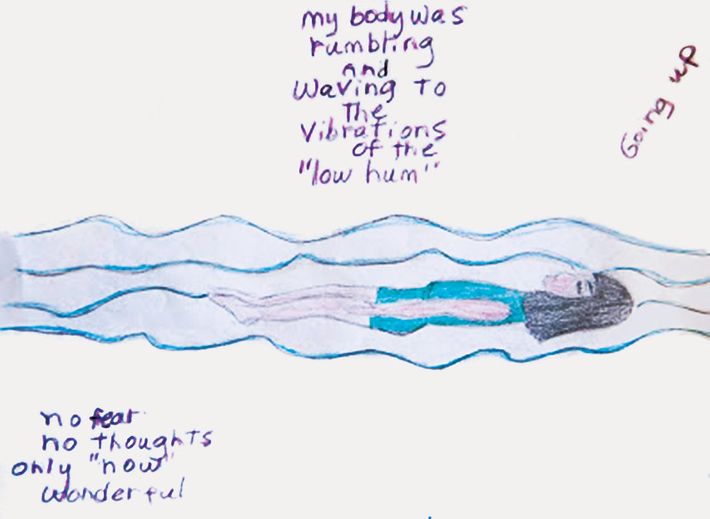
In 2012, the photographer Steven Hirsch asked UFO-convention attendees who claimed to have had personal contact with extraterrestrials to draw and describe their experiences. A sampling below.
Camille: A beam of solid blue light came through her ceiling and transported her onto a table where she was surrounded by beings in white robes with high collars. Photo: Courtesy of Steven Hirsch
Bruce: An alien woke him from his bed to show him the moons of Saturn. Photo: Courtesy of Steven Hirsch
Lisa: A gray alien knocked at her door and handed her two babies, leaving her with a hole in her head. Photo: Courtesy of Steven Hirsch
Steve: He saw a beeping, bright white light; it zapped his friend up. Photo: Courtesy of Steven Hirsch
Nancy: Her body responded to the “low hum” of the UFO spacecraft, a memory she accessed in regression therapy. Photo: Courtesy of Steven Hirsch
Rita: She has been visited by a golden reptilian alien throughout her life. Photo: Courtesy of Steven Hirsch
6. That “Asteroid” Looks an Awful Lot Like a Rocket Ship
For science-minded SETI freaks, the last decade has been a particularly exciting one.
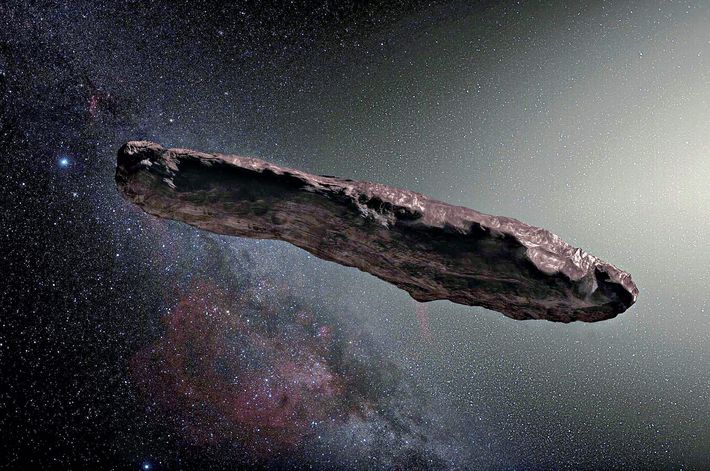
‘Oumuamua.
We May Have Just Seen an Actual Flying Saucer When ‘Oumuamua — the name means “first messenger” in Hawaiian — was discovered floating through the solar system in October, SETI nuts immediately started checking the boxes that suggested the rod-shaped object might be an alien spacecraft of some kind. After all, it’s the first interstellar object we’ve ever seen pass through the solar system. UFO enthusiasts point out that rods (along with flying saucers) are the two most common shapes cited by witnesses in UFO sightings, and the cigar shape would allow it to be slim enough to avoid collision with other objects as well as maximize aerodynamics for travel. Both the SETI Institute and the Breakthrough Listen initiative pointed their instruments toward the object but found no unusual signals emitting from it. Of course, maybe it’s an ancient relic from an interstellar civilization, or maybe the aliens just weren’t interested in making contact (that asteroid-ness could’ve just been camouflage). With the object on its way out of the solar system, we may never know.
And There Could Be an Alien Megastructure Much Farther Out In the fall of 2015, Penn State astronomer Jason Wright posited that erratic shifts in brightness coming from a newly discovered star 1,280 light-years from Earth couldn’t be explained by exoplanets or other astrophysics that we understand. He theorized, instead, that the fluctuations may be the result of massive objects passing in front of the star, in a kind of orbit — a whole array of massive satellites or other kinds of structures, presumably produced by a civilization of advanced intelligence. Whoa.
Aliens Could Be Dancing to Earth Music Right Now Last year, two planets were discovered orbiting a red dwarf 12.36 light-years from Earth. At least one of these planets is in the Goldilocks zone, so SETI International decided to beam some musical signals over to the planet. With a closer proximity to Earth than most potentially habitable exoplanets, it’d be an exciting planet to start an interstellar pen-pal relationship with — assuming there’s someone around to hear our notes and listen to them as a welcoming tune instead of a battle cry.
And We’re Getting Radio Signals From … Something Fast radio bursts (FRBs) are one of the most mysterious phenomena ever observed by scientists. Though they last only a few milliseconds, these pulses, first detected in 2007, emit more energy in that time than the sun does in 24 hours. Three more were found this month, and we’re no closer to understanding their origin — except that they’re coming from outside the Milky Way. So naturally, many experts have begun to think perhaps they’re produced by an ultra-advanced civilization from afar, trying to speak to us through signals we can barely comprehend.
7. These Masters of the Universe Are Obsessed (They Are Also All Men)
Which space-besotted billionaire will be the first to make contact?
Robert Bigelow As a child, Bigelow watched the government test atomic bombs from his bedroom window and he and his classmates could see the mushroom clouds bloom over the Mojave Desert from their school playground. To some, such memories are the stuff of dystopic Cold War hellscapes, but Bigelow remembers them as an epiphany. Even back then, Bigelow knew he wasn’t going to be a scientist (he was lousy at math), so he resolved himself to make as much money as possible in the hopes that he could one day fund his own space program. He went on to make at least $1 billion with Budget Suites of America, long-term motel rentals around the Southwest. He now runs Bigelow Aerospace, which holds contracts with NASA and was a primary contractor for the Department of Defense’s Advanced Aerospace Threat Identification Program.
Photo: Stephen Lam/Reuters
Elon Musk Musk is hell-bent on using his $21 billion to colonize Mars. His company SpaceX has been trying desperately to reduce the cost of space travel in the hopes of beginning a million-person colonization of Mars. “If [we’re not in] a simulation, then maybe we’re in a lab and there’s some advanced alien civilization that’s just watching how we develop, out of curiosity, like mold in a petri dish,” says Musk.
Photo: Paul Gallen/Twitter
Paul Allen When Congress cut off funding for NASA’s hunt for aliens in 1993, Allen gave millions to the SETI Institute; in 2009, the Allen Telescope Array started searching the cosmos. Allen has given an additional $30 million to the project, a sum that bought him a guarantee that if the array detects an extraterrestrial communiqué, Allen will be the first nonscientist to know.
Photo: Bryan Bedder/Getty Images for Breaktrough Prize Foundation
Yuri Milner Last year, Milner — named after a Russian cosmonaut — announced a plan to send spaceships to Saturn’s moon Enceladus in search of alien life. Milner is also funding Breakthrough Listen, a ten-year project to use a telescope in West Virginia to search for messages from intelligent life, and Breakthrough Starshot, in conjunction with Mark Zuckerberg and the late Stephen Hawking.
Jeff Bezos His company Blue Origin is competing with Elon Musk’s SpaceX to launch reusable rockets (and comically rich tourists) into space. While Musk played himself in a cameo in Iron Man 2, Bezos appeared as an alien Starfleet official in 2016’s Star Trek Beyond. (It was not a speaking role.)
“Why do I feel so much like Sigourney Weaver?” Bezos said last March as he piloted a giant manned robot at Amazon’s MARs conference.
Franklin Antonio Antonio cofounded Qualcomm, a mobile tech company, in the mid-’80s. He’s also the company’s chief scientist and has given millions to SETI research. Last year Antonio gave $30 million to the University of California San Diego’s school of engineering and followed that donation up with a contribution to Roy Moore’s failed senate campaign.
8. As Are Some Prominent Military and Government Folks
You see a lot more as a test pilot than as a farmer in Iowa.
Nick Pope “Know that there are people who watch our skies to protect the sleeping masses,” Britain’s former chief UFO investigator warns in his memoir. “But also know that not all potential intruders into our airspace have two wings, a fuselage, and a tail, and not all show up on our radar.” Pope’s ominous counsel follows time he spent in the ’90s inspecting thousands of paranormal incidents from crop circles to purported bedside abductions. He took that job certain this kind of stuff “only happened to weirdos,” but unexplainable sightings soon convinced him that “there is a war going on” with aliens. Worse, the U.K. Defense Ministry cut his old UFO desk’s funding in 2009, so whatever’s out there “could attack at any time,” Pope believes. Earthlings’ diminished odds have gotten him more fatalistic lately, too: After scientists suggested ‘Oumuamua — a bizarre-shaped asteroid that’s the first interstellar object to pass through our solar system — might be an alien spaceship, he argued in December we “probably wouldn’t survive an alien invasion” anyway, because if they find us, it’s clear who has the upper hand.
Paul Hellyer Canada’s Defense minister during the Cold War, now 94, believes that at least 80 species of aliens have been visiting Earth for millennia. One group is called the Tall Whites (because they can reach basketball-goal height) or Nordic Blondes (because they look like they’re “from Denmark or somewhere”). Unfortunately, the others may include ecoterrorists: “We’re doing all sorts of things which are not what good stewards of their homes should be doing,” he told media in 2014. “They don’t like that, and they’ve made it very clear.” Hellyer adds that many technological “breakthroughs” were aped from these extraterrestrials. Microchips and fiber optics, for instance, were taken off crashed alien vehicles and reverse-engineered. The aliens have a special technology that would solve climate change as well, he claims, but the Illuminati are hiding it because it would devastate oil interests.
Philip Corso Corso’s military career was long and illustrious, from rebuilding Rome’s government after World War II as an Army Intelligence captain to having worked the Pentagon’s foreign-technology desk in the ’60s. He doesn’t appear to have said a word publicly about aliens until 1997, when Simon & Schuster published The Day After Roswell — with a foreword by Strom Thurmond — just 13 months before Corso died. It was his tell-all outlining a decades-long Roswell cover-up while plugging his own clandestine exploits, which he claimed involved reverse-engineering technology found on alien spacecrafts. This is how the world got lasers, particle beams, microchips, even Kevlar, Corso said. Skeptics argue that regular Earth people’s R&D behind technology like lasers is impossibly well documented.
Barry Goldwater Had he won election in 1964, one of his White House’s first acts might have been releasing top-secret UFO files. He harbored a lifelong fascination with the truth about extraterrestrial contact, much of it stemming from his desire to “find out what was in” the mysterious Hangar 18 at Wright-Patterson Air Force Base, home to the Air Force’s Project Blue Book. In the ’80s, it surfaced he’d spent decades corresponding with UFO investigators and harassing the military for access to the hangar’s so-called Blue Room, where conspiracy theorists believe alien bodies from Roswell are preserved. (“Not only can’t you get into it,” his friend General Curtis LeMay supposedly snapped in 1975, “but don’t you ever mention it to me again.” Goldwater claims he didn’t.) After retiring in 1987, the senator toldLarry King the Earth is “one of several billion planets in this universe. I can’t believe that God or whoever is in charge would put thinking bodies on only one planet.”
Roscoe Hillenkoetter After he’d served as the first CIA director (he’d been appointed by President Truman), Hillenkoetter retired from a distinguished Navy career in 1957 and took a gig at a brand-new private research group called the National Investigations Committee on Aerial Phenomena. Its chief purpose was pressuring the government to disclose what it knew about UFOs, via investigations like Project Blue Book. Hillenkoetter went after the intelligence community, writing angry open letters that said things like: “It is time for the truth to be brought out in open congressional hearings.” When he pointed out in 1960 that the Air Force had investigated 6,312 UFO reports to date, but was seemingly trying “to hide the facts,” the military reminded Americans that “no physical evidence, not even a minute fragment of a so-called flying saucer, has ever been found.”
Of course, another theory popped up in the ’80s — that Hillenkoetter had helped run a secret committee all along of politicians, military officers, and scientists called the Majestic 12. Ufologists claimed this cabal was formed in 1947, once Truman started panicking over what to do with all the alien spacecrafts the government kept finding. The group’s existence is based on government files that allegedly materialized in 1984. The FBI denied their authenticity entirely, but they and the Majestic 12 remain popular grist for conspiracy theories, having figured in Blink-182’s song “Aliens Exist” and even one of Twin Peaks’s side plots.
Dennis Kucinich Kucinich’s 2008 presidential campaign didn’t suffer from his admission, made during a live TV debate, that, back in 1982, he’d seen a UFO at friend Shirley MacLaine’s Washington State home. (He was polling around 4 percent at the time.) But the current candidate for Ohio governor got mocked plenty; one joke among Beltway insiders was he wanted the “little green vote.”
Staff were prepped to deny the encounter when reporters asked about the passage in MacLaine’s 2007 New Age self-help book, Sage-ing While Age-ing, that revealed Kucinich didn’t just see a UFO but had also felt “a connection in his heart and heard directions in his mind.” The other witnesses — a Juilliard-trained trumpeter working as MacLaine’s bodyguard and his model girlfriend — also report having seen a trio of triangle-shaped aircrafts flying in tight formation. Her house was 50 miles from Mt. Rainier, a “saucer magnet” for UFO buffs because of all the nearby sightings, including America’s very first “flying saucer” in 1947. Kucinich had the community’s full support, even if he spent years playing coy.
It helped that in Congress he did things like trying to ban space-based weapons. A 2001 bill he authored himself prohibited America from using “radiation, electromagnetic, psychotronic, sonic, laser, or other energies” for the purposes of “information war, mood management, or mind control of such populations.” It explicitly singled out “chemtrails,” a term for jet condensation trails when conspiracy theorists believe they’re being used for biological warfare. In 2008, however, he only confirmed he’d seen a UFO, then pointed out, accurately, to moderator Tim Russert that “more people in this country have seen UFOs than I think approve of George Bush’s presidency.”
John Podesta When WikiLeaks published the Hillary Clinton emails, a weird number of Podesta’s mentioned aliens and involved contact with believers like Tom DeLonge and astronaut Edgar Mitchell. As Bill Clinton’s deputy chief of staff, he was known as an X-Files fanatic who’d “call the Air Force and ask them what’s going on in Area 51.” In 2014, he spent 13 months advising President Obama — and what was his “biggest failure”? According to him, failing to get government files declassified on the 1965 Kecksburg, Pennsylvania, UFO incident. Then during Bush’s term, he began publicly crusading for NASA to release UFO documents to journalist Leslie Kean, the person ultimately behind the Times’ Pentagon exposé.
Podesta has kept his personal ET beliefs under wraps, but in Kean’s best seller UFOs: Generals, Pilots, and Government Officials Go on the Record, he gamely wrote a foreword that argues: “It’s time to find out what the truth really is … The American people — and people around the world — want to know, and they can handle the truth.”
Pavel and Marina Popovich This husband-wife duo was one part world-renowned cosmonaut (Pavel) and one part the Soviet Union’s most celebrated female pilot (Marina). They held among their titles that of sixth human in orbit, first Soviet female to break the sound barrier, and holder of more than 100 aviation world records. Once their illustrious flying careers ended, both became ufologists. Pavel headed up Russia’s UFO association and claimed to have seen an unidentified aircraft zip past his airplane on a trip home from Washington, D.C., with a group of scientists. People onboard said it was triangular, brightly lit, and rocketed by at 1,000 miles per hour.
Marina one-upped him, though — she claimed to have seen multiple UFOs and a “Bigfoot creature” — and after they divorced, she became the acclaimed expert, not Pavel. She began preaching a UFO glasnost of sorts under Gorbachev, claiming the Soviet government had pieces of five spaceships in its possession and reports of 14,000 UFO sightings, yet for decades researchers were “either fired or put in psychiatric hospitals.” Her eventual book, simply called UFO Glasnost, spoke candidly about how Leonardo da Vinci, Jules Verne, and Ray Bradbury were alien mediums and Gorbachev had the markings of an extraterrestrial emissary because “he’s an epoch-making phenomenon.”
—Clint Rainey
9. (And This Genius Thinks He Can Talk to Them)
In January, Stephen Wolfram — a computer-scientist philosopher and the author of a “universal” programming language that informed the alien communication in the movie Arrival— wrote an exceedingly long blog post about how best to communicate with aliens.
Tim Urban: You created a language you think we might be able to use to communicate with aliens. So what exactly is it that we would want to say to the rest of the universe if we had the chance?
Stephen Wolfram: I think the main difficulty is the definitional one. You talk about alien life, you talk about intelligence; what are those things abstractly?
We know the specific example that we have historically been exposed to: life on Earth, human intelligence. The question is, when you generalize away from that, what do you get to? One of the things that I’m fond of quoting is the statement “The weather has a mind of its own.” What does this mean? What is the abstract kind of thing that’s like the mind? It’s the ability to do sophisticated computation. That’s something that exists in the weather, just as it exists in our brains, just as it exists in lots of living systems. And then, what’s different between the weather and its sort-of-mindlike thing and our human intelligence? The fundamental answer to that is our human intelligence has its particular cultural, civilizational history and the weather doesn’t.
TU: So is it that history that we’d want to communicate?
SW: Yes, I think the thing to realize is that we in our civilization have followed a particular path. There are an infinite number of possible paths that we could’ve followed. To any other intelligence, our path would be quite mysterious.
TU: Right, so we actually have unique information to communicate. You could have the most sophisticated species, and we can still tell them something they don’t know about our history.
SW: I’m particularly amused by Elon Musk’s car going into space. That is so extremely aligned with the notion of grave goods from ancient Egypt, where you’re taking things from your everyday life to be buried with you. It’s charming.
10. There Have Been Enough Well-Known Encounters to Fill Encyclopedias
Here, just a small sampling of the classics.
Barney and Betty Hill. Photo: Bettman Archive/Getty Images
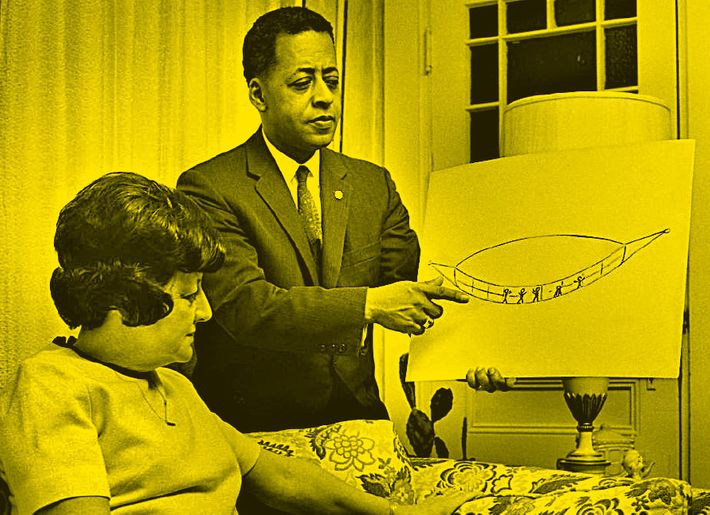
Barney and Betty Hill’s Abduction The Hills (above) claimed that in 1961 a bright light swooped over their car on a New Hampshire road and that they woke up a few hours later and the car had been “magnetized.” With regressive hypnosis, both were able to recall being abducted and probed by the little gray men, which soon became the de facto alien description. (The Hills’ captors were, interestingly, very similar to Selenites — the five-foot moon inhabitants H.G. Wells invented for The First Men in the Moon.) Betty astonished authorities when she began drawing a map of the constellation the creatures claimed to be from. Initially it looked like nonsense, until a few scientists noticed its resemblance to Zeta Reticuli, a system inside the constellation Reticulum largely unknown in that year. Their case generated widespread publicity, partly because they were a mixed-race couple in the ’60s, and turned into the flagship example of a “close encounter,” though not until years after the fact (skeptics argue the delayed report is a sign it’s a hoax). The hype ultimately culminated in The UFO Incident, a 1975 made-for-TV movie starring James Earl Jones and Estelle Parsons.
Antonio Villas-Boas’s Seduction In 1957, small aliens with huge heads allegedly came for Villas-Boas, a young Brazilian farmer. Villas-Boas was forced inside their vessel, where the creatures took blood samples from, of all places, his chin, and rubbed in some sort of gel. Soon after, a blonde female with big, almond-shaped eyes joined him. She began rubbing his body, then initiated sex. After they were done, she left quickly, which gave Villas-Boas the impression that he was being used to better the aliens’ “stock.” He didn’t react well, as he suddenly felt exploited as “a good stallion” by these foreign chin-fetishists.
Weird as it was, Boas’s encounter, with its probing and forced sex, became the archetypal alien abduction. Reportedly skittish at first, he eventually told his story to João Martins, the writer behind popular magazine O Cruzeiro’s “Flying Saucers’ Terrible Mission” series. Doctors confirmed Boas had suffered radiation poisoning, but Martins ultimately soured on Boas’s story, for one because his spaceship sketch bore remarkable similarities to the Soviet Union’s Sputnik. He turned out all right, though: He got a law degree, had four kids, and died believing his children had a half-sibling living in space.
The “Wow!” Signal In 1977, Ohio State’s Big Ear radio telescope intercepted a 72-second burst of sound that bore signs of having come from interstellar space, which could be a sign of extraterrestrial communication. The anomaly measured 1,420 megahertz, a frequency in the “water hole,” the term for a radio-emission range thought ideal for intergalactic messages because it’s unusually quiet. Jerry Ehman, the astronomer who spotted it, was so excited that he scribbled a giant “Wow!” on his printout. Astronomy’s explanations for the bizarre phenomenon include secret spy satellites and a passing comet nobody knew about in 1977. But many admit nothing explains it adequately, and even if the signal doesn’t prove aliens exist, it’s still a “tug on the cosmic fishing line.” To date, it remains the best evidence of alien communication ever obtained.
Foo Fighters In the middle of World War II, things took a mysterious turn for Air Force pilots flying overnight missions. They reported seeing lights chasing their aircraft. The number varied (sometimes it was one; other times ten), and so did the colors (red, orange, and green). But the unidentified objects shared in common that they moved very fast, up to 200 miles per hour, yet could dart on a dime. These pilots — among the world’s best — admitted the objects generally flew circles around them. Their lore grew among the squadrons. In 1944, a crew flying along the Rhine in Germany described seeing “eight to ten bright orange lights” whiz by “at high speed.” Neither ground control nor their own planes caught anything on radar, and when one pilot turned toward the lights, they reportedly “disappeared.”
They called their mystery air companions “foo fighters,” an inside joke based on a phrase the comic-book character Smokey Stover used to declare (“Where there’s foo, there’s fire”). The term flying saucer hadn’t caught on yet, or else it would’ve sufficed. Some witnesses assumed they were tracer fire, reflections from ice crystals, or high-tech weaponry developed by the Nazis, while the government had a boring explanation as always: They were “electrostatic (similar to St. Elmo’s fire) or electromagnetic phenomena,” though which one and wherefrom were “never defined.”
Kecksburg UFO Crash In 1965, an intense fireball streaked over southern Canada and Detroit and dropped debris over Ohio, Michigan, and Pennsylvania. Officially, it was declared a midsize meteor, but eyewitnesses in the small Pennsylvania town of Kecksburg claimed they’d found an acorn-shaped object about the size of a VW Beetle in the woods that was festooned with hieroglyphics. Newspaper reporters on the ground said the military conducted a “close inspection” of the crash site, and despite the official line being that the search yielded “absolutely nothing,” conspiracists maintain the object was packed onto an Army flatbed truck and that the whole thing was a Roswell-level cover-up. Leslie Kean’s Coalition for the Freedom of Information managed to secure some of the government’s files but reportedly not anything enlightening.
However, a second explanation surfaced in the early aughts: It was Die Glocke, purportedly a top-secret weapon Nazis developed that let them time-travel. By dumb Back to the Future–esque luck, it had come to rural Pennsylvania in the year 1965. These proponents argue Nazi SS officer Hans Kammler was navigating the device when it crash-landed in Kecksburg, allowing him to escape Allied troops in the days before VE Day and successfully integrate into postwar U.S. society.
Kenneth Arnold’s “Flying Saucer” Kenneth Arnold, a respected pilot, claimed in 1947 he’d seen nine mostly flat objects whip past Mount Rainier at speeds he timed at 1,760 miles per hour. “They were shaped like saucers,” he reportedly explained, “and were so thin I could barely see them.” A neologism was born.
Arnold he demanded military personnel explain what the contraptions were, if they knew, since he’d dismissed any possibility of them being guided missiles or new types of jets. His best guess? “From another planet.” Dozens of others came forward with similar sightings, from as far away as Oklahoma and Arizona. But Arnold didn’t enjoy his newfound celebrity. He said people had started shrieking in cafés when they saw him and fleeing. He described the situation to reporters as “out of hand” and regretted having people “look at me as a combination of Einstein, Flash Gordon, and screwball.”
Phoenix Lights On March 13, 1997, thousands of people in southern Arizona say they saw weird lights move across the night sky in a flying V. Most of their reports came in between 7 and 10:30 p.m. along a 300-mile stretch from Phoenix, through Tucson, and to the Mexico border. A majority of people spied the pattern passing overhead (it was supposedly several football fields long), but the Air Force also sent a team of A-10 Warthogs from nearby Barry Goldwater Range on a training exercise that same night, and, as luck would have it, those planes dropped some stationary flares just outside Phoenix, considerably complicating any UFO conspiracies with a second set of strange bright lights.
Witnesses claim to have watched the first set of lights — the low-altitude wedge formation — coast by with their binoculars; they say the lights were red, had a singular white one at the V’s tip, seemed engineless, and even banked southeast at one point. Actor Kurt Russell now claims he saw them while up in a private plane near the Phoenix airport, but air-traffic control told him the radar was clear. Governor Fife Symington reportedly witnessed the V-shaped as well. At the time he felt sure it wasn’t aliens, but his mind changed in 2007, after retiring from politics: He told media that as a pilot, he knows “just about every machine that flies,” and these lights definitely weren’t terrestrial.
The “Warminster Thing” Warminster’s long, controversial association with UFOs began in the English town on Christmas Day in 1964, when a local woman heard a “crackling sound” rip over her head. Other so-called sonic attacks plagued scores of others in town around the same time. Townspeople had no clue what was behind them, so they began blaming the “Thing.” Additional reports of inexplicable lights in the sky made it clear the “Thing” might have hailed from outer space.
Travis Walton’s Abduction In 1975, a team of loggers claimed their 22-year-old co-worker Travis Walton disappeared for five days after a glowing disc in the Arizona woods zapped him with a “bluish ray.” Intrigued, he’d reportedly wandered underneath the hovering object, and it abducted him. He claims he awoke on a table in a sterile-looking room surrounded by three “well-developed fetuses” wearing tan robes. He tried to flee, passed out, then regained consciousness only once the aliens had ditched him on the Arizona roadside.
The story received loads of publicity — authorities thought Walton had been murdered, and seven eyewitnesses corroborating a single close encounter was unheard of. The National Enquirer ultimately paid the group $5,000 for the story, after they passed polygraphs and Walton agreed to be interviewed by the tabloid’s “prestigious” hypnotist. In 1993, Paramount released Fire in the Sky, a movie it said was based on “the most famous case of UFO abduction ever recorded.” Skeptics have shot holes in what they assume was a hoax and note that James Earl Jones’s NBC movie The UFO Incident had aired two weeks before Walton’s own UFO incident. The encounter has a cult following to this day, though, enough that a first edition of Walton’s 1978 memoir The Walton Experience now fetches hundreds of dollars online.
The Battle of Los Angeles On February 25, 1942, reports filtered in of a glowing object floating over Culver City. Air-raid sirens sounded; the Army proceeded to pepper it with 1,400 anti-aircraft shells. Eventually it disappeared from view, but not before a citywide blackout was ordered, shell fragments got lodged in surrounding buildings, and five civilians died. The Navy later explained it had been a weather balloon. But ufologists suspected an alien spacecraft, which would explain why an hour’s worth of heavy artillery had failed to eliminate a single weather balloon.
Steven Spielberg would mercilessly satirize the incident in 1941, a “comedy spectacular.” But ufologists immediately suspected an alien spacecraft, which would explain why an hours’ worth of heavy artillery had failed to eliminate a single weather balloon. Conspiracists site a famous L.A. Times photo as extra proof; it seemingly caught searchlights trained on a very un-balloon-like object getting barraged with shells. The next day’s Times ran an editorial on page A1 (“Information, Please”) demanding the Army and Navy release more info, “if only to clarify their own conflicting statements about it.”
New encounters happen all the time — even to famous people. When Guillermo del Toro spotted one in Guadalajara, he says, “It was so crappy. It was a flying saucer, so clichéd, with lights.” Above, a sampling from ufosightingsdaily.com over recent months.
January 18, Japan. Photo: Ufosightingsdaily
February 4, Popocatépetl, Mexico. Photo: Ufosightingsdaily
February 28, Cleveland, Ohio. Photo: Ufosightingsdaily
March 7, Bangs, Texas. Photo: Ufosightingsdaily
12. We Even Have Some Pretty Developed Theories About Why We Haven’t Heard From ET Yet
Maybe we’re the pond scum.
The Aliens Are All Dead Let’s start with the most depressing theory: Maybe we haven’t found extraterrestrials because they’re all dead — at least now. The universe is 13.78 billion years old, and in that amount of time, there might have been plenty of civilizations that evolved and went extinct.
The Aliens Are All Sleeping But maybe they’re not dead — just hibernating. Another theory suggests that perhaps there’s an extraterrestrial species out there that’s so advanced it cannot efficiently make use of its technology right now, because the universe’s temperature is currently too high. Good news, though: The universe’s temperature is cooling down (even as Earth’s is heating up). So aliens may have decided to take a snooze for a few trillion years while they wait for colder weather that’s more suited.
The Aliens Are Hiding If even a genius like Stephen Hawking thought that aliens might destroy us if they ever were to find us, then maybe we should be a little afraid. Perhaps the aliens think the same thing, so they’ve gone into hiding — from us. If another civilization were technologically savvy enough and had enough resources, it could build a massive orbital structure like a Dyson sphere to keep it cloaked from detection. Or it might use high-powered lasers to provide an optical façade that keeps its planet from being detected by telescopic instruments.
The Aliens Are Still Evolving Maybe alien life is actually everywhere — it’s just not intelligent enough to speak with us. It took about 3.5 billion years of evolution to turn single-celled microbes into humans. Maybe we just happened to evolve faster and earlier than everyone else.
Humans Haven’t Spent Enough Time Looking Realistically speaking, we’ve only had the proper equipment to search for aliens for a little over half a century. On the scale of the cosmos, that time frame is less than a fraction of the blink of an eye. The process could take centuries or even millennia — optimistically speaking.
The Aliens Are Already Here This is where the conspiracy theorists get to go nuts. Yes, maybe the aliens are already here and we just haven’t figured it out yet. They might be taking some time to study us before unveiling themselves, or maybe they have already let themselves be known to certain groups. The truth isn’t out there — it’s here.
—N.P.
13. And in the Meantime, Aliens Can Be Whatever We Want Them to Be
Katie Heaney: Why, when we think of aliens, do they all look the same — three feet tall, gray or green, big black eyes?
Joseph O. Baker: It didn’t used to be that way. UFO narratives became much more popular in the 1950s and ’60s, and during that era, the descriptions of the aliens would be almost humanlike in form. If you see drawings that some of the so-called contactees made, the aliens almost look like Swedish people — very attractive blond types with shining eyes. The abductee narrative really took over pop culture in the 1970s and ’80s, and after that, there’s this homogenization of the public perception because of all the stories and TV and movies about abductions.
KH: Even those guys look pretty human — why do we have such a hard time imagining radically different forms of life?
JB: We’re the people doing the projecting here. Much the same way people do with God — really, what sense does it make for a supernatural entity to have a gender or be humanoid Anthropomorphized supernatural entities tend to be more compelling.
KH: Is there a reason why so many of the abduction stories feature “probing”?
JB: The probe part of the abduction narrative took over in some sense because it tends to be the most salacious aspect of these stories. It’s almost become shorthand for alien abduction. But the stories of abduction among believers are really diverse, and usually probing is only one small part of it. Men will report having sperm extraction, and women will report having eggs extracted. Positive encounters tend to be akin to religion in some ways, in which beings of higher enlightenment show people the errors of humanity, or help them reach a higher plane of consciousness.
KH: Who is likely to believe?
JB: Men, and people with lower levels of income, are more likely to believe. We don’t really find strong patterns by education, and if we do, there’s usually a slight positive effect. But one of the strongest predictors you can find for believers is their extreme distrust of the government. That’s part of the reason it got so big in the ’70s, when trust in institutions was low. Trump might actually increase belief in UFOs.
Another one of the strongest predictors is not participating as strongly in forms of organized religion. In some sense, there’s a bit of a clue there about what’s going on with belief — it’s providing an alternative belief system.
KH: Most alien-encounter stories give aliens one of two motives: Either they want something from us or they want to kill us. What does that say about us?
JB: It shows that we have a high level of perceived self-importance. The idea that, in this vast universe, these beings sought us out in this tiny corner of the spiral arm of the Milky Way to come learn omething from us, or eliminate us, is a bit flattering.
KH: I’ve heard that sightings are way down in the smartphone era, when people presumably don’t take a story as proof enough.
JB: Well, it’s easier to hoax things now than it used to be. I would think that with an increased availability of videos, if it was going to do anything, it might lead to more belief, but from most of what I’ve seen, it looks more like stasis. Rates of reported sightings and rate of belief have been pretty stable. The 2005 Baylor Religion Survey found that 25 percent of respondents agreed or strongly agreed with the statement “Some UFOs are probably spaceships from other worlds.”
ABriefHistoryof‘AlienDreams’
1899: Nikola Tesla notices rhythmic sounds on a radio receiver and is convinced they’re communications from Martians.
1924: At the request of David Todd, former head of the astronomy department at Amherst College, the Navy agrees to limit unnecessary radio communications from its largest bases for one day so that he can listen for alien signals as Mars passes closer to Earth than it’s been in over a century.
1960: The modern search for ETs begins when Frank Drake uses an 85-foot radio telescope in the hills of West Virginia to scan stars for signs of intelligent life; he later develops an equation to estimate the number of advanced civilizations.
1969: Jimmy Carter, candidate for Georgia governor at the time, sees a strange light.
1992: NASA formally begins its own SETI program.
1993: Congress eliminates funding for NASA’s SETI program.
1999: UC Berkeley launches SETI@home, a screen saver available to the public that enables anyone’s idle computer to analyze data collected by radio telescopes.
2016: Breakthrough Listen launches; it will collect as much data in a day as past SETI projects collected in a year.
0
1
2
3
4
5
- Gemiddelde waardering: 0/5 - (0 Stemmen) Categorie:ALIEN LIFE, UFO- CRASHES, ABDUCTIONS, MEN IN BLACK, ed ( FR. , NL; E )
20-03-2018
DON’T TALK TO ALIENS, WARNS STEPHEN HAWKING (VIDEO)
DON’T TALK TO ALIENS, WARNS STEPHEN HAWKING (VIDEO)
The aliens are out there and Earth had better watch out, at least according to Stephen Hawking. He has suggested that extraterrestrials are almost certain to exist — but that instead of seeking them out, humanity should be doing all it that can to avoid any contact.
The suggestions come in a new documentary series in which Hawking, one of the world’s leading scientists, will set out his latest thinking on some of the universe’s greatest mysteries.
Alien life, he will suggest, is almost certain to exist in many other parts of the universe: not just in planets, but perhaps in the centre of stars or even floating in interplanetary space.
Hawking’s logic on aliens is, for him, unusually simple. The universe, he points out, has 100 billion galaxies, each containing hundreds of millions of stars. In such a big place, Earth is unlikely to be the only planet where life has evolved.
“To my mathematical brain, the numbers alone make thinking about aliens perfectly rational,” he said. “The real challenge is to work out what aliens might actually be like.”
The answer, he suggests, is that most of it will be the equivalent of microbes or simple animals — the sort of life that has dominated Earth for most of its history.
One scene in his documentary for the Discovery Channel shows herds of two-legged herbivores browsing on an alien cliff-face where they are picked off by flying, yellow lizard-like predators. Another shows glowing fluorescent aquatic animals forming vast shoals in the oceans thought to underlie the thick ice coating Europa, one of the moons of Jupiter.
Such scenes are speculative, but Hawking uses them to lead on to a serious point: that a few life forms could be intelligent and pose a threat. Hawking believes that contact with such a species could be devastating for humanity.
He suggests that aliens might simply raid Earth for its resources and then move on: “We only have to look at ourselves to see how intelligent life might develop into something we wouldn’t want to meet. I imagine they might exist in massive ships, having used up all the resources from their home planet. Such advanced aliens would perhaps become nomads, looking to conquer and colonise whatever planets they can reach.”
He concludes that trying to make contact with alien races is “a little too risky”. He said: “If aliens ever visit us, I think the outcome would be much as when Christopher Columbus first landed in America, which didn’t turn out very well for the Native Americans.”
The completion of the documentary marks a triumph for Hawking, now 68, who is paralysed by motor neurone disease and has very limited powers of communication. The project took him and his producers three years, during which he insisted on rewriting large chunks of the script and checking the filming.
John Smithson, executive producer for Discovery, said: “He wanted to make a programme that was entertaining for a general audience as well as scientific and that’s a tough job, given the complexity of the ideas involved.”
Hawking has suggested the possibility of alien life before but his views have been clarified by a series of scientific breakthroughs, such as the discovery, since 1995, of more than 450 planets orbiting distant stars, showing that planets are a common phenomenon.
So far, all the new planets found have been far larger than Earth, but only because the telescopes used to detect them are not sensitive enough to detect Earth-sized bodies at such distances.
Another breakthrough is the discovery that life on Earth has proven able to colonise its most extreme environments. If life can survive and evolve there, scientists reason, then perhaps nowhere is out of bounds.
Hawking’s belief in aliens places him in good scientific company. In his recent Wonders of the Solar System BBC series, Professor Brian Cox backed the idea, too, suggesting Mars, Europa and Titan, a moon of Saturn, as likely places to look.
Similarly, Lord Rees, the astronomer royal, warned in a lecture earlier this year that aliens might prove to be beyond human understanding.
“I suspect there could be life and intelligence out there in forms we can’t conceive,” he said. “Just as a chimpanzee can’t understand quantum theory, it could be there are aspects of reality that are beyond the capacity of our brains.”
Though it may come as a surprise to many, debates surrounding extraterrestrial invasion are not restricted to the UFO community and Hollywood. In recent years, mainstream science and even the US defense establishment have openly discussed ‘falling skies’ scenarios and what humanity might do to repel potential alien aggressors.
The late, great Sir Stephen Hawking was perhaps the most high-profile individual to warn of the potential dangers of extraterrestrial contact. In April 2010, Hawking made international news by stating his firm belief that humanity should seek to avoid any form of interaction with aliens. In an episode of the Discovery Channel’s Into the Universewith Stephen Hawking, the professor said: “If aliens ever visit us, I think the outcome would be much as when Christopher Columbus first landed in America, which didn’t turn out very well for the American Indians.” Hawking suggested that aliens “might exist in massive ships, having used up all the resources from their home planet” and would perhaps be “looking to conquer and colonize whatever planets they can reach.”
Hawking’s anti-alien comments captured the attention of Hollywood and, later that same year, were incorporated into the marketing campaign for the alien invasion blockbuster, Skyline(2010). The trailer for the film begins with bold text against a cosmic backdrop, reading: “On 28 August 2009, NASA sent a message into space farther than we ever thought possible in an effort to reach extraterrestrial life.”
This is true. On the date specified, the Australian government, through its “Hello from Earth” science initiative, and with the help of NASA, sent some 26,000 carefully vetted messages from the public to the extra-solar Earth-like planet Gliese 581d in a single transmission. This proactive approach to alien contact, known as METI (Messaging Extraterrestrial Intelligence), differs from the traditional passive approach favored by SETI (Search for Extraterrestrial Intelligence), which devotes its efforts simply to listening for any potential incoming alien signals. Stephen Hawking was not a fan of the METI approach as he considered it unwise to knowingly alert our presence in the galaxy to any technologically superior civilizations.
In a bid to blur fact and fantasy for viral marketing purposes, Skyline made use of Hawking’s comments in its trailer, which featured well known American newsreaders—including Dan Rather—citing the famed professor on the potential dangers of extraterrestrial contact. The trailer then cuts to panoramic views of an American city being obliterated by dozens of the “massive ships” to which Hawking had referred. Against a black screen, and again referring to the professor’s warning, bold text then reads: “Maybe we should have listened.”
Skyline wasn’t the only movie to draw inspiration from METI initiative, or from Hawking’s dire warnings against phoning E.T. The 2012 movie, Battleship, opens with a scene in which NASA prepares to transmit a signal to the Gliese system, exactly as the space agency had done in real life two-years prior. In the movie, a wise-cracking scientist paraphrases Stephen Hawking, quipping, “it’s going to be like Columbus and the Indians—only we’re the Indians.” But the signal is sent anyway, and NASA gives itself a hearty pat on the back. Needless to say, alien contact ensues, and it ain’t pretty.
In April 2012, a month before the release of Battleship in American cinemas, Professor Paul Springer of the US Air Command and Staff College was granted special clearance by his employers at the Pentagon to discuss how the military would respond in the event of an alien invasion. Springer’s comments were aired in a televised interview for Australia’s Channel 9.
When asked by his interviewer exactly how an alien invasion might unfold, Springer replied:
“That really depends on why they are here in the first place. If they are here for the extraction of a specific resource, for example, they might just want to eliminate any resistance that might block them from their objective. If, on the other hand, their goal was actual occupation and conquest, then they would probably have to prioritize anything they perceive as a threat to their own dominance. So, they would probably start by wiping out as many communications networks as possible and eliminating as many weapons that might represent some form of threat either to them, or to the resources they are trying to extract.”
However, any plans the Pentagon may have drawn to fight-off evil aliens are almost certainly in vein. If any aliens out there do harbor plans for invasion, it is probable that their tactics and technology would make any resistance on our part entirely futile. “If they are hostile,” warns Professor Michio Kaku, “it would be like Bambi meeting Godzilla if we ever had to fight them… we would present no military challenge to such an advanced civilization… We would be a pushover for them. Forget all the Hollywood movies.”
In my book, Silver Screen Saucers, I take Hollywood to task for its simplistic, pumped-up depictions of how an interstellar civilization might invade our planet. If aliens should ever decide to attack Earth for its natural resources (water, minerals, human DNA, etc.), it seems unlikely in the extreme that they would opt for the scorched earth approach depicted in the likes of War of the Worlds and Independence Day. Actually, it seems improbable that the aliens would launch air strikes at all, let alone anything so messy as the ground invasions seen in, say, Falling Skies or Battle: Los Angeles. Any tactics that would provoke a military response from Earth’s leaders would probably result in damage to the very resources the aliens are seeking to acquire, especially if weapons of mass destruction are used by either side.
Even if the aliens’ goal is simply to eradicate humanity, direct engagement with our military forces would likely be entirely unnecessary. Many UFO movies depict aliens using psychic forces to harm or control those around them—but if real aliens have developed advanced psychic abilities, might they be able to use these on a mass scale? If so, our psychically puny species would be conquered within a matter of hours, or instantly, even.
Possible psychic abilities aside, advanced ETs might very well have psychotronic and psychotropic weapons with which to attack the mind, or even weapons that target specific parts of the body, both external and internal—even the heart or brain—causing targets to fall down dead en masse, and all without inflicting so much as a scratch on the skin. There would be no resistance from us, and minimal effort on their part. For Hollywood’s purposes, however, such scenarios are utterly lacking in spectacle and drama.
In his later years, Stephen Hawking remained firm in his stance that the universe is likely teeming with life, some of it intelligent, but he was less optimistic about the inherent benevolence of advanced ET civilizations, believing that advanced technology does not necessarily go hand-in-hand with moral and ethical enlightenment.
Jill Tarter, former Director of SETI.
Before Hawking died, former SETI director Jill Tarter (the real-life Ellie Arroway from Contact) voiced her disagreement with the Cambridge professor about the probable nature of any future alien contact scenarios. Tarter also advised the public to disregard Hollywood entirely as an even remotely realistic representation of what to expect on contact day. “Often the aliens of science fiction say more about us than they do about themselves,” Tarter remarked on the SETI website in 2012. “While Sir Stephen Hawking warned that alien life might try to conquer or colonize Earth, I respectfully disagree. If aliens were able to visit Earth that would mean they would have technological capabilities sophisticated enough not to need slaves, food, or other planets. If aliens were to come here it would be simply to explore.”
Tarter added: “Considering the age of the universe, we probably wouldn’t be their first extraterrestrial encounter, either. We should look at movies like Men in Black, Prometheusand Battleship as great entertainment and metaphors for our own fears, but we should not consider them harbingers of alien visitation.”
On Saturday, March 3rd, two men armed with instructions on how to contact extraterrestrials and a protocol on what to do if they show up tried to contact aliens on the shore of a lake in Sicamous, British Columbia, Canada. After a few hours of meditating and watching, they left without a successful contact. Did they leave too soon?
On the morning of Sunday, March 4th, a woman walked to the very same lake and spotted a series of mysterious ice circles on the lake’s frozen surface. Coincidence? Contact? Something else?
Let’s start with the location. Shuswap Lake is in south-central British Columbia, Canada, and is known for (among other things) its odd shape – the four fingers of the lake look like the letter H from the air. The name comes from the Shuswap or Secwepemc First Nations people and it’s now a popular recreational lake centered around the city of Salmon Arm, which gets ITS name from the fish and the lake’s appendage. Besides salmon and trout, Shuswap Lake is Like many other lakes, Shuswap Lake has a legendary 25-foot long monster known as the Shuswap Lake Monster or Shuswaggi.
Does it also have close encounters of the third-thru-fifth kind? The Salmon Arm Observer reports that local (Sunnybrae) area resident Grace Edwards was walking on the lake shore in nearby Tappen when she spotted and photographed the ice circles on the frozen lake. These were not ice discs, which are circular pieces of ice formed in cold rivers as the chunks break off and are swirled and worn into circles. What Edwards saw were more like swirling patterns made in the ice – kind of like frozen crop circles. One thought is that they were made by spinning snowmobilers who someone managed to make perfect circles without leaving any other visible tracks. Another thought might be …
Aliens!
Grace Edwards’s photos (see here) were published by the Salmon Arm Observer and other local media, where they eventually were shown to Dan Berg (Berg? As in iceberg? Another coincidence?). Berg is the man who attempted to contact aliens on the night of March 3rd in Sicamous, another small town on Shuswap Lake. He told the Observer that he and a friend from Salmon Arm he met through SETI social media decided to celebrate International CE-5 day by conducting a Close Encounter of the Fifth Kind (direct communications with ETs) using the CE-5 protocol developed by Steven M. Greer of the Center for the Study of Extraterrestrial Intelligence (CSETI). For Berg, that was “meditation through consciousness.”
“In my meditation all I did was concentrate on the edge of the Rocky Mountains and Shuswap Lake for 40 minutes nonstop.”
After scanning the skies and their minds for a few hours and seeing nor hearing nothing, Berg and his friend left and thought no more about the incident until someone showed the article about Edwards and the ice circles to Berg. What did he think now?
“I think it was kind of cool and kind of ironic that something as strange as those circles that no one has ever seen before showed up the night that we were out here.”
As with crop circles, the Shuswap Lake ice circles could be explained by humans making very precise patterns in the dark on snowmobiles. Possible? Yes, but the perfection leaves an opening. Is the lake’s H pattern a beacon or marker for aliens? What about the Shuswaggi? Some crytozoologists believe these creatures are visitors from other planets.
Berg has piqued the interest of others and will probably have a crowd with him the next time he tries a CE-5. Let’s hope they bring cameras and a net for the Shuswaggi.
0
1
2
3
4
5
- Gemiddelde waardering: 0/5 - (0 Stemmen) Categorie:ALIEN LIFE, UFO- CRASHES, ABDUCTIONS, MEN IN BLACK, ed ( FR. , NL; E )
'It's a space WAR' Alien ‘battle’ near Area 51 baffles UFO hunters
'It's a space WAR' Alien ‘battle’ near Area 51 baffles UFO hunters
ALIEN hunters were left in a frenzy when they spotted what they believed to be a UFO ‘battle’ in the skies above a city in Nevada which is just a two hour driver from Area 51 – an alleged extraterrestrial hotspot.
On February 19, a driver in Henderson, Nevada, just a short drive from Las Vegas, was waiting in his car when he saw bright lights in the sky.
The unnamed motorist says the bright star-like lights in the footage, which was taken during broad daylight, started moving towards each other at a rapid speed as if they were attacking each other.
The witness said: "I was waiting in the car while my buddy went into the store. I noticed about 9 to 10 brights dots in the sky that looked like stars.
“The dots were in a line on approx 45 degree angle. All of a sudden they started to move upward on that same angle and it looked like they were attacking each other.”
'It's a space WAR' Alien ‘battle’ near Area 51 baffles UFO hunters
The man says that there were many bursts of energy and it lasted for about 20 seconds
To add more fuel to the conspiracy, the location where the footage was taken is just a two hour drive from Lincoln County, where Area 51 is based.
Area 51 is a top secret US military base which has been the centre of countless UFO theories over the years, including the infamous Roswell crash.
Some comments left beneath the video shows that some people are convinced this is a genuine UFO battle.
YOUTUBE
Alien ‘battle’ spotted near Area 51 by UFO hunters
GETTY
The incident took place near roswell
Rico Greem said: “Space war for the freedom of mankind.”
Corine Thomas said: “I believe this video, it's only a matter of time folks. The watchers are protecting us from the unruly greys.”
However, there were doubters of the authenticity, claiming that it was just reflection playing tricks on the mind.
Dan Aliyev wrote: “It’s reflections of cars turning.”
Carlos Urquides said: “It's the reflection of cars lights. If they were shooting lasers like that something would have clearly been destroyed. I believe in ufos but not this!”
The video displays the vehicle zooming through the sky at pace, leaving a thick contrail behind it.
But another object emerges from behind the cloud-like stream, sparking wild speculation online.
It then proceeds to follow the jet, before eventually overtaking it.
The footage then zooms in to show the subject as a round, peculiar-shaped craft.
NOWYOUKNOW
UFO? Bizarre footage shows the object following a plane
It was captured in the US in 2016, but has only been shared now.
A witness said: "I am told that military pilots train in the mountains around where I live and I’ve always enjoyed seeing them fly through.
"This happens all the time. jets and helicopters are a common sighting. So I naturally saw the jet and did a double take, because there was something following it.”
The clip was uploaded to YouTube channel NowYouKnow on Saturday and has already racked up over 16,000 hits.
And some users were convinced it is proof of alien life.
One comment read: “I am actually baffled. This looks legit, as to why — who knows.”
And another added: “No s*** the UFO is following a jet that's leaving a stream of chemtrail.”
The chemtrail theory is a conspiracy that aims to prove the condensation trails left in the sky are deliberately sprayed with harmful chemicals in order to control weather modification, radiation management and a number of other claims.
But other viewers believed there was a more reasonable explanation for the activity.
“This looks like an air refuelling plane,” someone claimed.
And others passed the video off for a number of other reasons, such as CGI or a possible military exercise.
0
1
2
3
4
5
- Gemiddelde waardering: 0/5 - (0 Stemmen) Categorie:ALIEN LIFE, UFO- CRASHES, ABDUCTIONS, MEN IN BLACK, ed ( FR. , NL; E )
19-03-2018
Leaked WikiLeaks Cable Confirms Alien Life On Other Planets
Leaked WikiLeaks Cable Confirms Alien Life On Other Planets
“…He asserted the existence of life on other planets, caveating this by noting that we should focus on solving our problems on Earth. End Summary…”
A cable released by Wikileaks seems to have confirmed what millions of people around the globe believe for decades: we are not the only “intelligent” lifeforms in the universe.
WikiLeaks is an international non-profit media organization, which publishes anonymous reports and leaked documents with sensitive content of public interest on its website, preserving the anonymity of its sources.
The site was launched in December 2006, although its activity began in July 2007-2008.
Since then its database has grown steadily to accumulate 1.2 million documents.
Its creator is Julian Assange and is managed by The Sunshine Press.
The website itself is a treasure-trove of ‘secret’ or better said sensitive information, and unsurprisingly, among the 1.2 million leaked documents posted on Wikileaks, we find a couple for them that directly speak about extraterrestrial life.
A document titled: “MAYOR MEETS AMBASSADOR, CONFIRMS EXTRATERRESTRIAL LIFE” seems to confirm what many of us have known for decades, there is life on other planets in the universe.
The leaked document was posted in January of 2010 and was originally classified as ‘Confidential’ according to Wikileaks.
The document reads:
REASON: 1.4 (b), (d)
(C) Summary: In a platitude-ridden meeting, Dushanbe Mayor Mahmadsaid Ubaidulloev said upcoming elections would be free and fair, that contributions to the Roghun Dam were voluntary, and that the losses suffered by the United States in Afghanistan were felt by Tajiks as their own. Ubaidulloev asked for help in getting Tajik students admitted to Harvard University but effectively declined to help find a new location for an American Corner in Dushanbe. He asserted the existence of life on other planets, caveating this by noting that we should focus on solving our problems on Earth. End Summary.
AFGHANISTAN
(SBU) On January 13 Ambassador called on Dushanbe Mayor and Chairman of the upper house of Parliament Mahmadsaid Ubaidulloev at his parliamentary office. The Mayor began the meeting with a lengthy discourse on Afghanistan, thanking the United States for its contributions and sacrifices there, and saying that U.S. activities there were very important “as we enter the third millennium and the 21st century.” Ubaidulloev thought the main task there was to build a sense of national identity among ethnically disparate groups, and said the United States was an example for this. He noted that “war is very dangerous”, and said, “we know there is life on other planets, but we must make peace here first.”
The evidence that aliens exist has been slowly mounting for decades and 2017 marks the most convincing year yet for the belief that life must exist beyond our planet.
And believing in the extraterrestrial is no longer reserved for conspiracy theorists in tinfoil hats. Nearly half of humanity believes aliens are out there, according to a recent study, and in June, the European Space Agency signed off on a $668 million mission that will hunt for other life forms 932,000 miles into space. Meanwhile, scientists continue to be baffled by a bunch of mysterious signals that keep emanating from faraway galaxies.
Here are five stories that prove it’s only a matter of time before we meet our celestial neighbors.
Scientists have long presumed that if we’re going to find life on other planets, we’re going to find them in the “Goldilocks zone” — spots throughout the universe where conditions are just right for water to exist.
The intergalactic search for our neighbors grew more promising in 2017 with dozens more “super-Earth” discoveries.
And even though we don’t yet have the technology to reach these planets, 2017’s “super-Earths” have included:
Wolf 1061c: Discovered in January, located 14 light years away
LHS 1140b: Discovered in April, located 40 light years away
Ross 128b: Discovered in November, located 11 light years away
K2-18b: Discovered in December, located 111 light years away
In June, NASA’s Kepler telescope found 10 “Goldilocks-zone” planets and in October, the telescope found 20 more “hiding in plain sight.”
“Are we alone?” Kepler scientist Mario Perez asked at a news conference following NASA’s June discovery. “Maybe Kepler today has told us indirectly, although we need confirmation, that we are probably not alone.”
2. Reported UFO sightings are at their highest ever
Sam Manafort, who’s studying Human Factors and Applied Cognition at George Mason University, crunched numbers from the National UFO Reporting Center. In his report, he found that since the first recorded UFO flew over Portugal in 1905, there have been at least 104,947 sightings.
But the number of yearly sightings has spiked dramatically from about 5,000 in 1980 to about 45,000 in 2010. In the US alone, there are 2,500 sightings per 10 million people — something Manafort attributes to the fact that most of the US has access to the internet.
Most of the sightings have come from the West and Northwest, an area that lines up with America’s “UFO highway” — a latitude line across the US that a pair of sibling alien hunters believes is an entrance for extraterrestrial spacecraft.
The duo, whose book “37th Parallel” is being made into a movie, state that during years-long travels across the US, the most bizarre paranormal phenomenon took place along the 37th latitude line.
This line stretches from California through Nevada, Colorado, Kansas, Missouri, Illinois, Kentucky and across to Virginia.
3. Life may already be hanging out in our own solar system
Dubbed Trans-Neptunian objects, these celestial bodies might benefit from tidal heating. This means that these icy planets have moons with enough gravitational pull to create energy beneath the planet’s surface — which generates heat and allows a sub-surface ocean to exist. The findings were published in Icarus.
“These objects need to be considered as potential reservoirs of water and life,” Prabal Saxena of NASA’s Goddard Space Flight Center said in a press release. “If our study is correct, we now may have more places in our solar system that possess some of the critical elements for extraterrestrial life.”
The space agency was looking to hire a planetary protection officer — someone in charge of making sure that spacecraft and astronauts don’t contaminate other worlds and don’t bring back anything that could contaminate our own.
“NASA maintains policies for planetary protection applicable to all space flight missions that may intentionally or unintentionally carry Earth organisms and organic constituents to the planets or other solar system bodies and any mission employing spacecraft, which are intended to return to Earth and its biosphere with samples from extraterrestrial targets of exploration,” the job description stated.
The job, which pays between $124,406 and $187,000, is only one of two full-time posts in the world. It became available after Catherine Conley, the former planetary protection officer, accepted a different position inside NASA.
NASA first created the position following the signing of the Outer Space Treaty of 1967 — a UN-approved agreement that outlines international space law.
The application closed Aug. 14 and there’s been no update on who landed the extraterrestrial gig.
In November, a NASA scientist at Goddard Institute For Space Studies said he believes we’ll find alien life within the next 20 years.
In December, the Pentagon released footage of Navy pilots seemingly coming into contact with UFOs. The eerie clip from 2004 shows a glowing white orb rotating while the F/A-18F fighter jet pilots try to figure out if what they’re looking at is a drone or something more… universal.
The footage, which was taken off the coast of California, was released after the Pentagon acknowledged the existence of the Defense Department’s Advanced Aerospace Threat Identification Program. This program, which costs $22 millionbetween 2008 and 2012, was set up to investigate reports of unidentified flying objects. Some officials have said that parts of the program have continued.
“It was a real object, it exists and I saw it,” Cmdr. David Fravor, one of the pilots who saw the UFO, told the Washington Post. Fravor said the object resembled a white Tic Tac and was “something not from the earth.”
0
1
2
3
4
5
- Gemiddelde waardering: 0/5 - (0 Stemmen) Categorie:ALIEN LIFE, UFO- CRASHES, ABDUCTIONS, MEN IN BLACK, ed ( FR. , NL; E )
Aliens Can Destroy Us All With An Email, According To Scientists
Aliens Can Destroy Us All With An Email, According To Scientists
So far as we can tell at the moment, we’re alone in the galaxy. Or at least far enough away from other civilizations that we can’t find them. Apparently, they can’t find us, either… yet. That’s not to say alien’s don’t exist. It’s just that interstellar travel is a very, very difficult problem to defeat, so, practically speaking, if aliens wanted to show up to invade, it would be expensive. Aliens probably have budgets, too, after all.
Fortunately for science fiction writers who don’t want to get quagmired in interplanetary numbers crunching, two scientists have pointed out that there are much cheaper and more effective ways for aliens to kill us all, either by accident or design. John Learned, professor of physics and astronomy at the University of Hawaii, and Michael Hippke, a self-described gentleman scientist, have a not-entirely-serious, but still pretty serious, paper about how even aliens making contact with us could wipe out humanity. To start with, any message aliens sent us would necessarily be in some form of computer code, and that computer code could be anything, including a virus that spreads across the world before we can stop it and, say, launches all our nuclear missiles, or just shuts down every computer it finds, grinding the entire planet to a halt. It might not even be intentional, they point out, as aliens have no way of knowing what our computer systems are like.
If that weren’t enough, they point out that any message from aliens would necessarily need a computer to understand it, and that there is no “perfect prison” for locking down computer code. Some well-meaning Search for Extra-Terrestrial Institute (SETI) guy could just be doing his job. He might not even have time to realize he’s opened an alien code and we’re all boned.
The good news is the scientists do agree that the risk of a malicious contact is extremely low, they’re just pointing out that it’s not zero, and that we should think about this before firing up those radio telescopes.
My recent article on the Men in Black asked the question: Are the MIB self-aware? It’s a question that many might not have given much thought to. But, it’s certainly a valid question. After all, you only have to read a handful of stories of the Men in Black to realize that (a) they are not human; (b) they come across almost as if they are “programmed;” and (c) at times they even have a distinct “going through the motions”-type approach to their often-less-than-efficient intimidation and threats. There’s another group of creepy entities that fall into this very same category of not appearing completely self-aware (if at all, even). It’s the Black Eyed Children.
Although, today, I have accounts from people who claim to have seen the BEC as far back as the 1930s, the first reported cases didn’t surface until around two decades ago. We’ll focus on one case which occurred in the 1990s. The location was the Lone Star State, specifically the city of Abilene. The story revolves around a man named Brian Bethel, a journalist with the Abilene Reporter News. It was late one night when Bethel’s life was changed and he came to realize that there are dangerous, supernatural entities in our midst.
It was close to 10:00 p.m. when Bethel had the kind of encounter that never gets forgotten. He had pulled up at a mall not too far from his home, to deposit a check in a mail-box. All was quiet and dark. Bethel, using the lights of the mall to illuminate the interior of his vehicle, was writing the check when he was suddenly interrupted. He jumped with surprise at the sight of a couple of kids who were standing next to the car, on the driver’s side. But, there was something about these kids that rang alarm bells in Bethel’s head. In fact, as Bethel would imminently learn, things were wrong in the extreme.
Bethel stared at the pair and couldn’t fail to see just how incredibly pale the face of one of the boys was. The other had what Bethel described as olive-colored skin. Both boys were around ten to fourteen years of age, Bethel estimated, and both were dressed in pullovers. Only one of the two boys spoke – he claimed that they wanted to see a movie at the local cinema. But, there was a problem: they had left their money at home. Could Bethel take them to their homes to get some cash? Bethel near-instantly realized that this whole situation had an air of dark and disturbing theater about it. There was an undeniably unsettling agenda at work, and it had absolutely zero to do with movies. Feeling almost mind-controlled by the pair, and seeing their strange, completely black eyes, Bethel hit the road. And quickly, too. It was a wise move.
The BEC act as weird as the Men in Black. They knock on doors late at night, or ring doorbells, and then deliver one of several variations designed to allow them to get into the home of the poor soul they targeted. “We’re lost. Can we use the phone?” “We’re hungry. Can we please come in and have some food?” “We’re homeless. Can you give us some money?” The primary reason why people don’t fall for their ruses (most of the time, at least) is because of the undeniably weird, surreal and creepy situations. And, of course, the weird appearances of the Black Eyed Children hardly helps.
Indeed, the BEC don’t seem to realize – at all – that their odd antics are almost guaranteed to ensure that people won’t let them in. The questions they ask, while standing on the doorstep, do nothing but terrify their targets. The result: the BEC often have doors slammed in their faces. In my MIB article I referenced the story of a woman named Tina Vincent. In the late 1980s, Tina had an eerie experience with a Man in Black, something which led her to suspect that her MIB was “programmed,” rather than acting on its own volition. Are the BEC self-aware? In light of all the above, I would say not just no, but hell no.
Beste bezoeker, Heb je zelf al ooit een vreemde waarneming gedaan, laat dit dan even weten via email aan Frederick Delaere opwww.ufomeldpunt.be. Deze onderzoekers behandelen jouw melding in volledige anonimiteit en met alle respect voor jouw privacy. Ze zijn kritisch, objectief maar open minded aangelegd en zullen jou steeds een verklaring geven voor jouw waarneming! DUS AARZEL NIET, ALS JE EEN ANTWOORD OP JOUW VRAGEN WENST, CONTACTEER FREDERICK. BIJ VOORBAAT DANK...
Druk op onderstaande knop om je bestand , jouw artikel naar mij te verzenden. INDIEN HET DE MOEITE WAARD IS, PLAATS IK HET OP DE BLOG ONDER DIVERSEN MET JOUW NAAM...
Druk op onderstaande knop om een berichtje achter te laten in mijn gastenboek
Alvast bedankt voor al jouw bezoekjes en jouw reacties. Nog een prettige dag verder!!!
Over mijzelf
Ik ben Pieter, en gebruik soms ook wel de schuilnaam Peter2011.
Ik ben een man en woon in Linter (België) en mijn beroep is Ik ben op rust..
Ik ben geboren op 18/10/1950 en ben nu dus 75 jaar jong.
Mijn hobby's zijn: Ufologie en andere esoterische onderwerpen.
Op deze blog vind je onder artikels, werk van mezelf. Mijn dank gaat ook naar André, Ingrid, Oliver, Paul, Vincent, Georges Filer en MUFON voor de bijdragen voor de verschillende categorieën...
Veel leesplezier en geef je mening over deze blog.






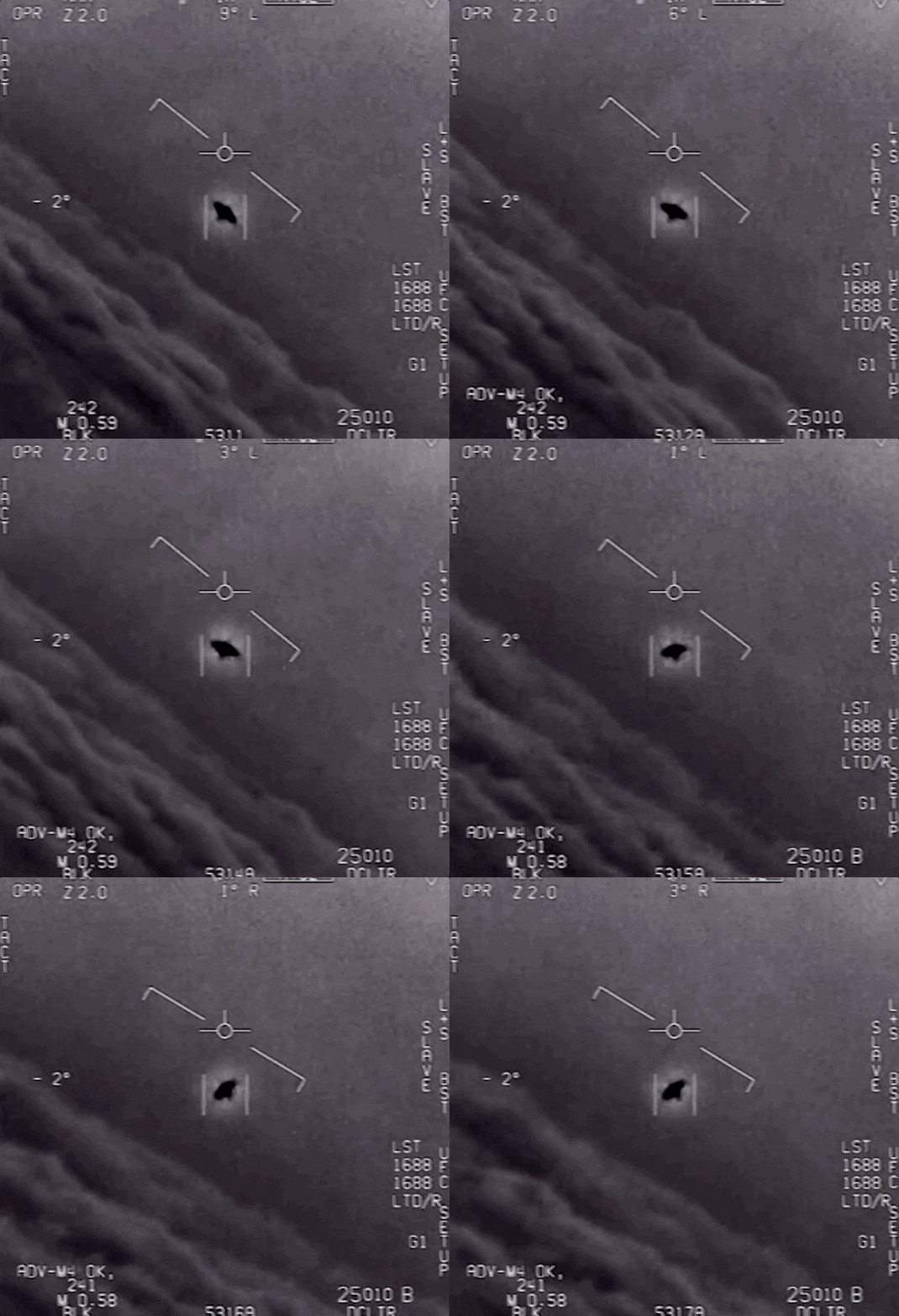







/cdn.vox-cdn.com/uploads/chorus_image/image/59166735/165526_web.0.jpg)
/cdn.vox-cdn.com/uploads/chorus_asset/file/8866417/Arecibo_Observatory_Aerial_View.jpg)
/cdn.vox-cdn.com/uploads/chorus_asset/file/9970729/pia22081_opt.jpg)
/cdn.vox-cdn.com/uploads/chorus_asset/file/9593009/2_Khufus_aerial_3D_cut_view_with_ScanPyramids_Big_Void_1.png)


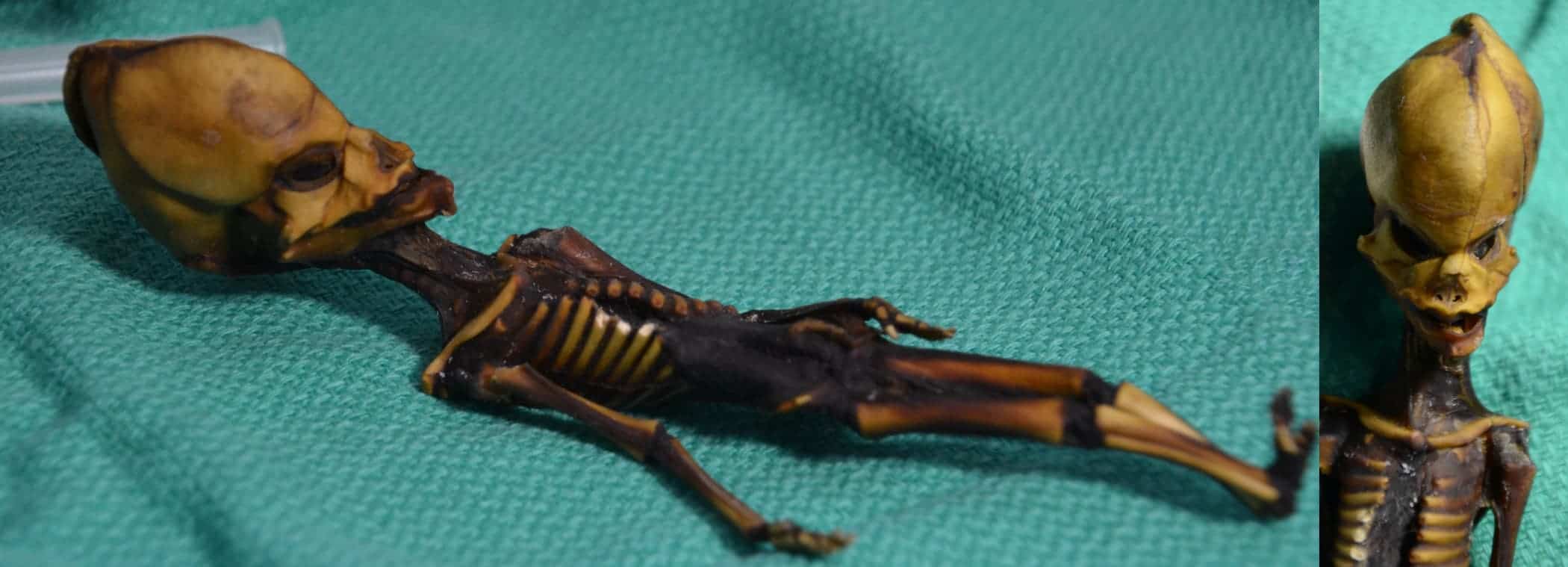

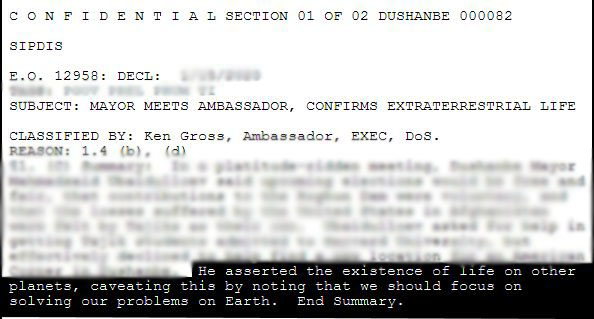

)