The purpose of this blog is the creation of an open, international, independent and free forum, where every UFO-researcher can publish the results of his/her research. The languagues, used for this blog, are Dutch, English and French.You can find the articles of a collegue by selecting his category. Each author stays resposable for the continue of his articles. As blogmaster I have the right to refuse an addition or an article, when it attacks other collegues or UFO-groupes.
Druk op onderstaande knop om te reageren in mijn forum
Zoeken in blog
Deze blog is opgedragen aan mijn overleden echtgenote Lucienne.
In 2012 verloor ze haar moedige strijd tegen kanker!
In 2011 startte ik deze blog, omdat ik niet mocht stoppen met mijn UFO-onderzoek.
BEDANKT!!!
Een interessant adres?
UFO'S of UAP'S, ASTRONOMIE, RUIMTEVAART, ARCHEOLOGIE, OUDHEIDKUNDE, SF-SNUFJES EN ANDERE ESOTERISCHE WETENSCHAPPEN - DE ALLERLAATSTE NIEUWTJES
UFO's of UAP'S in België en de rest van de wereld Ontdek de Fascinerende Wereld van UFO's en UAP's: Jouw Bron voor Onthullende Informatie!
Ben jij ook gefascineerd door het onbekende? Wil je meer weten over UFO's en UAP's, niet alleen in België, maar over de hele wereld? Dan ben je op de juiste plek!
België: Het Kloppend Hart van UFO-onderzoek
In België is BUFON (Belgisch UFO-Netwerk) dé autoriteit op het gebied van UFO-onderzoek. Voor betrouwbare en objectieve informatie over deze intrigerende fenomenen, bezoek je zeker onze Facebook-pagina en deze blog. Maar dat is nog niet alles! Ontdek ook het Belgisch UFO-meldpunt en Caelestia, twee organisaties die diepgaand onderzoek verrichten, al zijn ze soms kritisch of sceptisch.
Nederland: Een Schat aan Informatie
Voor onze Nederlandse buren is er de schitterende website www.ufowijzer.nl, beheerd door Paul Harmans. Deze site biedt een schat aan informatie en artikelen die je niet wilt missen!
Internationaal: MUFON - De Wereldwijde Autoriteit
Neem ook een kijkje bij MUFON (Mutual UFO Network Inc.), een gerenommeerde Amerikaanse UFO-vereniging met afdelingen in de VS en wereldwijd. MUFON is toegewijd aan de wetenschappelijke en analytische studie van het UFO-fenomeen, en hun maandelijkse tijdschrift, The MUFON UFO-Journal, is een must-read voor elke UFO-enthousiasteling. Bezoek hun website op www.mufon.com voor meer informatie.
Samenwerking en Toekomstvisie
Sinds 1 februari 2020 is Pieter niet alleen ex-president van BUFON, maar ook de voormalige nationale directeur van MUFON in Vlaanderen en Nederland. Dit creëert een sterke samenwerking met de Franse MUFON Reseau MUFON/EUROP, wat ons in staat stelt om nog meer waardevolle inzichten te delen.
Let op: Nepprofielen en Nieuwe Groeperingen
Pas op voor een nieuwe groepering die zich ook BUFON noemt, maar geen enkele connectie heeft met onze gevestigde organisatie. Hoewel zij de naam geregistreerd hebben, kunnen ze het rijke verleden en de expertise van onze groep niet evenaren. We wensen hen veel succes, maar we blijven de autoriteit in UFO-onderzoek!
Blijf Op De Hoogte!
Wil jij de laatste nieuwtjes over UFO's, ruimtevaart, archeologie, en meer? Volg ons dan en duik samen met ons in de fascinerende wereld van het onbekende! Sluit je aan bij de gemeenschap van nieuwsgierige geesten die net als jij verlangen naar antwoorden en avonturen in de sterren!
Heb je vragen of wil je meer weten? Aarzel dan niet om contact met ons op te nemen! Samen ontrafelen we het mysterie van de lucht en daarbuiten.
03-01-2026
Godfather of AI Warns That It Will Replace Many More Jobs This Year
Godfather of AI Warns That It Will Replace Many More Jobs This Year
During our planet’s latest and seemingly interminable revolution around the Sun, the tech industry’s obsession with AI soared to ever more implausible heights. CEOs began openly gloating about replacing their underlings with AI “agents.” The phenomenon of so-called AI psychosis became a national news story as more people were seemingly driven over the edge by their silver-tongued chatbot companions. “Slop” took on a new meaning. And the word “circular” suddenly started being used a whole lot in the same sentence as “billions of dollars” or even “hundreds of billions of dollars.”
Will 2026 finally deliver us from this endless cavalcade of large language model madness? Not likely, according to computer scientist and “godfather” of AI Geoffrey Hinton. AI will only continue to improve next year, he predicts, reaching a point where it will liberate us from all our horrible low-paying jobs.
“I think we’re going to see AI get even better,” Hinton said during an interview on CNN’s State of the Union on Sunday. “It’s already extremely good. We’re going to see it having the capabilities to replace many, many jobs. It’s already able to replace jobs in call centers, but it’s going to be able to replace many other jobs.”
Hinton was one of three recipients of the prestigious Turing Award in 2018 for his work on neural networks that formed the bedrock of modern AI, earning him the moniker of being a “godfather” of the field.
In 2023, Hinton declared that he regretted his life’s work after stepping down from his role at Google, where he had been for over a decade. Since then, he’s become one of the tech’s most prominent doomsayers.
During the CNN interview, Hinton was asked whether he was more or less worried about AI since making that now infamous declaration.
“I’m probably more worried,” Hinton replied. “It’s progressed even faster than I thought. In particular, it’s got better at doing things like reasoning and also at things like deceiving people.”
AI is progressing so quickly, according to Hinton, that around every seven months it can complete tasks that took twice as long before. He predicted that it’s only a matter of years until an AI will effortlessly perform software engineering tasks that take a human a month to complete.
“And then there’ll be very few people need for software engineering projects,” Hinton added.
Hinton made similarly gloomy predictions in a talk with Senator Bernie Sanders last month, saying that tech leaders are “betting on AI replacing a lot of workers.”
It still remains to be seen, though, if AI will actually make those strides. Many efforts to replace workers with semi-autonomous AI models have failed, while some new models, like OpenAI’s GPT-5, showed only lackluster improvements.
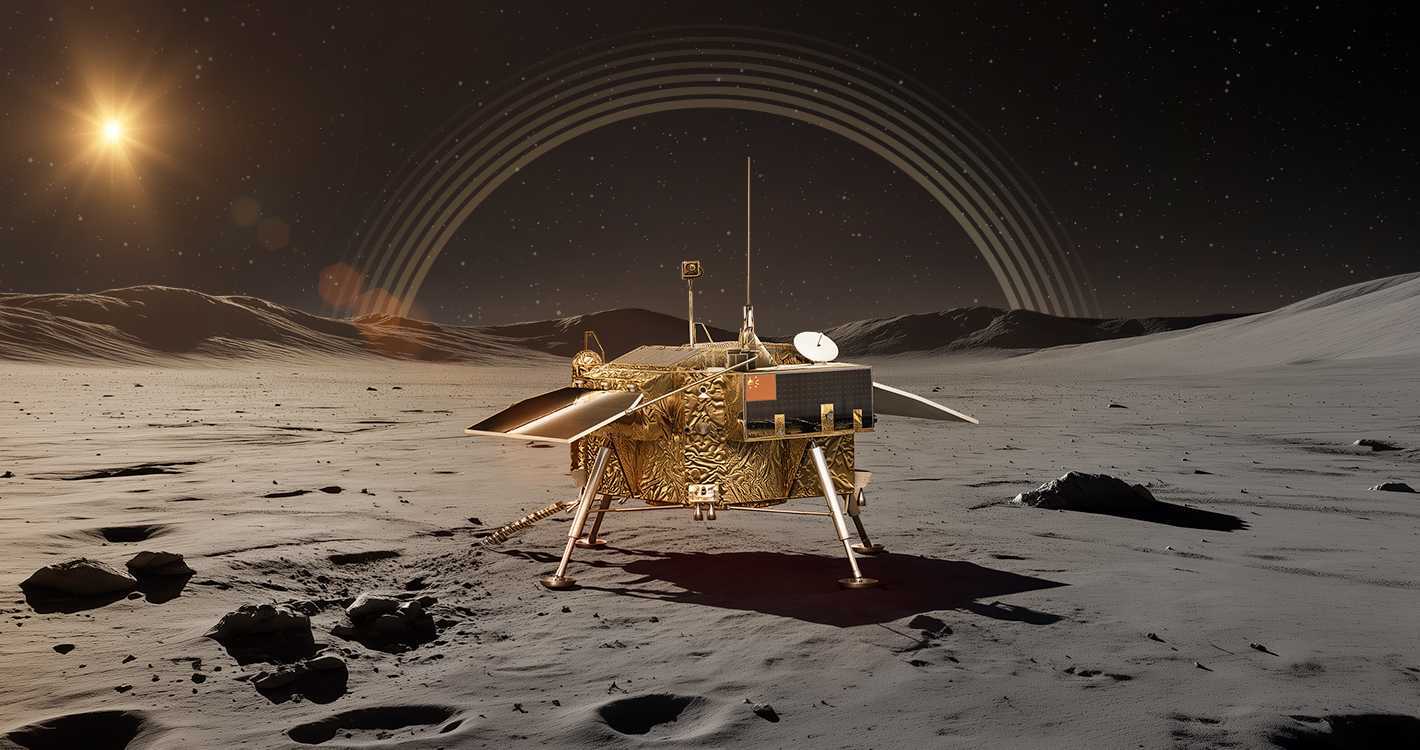
Chang’e 4 is a Chinese space probe that landed on the far side of the Moon on January 3, 2019. It not only studied the chemical composition of the rocks in this location, but also conducted the first experiment in history to grow plants on another celestial body.
The Chang’e 4 spacecraft
Chinese space program
January 3, 2019, was a triumph for the Chinese space program. The rest of humanity also had reason to rejoice. For the first time in history, the Chang’e 4 spacecraft landed on the far side of the Moon, which we never see from Earth.
The road to this landing was quite long. China was late to the lunar race between the US and the USSR. The PRC had to implement its lunar program in the 21st century. It began with two spacecraft that operated in lunar orbit, photographing and remotely sensing the Moon. Both were named after Chang’e, the Chinese goddess of the Moon.
Initially, the Chang’e 1 spacecraft operated in lunar orbit from 2007 to 2009. It made general observations, which were hardly surprising at the time, since the US had already found water on our satellite.
However, in 2010, Chang’e 2 was launched to the Moon. It photographed the surface of our satellite from an altitude of only 100 km. In 2012, based on the data it collected, the Chinese government presented the most detailed map of the Moon at that time, and it was confirmed that all this time, the Chinese had been looking for a landing site for Chang’e 3.
Around that time, the first discussions about China’s lunar ambitions began, but no one knew how seriously to take them, since only two countries – the US and the USSR – had successfully landed on the Moon at that point.
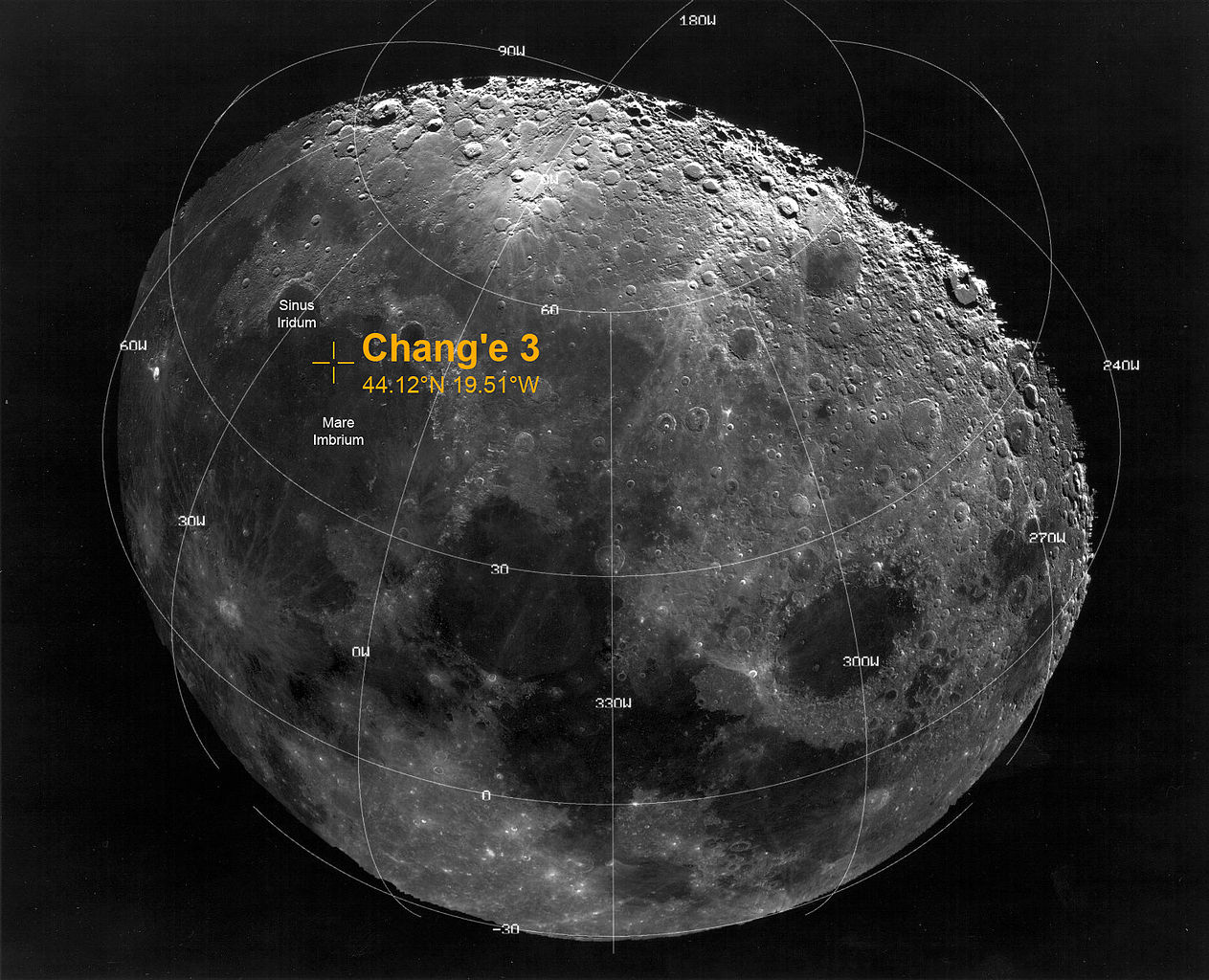
However, on December 14, 2013, Chang’e 3 landed in the Sinus Iridum of the Mare Imbrium. It was not only the first spacecraft in 37 years to remain intact after reaching the surface of our satellite. It also carried the Yutu rover, named after the jade rabbit, a character from Chinese legends who is said to have prepared the powder of immortality on the Moon. At that time, China was able to explore the material of our satellite for the first time and confirm that it was exactly as American and Soviet scientists had determined.
The Chang’e 3 landing site. Source: Wikipedia
The Chang’e 4
However, all this was a repeat of achievements made many years ago. In order to challenge the US, which had already announced plans to return to the Moon, it was necessary to show that Chinese missions could provide the global scientific community with data that no one had previously had access to.
This was the goal of the Chang’e 4 probe. In terms of design, it was a copy of the previous mission, with the same cameras and spectrographs, and even carried the Yutu-2 rover on board. However, this device was to land on the far side of the Moon, which humans first saw only in 1959 and, before the Chinese attempt, had only seen from orbit.
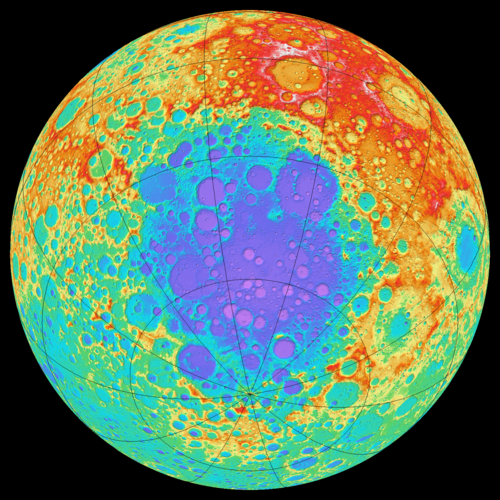
Moreover, Chang’e 4 was supposed to land in the Von Kármán lunar crater, which covers the much older and largest basin on our satellite, the South Pole-Aitken basin. Once, at the dawn of the solar system’s existence, a body much larger than the asteroid that ended the dinosaurs crashed into the Moon, which, scientists believe, led to the asymmetry of its two hemispheres: the visible and the reverse.
South Pole-Aitken basin. Source: Wikipedia
Almost all experimental data confirming this was obtained thanks to the Chinese missions Chang’e 4 and Chang’e 5, which followed it. But for them to be possible, it was first necessary to ensure their connection with Earth. This mission was entrusted to the Queqiao-1 relay satellite, which was launched to the Lagrange 2 point of the Earth-Moon system, i.e., directly behind our natural satellite.
Queqiao-1 began operating in May 2018, and in December of the same year, Chang’e 4 was launched to the Moon. It remained in orbit around our satellite for some time, and on January 3, 2019, it landed at the planned location. On the same day, it began scientific research and took photographs.
Yutu-2 rolled off the platform and began performing spectroscopic analysis of the rocks. After a few days, scientists had to interrupt their work because night fell on the Moon and the temperature dropped to extreme levels. However, two weeks later, when dawn finally broke, the mission resumed its work.
Yutu-2 . Source: news.cgtn.com
In total, Chang’e 4 lasted more than a year and a half. Technically, the mission is not yet complete. It is currently in sleep mode. Ultimately, it accomplished its main task: it examined the mantle rock emissions and noted how they are similar to and different from those found on the visible side of the Moon.
Growing plants on the Moon
The biggest difference in the design of Chang’e 4 from previous spacecraft was the addition of a module for biological experiments. It consisted of germinating seeds. This had been done repeatedly in space before, but it was all in Earth orbit.
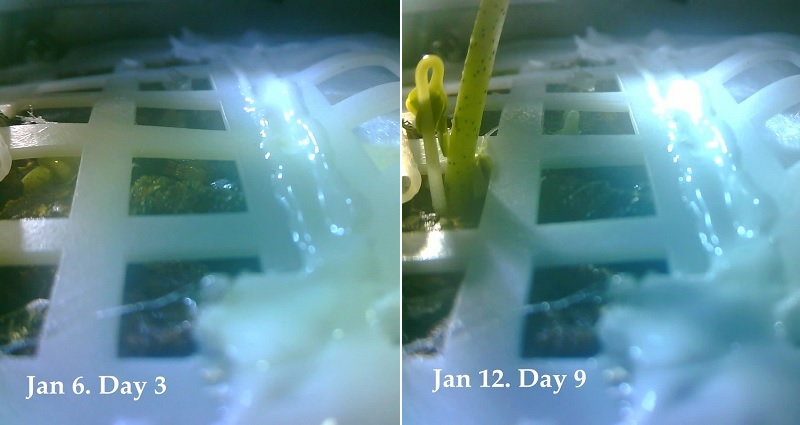
It was Chang’e 4 that became the first spacecraft to successfully grow cotton, potato, and rapeseed seeds on another celestial body. This happened a few days after landing, and photos of the tiny sprouts went viral around the world. The experiment was supposed to last 100 days. During this time, the capsule with the samples had to be heated and humidified.
Plants on the Moon. Source: nextshark.com
Incidentally, it also contained yeast spores and Drosophila fly eggs. So, theoretically, an entire ecosystem could have developed on board in later stages. However, with the onset of the lunar night, the temperature outside dropped too sharply, and too much electricity was needed for heating. Therefore, the experiment had to be interrupted.
Nevertheless, it is considered successful and was extremely important for global science. It proved the fundamental ability of plants to overcome the most difficult stage of their development in space conditions. In the future, humans will inevitably live in space, and we will need oxygen and nutrients that plants can provide. To achieve this, large modules with artificial biospheres will need to be created on planets. Similar to the one that was on board Chang’e 4.
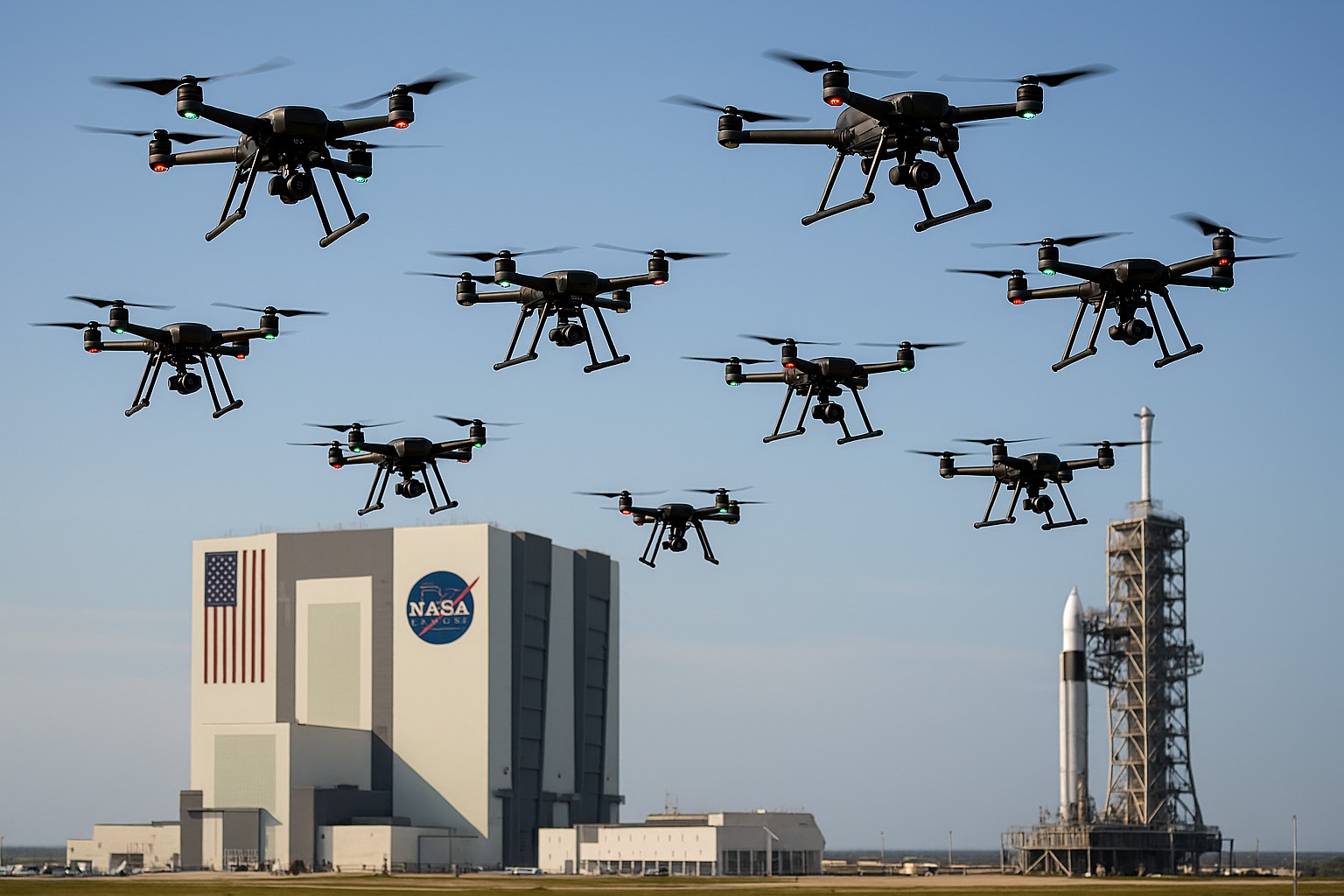
The US Space Agency has announced a search for an innovative system to detect and neutralize potential airborne threats in the form of drones. The goal is to protect personnel, rockets, and critical infrastructure in the area of the Kennedy Space Center at Cape Canaveral.
Any outside interference in the Kennedy Space Center area at Cape Canaveral, even accidental, could have catastrophic consequences. Illustration generated by Copilot AI
The Kennedy Space Center is the heart of the Artemis lunar program, from where powerful Space Launch System rockets will be launched. Any outside interference, even accidental, could have catastrophic consequences.
How the “smart shield” will work
Space Launch System rocket. Source: JOE SKIPPER | REUTERS
According to the agency’s request, the system should include a network of stationary and mobile sensors (radar, radio frequency, optical). Its key tasks are:
Detect and identify unknown drones at a distance of up to 64 km.
Analyze risk in real time.
Provide data for quick decision-making by the security service.
The system is scheduled to be implemented in April 2026. From now on, all drone flights in the central area will be strictly limited and will require special permission.
Balancing security and innovation
Interestingly, NASA itself periodically uses drones for festive events – for example, the visitor center hosts a show featuring 600 autonomous devices. The new system is designed to distinguish authorized flights from potentially dangerous ones, protecting the future of lunar missions.
This move demonstrates how space agencies are adapting to the challenges of a new era, where advanced technologies can bring both benefits and risks.
Spanish Soldiers Fired on a Tall Humanoid After a UFO Landed Near Their Base (1971 )
Spanish Soldiers Fired on a Tall Humanoid After a UFO Landed Near Their Base (1971)
In March 1971, an extraordinary series of events unfolded at a Spanish military radar installation near the coast. What began as routine perimeter patrols escalated into one of the most unsettling close-encounter testimonies to emerge from Cold War-era Europe. The account comes from Jesus Jofre Mila, a corporal stationed at the base, whose story was later discussed publicly in interviews and investigative programs.
This article is based exclusively on his testimony, reconstructed from later retellings and corroborated by partial witness accounts and secondary investigators.
An Uneasy Night at the Radar Base
On the night of March 25, 1971, something felt wrong almost immediately. The base’s German Shepherd patrol dogs – highly trained and accustomed to night duty, became unusually aggressive and agitated. No amount of calming helped. According to Mila, the dogs reacted as if sensing something entirely unfamiliar.
Shortly after, a guard pointed toward the sky. Above the radar domes, a disc-like craft appeared, described as a classic stacked or double-layered oval shape emitting a golden-yellow light. The glow was bright enough to illuminate the object clearly, yet strangely non-blinding.
Several soldiers watched as the object drifted slowly across the horizon, then suddenly accelerated at tremendous speed toward the sea before vanishing.
A Blinding Flash from the Water
That was not the end of the night’s events.
Another soldier stationed closer to the rocky shoreline later witnessed the object descend rapidly toward the ocean. Upon contact with the water, it emitted a violent flash of light so intense it temporarily blinded him. He was later found clutching his eyes, which remained swollen and red for days. Base medical personnel could not explain the injuries.
No conventional explosion, aircraft, or weapon discharge was reported.
The Green Light Beyond the Fence
Later that same night, Mila and a fellow handler armed themselves and followed one of the dogs toward the perimeter fence after noticing an unnatural green glow in an area where the base ended and open land began.
As they advanced, the atmosphere reportedly felt “charged,” like static electricity. Mila described a tingling sensation on his tongue, similar to touching a battery. Even the dog appeared distressed, shaking its head as if in pain.
Then they heard it.
Heavy footsteps -fast, deliberate, and unnervingly close.
Face-to-Face with a Tall Humanoid Figure
Out of the darkness emerged a very tall figure, estimated between 7 and 7.2 feet in height. The soldiers shouted warnings. There was no response.
Panicking, one soldier opened fire. Mila followed, firing his 9 mm sidearm multiple times. The muzzle flashes briefly illuminated the being.
What they saw was unlike anything human.
The figure was described as:
Extremely tall and thin
Pale in appearance
With long, light-colored hair falling to the shoulders
Wearing a tight, metallic-looking suit with a high collar
A belt featuring a distinct inverted triangle symbol at the center
The being did not react to the gunfire.
For a brief moment, Mila described the sensation that time itself had stopped. Then the figure turned calmly and walked away, disappearing toward the fence.
A Fence That Vanished
Moments later, the soldiers heard metallic impacts. At dawn, the evidence was impossible to ignore.
A section of the inner perimeter fence; approximately 50 cm wide, had vanished entirely. The edges were scorched, as if cut or disintegrated. The outer fence beside it was completely intact. There were no footprints, no debris, and no mechanical explanation.
The missing section had to be crudely repaired with wire.
Dreams, Voices, and a Return to the Sky
In the nights that followed, Mila experienced intense dreams involving the encounter. On one night, he reported hearing overlapping voices in his head- unintelligible at first. Days later, he claimed the message became clearer, though he has remained guarded about its content.
On March 27, the lights returned, this time witnessed by dozens of personnel, possibly over a hundred. The object hovered visibly above the base for several minutes.
On March 29, the phenomenon escalated again: two military jet aircraft were reportedly seen approaching the object before all three accelerated away at extreme speed. Officially, no jets were launched that night. Unofficially, radar operators reportedly disagreed.
The Investigation That Left No Records
After the mass sighting, higher command intervened. Soldiers were interviewed individually and instructed to write reports. Shortly after, two American servicemen, accompanied by a Spanish Air Force officer, arrived on base.
According to witnesses:
Soldiers were questioned separately
Told explicitly to forget the incident
Photographed against a white wall using an unusually powerful flash that temporarily blinded them
No explanations were provided. No official findings were released.
Later, Spanish ufologist Antonio Rivera reported that American technicians were seen inspecting coastal cliffs near where the object had descended into the sea. Officially, it was described as radar maintenance. The case was subsequently classified by the Spanish Ministry of Defense.An Unresolved Military Encounter
More than five decades later, the 1971 radar base incident remains unexplained.
There are no radar records, no declassified conclusions, and no conventional explanations that fully account for:
The disciplined dogs’ reaction
The blinding light injuries
The humanoid figure unaffected by gunfire
The selectively disintegrated fence
The mass sightings over multiple nights
What remains is the testimony of trained military personnel, men with no incentive to fabricate a story that initially brought them reprimand rather than recognition.
Whether interpreted as a close encounter, a classified technology incident, or something beyond current understanding, the events described by Jesus Jofre Mila stand as one of the most detailed and unsettling military UFO encounters on record.
Chinese researchers have developed a robotic e-skin that brings robots one step closer to humans by mimicking our ability to touch, and even sense “pain” when encountering potentially dangerous surfaces.
As companies like Tesla push robots toward a fully human level of capability, recreating the sense of touch is essential not only for understanding the environment but also for navigating it safely. The team behind therobotics advancement revealed their work in a recent paper published in the Proceedings of the National Academy of Sciences.
The Importance of Pain
While pain may be among the least desirable human experiences, it plays an essential role in self-preservation. The spinal cord acts as a relay system to the brain, sending reflexive messages to our muscles in response to pain stimuli. For example, if we touch something hot, we withdraw our hand without thinking, thereby preventing a more severe burn. Alternatively, if we step on a sharp object, we lift our foot to avoid a deep wound. The signals involved in these actions are rapid, with the brain becoming aware of what has occurred only after the movement has begun.
Saving those precious seconds of processing time as the brain decodes sensory data into understanding (which results in a conscious response in humans) can make an enormous difference between receiving a minor abrasion and sustaining a serious injury. However, robots typically lack a swift, automatic system for processing external stimuli. Instead, sensors collect data, which is sent to a central processing unit (CPU).
Electronic robotic skin (representational image)
The CPU compares the data against its program and generates an appropriate response, which is then transmitted over the robot’s data network to an actuator, which decodes the response and executes the CPU’s selected movement. While this may occur at an impressive speed, even a slight delay in action due to processing time can cause greater damage to the robot.
Challenging Environments for Robots
Automation, until now, has primarily been confined to highly controlled environments, specifically designed to safely accommodate robotic machinery, such as factory floors and laboratories.
Presently, advances in both mechanical robotics and artificial intelligence are seeking to change this. Companies such as Tesla, with its humanoid Optimus robot, are attempting to integrate robots into everyday environments to perform a variety of human tasks. Unfortunately, homes, hospitals, and workplaces are designed for humans, who can navigate with considerably more intuitive ease than pre-programmed machines.
To enable robots to match humans’ instinctive environmental responses as they move into our imperfect and sometimes hazardous world, Chinese scientists have developed a robotic e-skin (NRE-skin) that provides robots not only with a “sense” of touch, but also the ability to “feel” pain.
Previous attempts to provide robots with sensor skins have been much simpler, wrapping the robot in a sensor system that sends signals to a CPU for processing and response. By contrast, the NRE-skin processes the information obtained when a robot comes into contact with an object and identifies potentially dangerous contact (i.e., pain) within the skin itself, thereby reducing the time required for sending and receiving information.
Modular, neuromorphic electronic skin capable of active pain and injury perception in robotic applications.
Credit: Xinge Yu, City University of Hong Kong
Robotic NRE-Skin
The Chinese researchers developed their NRE-skin as a four-layer system. Like our own epidermis, the top layer features a protective coating that shields the delicate underlying components from the environment. Beneath that layer, the skin performs its functions, with layers of sensors and circuits designed to mimic human nerves. Even when nothing is touching the robot, the skin sends a “all clear” null result signal every 75-150 seconds, informing the CPU that the system is still operating correctly. If the skin is cut or damaged significantly enough, the lack of signal alerts the robot that damage has occurred in the area.
Most importantly, the skin registers touch with signals called “spikes.” These spikes occur in two forms, depending on the severity of the situation. Regular touch sends a spike to the CPU, which processes the data to understand the environment. When the skin detects an extreme event, it instead sends a spike directly to the robot’s actuators to produce an automatic response, thereby removing it from potential harm.
The team designed the skin not only to warn of real-world dangers but also to accept that harm will eventually occur in an uncontrolled environment. The skin is produced in swappable magnetic patches. While it cannot “heal” in the sense that a living creature does, it can quickly be mended by changing a patch without having to repair the entire skin covering.
Currently, the primary issue is that multiple points of contact can lead to confusion within the system. To overcome this, the next step for researchers will be to enhance the skin’s sensitivity and enable it to disambiguate between the many sensations experienced while moving through a range of environments.
Ryan Whalen covers science and technology for The Debrief. He holds an MA in History and a Master of Library and Information Science with a certificate in Data Science. He can be contacted at ryan@thedebrief.org, and follow him on Twitter@mdntwvlf.
Analysis of 9,500-year-old human remains discovered in Central Africa, led by University of Oklahoma scientists, has revealed evidence suggesting these ancient hunter-gatherers cremated their dead millennia before the first organized African civilizations existed.
If confirmed, the discovery of a small, cremated woman on a funeral pyre at the base of Mount Hora, a prominent natural landmark in northern Malawi, would represent the oldest known example of ancient African hunter-gatherers intentionally burning the remains of a deceased individual.
The research team behind the discovery said the cremation site also hints at potentially spiritually complex ritual practices surrounding fire and death that had not previously been identified during this ancient period.
“Not only is this the earliest cremation in Africa, it was such a spectacle that we have to rethink how we view group labor and ritual in these ancient hunter-gatherer communities,” explained Jessica Thompson, an assistant professor of anthropology at Yale University, and leader of a long-term research project at the site of the discovery.
Date of Discovery Rivals Oldest Known Human Cremation Site
According to a statement announcing the unexpected discovery of ancient, cremated human remains, evidence of intentionally burned human remains appears as early as 40,000 years ago in Australia. However, “intentionally built” structures made of combustible materials don’t appear until about 10,000 years before present.
According to researchers, the previously discovered ancient pyre at the Xaasaa Na’ Upward Sun River archaeological site in Alaska, which contained the remains of a small child, was dated to sometime around 11,500 years ago. Conversely, the oldest known funerary cremation site in Africa, dated to a comparatively recent 3,500, was likely built by Pastoral Neolithic herders who were much more organized than the ancient hunter-gatherers associated with the discovery.
“Cremation is more common among ancient food-producing societies, who generally possess more complex technology and engage in more elaborate mortuary rituals than earlier hunter-gatherers,” the researchers explain.
Remains of a Single Individual Discovered in the Pyre
In the 1950s, archaeologists determined that the ancient cremation site, dubbed Hora 1, was a hunter-gatherer burial ground. However, those scientists didn’t know when those burials occurred. Decades later, Thompson’s team unearthed evidence that it was used by ancient humans as far back as 21,000 years ago, with the site’s burials seemingly dating to between 16,000 and 8,000 years before present. Notably, all the bodies buried during this period were interred in a complete state.
The Hora 1 site photographed from the air.
Image credit: Jacob Davis.
In collaboration with the Malawi Department of Museums and Monuments, the latest effort analyzed a separate set of bones from what they described as a “highly fragmented individual.” 170 separate bones were examined, mostly originating from the woman’s arms and legs. The researchers say the bones suggest the woman was between 18 and 60 years old and slightly under 5 feet tall.
After a closer analysis of the cremated remains, the researchers determined that the body was likely cremated before decomposition, most likely within a few days of the woman’s death. The researchers also found cut marks on the bones, suggesting that the flesh had been removed before incineration.
Study team member Elizabeth Sawchuk, a Curator of Human Evolution at the Cleveland Museum of Natural History and a bioarchaeologist, said they were surprised to find no teeth or skull bone fragments in the cremated remains. Sawchuk said that because those body parts are historically preserved during cremations, the team believed they may have been removed “prior to burning.”
Researchers found cut marks on the bone fragments recovered from the ancient funeral pyre.
Image credit: Jessica Thompson.
Labor Intensive Cremation Hints at Its Purpose
When discussing the unusual nature of an organized cremation by African hunter-gatherers almost 10,000 years ago, Jessica Cerezo-Román, an associate professor of anthropology at the University of Oklahoma and the study’s lead author, noted the significant amount of labor and time required to complete an effective cremation.
“Cremation is very rare among ancient and modern hunter-gatherers, at least partially because pyres require a huge amount of labor, time, and fuel to transform a body into fragmented and calcined bone and ash,” Professor Cerezo-Román explained.
For example, the team estimated that ancient humans would have had to gather at least 30 kilograms of deadwood and grass, a figure they said points to a significant communal effort. An analysis of ash sediments and bone fragments also suggests that participants actively disturbed the fire throughout the burning, including regularly adding more fuel to maintain the high temperatures needed. The team estimated the fire reached temperatures above 500°C.
Cerezo-Román said the job of removing and preparing the body may sound “gruesome,” but also noted that these practices may have been associated with social memory, remembrance of a loved one, or an ancestral veneration. The professor also pointed out that a growing body of evidence suggests ancient hunter-gatherers in Malawi performed cremations that included the posthumous “removal, curation, and secondary reburial of body parts,” maybe as tokens of the deceased.
In the study’s conclusion, the team notes that stone tools discovered at the site may have been funerary objects added during or after the cremation. They also note that no other individuals were cremated, suggesting that the site was considered significant.
“The history of large fires in this location, the effort associated with the cremation, and the subsequent burning events reflect a deep-rooted tradition at the site linked to ritual behavior and memory-making tied to a place that was clearly a local landmark,” they explained.
As far as the woman who was cremated when others at the site were buried, the researchers said that is still an open question.
“Why was this one woman cremated when the other burials at the site were not treated that way?” Thompson asked.
Christopher Plain is a Science Fiction and Fantasy novelist and Head Science Writer at The Debrief. Follow and connect with him onX,learn about his books atplainfiction.com, or email him directly atchristopher@thedebrief.org.
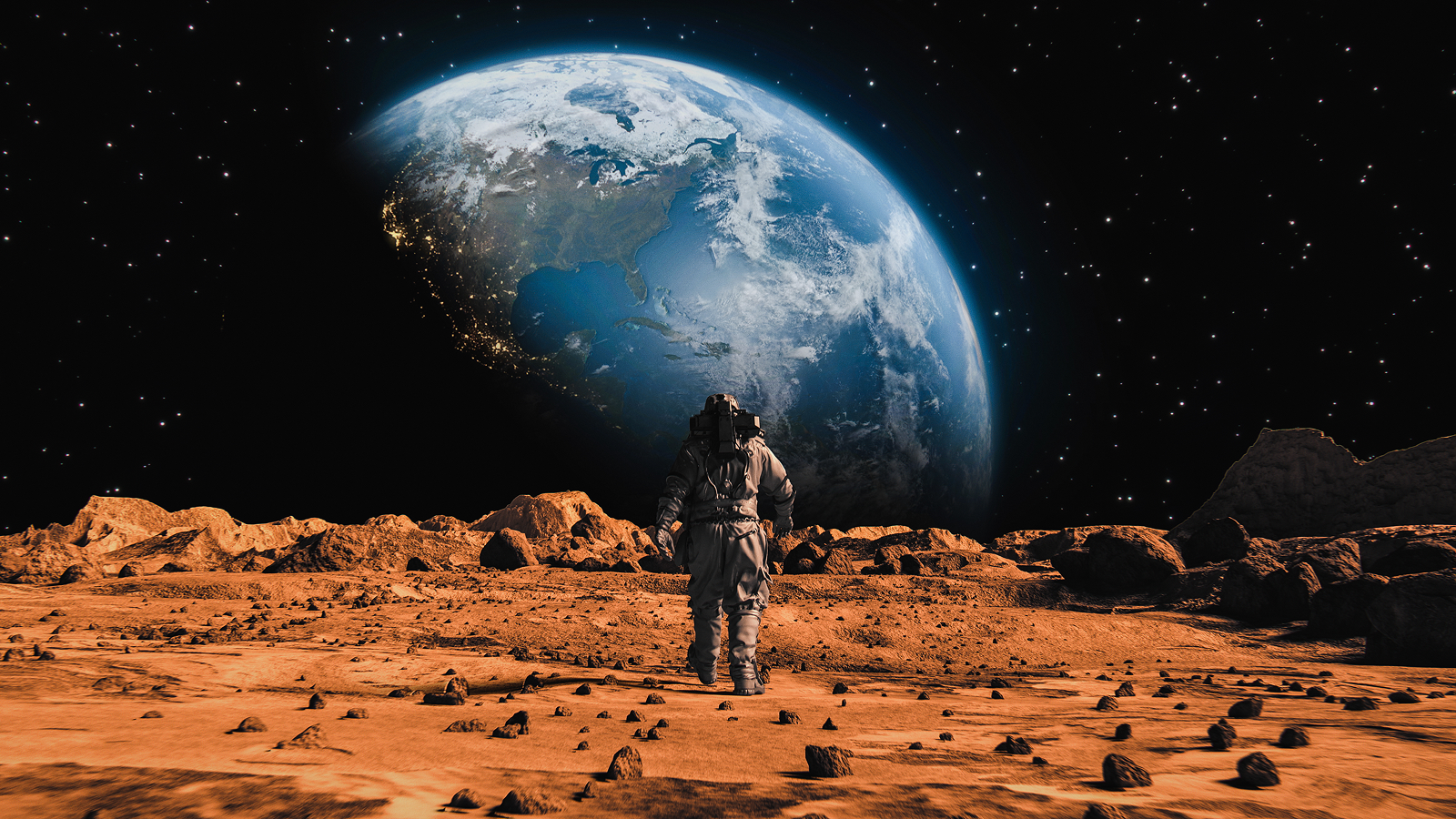
The idea of humans living beyond Earth was once only possible in science fiction, but now space agencies are making plans to bring space colonization closer to reality. NASA and SpaceXare exploring long-term missions to the moon and Mars, while astronomers continue to discover potentially habitable exoplanets orbiting distant stars beyond our solar system.
Supporters of planetary colonization argue that becoming a multi-planet species could safeguard us from potentially Earth-ending events. However, it will require an enormous effort to colonize another planet or moon. And if we look beyond Mars, potentially habitable planets may take thousands of years to reach.
But as technology advances and space agencies consider long-term human settlements on other planets, a more fundamental issue now beckons — not whether we can expand to other worlds, but whether we should.
What's your take? Answer our poll below and share the reasoning behind your choice in the comments.
Tractor beams inspired by sci-fi are real, and could solve the looming space junk problem
Tractor beams inspired by sci-fi are real, and could solve the looming space junk problem
Researchers are developing a real-life tractor beam, with the goal of pulling defunct satellites out of geostationary orbit to alleviate the space junk problem.
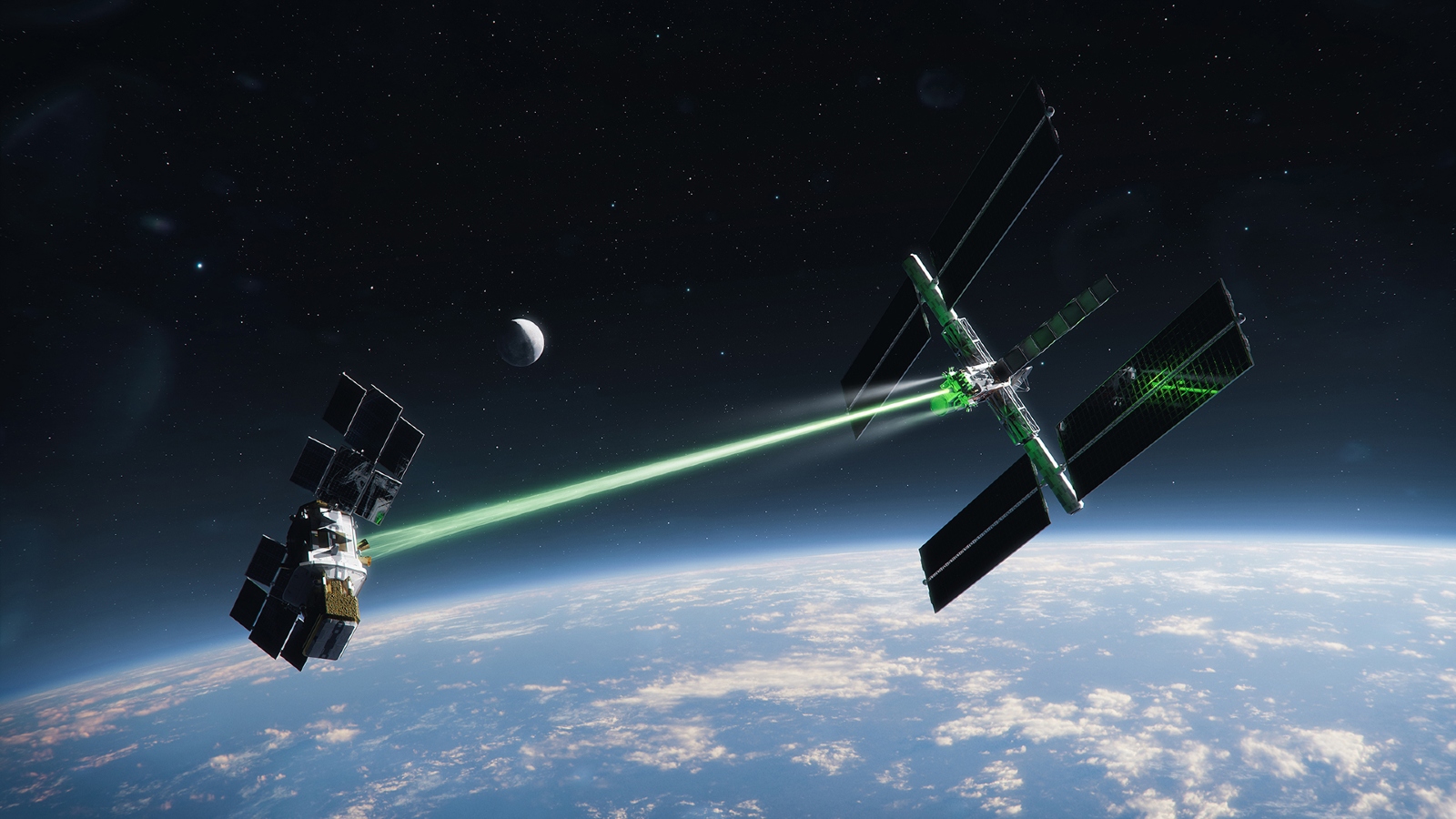
An artist's illustration shows how an electrostatic tractor beam could be used to pull defunct satellites out of geostationary orbit around Earth. In reality, the beam would be invisible.
In science fiction films, nothing raises tension quite like the good guys' spaceship getting caught in an invisible tractor beam that allows the baddies to slowly reel them in. But what was once only a sci-fi staple could soon become a reality.
Scientists are developing a real-life tractor beam, dubbed an electrostatic tractor. This tractor beam wouldn't suck in helpless starship pilots, however. Instead, it would use electrostatic attraction to nudge hazardous space junk safely out of Earth orbit.
The science is pretty much there, but the funding is not.
The electrostatic tractor beam could potentially alleviate that problem by safely moving dead satellites far out of Earth orbit, where they would drift harmlessly for eternity.
While the tractor beam wouldn't completely solve the space junk problem, the concept has several advantages over other proposed space debris removal methods, which could make it a valuable tool for tackling the issue, experts told Live Science.
A prototype could cost millions, and an operational, full-scale version even more. But if the financial hurdles can be overcome, the tractor beam could be operational within a decade, its builders say.
"The science is pretty much there, but the funding is not," project researcher Kaylee Champion, a doctoral student in the Department of Aerospace Engineering Sciences at the University of Colorado Boulder (CU Boulder), told Live Science.
Avoiding Disaster
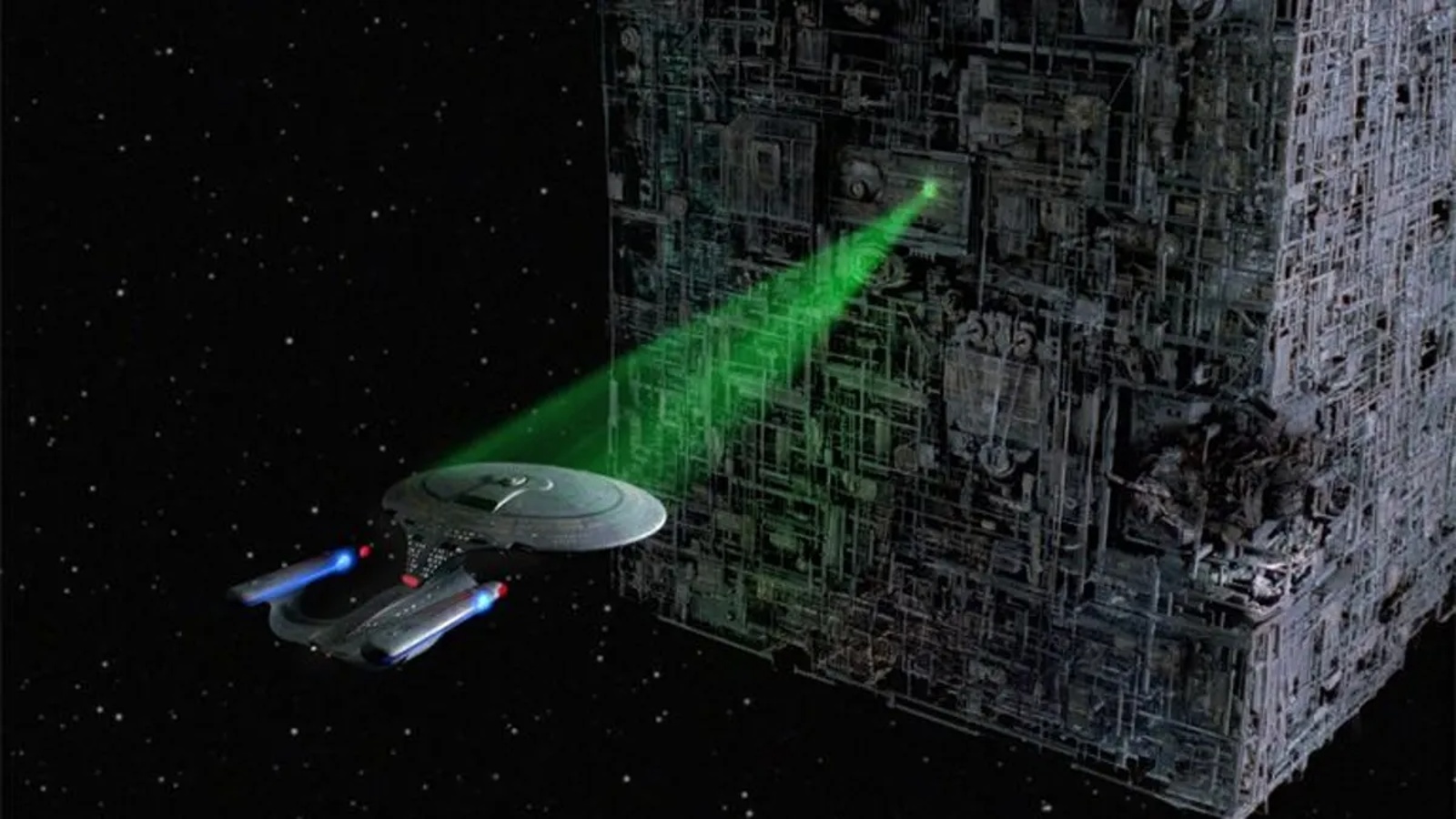
Tractor beams are a staple of sci-fi films and TV shows, such as Star Trek.
(Image credit: Star Trek)
The tractor beams depicted in "Star Wars" and "Star Trek" suck up spacecraft via artificial gravity or an ambiguous "energy field." Such technology is likely beyond anything humans will ever achieve. But the concept inspired Hanspeter Schaub, an aerospace engineering professor at CU Boulder, to conceptualize a more realistic version.
In the wake of this disaster, Schaub wanted to be able to prevent this from happening again. To do this, he realized you could pull spacecraft out of harm's way by using the attraction between positively and negatively charged objects to make them "stick" together.
Over the next decade, Schaub and colleagues refined the concept. Now, they hope it can someday be used to move dead satellites out of geostationary orbit (GEO) — an orbit around Earth's equator where an object's speed matches the planet's rotation, making it seem like the object is fixed in place above a certain point on Earth. This would then free up space for other objects in GEO, which is considered "prime real estate" for satellites, Schaub said.
How does it work?
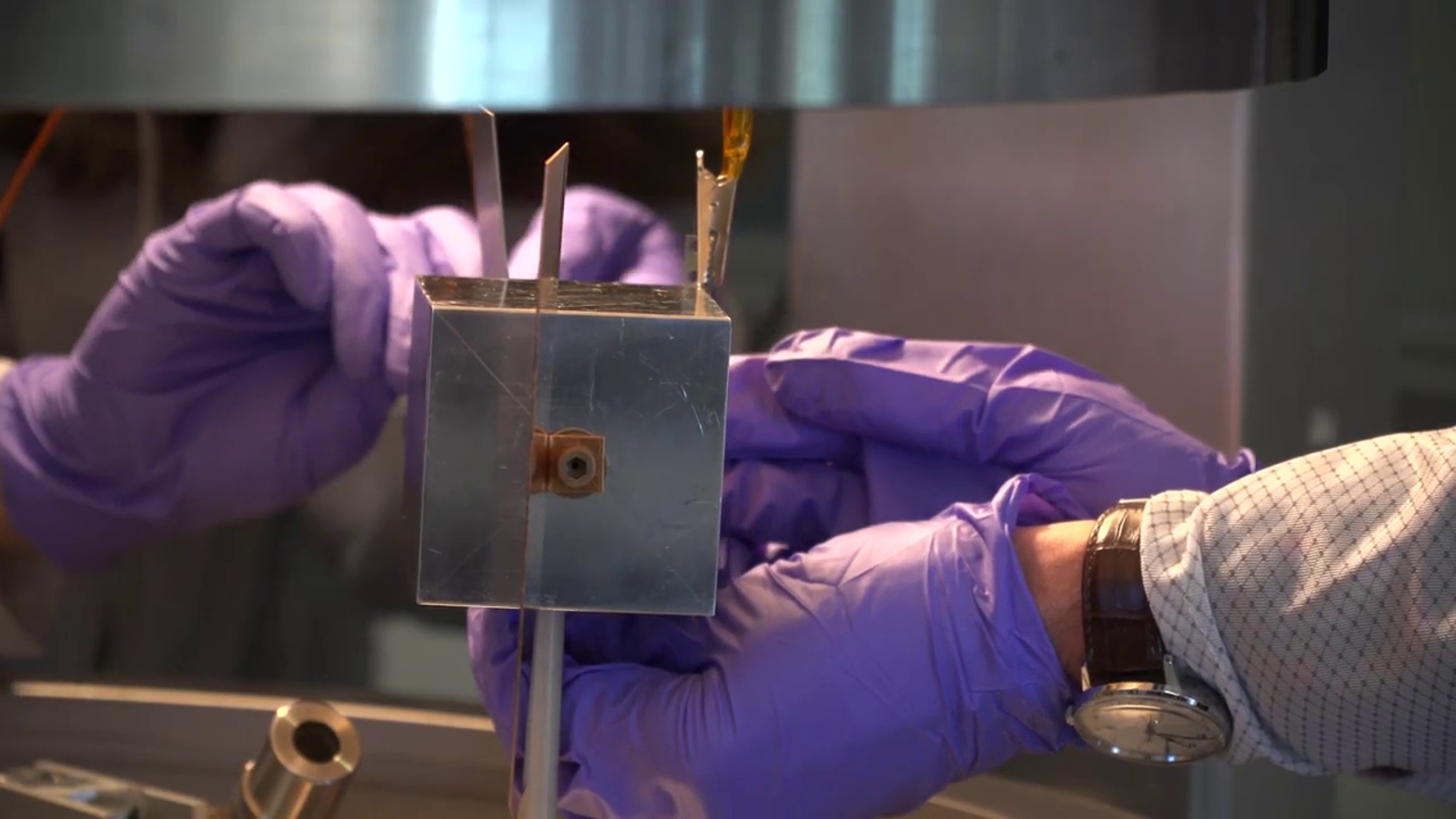
The researchers have been testing the electron gun on pieces of metal in the lab.
(Image credit: Nico Goda/CU Boulder)
The electrostatic tractor would use a servicer spacecraft equipped with an electron gun that would fire negatively charged electrons at a dead target satellite, Champion told Live Science. The electrons would give the target a negative charge while leaving the servicer with a positive charge. The electrostatic attraction between the two would keep them locked together despite being separated by 65 to 100 feet (20 to 30 meters) of empty space, she said.
Once the servicer and target are "stuck together," the servicer would be able to pull the target out of orbit without touching it. Ideally, the defunct satellite would be pulled into a "graveyard orbit" more distant from Earth, where it could safely drift forever, Champion said.
The electrostatic attraction between the two spacecraft would be extremely weak, due to limitations in electron gun technology and the distance by which the two would need to be separated to prevent collisions, project researcher Julian Hammerl, a doctoral student at CU Boulder, told Live Science. So the servicer would have to move very slowly, and it could take more than a month to fully move a single satellite out of GEO, he added.
That's a far cry from movie tractor beams, which are inescapable and rapidly reel in their prey. This is the "main difference between sci-fi and reality," Hammerl said.
Advantages and limitations
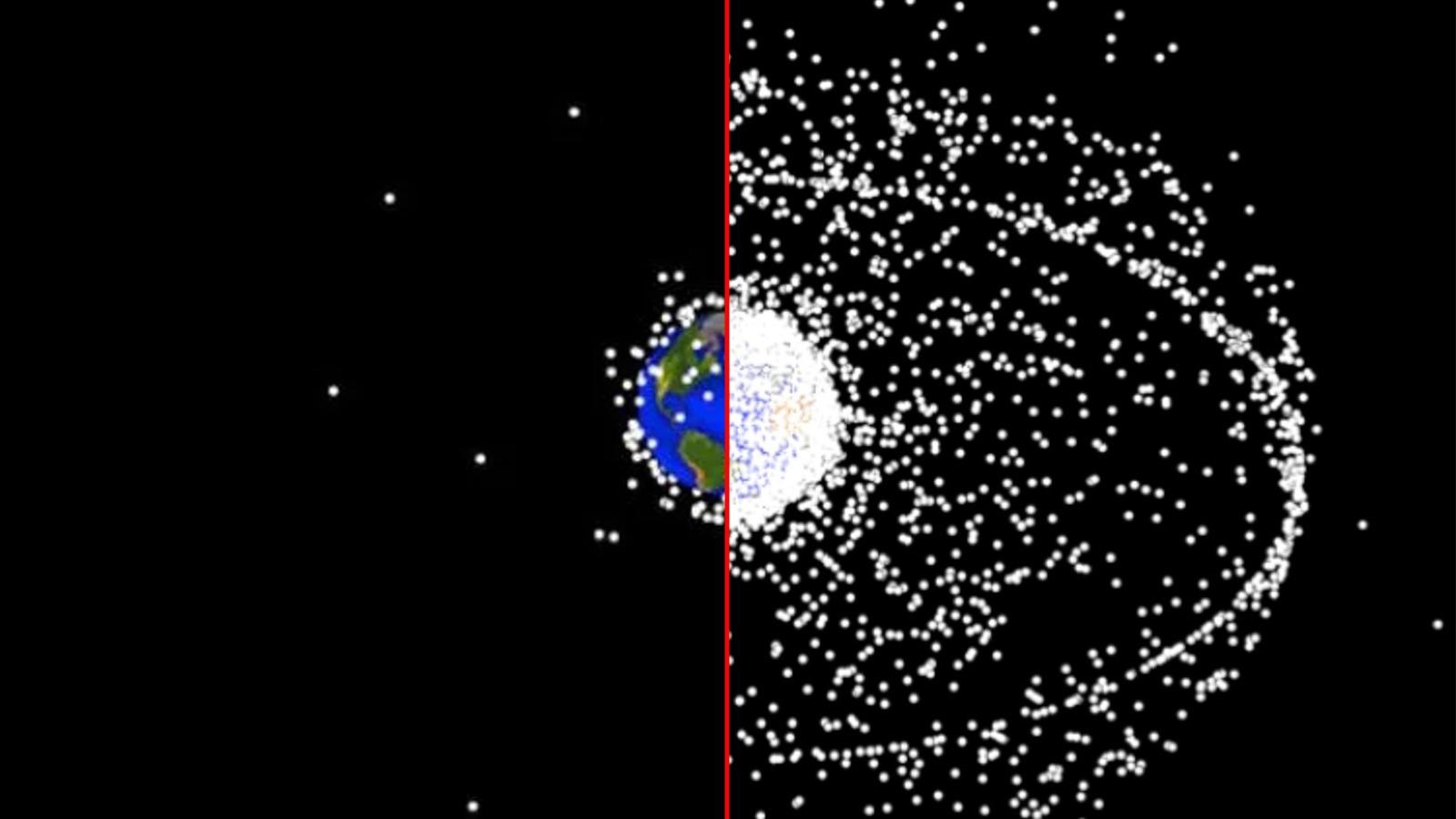
The amount of space junk surrounding Earth has greatly increased in recent years. Here is a comparison of space junk in 1965 (left) and 2010 (right).
(Image credit: NASA)
The electrostatic tractor would have one big advantage over other proposed space junk removal methods, such as harpoons, giant nets and physical docking systems: It would be completely touchless.
"You have these large, dead spacecraft about the size of a school bus rotating really fast," Hammerl said. "If you shoot a harpoon, use a big net or try to dock with them, then the physical contact can damage the spacecraft and then you are only making the [space junk] problem worse."
Scientists have proposed other touchless methods, such as using powerful magnets, but enormous magnets are both expensive to produce and would likely interfere with a servicer's controls, Champion said.
The main limitation of the electrostatic tractor is how slowly it would work. More than 550 satellites currently orbit Earth in GEO, but that number is expected to rise sharply in the coming decades.
If satellites were moved one at a time, then a single electrostatic tractor wouldn't keep pace with the number of satellites winking out of operation. Another limitation of the electrostatic tractor is that it would work too slowly to be practical for clearing smaller pieces of space junk, so it wouldn't be able to keep GEO completely free of debris.
Cost is the other big obstacle. The team has not yet done a full cost analysis for the electrostatic tractor, Schaub said, but it would likely cost tens of millions of dollars. However, once the servicer were in space, it would be relatively cost-effective to operate it, he added.
Next steps
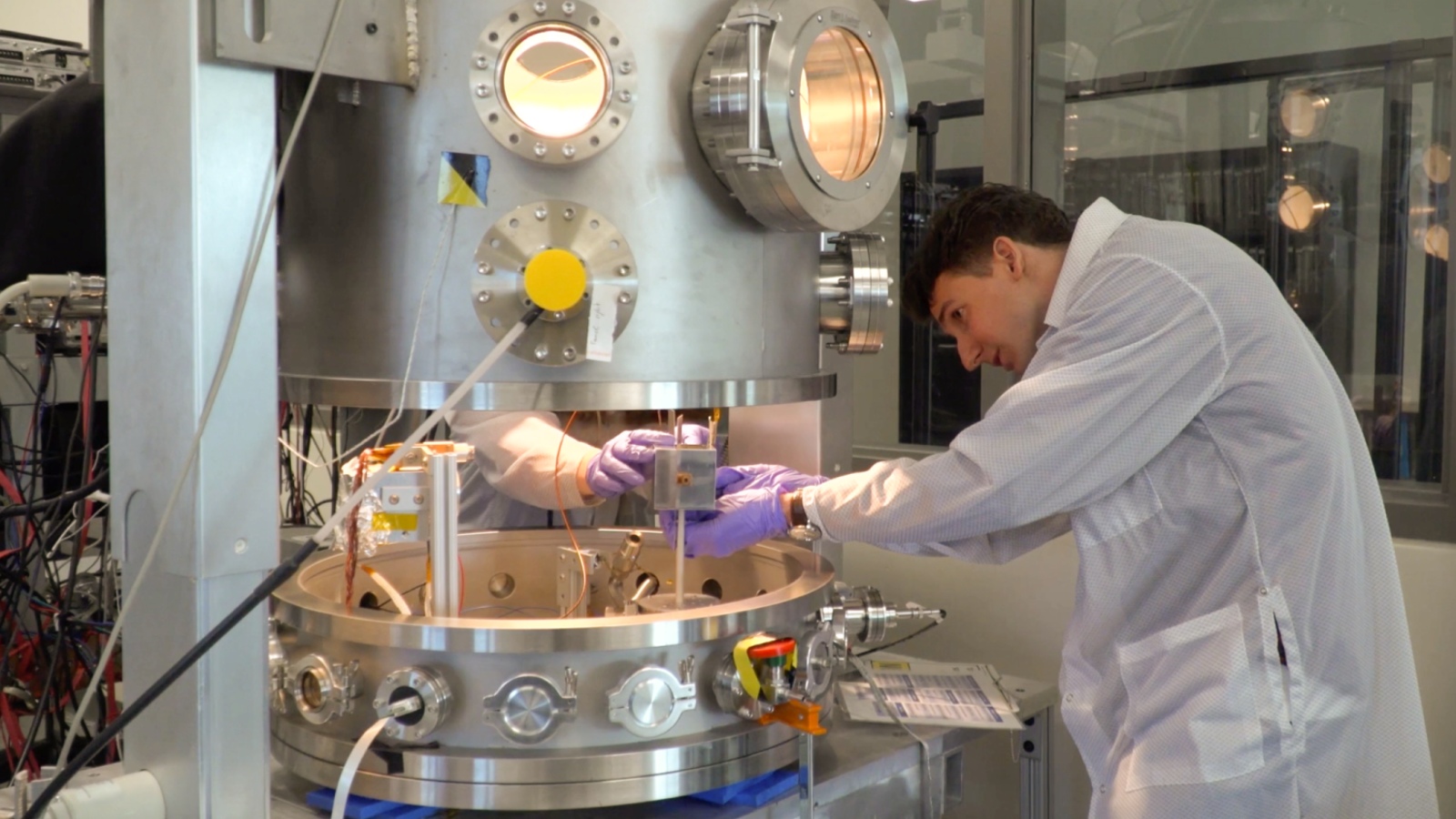
Researcher Julian Hammerl photographed next to the ECLIPS machine at CU Boulder.
(Image credit: Nico Goda/CU Boulder)
The researchers are currently working on a series of experiments in their Electrostatic Charging Laboratory for Interactions between Plasma and Spacecraft (ECLIPS) machine at CU Boulder. The bathtub-sized, metallic vacuum chamber, which is equipped with an electron gun, allows the team to "do unique experiments that almost no one else can currently do" in order to simulate the effects of an electrostatic tractor on a smaller scale, Hammerl said.
Once the team is ready, the final and most challenging hurdle will be to secure funding for the first mission, which is a process they have not yet started.
Most of the mission cost would come from building and launching the servicer. However, the researchers would ideally like to launch two satellites for the first tests, a servicer and a target that they can maneuver, which would give them more control over their experiments but also double the cost.
If they can somehow wrangle that funding, a prototype tractor beam could be operational in around 10 years, the team previously estimated.
Is it viable?
Space junk is becoming a major problem for the space exploration industry.
(Image credit: CU Boulder)
While tractor beams may sound like a pipe dream, experts are optimistic about the technology.
"Their technology is still in the infancy stage," John Crassidis, an aerospace scientist at the University at Buffalo in New York, who is not involved in the research, told Live Science in an email. "But I am fairly confident it will work."
If you shoot a harpoon, use a big net or try to dock with them, then the physical contact can damage the spacecraft and then you are only making the [space junk] problem worse.
Removing space junk without touching it would also be much safer than any current alternative method, Crassidis added.
The electrostatic tractor "should be able to produce the forces necessary to move a defunct satellite" and "certainly has a high potential to work in practice," Carolin Frueh, an associate professor of aeronautics and astronautics at Purdue University in Indiana, told Live Science in an email. "But there are still several engineering challenges to be solved along the way to make it real-world-ready."
Scientists should continue to research other possible solutions, Crassidis said. Even if the CU Boulder team doesn't create a "final product" to remove nonfunctional satellites, their research will provide a stepping stone for other scientists, he added.
In the summer of 1947, in the vast, dry landscape of New Mexico, an event unfolded that would forever alter the course of UFO lore and conspiracy theories. On either late June or early July, Mac Brazel, a humble ranch foreman, stumbled upon an unusual discovery that would ignite curiosity, skepticism, and speculation across the globe. What began as a routine day for a sheepherder turned into the foundation of one of the most famous and enduring mysteries of modern times: the Roswell UFO incident.
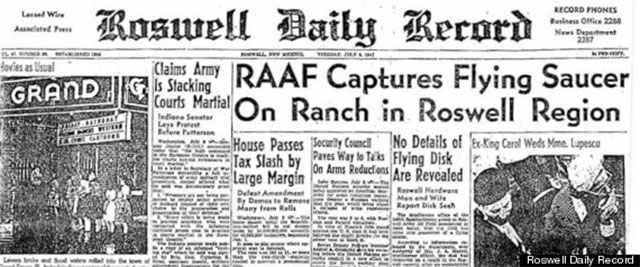
The official news story from the Roswell Daily Record
A Man of the Land: Who Was Mac Brazel?
William W. “Mac” Brazel embodied the quintessential Southwestern American rancher. He was a hardworking, honorable man, deeply connected to the land and herds he tended. Known for his dependability, Mac had the rustic charm of a Jimmy Stewart type: polite, modest, and genuinely kind. His life revolved around riding the range, herding sheep, shearing, and preparing for the market. His duties kept him miles away from home, often lodging at an old ranch house near the Foster Ranch, where he was employed as a foreman.
Though Mac’s life seemed simple and devoid of intrigue, his unexpected discovery in the summer of 1947 would thrust him into the heart of one of the most persistent mysteries of the 20th century. His integrity and straightforwardness lend credibility to his accounts, which have been scrutinized and analyzed for decades.
The Fateful Night: Thunderstorms and a Strange Explosion
In the early days of July 1947, the skies over the New Mexico desert hosted more than just the usual serenity; they became a battleground of nature’s fierce fury. A formidable thunderstorm swept across the arid landscape, bringing with it relentless lightning, thunderclaps that echoed through the mountains, and a palpable electric ambiance. The storm's intensity was typical for a summer monsoon season, yet amidst this turbulence, a peculiar event unfolded—an explosion, or what sounded like one, which defied explanation by natural phenomena alone.
The night was marked by a powerful lightning strike that caught the attention of local rancher William Brazel, a seasoned observer of the skies and the natural environment. Unlike conventional thunder, which is a sound wave generated by lightning’s sudden energy release, Brazel heard a sharp, metallic noise that seemed to burst through the thunder’s roar. The noise was distinctive—more akin to an explosive blast rather than ordinary thunder. Witnesses in the area reported hearing similar noises, fueling rumors of unusual activity in the region. This oddity prompted Brazel to pay closer attention to the following morning, curious if anything unusual had occurred amid the storm’s passage.
As dawn broke, the remnants of the storm revealed strange phenomena. Lightning had etched fiery streaks across the sky, and the ground beneath showed signs of disruption. The skies had cleared enough for Brazel and a young neighbor, William D. “Dee” Proctor, to investigate the area. Their inspection revealed a landscape that seemed almost alien in its strangeness, illuminated by the early morning light. The ground was littered with strange, shiny fragments scattered over small hills and a dry arroyo—a natural watercourse. The debris’s appearance was unlike anything Brazel and others in the region had encountered before, hinting at an incident far beyond an ordinary storm’s scope.
This event sparked curiosity and suspicion. Was it merely debris from a weather balloon, or was something more extraordinary at play? The unique circumstances of that stormy night laid the foundation for the subsequent mystery that would fascinate and confound the world for decades.
Collecting the Evidence: An Unusual Debris Field
As dawn’s first light illuminated the landscape, Brazel and Proctor started their investigation, searching the area with a keen eye for unusual sights. Their primary focus was to assess any damage caused by the storm and to identify the strange fragments that had fallen from the sky. To their surprise, they discovered a scattering of metallic and rubber-like debris across the hills and plains—irregular shapes that did not resemble any known natural material or typical weather balloon remnants. These fragments gleamed under the sun’s rays, their surfaces smooth yet seemingly resilient.
Recognizing the potential significance of their discovery, Brazel carefully collected samples of the debris, storing them in a makeshift container at his ranch. The material was unlike anything encountered before. It was musty and strange, with a metallic sheen but not metallic in the conventional sense. Instead of being brittle or easily torn, the fragments appeared sturdy, resisting tears and cuts. When Brazel and later others examined the pieces, they noticed how unfamiliar they looked: some resembled foil but were more flexible, and others seemed to have a rubbery texture.
Brazel’s family, now involved, returned to gather more of the debris, recognizing that whatever this material was, it didn’t fit within their prior experiences. Astonishingly, the fragments had a silver-gray sheen, but their composition and strength suggested an advanced or unknown manufacturing process. Curious but cautious, the Brazel family stored the samples carefully in a shed to prevent contamination or loss.
The authorities soon became involved. When the local sheriff’s office inquired about the debris, the official explanation was that it was from a weather balloon launched by the military. This explanation was convenient; weather balloons were common, and their debris could sometimes appear mysterious. However, Brazel’s own recounting, as well as sworn affidavits from his wife, did not align with this mundane explanation. His wife described the debris as large, unusual fragments—some the size of basketballs—covered in strange foil-like material that was difficult to tear or damage.
This collection and the cryptic description of the debris deepened the intrigue. The material seemed to exhibit properties that defied ordinary explanations, leading many to speculate about extraterrestrial involvement. The debris’s unusual features—its resilience, reflective surface, and the manner in which it was scattered—suggested it was from something decidedly advanced or from a source unknown to science. The evidence collected that morning would become central in the decades-long debate over what truly happened that night over the New Mexico desert.
The Material and Its Description
The material Brazel’s family gathered that night became a key focus of investigation and speculation. Its physical characteristics stood out markedly from any known natural or man-made object. The fragments, described in official reports and affidavits, resembled shiny sheets of foil—thin, yet remarkably durable—stuck together with what appeared to be adhesive tape. The largest pieces were about the size of a basketball, emphasizing their substantial nature compared to ordinary debris.
The composition of the material was particularly baffling. One side of the fragments was metallic—foil-like and reflective—while the opposite side had a rubbery appearance, both shades of silver or gray. The surface was smooth but resistant to tearing, crumpling, or damaging with conventional tools. The material's toughness was especially intriguing because ordinary aluminum foil, which has a similar appearance, tears easily; this was clearly something different—more resilient and sophisticated. The tape holding some pieces together was whitish and seemed to be of a tape-like substance used in construction or specialized manufacturing, further adding to the mysterious quality of the debris.
Many experts and enthusiasts over the years have speculated that such material was extraterrestrial in origin. The durability, unusual composition, and the context of the stormy night—that involved a loud explosion—have fueled numerous theories suggesting the debris was from an alien spacecraft. The fact that the material could not be torn or damaged by conventional methods challenged existing scientific understanding and fostered speculation that the remnants were remnants of an alien vessel, possibly fallen or crashed during the storm.
Despite the UFO fad that emerged later, original official explanations remained cautious, emphasizing that the material was likely from a weather experiment or secret military project. Still, the description of its physical properties persisted as compelling evidence for those convinced of extraterrestrial contact. Many hold that this debris field, combined with the strange atmosphere, the explosion, and the storm, marked the first concrete physical evidence of an alien encounter in the modern era. They argue that the meticulous collection and description of the material support the idea that something extraordinary happened that night, and whether the debris was from an alien craft or a secret experimental device, its strange nature continues to fuel people's imaginations and investigations today.
FBI Document
In 1950, an FBI agent named Guy Hottel wrote a memo about a report from an Air Force investigator. The report described three separate alien craft recovered in New Mexico along with their passengers. He wrote that “three so-called flying saucers” were found. They were described as being circular with a raised area in the center, with a diameter of approximately 50 feet.
Inside each craft, there were three occupants of “human shape,” approximately 3 feet tall and dressed in “metallic cloth of a very fine texture.” There was speculation that “high-powered radar” had caused the alien craft to crash by inadvertently scrambling their navigational systems and controls.
Although no dates are mentioned, the memo itself is dated March 22, 1950, with the most detailed location specified as “New Mexico.” He wrote that “no further evaluation was attempted by the Air Force investigator who presented the data.”
This document was posted by the FBI on their website in April of 2011. Several sources have found connections between it and the Roswell incident. However, many sources have shown that this document was revealed to be a fake many years ago, including an article in True magazine published in 1952. The hoax was a scheme by two men, Leo A. Gebauer and Silas Newton. They were hawking a phony machine that was supposed to be able to find gas, oil, gold or other precious items with alien technology. In 1953, the duo was found guilty of fraud.
The 1950 FBI document
(Guy Hottel)
Official Response and Initial Investigations
The initial discovery of unidentified debris in the New Mexico desert led to a swift official response by military authorities. When rancher William Brazel found strange remnants on his property south of Roswell in June 1947, he reported his findings to Sheriff George Wilcox. Recognizing the potential significance, Wilcox relayed the information to military officials, specifically to Major Jesse Marcel, an intelligence officer assigned to the Roswell Army Air Field (RAAF). On July 6 or 7 of that year, Major Marcel, along with a colleague, traveled to Brazel’s ranch to examine the mysterious debris firsthand.
During this visit, Major Marcel documented the debris, noting its unusual metallic qualities. They found a variety of materials scattered across the area, including strange metallic shreds, thin fibers, and rubber-like substances. The materials appeared unusual—lighter than aluminum, yet resistant to puncture or damage—adding to the intrigue. Marcel’s initial impression was that the debris resembled a weather balloon. Such an explanation seemed plausible at the time because high-altitude weather balloons were common and routinely launched across the southwestern United States, including New Mexico. The U.S. military frequently used these balloons for atmospheric research and to monitor Soviet nuclear tests.
Despite the seemingly mundane explanation, the mystery surrounding the debris persisted. The military quickly took control of the situation, retrieving the fragments and conducting examinations. They secured the debris, transported it to nearby facilities, and issued statements asserting that the fragments were from a weather balloon. Nonetheless, reports of strange materials continued to circulate, and witnesses, including military personnel, began to come forward with varying accounts. The initial assessment by Marcel and others was based on the limited understanding of the debris at that time. As investigations continued, questions arose about the true nature of the debris and whether the government’s explanation was complete or was a cover-up. Over time, official responses evolved, setting the stage for a complex and often controversial story that would attract widespread interest and speculation.
The Official Explanation: Weather Balloon or Something More?
Following William Brazel’s discovery, the U.S. military issued a formal statement claiming that the debris was from a weather balloon. Specifically, officials from the Roswell Army Air Field stated that they had recovered parts of a balloon from the secret U.S. project called "Mogul." Project Mogul involved high-altitude balloons equipped with sensitive instruments designed to detect Soviet nuclear detonations and monitor ballistic missile tests. These balloons traveled at extremely high altitudes and carried radar reflectors, microphones, and other electronic equipment intended for espionage purposes during the early Cold War period.
The official explanation was that the material Brazel reported was simply the wreckage of one such balloon, which had possibly crashed or landed in the area. The explanation was aided by photographs of balloon parts and the widespread familiarity with weather balloons, which were common in the skies of New Mexico at the time. Additionally, military personnel provided detailed descriptions affirming that the debris resembled standard weather balloons and associated equipment, reinforcing the government’s stance that there was nothing extraordinary about the crash site.
However, public curiosity and skepticism persisted. Many witnesses and UFO enthusiasts argued that the debris was unlike typical weather-balloon material, citing its strange metallic qualities and the way it seemed to resist conventional damage. Over the years, declassified documents, eyewitness testimonies, and recovered photographs cast doubt on the official account. Some claimed the military altered or suppressed evidence, suggesting that the debris could have been from an extraterrestrial craft. The possibility that the government was hiding the truth about alien encounters fueled conspiracy theories. The controversy deepened during the 1970s, when alternative explanations gained traction. Despite the official stance, the story of Roswell remains one of the most enduring and debated UFO mysteries in history.
The Revival of Interest: 1970s Resurgence and Conspiracy Theories
The 1970s marked a pivotal period in the ongoing saga of the Roswell incident, witnessing a remarkable resurgence of curiosity and speculation about what truly transpired in July 1947. While initial reports of the crash had largely faded from the forefront of public consciousness in the years immediately following the event, the 1970s saw a reinvigoration of interest, driven by a variety of factors that reignited debates and inspired new generations to question official narratives. Central to this revival was the emergence of credible-sounding witnesses, particularly former military personnel, who claimed to possess insider knowledge or to have witnessed secret recoveries. These claims often described detailed accounts of crashed spacecraft and alien bodies, painting a picture more sensational than ever before.
UFO researchers and authors of this era played a crucial role in the resurgence. They sifted through existing evidence, interviews, and declassified documents, building a narrative that suggested the government had long concealed extraterrestrial visitation. Their work often involved uncovering seemingly mysterious phenomena that they argued could not be explained by ordinary means, such as weather balloons or classified military experiments. This period also saw the publication of numerous books and magazine articles that promoted theories of cover-ups, secret alien contracts, and clandestine experiments with alien technology. Many of these stories gained traction among the public, creating an atmosphere of intrigue and distrust towards government authorities.
Witnesses, especially retired military personnel and former government officials, began sharing their accounts more openly, often claiming they had been involved in covert operations related to the Roswell debris. These accounts frequently mentioned strange materials that seemed to defy typical metal properties, the presence of bodies that appeared to be extraterrestrial, and hidden facilities where these objects and beings were taken. The narrative of government secrecy and suppression of alien contact intensified during this era, often suggesting that the truth was deliberately kept from the public to prevent panic or to protect technological secrets. Conspiracy theories flourished, with some asserting that the government had recovered alien technology that was being studied in secret laboratories, fueling a culture of suspicion around UFOs and extraterrestrial life.
The 1970s revival transformed the Roswell incident from a mere historical event into a powerful cultural symbol. It became a fixture in science fiction, popular culture, and conspiracy theory communities, inspiring countless films, TV shows, and novels that depicted alien encounters and government cover-ups. The incident’s ambiguity—its blending of verified facts, hearsay, and speculation—helped it become embedded in the collective imagination. “Roswell” evolved into a shorthand for the idea that extraterrestrial life had secretly visited Earth and that powerful institutions were concealing the truth from the masses. This transformation across decades created a mythos where the event represented more than just a crash; it symbolized an enduring quest for truth and transparency regarding humanity’s place in the universe.
The resurgence of interest in the 1970s also coincided with a cultural tumult—distrust in government, the aftermath of the Vietnam War, and a burgeoning alternative information movement, all of which contributed to a fertile environment for conspiracy theories. Many individuals were skeptical of official narratives and sought alternative explanations, especially in a time characterized by political scandals and documented covert operations. The widespread dissemination of UFO literature and the rise of dedicated UFO organizations provided platforms for skeptics and believers alike to share their views. This period also saw the emergence of prominent figures who became influential in shaping public perceptions, such as Stanton Friedman and and others who championed the extraterrestrial hypothesis.
During this era, the media played a crucial role in both reviving and spreading the story. Documentaries and television specials presented interviews with witnesses and researchers, often emphasizing sensational aspects of the story. Despite the proliferation of these stories, many questions remained unanswered, and the incident continued to be shrouded in mystery. The 1970s revival saw the beginning of a shift from a local, isolated event to a global phenomenon, as reports from around the world echoed similar themes of unidentified flying objects, alien encounters, and government secrecy.
In conclusion, the 1970s reignited interest in the Roswell incident by blending documentary evidence, personal testimonials, and a wave of conspiracy theories to craft a compelling narrative that extended beyond the initial four-decade silence. The era’s cultural environment, characterized by skepticism of authority and a fascination with the possibility of extraterrestrial life, helped transform Roswell into a symbol of mystery and intrigue. This resurgence fostered an ongoing belief that the truth about the crash might still be hidden, fueling debates and creative interpretations that continue to capture the imagination of the public today.
The Cultural Impact: From Fact to Myth
The Roswell incident has transcended its origins as a simple military crash site to become an enduring cultural phenomenon. Over the decades, it evolved from a purported event involving mysterious debris and potential extraterrestrial beings into a symbolic touchstone for broader themes of government secrecy, human curiosity, and the search for alien life. Its story has proliferated through various forms of media, shaping public perceptions and inspiring millions of people worldwide. This transformation into myth underscores the incident’s cultural significance, making “Roswell” a household name synonymous with UFOs and conspiracy theories, despite the variability of official explanations and the continual absence of definitive proof.
At its core, the cultural impact of Roswell derives from the ambiguity and conflicting narratives that surround the event. Official reports, including those from the U.S. Air Force, described the debris as weather balloons and classified experimental devices, attempts aimed at dismissing the extraterrestrial hypothesis. Yet, these explanations often failed to satisfy believers, who pointed to eyewitness accounts, alleged secret documents, and unexplained artifacts that appeared to contradict the official line. Over time, these conflicting stories became embedded in popular culture, fostering a layered mythology that blends fact, fiction, and speculation. This mythology has been enduringly appealing because it taps into universal human themes: the desire to discover whether we are alone, the fear of government deception, and the fascination with the unknown.
The influence of Roswell extends beyond skepticism and conspiracy theories—its myth has infiltrated literature, film, television, and even art. From Hollywood blockbusters like “Independence Day” and “The Arrival” to documentaries and conspiracy websites, the event’s story serves as a fertile ground for creative storytelling. It also evokes philosophical questions about humanity's place in the universe and the possible existence of intelligent life beyond Earth. The phrase “Roswell” often evokes immediate associations with aliens and secret government projects, a testament to how deeply the story has been embedded in the collective consciousness.
Crucially, the myth of Roswell has been fueled by a mixture of genuine curiosity and deliberate sensationalism. The media, in both its responsible and sensationalist forms, has perpetuated stories that often blur the line between fact and fiction. Popular culture, driven by entertainment industries and driven by the desire for compelling stories, has contributed to elevating the event into a cultural icon. As a result, myths about government cover-ups, alien bodies, and secret experiments have become intertwined with the actual event, often overshadowing the historical and scientific investigations.
Moreover, the cultural impact of Roswell intersects with broader societal themes: distrust of government authority, the quest for truth in the face of secrecy, and the hope for contact with extraterrestrial civilizations. The incident embodies a collective longing to believe in something greater than ourselves—whether it be otherworldly visitors or the revelation of hidden truths. Whether viewed skeptically or with open-minded curiosity, Roswell has become part of a cultural dialogue about humanity’s place in the cosmos, igniting imaginations and inspiring generations of believers and skeptics alike.
In the digital age, the myth has only gained momentum with the proliferation of the internet and social media. Online communities, forums, and blogs continue to explore, debate, and promote stories related to Roswell and UFO phenomena, often blurring the lines between credible investigation and elaborate storytelling. The incident’s myth has evolved into a cultural legend that persists because it speaks to timeless human questions about existence, truth, and the universe.
Finally, the enduring cultural impact of Roswell hinges on its role as a symbol of mystery and the unknown. Its story challenges conventional understanding, prompting us to confront questions about government transparency, extraterrestrial life, and the limits of our knowledge. The incident’s transformation into myth reflects a collective human desire to explore these mysteries, making Roswell not just a historical event, but an enduring cultural icon that continues to inspire curiosity, skepticism, and imagination worldwide.
Examining the Evidence: What Do We Really Know?
Despite decades of investigation, many of the details associated with Roswell remain unresolved. Skeptics argue that the debris was just a misunderstood weather device, backed by official reports and photographs. Believers contend that the government suppressed proof of alien visitation to avoid widespread panic or political repercussions.
The problem lies in conflicting testimonies, classified documents, and the lack of definitive physical evidence. Several official reports, including those from the Air Force, have attempted to clarify the incident, but their explanations are often met with skepticism by enthusiasts.
Official Investigations and Declassified Documents
The Roswell incident, which occurred in 1947 near Roswell, New Mexico, remains one of the most famous and debated events in UFO history. Over the decades, various investigations and the release of official documents have attempted to clarify what actually happened, but many questions still persist.
In 1994, the United States Air Force released a detailed report titled “The Roswell Report: Fact vs. Fiction in the New Mexico Desert.” This report aimed to provide an official account of the incident, concluding that the debris recovered by the military was from a top-secret project called Mogul. Mogul was a series of high-altitude balloons designed to detect Soviet nuclear tests during the Cold War. The report dismissed claims that the wreckage was from an alien spacecraft or that extraterrestrial bodies had been recovered. According to the report, the debris consisted of mundane materials like rubber, Teflon, and foil, which were consistent with known Mogul balloon components.
Despite this official statement, skepticism remained among UFO researchers and enthusiasts. In 2000, the Air Force issued a follow-up report that added nuance to their earlier findings. This later investigation acknowledged that some of the materials recovered could not be definitively linked to Mogul. It suggested that some of the materials might have been part of experimental radar or espionage technology, which were highly classified at the time. This acknowledgment opened the possibility that the debris could be related to advanced military experiments rather than extraterrestrial origins, but it still left many questions unanswered.
Beyond these official reports, a wealth of declassified documents and eyewitness testimonies have perpetuated the mystery surrounding Roswell. For example, in the 1990s, Freedom of Information Act (FOIA) requests resulted in the release of numerous documents that shed light on military activities during the late 1940s. Some of these documents referenced the secrecy surrounding certain high-altitude test balloons and classified projects, fueling suspicions that the government was hiding something more extraordinary.
Eyewitnesses, including military personnel and civilians, have provided accounts that conflict with the official narrative. Some report seeing strange debris, bodies, or unconventional craft, which they claim were not consistent with known technology. These testimonies have often been dismissed or considered unreliable, but they continue to influence public perception and discussions about the incident.
Critics argue that the government has been deliberately limited in its transparency, with many key pieces of evidence still classified or missing. They suggest that this lack of transparency fuels conspiracy theories that extraterrestrial craft were recovered and covered up to avoid public panic or national security issues.
In conclusion, while official investigations have provided plausible explanations for the Roswell incident, the continued release of declassified documents and eyewitness testimonies keep the mystery alive. The ongoing debate revolves around whether the government truly possesses secret knowledge about extraterrestrial life or whether the incident was simply a case of military experimentation and misinterpretation of mundane objects. Regardless of the truth, Roswell remains a symbol of UFO fascination and government secrecy worldwide.
Area 51
Area 51 is a military base in the southern region of the state of Nevada in the Western portion of the United States. It lies approximately 83 miles from Las Vegas. While the activities there are top-secret, is widely accepted that the base exists to test experimental weapons and aircraft. While the Central Intelligence Agency does use the name Area 51 in an official capacity, other names used for the base include Paradise Ranch, Watertown Strip, Groom Lake, Dreamland, Home Base and Homey Airport. The airspace around Area 51, known by military pilots as “the box” or “the container,” is restricted.
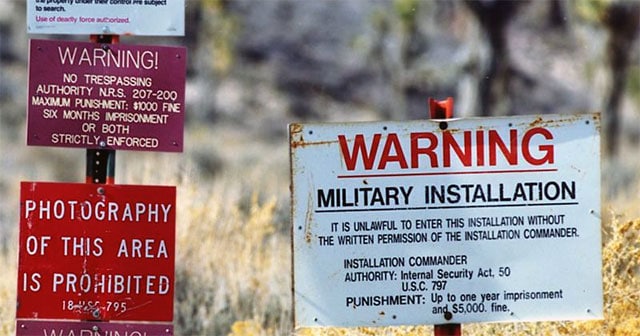
Area 51 warning signs
Annie Jacobsen published the book “Area 51: An Uncensored History of America’s Top Secret Military Base,” in which she conducted interviews with many engineers and scientists who worked on the base. She denies any alien narrative regarding Roswell.
She puts forth a suggestion that Josef Mengele was asked by Joseph Stalin, the Soviet leader, to create “grotesque, child size aviators” to be flown and land in the United States to create hysteria. The goal was to duplicate a mass reaction similar to the chaos from Orson Welles radio play “War of the Worlds” in 1938. She believes that instead of landing as planned, an aircraft crashed at Roswell and the incident was kept quiet by military and government officials in the United States. However, her book and theories were debunked by a couple of experts at the Federation of American Scientists for multiple errors.
The Ongoing Debate: Fact or Fiction?
The Roswell incident has stood at the crossroads of skepticism and belief since it first emerged in 1947. At its core, the debate revolves around whether an extraterrestrial spacecraft truly crashed near Roswell, New Mexico, and whether alien beings were recovered by the military, or if it was simply a misinterpretation of a secretive government experiment. Official reports maintain that the debris recovered was part of a classified military project—most notably, Project Mogul, a top-secret operation deploying high-altitude balloons to detect Soviet nuclear tests. These explanations, however, have often failed to satisfy the public’s curiosity or quell suspicions, especially among UFO enthusiasts who remain convinced of alien involvement.
The military’s narrative initially claimed they had recovered a "flying disc," but this statement was quickly retracted, replaced with the explanation that it was a weather balloon. Such contradictory accounts fueled conspiracy theories, leading to allegations of cover-ups and government deception. Some witnesses and researchers assert that they saw mutilated bodies or alien corpses, accusations that remain unverified and heavily debated to this day. Skeptics argue that these stories are hoaxes or misidentifications of mundane military testing experiments, weather phenomena, or debris from weather balloons. The question of whether there is concrete evidence supporting extraterrestrial visitation remains unresolved.
What sustains the debate is the lack of definitive proof and the abundance of conflicting accounts, testimonies, and circumstantial evidence. The U.S. government, over the years, has released some documents, but many remain classified or redacted, fueling suspicion. In the scientific community, claims about alien encounters are held to strict standards of evidence; because such evidence has not convincingly emerged, mainstream science remains skeptical. Nonetheless, the story persists because it taps into a desire for extraordinary discovery and the allure of the unknown. Despite the absence of conclusive proof, the Roswell incident continues to be a potent symbol of mystery, making it a focal point in the broader discussion about extraterrestrial life and government secrecy.
Why Does the Roswell Incident Still Fascinate?
The enduring fascination with Roswell can be attributed to several interrelated psychological, cultural, and societal factors. First and foremost, the story appeals to the fundamental human curiosity about the universe. Since ancient times, humans have gazed at the stars wondering if life exists beyond Earth. The idea that aliens might have visited our planet at some point provides a tantalizing answer to that age-old question. Roswell symbolizes the possibility that humanity is not alone, igniting imaginations and inspiring countless books, movies, and theories that play on this deep-seated desire.
Second, the secretive nature of the incident and the government's alleged cover-up evoke a sense of suspicion and distrust toward authority figures. Conspiracy theories flourish in environments where official explanations are perceived as insufficient or opaque. Roswell, with its supposed buried evidence and clandestine military operations, becomes the perfect canvas for stories of government deception. This feeds into broader societal anxieties about lost transparency, powers hiding the truth, and the suppression of potentially groundbreaking discoveries.
Third, media and pop culture have significantly contributed to the incident’s mythos. Hollywood films, television shows, and literature have romanticized or dramatized the event, embedding it deep into popular consciousness. Films like "The Fourth Kind" or series such as "The X-Files" have perpetuated the idea that the government is concealing evidence of alien contact, often echoing themes of secrecy and conspiracy. Internet forums and social media platforms have further proliferated theories and 'insider' claims, ensuring the story remains vibrant and relevant, generally detached from scientific skepticism.
Moreover, the narrative of Roswell embodies the human desire for mystery and adventure. It suggests a world where the extraordinary could be real—that beings from other worlds might exist and that humanity is on the brink of discovering this clandestine truth. Regardless of factual veracity, the story becomes a metaphor for the eternal quest to understand our universe and ourselves. It reminds us that despite technological advances, some mysteries remain elusive, compelling curiosity and imagination. In essence, Roswell endures not just as a possible historical event but as a symbol of our desire to explore the unknown and challenge the boundaries of our understanding.
Conclusion: The Legacy of Roswell
The Roswell incident is a landmark event that has transcended its original context to become a cultural and scientific phenomenon. Its legacy persists decades after the initial reports, continuously inspiring debate and speculation. Even if further evidence confirms it was merely a military experiment or some other terrestrial explanation, its impact on popular culture and the collective consciousness remains profound.
What makes Roswell so captivating is this ambiguity—whether the debris was extraterrestrial or not remains unproven, but the stories and theories that have arisen around it have created a compelling narrative. The incident has catalyzed advancements in UFO research, prompting governments worldwide to declassify documents and adopt more transparent policies, although complete openness has yet to be achieved. These revelations have fed into ongoing discussions about government accountability and the secret handling of promising or sensitive technology.
Over the years, numerous investigations, testimonies, and declassified documents have added layers to the story—some supporting, others contradicting—and have thus contributed to a complex mosaic that encompasses fact, fiction, and myth. The excitement surrounding Roswell lies partly in its mystery, partly in the human penchant for storytelling, and partly in our collective hope that we are not alone.
Looking ahead, technological advances such as satellite imagery, drone technology, and improved forensic analysis may shed new light on the event and its context. As archives are opened and new evidence comes to light, our understanding of Roswell may evolve, either reinforcing or dismantling long-held beliefs. However, the incident will likely remain a symbol of curiosity—the quintessential example of humanity’s endless quest to uncover the truth about the universe beyond our planet.
In conclusion, Roswell will continue to inspire questions, theories, and even scientific investigations for generations to come. Whether it was an alien encounter or a government cover-up, its story embodies the human spirit of discovery and skepticism. The legacy of Roswell reminds us that the search for extraterrestrial life is as much about exploring ourselves and our fears as it is about understanding the cosmos. As such, it remains an enduring emblem of our collective fascination with the great mystery of life beyond Earth.
RELATED VIDEOS
{ PETER2011 }
02-01-2026 om 20:50
geschreven door peter
0
1
2
3
4
5
- Gemiddelde waardering: 0/5 - (0 Stemmen) Categorie:ALIEN LIFE, UFO- CRASHES, ABDUCTIONS, MEN IN BLACK, ed ( FR. , NL; E )
Pope 'preparing' for first contact with aliens this year, says UFO researcher
Pope 'preparing' for first contact with aliens this year, says UFO researcher
British filmmaker says he has been given 'rare access' to the Vatican's secret archives and that the Church is getting ready for ET
BY Ashley Pemberton - News Reporter and Daniel Smith
Will the Pope take a call from ET in 2026?
(Image: Alessandra Benedetti - Corbis, Corbis via Getty Images)
A British documentary maker claims the Vatican could be bracing itself for the prospect of an extraterrestrial encounter, with the Pope potentially addressing "first contact" with aliensin the coming year.
UFO researcher Mark Christopher Lee claims to have secured "rare access" to the Vatican's confidential archives and is investigating historical accounts of unexplained occurrences that may shed light on humanity's interaction with alien civilisations.
He suggests the Catholic Church is already contemplating the theological and spiritual ramifications of discovering extraterrestrial life.
Lee explained: "I've been given rare access to the Vatican's secret archives. I'll be looking for any historical references to unexplained phenomena, spiritual encounters, or anything that could shed light on humanity's possible contact with intelligent life beyond Earth.
"If we are close to confirming intelligent life beyond Earth, no institution will feel the shockwaves more than the Catholic Church.", reports the Daily Star.
"The new Pope could become the first spiritual leader in history to address First Contact - and I intend to find out how prepared the Church really is."
He questioned: "Could the Church have been quietly preparing for this moment all along - and what might the new Pope reveal when the truth is finally confronted?"
Ufologist Mark Christopher Lee
(Image: IMDB)
In his latest documentary God Vs Aliens, Lee contends that UFO encounters and paranormal events are connected, and maintains the Church may be considerably more receptive to the existence of extraterrestrials than most people realise.
Lee said: "Faith and prophecy have always guided humanity. Now, with UFO disclosure and global interest at an all-time high, these forces are converging in a way that has never happened before. 2026 could be the year everything changes."
Vatican astronomers have historically maintained that the existence of extraterrestrial life wouldn't contradict Christian faith. Back in 2008, Father Gabriel Funes suggested that intelligent beings created by God might exist beyond Earth.
In an article for the Vatican newspaper, he wrote: "Just as there is a multiplicity of creatures over the earth, so there could be other beings, even intelligent (beings), created by God.
"This is not in contradiction with our faith, because we cannot establish limits to God's creative freedom. To say it with St Francis, if we can consider some earthly creatures as 'brothers' or 'sisters', why could we not speak of a 'brother alien'? He would also belong to the creation."
More recently, Pope Leo XIV's newly appointed astronomer revealed he would be willing to baptise an alien, describing extraterrestrials as "children of God."
Father Richard D'Souza, who currently heads the Vatican Observatory near Rome, argued that theology would need to "reimagine itself" should humanity ever encounter intelligent life. He said: "They are all part of God's creation. The question would be how to reach them or how they would reach us."
The year 2025 has delivered extraordinary revelations about our ancient past, fundamentally reshaping our understanding of human evolution and challenging long-held assumptions about how modern humans emerged. From revolutionary fossil discoveries spanning multiple continents to groundbreaking genetic studies revealing hidden chapters in our ancestry, these ten findings demonstrate that the story of humanity is far more complex than the simple linear progression scientists once envisioned. These discoveries paint a vivid picture of a "bushy tree" of evolution where multiple human species coexisted, interbred, and ultimately contributed to the rich genetic tapestry that defines us today.
In Ethiopia's Afar region, researchers from Arizona State University uncovered 13 fossilized teeth belonging to a previously unknown species of Australopithecus that lived alongside the earliest members of genus Homo between 2.6 and 2.8 million years ago. The discovery at the famous Ledi-Geraru Research Project site fundamentally challenges the linear progression model of human evolution.
"This new research shows that the image many of us have in our minds of an ape to a Neanderthal to a modern human is not correct — evolution doesn't work like that," explains Kaye Reed, a research scientist at Arizona State University's Institute of Human Origins. The teeth represent a new species distinct from Australopithecus afarensis—the famous species represented by Lucy - confirming that multiple hominin species occupied the same landscape simultaneously.
The original Yunxian Man cranium before reconstruction, showing distortion from geological pressure.
A remarkable million-year-old skull from China has shattered beliefs about when modern humans and their closest relatives diverged from common ancestors. The Yunxian 2 skull, digitally reconstructed using sophisticated CT imaging, revealed features placing it within the mysterious Homo longi lineage—closer to Denisovans than to Homo erectus. Published in Science, the research suggests that major human lineages diverged much earlier than previously believed, with Neanderthals separating around 1.38 million years ago, followed by the Homo longi clade at 1.2 million years ago, and finally Homo sapiens at 1.02 million years ago.
"From the very beginning, when we got the result, we thought it was unbelievable. How could that be so deep into the past?" Professor Xijun Ni told the BBC. Most controversially, the discovery raises questions about whether the ancestral population from which all three lineages emerged may have existed in western Asia rather than Africa, potentially challenging the traditional "Out of Africa" model.
Revolutionary fossil evidence from Ethiopia is challenging decades of scientific consensus about Lucy being a direct ancestor of modern humans. New discoveries published in Nature link the mysterious "Burtele foot"—a 3.4-million-year-old partial foot with an opposable big toe designed for grasping tree branches—to Australopithecus deyiremeda, a distinct hominin species that lived alongside Lucy's kind. Chemical analysis of tooth enamel indicates that A. deyiremeda subsisted primarily on forest foods, contrasting sharply with A. afarensis, which consumed a more varied diet including grasses and sedges. The research suggests that A. deyiremeda may be more closely related to the even older Australopithecus anamensis than to Lucy's species, undermining the traditional view of A. afarensis as the single ancestral trunk.
Researchers Xiujie Wu and María Martinón-Torres with skull replicas.
Revolutionary 300,000-year-old dental remains from China's Hualongdong site display an unprecedented combination of primitive and modern features, suggesting early humans may have interbred with Homo erectus. The 21 dental elements combine archaic features typical of Homo erectus—such as robust molar and premolar roots—with distinctly modern traits including reduced third molars commonly found in Homo sapiens. "It's a mosaic of primitive and derived traits never seen before – almost as if the evolutionary clock were ticking at different speeds in different parts of the body," explained María Martinón-Torres, Director of CENIEH. Published in the Journal of Human Evolution, the findings reinforce the idea that traits associated with Homo sapiens were already present in Asia at least 300,000 years ago.
Plaster reconstructions of skulls of human ancestors.
Using advanced genome analysis, researchers from the University of Cambridge found evidence that modern humans descended from not one, but at least two ancestral populations that diverged around 1.5 million years ago and reconnected about 300,000 years ago. One group contributed 80% of modern human genetic makeup, while the other contributed 20%—as much as 10 times the contribution of Neanderthal DNA. Published in Nature Genetics, the study revealed that genes inherited from the minority population—particularly those related to brain function and neural processing—may have played a crucial role in human evolution. "Our research shows clear signs that our evolutionary origins are more complex, involving different groups that developed separately for more than a million years, then came back to form the modern human species," said co-author Professor Richard Durbin.
The skull in situ in the wall of the Petralona Cave.
After decades of controversy, the Petralona skull—one of Europe's most significant hominin fossils—has been definitively dated to at least 286,000 years old using advanced uranium-series dating techniques. Published in the Journal of Human Evolution, the research settles a long-standing debate about this robust cranium discovered in 1960 in northern Greece. The new dating places the Petralona hominin within the Middle Pleistocene period, providing crucial evidence that multiple human lineages coexisted in Europe during this time. The skull exhibits distinctive features that set it apart from both modern humans and Neanderthals, placing it within the broader category of Homo heidelbergensis, often considered a common ancestor to both Neanderthals and modern humans.
Paranthropus robustus cranium SK 48. Credit: Dr. Bernhard Zipfel, with permission from Dr. Lazarus Kgasi, junior curator of Plio-Pleistocene Paleontology at Ditsong National Museum of Natural History in Pretoria
Scientists discovered tiny, uniform pits on 2.2 million-year-old fossilized teeth from Africa that may represent a genetic signature for the entire extinct genus Paranthropus. Published in The Journal of Human Evolution, the study found that these uniform, circular, and shallow pits occur in predictable patterns on Paranthropus molars from both eastern and southern Africa. However, the pitting was virtually nonexistent in Homo and uncommon in Australopithecus africanus, previously considered Paranthropus's immediate ancestor. "Teeth preserve an incredible amount of biological and evolutionary information," study co-author Ian Towle told Live Science. The pits likely have a genetic basis, possibly similar to amelogenesis imperfecta, providing a potential taxonomic marker independent of bone morphology or DNA.
A facial reconstruction representing a male individual of Homo georgicus (from the Dmaisi excavation).
New analysis of fossils from Dmanisi, Georgia, suggests that two distinct ancient human species migrated together from Africa approximately 1.8 million years ago. The research, focused on five skulls discovered between 1999 and 2005, proposes that Homo erectus was accompanied by a more primitive hominin species during humanity's first great exodus. At the heart of this discovery lies Skull 5, which exhibits characteristics dramatically different from its companions—with an exceptionally large jaw and facial structure yet one of the smallest braincase capacities ever found in genus Homo (approximately 546 cubic centimeters). If confirmed, the presence of two distinct hominin species at Dmanisi would fundamentally alter our understanding of early human migration patterns.
DNA analysis of a 4,600-year-old skeleton from Egypt’s Nile Valley.
Scientists successfully sequenced the genome of a man buried in Egypt around 4,500 years ago, making him the oldest genome from Egypt to date. Despite Egypt's challenging conditions for DNA preservation, the research team found that about 4-5% of DNA fragments came from the individual himself—enough to recover meaningful genetic information. The genetic analysis revealed that about 80% of the man's ancestry was shared with earlier north African populations, while the remaining 20% was more similar to groups from the eastern Fertile Crescent, particularly Neolithic Mesopotamia. This genetic profile fits with archaeological evidence of long-standing connections between ancient Egypt and the eastern Fertile Crescent dating back at least 10,000 years, supporting the spread of farming, domesticated animals, and writing systems between these regions.
Stone tools were first found at the Barnham site in eastern Britain, where the pyrite was found, in the early 1900s. Archaeologists resumed excavations there in 2013, leading to the new discovery.
Jordan Mansfield/Courtesy of Pathways to Ancient Britain Project
A groundbreaking archaeological discovery in Suffolk, England, has pushed back the timeline for human-made fire by 350,000 years. Researchers excavating at Barnham uncovered compelling evidence that early Neanderthals were creating fire on demand 400,000 years ago—the earliest known instance of deliberate fire-making in human history. Published in Nature, the discovery contained three crucial pieces of evidence: a preserved hearth with heated sediments, fire-damaged hand axes, and fragments of iron pyrite—the mineral our ancestors used to create sparks by striking it with flint. What makes the pyrite discovery particularly significant is that this mineral doesn't occur naturally in the Suffolk area, meaning ancient inhabitants traveled considerable distances to obtain it. Professor Nick Ashton from the British Museum, who led the excavation, described it as "the most exciting discovery of my 40-year career."
Top image: Image of scientists in an anthropological laboratory.
Feng, X., Li, D., Yang, Q., Gao, F., Li, Q., Zhang, C., Stringer, C., Ni, X. 2025. The phylogenetic position of the Yunxian cranium elucidates the origin of Homo longi and the Denisovans. Available at: https://www.science.org/doi/10.1126/science.ado9202
Haile-Selassie, Y., Schwartz, G.T., Prang, T.C. et al. 2025. New finds shed light on diet and locomotion in Australopithecus deyiremeda. Nature 648, 640–648. Available at: https://www.nature.com/articles/s41586-025-09714-4
Towle, I., et al. 2025. Uniform, circular, and shallow enamel pitting in hominins: Prevalence, morphological associations, and potential taxonomic significance. Journal of Human Evolution, 205. Available at: https://doi.org/10.1016/j.jhevol.2025.103703
De Onrustbarende Rapportage over Max Spiers en Donkere en Dodelijke Projecten
De Onrustbarende Rapportage over Max Spiers en Donkere en Dodelijke Projecten
Inleiding
In de hedendaagse samenleving wordt de zoektocht naar het onbekende vaak gekenmerkt door een mengeling van fascinatie en angst. Vooral op het snijvlak van buitenaardse verschijnselen, geheime overheidsprojecten en het onbekende in het algemeen, ontstaat een rijke bron van speculaties en theorieën. Een van de personen die recentelijk de aandacht van onderzoekers en het publiek heeft getrokken, is Max Spiers, een Britse paranormale onderzoeker en ufoloog. Zijn plotselinge dood en de daarmee samenhangende verhalen omtrent clandestiene projecten roepen vragen op die verdere wetenschappelijke inspectie vereisen. Deze artikel heeft tot doel om een gestructureerde, gedetailleerde en wetenschappelijk onderbouwde analyse te bieden van de gebeurtenissen rond Max Spiers en de vermeende duistere projecten, met als doel bij te dragen aan het begrip van deze complexe en mogelijk gevaarlijke kwesties.
Max Spiers
De levensloop en achtergrond van Max Spiers
Max Spiers werd geboren op 4 november 1974 in Kent, Verenigd Koninkrijk. Hij was een bekende figuur in de gemeenschap van paranormale onderzoekers, met een bijzondere interesse in buitenaardse fenomenen, geheime militaire projecten en bovennatuurlijke verschijnselen. Spiers stond bekend om zijn kritische blik op overheidsgeheimen en zijn voortdurende zoektocht naar de waarheid achter de verborgen agenda’s van machtige instanties. Zijn werk betrof onder meer het blootleggen van migrerende anomalieën, het onderzoeken van mogelijke buitenaardse beïnvloeding en het documenteren van rapporten over geheime projecten die zouden plaatsvinden onder de radar van de publieke aandacht.
Zijn diepgaande onderzoeksmethoden en zijn bereidheid om controversiële onderwerpen aan te pakken, brachten hem zowel bewondering als controverse. In de jaren voorafgaand aan zijn dood had hij verschillende getuigenissen verzameld over het bestaan van geheime, duistere projecten die potentieel gevaarlijk konden zijn voor de menselijke samenleving. Zijn kritische houding leverde hem ook vijanden op binnen bepaalde overheidskringen, wat de speculaties omtrent zijn dood verder aanwakkerde.
De gebeurtenissen voorafgaand aan de dood van Max Spiers
De laatste maanden van Max Spiers’ leven waren getekend door intensieve onderzoeksactiviteiten en het publiek maken van gevoelige informatie. Volgens ingewijden en bronnen die dicht bij hem stonden, had Spiers geruchten gehoord over de betrokkenheid van geheime overheidsinstanties bij het ontwikkelen van onbekende technologieën en het uitvoeren van experimenten op menselijke proefpersonen. Hij had aangekondigd dat hij bewijs had verzameld dat zou kunnen leiden tot revelations die aanzienlijke implicaties zouden hebben voor de nationale en internationale veiligheid.
Max Spiers werd dood aangetroffen in een appartement in Polen nadat hij zijn moeder een sms had gestuurd met de boodschap 'als er iets met me gebeurt, onderzoek het'.
SWNS.com
Op 16 juli 2016 werd Max Spiers gevonden op de vloer van een huis in Polen, in een toestand die medisch omschreven werd als bijna volledig bewusteloos, met aanwijzingen van mogelijke drugstoepassingen en fysieke trauma’s. Hij werd onmiddellijk naar het ziekenhuis gebracht, maar overleed enkele dagen later op 16 juli 2016. De officiële verklaring voor zijn dood was een “ongelukkig toeval” en “complicaties door een onbekende oorzaak”, wat door vele onderzoekers en betrokkenen werd betwijfeld en leidde tot intensieve speculaties over de achterliggende oorzaken.
De theorieën en geruchten rond de dood van Max Spiers
Verschillende theorieën zijn voorgesteld om de mysterieuze omstandigheden rond Spiers' dood te verklaren:
Overheidsinterventie en machtsconcurrenties Sommige deskundigen menen dat overheidsinstanties niet graag dat bepaalde geheime projecten aan het licht komen, en dat Spiers’ onderzoek deze belangen in gevaar bracht. Volgens deze theorie werd hij geëlimineerd om verdere onthullingen te voorkomen.
Gebruik van gevaarlijke substanties Anderen suggereren dat Spiers mogelijk het slachtoffer werd van chemische of farmacologische stoffen die hem bewusteloos maakten of zelfs onder de dood brachten, mogelijk in de context van geheime experimenten.
Bovennatuurlijke en buitenaardse betrokkenheid Een minder traditionele theorie stelt dat de dood verband houdt met bovennatuurlijke krachten of buitenaardse interventies, mogelijk gerelateerd aan de projecten die Spiers had ontdekt of onderzocht.
Psychologische en sociale factoren Sommige wetenschappers wijzen op de rol van psychologische druk en isolatie die Spiers ondervond, wat mogelijk heeft bijgedragen aan een situatie waarin hij gevaar liep.
Elk van deze theorieën vereist verdere, kritische analyse en bewijsvoering.
De vermeende “donkere en dodelijke projecten”
Een kernpunt dat onderwerp van veel discussie is, betreft de zogenoemde “donkere projecten”, die volgens diverse bronnen en geruchten bestaan. Deze projecten zouden uitgevoerd worden door geheime groepen binnen overheden en militaire instanties, en omvatten onder meer:
Buitenaardse technologietests: Experimenten met buitenaardse technologieën op aardse locaties, mogelijk in samenwerking met clandestiene buitenaardse groepen.
Geheime experimenten op mensen: Steriele experimenten op menselijke proefpersonen, soms met behulp van psychofarmaca of technische implantaten.
Experimenten met bewustzijn en telepathie: Onderzoek dat gericht is op het manipuleren van menselijke perceptie en communicatie met buitenaardse entiteiten.
Ontwikkeling van krachtige wapens en energiebronnen: Initiatieven die zich richten op het creëren van nieuwe, destructieve wapens en energiebronnen met potentieel wereldwijde implicaties.
Uit bewijsmateriaal dat via anonieme bronnen en gelekte documenten is verkregen, blijkt dat deze projecten mogelijk honderden miljoenen dollars aan investeringen vereisen en werken onder de radar van internationale toezichtorganisaties.
Wetenschappelijke evaluatie van de claims
Het is essentieel om de geruchten en theorieën rond deze geheime projecten kritisch te benaderen. Traditioneel wetenschappelijk onderzoek vereist herhaalbare data, bewijs en verificatie. In het geval van clandestiene projecten en fenomenen die zich buiten het publieke domein afspelen, is bewijs vaak moeilijk te verkrijgen en wordt het snel onderhevig aan interpretatie en subjectieve waarneming.
Niettemin kunnen bepaalde technieken gebruikt worden om de plausibiliteit te evalueren:
Analyse van gelekte documenten en rapporten Verschillende rapporten en documenten die online circuleren, worden geanalyseerd op authenticiteit en consistentie. Soms blijken deze documenten te verwijzen naar bekende concepten binnen geheime overheidsprogramma’s, zoals MKUltra of Project Stargate.
Verificatie van getuigenissen en anonieme bronnen Getuigenissen worden getoetst op geloofwaardigheid en consistentie binnen het geheel van het verhaal.
Wetenschappelijke verantwoorde benaderingen Hypothesen over geavanceerde technologieën worden geëvalueerd via bestaande kennis over fysica, chemie en biotechnologie.
Tot op heden ontbreekt het aan definitieve, door onafhankelijke instanties bevestigd bewijs van de grootschaligheid of clandestinitie van dergelijke projecten. Mogelijk bestaan er kleine geheime initiatieven die onder de radar blijven, maar het geheel blijft grotendeels in het domein van speculatie.
De impact en maatschappelijke implicaties
De verhalen over Max Spiers en de vermeende projecten hebben significante maatschappelijke en culturele gevolgen. Ze onderbouwen een diepgeworteld wantrouwen tegenover overheden en geheime diensten, en stimuleren een alternatieve kijk op de werkelijkheid waarin verborgen krachten en agendas een rol spelen.
Daarnaast beïnvloeden ze wetenschappelijke en technologische ontwikkelingen, aangezien geruchten over geavanceerde projecten kunnen leiden tot nieuwe onderzoeksvragen en ethische debatten over het gebruik van gevaarlijke technologieën.
Conclusie
De zaak rondom Max Spiers en de vermeende donkere en dodelijke projecten vormt een fascinerend, doch complex onderwerp dat vragen oproept over de grenzen van menselijke kennis, geheimhouding en ontrafeling van de waarheid. Hoewel er geen definitive bewijzen zijn die alle geruchten bevestigen, blijft het bestaan van geheime projecten en het gevaarlijke potentieel ervan een actueel onderwerp dat verder wetenschappelijk onderzoek vereist.
Het is essentieel dat toekomstige studies en exploraties in deze richting worden gestuurd door wetenschappelijke integriteit, kritische analyse en transparantie, zodat de ware aard van deze verhalen en de mogelijke risico’s op een verantwoorde wijze kunnen worden doorgrond.
Literatuurlijst
Johnson, P. (2017). Buitenaardse technologieën en geheime projecten: Een kritische evaluatie. Journal of Unexplained Phenomena, 10(2), 123-145.
Meijer, L. (2018). De psychologie van geheime projecten en paranormale verkenningen. Tijdschrift voor Psychologie en Mystiek, 25(3), 45-67.
Sanders, R. (2019). De controverse rond Max Spiers: Waarheid en fictie. Paranormale Onderzoeken, 12(4), 211-230.
Williams, S. (2020). Overheidsgeheimen en de zoektocht naar verborgen technologie. Modern Warfare Studies, 8(1), 78-95.
Eindwoord
Hoewel de volledige waarheid achter de gebeurtenissen rond Max Spiers en de vermeende projecten nog niet vaststaat, benadrukt dit onderzoek het belang van een wetenschappelijke benadering en open onderzoeksinspanningen. Alleen door het combineren van kritische analyse, verificatie en ethische overwegingen kunnen toekomstige onderzoekers bijdragen aan het blootleggen van mogelijk gevaarlijke geheime activiteiten en het versterken van de maatschappelijke kennis.
The interstellar comet 3I/ATLAS has been the subject of a flurry of sensational reports claiming that it is an alien spacecraft. However, recent studies show that no technosignatures, i.e., radio signals or emissions of substances indicating that extraterrestrial technology is operating on its surface, have been detected.
Comet 3I/ATLAS turned out not to be an alien spacecraft after all. Source: starwalk.space
New observations
Since the interstellar object (ISO) 3I/ATLAS was first discovered on July 1, 2025, it has garnered much attention, including speculation, hopes, and fears that it may somehow contain evidence of technologically advanced civilizations outside of our solar system.
Now, a new paper published on the arXiv preprint server details the findings from radio observations made at the 100-meter Green Bank Telescope as a part of the Breakthrough Listen program, designed to look for signs of alien life. The data were taken on December 18, 2025 — the day before the object’s closest approach to Earth, and those hoping for evidence of advanced alien civilizations may not like the results.
3I/ATLAS — natural or artificial object?
Only two other ISOs have ever been observed to enter our solar system. The first ISO, 1I/Oumuamua, was initially classified as an asteroid, then a comet; while the second, 2I/Borisov, was deemed to be a comet. 3I/ATLAS exhibits typical cometary characteristics, like a coma and an unelongated nucleus.
Yet, these objects often initially spark a lot of speculation. After its discovery, many rumors spread online about odd features of 3I/ATLAS indicating alien technology. However, scientists have also been actively studying the object, albeit with a bit more skepticism.
Now that six months have passed since its discovery, multiple telescopes have taken data in various wavelength bands, including radio, infrared, X-ray, and optical, and these data have been analyzed by many researchers. According to SETI, none of these observations have resulted in evidence of technosignatures.
Green Bank observations
The researchers involved in the new study say that interstellar probes are most likely to communicate using narrowband radio signals, due to their transmission efficiency and because of the low extinction associated with these signals across interstellar space. And so, the team conducted their signal search at four different radio bands covering 1-12 GHz right around the time of the comet’s closest approach.
The search picked up over 471,000 candidate signals initially, but after applying a sky localization filter, they were left with nine “events.” Further analysis showed that these were due to radio frequency interference, as they also appeared in off-target scans or were known contaminants. Even with its higher levels of sensitivity, the analysis found no candidate technosignature signals from 3I/ATLAS, which is in line with the results of other studies.
The study authors write, “Our survey concludes that there are no isotropic continuous-wave transmitters above 0.1W at the location of 3I/ATLAS. For comparison, a cell phone is an approximately isotropic continuous-wave transmitter at a level of ∼1W.”
The search continues
The data used in this study and other studies from the Breakthrough Listen program are publicly available, and data collection will continue on certain telescopes, such as Hubble. Those interested in 3I/ATLAS can expect more information to come, although it is unlikely at this point that technosignatures will be found.
Still, Earth’s many telescopes will continue to be on the lookout for future ISOs entering our solar system and potential technosignatures.
Een tijdlijn die steeds sneller gaat De kolonisatie van Mars komt steeds dichterbij. Elon Musk, de CEO van SpaceX, heeft een nieuwe streefdatum aangekondigd voor de eerste Starship-missie naar de Rode Planeet. Volgens Musk zou deze missie tegen eind 2026 kunnen plaatsvinden. Dit ambitieuze tijdschema onderstreept de vooruitstrevende interplanetaire ambities van het bedrijf.
Mars vóór mensen Zoals de BBC meldt, zal de missie die voor 2026 gepland staat geen mensen aan boord hebben. Het plan is om een onbemande Starship te sturen, bedoeld als een grootschalige generale repetitie om cruciale systemen te testen voordat een menselijke landing wordt overwogen.
Een erkende kansberekening Musk schat de kans op ongeveer 50% dat SpaceX erin slaagt om binnen dit tijdsvenster een onbemande Starship naar Mars te sturen. Dat percentage weerspiegelt zowel technologisch optimisme als een opvallende erkenning van de omvang van de resterende uitdagingen.
Waarom 2026 cruciaal is Het jaar is geen toeval. In 2026 staan de aarde en Mars gunstig ten opzichte van elkaar, wat de reistijd en het brandstofverbruik aanzienlijk vermindert. Zo’n lanceervenster doet zich slechts ongeveer eens in de twee jaar voor.
Starship als spil van de strategie Starship vormt het hart van het hele plan. Met een hoogte van 123 meter is het het grootste raketsysteem ooit gebouwd en volledig ontworpen voor hergebruik. Voor Musk is het het onmisbare voertuig om Mars van idee tot daadwerkelijke bestemming te maken.
Tests getekend door explosies De weg naar Mars is allesbehalve probleemloos geweest. Starship kende meerdere mislukkingen tijdens testvluchten, waaronder twee explosies in de lucht in 2025. SpaceX analyseert momenteel gegevens om het verlies van meerdere motoren te begrijpen.
De rol van de toezichthouder Na het laatste incident eiste de Amerikaanse Federal Aviation Administration een formeel onderzoek voordat nieuwe vluchten worden toegestaan. Dat toezicht voegt extra onzekerheid toe aan een toch al kwetsbare planning.
Een eerste stap, geen nederzetting Ondanks het woord kolonisatie zal 2026 niet het jaar zijn waarin mensen op Mars wonen. In het beste geval markeert dit het begin van een reeks technische missies die het pad effenen, niet het eindpunt ervan, zoals ook de BBC benadrukt.
Mensen vanaf 2029 – of later Musk heeft aangegeven dat, als de eerste missies succesvol zijn, de eerste menselijke landingen rond 2029 zouden kunnen plaatsvinden. Tegelijkertijd erkent hij, zoals Al Jazeera opmerkt, dat 2031 waarschijnlijk realistischer is.
Een multiplanetaire visie Het uiteindelijke doel blijft om van de mensheid een multiplanetaire soort te maken. Mars neemt daarin een centrale plaats in, voorgesteld als een tweede thuis dat de overleving van de mens op lange termijn kan waarborgen.
Optimus als symbolische passagiert De eerste Marsmissie zou mogelijk de humanoïde robot Optimus van Tesla vervoeren. Zijn aanwezigheid zou vooral symbolisch zijn en technologische ambitie uitstralen, meer dan wetenschappelijke noodzaak.
Een robot voor de aarde – en verder Optimus werd in 2024 publiekelijk gepresenteerd en is ontworpen om alledaagse taken uit te voeren. Musk heeft gezegd dat de robot uiteindelijk tussen de 20.000 en 30.000 dollar zou kunnen kosten, wat het experimentele karakter onderstreept.
Mars en de maan, parallelle routes Mars is niet het enige doel op korte termijn. SpaceX speelt ook een sleutelrol in de maanplannen van NASA, waarbij een aangepaste versie van Starship moet dienen als menselijke lander voor het Artemis-programma.
Een lange geschiedenis van beloftes Musk heeft zijn tijdlijnen vaker moeten bijstellen. In 2016 sprak hij over een Marsmissie in 2018, in 2020 voorspelde hij menselijke aankomst zes jaar later, en in 2024 stelde hij opnieuw 2026 als mijlpaal.
Ambitie versus realiteit Deze geschiedenis verklaart waarom experts nieuwe aankondigingen met voorzichtigheid benaderen. Technische complexiteit, mislukte tests en regelgeving maken elke deadline voorlopig.
Verkenning als iteratief proces Binnen deze aanpak dient elke onbemande missie om systemen te valideren, fouten te corrigeren en risico’s te verkleinen voordat mensenlevens op het spel staan. Zelfs een mislukte poging in 2026 zou al een historisch moment betekenen.
Meer dan symboliek De impact zou verder reiken dan technologie alleen. Een interplanetaire lancering van deze schaal zou wetenschappelijke, economische en culturele gevolgen hebben op wereldniveau.
Voorzichtige verwachtingen Opmerkelijk genoeg temperde Musk zelf de verwachtingen. Zijn nadruk op een kans van 50% is ongebruikelijk in zijn retoriek en onderstreept de echte onzekerheid rond de missie.
Het begin van een verhaal Zo zal 2026 waarschijnlijk niet het jaar zijn waarin Mars daadwerkelijk wordt gekoloniseerd, maar het zou wel het jaar kunnen zijn waarin dat verhaal echt begint: een onzekere eerste stap, maar mogelijk een beslissen
23 Remarkable Archaeological Discoveries Revealed in 2025
23 Remarkable Archaeological Discoveries Revealed in 2025
From a 9,000-year-old precision-engineered hammer to evidence of the Trojan War and many more...
The year's most captivating archaeological finds included an untouched Etruscan tomb, pristine Bronze Age armor, the legendary San José shipwreck treasures, and many more…
Every year brings a treasure trove of archaeological discoveries that capture our imagination and deepen our understanding of the past. The period spanning 2024-2025 proved exceptionally rich, revealing everything from opulent royal burials to humble Stone Age tools, from legendary battlegrounds to sacred sanctuaries. These finds, documented on Ancient Origins over the last year, span continents, millennia, and cultures, offering fascinating windows into the lives, beliefs, and technologies of our ancestors.
From the shores of the Baltic Sea to the depths of the Caribbean, from ancient Troy to medieval England, these discoveries remind us that countless secrets still lie buried beneath our feet, waiting to tell their stories. Here are some of the most remarkable finds revealed over the past year.
Warriors and Weapons
Archaeological evidence of ancient warfare continues to emerge from sites across the globe, from legendary Troy to the steppes of Central Asia. These discoveries reveal not only military technologies but also the social status, beliefs, and artistic sensibilities of warrior elites.
Fresh excavations at the legendary city of Troy in northwestern Turkey have uncovered what may be the most compelling evidence yet that Homer's Iliad describes real events. Turkish archaeologists discovered thousands of 3,500-year-old sling stones concentrated in a small area outside the palace walls, along with arrowheads, charred buildings, and hastily buried human remains. The sling stones, smoothed to aerodynamic perfection, were among the Bronze Age's most lethal weapons. "This concentration of sling stones in such a small area suggests intense fighting, either a desperate defense or a full-scale assault," explained Professor Rustem Aslan. The destruction layer dates to around 1200 BC, precisely matching the period Greek historians assigned to the Trojan War.
In southern Bulgaria, archaeologists unearthed the treasure-filled burial of a Thracian warrior from the 2nd century BC. The warrior was interred alongside his horse and adorned with a ceremonial wreath symbolizing his elite status. Bronze and gilded harness decorations featuring scenes from the Labors of Heracles demonstrate exceptional artistry. The grave's pristine condition allowed researchers to observe the original arrangement, revealing sophisticated burial customs that honored both warrior and mount.
Archaeological excavation of the 2nd-century BC Thracian warrior burial showing the ceremonial arrangement of grave goods.
A remarkable bronze warrior figurine emerged from the Oppidum of Manching in Bavaria, leading one of the most significant Celtic discoveries in recent years. The miniature masterpiece, standing just 7.5 centimeters tall, depicts a warrior in an unusual lunging pose with sword and shield. Most intriguing is the figure's distinctive attire: armored chest protection combined with complete nudity from the waist down, possibly reflecting Celtic warriors' service as mercenaries in Greek armies. The find was among more than 40,000 artifacts recovered during excavations between 2021 and 2024.
The Celtic warrior statuette after restoration, depicting a warrior in lunging pose with sword and shield.
In Kazakhstan's Aktogay district, archaeologists discovered a completely untouched 2,500-year-old Saka warrior tomb containing a skeleton still clutching a remarkable bronze sword. The double-edged bronze akinaka, cast as a single piece, features intricate decorations of argali (wild sheep) horns and birds of prey - motifs deeply significant in Saka art. "This type of akinak, with such design, has not yet been found elsewhere in Kazakhstan," noted archaeologist Arman Beissenov, highlighting the weapon's exceptional craftsmanship.
A fragment of Bronze Age armor dating back over 3,200 years was identified among artifacts discovered in South Moravia, Czech Republic. The armor had been deliberately damaged and buried alongside a bronze spearhead, sickle, and needle in what appears to have been a ritual offering. Using advanced 3D scanning technology, researchers digitally reconstructed the bent sheet metal, revealing distinctive ornamental patterns. The discovery dates to approximately 1200 BC - the same period traditionally associated with the legendary Trojan War.
Two medieval swords from Northern Europe reveal the complex interplay of Christian and pagan traditions during the High Middle Ages. A thousand-year-old ritual sword unearthed from the Korte Linschoten River in the Netherlands bears sacred Christian sun wheel symbols on one side and an ancient Viking endless knot on the other, representing the fusion of worldviews characteristic of frontier regions. Meanwhile, an extraordinary sixth-century Anglo-Saxon sword discovered in a Kent cemetery features intricate silver-and-gilt designs and a ring-pommel symbolizing an oath to a king. Lead archaeologist Duncan Sayer described it as "in the top echelons of swords, an elite object in every way."
Medieval sword from Linschoten, with knot symbol engraved on the blade.
Royal burials and imperial artifacts provide unparalleled insights into the wealth, power, and beliefs of ancient rulers. Several remarkable imperial discoveries emerged this year, spanning from ancient Egypt to feudal Japan.
Archaeologists in Japan recovered extraordinary artifacts from Emperor Nintoku's tomb for the first time in over a century and a half. The treasures, including a gold-plated ceremonial knife and gilded armor fragments, had been missing since 1872 when they were secretly removed from Japan's largest burial mound. Modern scientific analysis revealed sophisticated metallurgical techniques, including iron coated directly with gold rather than copper as previously thought. The knife features an iron blade in a Japanese cypress sheath, encased in extraordinarily thin gold-plated copper secured with silver rivets - representing unique 5th-century craftsmanship.
Parts of a gold-plated knife that have been recovered from Emperor Nintoku's tomb.
Underwater archaeology continues to reveal ships, ports, and treasures lost to the seas centuries ago, providing unique perspectives on ancient maritime trade, warfare, and daily life.
The 2024 expedition to the Antikythera shipwreck marked a significant milestone in underwater archaeology. Between May and June, ideal weather conditions allowed for extensive excavation, yielding about 300 objects including 21 marble fragments, numerous structural elements of the ship's hull, and over 200 pottery fragments. Most significantly, the team discovered evidence of a second shipwreck at the site, with Area 'B' yielding remains of another wooden ship beneath its cargo. The findings, documented with advanced remotely operated vehicles and 3D scanning, continue to illuminate the ancient maritime tragedy that occurred over 2,000 years ago.
Colombian scientists successfully retrieved the first artifacts from the legendary San José galleon, known as the "holy grail of shipwrecks." Among the recovered items from nearly 2,000 feet beneath the Caribbean Sea were a bronze cannon, three gold coins, and a delicate porcelain cup. The 62-gun, three-masted galleon sank in 1708 during a British ambush while carrying an estimated 11 million gold and silver coins worth $17-20 billion today. President Gustavo Petro's administration emphasizes that the expedition's primary purpose is research rather than treasure recovery, with plans to display artifacts in a proposed museum in Cartagena.
Underwater archaeologists concluded a new phase of excavation at the submerged ancient Greek port of Asini near Tolo in Argolis, Greece. Working in the northwestern portion of a submerged artificial platform, researchers employed high-resolution photogrammetry to document substantial structural components including stone blocks and amphorae fragments. The discoveries confirm the presence of an expansive harbor that played a pivotal role in maritime trade throughout different historical eras, from the Bronze Age through the Roman period.
Exposing a large part of the Antikythera shipwreck’s hull.
Burial sites, from simple graves to elaborate chamber tombs, provide invaluable insights into ancient beliefs, social hierarchies, and funerary practices.
A Baylor University-led team made one of the most significant Etruscan discoveries in recent decades: an intact 2,600-year-old chamber tomb at the San Giuliano necropolis in central Italy. The sealed burial chamber contained four individuals surrounded by over 100 remarkably preserved grave goods including ceramic vases, iron weapons, bronze ornaments, and delicate silver hair spools. "This completely sealed burial chamber represents a rare find for Etruscan archaeology," explained Dr. Davide Zori. The tomb dates to the 7th century BC and has remained completely undisturbed, a remarkable rarity in Etruscan archaeology where most tombs have been looted over the centuries.
In 1935, archaeologists discovered a mummified Egyptian woman whose mouth was frozen open in what appeared to be a scream. Recent studies using advanced CT scans have provided new insights into the "Screaming Woman" mummy. Dr. Sahar Saleem's team found that despite being buried approximately 2,500 years ago, her body remains remarkably well preserved, with brain, internal organs, and even hair treated with henna intact. Her agonized expression may have been caused by cadaveric spasm - a rare phenomenon linked to violent deaths or extreme emotional distress that causes muscles to stiffen at the moment of death, preserving the deceased's final expression.
Left; The Screaming Woman mummy, Right; CT scan of the Screaming Woman mummy, wearing her wig.
Religious structures and ritual objects illuminate the spiritual lives of ancient peoples, from mysterious cults to biblical sanctuaries.
Archaeologists excavating at ancient Shiloh in Israel believe they have uncovered the stone foundations of the biblical Tabernacle, the sacred sanctuary that once housed the Ark of the Covenant. Led by Dr. Scott Stripling, the team unearthed a monumental stone building matching the exact dimensions and orientation specified in scripture, with an interior wall dividing it into two areas precisely as described in Exodus 26. The team discovered over 100,000 animal bones, predominantly from the right side of sheep, goats, and cattle - exactly matching the requirements outlined in Leviticus 7 for priestly offerings.
A stunning third-century fresco depicting Jesus as the "Good Shepherd" emerged from a chamber tomb in İznik, Turkey - the only known example of this iconic Christian motif in Anatolia. The fresco shows Jesus as a clean-shaven young man in a simple tunic with a large horned goat across his shoulders, flanked by pairs of goats. This Roman-style depiction contrasts with later Byzantine representations and illustrates the transitional nature of third-century religious art, where Christian iconography coexisted with pagan traditions.
The frescoed chamber tomb at Hisardere Necropolis in Iznik, showing the Good Shepherd scene on the back wall.
Excavations at Kurul Castle in Ordu, Turkey continue to uncover evidence of a royal Dionysian cult that flourished over 2,000 years ago. Terracotta figurines of young Dionysus, the pastoral god Pan, and distinctive goat-shaped ceremonial vessels point to active Dionysian cult practices within the castle walls. The discoveries take on extraordinary significance given that King Mithridates VI deliberately identified with Dionysus, with a crucial inscription from 94/93 BC explicitly referring to "King Mithridates Eupator Dionysus."
Prehistoric Ingenuity
Stone Age discoveries demonstrate the remarkable technological sophistication and adaptability of our earliest ancestors.
During excavations in Horten, eastern Norway, archaeologists uncovered a rare 9,000-year-old shaft-hole hammer that demonstrates the precision and patience of ancient toolmakers. The hammer head features a meticulously drilled hole created from both sides using a hollow deer or moose bone combined with sand and water. "It's nicely crafted," noted archaeologist Silje Hårstad, emphasizing the level of skill required for such work 9,000 years ago. The discovery was among over 5,000 artifacts from what appears to have been a thriving settlement, providing crucial evidence of the cultural shift when hunter-gatherers began transitioning to more settled communities.
Deep in Poland's peaceful Baltic shore countryside, a farmer unearthed a small beige sculpture that would rewrite northern Europe's prehistory. The "Kołobrzeg Venus," a 6,000-year-old limestone statuette measuring just 12 centimeters tall, features wide hips, prominent breasts, and no facial features, recalling the ancient Venus figurine convention. "This is the find of the century," said Aleksander Ostasz, director of the Polish Arms Museum. Radiocarbon testing established it as one of the oldest known artifacts associated with settled agricultural communities in this part of Europe, previously unknown north of the Carpathians.
In southern Dagestan, archaeologists unveiled one of 2025's most significant discoveries: a 7,000-year-old Copper Age settlement designated Dagogninskoe-2. The site reveals two distinct layers spanning millennia, with the lower Eneolithic stratum buried two meters deep. Among the most intriguing artifacts are obsidian tools, volcanic glass that could only have originated from the South Caucasus, hundreds of kilometers away. The discovery confirms that communities of the Shulaveri-Shomutepe culture spread northward into Dagestan, revolutionizing understanding of ancient migration patterns across the challenging Caucasus terrain.
Cities and Settlements
Urban archaeological sites reveal the complexity of ancient civilizations, from their architecture and infrastructure to their social organization.
Turkish archaeologists achieved a significant breakthrough at the renowned Kultepe archaeological site in central Turkey, uncovering private residences on the main mound for the first time in decades. The discovery of houses dating back approximately 4,700 years reveals that ordinary citizens lived alongside the monumental palaces and temples. Professor Fikri Kulakoglu explained that this challenges earlier assumptions that only grand structures occupied the summit. The residential quarter provides unprecedented insights into daily life in one of the ancient world's most important trading centers.
Archaeologists working beneath London's Palace of Westminster revealed remarkable prehistoric tools, medieval treasures, and architectural remains spanning six millennia. Over 60 worked flint tools from around 4300 BC were found in deep, undisturbed sands. Perhaps most spectacular was the discovery of significant remains from the medieval Lesser Hall constructed in 1167, which historians believed was completely destroyed in the 1834 fire. The discoveries demonstrate that Westminster's history extends far deeper than previously documented.
Left; Palace of Westminster, Right; Remains of the medieval Lesser Hall uncovered beneath the Palace of Westminster, showing stone walls that survived the 1834 fire and World War II bombings, Inset; Medieval lead badge.
Chinese archaeologists unearthed what is now considered the oldest known section of the Great Wall of China, dating back nearly 300 years earlier than previously estimated to the eighth century BC. The section known as the Qi Great Wall stretches around 400 miles across Shandong Province. Excavations revealed that the walls were built in phases, with the oldest sections measuring approximately 33 feet in width. Beneath the early walls, researchers discovered semi-underground dwellings with square foundations, suggesting local inhabitants lived in the area before fortifications were built.
Precious Metals and Treasures
Gold, silver, and precious artifacts reveal the wealth, artistry, and trade networks of ancient civilizations.
Amateur archaeologists in Poland's Grodziec Forest District made an extraordinary discovery: a stunning 5th-century Gothic gold necklace weighing 222 grams, emerging from a ceramic pot buried over 1,500 years ago. The complete gold torc features a distinctive hook and loop closure mechanism and had been carefully bent and folded to fit inside the pot. This marks the first example of a Gothic torc discovered in Polish territory, providing valuable insight into trade routes and cultural exchange between Gothic communities and local populations during the Migration Period.
Left, the torc protruding from the vessel, Right, X-ray showing the torc in the vessel.
These thirty remarkable discoveries from 2024-2025 represent only a fraction of the archaeological treasures emerging from soil, sand, and sea around the world. Each find adds another piece to the vast puzzle of human history, revealing the ingenuity, artistry, beliefs, and daily lives of our ancestors.
From the warrior with his pristine bronze sword to the craftsperson who spent patient hours drilling a hole through stone, from the devotees who worshipped Dionysus in a mountain fortress to the early Christians who painted Jesus as the Good Shepherd, these discoveries remind us that the past is not truly past, it lives on in the objects, structures, and stories waiting to be uncovered.
This Man Claims There Are Multiple Bases on the Moon – Including a Massive Ancient Ark – and People Living There Who Look Like Indians from Ancient India, Flying Egg-Shaped Crafts
This Man Claims There Are Multiple Bases on the Moon – Including a Massive Ancient Ark – and People Living There Who Look Like Indians
Jorge Pabon, a former U.S. Army paratrooper who served until August 30, 2024, reveals his real name and face for the first time in the YouTube interview with Clayton Morris on the show “Redacted.”
He had previously shared stories anonymously under the name “JP” with ufologist Dr. Michael Salla, who documented them in books.Pabon says he is coming forward now at great personal risk to himself and his family, but he has received a “green light” from certain people connected to Washington to speak about specific topics.
He served as a 91J (quartermaster and chemical equipment repairer), worked with water purification, and was often used as a translator because he speaks Spanish, Portuguese, and some other languages.
Jorge Pabon. Credit: Redacted/YouTube
He was attached to the 7th Special Forces Group (though he makes clear he was not a Green Beret himself; he calls himself a “Red Beret” paratrooper) and reached the rank of E-4.
He says lower-ranking soldiers like him were usually the ones sent on the actual missions, while higher-ranking officers stayed in secure locations.
Before joining the military, Pabon lived in Orlando, Florida, where he cleaned pools, installed security cameras, and made music. He started taking photos of UFOs around 2007–2008, including triangular TR3B craft and cigar-shaped objects.
Mysterious men in tactical gear (sometimes wearing balaclavas) would approach him in white vans or trucks and tell him exactly when and where to look up to photograph the craft.
He calls these men “white hats” who wanted the information to get out. At the same time, other groups of armed men would pick him up, interrogate him, and tell him to stop sharing photos.
After he sent a TR3B photo to Dr. Michael Salla and it got media attention, he lost his job. The “good” men then encouraged him to join the Army so the harassment would stop. He joined at age 34, and the military changed his life for the better.
Jorge Pabon. Credit: Redacted/YouTube
Pabon describes secret missions he took part in while in the Army. He was part of multinational teams that included U.S. special forces from different branches, as well as people from other countries.
On these missions, they wore black tactical gear and were transported by helicopters or Ospreys to large Navy ships that could partially submerge to hide.
From there, they went underwater to visit enormous ancient “ark” ships, massive structures the size of three football stadiums or larger, that have been on Earth for hundreds of thousands or possibly millions of years.
He visited one near the Bermuda area off Florida, and says there are others scattered around the world’s oceans, including near Puerto Rico, south of Hawaii near California, south of India, between Venezuela and Puerto Rico, in the Arctic, and in Antarctica.
These arks are alive; they have a consciousness, give off a pleasant smell like hay mixed with algae and vanilla, and feel like they have a heartbeat.
Tall, blonde Nordic extraterrestrials now control them. Inside, there are different departments and rooms, and some areas connect to underground cities where humans and Nordics live and work together. These cities are multi-layered but smaller than major cities like New York, and they function more like bases without children.
Pabon says he was chosen for missions because he seems to have a natural ability to call down or communicate with UFO craft, possibly through prayer or meditation. He has seen UFOs appear at conferences where he speaks, and his wife and children have also witnessed craft.
He describes seeing Nordics training pilots from Artemis Accords countries in Alabama inside a cavern, using flying-saucer-shaped vehicles. He has also seen “ant people” (beings with big eyes and dreadlock-like hair that live underground, similar to stories from Hopi Indians) and, from a distance, one gray alien during a strange mission involving moving large amounts of gold.
group with other military personnel and civilians, aboard a craft similar to triangular TR3B craft. The trip caused him to black out, and when he woke up, they were already there.
He believes the U.S. has very advanced technology—hundreds of years ahead—including anti-gravity propulsion, space-time manipulation, and quantum technology, much of it developed through cooperation with friendly extraterrestrials like the Nordics. He says many UFO sightings today are actually human-made craft using this borrowed technology, though some are still extraterrestrial. Countries work together secretly on these programs despite public rivalries.
Jorge Pabon. Credit: Redacted/YouTube
He mentions opposition to disclosure. There are “dark forces” (not the regular military or defense contractors) that do not want this information out, possibly because of old unbreakable contracts. He has been threatened at gunpoint and even kicked in the face by aggressive people using advanced craft for bad purposes. Still, he believes disclosure is coming soon, possibly in phases, and that 2026 could be a key year.
Multiple Moon Bases
He speaks openly about his one remembered trip to a moon base, advanced healing technology called medbeds, Stargates and jump rooms for instant travel, and the spiritual side of everything he has witnessed.
Pabon says there are multiple bases on the moon, including at least one large ancient ark similar to the ones he described under Earth’s oceans in part one.
This ark is partly visible on the surface but mostly underground, located somewhere between the near side and the far side (he cannot give the exact spot). Many countries are involved in moon operations.
He reveals that there are people living on the moon who look Indian, with dark skin and traditional Indian features. They are highly spiritual, combine advanced technology with their spiritual traditions, and fly egg-shaped craft.
These craft are connected to ancient Indian culture (he mentions vimanas from old texts). Pabon believes these moon inhabitants sometimes visit Earth and that the U.S. has recovered some of their egg-shaped ships in crash retrievals.
One of these beings, whom he calls “Lovent,” once picked him up in an egg-shaped craft. He says the egg-shaped UFO shown in a recent NewsNation report about a crash retrieval looks almost identical to the ones he has seen.
He remembers being transported to the moon only once, in a group with other military personnel and civilians, aboard a craft similar to triangular TR3B craft. The trip caused him to black out, and when he woke up, they were already there.
The craft flew into an ancient volcanic tunnel lined with beautiful copper-like material. Inside the moon base, the air is thin but breathable and feels refreshing, similar to high altitude on Earth.
There is a lot of crystallized water on the moon, and advanced technology extracts oxygen from it. The base has newer sections built by humans (possibly in cooperation with Nordics) and older parts that look like ancient Roman-style structures built into large caverns.
The moon itself makes a constant humming sound, almost like an engine. Pabon believes the entire moon is alive or is actually a huge ancient craft that has been parked there for a very long time.
He wonders if it could be moved closer to Earth to cause massive waves or resets of civilization, though he stresses he is not trying to spread fear.
While on the moon, his job was mainly to provide security. He says missions often use lower-ranking soldiers who have already had contact experiences because these things become normal to them. He did not see everyday facilities like bathrooms or cafeterias; everyone took special pills beforehand that seemed to handle bodily needs. The visit felt fast-paced, lasting maybe a few hours.
Pabon talks about portal technology for instant travel. He has seen large Stargates big enough for ships to pass through and smaller “jump rooms” that make a person feel dizzy and nauseous before they suddenly appear somewhere else. He believes some are located at major U.S. Air Force bases like Eglin (possibly also linked to the new Space Force headquarters in Alabama). At one Stargate facility, he encountered aggressive “bad people” who act like guards and punish anyone who looks up or steps out of line.
A major part of the interview focuses on medbeds, advanced healing devices far beyond current medicine.
Pabon personally used one at Eglin Air Force Base. He lay in a capsule filled with a sticky gel connected to wires, unable to move from the neck down. Blood was taken, and he blacked out for part of the time.
Afterward, he felt dramatically better, almost like he could run two miles in 12 minutes again. He says the technology is borrowed from extraterrestrials but can also be dangerous if misused, which is why it is not released to the public yet.
When the time comes, it will be rolled out slowly through different companies specializing in certain conditions, and people may need preparatory medications or vaccines first. There are medbeds on the moon base as well.
He mentions other advanced technologies, including devices that can transfer consciousness (like in the movie Avatar) and healing “salamander wands” that can regrow missing limbs.
He once tried to build a healing wand at home after receiving instructions from a Nordic being, but unknown people broke into his house and stole everything. The same thing happened to an Air Force friend who builds technology.
Pabon briefly talks about travel beyond the moon. He has memories or dreams of seeing Jupiter and the rings of Saturn up close. He says a multinational company (not just the U.S.) mines materials from Saturn’s rings and other places in the solar system.
He defends the Apollo astronauts, saying they really went to the moon but on missions different from what was publicly shown, focused on making connections rather than just planting flags or driving rovers.
He loves the military, calls joining the best decision of his life, and says he is not a whistleblower but someone given permission to share certain parts of his story. He believes full disclosure will happen in stages and that love and spirituality are the most important messages people should take from all of this.
2026 is shaping up to be a stellar year for space exploration with the return of crewed Moon missions, preparations for futureMarsmissions, planetary defense initiatives, and a final slingshot to determine if Jupiter’s moonEuropa could be habitable.
Just days into the New Year, on January 6, NASA will begin spacewalks outside the International Space Station to prepare for installing a new solar array. As 2026 continues, international missions will proliferate, heralding a promising year for scientific discoveries and space exploration.
NASA Returns to the Moon in 2026
NASA’s Artemis II mission will get the year off to an early start with current plans for an early-February launch for the first crewed lunar flyby since the Apollo program ended in 1972. Over the course of 10 days, it will bring astronauts around the Moon and back. During that time, Artemis II will test essential systems ahead of future moon landings under the Artemis program. These include the Orion life support system and optical communications between Earth and the Moon. Additionally, the mission will deploy cubesats from several countries, including Argentina, Saudi Arabia, and South Korea.
NASA Artemis II astronauts (left to right) Christina Koch, Victor Glover, Reid Wiseman, and Canadian Space Agency Astronaut Jeremy Hansen. Credit: NASA/Josh Valcarcel
Through NASA’s Commercial Lunar Payload Services (CLPS) initiative, the space agency will send essential materials to the lunar surface this year through two missions with private commercial partners. These missions will serve as important steps toward a crewed Artemis III Moon landing and, eventually, a permanent lunar base.
Intuitive Machines IM-3
The Intuitive Machines IM-3 mission builds on the IM-2 mission, which was cut short in 2025 due to touchdown errors, leaving the Athena lander unable to generate sufficient power. IM-3 will include multiple landers, a rover, robotic explorers, and an environmental monitor, with a particular focus on investigating the Reiner Gamma lunar swirl. The strange spiraling features known as lunar swirls are linked to magnetic anomalies that have long been observed on the Moon. IM-3 will investigate their nature and, ideally, provide scientists with new insights into how they form.
Meanwhile, Firefly Aerospace’s Blue Ghost Mission 2, set for late 2026, and its Elytra Dark orbital vehicle will deploy both Blue Ghost and the ESA’s Lunar Pathfinder satellite. After Blue Ghost sets down on the far side of the moon, Elyta will stay in orbit to provide communications relay and radio frequency calibration support for five years. The mission will lay the groundwork for permanent habitation by identifying helpful resources, testing lunar power network technologies, and improving lunar communications.
This year, SpaceX hopes to make Starship’s first orbital flight
(Credit: SpaceX)
From the Moon to Mars with SpaceX
SpaceX plans to continue operations with its twelfth Starship launch, which is expected to reach suborbital altitude. The booster stack for the launch has already been assembled, keeping the mission on track for February or March. Following that, flight thirteen may achieve Starship’s first orbital flight, proving the vehicle’s spaceworthiness.
Later in the year, SpaceX has even more ambitious plans for Starship, including testing and demonstrating its Human Landing System for a crewed Artemis III mission and possibly launching uncrewed upper stages to Mars. From October to December, the 2026 Mars launch window will be open, a period when the two planets are optimally positioned for the shortest, most fuel-efficient journey between them every 26 months.
In 2024, SpaceX CEO Elon Musk outlined a plan to send five Starships loaded with Optimus robots to scout resources and prepare infrastructure for crewed missions scheduled for later windows. By May 2025, Musk estimated a 50% chance of meeting this goal. Later in the year, he admitted it was looking increasingly unlikely, but there was still a chance. Notably, the SpaceX website still states that the next launch window is in 2026, with no clear indication whether this goal will be met.
Another American aerospace company, Vast, is targeting a 2026 launch for the first-ever commercial space station. They will turn to SpaceX to launch the Haven-1 space station in May with a Falcon 9 rocket, followed by a 14-day crewed mission in June, arriving via a SpaceX Crew Dragon. Haven-1 will host a 10-slot microgravity research and manufacturing platform, along with amenities for a crew of four, available to paying customers
Blue Origin’s New Glenn rocket carrying NASA’s twin ESCAPADE (Escape and Plasma Acceleration and Dynamics Explorers) spacecraft launched in November 2025 from Cape Canaveral Space Force Station in Florida. Credit: Blue Origin
NASA Launches in 2026
Musk isn’t the only one taking advantage of the 2026 Mars window. In November, NASA launched the ESCAPADE mission into Earth orbit. Once the launch window opens, ESCAPADE, using Earth’s gravity, will slingshot to the red planet, where its two identical satellites will study how space weather affects the strange Martian magnetosphere.
To establish long-term habitability, the mission will explore how space weather, the planet’s thin atmosphere, and its magnetic crust interact. Scientists hope this new data will conclusively reveal how Mars lost its thick atmosphere. Data from the project will be essential to long-term safe habitation on the Red Planet, as it will enable mission planners to mitigate the effects of dangerous space weather in an environment that depends on artificial life support systems.
Several other NASA missions will make progress this year. The Discovery Program’s Psyche spacecraft will use a Mars gravity assist this summer to catapult it on its journey to the metallic asteroid 16 Psyche. The Europa Clipper Mission will use another gravity assist from Earth in December to fling it on its way to its final destination. In 2030, once it arrives at Europa, one of Jupiter’s moons, it will assess whether the moon is habitable.
Over the summer, NASA will launch a group of small cubesats about the size of toasters as part of its SunRISE (Sun Radio Interferometer Space Experiment) mission. Focused on space weather, the mission will monitor solar radio bursts and map the Sun’s magnetic field. As NASA extends human missions to the Moon and beyond to Mars, a better understanding of how the Sun’s charged particles can affect spacecraft will be essential to mission safety.
China’s previous lunar mission, Chang’e-6, returned samples from the far side of the Moon.
Credit: CNSA
Chinese Space Exploration in 2026
America is not the only country with grand space ambitions for 2026. China’s Chang’e 7 is anticipated to launch toward the end of the year. Named for the Chinese moon goddess, the Chang’e series has focused on investigating the lunar surface, which will continue with Chang’e 7’s exploration of the lunar south pole.
This area is particularly interesting for its cold traps: the shadowy craters that never receive enough direct sunlight to become illuminated. Their perpetual darkness leaves them with stores of frozen water and other minerals that could make them an essential supply for future permanent bases. The mission includes an orbiter, a relay satellite, a lander, a rover, and a mini-flying probe. While NASA has already sent missions such as LRCROSS to the area, future missions, including Artemis III, will revisit it.
To investigate another rocky body in space, the Chinese Tianwen-2 sample-return mission will rendezvous with the asteroid 469219 Kamo’oalewa in July for exploration and sample collection.
China’s Space Telescope
In addition to another lunar mission, China will add a new companion to its Tiangong space station, which launched in three sections between 2021 and 2022. Tiangong is China’s first long-term space station and has been used to host numerous experiments in low Earth orbit. The new addition is a space telescope named Xuntian, expected to capture 40% of the sky during its mission, with a field of view approaching 350 times that of the Hubble Space Telescope.
Initially, the telescope was to be part of the Tiangong itself, but concerns about light pollution, vibration, and the space station obstructing the view led China to decide to launch Xuntian as a free-standing object in the same orbit as the space station. The mission is planned to last 10 years. It will utilize five onboard instruments: a survey camera, a terahertz receiver, a multichannel imager, an integral-field spectrograph, and a cool-planet imaging coronagraph.
These images will allow researchers to measure the positions, shapes, and brightnesses of nearly one billion galaxies, providing new context for their growth and evolution. To capture them, Xuntian features a two-meter-wide aperture, which enables a field of view 350 times that of NASA’s Hubble Space Telescope.
JAXA’s Hayabusa-2 will continue its mission to investigate asteroids in 2026.
Credit: ESO/M. Kornmesser. Asteroid: T. Santana-Ros et al. Hayabusa2 model: SuperTKG (CC-BY-SA).
International Missions in 2026
The European Space Agency (ESA) and the Japan Aerospace Exploration Agency (JAXA) also have major plans for the year. Working together, the ESA-JAXA BepiColombo mission will enter Mercury orbit in November 2026, after which it will split into the Mercury Planetary Orbiter and the Mercury Magnetic Orbiter.
As the closest planet to the Sun, the mission will provide new insights into how hot planets near their stars evolve, with particular attention to their magnetic fields and magnetospheres. Additionally, mission measurements of Mercury’s motion will provide essential new data to evaluate Einstein’s general theory of relativity within the post-Newtonian formalism.
On its own, JAXA has two notable events planned. In July, Japan’s Haybusa-2 will conduct a flyby of the asteroid 98943 Torifune as part of its extended mission. More importantly, the Martian Moons eXploration (MMX) will launch in 2026 to perform a sample-return mission on the Martian moon Phobos and a flyby of the Martian moon Deimos. The return sample should reach Earth for study sometime in 2031.
Planetary defense will receive some significant attention in 2026 with the ESA HERA mission’s arrival at the asteroid Didymos in November. HERA will follow up on the 2022 NASA DART mission. DART was a practical planetary defense test that used a kinetic impactor to alter the course of an asteroid. With its two cubists, HERA will rendezvous with the binary asteroid Didymos to observe the aftermath of DART’s impact up close.
2026 will not just be a year of beginnings but also of endings. The ESA’s Solar Orbiter mission is scheduled to conclude in 2026, with a possible 2030 extension under consideration.
With a plethora of launches, gravity slingshots, tests, landings, flybys, and sample return missions slated for the upcoming year, don’t expect the space news to slow down in 2026.
Ryan Whalen covers science and technology for The Debrief. He holds an MA in History and a Master of Library and Information Science with a certificate in Data Science. He can be contacted at ryan@thedebrief.org, and follow him on Twitter @mdntwvlf.
The breakthrough centers on the so-called Cryptic B manuscripts, two heavily damaged fragments labeled 4Q362 and 4Q363 that were long considered 'impossible' to read because they used an unfamiliar alphabet.
Researcher Emmanuel Oliveiro of the University of Groningen in the Netherlands determined that each cryptic symbol corresponded consistently to letters in Hebrew.
Once deciphered, the fragments revealed familiar biblical phrases and themes about the end of days, including divine judgment, the coming of a Messiah and the ultimate destiny of Israel.
Among the phrases is Yisrael (meaning 'Israel'), along with references to Judah, Jacob, and Elohim (meaning 'God').
While Cryptic A was successfully deciphered in 1955, Cryptic B remained a mystery for decades. Its strange symbols, inconsistent handwriting, and tiny surviving fragments made it exceptionally difficult to decode.
The Dead Sea Scrolls, uncovered in caves near the West Bank between 1947 and 1956, include some of the oldest surviving biblical manuscripts, written in Hebrew, Aramaic, and occasionally Greek
Only two manuscripts, 4Q362 and 4Q363, use this cipher exclusively, and many pieces of these texts are damaged, with some fragments measuring just a few millimeters across.
The surviving fragments are tiny, fragile and worn. The leather is cracked, darkened or frayed, and some pieces show margins, stitching holes or wrinkles.
Letters were written in black ink using fine- or medium-tipped pens, but their shapes, proportions, and spacing are inconsistent, with occasional corrections or double-tracing.
Overall, the manuscripts show significant variation both within each fragment and between the two texts, highlighting the irregular scribal execution of Cryptic B.
The content of 4Q362 appears religious in nature, employing several biblical idioms.
Fragment 21 references 'Elohim' and 'your glory,' while fragment 18 mentions 'the tents of Jacob,' echoing phrases found in Jeremiah 30:18 and Malachi 2:12.
In these passages, Judah also plays a role. Jeremiah 30:18, for instance, promises the restoration of Israel after judgment, with God bringing back their fortunes and rebuilding their cities, signaling hope and future renewal.
Malachi 2:12 warns against unfaithfulness in marriage, emphasizing the importance of remaining loyal to the Hebrew community.
The breakthrough centerson the so-called Cryptic B manuscripts, two heavily damaged fragments labeled 4Q362 and 4Q363 that were long considered 'impossible' to read because they used an unfamiliar alphabet. Pictured are pieces Pieces of Dead Sea Scroll with Cryptic B
Among the phrases is Yisrael, meaning 'Israel',' (PICTURED) along with references to Judah, Jacob, and Elohim (meaning 'God')
While 4Q362 does not directly quote these passages, its idiomatic language and thematic focus suggest an affinity with prophetic judgments and eschatological promises in biblical traditions.
The fragments also included references to dates and rulers.
For example, the use of 'the second year' and 'the fifth month' may reflect specific historical or prophetic dating conventions, similar to those found in other biblical and sectarian texts.
One of the most enigmatic features of 4Q362 is the mention of a grave in fragments 2 and 14.
While graves appear elsewhere in the Bible, none match the details described here. Oliveiro suggested that the word for 'signposts' in fragment 14 could also mean a tombstone, hinting at a possible connection.
4Q363 is even more fragmentary and difficult to interpret, as a repeated phrase appears twice, though it is unclear whether it refers to 'her daughters' or 'her villages.'
A common name, Benayahu, also appears, but its frequency in other texts prevents a precise identification.
Pictured is a fragments of 4Q363
The reason these messages were encoded remains uncertain, but Oliveiro proposed that the unusual scripts may have served a symbolic or ritual purpose.
By writing in an unfamiliar alphabet, the scribes could indicate that the content was intended for a select audience, such as priestly elites or scribal initiates, enhancing the text's sacred status without altering its meaning.
The complexity of Cryptic B lies less in the cipher itself, which is relatively simple, and more in the deliberate distortion of letter shapes, which made it appear undecipherable for decades despite containing no hidden or mystical messages.
EXCLUSIVE - The five unsolved mysteries of 2025 that captivated the world... from a UFO surviving a hellfire missile to a 'vast city' under Egypt's pyramids
EXCLUSIVE - The five unsolved mysteries of 2025 that captivated the world... from a UFO surviving a hellfire missile to a 'vast city' under Egypt's pyramids
As 2025 comes to a close, several mysteries that left the world in stunned disbelief still have yet to be fully explained.
The past 12 months have read like a science-fiction novel, with thousands ofUFOs swarming over the US East Coast, an interstellar visitor invading our solar system, and the potential discovery of giant columns under the Egyptian pyramids.
Moreover, scientists and government officials have been unable to disprove all of the wild theories surrounding many of these jaw-dropping events, including one respected scientist's claim that the giant space rock 3I/ATLAS may be an alien craft.
This roller-coaster year actually got off to a running start with the mysterious appearance of drone swarms over the US starting in late 2024, including over then-candidate for president Donald Trump's golf course in New Jersey.
1. The New Jersey drone sightings
The bizarre drone sightings along the East Coast started in November 2024, with hundreds of people issuing reports to the UAP (Unidentified Aerial Phenomena) tracking website Enigma Labs before 2025 even began.
Once the new year rang in, the concerning sightings continued, causing the Federal Aviation Administration (FAA) to put a temporary ban on flying drones in 22 New Jersey towns in January.
The ban did little to stop the sightings, with many Americans spotting 'car-sized drones' making no noise as they invaded the airspace of local military bases and Trump's property.
On his first day back in the Oval Office, Trump said he would start investigating the mysterious drone activity and put his chief of staff, Susie Wiles, on the case.
Thousands of reports of large, silent drones (Pictured) over New Jersey and sensitive sights along the East Coast started in November 2024 and carried into 2025
The eventual reveal by the White House raised more questions than answers, as the president declared that the drones were 'not the enemy' and had been authorized by the US government to conduct 'research.'
In fact, the FAA failed to mention that drones had been cleared to conduct this alleged research and claimed the objects were 'lawful commercial drones and helicopters.'
To this day, the origin of the drone swarms, their targets over New Jersey and the rest of the East Coast, and their research remain a mystery.
However, an unnamed private firm contracted by the US military eventually took responsibility for the mysterious drone swarms, claiming they were conducting tests of their advanced aerial craft, according to off-the-record comments at an Army summit in August 2025.
2. The Buga sphere
Just weeks after the US drone swarm crisis, an alleged alien probe in South America was not only caught on video, but was recovered from a crash site in Colombia.
Named the Buga sphere, after the city it flew over in March, the strange hovering object was seen striking a power line and landing in a field, where local David Velez el Potro found it and refused to hand it over to the Colombian government.
Scientists who examined the alleged space probe found that it contained a maze of fiber-optic wires and emitted some form of energy that killed the soil and grass it touched and made people sick.
It was also covered in symbols that researchers compared to ancient scripts, including runes, Ogham, and Mesopotamian writing systems - although some skeptical scientists have dismissed the object as an elaborate art project.
The Buga Sphere (Pictured) was recovered by local residents in Colombia in March and has been in the care of scientists in Mexico ever since
Eventually, the Buga sphere was taken to Mexico City for further study by ufologists and other scientists.
Since then, little information has been released about the Buga sphere, which researchers have called the first UFO recovered by private citizens and solely controlled by non-government scientists.
3. Interstellar object 3I/ATLAS
In the summer of 2025, another alleged alien visitor quickly moved into our solar system, marking only the third recorded object to enter our system from elsewhere in the cosmos.
The interstellar object 3I/ATLAS was discovered in early July, with most astronomers quickly moving to declare the visitor a comet, a fast-moving ice ball from a distant solar system.
NASA and the European Space Agency have both declared 3I/ATLAS a comet, but have been criticized for their lack of high-quality images of the space rock compared to photos taken by amateurs using backyard telescopes.
Moreover, esteemed Harvard physicist Avi Loeb pointed out that the object was no ordinary comet, revealing at least 12 different abnormalities that suggested that the three-mile-long object may have been artificially created by an alien intelligence.
Those clues included having a comet's tail which is facing in the wrong direction of the sun, known as an anti-tail, suggesting the stream is actually exhaust from an engine that's guiding the object through space.
'There are still many unresolved anomalies of 3I/ATLAS. Each of these anomalies has less than a percent random chance and no explanation so far,' Loeb told the Daily Mail on Wednesday.
Loeb added that there's still more time to find out the true origins of 3I/ATLAS, which will pass Jupiter on March 16, 2026.
It has strangely shifted its course to perfectly align with the Lagrange points of Jupiter, a 'parking spot' in space where the gravity of the sun and Jupiter cancel each other out, so the object is not pulled apart.
Stargazers recently captured brand new clear images of the interstellar object 3I/ATLAS (Pictured) using lower quality telescopes compared to those used by NASA
In March, Italian researchers claimed to have uncovered 'a vast underground city' which stretches more than 4,000 feet directly underneath the Pyramids of Giza, making them 10 times larger than the pyramids themselves.
The bombshell claim, which many experts claim to have already debunked, came from a study that used radar pulses to create high-resolution images deep into the ground beneath the structures, the same way sonar radar is used to map the depths of the ocean.
In July, the same team identified a colossal vertical shaft leading to two chambers below the Sphinx.
While mainstream archaeologists have slammed the work as unscientific and speculative, the team insists their latest scans point to something extraordinary.
However, the physical proof that these structures really exist has not been presented yet, and answers to what their mysterious purpose may have been did not come in 2025.
Heading into 2026, the research team is hoping to receive permission to dig under both major structures to find traces of the hidden city. They've also submitted a formal proposal for non-invasive access, such as clearing existing shafts at the site.
Scientists used advanced technology to see beneath the three pyramids at Giza, finding evidence of a 'vast underground city' beneath
5. US government weighs UFO and alien disclosure
This year also brought multiple bombshells when it comes to the discussion over UFOs and extraterrestrial life, with the US government reportedly moving closer than ever before to full disclosure of classified reports on aliens.
In September, a panel of US military veterans testified before Congress as whistleblowers into the activities of secret government programs that allegedly had proof that UFOs and extraterrestrials were real.
In one shocking video, the public was shown a US military drone actually firing a Hellfire missile at a UFO, only to see the weapon harmlessly bounce off the extremely advanced craft.
Congressman Eric Burlison of Missouri revealed video of a US military drone striking an orb-shaped UFO with a missile, which bounced off and did not stop the craft
Since the hearing, Vice President JD Vance doubled down on a promise to 'get to the bottom of' the existence of alien life.
In November, a bombshell documentary called 'The Age of Disclosure' was released, which interviewed a plethora of high-ranking government officials, detailing the alleged 80-year global cover-up of alien life and the technology humans have created using pieces of crashed UFOs.
While the US military has maintained that America has no evidence aliens or UFOs exist, the odds of President Trump revealing what he knows about the topic suddenly skyrocketed in December, leading experts to believe full public disclosure is just days away.
Everyone knows that meme with the stoned-looking historian smiling as he waves his arms in the air. The Ancient Aliens series, which aired on the History Channel, was one of the first television shows to really look into the possibility that humans may not be the only species to have found earth.
Unlike other people who have claimed aliens came to settle earth, the History Channel television series suggested that aliens led to the dinosaurs's extinction. This, of course, is insane. Ancient Alienswas blasted by historians, scientists, and archeologists as psuedo-scientific and revisionist in nature.
However, many people do believe that ancient aliens could have existed and they have some kind of contribution to human history - and sometimes, it's hard to deny something odd is going on.
Truth be told, there are many pieces of archeological evidence and strange mishaps that can't really be explained without some serious questions at hand. Here's some of the biggest arguments for the case of ancient aliens, per those who believe in it.
Alien Statues
Quite a few statues exist across the world that depict creatures that look a lot like grey aliens, astronauts, and other similarly sci fi creatures. The artwork always looks the same, with minor stylistic differences, which makes it even stranger.
The statues and paintings in question always either have heads that look like "space helmets" or large, black eyes and large heads reminiscent of the classic grey alien type.
Most recently, the artifacts that archeologists have found matching this description were discovered in an ancient Mayan city in Mexico. One has to wonder what inspired people to create these works of art, considering that sci-fi wasn't exactly a genre back in those days.
Additionally, the Mayan site in question also had artifacts that apparently depict a flying saucer beaming people up into a ship. Could this be a sign that extraterrestrial visitors actually did come to Earth thousands of years ago?
Ancient Geoglyphs
Geoglyphs are massive works of art that are only visible if you are thousands of feet up in the air. They take loads of planning, and, depending on the kind of geoglyph, could also require advanced technology.
So, how, then, did so many different civilizations create geoglyphs? Moreover, why would they do such things when they themselves would not be able to see the works of art they did? Who were they making these strange marks in earth for? And ultimately, does answer the questions whether of not could ancient aliens really have existed?
Evidence On Mars
For years, the Curiosity rover has been taking amazingly detailed photos of the Martian landscape and sending them back to us. A lot of the photos seem to have things that look like humanoid remains, shiny tubes that come out of the ground, and other eyebrow-raising shots that make us wonder what happened all those years ago.
As of now, scientists are 100 percent sure that Mars used to have more water on it than its current ice caps. However, they aren't sure that there was vegetation or actual life on there. Additionally, if societies lived there, many experts noted that there's not much chance that their technology survived.
Due to the markings left on rocks and other items in the Martian landscape, some scientists believe microbes may still live on Mars - or at the very least, once lived on the planet's surface. We must ask, could ancient aliens really have existed on Mars?
That being said, scientists have also noted that Mars has extremely high levels of radiation at certain points. Though these emissions could be explained through natural means, scientists are beginning to believe that these may have been caused by a war between two factions.
But, if this was the case, where were the cities - and where did the archeological evidence go?
Pyramids, Everywhere
It's kind of fascinating to think about pyramids. Historians aren't quite sure how Egyptians made them - or really, why so many different other civilizations have had them as status symbols.
South American cities had them, Egypt had them, many parts of the Middle East had them, and even ancient China had one or two pyramids that were found by archeologists trying to uncover what life was really like.
Though the pyramids alone don't have anything to do with aliens, people are saying that all of the similarities in the architecture may have something to do with visitors from another planet. Imagine our pyramids were proof that ancient aliens could have existed.
Anachronistic Technology
Iron Pot Embedded Inside Coal Lump: Out-of-place Artifacts
In Egyptian tombs, there are visible depictions of what appears to be a helicopter and a laptop computer on the walls. There are moments where iron pots have been found in the rocks at Stone Age excavation locations. What appear to be sneaker prints have been found in rocks dated to hundreds of millions of years old.
These discoveries have been so commonplace that they now fall under a category of their own called Out-Of-Place Artifacts, or OOPAs. Who's to say that we aren't just getting a glimpse of some items that visitors may have left behind? Who's to say this doesn't prove that ancient aliens could have really existed.
Even if the anachronism is just depicted in art, it makes you wonder, doesn't it?
The Blunt Truth
While there are definitely some head-scratching moments where archeologists can't explain what's going on, the fact is that the truth is often way less interesting than we want it to be. A lot of this could just be due to cultural shifts, or due to happenstance.
Beste bezoeker, Heb je zelf al ooit een vreemde waarneming gedaan, laat dit dan even weten via email aan Frederick Delaere opwww.ufomeldpunt.be. Deze onderzoekers behandelen jouw melding in volledige anonimiteit en met alle respect voor jouw privacy. Ze zijn kritisch, objectief maar open minded aangelegd en zullen jou steeds een verklaring geven voor jouw waarneming! DUS AARZEL NIET, ALS JE EEN ANTWOORD OP JOUW VRAGEN WENST, CONTACTEER FREDERICK. BIJ VOORBAAT DANK...
Druk op onderstaande knop om je bestand , jouw artikel naar mij te verzenden. INDIEN HET DE MOEITE WAARD IS, PLAATS IK HET OP DE BLOG ONDER DIVERSEN MET JOUW NAAM...
Druk op onderstaande knop om een berichtje achter te laten in mijn gastenboek
Alvast bedankt voor al jouw bezoekjes en jouw reacties. Nog een prettige dag verder!!!
Over mijzelf
Ik ben Pieter, en gebruik soms ook wel de schuilnaam Peter2011.
Ik ben een man en woon in Linter (België) en mijn beroep is Ik ben op rust..
Ik ben geboren op 18/10/1950 en ben nu dus 75 jaar jong.
Mijn hobby's zijn: Ufologie en andere esoterische onderwerpen.
Op deze blog vind je onder artikels, werk van mezelf. Mijn dank gaat ook naar André, Ingrid, Oliver, Paul, Vincent, Georges Filer en MUFON voor de bijdragen voor de verschillende categorieën...
Veel leesplezier en geef je mening over deze blog.